政策支持

Search documents
中信证券:AI需求+政策支持双轮驱动 小型模块化反应堆产业拐点已至
Di Yi Cai Jing· 2025-11-05 00:31
Core Insights - The report from CITIC Securities highlights a trend of regulatory easing in the U.S. small modular reactor (SMR) industry since Trump's executive order aimed at promoting nuclear power on May 23, 2025 [1] - The demand side is driven by the rapid growth in electricity demand from data centers, allowing nuclear power to maintain a premium [1] - On the supply side, industry technology is maturing, with commercial operations expected to begin as early as 2027-2028 [1] - With the dual drivers of AI demand and policy support, total investment in the U.S. SMR industry is projected to approach $1 trillion over the next 20 years [1] - Annual investment in the construction market is expected to exceed $30 billion, with the fuel market projected to reach $18.3 billion by 2048 [1] - As the SMR industry is still in the pre-commercialization phase, upstream fuel and raw material supply, as well as midstream equipment manufacturing, are expected to benefit first [1]

财报横评丨10家商用车企三季报亮了:总营收破1244 亿元 福田净利暴增1764% 新能源成关键推手
Mei Ri Jing Ji Xin Wen· 2025-11-04 14:34
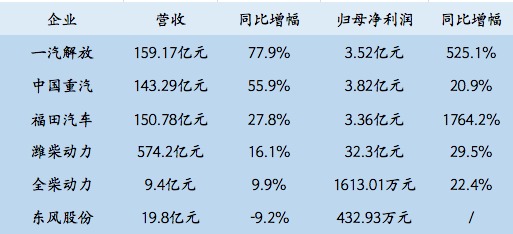
Core Viewpoint - The commercial vehicle sector is experiencing a significant performance surge in Q3 2025, with major companies reporting substantial revenue and profit increases after a market adjustment in the first half of the year [1][5]. Group 1: Commercial Vehicle Performance - Ten listed commercial vehicle companies reported total revenue exceeding 124.4 billion yuan and net profit over 5.8 billion yuan in Q3 2025 [1]. - Weichai Power led the industry with revenue of 57.42 billion yuan and a net profit of 3.23 billion yuan [1]. - Eighty percent of commercial vehicle companies saw significant increases in both revenue and net profit in Q3 compared to the previous half [1]. Group 2: Heavy Truck Sales Growth - Heavy truck sales in Q3 showed a marked increase, with monthly sales of 84,900 units, 88,000 units, and 105,000 units in July, August, and September respectively, representing year-on-year growth of 45.6%, 41%, and 82% [1][2]. - Major heavy truck manufacturers, including FAW Jiefang and Foton Motor, reported revenues exceeding 15 billion yuan and net profits over 300 million yuan in Q3 [2]. Group 3: Company-Specific Financials - FAW Jiefang reported revenue of 15.917 billion yuan, a year-on-year increase of 77.9%, with a net profit of 352 million yuan, up 525.1% [3]. - China National Heavy Duty Truck Corporation achieved revenue of 14.329 billion yuan, a 55.9% increase, with a net profit of 382 million yuan, up 20.9% [3]. - Foton Motor's revenue reached 15.078 billion yuan, a 27.8% increase, with a net profit of 336 million yuan, soaring 1764.2% [3]. Group 4: Policy and Market Drivers - Government policies supporting the commercial vehicle sector, including subsidies for scrapping old vehicles, have stimulated market growth [5]. - The penetration of new energy vehicles in the commercial vehicle sector is rapidly increasing, contributing to market expansion [5]. - In September, sales of new energy heavy trucks reached 24,000 units, marking a year-on-year increase of 184% [5]. Group 5: Bus Sector Performance - Bus companies also reported significant revenue increases, with Yutong Bus achieving revenue of 10.24 billion yuan, a 32.3% year-on-year growth, and a net profit of 1.357 billion yuan, up 78.9% [9]. - King Long Motor reported revenue of 6.002 billion yuan, a 29.4% increase, with a net profit of 130 million yuan, up 1211% [9]. Group 6: Future Outlook - Analysts predict continued positive trends in the heavy truck industry, with expectations of domestic sales reaching 700,000 units or more, representing a year-on-year growth of over 16% [5]. - The global market for commercial vehicles presents significant growth opportunities, particularly in the new energy segment, as many countries implement policies to promote the replacement of traditional buses [10].



经济观察丨四年9万亿,大湾区“强磁场”引世界瞩目
Sou Hu Cai Jing· 2025-11-04 10:43
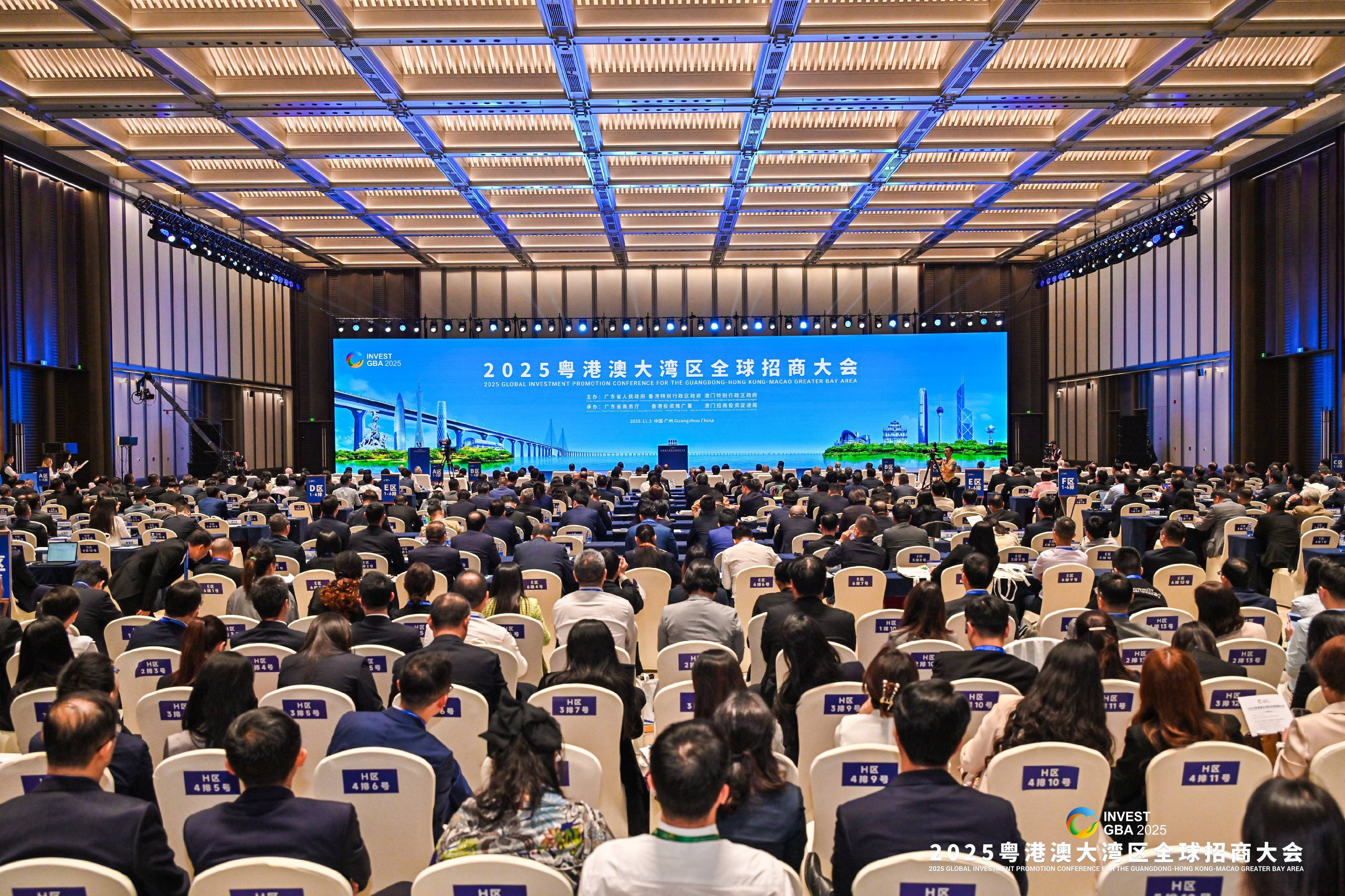
Core Insights - The 2025 Guangdong-Hong Kong-Macao Greater Bay Area Global Investment Conference successfully gathered global investors, achieving a total investment and trade amount of 2.03 trillion yuan with 2,073 projects signed [1][4] - The conference highlighted the region's strong industrial foundation and favorable economic conditions, which provide stable development expectations for global investors [4][6] Group 1: Investment Achievements - The conference has seen a cumulative signing amount of 7 trillion yuan over the past three years, with an overall project commencement rate of 88.1% [1] - This year's conference resulted in 2,073 investment and trade projects, with 21 representative projects signed on-site [1][4] Group 2: Industrial Strength - Guangdong boasts a complete industrial system with all 31 manufacturing categories, fostering nine trillion-level industrial clusters [4] - The advanced manufacturing and high-tech manufacturing sectors in Guangdong saw value-added growth of 5.4% and 6.4% respectively in the first three quarters of this year [4][6] Group 3: Policy Support - Guangdong's government has introduced a comprehensive policy framework to attract global investors, including a detailed "Guangdong Industrial Investment Map" [6] - Financial incentives include rewards for new foreign investment projects and substantial funding support through industry funds and loan interest subsidies [6][7] Group 4: Talent and Land Resources - Guangdong has reserved 20,000 acres of land for new quality productivity projects, while Hong Kong has planned 30,000 hectares for urban development [7] - Talent attraction initiatives have successfully drawn over one million graduates to Guangdong and more than 5,000 high-end talents to Hong Kong [7] Group 5: Regional Collaboration - The collaboration among Guangdong, Hong Kong, and Macao creates a competitive development community, enhancing the region's attractiveness to investors [8] - Hong Kong serves as a vital link for global market access, while Macao focuses on building a favorable investment environment through its unique advantages [8][9]
行业聚焦:全球半导体用湿电子化学品市场头部企业份额调研(附Top 10 厂商名单)
QYResearch· 2025-10-30 02:40
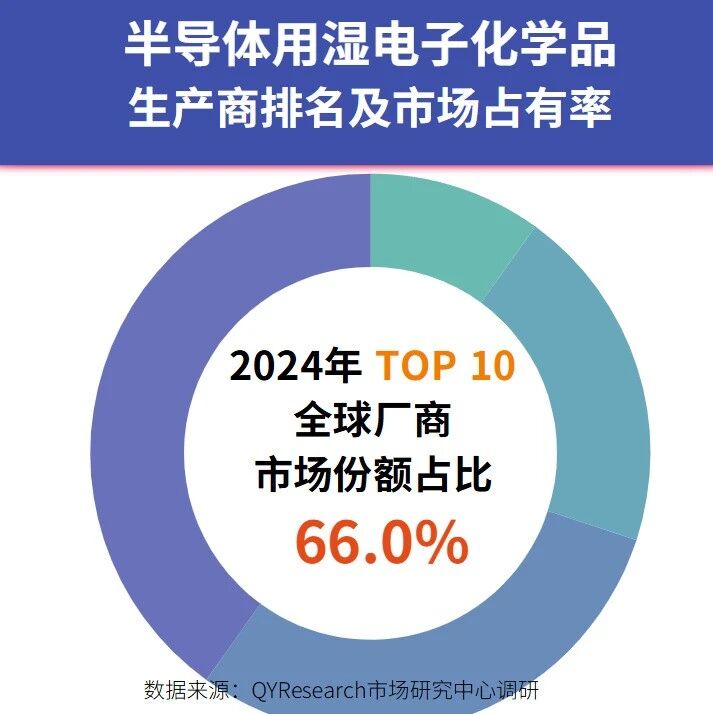
Core Viewpoint - The semiconductor wet electronic chemicals market is projected to reach $2.81 billion by 2031, with a compound annual growth rate (CAGR) of 7.4% in the coming years [2]. Market Overview - The global production of semiconductor wet electronic chemicals is expected to reach 1.2 million tons in 2024, with an average price of $1,300 per ton and a gross margin of approximately 30% [4]. - The top ten manufacturers are estimated to hold about 66.0% of the market share in 2024 [4]. Market Drivers and Opportunities - The rapid growth of the semiconductor industry is a key driver for the wet chemical market, fueled by the increasing demand for high-performance semiconductor chips due to the proliferation of electronic products like smartphones and computers [9]. - Technological advancements and innovations in semiconductor manufacturing processes are critical growth drivers, especially as device sizes shrink below 10 nanometers, necessitating ultra-pure chemicals and specialized formulations [9]. - Government policies supporting the domestic wet chemical industry, such as financial subsidies and tax incentives, positively impact market growth [9]. Market Trends - There is a rising demand for higher purity levels in wet chemicals as semiconductor nodes shrink to 7 nanometers and below, leading to the development of specialized formulations and purification processes [11]. - Approximately 70% of semiconductor manufacturers have adopted advanced cleaning steps using specialized wet chemicals like hydrogen peroxide to ensure the quality and performance of semiconductor chips [11]. - The use of AI-controlled quantitative feeding systems is increasing, with about 45% of semiconductor manufacturers implementing these systems to enhance accuracy and efficiency in chemical feeding [11].
把握科技主线,关注内外需复苏:——高端制造2026年投资策略
EBSCN· 2025-10-29 11:22
Core Viewpoints - In 2026, high-end manufacturing will remain a key focus for the market, with significant breakthroughs expected in humanoid robots, liquid cooling equipment, and solid-state battery equipment industries. The PCB equipment sector is anticipated to see increased demand driven by the growth in AI computing power [3][4]. Group 1: Technology - The humanoid robot industry is expected to achieve mass production breakthroughs in 2026, with a focus on high-complexity dexterous hands, screw rod mass production, and the reducer supply chain [4][21]. - Liquid cooling technology is projected to evolve from single-phase cooling plates to dual-phase and immersion cooling systems, driven by increased chip power density and reduced PUE in data centers [4][49]. - The PCB equipment market is set to benefit from the rising demand for AI-related PCBs, with domestic manufacturers actively expanding their high-end PCB production capacity [4][50]. Group 2: External Demand - The impact of tariffs is expected to stabilize, leading to a recovery in external demand, particularly in tool & OPE and mining machinery exports [4][5]. - The mining equipment sector is highlighted with two main investment lines: the inflation of consumables due to declining copper ore grades and the acceleration of capital expenditures driven by supply gaps [4][5]. Group 3: Internal Demand - The recovery of the manufacturing sector is likely to boost demand for machine tools and automation equipment, with a focus on domestic replacements [4][5]. - The automation upgrade pace among manufacturing enterprises is accelerating, indicating a strong trend towards domestic automation equipment [4][5]. Group 4: Key Company Recommendations - Recommended companies in the humanoid robot sector include Zhaowei Electromechanical, Mingzhi Electric, and others focusing on various components of humanoid robots [4][21]. - In the liquid cooling equipment space, companies such as Invec, Highlan, and others are suggested for investment [4][49]. - For PCB equipment, leading firms like Dazhu Laser and Dongwei Technology are highlighted as key players to watch [4][50][55].
2025年四季度股指期货展望:行情在犹豫中发展
Shan Jin Qi Huo· 2025-10-27 08:11
1. Report Industry Investment Rating No information provided in the document. 2. Core Views of the Report - A long - term bull market started in early 2024, and the current market is in the transition from confidence restoration to the main up - wave or may already be in the main up - wave. In the fourth quarter, there will be a shock adjustment in October, and there is still a possibility of a new medium - level rise at the end of the year [5][7]. - The driving forces of the bull market include the cyclical recovery and improved expectations of the macro - economy, policy support, technological progress, and the shift of asset allocation directions [7]. - The overall index position is not high, but the valuation is relatively high. It is currently on the eve of the main up - wave, and the "Davis double - click" has not started yet. It is speculated that the valuation will increase first, followed by performance improvement [124]. - Index differentiation is obvious. There will be an obvious adjustment in October, and the index will continue to fluctuate upward from November to December, with the center of gravity moving up. The style may change at the end of the year, and the Shanghai Composite 50 will be stronger than the CSI 500 and CSI 1000 index futures. The long - term trend remains unchanged, and there is still hope for an upward movement around the Spring Festival [135]. 3. Summary by Relevant Catalogs 3.1 Why the Current Bull Market Started in Early 2024 - From the definition of trends, the bear - to - bull conversion was completed in February 2024, which is also the case for other indices [10]. 3.2 Driving Forces of the Bull Market 3.2.1 Cyclical Recovery and Improved Expectations of the Macro - Economy - The fundamentals are still not optimistic, facing great pressure. For example, the growth rate of industrial added value has rebounded, but the growth rate of major industrial product output remains low; the growth rate of fixed asset investment continues to decline; the growth rate of total retail sales of consumer goods has declined, and consumer confidence is hovering at a low level; the inflation situation is continuously weak; the unemployment rate has risen seasonally; the manufacturing PMI has been continuously weak; production is strong while demand is weak, and inventories are increasing; the PMI of the construction and service industries is at a low level; the export situation is expected to deteriorate [13][14][19]. - There are also many positive signals. China's share of global exports is increasing, and the new "new three" products (robots, artificial intelligence, and innovative drugs) are emerging. The chip export is increasing year by year, and the chip import - export deficit is gradually shrinking. The production and sales of automobiles have increased, and the export volume has exceeded the sum of Germany and Japan. The production and sales of excavators have improved. The profitability of industrial enterprises above a designated size has improved month - on - month [60][61][65]. 3.2.2 Policy Support - Fiscal policy is loose. The government department's leverage ratio is relatively low and there is still room to increase leverage. Various consumption subsidies are likely to continue in some form, and other measures such as increasing the deficit scale and transfer payment intensity will be implemented [81]. - The Fed's interest rate cut provides room for domestic interest rate cuts. The 7 - day reverse repurchase rate has remained low for a long time, and the capital supply will continue to be loose. The capital interest rate still has room to decline [83][84]. - The stock market's rise can stimulate economic growth, help economic transformation, improve the corporate financing environment, relieve debt pressure, and enhance international competitiveness [88]. 3.2.3 Technological Progress - Technologies such as artificial intelligence and robotics represented by the open - source DeepSeek artificial intelligence large - model and Unitree Technology may be first applied in China. The chip industry chain is the last important short - board before China becomes a technological super - power. Technological progress will bring a bull market [89]. 3.2.4 Shift of Asset Allocation Directions - Overseas funds are flowing in. As the pressure on the US dollar to depreciate increases and the US stock market is at a record high with high correction pressure, overseas investors' expectations for A - shares have improved, resulting in an increase in the surplus of foreign exchange settlement and sales [92]. - Residents are shifting from real estate to the stock market. The demand for "speculating in real estate" temporarily does not exist. The real estate is still in the bottom - building process, and the ratio of the stock market's total market value to residents' deposits is still at a low level, with great room for improvement [101][103]. 3.3 Index Valuation - The overall index position is not high, but the valuation is relatively high. This is mainly because the current macro - economy is still in the bottom - building process, corporate profits are poor, and the valuation is passively pushed up [124]. 3.4 Index Seasonality - Index differentiation is obvious. There is an obvious adjustment in October. From November to December, the index continues to fluctuate upward with the center of gravity moving up. Sometimes, in December, fund position - adjustment may cause the index to fall. At the end of the year, the style may change, and the Shanghai Composite 50 will be stronger than the CSI 500 and CSI 1000 index futures. The long - term trend remains unchanged, and there is still hope for an upward movement around the Spring Festival [135].
一家破200亿,一家超300亿!两家建材企业市值大涨背后的逻辑
Xin Lang Cai Jing· 2025-10-23 03:35
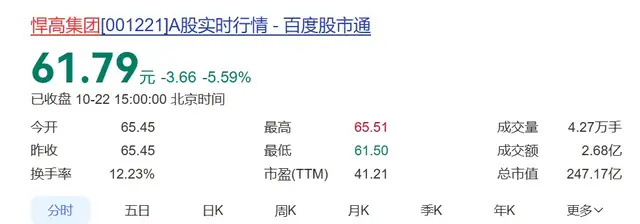
Core Viewpoint - Two notable building material companies listed on the Shenzhen Stock Exchange since 2025, HanGao Group and Marco Polo, have attracted significant attention from the capital market, with both experiencing substantial market capitalization growth post-listing [1][2]. Company Performance - HanGao Group's market capitalization reached over 300 billion on its listing day, later stabilizing at 238.49 billion by August 1, 2025, and exceeding 247 billion by October 22, 2025, with a stock price of over 61 [2][4]. - Marco Polo's stock closed at 31.46, reflecting a 128.80% increase, with a market capitalization of 375.92 billion on October 22, 2025, and a trading volume of 25.82 billion [3][5]. - HanGao Group's revenue from 2022 to 2024 was 16.20 billion, 22.22 billion, and 28.57 billion, with a compound annual growth rate (CAGR) of 32.78%, and net profit of 2.06 billion, 3.33 billion, and 5.31 billion, with a CAGR of 60.74% [6][10]. - Marco Polo's revenue for the same period was approximately 86.6 billion, 89.25 billion, and 73.24 billion, with net profits of 15.14 billion, 13.53 billion, and 13.27 billion [6][7]. Market Dynamics - The building materials and home furnishing sector has faced challenges due to the real estate market, but recent trends such as market upgrades and new housing projects have revived interest [8]. - The industry is characterized by a large scale, providing ample opportunities for companies to grow, especially as smaller competitors exit the market [8][14]. - The market concentration is increasing, benefiting leading companies like HanGao and Marco Polo, which can capture a larger market share [8][13]. Investment Appeal - Newly listed companies often attract investor interest, leading to significant initial stock price increases [12]. - Supportive policies, such as home upgrades and urban renewal initiatives, have bolstered market confidence [13]. - Companies demonstrating continuous high growth and innovative strategies are more likely to attract investor attention [12][14].
中金10月数说资产
中金点睛· 2025-10-20 23:50
Core Viewpoint - The article highlights the weakening of domestic demand and the need for increased policy support as the economy faces growing pressure, with GDP growth falling below 5% for the third quarter [2][3][4]. Economic Performance - In Q3, GDP grew by 4.8% year-on-year, a decline of 0.4 percentage points from Q2, indicating increased economic growth pressure [4][5]. - The contribution of capital formation to GDP growth has decreased, while consumption and net exports have increased their contributions [5][6]. - Investment growth has continued to decline, with fixed asset investment showing a cumulative year-on-year decrease of 0.5% for the first nine months [6][7]. Sector Analysis - Industrial production in September saw a year-on-year increase of 6.5%, supported by external demand, while fixed asset investment has turned negative due to a significant drop in construction and installation projects [6][7]. - The real estate sector continues to show weakness, with new housing sales down by 10.5% year-on-year in September, and development investment declining further [8][26][27]. - Retail sales growth slowed to 3.0% in September, influenced by the tapering of the "old-for-new" policy and a higher base from the previous year [8][29]. Investment Outlook - The article suggests that to achieve the annual GDP growth target of around 5%, there may be a need for more robust growth-stabilizing policies in the coming months [4][5]. - The manufacturing sector's investment growth has declined but remains better than that of real estate and infrastructure, supported by export resilience and policy backing [6][7]. - The financial sector is expected to benefit from higher market activity, with non-financial sectors like gold and technology hardware anticipated to be structural highlights [9][11].

和讯投顾徐梦婧:市场多重积极信号支撑
Sou Hu Cai Jing· 2025-10-19 09:19
Group 1 - Multiple positive signals support the market rebound, with external environment improvements and upcoming domestic policy events providing favorable conditions for recovery [1][2] - The easing of trade tensions, indicated by comments on tariffs, alleviates concerns over US-China trade friction, which had previously suppressed market sentiment [1] - The upcoming important meeting and the drafting of the 15th Five-Year Plan are expected to clarify future industry development directions, potentially stabilizing market expectations for economic growth [1] Group 2 - Technical indicators show a significant low divergence across multiple time frames, suggesting a potential market bottom and increasing the likelihood of a rebound [1] - The market's downward momentum has slowed, with signs of stabilizing investor sentiment and attempts to "bottom fish," particularly in the technology sector [1] - The recommendation for investors is to focus on previously oversold mainstream sectors like technology and new energy, rather than chasing all stocks indiscriminately [2] Group 3 - A combined strategy of index investing and short-term trading for individual stocks is advised, with index ETFs suitable for dollar-cost averaging due to their long-term policy support [2] - Investors should remain cautious of potential "black swan" risks and set stop-loss levels to manage downside exposure effectively [2] - The overall assessment indicates a significant probability of market rebound, particularly in previously oversold sectors, while emphasizing the distinction between a rebound and a trend reversal [2]
外资唱多A股,北向资金持仓市值增超3800亿
21世纪经济报道· 2025-10-16 15:16
Core Viewpoint - Northbound capital has shown a positive trend towards A-shares, with significant increases in holdings and a focus on technology growth and high-dividend assets [1][6][7]. Group 1: Northbound Capital Holdings - As of the end of Q3, Northbound capital held A-shares worth 2.58 trillion yuan, marking an increase of over 380 billion yuan year-to-date, with continuous growth for three consecutive quarters [3][4]. - The top five industries by Northbound capital holdings are: Electric Equipment (443.80 billion yuan), Electronics (391.53 billion yuan), Pharmaceutical Biology (183.94 billion yuan), Banking (173.69 billion yuan), and Food & Beverage (162.31 billion yuan) [3][4]. - In Q3, Northbound capital increased holdings in nine industries, with the Electronics sector seeing the largest increase of 1.82 billion shares, followed by Basic Chemicals (370 million shares) and Automotive (287 million shares) [3][4]. Group 2: Industry Trends and Foreign Investment - Northbound capital reduced holdings in 22 industries, with the largest decreases in Banking (6.97 billion shares), Construction Decoration (2.31 billion shares), and Non-Bank Financials (2.04 billion shares) [4]. - Foreign investment in Chinese stocks has rebounded, with a net inflow of 4.6 billion USD in September, the highest since November 2024, and a total of 18 billion USD net inflow in the first nine months of 2025 [6][7]. - Major global asset management firms have expressed optimism about the A-share market, with Goldman Sachs predicting an 8% potential upside for A-shares over the next 12 months [7][8]. Group 3: Focus on Technology Stocks - The attractiveness of Chinese technology stocks is increasing, with strong fundamentals and favorable management teams noted as key factors [8]. - The Chinese government's macro policies and rapid development in high-tech sectors are boosting market confidence, with AI technology driving traditional manufacturing towards "China R&D" [8]. - Foreign capital is particularly drawn to A-shares due to economic recovery, low valuations, and policy support, indicating a trend of increasing foreign investment in the Chinese stock market [8].