
需求疲软

Search documents
研究所晨会观点精萃-20250828
Dong Hai Qi Huo· 2025-08-28 01:56
Report Industry Investment Rating No relevant content found. Core Viewpoints of the Report - Overseas, the market focuses on upcoming US economic data for policy clues, with concerns about the Fed's independence. The US dollar index and Treasury yields are generally weak, and global risk appetite has increased. Domestically, China's economic data in July slowed down and fell short of expectations. The Ministry of Commerce will introduce policies to expand service consumption in September. The 90 - day extension of the tariff truce between China and the US and increased US easing expectations reduce short - term external risks and strengthen domestic easing expectations. However, short - term market sentiment has cooled, and domestic risk appetite has significantly declined. The market trading logic focuses on domestic incremental stimulus policies and easing expectations, with short - term macro upward drivers strengthening marginally but sentiment weakening. Attention should be paid to the progress of China - US trade negotiations and the implementation of domestic incremental policies [2][3]. - For assets, the stock index has corrected from its short - term high, and short - term cautious observation is recommended. Treasury bonds are oscillating at a high level, and cautious observation is needed. In the commodity sector, black, non - ferrous, energy - chemical, and precious metals are all in short - term oscillations, and cautious observation is advised [2]. Summary by Relevant Catalogs Macro - finance - **Stock Index**: Affected by sectors such as clothing and home textiles, biomedicine, and liquor, the domestic stock market fell sharply. The economic data in July slowed down and missed expectations. The Ministry of Commerce will introduce policies in September. The 90 - day extension of the tariff truce and increased US easing expectations reduce external risks and strengthen domestic easing expectations. However, short - term market sentiment has cooled. The trading logic focuses on domestic policies and easing expectations, with short - term macro upward drivers strengthening but sentiment weakening. Short - term cautious observation is recommended [3]. - **Precious Metals**: Precious metals oscillated narrowly on Wednesday. The market focuses on Friday's PCE data to assess the Fed's policy path. Economists expect a 2.6% increase in PCE in July, the same as in June. After Powell's dovish signal, the market expects a more than 87% probability of a 25 - basis - point rate cut in September. The manufacturing PMI in August reached a new high, but initial jobless claims rose. The increase in key capital goods orders in July exceeded expectations. The rate - cut expectation is further strengthened, providing short - term support for gold, but beware of the Fed's changing attitude [4][5]. Black Metals - **Steel**: On Wednesday, the domestic steel futures and spot markets weakened, with low trading volumes. The stock market correction increased risk - aversion sentiment, dragging down the black sector. Real - world demand continued to weaken, inventories of construction steel and hot - rolled coils increased, and apparent consumption declined. Supply increased slightly. Near the end of the month, there is more pressure for capital repatriation and sales. The steel market is expected to be weak and oscillating in the short term [6]. - **Iron Ore**: On Wednesday, the spot price of iron ore remained flat, and the futures price declined slightly. With high steel mill profits, hot - metal production continued to decline slightly. In the next week, northern regions will have different degrees of production restrictions, and steel mills are cautious in purchasing. Global iron ore shipments and arrivals decreased this week. Mainstream Australian powder resources are stably supplied, but traders are reluctant to sell, and the market is in a wait - and - see state. The port inventory decreased slightly on Monday. Iron ore prices are expected to oscillate within a range in the short term [6]. - **Silicon Manganese/Silicon Iron**: On Wednesday, the spot prices of silicon iron and silicon manganese remained flat, and the futures prices declined slightly. The production of construction steel and hot - rolled coils increased slightly, and the demand for ferroalloys is currently okay. The price of silicon manganese 6517 is 5700 - 5750 yuan/ton in the north and 5770 - 5820 yuan/ton in the south. In the south, production is increasing, but factories are in a wait - and - see state due to the falling futures price. The price of manganese ore is weak. The price of silicon iron in the main production areas is 5350 - 5450 yuan/ton for 72 - grade natural lumps and 5800 - 5900 yuan/ton for 75 - grade. Some silicon - iron enterprises are profitable and have high production enthusiasm. Ferroalloy prices are expected to oscillate within a range in the short term [7][8]. - **Soda Ash**: On Wednesday, the main soda - ash contract oscillated weakly. Last week, production increased due to the return from maintenance. In the new capacity - release cycle, there is supply pressure, and the oversupply pattern remains. New devices will be put into production in the fourth quarter. High supply is the core factor suppressing prices. Demand remained stable week - on - week, and downstream demand support is still weak. Profits decreased week - on - week. Soda ash has a pattern of high supply, high inventory, and weak demand, and the supply - side contradiction is the core factor dragging down prices. The futures price is expected to oscillate within a range in the short term [9]. - **Glass**: On Wednesday, the main glass contract oscillated weakly. Last week, production and the number of operating production lines remained stable. The real - estate industry is still weak, and demand is hard to improve. Downstream deep - processing orders increased in mid - August, and overall demand remained stable. Profits decreased as the glass price fell. With stable supply and limited demand growth, glass prices are expected to oscillate within a range in the short term [9]. Non - ferrous Metals and New Energy - **Copper**: US data shows that core capital goods orders (excluding aircraft and military equipment) increased by 1.1% last month. As factors such as export rush, PV pre - installation, and the marginal effect of trade - in policies decline, domestic demand will weaken marginally, and the strong copper price will not last [11]. - **Aluminum**: On Wednesday, the aluminum price rose and then fell. There was no news for the night - session surge, which was likely driven by the copper price. The aluminum price increase was greater than that of copper, but it fell during the day as commodities weakened. Aluminum's fundamentals changed little, with social inventory increasing by 20,000 tons and a cumulative increase of 170,000 tons. LME aluminum inventory also continued to increase. There is limited medium - term upward space, and it will oscillate in the short term, lacking a strong downward driver but with a weakening rebound foundation [11]. - **Aluminum Alloy**: The supply of scrap aluminum is tight, and recycled aluminum plants face raw - material shortages, with rising production costs. It is still the off - season for demand, and manufacturing orders are growing weakly. Considering cost support, the price is expected to oscillate strongly in the short term, but the upside is limited due to weak demand [11]. - **Tin**: On the supply side, the combined operating rate in Yunnan and Jiangxi increased by 0.41% to 59.64%. The mine supply is currently tight, but the reduction in refined tin production is less than expected. Some enterprises plan to conduct maintenance, and capacity utilization may decline. With the issuance of mining licenses, the mine supply will tend to be loose. African tin imports decreased in July due to transportation and power issues. On the demand side, terminal demand is weak. PV pre - installation has overdrawn future demand, and new PV installations are weakening. The operating rates of PV glass and PV solder strips have declined. Overall, downstream orders are scarce. The price decline has stimulated downstream restocking, and inventory decreased by 802 tons to 9,278 tons, but downstream buyers are still cautious, only making purchases for immediate needs. The price is expected to oscillate in the short term, supported by smelter maintenance and peak - season expectations, but restricted by high - tariff risks,复产 expectations, and weak demand [12]. - **Lithium Carbonate**: On Wednesday, the main lithium - carbonate contract 2511 fell by 0.23%, with a new settlement price of 80,000 yuan/ton and a reduction of 3,104 lots in weighted contracts, and a total position of 757,900 lots. The battery - grade lithium - carbonate price is 79,500 yuan/ton (unchanged), and the industrial - grade is 78,450 yuan/ton (unchanged). The CIF price of Australian lithium spodumene is 920 US dollars/ton (unchanged). The profit from purchasing lithium spodumene for production is 1,988 yuan/ton. After the previous sentiment subsided, it is expected to oscillate widely, with a short - term bearish and long - term bullish outlook [13]. - **Industrial Silicon**: On Wednesday, the main industrial - silicon contract 2511 fell by 1.56%, with a new settlement price of 8,540 yuan/ton, a position of 516,800 lots in weighted contracts, and a reduction of 9,286 lots. The price of East China oxygen - containing 553 is 9,300 yuan/ton (down 50 yuan), and the futures price is at a discount of 775 yuan/ton. The price difference between East China 421 and East China oxygen - containing 553 is 250 yuan/ton. Recently, black metals and polysilicon have weakened, and industrial silicon is expected to oscillate weakly [13]. - **Polysilicon**: On Wednesday, the main polysilicon contract 2511 fell by 4.89%, with a new settlement price of 49,715 yuan/ton, a position of 334,600 lots in weighted contracts, and an increase of 14,137 lots. The price of N - type re -投料 is 49,500 yuan/ton (unchanged), and the P - type cauliflower - like material is 30,500 yuan/ton (unchanged). The price of N - type silicon wafers is 1.24 yuan/piece (unchanged), the M10 single - crystal TOPCon battery is 0.292 yuan/watt (unchanged), and the 210mm N - type module is 0.68 yuan/watt (unchanged). The number of polysilicon warehouse receipts increased to 6,880, reflecting increased hedging pressure. The polysilicon output in August is approaching 130,000 tons, and there is a game between strong expectations and weak reality. It broke through support in the short term, with a bearish direction. Attention should be paid to the spot support below [14]. Energy and Chemicals - **Crude Oil**: US crude and fuel inventories decreased, alleviating concerns about imminent supply over - capacity. Although the absolute price is still in a range, the spread of WTI has widened to the largest in over a week, and Cushing inventory decreased for the first time in 8 weeks, with a national inventory reduction of 2.4 million barrels, exceeding expectations. The US increased tariffs on some Indian goods, but Indian refineries plan to maintain most purchases, so short - term supply concerns are hard to ease, and there is still significant medium - and long - term downward pressure on oil prices [16]. - **Asphalt**: The asphalt price decreased slightly as the market followed the decline of anti - involution leading varieties. The asphalt spot market has slightly recovered, and the decline of the basis has paused. However, social and factory inventories have not significantly decreased, and profits have slightly recovered with a significant increase in production. In the future, crude oil will be affected by OPEC+ production increases and decline. With limited inventory reduction, asphalt is expected to remain in a weak oscillation pattern in the near term [16]. - **PX**: After the price increase due to Zhejiang Petrochemical's maintenance, the tight PX situation will provide obvious support at the bottom. Benefiting from petrochemical capacity adjustment, but with the PX plant load at a medium - low level, it is still in a tight pattern in the short term. The PXN spread is currently 266 US dollars, and the PX overseas price has rebounded to 864 US dollars. It is expected to oscillate in the near term, waiting for changes in PTA plants [16]. - **PTA**: The PTA price decreased with position reduction as the market declined. However, domestic and South Korean petrochemical capacity adjustments have stabilized the energy - chemical sector in the short term. The temporary shutdown of the Huizhou plant due to environmental requirements provides some support, and the basis remains at +30. Downstream production has recovered to 90%, and the restocking pace has accelerated before the peak season. PTA may have a slight inventory reduction in September and is expected to maintain a strong oscillation pattern in the short term [17]. - **Ethylene Glycol**: Ethylene glycol gave back some previous gains and oscillated narrowly in the short term. Port inventory decreased slightly to 500,000 tons. Domestic restrictions on petrochemical capacity and new - project approvals will limit supply. However, the basis has not significantly recovered. The increase in downstream production will support ethylene glycol at the bottom, but the supply pressure is still large after the resumption of synthetic - gas - based plants. It is necessary to wait for verification of peak - season demand. When going long at low prices, attention should be paid to crude - oil cost fluctuations [18]. - **Short - fiber**: The short - fiber price decreased slightly as the sector declined. Terminal orders have seasonally increased, and short - fiber production has slightly rebounded, with limited inventory accumulation. Further inventory reduction depends on the continuous improvement of terminal orders and the resulting increase in production. In the medium term, short - fiber can be short - sold along with the polyester sector [18]. - **Methanol**: The restart of inland plants and concentrated arrivals have pressured the price. As the port price falls, the back - flow window is about to open, providing some support for the spot. MTO plants plan to restart, and the traditional downstream peak season is approaching. The methanol fundamentals show marginal improvement, but the oversupply pattern has not changed, and the price is expected to oscillate [18]. - **PP**: The increase in plant operation and upcoming new capacity have increased supply pressure. Downstream production has slightly increased, and demand is showing signs of recovery. There is significant fundamental pressure, but policy support prevents a deep decline. The 09 contract is expected to oscillate weakly, and the 01 contract should be monitored for peak - season stocking [18]. - **LLDPE**: Supply pressure remains high, and demand is showing a turning point. The "supply - side" speculation provides some price support. The 09 contract is expected to oscillate weakly, and the 01 contract is short - term bearish. Attention should be paid to demand and stocking [19]. Agricultural Products - **US Soybeans**: The November soybean contract on the CBOT closed at 1048.25, down 1.25 or 0.12% (settlement price 1047.50). The weather in the US core soybean - producing areas in August has been favorable, and the overall soybean quality rate remains high. With the increasing likelihood of a US soybean harvest, the futures price is under pressure. Market news indicates that China will send a delegation to the US for trade negotiations this week, boosting US soybean export expectations. Additionally, increased US Treasury bond selling and a weaker US dollar provide some macro - level support for US soybeans [21]. - **Soybean and Rapeseed Meal**: The pressure on domestic oil mills to accumulate soybean and soybean meal inventories has eased. Market news suggests that this week's China - US trade negotiations will focus on soybean purchases, further stabilizing supply expectations. In the third quarter, preventive purchases have ensured sufficient soybean supply, but supply may tighten in the fourth quarter, with stable cost - based support. Rapeseed meal currently has high - inventory circulation pressure, but with low rapeseed inventory and few far - month purchases, there is still potential for price increases. Attention should be paid to the development of China - Canada trade relations [21]. - **Edible Oils**: The port inventory of rapeseed oil is continuously decreasing. With few imported rapeseed purchases and low inventory in China, the supply is expected to contract strongly. The cost expectation of soybean oil has strengthened, and a low - valuation price increase is expected. The palm oil production cycle is in progress, and the supply - demand contradiction is not prominent. There is no short - term incremental consumption expectation from policies, and the bullish market may enter an oscillation phase [21]. - **Corn**: The national corn price is running weakly. The arrival of corn at Shandong deep - processing enterprises increased over the weekend, and enterprise prices were slightly reduced. In September, the pricing weight of new - season corn will increase, and the C2511 contract has entered the price range of last year's opening price, 2100 - 2200 yuan/ton. There is no pressure from a large - scale arrival as in last year, with low carry - over inventory and the risk of excessive rainfall in the main producing areas. Although the planting cost has decreased this year, due to policies to stabilize the prices of important agricultural products and increase farmers' income, it is unlikely to break through last year's price range. The futures price is currently in a relatively undervalued range, and there is no need for excessive pessimism [22]. - **Hogs**: The supply of hogs for slaughter is sufficient, and slaughterhouses have low purchasing pressure. The reduction in supply in some provinces has a limited impact on enterprise purchases, with a slight upward trend. There may be local emotional - driven price increases in the north tomorrow. In the south, demand supports the price, and the market is stable. Currently, secondary fattening is generally cautious, with limited restocking. As a result, the buffer space for large - scale future slaughter is reduced, and market pessimism about the fourth - quarter outlook is increasing [22].
财政扩张与需求疲软双重打压!日本超长债收益率升至数十年高位
智通财经网· 2025-08-21 04:13
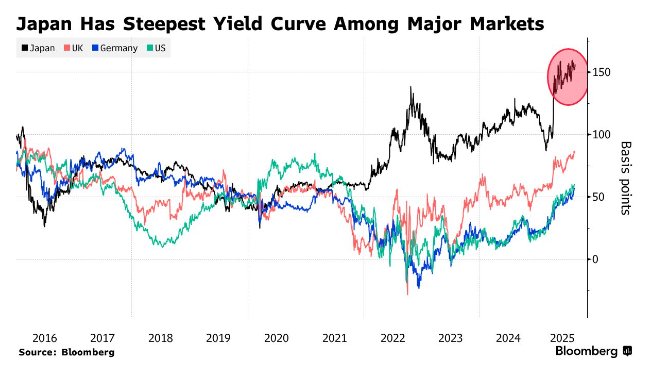
Group 1 - The yield on Japan's 20-year government bonds has risen to 2.655%, the highest level since 1999, while the 30-year bond yield has reached 3.185%, approaching historical highs since its introduction [1][2] - The fluctuations in bond yields are attributed to expectations of increased bond issuance following the ruling coalition's losses in the July Senate elections, exacerbating the pressure on already strained long-term bonds [1] - Ongoing inflation concerns are increasing pressure on ultra-long-term bonds, forcing the Bank of Japan to face greater interest rate hike pressures [1] Group 2 - Investor demand for Japanese government bonds is declining, with net purchases of bonds with maturities over 10 years by foreign investors dropping to 480 billion yen (approximately 3.3 billion USD) in July, only one-third of the June level [2] - The significant decrease in foreign net purchases raises concerns about potential volatility in the long end of the yield curve [2] - Recent increases in open interest in Japanese government bond futures indicate that aggressive traders are increasingly confident that the probability of an interest rate hike in October has shifted from 50% to fully priced in [2]

不锈钢:盘面窄幅震荡 成本支撑需求仍有拖累
Jin Tou Wang· 2025-08-19 02:04
Core Insights - The stainless steel market is experiencing a transition from a consumption off-season to a peak season, with cautious purchasing behavior from downstream buyers [3] - Nickel ore prices remain stable, with mainstream transaction prices for 1.3% nickel ore around CIF 42 and for 1.4% nickel ore around CIF 50 [3] - Domestic stainless steel production is expected to increase in August, with a projected output of 330.41 million tons, a month-on-month increase of 2.29% [1] Pricing and Inventory - As of August 18, the price of 304 cold-rolled stainless steel in Wuxi is 13,150 yuan/ton, up 50 yuan/ton from the previous day, while in Foshan it remains stable at 13,050 yuan/ton [1] - Social inventory of 300 series stainless steel in Wuxi and Foshan is 49.65 million tons, a week-on-week decrease of 0.5 million tons [2] Supply and Demand Dynamics - The overall profit margins for steel mills have improved, leading to increased production motivation, which may exert pressure on supply in August [3] - Despite seasonal and policy improvements in demand expectations, the actual terminal demand remains weak, with traditional downstream sectors showing sluggish demand [3] - The chromium iron price is expected to remain strong due to cost support from chromium ore [1][3]
国内基本面宽松 棕榈油期货价格或继续承压运行
Jin Tou Wang· 2025-08-17 23:46
Core Viewpoint - Palm oil futures have shown a significant increase in price and trading volume, indicating a bullish trend in the market despite underlying supply and demand challenges [1][2][3] Market Performance - As of August 11, 2025, palm oil futures closed at 9460 yuan/ton, with a weekly increase of 4.97% [1] - The trading volume increased by 175,121 contracts compared to the previous week [1] - The weekly trading range was between 8914 yuan/ton and 9536 yuan/ton [1] Import and Cost Analysis - The CNF price for 24-degree palm oil for September-October shipments rose by 30 to 49 USD/ton, reaching 1118 USD/ton and 1105 USD/ton respectively [2] - The landed cost in South China increased by 260 to 430 yuan/ton, amounting to 9580 yuan/ton and 9450 yuan/ton [2] - India's palm oil imports in July were 855,695 tons, down from 955,683 tons in June [2] Supply and Demand Insights - Malaysia is entering a seasonal production increase, with expectations of the highest inventory levels in nearly two years [3] - Domestic consumption in China remains weak, with low port inventories and a declining spot basis [3] - Competition from alternative oils, particularly soybean oil, is exerting downward pressure on palm oil prices [3] Technical Analysis and Future Outlook - The market is currently in an overbought condition, suggesting limited short-term upward momentum [3] - If supply continues to increase without a corresponding improvement in demand, palm oil futures may face further downward pressure [3] - The domestic oilseed supply remains stable, with a neutral outlook for palm oil prices in the near term [3]
基金研究周报:美欧股市回暖,全球大宗分化(8.11-8.15)
Wind万得· 2025-08-16 22:33
Market Overview - The A-share market showed a clear correction trend from August 11 to August 15, with the ChiNext Index rising the most at 8.58%, and the ChiNext 50 increasing by 9.90, indicating continued attractiveness in the growth sector after a short-term adjustment [2] - The major indices performed as follows: the Shanghai Composite Index rose by 1.70%, briefly surpassing the 3700-point mark, while the Wind first-level average increase was 2.03% with 89% of the Wind 100 concept index recording gains [2] - Sector performance was mixed, with telecommunications, electronics, and non-bank financials performing well, increasing by 7.66%, 7.02%, and 6.48% respectively, while textiles, steel, and banking sectors weakened, declining by 1.37%, 2.04%, and 3.19% respectively [2] Fund Issuance - A total of 23 funds were issued last week, including 14 equity funds, 6 mixed funds, and 3 bond funds, with a total issuance of 9.946 billion units [16] Fund Performance - The Wind All Fund Index rose by 1.83% last week, with the ordinary equity fund index increasing by 3.82% and the mixed equity fund index rising by 3.85% [8] - The bond fund index saw a slight decline of 0.02%, indicating a challenging environment for fixed-income investments [8] Global Asset Review - Global asset performance showed divergence, with developed markets like the US maintaining upward momentum supported by resilient tech earnings and policy expectations, while emerging markets displayed greater elasticity, particularly in Vietnam and Russia [4] - The energy sector experienced increased volatility, with oil and gas prices affected by supply-demand rebalancing and geopolitical risks, while metal prices remained resilient due to new energy demand and supply disruptions [4] Domestic Bond Market Review - The national bond futures index (CFFEX 10-year) fell by 0.29%, and the 30-year national bond futures main contract dropped by 1.48%, indicating significant downward pressure on long-term interest rates [12]

全球苯酚和丙酮市场下半年看跌
Zhong Guo Hua Gong Bao· 2025-08-15 04:20
Group 1 - The global phenol and acetone market is facing dual pressures of weak demand and oversupply, with participants pessimistic about recovery prospects until the second half of 2025 [2] - In Europe, market participants have little hope for demand recovery for the remainder of the year due to oversupply, with Orlen's decision to halt production unlikely to alleviate the situation [2] - European phenol and acetone prices have remained weak, with July 29 assessments showing acetone at €600 per ton (down 33.3% since January) and phenol at €771 per ton (down 26% since January) [2] Group 2 - In the U.S., market participants expect stability in phenol and acetone markets by year-end, but low housing starts and renovation projects due to inflationary pressures will suppress demand [3] - U.S. acetone demand has stagnated since 2023, with expectations of continued weakness until 2025, and the market may face oversupply requiring increased exports [3] - As of July 22, U.S. Gulf acetone was priced at $992 per ton (down 4% since January) and phenol at $1,046 per ton (down 8% since January) [3] Group 3 - Asia is expected to continue increasing production capacity, with supply to India rising in the second half of the year, despite slow growth in solvent demand [4] - Indian phenol prices have dropped to near two-year lows, and acetone prices have reached 31-month lows due to increased supply from Asian suppliers [4] - The Asian phenol market may experience intensified oversupply due to seasonal weakening and ongoing capacity expansion, with producers facing further margin pressure [4]
因美国需求疲软,德国第二季经济萎缩0.1%
news flash· 2025-07-30 08:47
Core Viewpoint - The German economy contracted by 0.1% in the second quarter, contrasting with a 0.4% growth in the first quarter, primarily due to weakened demand from the United States [1] Economic Performance - The contraction in the second quarter is attributed to a slowdown in U.S. demand, which previously led to increased imports of German goods as importers anticipated higher tariffs [1] - Investment in Germany saw a decline in the second quarter, while consumption and government spending increased compared to the previous three months [1]
加拿大央行调查:因竞争压力和需求疲软,许多企业正承担关税成本。
news flash· 2025-07-21 14:34
Core Insights - The Bank of Canada has conducted a survey indicating that many businesses are absorbing tariff costs due to competitive pressures and weak demand [1] Group 1: Economic Impact - Businesses are facing increased costs from tariffs, which they are unable to pass on to consumers due to competitive market conditions [1] - The survey highlights a significant concern among companies regarding the impact of tariffs on their profitability and pricing strategies [1] Group 2: Industry Response - Companies are adapting to the current economic environment by finding ways to manage and mitigate the financial burden of tariffs [1] - The findings suggest a potential shift in business strategies as firms navigate the challenges posed by both tariffs and subdued demand [1]
联合航空首席执行官:不确定性导致2025年前五个月需求疲软。
news flash· 2025-07-17 14:40
Core Viewpoint - The CEO of United Airlines indicated that uncertainty is leading to weak demand in the first five months of 2025 [1] Group 1 - The airline industry is experiencing a decline in demand due to various uncertainties affecting consumer confidence [1] - United Airlines is closely monitoring market conditions to adapt its strategies accordingly [1] - The CEO emphasized the importance of understanding these uncertainties to navigate the upcoming challenges [1]
【期货热点追踪】特朗普对俄下最后通牒!获利了结叠加对需求疲软的担忧导致马棕油结束二连涨,这一关键支撑能否守住?
news flash· 2025-07-15 03:43
Core Viewpoint - The article discusses the impact of Trump's ultimatum to Russia on palm oil prices, highlighting concerns over demand weakness and profit-taking that led to the end of a two-day price increase for palm oil [1] Group 1: Market Reactions - Trump's ultimatum to Russia has created uncertainty in the market, influencing investor sentiment and trading behavior [1] - Profit-taking activities have been observed, contributing to the decline in palm oil prices after a brief rally [1] Group 2: Demand Concerns - There are growing worries about weak demand for palm oil, which may affect future price stability [1] - The ability of palm oil to maintain key support levels is in question due to these demand concerns [1]