
中特估

Search documents
交易型指数基金资金流向周报-20250529
Great Wall Securities· 2025-05-29 11:45
Group 1: Report Information - Report Title: Transactional Index Fund Capital Flow Weekly Report [1] - Data Date: May 19 - May 23, 2025 [1] - Analyst: Jin Ling [1] - Report Date: May 29, 2025 [1] Group 2: Domestic Passive Stock Funds - **Comprehensive Category**: - Funds like Shanghai Composite 50 had a scale of 159.456 billion yuan, a weekly decline of 0.09%, and a net capital outflow of 912 million yuan; CSI 300 had a scale of 983.449 billion yuan, a decline of 0.04%, and an outflow of 2.504 billion yuan; CSI 500 had a scale of 140.12 billion yuan, a decline of 0.81%, and an outflow of 624 million yuan; CSI 1000 had a scale of 116.917 billion yuan, a decline of 1.09%, and an outflow of 1.163 billion yuan; ChiNext Index had a scale of 126.448 billion yuan, a decline of 0.79%, and an outflow of 1.876 billion yuan; STAR Market and ChiNext 50 had a scale of 32.965 billion yuan, a decline of 0.94%, and an outflow of 59 million yuan; STAR 50 had a scale of 181.221 billion yuan, a decline of 1.28%, and an inflow of 1.227 billion yuan; STAR 100 had a scale of 25.701 billion yuan, a decline of 1.28%, and an inflow of 237 million yuan; STAR 200 had a scale of 547 million yuan, a decline of 1.31%, and no net inflow; A50 had a scale of 36.101 billion yuan, an increase of 0.24%, and an outflow of 741 million yuan; A500 had a scale of 198.099 billion yuan, a decline of 0.10%, and an outflow of 4.363 billion yuan; Hang Seng Index had a scale of 6.723 billion yuan, an increase of 0.38%, and an inflow of 14 million yuan; Hang Seng China Enterprises Index had a scale of 915 million yuan, an increase of 0.71%, and an outflow of 1 million yuan; Others had a scale of 129.449 billion yuan, a decline of 0.20%, and an outflow of 1.715 billion yuan [4]. - **Industry - Theme Category**: - Big Technology funds had a scale of 216.688 billion yuan, a decline of 1.56%, and an outflow of 375 million yuan; Big Finance had a scale of 128.483 billion yuan, a decline of 1.15%, and an inflow of 1.136 billion yuan; Big Health had a scale of 100.161 billion yuan, an increase of 2.41%, and an outflow of 4.06 billion yuan; Big Manufacturing had a scale of 72.818 billion yuan, a decline of 1.03%, and an inflow of 2.928 billion yuan; Big Consumption had a scale of 56.089 billion yuan, a decline of 0.09%, and an outflow of 45.5 million yuan; Big Cycle had a scale of 21.416 billion yuan, an increase of 0.35%, and an inflow of 137 million yuan; Public Utilities had a scale of 6.614 billion yuan, a decline of 0.05%, and an outflow of 6.5 million yuan; Carbon Neutrality had a scale of 13.051 billion yuan, an increase of 0.21%, and an outflow of 9.8 million yuan; State - owned Enterprise Reform had a scale of 61 million yuan, a decline of 0.68%, and no net inflow; Others had a scale of 74.2 million yuan, an increase of 0.24%, and an outflow of 200,000 yuan [4]. - **Style - Strategy Category**: - Dividend funds had a scale of 59.877 billion yuan, an increase of 0.90%, and an outflow of 56.9 million yuan; Growth had a scale of 7.306 billion yuan, a decline of 0.48%, and an inflow of 1.1 million yuan; Value had a scale of 3.308 billion yuan, an increase of 0.18%, and an outflow of 300,000 yuan; Dividend Low - Volatility had a scale of 43.535 billion yuan, an increase of 0.59%, and an inflow of 52.9 million yuan; Quality had a scale of 1.332 billion yuan, an increase of 0.27%, and an outflow of 30,000 yuan; Low - Volatility had a scale of 25.5 million yuan, a decline of 0.27%, and no net inflow; Others had a scale of 11.1 million yuan, a decline of 0.14%, and no net inflow [4]. - **Enterprise - Nature and Region Category**: - China Special Valuation had a scale of 51.633 billion yuan, an increase of 0.20%, and an outflow of 78.3 million yuan; Regional funds had a scale of 4.342 billion yuan, a decline of 0.07%, and an outflow of 300,000 yuan [4]. Group 3: Overseas - Related Funds - **Comprehensive Category**: - Nasdaq 100 had a scale of 78.421 billion yuan, a decline of 1.22%, and an outflow of 994 million yuan; S&P 500 had a scale of 20.837 billion yuan, a decline of 0.92%, and an outflow of 60 million yuan; Dow Jones had a scale of 1.708 billion yuan, a decline of 1.18%, and an outflow of 60 million yuan; German DAX had a scale of 975 million yuan, an increase of 1.19%, and an inflow of 44 million yuan; French CAC40 had a scale of 601 million yuan, an increase of 1.14%, and no net inflow; Nikkei 225 had a scale of 3.611 billion yuan, a decline of 0.41%, and an outflow of 8.2 million yuan; Tokyo Stock Price Index had a scale of 771 million yuan, an increase of 0.69%, and an outflow of 5.6 million yuan; Saudi Arabia had a scale of 540 million yuan, a decline of 1.86%, and an inflow of 6.2 million yuan; Hang Seng Index had a scale of 19.174 billion yuan, an increase of 0.45%, and an outflow of 7.7 million yuan; Hang Seng China Enterprises Index had a scale of 12.002 billion yuan, an increase of 0.54%, and an outflow of 6.9 million yuan; Others had a scale of 3.713 billion yuan, an increase of 0.10%, and an outflow of 11.5 million yuan [5]. - **Industry - Theme Category**: - Hong Kong Stock Technology had a scale of 92.609 billion yuan, a decline of 1.18%, and an outflow of 3.8 million yuan; Chinese Internet had a scale of 45.35 billion yuan, a decline of 1.13%, and an outflow of 25.4 million yuan; Hong Kong Stock Medical had a scale of 27.231 billion yuan, an increase of 5.49%, and an outflow of 239 million yuan; Hong Kong Stock Consumption had a scale of 968 million yuan, an increase of 0.04%, and an outflow of 9.8 million yuan; Others had a scale of 16.931 billion yuan, a decline of 0.95%, and an inflow of 6.2 million yuan [5]. - **Style - Strategy Category**: - Dividend had a scale of 1.269 billion yuan, an increase of 2.40%, and an inflow of 10.9 million yuan; Dividend Low - Volatility had a scale of 77.7 million yuan, an increase of 0.95%, and an inflow of 1.8 million yuan [5]. Group 4: Bond and Commodity Funds - **Bond Funds**: - **Interest - Rate Bonds**: 30 - year bonds had a scale of 8.969 billion yuan, an increase of 0.28%, and an inflow of 821 million yuan; 10 - year bonds had a scale of 4.09 billion yuan, an increase of 0.16%, and an inflow of 113 million yuan; 5 - 10 - year bonds had a scale of 38.952 billion yuan, an increase of 0.18%, and an inflow of 365 million yuan; 5 - year bonds had a scale of 6.948 billion yuan, an increase of 0.09%, and an inflow of 66 million yuan; Bonds under 5 - year had a scale of 22.725 billion yuan, an increase of 0.02%, and an outflow of 195 million yuan; Others had a scale of 371 million yuan, an increase of 0.10%, and an outflow of 2.8 million yuan [6]. - **Credit Bonds**: Medium - to - high - grade bonds had a scale of 10.916 billion yuan, an increase of 0.12%, and an inflow of 893 million yuan; Urban Investment Bonds had a scale of 13.817 billion yuan, an increase of 0.18%, and an inflow of 328 million yuan; Short - term Commercial Papers had a scale of 29.341 billion yuan, an increase of 0.03%, and an inflow of 1.707 billion yuan [6]. - **Convertible Bonds**: Had a scale of 43.859 billion yuan, an increase of 0.07%, and an outflow of 688 million yuan [6]. - **Commodity Funds**: - Gold had a scale of 70.887 billion yuan, an increase of 3.78%, and an outflow of 563 million yuan; Soybean Meal had a scale of 4.193 billion yuan, an increase of 0.84%, and an inflow of 11 million yuan; Non - ferrous Metals had a scale of 745 million yuan, a decline of 0.36%, and an inflow of 1.5 million yuan; Energy and Chemicals had a scale of 293 million yuan, a decline of 1.75%, and an outflow of 3 million yuan [6]. Group 5: Index - Enhanced Funds - Index - enhanced funds related to Shanghai Composite 50 had a scale of 76 million yuan, a decline of 0.38%, and no net inflow; CSI 300 had a scale of 3.209 billion yuan, an increase of 0.13%, and an outflow of 1.5 million yuan; CSI 500 had a scale of 1.978 billion yuan, a decline of 0.50%, and an outflow of 500,000 yuan; CSI 1000 had a scale of 656 million yuan, a decline of 0.97%, and an outflow of 70,000 yuan; ChiNext Index had a scale of 469 million yuan, a decline of 0.92%, and an outflow of 50,000 yuan; STAR Market and ChiNext 50 had a scale of 62 million yuan, a decline of 1.38%, and no net inflow; STAR 50 had a scale of 935 million yuan, a decline of 1.63%, and an inflow of 1.5 million yuan; STAR 100 had a scale of 317 million yuan, a decline of 1.49%, and an inflow of 10,000 yuan; Others had a scale of 194 million yuan, a decline of 0.70%, and an outflow of 90,000 yuan [6]

再上新台阶!公募规模首破33万亿元,股票基金规模同比领涨
Bei Jing Shang Bao· 2025-05-28 11:45
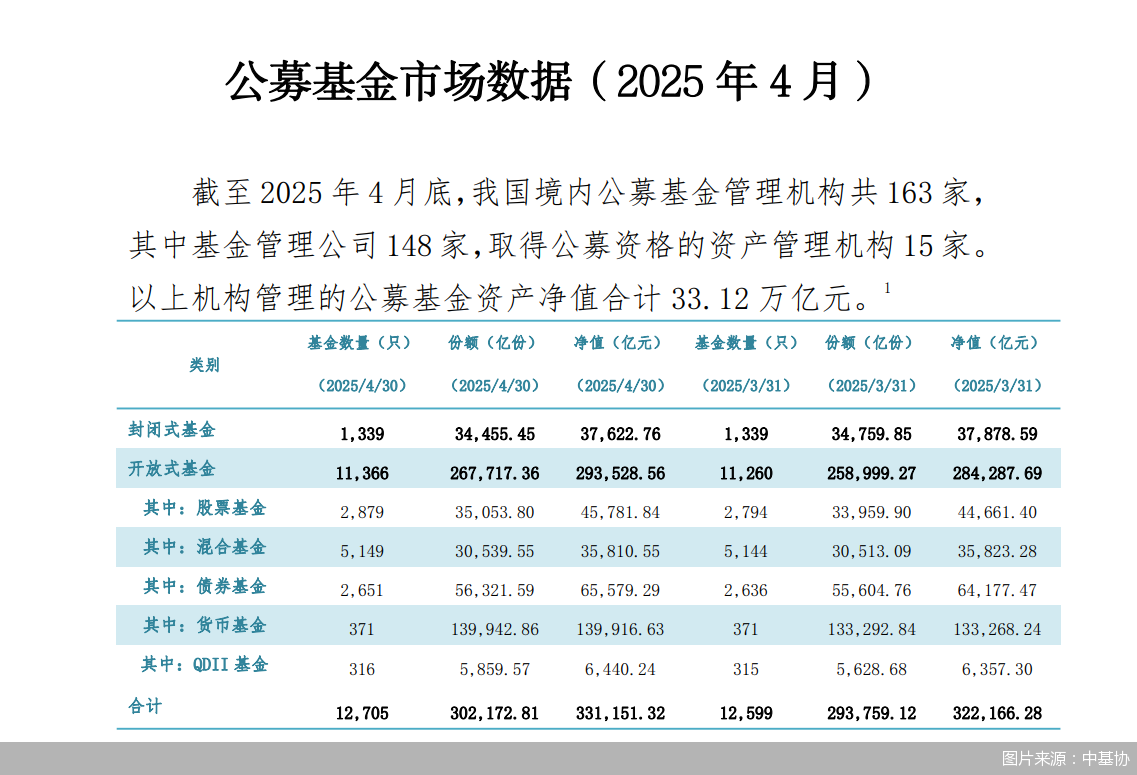
北京商报讯(记者 李海媛)公募规模再创新高!5月27日,中基协公布的数据显示,截至2025年4月末,公募基金规模达33.12万亿元,这也是公募规模首次 突破33万亿元关口。回顾2024年同期,公募基金规模首次突破30万亿元。换句话说,时隔仅一年,公募基金已连下3个万亿级关口。对比去年同期数据看, 除混合基金外,其余各类基金的规模同比均有所增长。有业内人士指出,在中国经济高质量发展的背景下,预计公募基金规模还将稳定地持续增长。 在前海开源基金首席经济学家杨德龙看来,4月股票市场表现一般,在此背景下,投资者购买货币基金的需求较大。 | 以上机构管理的公募基金资产净值合计 33.12 万亿元。 | | --- | | 类别 | 基金数量(只) | 份额(亿份) | 净值(亿元) | 基金数量(只) | 份额(亿份) | 净值(亿元) | | --- | --- | --- | --- | --- | --- | --- | | | (2025/4/30) | (2025/4/30) | (2025/4/30) | (2025/3/31) | (2025/3/31) | (2025/3/31) | | 封闭式基金 | ...

人民币升值,A股却现调整?
Mei Ri Jing Ji Xin Wen· 2025-05-27 00:57
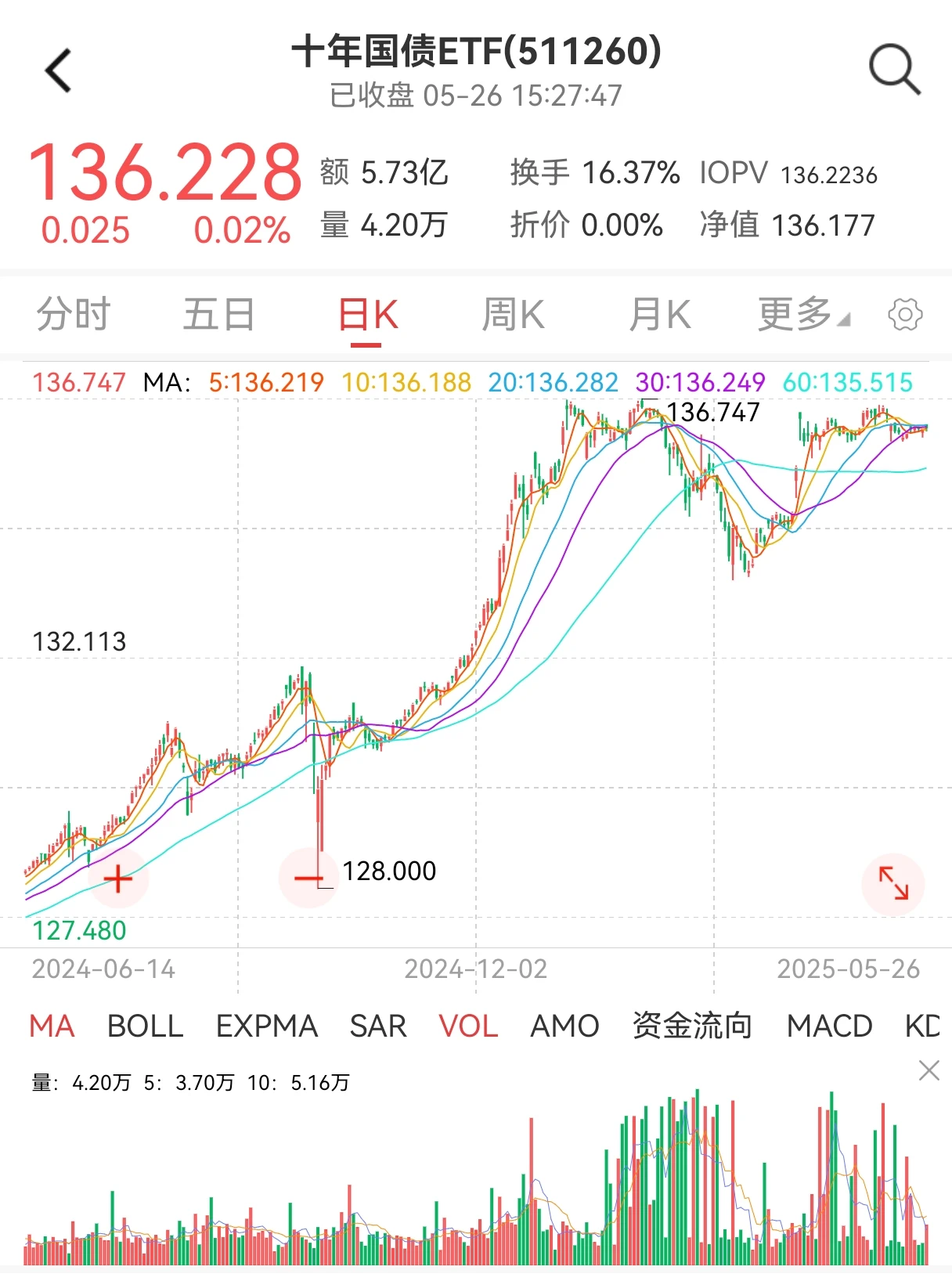
Market Overview - On May 26, the A-share market experienced a slight decline, with the Shanghai Composite Index down 0.05% to 3346.84 points, the Shenzhen Component Index down 0.41%, and the ChiNext Index down 0.8%. The total trading volume was 1.01 trillion yuan, showing a slight decrease compared to the previous trading day [1] - The pharmaceutical and automotive sectors adjusted, while the controllable nuclear fusion concept led the gains [1] Policy Developments - The "Opinions on Improving the Modern Enterprise System with Chinese Characteristics" was released, proposing improvements to the income distribution system of enterprises, promoting a reasonable wage growth mechanism, and establishing a scientific salary and performance evaluation system for senior management. It encourages listed companies to implement long-term incentives and stable cash dividend policies, which are expected to enhance investment returns and make A-share valuations more attractive in the long run [1] International Trade Relations - On May 25, former President Trump agreed to extend the deadline for tariff negotiations with the EU to July 9, indicating a desire to maintain negotiation space and avoid escalating trade tensions. This news boosted market sentiment, with a weaker dollar providing effective support for Asia-Pacific assets, although the fluctuating tariff situation may still disrupt global capital markets [1] Investment Strategies - During the current trade conflict, the resilience of the RMB reflects improved export competitiveness and diversification, suggesting that investors may consider strategies like regular investment or grid trading to capitalize on lower prices. Suggested investment vehicles include the CSI A500 ETF (159338) and the Shanghai Composite Index ETF (510760) [2] - Following the LPR reduction on May 20, long-term interest rates have continued to rise, with the 10-year government bond yield approaching 1.7%. The bond market is under pressure due to the peak issuance of special government bonds and positive impacts from US-China trade negotiations. The outlook suggests that a more relaxed exchange rate could further open monetary policy space, with a continued focus on long-duration strategies [2] Dividend Policies - Recent policies encouraging listed companies to distribute dividends are seen as beneficial for state-owned enterprises, helping to stabilize dividend expectations and enhance investor returns. This aligns with the "China Special Valuation" initiative aimed at value reconstruction. Investors may consider the monthly dividend-paying National Enterprise ETF (510720) and the cash flow ETF (159399), which has outperformed major indices over the past nine years [5]
两办发文推动公司发展,“中特估”+“科特估”估值有望持续修复
Xuan Gu Bao· 2025-05-26 23:34
Group 1 - The central government aims to establish a modern enterprise system suitable for China's conditions within approximately five years, emphasizing the integrity obligations of controlling shareholders and encouraging the introduction of institutional investors with over 5% shareholding as active shareholders in listed companies [1] - The State-owned Assets Supervision and Administration Commission (SASAC) previously proposed incorporating market value management into the performance assessment of central enterprise leaders, leading to a significant increase in the market value of state-owned enterprises [1] - Central enterprises are crucial in key industries such as finance, electronics, biomedicine, power equipment, national defense, and public utilities, and their performance is closely correlated with major stock indices [1] Group 2 - The "Kotevaluation" concept focuses on strategic emerging industries and advanced technologies that can transform into future industries, emphasizing high innovation, low valuation, and international competitiveness, particularly in critical areas like semiconductors and biotechnology [2] - China National Chemical Equipment Corporation focuses on chemical equipment and rubber machinery as a central enterprise [3] - CITIC Heavy Industries is a leading company in mining machinery and is developing special robots as a second growth curve [4]
【客车5月月报】4月行业整体偏淡,出口同比稳步提升
东吴汽车黄细里团队· 2025-05-26 13:02
Group 1 - The core viewpoint of the article is that the bus industry represents China's automotive manufacturing sector becoming a global leader in technology output, with overseas market contributions expected to recreate a market equivalent to China in the next 3-5 years [2][7]. - Supporting factors include favorable national policies aligning with the "Belt and Road" initiative, advanced technology and product quality of Chinese buses, and the end of domestic price wars leading to a resurgence in demand [2][7]. - The article suggests that the current bus industry cycle is driven by the absence of price wars domestically, an oligopolistic market structure, and higher profit margins in overseas markets compared to domestic ones [3][11]. Group 2 - The article outlines a small target of challenging the market value peak from 2015-2017 and a larger goal of establishing a new ceiling for the industry, marking the emergence of a true global bus leader [4][11]. - Investment recommendations include Yutong Bus as a "model student" with high growth and dividend attributes, and King Long as a rapidly improving company with significant profit elasticity [5][9]. - Profit forecasts for Yutong Bus from 2025 to 2027 are projected at 46.3 billion, 55.5 billion, and 67.5 billion yuan, with year-on-year growth rates of 12%, 20%, and 22% respectively [5][9]. For King Long, the expected profits are 4.4 billion, 6.4 billion, and 8.3 billion yuan, with growth rates of 182%, 45%, and 28% respectively [5][9]. Group 3 - The April report indicates a decline in overall bus production and wholesale volume, with a slight increase in exports [12][14]. - The wholesale volume for April was 45,000 units, showing a year-on-year decrease of 0.6% and a month-on-month decrease of 16.1% [14][15]. - The report highlights that the domestic market for buses is stabilizing, with Yutong and King Long maintaining significant market shares in both domestic and export markets [48][54].


ETF日报:本轮贸易冲突期间,人民币显示出的韧性,反映了中国出口竞争力的提升与多元化,可关注中证A500ETF
Xin Lang Ji Jin· 2025-05-26 11:56
Market Overview - A-shares experienced a slight decline with the Shanghai Composite Index down 0.05% to 3346.84 points, the Shenzhen Component Index down 0.41%, and the ChiNext Index down 0.8%. The total trading volume was 1.01 trillion, showing a slight decrease from the previous trading day [1] - The medical and automotive sectors adjusted, while the controllable nuclear fusion concept led the gains [1] Policy Developments - The Central Committee and the State Council issued an opinion on improving the modern enterprise system with a focus on enhancing income distribution systems and establishing reasonable salary growth mechanisms for enterprises. This is expected to improve investment returns and make A-share valuations more attractive in the long term [1] International Trade Relations - U.S. President Trump agreed to extend the tariff negotiation deadline with the EU to July 9, indicating a desire to maintain negotiation space and avoid escalating trade tensions. The total trade between the EU and the U.S. exceeds $1.1 trillion, highlighting their significant economic partnership [1] - The temporary pause in the U.S.-EU tariff conflict has boosted market sentiment, although the fluctuating tariff situation may still disrupt global capital markets [1] Investment Strategies - Investors are encouraged to consider systematic investment plans and grid trading strategies to capitalize on market dips, with a focus on broad-based ETFs such as the CSI A500 ETF and the Shanghai Composite Index ETF [2] - The bond market is under pressure following the recent LPR reduction, with long-term interest rates rising. The 10-year government bond yield is approaching 1.7%, presenting good allocation value [2] Sector Performance - The telecommunications ETF and semiconductor equipment ETF saw gains of 0.83% and 1.1%, respectively. AI companies are accelerating the rollout of new models and applications, with significant capital expenditures reported by major firms [6][7] - Domestic tech giants are also increasing capital expenditures, with Alibaba and Tencent reporting substantial year-on-year growth in their CAPEX, indicating a strong commitment to advancing their cloud and AI capabilities [7] Investment Opportunities - The cash flow ETF is highlighted as a potential investment option, with its index outperforming other indices over the past nine years. This ETF aims to meet investors' cash flow needs while providing investment returns [5] - The current policies encouraging dividend distributions among listed companies are seen as beneficial for state-owned enterprises, enhancing investor returns and supporting valuation recovery [4]
客车5月月报:4月行业整体偏淡,出口同比稳步提升-20250526
Soochow Securities· 2025-05-26 02:53
Investment Rating - The report recommends a "Buy" rating for the bus sector, specifically favoring Yutong and King Long [3][4]. Core Insights - The driving factors for the current bus cycle indicate that the bus industry represents China's automotive manufacturing sector becoming a global leader in technology output. The overseas market is expected to contribute significantly to the bus industry, potentially creating a market equivalent to China within 3-5 years [2]. - The report highlights that the domestic price war has ended, which will not hinder growth but rather resonate positively with the market. The recovery in tourism and the demand for bus updates are expected to return to 2019 levels [2]. Summary by Sections Industry Overview - In April 2025, the overall production of the bus industry in China was 45,000 units, with year-on-year and month-on-month changes of -0% and -10% respectively. The wholesale volume for April was also 45,000 units, showing a year-on-year decrease of 0.6% and a month-on-month decrease of 16.1% [9][10]. - The report notes that the sales of large and medium buses increased year-on-year, while export volumes also saw a rise [9]. Company Performance - Yutong is characterized as a "model student" with high growth and high dividend attributes, with projected net profits of 4.63 billion, 5.55 billion, and 6.75 billion yuan for 2025-2027, reflecting year-on-year growth of 12%, 20%, and 22% respectively [4]. - King Long is noted for its rapid progress, with projected net profits of 440 million, 640 million, and 830 million yuan for the same period, indicating substantial year-on-year growth of 182%, 45%, and 28% respectively [4]. Export Dynamics - In April 2025, the export of large and medium buses reached 4,128 units, showing a year-on-year increase of 4% but a month-on-month decrease of 18% [45]. - The report indicates that the export market is concentrated among leading companies, with Yutong and King Long holding significant market shares in both bus types [54].
利率下破1%,“财富搬家”该往哪里去?
Mei Ri Jing Ji Xin Wen· 2025-05-21 01:36
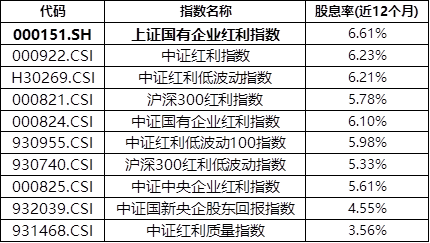
每经编辑|叶峰 降息降准落地,一年期定期存款利率下破1%。低利率背景下,"财富搬家"该往哪里去? 红利类高股息资产或为较好选择。 1、股息率高,显著高于银行存款 以上证国企红利指数为例,截至5月19日,股息率超6%,显著高于当前银行存款利率。另外,红利资产具备"类固收"属性,定期支付股息,收益相对稳定。 2、红利避险属性突出,市场下行期表现占优 市场震荡调整期,红利风格往往占优。以上证国有企业红利指数为例,在2021/12/10-2024/9/23的市场调整期,二级市场涨幅为20.63%,明显优于同期的沪 深300(-36.74%)、上证指数(-25.16%)的回报水平。 从指数过往表现来看,在"红利"+"中特估"的双重增益加持下,上证国企红利指数的市场表现明显占优。截至一季度末,上证国企红利指数近三年涨幅为 13.63%,同期中证红利指数涨3.12%,上证综指涨2.12%,沪深300下跌8.62%。 | 日期/指数(2 | 上证国企红利e | 中证红利( | 上证综指( | 沪深 300-7 | | --- | --- | --- | --- | --- | | 近三年4 | 13.63% | 3.12%< ...
两会“爆款”主题面面观,兼论深海科技与具身智能(人形机器人)的投资前景
Huafu Securities· 2025-05-19 14:06
Group 1 - The report emphasizes that the investment themes from the Two Sessions are not just one-time opportunities but have long-term implications for industry development and sustained excess returns [2][20]. - Short-term characteristics highlight that low valuation themes are more likely to experience valuation increases shortly after the Two Sessions [3][26]. - The correlation between market capitalization distribution and cumulative excess returns weakens over time, indicating that smaller market cap stocks (<100 billion) tend to outperform in the short term [3][30]. Group 2 - Cumulative excess returns and performance growth are significant in the long term, with themes often generating excess returns over a 360-day period post-Two Sessions [4][36]. - Historical analysis shows that only a few years (2017, 2019, 2023) underperformed, suggesting the importance of new proposals in the government work report [4][36]. - The average cumulative excess returns may not be realized in the same year as the Two Sessions, indicating a longer-term guidance effect [4][38]. Group 3 - Seasonal timing indicates that the best periods for investing in Two Sessions themes are February-March and October [5][55]. - The report suggests that themes failing to pass the first-quarter report test may see their momentum stall in spring [5][56]. Group 4 - The evolution of "blockbuster" themes shows a clear pattern: national policy setting, local follow-up, highlighting key enterprises/events, expanding networks, and standardized industry development [6][10]. - Common characteristics of successful themes include alignment with current trends, broad market potential, high recognizability, and performance support [6][10]. - Themes first introduced in the Two Sessions tend to have better long-term excess returns [6][12]. Group 5 - The report identifies investment opportunities in 2025, particularly in deep-sea technology and embodied intelligence (humanoid robots) [7][18]. - Deep-sea technology is positioned as a strategic area with strong performance support, while humanoid robots are seen as potential blockbuster themes due to their alignment with market trends [7][18]. - The report suggests that deep-sea technology has already shown significant gains since the Two Sessions, with a maximum increase of 16.91% and an excess return of 18.16% relative to the Wind All A index [12][16].
引战增资一周年,山高新能源(1250.HK)谱写可持续发展新篇章
Ge Long Hui· 2025-05-16 01:26
Core Viewpoint - The article highlights the transformation and growth of Shandong High New Energy (山高新能源) after the introduction of Shandong High Holdings as a controlling shareholder, emphasizing its commitment to clean energy and sustainable development [1][3]. Group 1: Company Transformation and Market Performance - After the introduction of a state-owned enterprise as a major shareholder, Shandong High New Energy has successfully completed a transformation, showcasing a strong fundamental and long-term development potential [3]. - The company's stock price has seen significant growth, rising from a low of HKD 0.042 in September 2022 to a high of HKD 0.085 in March 2023, nearly doubling in value [4]. - On May 12, the company announced a share consolidation plan, proposing a "50-for-1" share consolidation to align with market standards and reduce trading costs for investors, which is expected to enhance its capital market image [4]. Group 2: ESG and Sustainable Development - Shandong High New Energy is a leading player in the clean energy sector, operating 53 centralized solar power stations, over 200 distributed solar power stations, and 13 wind power stations, providing clean heating for approximately 230,000 households [8]. - The company has consistently disclosed ESG reports for seven years, demonstrating its commitment to sustainable operations and stakeholder communication [8]. - In 2022, the company’s renewable energy projects generated approximately 6.08 million megawatt-hours of electricity, saving over 1.8 million tons of standard coal and reducing carbon dioxide emissions by over 5 million tons [8]. Group 3: Recent Performance and Industry Outlook - In the first quarter of the year, Shandong High New Energy achieved a record high in electricity generation, with a total output of approximately 1.337 billion kWh, a year-on-year increase of 27.9% [12]. - The company’s centralized solar power stations generated 684 million kWh, up 14.7% year-on-year, while wind power stations saw a significant increase of 56.5% in generation [12]. - The national push for green energy transition and the inclusion of the company in major indices like the Hang Seng Composite Index are expected to enhance stock liquidity and benefit from the recovery in the photovoltaic sector [14].
