全球化

Search documents
古越龙山:一坛黄酒酿造产业复兴之道
Shang Hai Zheng Quan Bao· 2025-12-02 09:27
Core Viewpoint - The company Gu Yue Long Shan is committed to the revival of Huangjiu (yellow wine) as both a cultural heritage and a business, focusing on high-end, youthful, global, and digital strategies to expand the market and promote Huangjiu culture [2][6]. Group 1: Business Strategy - Gu Yue Long Shan views its competition not as other Huangjiu brands but as a challenge to promote the category and culture of Huangjiu to a broader audience [2]. - The company has seen significant growth in new business formats, with a 22.64% year-on-year increase in new business sales and a 15.31% increase in online sales [2]. - The introduction of innovative products, such as the "Wu Gao Di" targeting younger consumers, has resulted in over 330,000 bottles sold in its first year, with more than 70% of orders coming from the younger demographic [6]. Group 2: Technological Innovation - Gu Yue Long Shan is investing in smart manufacturing, with a 22 billion yuan project set to be completed by the end of 2024, which will enhance automation and efficiency in production [3]. - The company has maintained the largest capacity for hand-crafted Huangjiu production while addressing challenges such as high costs and low efficiency through technological upgrades [3][4]. - Research and development expenditures reached 17.46 million yuan in the first half of the year, marking a 33.61% increase year-on-year, reflecting the company's commitment to innovation [4]. Group 3: Market Expansion - The company has opened 66 tasting and slow wine bars across the country, with revenue from markets outside Jiangsu, Zhejiang, and Shanghai reaching 40.74% in 2024 [7]. - Gu Yue Long Shan is actively expanding its market presence through initiatives like "Bai Cheng Gong Pin," aiming to enhance brand visibility and consumer engagement nationwide [8]. - The company is also exploring cross-industry collaborations, such as a partnership with China Resources Beer to create a new product that combines Huangjiu and beer [6]. Group 4: Cultural Significance - Gu Yue Long Shan emphasizes the cultural heritage of Huangjiu, viewing it as a living cultural legacy and a historical narrative rather than just a commodity [8]. - The company has a significant inventory of over 11 million jars, approximately 260,000 tons of original wine, which it considers a valuable asset [8]. - The company aims to contribute to the broader Huangjiu industry, with a goal of achieving 10 billion yuan in annual sales by 2027 and capturing over 50% of the national market share [8].


中金 | 股市长牛之中国道路:向新而生
中金点睛· 2025-12-01 23:51
Group 1: Core Views - The article discusses the favorable factors for the Chinese stock market from both the asset and funding sides, emphasizing the importance of stable profit growth and elevated valuation levels during economic transformation and upgrading [3][4]. - Historical experiences from developed countries indicate that a stable profit growth rate and rising valuation levels can sustain a long-term bull market, even when economic growth rates decline [6][10]. Group 2: Transformation and Growth - Since the "924" event last year, the A-share market has diverged from the economic fundamentals, with A-shares rising over 50% while domestic demand remains under pressure [6]. - The current financial cycle's downward trend is expected to enhance overall efficiency in the Chinese economy, transitioning from a focus on real estate to innovation and technology [18][21]. Group 3: High-Quality Global Expansion - China is actively expanding through trade and investment, with high-tech and high-growth companies increasingly exposed to overseas markets, leading to better revenue growth and profitability compared to traditional sectors [28][30]. - The share of overseas revenue for specialized and innovative companies is projected to rise significantly, indicating a shift towards global market engagement [32][33]. Group 4: Corporate Governance Improvement - Recent policies aimed at improving corporate governance are expected to enhance transparency and shareholder returns, transitioning the capital market towards a balance between financing and investment [45]. - The contribution of dividends to total returns in the A-share market has been relatively low, but recent reforms are likely to improve this situation, with dividend rates increasing from 35% in 2020 to nearly 45% [49][51]. Group 5: Long-Term Capital Inflows - Stable inflows of long-term capital, particularly from insurance and pension funds, are anticipated to support a structural bull market in A-shares [56][59]. - Global capital rebalancing is expected to attract more foreign investment into the Chinese market, which has been undervalued in recent years [60][62].

研报掘金丨国海证券:维持柳工“买入”评级,装载机+挖掘机比翼双飞
Ge Long Hui· 2025-12-01 07:36
Core Viewpoint - LiuGong's excavators and loaders are positioned to benefit from market recovery, with a focus on electrification and globalization as key growth strategies [1] Group 1: Product Performance - LiuGong's two main products, excavators and loaders, are expected to significantly benefit from the market recovery [1] - The electric loader is anticipated to continue building a competitive advantage for the company [1] Group 2: Strategic Goals - LiuGong has set a target to achieve an operating revenue of 60 billion yuan by 2030, with international revenue accounting for over 60% [1] - The company aims to maintain a net profit margin of no less than 8% as part of its "15th Five-Year Plan" [1] Group 3: Investment Outlook - The analysis suggests that LiuGong's product advantages and overseas expansion strategy are likely to help achieve the goals outlined in the "15th Five-Year Plan" [1] - The firm maintains a "buy" rating for LiuGong based on these factors [1]

老字号舆论生态与品牌建设专题交流在京举行
Ren Min Wang· 2025-12-01 03:51
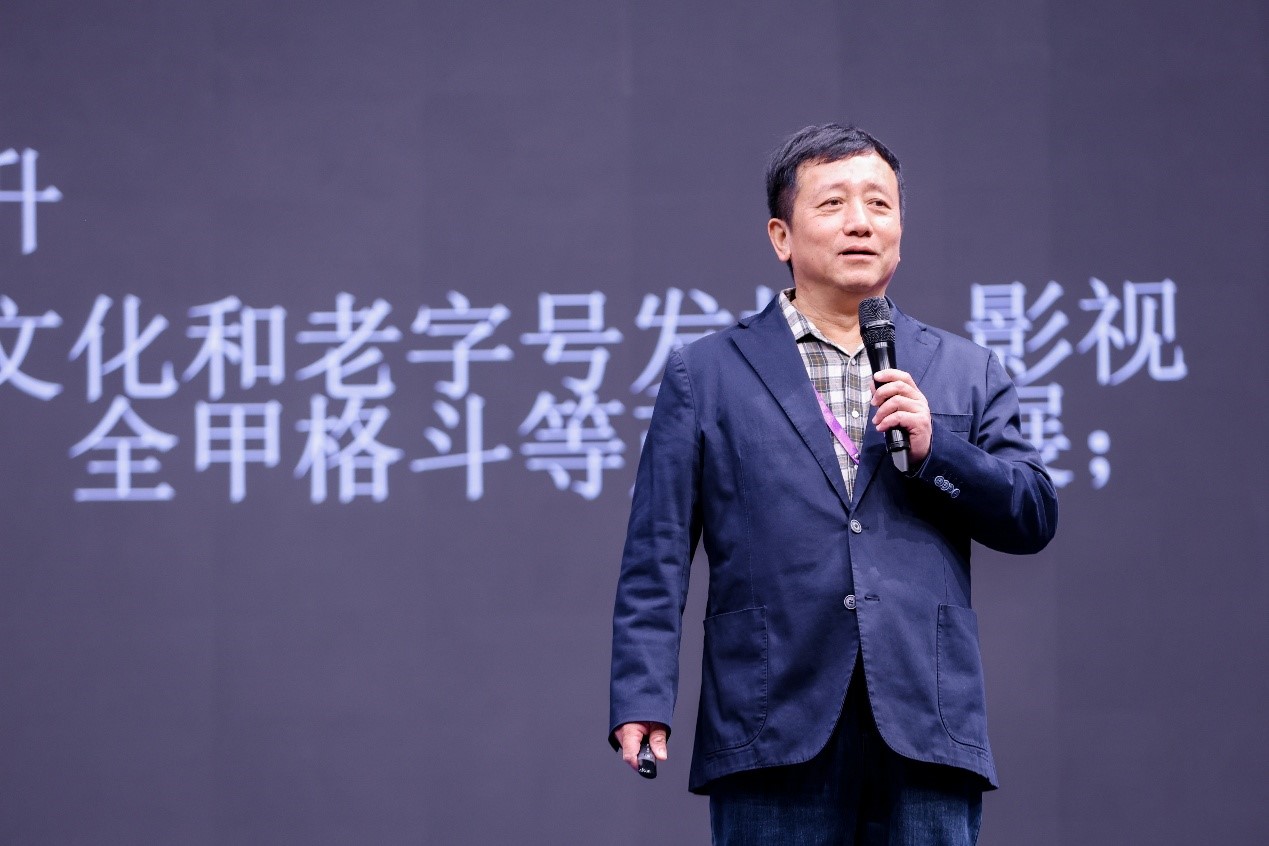
Core Insights - The event "Old Brand Public Opinion Ecology and Brand Building Special Exchange" focuses on the development opportunities and challenges of traditional Chinese brands in the new era, aiming to explore the consumption potential of national goods represented by old brands and cultivate new growth points in consumption [1][3]. Group 1: Brand Development and Innovation - The event is part of the "2025 National Consumption Conference" and emphasizes the importance of integrating traditional elements with modern communication methods to enhance brand innovation and value [1][4]. - Mei Xinyu, a researcher from the Ministry of Commerce, highlighted that old brands represent traditional Chinese culture and lifestyles, gaining global recognition and becoming a consumer trend, which necessitates continuous innovation for sustained vitality [3][4]. - Zhang Jingyun, a professor at Beijing Technology and Business University, discussed five key points for old brands to transition to brand-oriented operations, including strategic transformation, system design, market expansion, mergers and acquisitions, and creating new experiences [4][6]. Group 2: Brand Reconstruction and Market Strategy - Zhu Minggang, Deputy General Manager of People Online, released a report emphasizing that the reconstruction of old brands should follow a three-layer logic: cultural depth, technological leadership, and experiential reconstruction, aiming for a sustainable economic value and cultural representation [8][9]. - The Shandong Provincial Old Brand Enterprise Association has established mechanisms to support the globalization of old brands, including overseas diagnosis and service platforms [10]. - Various industry leaders discussed the importance of innovation in meeting new consumer demands, with strategies such as optimizing service models, enhancing product quality, and embracing new marketing approaches to maintain competitiveness [12][13].
特讯!最近的世界格局在发生变化,两个超级大国,到底在争什么?引发全球关注
Sou Hu Cai Jing· 2025-12-01 03:44
Group 1: Core Economic Competition - The ongoing economic tug-of-war between China and the U.S. is fundamentally about global dominance, particularly in trade, technology, and finance [1] - The U.S. aims to reduce reliance on China by relocating supply chains, which is framed as "de-risking," but is essentially about maintaining control over global industry [3] - Despite pressures, both countries are unlikely to fully decouple; trade volumes are expected to continue rising in 2024, indicating interdependence [3] Group 2: Technological Rivalry - The U.S. has intensified efforts to restrict China's high-tech industries, particularly in semiconductors and AI, through various legislative measures [5] - China is significantly increasing its R&D spending, projected to reach 3.61 trillion yuan in 2024, with a focus on overcoming key technological challenges [5][8] - Both nations recognize that technology is a critical battleground for future dominance, making it unlikely for either side to concede easily [5] Group 3: Financial Dynamics - The U.S. is using interest rate hikes and balance sheet reductions to maintain the dollar's dominance and attract global capital, while also exerting financial pressure on other nations [5] - China is gradually promoting the internationalization of the yuan and maintaining a stable monetary policy to mitigate financial risks and external shocks [5] - Both countries are strategically maneuvering to increase their shares in the global financial system, as finance is essential for modern economies [5] Group 4: Evolving Trade Relations - The previous economic relationship, once a stabilizing force, has transformed into a battleground with increasing friction, yet both countries remain interdependent [7] - The U.S. attempts to use tariffs and supply chain shifts to pressure China, but alternatives like Vietnam and India lack the capacity to fully replace China [7] - China is focusing on internal improvements, such as expanding domestic demand and reforming income distribution to drive economic growth [7] Group 5: Future Outlook - The competition between the two nations is expected to be a long-term struggle, with both sides seeking a balance rather than a definitive victory [9][11] - Ongoing dialogues and negotiations indicate a pragmatic approach, as neither side wants to push the other to a breaking point [11] - The competition reflects structural tensions between a dominant power and an emerging one, with internal governance and strategic stability being crucial for long-term success [11]

中金公司-宏观探市:股市长牛之中国道路:向新而生-18页
中金· 2025-12-01 03:18
Investment Rating - The report suggests a bullish outlook for the Chinese stock market, indicating potential for a long-term bull market driven by structural factors in both the asset and funding sides [2][3][8]. Core Insights - The report emphasizes that the long-term bull market in the Chinese stock market requires a combination of asset-side and funding-side factors, with globalization enhancing both aspects [3][18]. - It highlights that despite a decline in economic growth rates, stable profit growth and elevated valuation levels can sustain a bull market, drawing parallels with historical experiences from developed countries [15][22]. - The report identifies key drivers for the A-share market's upward momentum, including growth potential, high-quality overseas expansion, and improvements in corporate governance [4][5][6][7]. Summary by Sections Growth Potential - The report discusses the transition towards a more efficient economy, driven by innovation and research, as the financial cycle shifts downwards [4][24]. - It notes that China's R&D expenditure as a percentage of GDP has reached 2.6%, aligning with developed countries, and highlights the increasing complexity of the economy [25][30]. High-Quality Overseas Expansion - The report states that China is actively expanding through trade and investment, with high-tech and high-growth companies increasingly exposed to international markets [5][33]. - It mentions that the share of overseas revenue for specialized and innovative companies has risen significantly, indicating a shift towards global markets [35][39]. Corporate Governance Improvements - The report outlines various policies aimed at enhancing corporate governance, increasing transparency, and encouraging dividend payouts, which are expected to improve overall market returns [6][43]. - It highlights that the contribution of dividends to total returns in the A-share market has been low but is improving due to recent reforms [48][49]. Global Long-Term Funding - The report emphasizes the importance of stable long-term funding, particularly from insurance and pension funds, in supporting the bull market [7][57]. - It notes that global capital rebalancing may lead to increased foreign investment in the Chinese market, enhancing liquidity and valuation [61][63].

武汉民营经济崛起,从政策土壤到市场蓝海的跃迁之路
3 6 Ke· 2025-12-01 02:06
Core Insights - The central theme emphasizes the strong support from the national level for private enterprises, reinforcing the idea that they are considered "one of their own" by the government [1] - The transformation of macro-level confidence into visible urban vitality in Wuhan is highlighted, showcasing various events and initiatives that reflect economic activity and innovation [1][2] - The significant growth of private enterprises in Wuhan, with over 115 million private companies contributing to the city's economic landscape, is underscored [2] Economic Performance - Wuhan's GDP reached 15,537.82 billion yuan in the first three quarters of 2025, marking a 5.6% year-on-year increase [2] - The private economy's added value surpassed 1 trillion yuan in 2024, indicating a historic milestone [2] - In 2025, Wuhan saw the establishment of 182,000 new private enterprises, the highest growth rate among sub-provincial cities in China [2] Structural Changes - The data reflects not just economic recovery but also a profound structural transformation within Wuhan's economy [2] - Emerging industries such as industrial robots and optoelectronic information experienced growth rates exceeding 70% [2] Government Initiatives - The Wuhan government is shifting from a traditional management role to a more efficient service-oriented approach, facilitating business operations [5][6] - Reforms such as "certificate separation" and "one-stop service" have streamlined processes for business registration, significantly reducing time and costs [6] Business Environment - The establishment of fair rules and trust is crucial for a healthy business environment, with initiatives like "double random, one public" regulation minimizing human intervention [7] - The government adopts a flexible enforcement philosophy, encouraging innovation and allowing for trial and error in business operations [7] Private Sector Growth - By mid-2025, the total number of private enterprises in Wuhan exceeded 1.15 million, making it the fifth sub-provincial city in China to surpass one million [8] - A diverse ecosystem of private enterprises is emerging, ranging from traditional giants to innovative "hidden champions" and "unicorns" [8][9][10] Globalization of Enterprises - Wuhan's private enterprises are evolving from merely exporting products to integrating technology, models, and supply chains on a global scale [11] - Companies like Jianyi Technology and Jiachen Electronics are successfully entering international markets with innovative products and collaborative research [11][12] Urban and Enterprise Synergy - The relationship between the city and enterprises is characterized by mutual growth, with private enterprises contributing significantly to local tax revenue and employment [13][14] - The supportive environment provided by the city fosters innovation and risk-taking among businesses, leading to a vibrant economic landscape [14]



中国公司全球化周报|滴滴国际业务已覆盖拉美、亚太、非洲的14个国家和地区/菜鸟中非跨境小包专线覆盖非洲8国
3 6 Ke· 2025-11-30 17:28
Key Points - 36Kr will cover the global stories of Chinese brands at CES 2026, following their previous coverage at IFA and GITEX GLOBAL in 2025 [2] - Didi's international business has expanded to 14 countries and regions across Latin America, Asia-Pacific, and Africa, with a 13.8% year-on-year increase in core platform order volume [3] - WeRide and Uber have launched L4 level fully autonomous Robotaxi commercial operations in Abu Dhabi, marking the first such operation in the Middle East [4] - Cainiao has launched a cross-border small package service covering eight African countries, with plans to expand to South Africa and Egypt by the end of December [4] - Temu has partnered with Royal Mail to enhance its local fulfillment system in the UK, adding over 24,000 parcel drop-off points [4] - JD FinTech has partnered with Banking Circle to provide cross-border financial services for global enterprises, facilitating multi-currency accounts and payment solutions [5] - J&T Express has implemented an AI sorting system in Thailand, doubling efficiency and achieving over 99% accuracy [5] - Dianping has expanded its services to over 1,000 cities worldwide, focusing on destinations popular among Chinese tourists [6] - The tea brand Jasmine Milk Tea has opened two stores in Jakarta, Indonesia, and four stores in the US, expanding its global presence [7] - Leapmotor has officially entered the South American market with launches in Brazil and Chile, planning to establish 36 outlets in Brazil by 2025 [7] - Aito has launched its Aito 11 model in Brazil, collaborating with CAOA Group for market entry and sales support [7] - EVE Energy has signed a three-year memorandum for a 1.48GWh energy storage project in Northern Europe, with the first batch of orders to be shipped in December [8] - Tencent's Hunyuan 3D engine has launched an international version, allowing global users to create high-quality 3D works [8] - Das Intellitech has established its MENA headquarters in Doha, aiming to enhance cooperation with local SMEs and support Qatar's innovation goals [8] - Hypershell has completed $70 million in financing, expanding its consumer-grade exoskeleton products to over 70 countries [9] - Bixing Coffee has raised several million yuan in B round financing to expand its presence in Italy, Japan, and Indonesia [10] - Lingxin Smart Hand has completed A+ round financing, with monthly orders exceeding 1,000 units [10] - Ruiyun Cold Chain has raised nearly 100 million yuan in A+ round financing to enhance its digital capabilities and international expansion [10] - WoFei ChangKong has completed C round financing to integrate eVTOL into the global low-altitude transportation system [11] - Bain predicts that global humanoid robot sales could exceed 10 million units by 2035, with a market size reaching $260 billion [12] - Beijing is supporting humanoid robot companies to expand internationally and enhance global collaboration [12]


美国中产阶级的萎缩
Sou Hu Cai Jing· 2025-11-30 16:28
Core Insights - The middle class in the United States is facing a silent crisis of decline, not just a slow erosion, as evidenced by the widening gap between official poverty lines and actual living costs [1][3][12] Economic Context - Since the 1980s, economic policies have shifted, leading to a significant decline in labor income's share of GDP, from approximately 64% in 1980 to an estimated 56% by 2025 [4][9] - The federal debt as a percentage of GDP has surged from 32% in 1980 to a projected 123% in 2025, partly due to tax cuts that expanded deficits [4][9] Poverty Line Discrepancies - The official poverty line for a family of four is set at $31,200 in 2025, while the actual survival cost is estimated to be around $136,000, creating a cognitive gap of nearly $100,000 [3][11] - A report suggests that the real poverty line should be approximately $166,400, indicating that over 70% of American households earn below this threshold [3][11] Changing Expenditure Patterns - Essential expenses such as housing, healthcare, and childcare now account for nearly 60% of family budgets, a significant increase from one-third in 1963 [2][6] - The median home price in 2025 is projected to be $416,900, which is five times the median household income of $83,150, far exceeding historical averages [6][7] Income and Wealth Inequality - The top 1% of wealth holders are projected to control 31% of GDP by 2025, a significant increase from 8% in 1964, highlighting growing inequality [8][9] - The median net worth for middle-class families is only $192,900, compared to $3 million for the top 10% [8] Future Projections - The Congressional Budget Office (CBO) predicts that by 2030, the middle-class contraction will worsen, with poverty rates potentially reaching 75% when recalibrated [11][12] - Structural reforms are necessary to address the middle-class crisis, including redefining the poverty line, reforming tax policies, and investing in vocational education [12]
周观点 | 长安汽车投资设立机器人公司 关注机器人板块【国联民生汽车 崔琰团队】
汽车琰究· 2025-11-30 06:45
Market Performance - The A-share automotive sector rose by 3.6% from November 24 to November 30, outperforming the CSI 300 index, which increased by 0.9% [2] - Sub-sectors such as automotive parts, motorcycles, automotive services, passenger cars, commercial passenger vehicles, and commercial freight vehicles saw increases of 4.0%, 4.0%, 3.4%, 3.3%, 3.2%, and 1.4% respectively [2] Investment Recommendations - Recommended core stocks include Geely Automobile, Xpeng Motors, BYD, Xiaomi Group, Li Auto, Bertel, Top Group, Xinquan Co., Hu Guang Co., and Chunfeng Power [3][12] - In the passenger car segment, focus on quality autonomous brands that are accelerating in intelligence and globalization [16] - For automotive parts, recommended stocks include Bertel, Horizon Robotics, and Kobot, with a focus on the new forces in the industry chain [19] Company Developments - Changan Automobile announced plans to invest 225 million yuan to establish a robotics company, holding a 50% stake, while its subsidiary Changan Technology will invest 45 million yuan for a 10% stake [4] - Avita Technology submitted an IPO application to the Hong Kong Stock Exchange, reporting a revenue of 12.21 billion yuan for the first half of 2025, a year-on-year increase of 98.5% [5][14] Policy Impact - The Chinese government is extending the "old-for-new" vehicle replacement policy, which includes subsidies for scrapping vehicles that meet certain emission standards [15][30] - The subsidy for scrapping and replacing eligible vehicles is set at an average of 80,000 yuan for scrapped vehicles and 35,000 yuan for new purchases without scrapping [30] Industry Trends - The demand for high-performance computing driven by AI is expected to boost the liquid cooling market, projected to grow at a CAGR of 27.6% from 2024 to 2030, reaching a market size of 21.3 billion USD [24] - The motorcycle market is experiencing growth in the large-displacement segment, with sales of motorcycles over 250cc reaching 61,000 units in October 2025, a year-on-year decrease of 0.2% [27][29] Competitive Landscape - The tire industry is witnessing a recovery in demand, with the operating rate for passenger car tires at 70.05% and truck tires at 62.25% as of November 22, 2025 [33] - The heavy truck market is expected to benefit from the expanded subsidy policy, with sales in October 2025 reaching approximately 93,000 units, a year-on-year increase of about 40% [30][31]