
新消费

Search documents
宗庆后弟弟所创品牌“娃小智”董事长首次直播露面,称买30万元货送SUV
Sou Hu Cai Jing· 2025-10-22 04:18
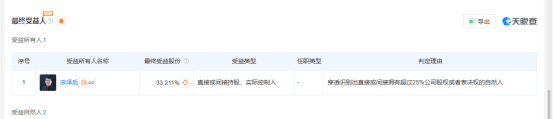
Group 1 - The chairman of Wazhi, Wu Jian, made his first live appearance on October 21, expressing hopes for the growth of both Wazhi and Wahaha, emphasizing service to consumers and distributors [1] - Wazhi has a low threshold for its recruitment policy, requiring no agency or franchise fees, and offers incentives such as a free SUV for bulk purchases [1] - Wazhi has already secured 300 counties for its operations [1] Group 2 - Wazhi is a new brand launched by the Zongsheng Group, led by Zong Qinghou's brother, Zong Zehou [2] - Wazhi Food (Hangzhou) Co., Ltd. was established in January 2025, with Wu Jian as the legal representative, and is primarily engaged in wholesale [2] - Zong Zehou is the actual controller of Wazhi Food [2] Group 3 - Wazhi aims to fundamentally reconstruct its business model based on new consumption, focusing on brand core, product innovation, and market promotion [3] - A national recruitment meeting was held on October 10, where purchasing over 100,000 yuan of Wazhi products grants exclusive distribution rights in the region [3] - Wu Jian is also the legal representative of several companies within the Zongsheng Group, including Guizhou Wamei Liquor Group and Hangzhou Zongsheng Commercial Development [3] Group 4 - Guizhou Wamei Liquor Group, established in June 2023 with a registered capital of 10 million yuan, holds a 40% stake in Wazhi Food [3] Group 5 - Zong Fuli resigned from her position as chairman of Wahaha Group on September 12, following the necessary procedures through the group’s shareholders and board of directors [5]

买30万元货送SUV,娃小智董事长首次直播露面
Sou Hu Cai Jing· 2025-10-22 03:31
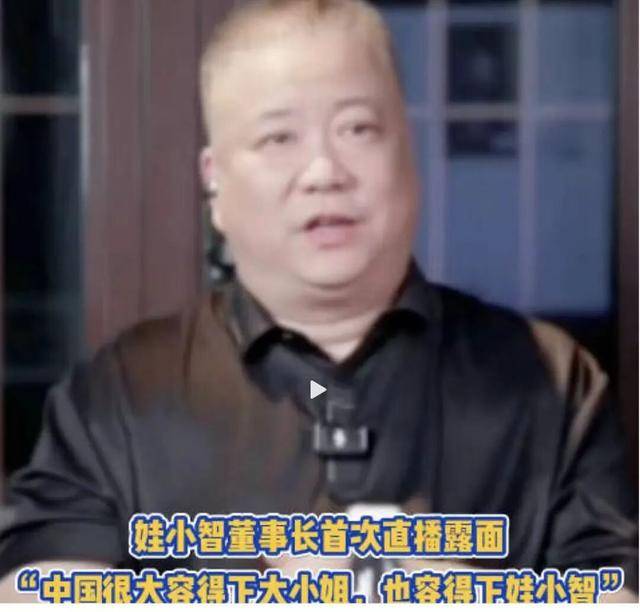
Core Insights - The chairman of Wa Xiaozhi, Wu Jian, made his first live appearance, expressing hopes for the growth of both Wa Xiaozhi and its sister brand, Wa Xiaozong, emphasizing the importance of serving consumers and distributors [1] - Wa Xiaozhi has set low entry barriers for its distributors, requiring no agency or franchise fees, and offering incentives such as a free SUV for those who make a prepayment of 300,000 yuan [1] - The company has already secured 300 counties for its operations [1] Company Background - Wa Xiaozhi is a new brand launched by the Zongsheng Group, led by Zong Qinghou's brother, Zong Zehou, focusing on new consumption trends and systematic restructuring of brand, product innovation, and market promotion [3] - The brand was registered on September 23, 2025, and is operated by Wa Xiaozhi Food (Hangzhou) Co., Ltd., which was previously named Nutrient Delivery (Hangzhou) Food Co., Ltd. [4] - The actual controller of Wa Xiaozhi is Zong Zehou, who holds a 33.211% stake through Guizhou Wamei Liquor Group Co., Ltd. [4] Competitive Landscape - The announcement of Wa Xiaozhi's new brand comes in contrast to the launch of Wa Xiaozong by Zong Qinghou's daughter, Zong Furui, who resigned from her positions at Wahaha Group on September 12, 2025 [4] - Wa Xiaozong's official Weibo account was certified on September 30, 2025, but has not yet posted any content [4]
娃小智董事长首次直播露面,称买30万元货送SUV
Xin Lang Cai Jing· 2025-10-22 02:15
Core Viewpoint - The launch of the new brand "娃小智" by the company led by宗泽后, aims to innovate and restructure the traditional beverage market, contrasting with the existing "娃小宗" brand under宗馥莉 [3][4]. Group 1: Company Overview - "娃小智" is a new brand launched by宗盛系, led by宗泽后, the brother of娃哈哈's founder宗庆后 [3]. - The company "娃小智食品(杭州)有限公司" was established on January 13, 2025, with a registered capital of 5 million [6]. - The actual controller of the company is宗泽后, who holds 33.211% of the shares through贵州娃茅酒业集团有限公司 [6]. Group 2: Business Strategy - The chairman of "娃小智", 吴坚, announced a low-threshold recruitment policy with no agency or franchise fees, incentivizing purchases with rewards such as a free SUV [1]. - The company has already secured 300 counties for its distribution network [1]. - A national recruitment meeting was held on October 10, where purchasing over 100,000 yuan of "娃小智" products grants exclusive distributor rights in the region [3]. Group 3: Market Positioning - The brand "娃小智" is positioned as a new consumer-focused brand, emphasizing systematic restructuring from brand core to product innovation and market promotion [3]. - The transition to the new brand "娃小宗" by娃哈哈 is aimed at maintaining brand compliance starting in 2026 [3].
回望“十四五”| 引资量质齐升 “数”看金融高水平开放历史跨越
Shang Hai Zheng Quan Bao· 2025-10-22 00:28
金融机构外资持股比例限制全面取消;沪深港通、债券通等互联互通机制持续扩容;推进银行间和交易 所债券市场统一对外开放……一个个关键事件性坐标,绘就"十四五"时期我国金融市场从"通道式开 放"迈向"制度型开放"的历史跨越。 这五年,国际政治经济形势波谲云诡,中国以坚定的开放姿态,给全球投资者以"确定性""定心丸"。 五年很短,只够瞥见中国金融业高水平对外开放的若干精彩瞬间;五年亦很长,足以展开一幅国际投资 者深度融入中国市场、分享中国经济发展红利的长卷。 硕果累累 中国金融市场"朋友圈"越来越大 2025年10月初,德国法兰克福,全球金融业齐聚于金融界"奥运会"Sibos年会,感知金融发展的一线风 向。 在今年的会场上,多家中资机构亮相。他们在各自的环节和主题发言中,无一不在倡导"协作"与"开 放"。中国银行董事长葛海蛟在会谈时表示,中国银行愿与环球银行金融电信协会(SWIFT)继续深化 合作,积极推动SWIFT治理改革和创新发展,携手为全球金融业合作发展做出更多贡献。 "不管是参展、演讲或是参会,都反映了中国金融市场的持续开放以及中资机构国际化水平的显著提 升。"SWIFT北亚区总裁杨文说。 近年来,我国稳步推 ...
引资量质齐升 “数”看金融高水平开放历史跨越
Shang Hai Zheng Quan Bao· 2025-10-21 18:25
金融机构外资持股比例限制全面取消;沪深港通、债券通等互联互通机制持续扩容;推进银行间和交易 所债券市场统一对外开放……一个个关键事件性坐标,绘就"十四五"时期我国金融市场从"通道式开 放"迈向"制度型开放"的历史跨越。 这五年,国际政治经济形势波谲云诡,中国以坚定的开放姿态,给全球投资者以"确定性""定心丸"。 五年很短,只够瞥见中国金融业高水平对外开放的若干精彩瞬间;五年亦很长,足以展开一幅国际投资 者深度融入中国市场、分享中国经济发展红利的长卷。 硕果累累 中国金融市场"朋友圈"越来越大 2025年10月初,德国法兰克福,全球金融业齐聚于金融界"奥运会"Sibos年会,感知金融发展的一线风 向。 在今年的会场上,多家中资机构亮相。他们在各自的环节和主题发言中,无一不在倡导"协作"与"开 放"。中国银行董事长葛海蛟在会谈时表示,中国银行愿与环球银行金融电信协会(SWIFT)继续深化 合作,积极推动SWIFT治理改革和创新发展,携手为全球金融业合作发展做出更多贡献。 "不管是参展、演讲或是参会,都反映了中国金融市场的持续开放及中资机构国际化水平的显著提 升。"SWIFT北亚区总裁杨文说。 近年来,我国稳步推动 ...
手握奥特曼等IP授权 金添动漫递表港交所
Bei Jing Shang Bao· 2025-10-21 15:35
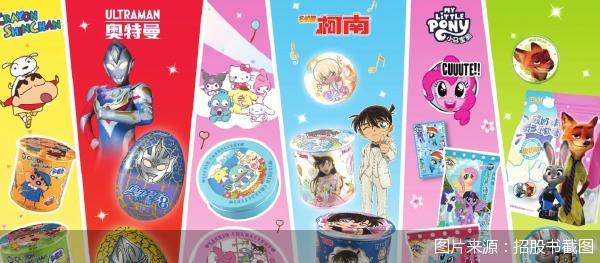
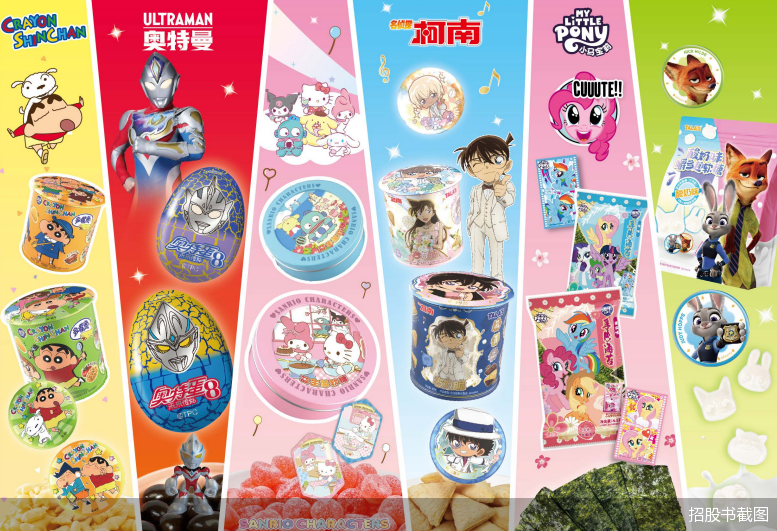
Core Viewpoint - Guangdong Jintian Animation Co., Ltd. is pursuing an IPO on the Hong Kong Stock Exchange, leveraging its popular IPs like Ultraman and My Little Pony, but faces challenges due to reliance on external IP licenses and a slowdown in growth in the first half of the year [1][3][4]. Group 1: Business Overview - Jintian Animation's main business involves producing and selling IP-themed food products, with brands like "TALA'S" and "Tianle Cartoon King" covering a range of snacks [3]. - The company previously listed on the New Third Board in 2016 but delisted in 2021 to improve operational efficiency [3]. - The company has shown strong growth in recent years, with projected revenues of 596 million, 664 million, and 877 million yuan from 2022 to 2024, and net profits of 36.7 million, 75.2 million, and 130 million yuan for the same period [4]. Group 2: Financial Performance - In the first half of the year, Jintian Animation reported revenues of 444 million yuan, a year-on-year increase of 9.82%, and net profits of 70.04 million yuan, up 13.45% [4]. - The revenue growth for candy and biscuits was strong at 37.75% and 25.63%, while other categories like puffed snacks and chocolate saw declines of 16.9%, 19.8%, and 30.81% [4]. Group 3: IP Dependency - Jintian Animation relies entirely on external IP licenses, with 99.5% of its revenue coming from these sources, raising concerns about the sustainability of its business model [8]. - The company has spent over 100 million yuan on IP licensing fees from 2022 to 2024, with a significant portion of these agreements requiring regular renewal [7]. - The company acknowledges that maintaining existing licensing agreements is crucial and depends on relationships with IP owners [7]. Group 4: Marketing and Sales Strategy - Jintian Animation employs a multi-channel marketing strategy, with a focus on retail and direct sales, reducing reliance on distributors [9]. - The proportion of revenue from direct sales has increased significantly, from 3.5% in 2022 to 43.2% in the first half of 2023 [9]. - The company is exploring e-commerce channels, which have seen growth from 0.2% to 1.1% of total revenue [9]. Group 5: Future Plans - The company plans to expand its IP portfolio through self-designed IPs and aims to enhance product development and brand recognition with the funds raised from the IPO [8]. - Jintian Animation is also considering entering Southeast Asian markets, although it has yet to establish a presence there [11].
港股日评:港股市场延续升势,硬科技涨幅居前-20251021
Changjiang Securities· 2025-10-21 14:13
Group 1 - The core viewpoint of the report indicates that the Hong Kong stock market continues its upward trend, with significant gains in hard technology sectors, driven by strong performance from industry leaders and positive signals regarding US-China trade relations [2][5][7]. - On October 21, 2025, the total trading volume in the Hong Kong stock market reached HKD 264.66 billion, with net inflows from southbound funds amounting to HKD 1.171 billion [2][7]. - The Hang Seng Index rose by 0.65% to close at 26,027.55, while the Hang Seng Technology Index saw a notable increase of 1.26%, closing at 6,007.94 [5][11]. Group 2 - In terms of industry performance, the Wind Hong Kong Electric Equipment Index showed strong gains, reflecting heightened demand expectations for energy storage and power battery sectors following robust third-quarter earnings from industry leaders [5][7]. - The semiconductor sector in Hong Kong experienced a strong rebound, driven by positive sentiment from the third-quarter earnings of major US chip companies, indicating renewed expectations for global AI industry demand [5][7]. - The report highlights three potential directions for future growth in the Hong Kong stock market: the continued inflow of southbound funds, the impact of US interest rate cuts on global liquidity, and the positive effects of "anti-involution" policies on supply-side improvements [5][7].
新消费行业周报:25年前三季度金银珠宝社零同增11.5%,关注双十一销售表现-20251021
Shanghai Securities· 2025-10-21 13:37
Investment Rating - The industry investment rating is "Overweight" (maintained) [1] Core Viewpoints - The demand for gold and jewelry is expected to continue growing due to the long-term investment advantages of gold, rising gold prices driven by Federal Reserve interest rate cut expectations, and trade tensions [2] - The retail sales of gold and jewelry in the first three quarters of 2025 increased by 11.5% year-on-year, with a focus on the sales performance during the Double Eleven shopping festival [2] - The sports and outdoor industry is seen as a significant contributor to economic growth, with sustained consumer activity in sports apparel expected [4] - The beauty and personal care sector is recommended to focus on four main lines: essential self-care, domestic product substitution, technological advantages, and channel evolution [10] Summary by Relevant Sections Gold and Jewelry - Retail sales for gold and jewelry reached 276.8 billion yuan in the first nine months of 2025, up 11.5% year-on-year, with September sales at 29.3 billion yuan, a 9.7% increase [2] - The London spot gold price hit a historical high of $4,380.79 per ounce on October 17, 2025, with a year-to-date increase of nearly 65% [2] - Recommended companies include Lao Pu Gold, Lao Feng Xiang, and Chao Hong Ji [11] Trendy Toys - The trendy toy industry is experiencing rapid growth, driven by Generation Z and products like blind boxes that meet deep emotional needs [3] - MINISO LAND, a strategic store format by MINISO, opened its first two locations in Wuhan, enhancing its IP strategy and targeting young consumers [3] - Recommended companies include Pop Mart, Blokus, TOPTOY, and Lezi Tianceng [11] Sports and Outdoor - The retail sales of clothing, shoes, and textiles reached 1.06 trillion yuan in the first nine months of 2025, with a year-on-year increase of 3.1% [4] - The sports apparel sector is expected to maintain high demand due to government support for the sports industry [4] - Recommended companies include Anta, Li Ning, 361 Degrees, and Bosideng [11] Beauty and Personal Care - Retail sales of cosmetics reached 328.8 billion yuan in the first nine months of 2025, with a year-on-year increase of 3.9% [10] - The growth rate for cosmetics in September was 8.6%, indicating strong consumer interest [10] - Recommended companies include L'Oréal, Mao Ge Ping, Jin Bo Biological, Runben Co., and Bai Ya Co. [11]
金添动漫递表港交所:业绩增长放缓,授权IP依赖风险凸显
Bei Jing Shang Bao· 2025-10-21 13:37
Core Viewpoint - Guangdong Jintian Animation Co., Ltd. is seeking an IPO on the Hong Kong Stock Exchange, leveraging its popular IPs like Ultraman and My Little Pony, but faces challenges due to reliance on external IP licenses and a slowdown in growth in the first half of the year [1][4]. Company Overview - Founded in 2011, Jintian Animation is one of the first companies in China to integrate anime IP with food products, primarily producing and selling IP-themed snacks under brands like "Tianle Cartoon King" and "TALA'S" [3]. - The company previously listed on the New Third Board in 2016 but delisted in 2021 to improve operational efficiency and decision-making [3]. Financial Performance - Revenue projections for 2022-2024 are 596 million, 664 million, and 877 million yuan, with net profits of 36.7 million, 75.2 million, and 130 million yuan respectively. The growth rates for 2023 and 2024 are 11.41% and 32.08% for revenue, and 104.92% and 72.82% for net profit [4]. - In the first half of 2025, revenue was 444 million yuan, a 9.82% increase year-on-year, while net profit was 70.04 million yuan, up 13.45% [4]. IP Dependency - Jintian Animation relies entirely on external IP licenses, with 99.5% of its revenue coming from these sources. The company has 26 IPs, including popular ones from Japan and the U.S. [6][8]. - The company has spent over 100 million yuan on IP licensing fees from 2022 to 2025, with a significant portion of its IP agreements requiring regular renewal [7]. Marketing and Sales Strategy - The company employs a multi-channel marketing strategy, with a focus on offline sales through over 2,600 distributors, covering more than 1,700 counties in China [9]. - The share of revenue from direct sales to retailers has increased significantly, from 3.5% in 2022 to 43.2% in the first half of 2025, while the share from distributors has decreased [9]. E-commerce Development - Jintian Animation's e-commerce channel is still in the exploratory phase, with online sales accounting for only 0.2% of revenue in 2024, increasing to 1.1% in the first half of 2025 [10]. - The company aims to establish a sales and marketing team in Southeast Asia to better understand local market demands and consumer preferences [11].
社零增速继续放缓,各平台双十一促销抢跑
Yin He Zheng Quan· 2025-10-21 13:36
Investment Rating - The report recommends focusing on the new consumption sector, highlighting companies such as Gu Ming and Mixue Group, while suggesting attention to Da Mai Entertainment [3]. Core Insights - The growth rate of social retail sales continues to slow down, with September 2025 showing a year-on-year increase of 3.0% [4][11]. - The impact of national subsidies is diminishing, leading to a decline in consumption growth across various categories [5][9]. - The upcoming Double Eleven shopping festival has seen early promotions from platforms like JD and Douyin, indicating a competitive landscape [2][3]. Summary by Relevant Sections Social Retail Sales Data - In September 2025, social retail sales reached 41,971 billion yuan, with a year-on-year growth of 3.0% [11]. - Excluding automobiles, retail sales were 37,260 billion yuan, growing by 3.2% year-on-year [11]. - The retail sales of food and beverages showed mixed results, with food sales increasing by 6.3% while beverage sales declined by 0.8% [11][15]. National Subsidy Impact - The report notes a significant reduction in the growth rate of categories benefiting from the "old for new" subsidy program, with categories like communication equipment and furniture showing year-on-year growth rates of 16.2% [9][12]. - The report anticipates continued pressure from high base effects in the coming months [9][10]. New Consumption Trends - New consumption categories are gaining traction, with gold jewelry sales increasing by 9.7% year-on-year due to rising gold prices [10][13]. - Sports and entertainment products also saw a robust growth of 11.9% year-on-year, reflecting consumer interest in outdoor activities [10][13]. Export Trends - In September 2025, China's export scale reached 328.57 billion USD, with a year-on-year increase of 8.3% [33]. - However, the export of consumer goods has generally declined, with significant drops in categories such as home appliances and clothing [35][37]. Holiday Economy - During the National Day and Mid-Autumn Festival holiday, domestic travel reached 888 million trips, a year-on-year increase of 16.1% [41]. - Total domestic travel expenditure was 809 billion yuan, reflecting a 15.4% increase compared to the previous year [41].