
金九银十

Search documents
综合晨报-20250815
Guo Tou Qi Huo· 2025-08-15 02:29
Report Industry Investment Ratings No relevant content provided. Core Views of the Report - The report analyzes the market trends of various commodities and financial products, including energy, metals, agricultural products, and financial derivatives. It provides investment suggestions based on the current market situation and future expectations [1][2][3]. Summaries by Commodity Categories Energy - **Crude Oil**: Overnight international oil prices rose, with Brent's October contract up 1.75%. Investors await the US - Russia summit. Short - term, focus on buying out - of - the - money options on dips; mid - term, consider short positions after geopolitical risks are priced in [1]. - **Fuel Oil & Low - Sulfur Fuel Oil**: In August, Asian fuel oil arrivals are abundant, with weak demand. Singapore's fuel oil inventory is high, and the diesel crack spread has declined. The low - sulfur fuel oil market faces pressure, and high - sulfur fuel oil fundamentals are bearish [20]. - **Liquefied Petroleum Gas**: Overseas exports are loose, but East Asian chemical procurement provides support. The price has stabilized slightly. The import cost and crude oil may drive refinery gas prices down. The market is in low - level oscillation [22]. - **Natural Gas**: No relevant content provided. - **Coal (Coke & Coking Coal)**: Both coke and coking coal prices are affected by the "anti - involution" policy. The carbon element supply is abundant, and downstream iron - making maintains a high level in the off - season. The prices are volatile in the short term [15][16]. Metals - **Precious Metals**: Overnight, precious metals declined. The US July PPI data suppressed the Fed's interest - rate cut expectations. With the US - Russia summit, the market is volatile, and it's advisable to stay on the sidelines [2]. - **Base Metals** - **Copper**: Overnight copper prices fell. The LME copper recovered some losses but faced resistance. The US July PPI increase was significant. The SMM social inventory decreased by 6,000 tons to 125,600 tons. Hold short positions at high levels [3]. - **Aluminum**: Overnight, Shanghai aluminum oscillated. The aluminum market is in a slight inventory - building state, with the peak likely in August. The price is expected to oscillate in the short term, with resistance at 21,000 yuan [4]. - **Zinc**: The fundamental supply - increase and demand - weakness suggest a short - selling strategy in the medium - to - long - term. The SMM zinc social inventory rose to 129,200 tons. Wait for short - selling opportunities above 23,500 yuan/ton [7]. - **Lead**: The refinery's maintenance and restart coexist, with insufficient demand. The short - covering support limits the downside. Hold long positions near 16,600 yuan/ton [8]. - **Nickel & Stainless Steel**: Shanghai nickel rebounded. The fundamental situation is poor. The inventory of nickel - iron and stainless steel decreased. Enter short positions as the rebound nears its end [9]. - **Tin**: Overnight, tin prices fell further. Consider bargain - hunting for short - term long positions [10]. - **Manganese Silicon**: The price is weakly oscillating. The iron - making output remains high, and the manganese ore price rose slightly. The price is affected by the "anti - involution" policy and follows coking coal [17]. - **Silicon Iron**: The price is weakly oscillating. The iron - making output is slightly down. The supply increased, and the inventory slightly rose. The price follows manganese silicon and is affected by the "anti - involution" policy [18]. - **Alumina**: The operating capacity is at a historical high, and the inventory increased. The spot index is falling, and the futures price may adjust [6]. - **Cast Aluminum Alloy**: It follows the trend of Shanghai aluminum. The scrap aluminum supply is tight, and the industry profit is poor. The price has some resilience [5]. - **Zinc**: The fundamental supply - increase and demand - weakness suggest a short - selling strategy in the medium - to - long - term. The SMM zinc social inventory rose to 129,200 tons. Wait for short - selling opportunities above 23,500 yuan/ton [7]. Chemicals - **Polypropylene, Plastic, & Propylene**: Propylene supply increased, and the market is bearish. Polyethylene producers are more likely to raise prices. Polypropylene demand is weak, and the market is under pressure [27]. - **PVC & Caustic Soda**: PVC is in a weak state, with increased inventory. Caustic soda is strong, with reduced inventory. The short - term price of caustic soda may rise, but the long - term supply pressure remains [28]. - **PX & PTA**: The prices rebounded. PTA's operating rate is low, and PX's supply - demand is expected to improve. The downstream demand is gradually improving [29]. - **Ethylene Glycol**: The price is oscillating at a low level. The supply is temporarily tight, and the demand is showing signs of improvement [30]. - **Pure Benzene**: The price oscillated. The domestic production increased slightly, and the import decreased. Consider trading the monthly spread [25]. - **Styrene**: The price is in a consolidation pattern. The production increased, and the inventory decreased slightly, but there is no strong upward driver [26]. - **Methanol**: The import is high, and the port inventory is increasing. The inland market is relatively strong. Pay attention to the downstream demand in the peak season [24]. - **Urea**: The price is oscillating. The supply is abundant, and the demand is weak. The market may continue to oscillate without new positive factors [23]. Agricultural Products - **Soybeans & Soybean Meal**: The USDA August report was positive for US soybeans. The domestic soybean arrival volume is expected to be around 10 million tons from August to October. Be cautious about going long on soybean meal and look for opportunities on dips [35]. - **Soybean Oil & Palm Oil**: The prices of soybean oil and palm oil declined with the fall of rapeseed oil. Be cautious about the adjustment risk of palm oil. Pay attention to the impact of position changes on prices in the short term [36]. - **Rapeseed & Rapeseed Oil**: The prices of rapeseed products declined. In the medium - term, the rapeseed supply may be tight. Maintain a bullish view on rapeseed products [37]. - **Corn**: The USDA August report was negative for US corn. The domestic corn supply is sufficient, and the price may continue to be weak at the bottom [39]. - **Cotton**: The US cotton planting area and output were significantly reduced. The domestic cotton inventory decreased, and the downstream demand is stable. Consider buying on dips [42]. - **Sugar**: The Brazilian sugar production forecast is negative. The domestic sugar inventory pressure is light. The sugar price is expected to oscillate [43]. - **Apple**: The futures price is oscillating. The cold - storage inventory is low, and the focus is on the new - season output estimate. It's advisable to stay on the sidelines [44]. - **Eggs**: The futures price is moving from near - term to far - term contracts. The egg price needs to fall to reduce production capacity. Pay attention to the spot price, peak - season demand, and cold - storage egg release [41]. - **Lumber**: The price is in a correction. The demand is improving, and the inventory is low. The spot price has support. Monitor whether the futures price can stop falling [45]. - **Paper Pulp**: The futures price rose. The port inventory is high, and the supply is relatively loose. Consider buying on dips as the demand may improve in the peak season [46]. Financial Derivatives - **Stock Index Futures**: The stock market fluctuated. The market style suggests increasing the allocation of technology - growth sectors and paying attention to consumption and cyclical sectors [47]. - **Treasury Bond Futures**: The prices of treasury bond futures declined. The yield curve is likely to steepen [48]. - **Container Freight Index (European Line)**: The spot price is in a competitive downward trend. The futures price is expected to oscillate in the short term [19].
综合晨报-20250814
Guo Tou Qi Huo· 2025-08-14 10:43
Report Industry Investment Ratings No relevant content provided. Core Views of the Report - The international oil price is expected to decline, with the fourth - quarter Brent crude oil price central falling to around $63 per barrel from $67 per barrel in the third quarter [2] - For precious metals, wait patiently for opportunities to enter the market on dips during the oscillatory trend [3] - Copper prices are difficult to break through effectively, and it is advisable to short on rallies [4] - Aluminum prices will mainly oscillate in the short - term, with resistance at 21,000 yuan [5] - For various commodities, different investment strategies are proposed based on their respective supply - demand and market conditions Summary by Commodity Categories Energy Commodities - **Crude Oil**: The IEA's August report increased supply growth forecasts and slightly decreased demand growth forecasts. The fourth - quarter Brent central may fall to around $63 per barrel from $67 per barrel in the third quarter. There is still upward risk due to potential supply disruptions, but the overall driving force is downward [2] - **Fuel Oil & Low - Sulfur Fuel Oil**: In August, the Asian fuel oil market has sufficient arrivals, and the low - sulfur fuel oil market is under pressure due to the expected release of the third - batch quota and weakening costs [18] - **Asphalt**: Supply - demand is expected to tighten marginally. With low inventory, the price has some support, and the recent BU cracking is considered strong [19] - **Liquefied Petroleum Gas**: Overseas exports are loose, but there is support from increased East Asian chemical procurement. The price has stabilized slightly. The domestic market is in a low - level oscillation [20] Metal Commodities - **Precious Metals**: After the release of the US CPI data, the market fully priced in a Fed rate cut in September. Wait patiently for opportunities to enter the market on dips during the oscillatory trend [3] - **Base Metals** - **Copper**: Chile's refined copper output may increase but the growth rate may fall short of expectations again. It is difficult for copper prices to break through 79,500 yuan, and it is advisable to short on rallies [4] - **Aluminum**: The social inventory of aluminum ingots is accumulating, but the peak may occur in August. The price will mainly oscillate in the short - term, with resistance at 21,000 yuan [5] - **Zinc**: The domestic market has weak demand and increasing supply, and the social inventory may rise further. Wait patiently for short - selling opportunities above 23,500 yuan per ton [8] - **Lead**: The price is in a wide - range oscillation. It is advisable to hold long positions with a stop - loss at 16,600 yuan per ton [9] - **Nickel & Stainless Steel**: The fundamentals of nickel are poor, and it is advisable to actively short during the later stage of the rebound [10] - **Tin**: Selectively go short for the short - term at low prices [11] - **Carbonate Lithium**: The futures price oscillates, and attention should be paid to risk management [12] - **Industrial Silicon**: The self - clearing of production capacity is difficult, and the price is affected by related varieties. Pay attention to the support at 8,300 yuan per ton [13] - **Polysilicon**: The price is expected to operate in the range of 48,000 - 53,000 yuan per ton. It is recommended to short cautiously at the lower end of the range [14] Agricultural Commodities - **Soybean & Palm Oil**: Affected by the rapeseed anti - dumping policy and the US Department of Agriculture's supply - demand report, the short - term price volatility should be enlarged, and attention should be paid to the changes in positions [33] - **Rapeseed & Rapeseed Oil**: The domestic rapeseed and rapeseed oil market is expected to remain relatively strong, and a bullish view is maintained [34] - **Soybean No. 1**: Affected by the rapeseed anti - dumping policy and the US Department of Agriculture's supply - demand report, short - term attention should be paid to the fluctuations of surrounding varieties [35] - **Eggs**: The spot price is stable, and the futures market is in a situation of near - term weakness and long - term strength. Attention should be paid to the demand in the peak season and the progress of capacity elimination [37] - **Cotton**: The US Department of Agriculture's August supply - demand report was bullish. Domestic inventory is decreasing, and it is advisable to buy on dips [38] - **Sugar**: The US sugar price is under pressure, and the domestic sugar price is expected to oscillate [39] - **Apples**: The market's trading focus has shifted to the new - season output estimate. It is advisable to wait and see for now [40] Others - **Grain & Oil Chemicals** - **Urea**: The short - term supply - demand is loose, and the market is likely to oscillate within a range [21] - **Methanol**: The domestic market is strong in the inland and weak in the ports. With the approaching peak - season demand, attention should be paid to macro - sentiment and downstream stocking [22] - **Pure Benzene**: There is an expected seasonal improvement in supply - demand in the second half of the third quarter, and it is advisable to conduct month - spread trading [23] - **Styrene**: The price is in a consolidation pattern, with limited upward and downward movement [24] - **Polypropylene, Plastic & Propylene**: Propylene prices are supported, polyethylene demand is expected to increase, and polypropylene is in a weak - adjustment state [25] - **PVC & Caustic Soda**: PVC prices are expected to oscillate weakly, and caustic soda prices are under pressure at high levels [26] - **PX & PTA**: Affected by oil prices, the prices are falling. PX is expected to have a good valuation in the third quarter [27] - **Ethylene Glycol**: The supply - demand pressure is alleviating, and short - term performance is weak due to oil prices [28] - **Short - Fiber & Bottle - Chip**: Short - fiber can be considered for long - position allocation in the medium - term, and bottle - chip is under long - term over - capacity pressure [29] - **Financial Products** - **Stock Index**: The market is in an active state, with a positive macro - driving force. It is recommended to increase the allocation of technology - growth sectors and also pay attention to consumption and cyclical sectors [43] - **Treasury Bonds**: The futures are oscillating. The probability of a steeper yield curve is increasing [44]
聚丙烯日报:供应增量,丙烯震荡运行-20250814
Hua Tai Qi Huo· 2025-08-14 06:56
Report Industry Investment Rating - Unilateral: Neutral; Inter - period: PL01 - 02 inter - period reverse spread; Cross - variety: None [3] Core Viewpoints - Supply - side overall开工率环比回升,PDH装置开工率回升,天弘PDH装置存重启预期,山东主力PDH装置存检修计划,但烟台区域亦有装置供应临时放量,丙烯价格偏弱整理 [2] - Downstream开工涨跌分化,酚酮开工回升较快,下游采购积极性回落,择低刚需入市为主,需求阶段性小幅支撑,但韧性仍显不足,丙烯走势承压,后期关注金九银十主力下游的采购节奏 [2] - Cost - end原油走弱,且沙特CP下跌带动丙烷价格下行,丙烯成本支撑下移 [2] Summaries by Directory 1. Propylene Basis Structure - Figures include propylene main contract closing price, propylene East China basis, propylene North China basis, propylene 01 - 05 contract, propylene market price in East China, and propylene market price in Shandong [7][10][12] 2. Propylene Production Profit and Operating Rate - Figures cover propylene China CFR - Japanese naphtha CFR, propylene capacity utilization rate, propylene PDH production gross profit, propylene PDH capacity utilization rate, propylene MTO production gross profit, methanol - to - olefins capacity utilization rate, propylene naphtha cracking production gross profit, and crude oil main refinery capacity utilization rate [16][18][24] 3. Propylene Import and Export Profit - Figures involve South Korea FOB - China CFR, Japan CFR - China CFR, Southeast Asia CFR - China CFR, and propylene import profit [30][34] 4. Propylene Downstream Profit and Operating Rate - Figures include PP powder production profit, PP powder operating rate, propylene oxide production profit, propylene oxide operating rate, n - butanol production profit, n - butanol capacity utilization rate, octanol production profit, octanol capacity utilization rate, acrylic acid production profit, acrylic acid capacity utilization rate, acrylonitrile production profit, acrylonitrile capacity utilization rate, phenol - acetone production profit, and phenol - acetone capacity utilization rate [37][39][42] 5. Propylene Inventory - Figures are about propylene in - plant inventory and PP powder in - plant inventory [64]
沪镍、不锈钢早报-20250814
Da Yue Qi Huo· 2025-08-14 02:13
report industry investment rating No specific investment rating for the industry is provided in the report. core view of the report - For Shanghai Nickel 2509, it is expected to fluctuate around the 20 - day moving average. The long - term supply surplus pattern remains unchanged, but there are short - term factors affecting the price [3][4]. - For Stainless Steel 2510, it is expected to operate with a slight upward trend [5]. summary according to relevant catalogs nickel daily view - **fundamentals**: The external market rose and then fell, with support at the 20 - day moving average. Last week, there was an arrival of Norwegian nickel slabs, increasing supply. The ore price was stable, the ferronickel price rose slightly, and the cost line rebounded slightly. Stainless steel inventory decreased slightly. New energy vehicle production and sales data were good, but the proportion of ternary battery installations decreased. The long - term surplus pattern remains unchanged, showing a bearish outlook [4]. - **basis**: The spot price was 123,800, and the basis was 1,460, showing a bullish outlook [4]. - **inventory**: LME inventory was 211,098 (- 648), and Shanghai Futures Exchange warehouse receipts were 20,578 (- 115), showing a bearish outlook [4]. - **market**: The closing price was above the 20 - day moving average, and the 20 - day moving average was upward, showing a bullish outlook [4]. - **main position**: The main position was net short, and short positions increased, showing a bearish outlook [4]. stainless steel daily view - **fundamentals**: The spot stainless steel price decreased. In the short term, the nickel ore price was stable, the shipping cost decreased slightly, the ferronickel price rose slightly, and the cost line increased slightly. Stainless steel inventory decreased, showing a neutral outlook [5]. - **basis**: The average stainless steel price was 13,850, and the basis was 720, showing a bullish outlook [5]. - **inventory**: The futures warehouse receipts were 103,518 (- 422), showing a bearish outlook [5]. - **market**: The closing price was above the 20 - day moving average, and the 20 - day moving average was upward, showing a bullish outlook [5]. price overview - **nickel**: On August 13, the Shanghai Nickel main contract closed at 122,340 (- 100), the LME nickel closed at 15,240 (- 120). The spot prices of SMM1 electrolytic nickel, 1 Jinchuan nickel, 1 imported nickel, and nickel beans all increased to varying degrees [13]. - **stainless steel**: On August 13, the stainless steel main contract closed at 13,130 (- 70). The spot prices of cold - rolled 304*2B in Wuxi, Hangzhou, and Shanghai decreased, while that in Foshan remained unchanged [13]. inventory situation - **nickel**: As of August 8, the Shanghai Futures Exchange nickel inventory was 26,194 tons, with futures inventory at 20,621 tons. On August 13, LME inventory was 211,098 (- 648), and Shanghai Futures Exchange warehouse receipts were 20,578 (- 115) [15][16]. - **stainless steel**: On August 8, the inventory in Wuxi was 61,620 tons, in Foshan was 330,800 tons, and the national inventory was 1,106,300 tons, a decrease of 4,900 tons compared to the previous period. Among them, the inventory of the 300 - series was 657,600 tons, a decrease of 19,100 tons. On August 13, the stainless steel warehouse receipts were 103,518 (- 422) [20][21]. price of nickel ore and ferronickel - The price of laterite nickel ore CIF with Ni1.5% and Ni0.9% remained unchanged at 57 and 29 US dollars per wet ton respectively on August 13 compared to August 12. The shipping costs from the Philippines to Lianyungang and Tianjin Port also remained unchanged. The price of high - nickel ferronickel increased by 1.5 yuan per nickel point, and the price of low - nickel ferronickel remained unchanged [24]. stainless steel production cost - The traditional production cost was 12,946, the scrap steel production cost was 13,704, and the low - nickel + pure nickel production cost was 16,552 [26]. nickel import cost - The converted import price was 123,027 yuan per ton [29]. factors affecting prices - **bullish factors**: Expectations for the "Golden September and Silver October" season and anti - involution policies [8]. - **bearish factors**: The domestic production continued to increase significantly year - on - year, there were no new demand growth points, the long - term surplus pattern remained unchanged. The nickel ore and ferronickel prices were weakly stable, and the cost line was still at a low level. The substitution ratio of ternary batteries increased [8].
社会库存高企 期螺出现五连阴大跳水
Qi Huo Ri Bao· 2025-08-13 23:12
Core Viewpoint - The steel market is experiencing a downward trend in prices due to high inventory levels and lower-than-expected demand, but there are expectations for a rebound in the upcoming "Golden September and Silver October" season [1][2]. Group 1: Market Trends - Last week, the national rebar market prices fell slightly, with an overall decline of 10-30 yuan/ton, and a cumulative drop exceeding 100 yuan/ton [1]. - Steel production in September is at historically high levels, but sales remain flat compared to last year, contributing to recent price declines [2]. - Analysts indicate that despite the recent downturn, confidence among traders remains, with an increase in bullish sentiment for the steel market [2]. Group 2: Supply and Demand Dynamics - There are currently 12 planned production line repairs affecting 11 steel mills, expected to impact finished product output by approximately 46,150 tons per day [3]. - The overall operating rate of blast furnaces and rolling lines remains high, with steel mills showing strong production enthusiasm despite low profit margins [3]. - Regional inventory pressures are easing in the western and southern areas, while demand is slow to start in eastern, northern, and northeastern regions [4]. Group 3: Profitability and Future Outlook - Most steel enterprises are still profitable despite low margins, with plate manufacturers performing better than long product manufacturers [4]. - The steel market faces significant downward pressure due to high inventory levels and uncertainties related to potential COVID-19 outbreaks in the autumn and winter [4][5]. - There is a divergence in market sentiment regarding the upcoming demand, with some analysts cautioning against overly optimistic expectations for price increases [5].
丙烯日报:下游需求跟进不足,丙烯上行承压-20250813
Hua Tai Qi Huo· 2025-08-13 06:59
Report Industry Investment Rating - Unilateral: Neutral; Inter - period: PL01 - 02 inter - period reverse spread; Cross - variety: None [3] Core View - Supply - side overall start - up increased month - on - month, with expected reduction in propylene commodity sales volume and tightened market supply, supporting propylene prices. Downstream start - up showed mixed trends, with weak demand and limited support for propylene price increases. Cost support for propylene decreased due to expected OPEC+ production increase and falling propane prices [2] Summary by Directory 1. Propylene Basis Structure - Figures include propylene main contract closing price, East China basis, North China basis, 01 - 05 contract, East China market price, and Shandong market price [7][10][12] 2. Propylene Production Profit and Start - up Rate - Figures cover propylene China CFR - Japanese naphtha CFR, propylene capacity utilization rate, PDH production gross profit, PDH capacity utilization rate, MTO production gross profit, methanol - to - olefins capacity utilization rate, propylene naphtha cracking production gross profit, and crude oil main refinery capacity utilization rate [16][18][24] 3. Propylene Import and Export Profit - Figures involve South Korea FOB - China CFR, Japan CFR - China CFR, Southeast Asia CFR - China CFR, and propylene import profit [30][31][35] 4. Propylene Downstream Profit and Start - up Rate - Figures include PP powder production profit and start - up rate, propylene oxide production profit and start - up rate, n - butanol production profit and capacity utilization rate, octanol production profit and capacity utilization rate, acrylic acid production profit and capacity utilization rate, acrylonitrile production profit and capacity utilization rate, and phenol - acetone production profit and capacity utilization rate [37][38][40] 5. Propylene Inventory - Figures are about propylene in - plant inventory and PP powder in - plant inventory [64][65]
实探|深圳二手房以价换量,业界期待楼市节奏提速
Zheng Quan Shi Bao· 2025-08-13 00:03
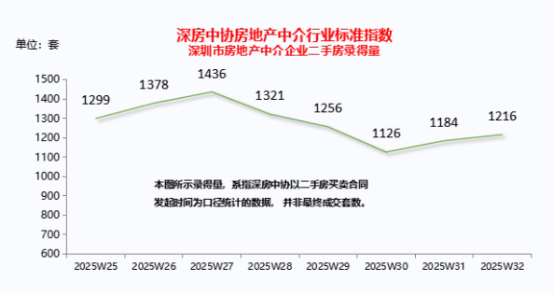
Group 1 - The real estate market in first-tier cities serves as a "weather vane" for the overall market [1] - Beijing has introduced a series of measures to relax housing purchase restrictions, attracting widespread attention [2] - The Shenzhen second-hand housing market has shown a good start since August, with a slight increase in transaction volume [3] Group 2 - Data from the Shenzhen Real Estate Agency indicates that the transaction volume of second-hand homes recorded 1,216 units from August 4 to August 10, a week-on-week increase of 2.7% [3] - The transaction rate for second-hand residential viewings in Shenzhen has risen to 4.22% as of August 11, up 0.26 percentage points from July, indicating a quicker pace of "bottom-fishing" by buyers [5] - Despite the positive data, market practitioners express mixed feelings, noting that the current second-hand market is still under pressure, with most buyers awaiting new policies [5] Group 3 - New projects are expected to flood the market in Bao'an and Longhua districts in August, with local developers hoping to capitalize on potential policy changes [7] - The housing market has shown signs of decline since July, traditionally a slow season, with lower-than-expected policy implementation [7] - The expectation is that second-hand housing transactions will remain high due to favorable loan conditions and a large demand from first-time buyers [7] Group 4 - The upcoming "golden September and silver October" period is anticipated to boost market activity, with increased interest from buyers following new policies in Beijing [9] - The new policies are expected to enhance market expectations and accelerate the release of housing demand, focusing on domestic needs rather than opening up to external demand [9] - Analysts suggest that the pace of further policy relaxation in first-tier cities may accelerate, reflecting a more cautious approach to market regulation [9]

苏州9月起公积金可付物业费
2 1 Shi Ji Jing Ji Bao Dao· 2025-08-12 15:46
Core Viewpoint - Suzhou's new housing policy aims to lower the barriers and costs for first-time and upgrading homebuyers, while enhancing the efficiency of housing fund usage to alleviate household financial pressure and stimulate housing consumption [2][5]. Group 1: Policy Details - The new policy allows for a minimum down payment of 15% for first or second homes purchased with housing fund loans [1]. - It optimizes the usage frequency of housing funds, allowing families to reduce the number of loans if their previous housing fund loan property has been sold [1]. - The policy also permits the withdrawal of housing funds to pay property management fees, with specific conditions on withdrawal frequency and amounts [1]. Group 2: Market Impact - Analysts suggest that the policy will significantly boost housing market sentiment and consumption willingness, especially with the upcoming traditional peak sales season in September and October [2][4]. - The policy is part of a broader trend where multiple cities are implementing similar measures to stimulate their housing markets, indicating a shift towards more flexible housing finance tools [3][7]. Group 3: Broader Context - The new policies in Suzhou align with national trends of easing housing market restrictions, with other cities like Beijing and Qionghai also adopting measures to stimulate demand [3][6]. - The overall market is expected to experience structural differentiation, with core cities likely stabilizing due to low interest rates and down payments, while non-core cities may still struggle with inventory [6][7]. Group 4: Future Outlook - The effectiveness of these policies will be tested during the "Golden September and Silver October" period, which is traditionally a peak time for housing sales [6]. - There is an expectation for further deepening of housing fund policies across various regions, alongside potential adjustments in supply-side measures to support quality projects and enterprises [7].
苏州9月起公积金可付物业费
21世纪经济报道· 2025-08-12 15:33
记者丨 唐韶葵 编辑丨黄剑 8月12日,苏州出台楼市新政。当日,苏州市住房公积金管理中心发布《关于进一步扩大住房 公积金使用范围的通知》, 明确使用住房公积金贷款购买家庭首套或第二套自住住房的,首 付款比例调整为不低于住房总价的15%。 同时, 优化公积金使用次数。 缴存人家庭购买首套或第二套自住住房申请住房公积金贷款 (不含"商转公"贷款),原住房公积金贷款购买的住房已出售的,可核减相应贷款次数。 此外, 苏州新政还支持提取住房公积金支付物业费。 缴存人本人及配偶在苏州范围内支付自 住住房物业管理费,可选择家庭任意一套住房申请提取住房公积金,只要申请前12个月无住房 公积金提取行为即可,一年可提取一次,合计提取额不超过实际支付的一年物业费用。个人住 房公积金账户须至少按最新缴存基数留存一个月的缴存额(不含新职工补贴)。 苏州这轮新政将于今年9月1日起正式执行,有效期2年。 同策研究院联席院长宋红卫指出,苏州此次新政,降低了刚需与改善群体的购房门槛和成本, 又通过拓宽公积金使用场景提升了资金效率,既减轻居民家庭支出压力,也有助于促进住房消 费与资源合理配置。 上海中原地产市场分析师卢文曦则认为,北京启动限购优 ...

实探深圳楼市丨二手房“以价换量”,业界期待政策放松节奏提速
Zheng Quan Shi Bao· 2025-08-12 14:21
Core Viewpoint - The real estate market in Shenzhen is showing signs of recovery, with an increase in second-hand housing transactions, but industry professionals are calling for more policy support to boost market sentiment [1][3][6]. Market Performance - Despite July and August being traditionally slow months for the real estate market, Shenzhen's second-hand housing market has seen a positive start in August, with a recorded transaction volume of 1,216 units from August 4 to August 10, reflecting a 2.7% week-on-week increase [3]. - The transaction rate for second-hand residential viewings in Shenzhen increased to 4.22% as of August 11, up by 0.26 percentage points from July, indicating a growing interest among buyers [3]. - Daily average signing volume in early August rose by 6.4% compared to July and increased by 32.5% year-on-year [3]. Market Sentiment - Industry professionals express mixed feelings about the market, noting that while some segments, such as popular new properties and affordable homes, are performing well, many other listings are still facing challenges [3][5]. - The sentiment among real estate agents suggests that the previous policy relaxation effects are fading, and most buyers are still waiting for new supportive measures [3][5]. Future Expectations - As the traditional peak season for real estate, "Golden September and Silver October," approaches, there are heightened expectations for market activity [7]. - Analysts believe that recent policy changes in Beijing could positively influence market expectations and stimulate housing demand, although the focus remains on domestic demand rather than opening up to external buyers [7]. - The overall trend indicates that while some new properties may perform well, the new housing market is likely to face greater downward pressure compared to the second-hand market [5][7].