产能过剩

Search documents
外交部驳斥欧盟领导人涉华“产能过剩”言论:充满偏见和双重标准
news flash· 2025-06-18 07:44
Core Viewpoint - The Chinese government strongly opposes the accusations made by the EU Commission President regarding China's trade practices, emphasizing that its industrial subsidy policies are compliant with WTO rules and based on genuine capabilities rather than subsidies [1] Group 1: China's Trade Practices - The Chinese government expressed strong dissatisfaction and firm opposition to the claims of bias and double standards in the EU's statements [1] - China maintains that its industrial development relies on continuous technological innovation, a complete supply chain system, sufficient market competition, and abundant human resources [1] Group 2: Global Contributions - China's renewable energy capacity significantly contributes to global efforts in addressing climate change and energy transition [1]
养殖业集体扑倒!猪、蛋、羊、鸡全在跌,怎么了这是?
Sou Hu Cai Jing· 2025-06-16 09:19
Core Viewpoint - The livestock industry is facing significant challenges, with prices for various meats, including pork, chicken, and lamb, declining due to oversupply and weak consumer demand [2][4][10]. Group 1: Price Trends - Pork prices have dropped below 7 yuan per kilogram, marking a new low for the year, and while the decline has eased somewhat after government intervention, the outlook remains bleak [2]. - Egg prices have fallen below 3 yuan, leading to losses for some producers, while wholesale chicken prices have decreased by 2.3% year-on-year [4]. - Lamb prices have also declined, with a 0.5% year-on-year drop, although beef prices have seen a slight increase of 3.5% [4]. Group 2: Supply Dynamics - The livestock sector is experiencing oversupply, particularly in the pig and poultry markets, with pig production remaining above 40 million heads for 11 consecutive months [4][7]. - The increase in production capacity is attributed to previous high prices that incentivized farmers to expand their operations, leading to significant supply pressure [4][7]. Group 3: Technological Advancements - Improvements in breeding and farming techniques have led to increased meat production, with optimized breeding capabilities resulting in stable pork supply despite a reduction in production capacity [7]. - Similar advancements in sheep farming have also contributed to a surplus in lamb supply [7]. Group 4: Import Factors - While imports of pork and poultry have a limited impact, beef imports have significantly increased due to lower prices abroad compared to domestic production costs [8]. - The rising availability of cheaper imported beef, coupled with declining prices of pork and poultry, has constrained domestic beef demand [8]. Group 5: Consumer Demand - Consumer demand for meat is recovering slowly, with overall growth in personal consumption being limited due to economic constraints [10]. - The lack of timely demand growth exacerbates supply pressures, making it difficult for the livestock industry to reduce excess supply [11].

光伏高管们的话,说给汽车高管们听
第一财经· 2025-06-15 04:02
Core Viewpoint - The current state of the new energy vehicle (NEV) industry mirrors that of the photovoltaic (PV) industry, with both sectors facing challenges from price wars and cost-cutting measures that threaten innovation and overall industry health [1][2]. Group 1: Industry Challenges - The price war in the PV sector has led to a significant decline in prices across the supply chain, with prices for polysilicon and components dropping nearly 30%, despite a 28.3% year-on-year increase in new installations [2][3]. - Major PV companies, including Longi Green Energy and Tongwei Co., have reported substantial revenue declines and losses, indicating that the aggressive pricing strategies are unsustainable [2][3]. - The NEV industry is currently experiencing a similar price war, with many companies unable to differentiate their products, leading to increased losses and cash flow issues [2][3]. Group 2: Capacity Expansion and Market Dynamics - The PV industry has faced severe overcapacity, driven by both market competition and local government incentives, which has historically led to inefficiencies and a poor market experience [3][4]. - The NEV sector is beginning to see similar patterns, with calls from industry leaders to halt new factory constructions and instead utilize existing overcapacity [3][4]. - The PV industry is now encouraging mergers and acquisitions to consolidate and eliminate low-quality capacity, a trend that is expected to emerge in the NEV sector as well [4][5]. Group 3: Innovation and Intellectual Property - The lack of intellectual property protection has hindered innovation in the PV sector, with new technologies quickly becoming common knowledge and not providing competitive advantages to early innovators [5][6]. - The NEV industry is undergoing a transformation that emphasizes the importance of innovation, particularly in software and artificial intelligence, necessitating both investment in R&D and protection of innovative outcomes [5][6]. - A supportive market environment that encourages and protects innovation is essential for the long-term success of both the PV and NEV industries in the global market [6][7].



光伏高管们的话,说给汽车高管们听
第一财经· 2025-06-15 03:21
Core Viewpoint - The current state of the new energy vehicle (NEV) industry mirrors that of the photovoltaic (PV) industry, with both sectors facing challenges from price wars and cost-cutting measures that threaten innovation and overall profitability [1][2]. Group 1: Industry Challenges - The price war in the PV sector has led to a significant decline in prices across the supply chain, with prices for polysilicon and components dropping nearly 30%, despite a 28.3% year-on-year increase in new installations [2]. - Major PV companies, including Longi Green Energy and Tongwei Co., have reported substantial revenue declines and losses, indicating that the aggressive pricing strategies are unsustainable [2][3]. - The NEV industry is experiencing similar pressures, with some companies facing increasing losses and cash flow issues, highlighting the risks of relying solely on price competition [2][3]. Group 2: Capacity Expansion and Market Dynamics - The PV industry has seen severe overcapacity, driven by both market competition and local government incentives, which has historically led to inefficiencies and market saturation [4]. - The NEV sector is beginning to echo these patterns, with calls from industry leaders for a halt to new factory constructions in favor of utilizing existing overcapacity [4][5]. - Mergers and acquisitions are being encouraged in both industries as a means to consolidate and eliminate low-quality capacity, supported by recent regulatory changes [4][5]. Group 3: Innovation and Intellectual Property - The lack of intellectual property protection has hindered innovation in the PV sector, where new technologies quickly become widely adopted without adequate rewards for the original innovators [6][7]. - The NEV industry must prioritize protecting innovation and fostering a supportive environment for technological advancements to avoid repeating the mistakes of the PV sector [6][7]. - A collaborative approach involving policy support is essential for creating a market environment that encourages and protects innovation across both industries [7][8].
关键信息出炉!详细解读!
格兰投研· 2025-06-14 15:13
Core Viewpoint - The latest financial data for May indicates a mixed economic outlook, with M1 growth reaching a one-year high but a significant decrease in liquidity, suggesting ongoing issues with consumer and investment sentiment [1][2][4]. Monetary Supply - M1 growth increased by 2.3%, reaching a new high for the year, but a month-on-month decrease of 230.7 billion indicates reduced liquidity for businesses and households [1]. - M2 growth stands at 7.9%, reflecting a stable monetary supply [1]. Social Financing - Social financing increased by 2.3 trillion, with a year-on-year increase of 227.1 billion, maintaining an 8.7% growth rate [5]. - Government bonds contributed significantly to social financing, with an increase of 1.4633 trillion, accounting for 64% of the total new social financing [9][10]. Loan Dynamics - New loans in May totaled 620 billion, a decrease of 330 billion year-on-year, marking a historical low for the period [12]. - The reluctance of both businesses and households to borrow is attributed to overcapacity and weak demand, with consumer loans also declining [13][14]. Consumer Subsidies - Local governments are pausing national subsidies due to budget constraints, with over 210 billion of the planned 300 billion already consumed by mid-year [16][17]. - The rapid consumption of subsidy funds raises concerns about the sustainability of consumer incentives [17]. Real Estate Market - The real estate sector shows signs of recovery, with medium to long-term loans for housing increasing by 746 billion, indicating a resurgence in homebuyer demand [19]. - However, the market remains cautious, with a significant portion of potential buyers adopting a wait-and-see approach due to unstable price expectations [21]. Future Outlook - The recovery of the real estate market is expected to occur in phases, starting with stabilizing transaction volumes, followed by improvements in second-hand property sales, and ultimately leading to increased new property sales [24][26][27].

江西首富,财富大缩水
盐财经· 2025-06-14 09:35
Core Viewpoint - The photovoltaic industry is experiencing significant differentiation, with JinkoSolar's performance in Q1 2025 being particularly surprising as it reported a substantial increase in losses compared to its peers [3][4][14]. Financial Performance - JinkoSolar reported Q1 2025 revenue of 13.84 billion RMB, a year-on-year decline of 40.03% and a quarter-on-quarter decline of 33.13%. The net profit was -1.39 billion RMB, a year-on-year decrease of 218.2% [5][6][14]. - In comparison, Longi Green Energy reported revenue of 13.65 billion RMB and a net profit of -1.44 billion RMB, with revenue and net profit growth rates of -22.75% and 38.89%, respectively [5][14]. - JinkoSolar's cash flow from operating activities was -2.62 billion RMB, a decline of 323.43% year-on-year [6]. Market Position and Stock Performance - JinkoSolar's stock price has dropped over 70% since its peak in 2022, with a market value loss exceeding 138 billion RMB. In 2025 alone, the stock fell over 27%, marking a historical low [7][14]. - The actual controller of JinkoSolar, Li Xiande, has seen his wealth decrease significantly, dropping to 11.5 billion RMB, a decline of over 23.5 billion RMB [8]. Industry Trends and Challenges - The competitive advantage of JinkoSolar in TOPCon technology is diminishing as other companies rapidly adopt similar technologies, leading to oversupply in the market [15][16]. - The industry has seen an increase in effective TOPCon capacity of approximately 700 GW over the past two years, far exceeding global demand [16]. - JinkoSolar's gross profit margin for photovoltaic modules fell to 7.79% in 2024, down from 14.43% the previous year, indicating a significant decline in profitability [16]. Future Outlook - JinkoSolar is facing a challenging future due to the oversupply of TOPCon technology and the need for technological upgrades to remain competitive [18][25]. - The company is under pressure to transition to more advanced technologies like TBC or perovskite tandem cells, but the latter's stability issues may take over three years to resolve [22][24]. - JinkoSolar's financial situation is precarious, with a debt ratio of 72.72% and total liabilities of 86.56 billion RMB, indicating significant financial strain [24][25].


江西“首富”李仙德,财富缩水超235亿
创业家· 2025-06-13 10:01
以下文章来源于侃见财经 ,作者侃见财经 今年一季度如果说哪家光伏巨头的表现最让外界大跌眼镜,那么晶科能源一定"榜上有名"。 因为,当隆基、通威、中环等行业巨头在今年一季度亏损环比收窄之际,晶科能源的亏损却同 比扩大。作为过去几年眼光最为"毒辣"的光伏巨头,如今却"顶不住"了。 侃见财经 . 看见不一样的财经! 光伏行业分化,已成大趋势。 来源:侃见财经 据财报显示,一季度晶科能源实现营收138.4亿,同比下滑40.03%,环比下降33.13%;实现 净利润-13.9亿,同比下滑218.2%,环比下降24.52%。相较于同样以组件作为主营业务的隆 基绿能,今年一季度分别实现营收和净利润136.5亿和-14.36亿,营收和净利润增速分别 为-22.75%和38.89%,虽然今年一季度隆基绿能没有走出亏损泥潭,但从净利润增速来看, 跟去年同期相比隆基绿能的亏损程度正在收窄。 | 项目 | 本报告期 | 上年同期 | 本报告期比上 年同期增减变 | | --- | --- | --- | --- | | | | | 动幅度(%) | | 营业收入 | 13,842,855,175.60 | 23,083,671,87 ...

比亚迪降价引发天然橡胶价格急跌
日经中文网· 2025-06-13 06:40
Group 1 - The international price of natural rubber has been hovering near a low point not seen in 1 year and 4 months, particularly influenced by price competition in the electric vehicle (EV) and plug-in hybrid vehicle (PHV) markets in China [1][2] - BYD has announced price cuts of up to 34% on its main brand's 22 models, leading to concerns about potential price competition in the automotive market, which is contributing to the downward pressure on natural rubber prices [2][3] - In the U.S., new car sales growth has significantly slowed, with a 1.4% increase in May compared to higher growth rates in previous months, indicating a potential end to the rush for purchases [3] Group 2 - The demand for natural rubber, primarily used in tires, is showing signs of decline, with approximately 70% of its usage in the automotive sector, reflecting a slowdown in the automotive market [1][2] - The Shanghai Futures Exchange's natural rubber futures dropped below 13,300 yuan per ton, marking the lowest level since February 2024, driven by expectations of price declines in EVs and PHVs [2] - The supply of natural rubber is expected to increase as the production period begins after the reduction phase, which may further exert downward pressure on prices [3]


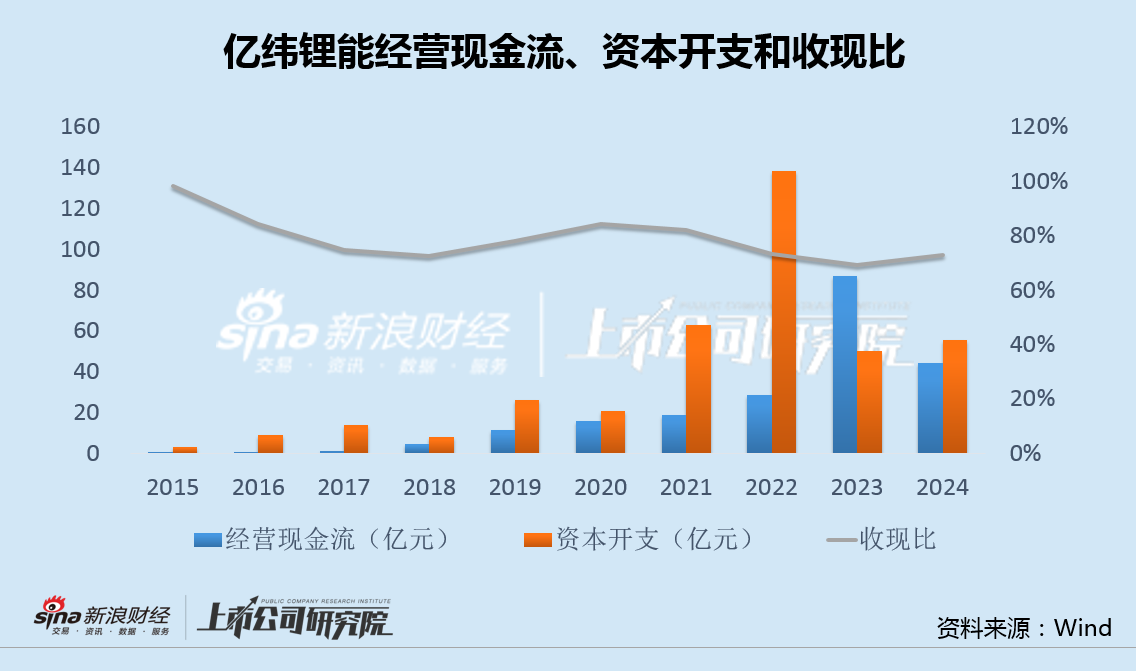
亿纬锂能拟赴港IPO:近6年直接融资190亿业绩掉队明显 大股东曾包揽定增又大幅质押
Xin Lang Zheng Quan· 2025-06-12 09:10
专题:新浪财经上市公司研究院 出品:新浪财经上市公司研究院 作者:昊 日前,亿纬锂能(维权)发布公告,拟发行H股股票并在香港联交所主板挂牌上市。国内锂电产业中寻求"A+H"布局的公司再添一员。 亿纬锂能表示,此次赴港上市,旨在进一步提高公司的资本实力和综合竞争力,提升国际化品牌形象,满足国际业务发展需要,深入推进全球化战略。 2009年上市以来,亿纬锂能累计直接融资205亿,近几年随着国内新能源锂电产业的高速发展,公司融资步伐也明显加速,2019年以来直接融资达190亿。 然而,除2023年以外,公司在其它年份资金均入不敷出,收现比长期处于较低水平,仍然十分缺钱。 更令人担忧的是,近两年亿纬锂能经营业绩明显掉队,净利润增速显著低于可比公司,2024年国内动力电池市占率也从2023年的4.45%降至3.4%,排名继续 下降。 值得注意的是,2022年,公司大股东及其关联方包揽了当年规模达90亿的定增融资,此后又进行了大比例质押,按定增价计算目前已浮亏约30%。无论是亿 纬锂能,还是其大股东,资金链似乎都颇为紧张。 近6年直接融资190亿 收现比持续走低资金入不敷出 亿纬锂能成立于2001年,主业从消费电池起家, ...

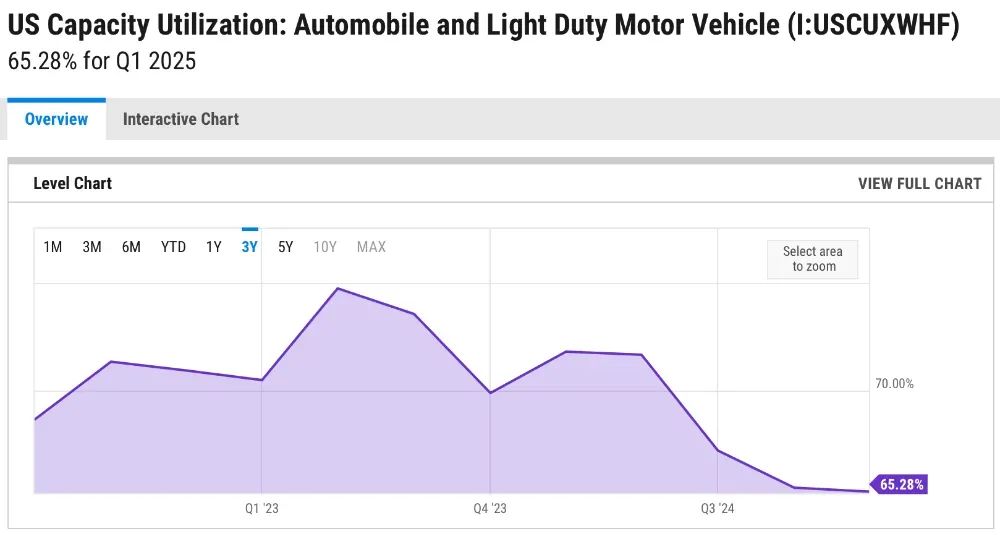
全球汽车产业真的“严重产能过剩”了吗?
Cai Jing Wang· 2025-06-11 11:47
《财经》了解到,李书福的表态更多从全球汽车产业布局的视角出发,强调中国车企"走出去"时,应该多利用当地的过剩产能,而非只考虑新 建工厂。李书福所指并非中国汽车产业存在严重产能过剩,从数据来看,中国也不存在这一情况。 根据中国国家统计局的官方数据,2021年-2024年,汽车整车制造、汽车零部件及配件等汽车制造业产能利用率分别为74.7%、72.7%、74.6% 和72.2%。 文|《财经》记者 王静仪 编辑|施智梁 全球并非同此凉热:国际车企密集关闭工厂,中国汽车产能利用率为72.2% "当今世界汽车工业严重产能过剩,我们决定不再建设新的汽车生产工厂,不搞重复建设。"吉利控股集团董事长李书福近日的公开发言,引起 广泛关注。 李书福在2025中国汽车重庆论坛上说,要充分利用全球过剩产能,尽最大可能的展开务实合作、资源重组,这样能利用成熟的质量保证体系、 熟练的技术工人,还能提高同行过剩产能的利用率,以友善的姿态参与全球市场竞争,为中国汽车工业"走出去"树立良好品牌形象。 尽管中国汽车产销正在高歌猛进,但全球并非同此凉热,世界经济增长乏力使得汽车需求低迷,汽车产量从2023年的9400万辆下降到9300万 辆,叠 ...