
情绪消费

Search documents
广州社零增速领跑一线城市,探路“老城市新活力”消费新范式
2 1 Shi Ji Jing Ji Bao Dao· 2025-08-09 14:28
Economic Performance - Guangzhou achieved a total retail sales of consumer goods of 561.12 billion yuan in the first half of the year, with a year-on-year growth of 5.9%, leading among first-tier cities [1] - The retail sales growth rate in Guangzhou outperformed Shanghai, Beijing, and Shenzhen, which recorded growth rates of 1.7%, 0.9%, and 3.5% respectively [1] Tourism and Consumption - The total passenger volume in Guangzhou reached 163 million in the first half of the year, with a growth of 0.9%, while Baiyun Airport saw a passenger throughput of 40.04 million, increasing by 9.2% [2] - Guangzhou received a total of 113 million tourists by June, with a significant increase in international visitors, particularly those arriving via international flights [2] - The implementation of optimized departure tax refund policies has facilitated a "consumption-refund-reconsumption" cycle, enhancing the overall consumer experience [2][3] Retail and E-commerce Trends - Online retail sales of physical goods in Guangzhou increased by 16.4% year-on-year, with significant growth in categories such as home appliances and furniture [4] - The demand for high-performance gaming laptops surged, driven by the summer economy and government subsidy policies [5] - Guangzhou has become a hub for major e-commerce platforms, with companies like Douyin establishing a presence in the city, reflecting its status as a leading retail market [6] Consumer Behavior and Trends - The rise of "emotional consumption" among younger consumers is driving a shift towards experiences over mere product ownership, with events and social interactions becoming key motivators for spending [7][9] - The collaboration with over 100 well-known IPs has led to a significant increase in sales for brands like Miniso, highlighting the impact of IP-driven marketing strategies [9] Service Industry Development - Guangzhou's service industry is evolving, with high-end professional services driving supply innovation to keep pace with consumer upgrades [10] - The city has been recognized as a pilot for retail innovation, aiming to integrate traditional commerce with digital and cross-border scenarios over the next two years [10]

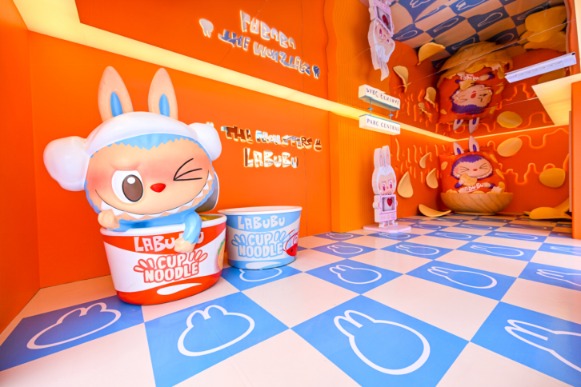
海报漫谈丨为感觉买单?当情绪消费硬控年轻人
Sou Hu Cai Jing· 2025-08-08 18:56
Core Insights - Emotional consumption has become a significant factor influencing the decision-making of the younger generation in China, as highlighted in the 2024 report by the China Consumers Association [1] Group 1: Emotional Consumption Trends - The shift from material experiences to emotional maintenance is emerging as a new consumption hotspot, with young consumers seeking joy and social fulfillment through products like blind boxes and trendy toys, leading to a market growth from 6.3 billion yuan in 2015 to approximately 60 billion yuan in 2023 [3] - Young consumers are increasingly prioritizing emotional value and personal expression in their spending, as evidenced by the Shanghai Youth Research Center's report indicating a transition in cultural tourism consumption towards these values [3][4] Group 2: Consumer Behavior Insights - A survey from the 2024 China Consumption Trend Insight Report reveals that 64.6% of respondents aged 18-65 value spiritual consumption more, with 48.9% seeking dedicated time for relaxation each week [4] - Emotional consumption is characterized by deep emotional resonance rather than impulsive buying, reflecting the younger generation's desire for identity expression and social recognition through their purchases [5][6] Group 3: The Impact of Fast-Paced Society - In a fast-paced environment, young consumers create a sense of ritual through "self-pleasing consumption," turning mundane purchases into immediate emotional rewards, which includes tangible goods and virtual companionship [8] - The rise of emotional consumption indicates a pressing need for spiritual fulfillment among the younger generation, although it may lead to a cycle of consumption and emptiness if not approached with moderation [8]

中金基金高大亮:重点关注情绪消费 传统消费白马股有估值修复空间
Zhong Zheng Wang· 2025-08-08 07:19
Group 1 - The current consumer industry shows two clear trends: more efficient sales channels and products that better meet diverse consumer needs [1] - Focus areas include emotional consumption sectors such as the millet economy, pet economy, and cosmetics [1] - Traditional consumer blue-chip stocks have potential for valuation recovery due to historical low valuation levels after three years of profit and valuation adjustments [2] Group 2 - The strong manufacturing base in China makes it difficult for monopolies to exist in most consumer goods sectors, with competitive advantages stemming from operational and production efficiency [1] - Consumer demand is complex and varied, leading to investment opportunities in areas like dopamine products, health, gaming, anime, social interaction, pets, and IP premium [1] - Recent domestic demand expansion policies have alleviated market pessimism regarding traditional consumer stocks, with many companies exceeding previous negative expectations in high-frequency data [2]
从数字解构消费新生
Bei Jing Shang Bao· 2025-08-07 12:27
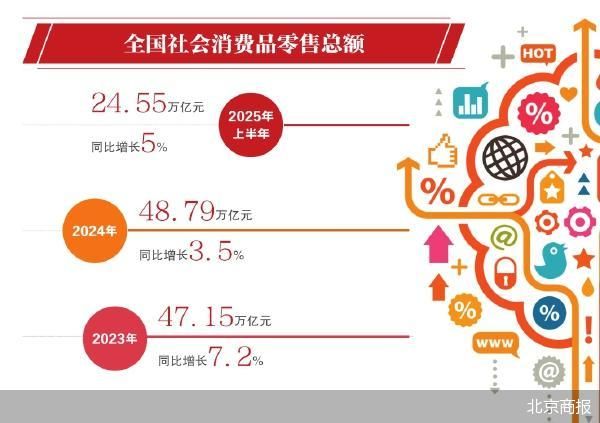
Core Insights - The article highlights the rapid restructuring of China's consumption landscape driven by digital technology, emphasizing the rise of service consumption, health-oriented spending, green consumption, the resurgence of lower-tier markets, and the proliferation of intelligent consumption. Consumption Trends - In the first half of 2025, growth in consumption upgrade products such as sports and entertainment goods, jewelry, home appliances, and cultural office supplies is projected to be 0% [2] - Online retail sales of physical goods are expected to grow by 0% due to policy incentives, with the "old-for-new" policy driving double-digit growth in retail sales of home appliances and communication equipment, accounting for 24.9% of total retail sales [2] - The retail sales of social consumer goods are projected to grow by 3.8% in 2024, with significant contributions from green and service consumption [2] Service Consumption - Service retail sales are expected to see a year-on-year growth of 20%, contributing significantly to the overall retail sales [2] - The demand for health and fitness services is increasing, with sports health service revenue expected to grow by 23.9% [2][3] - The recovery of service consumption is evident in the tourism sector, with domestic tourism revenue showing significant growth in 2024 [2] Green Consumption - Green consumption is becoming mainstream, with high-efficiency and smart home appliances experiencing rapid sales growth [2][3] - The retail volume of new energy vehicles is projected to grow by 1.7% in 2024, reflecting a shift towards sustainable consumption [2] Online Consumption - Online retail sales of physical goods reached 13.02 trillion yuan in 2023, with an 8.4% year-on-year growth [3] - The penetration rate of live e-commerce reached 37.8% in 2023, with a year-on-year increase of 24.3% [3] - The market size for live e-commerce is expected to reach approximately 5.8 trillion yuan in 2024, with a compound annual growth rate of 18% [3] Market Dynamics - The potential of lower-tier markets is being unlocked, with third-tier cities surpassing first and second-tier cities in sectors like tourism and automotive [2] - The "Xinjiang free shipping" initiative is expanding e-commerce opportunities in rural areas, reflecting a growing willingness to spend on health and wellness [2]
从四大咨询离职,我跑去卖毛绒玩具
Hu Xiu· 2025-08-07 06:09
Core Insights - The article discusses the transition from a traditional finance career to entrepreneurship in the plush toy industry, highlighting the emotional connection to toys and the market potential for growth in this sector [1][2][3]. Group 1: Industry Overview - The plush toy market is experiencing growth, driven by emotional consumer spending, particularly among women aged 15 to 35, who are becoming a significant force in the new consumer goods market [2]. - The market is currently dominated by foreign brands like Jellycat, which command high prices, indicating a willingness among consumers to spend on plush toys despite their cost [2]. - The emotional value of plush toys is emphasized, as they serve as a connection to personal memories and experiences, making them more than just simple objects [4][5]. Group 2: Company Development - The company has launched its first plush toy, named Ricky, which embodies the feelings of sensitivity and loneliness, aiming to resonate with urban consumers [9]. - The initial sales strategy involves using Xiaohongshu as the primary online sales platform, reflecting a strategic choice based on the founder's lack of experience in e-commerce [8]. - The founder's journey includes overcoming challenges such as product registration and marketing, showcasing the practical aspects of starting a business in a new industry [8][9].
中消协发布上半年投诉情况 私域引流营销乱象频出
Bei Jing Shang Bao· 2025-08-07 01:09
Core Insights - The China Consumer Association reported a significant increase in consumer complaints in the first half of 2025, with a total of 995,971 complaints received, marking a year-on-year growth of 27.23% [1] - The association highlighted key complaint areas, including traps targeting elderly consumers, private domain marketing issues, emotional consumption, online agricultural product purchases, jade live-streaming scams, and concert-related complaints [1][4] Group 1: Elderly Consumer Traps - Elderly consumer traps have become a major complaint area, with various deceptive practices identified, such as internet-induced traps, offline sales fraud, and false advertising in live-streaming [2][3] - Specific cases illustrate the issue, such as a consumer's parents being misled into purchasing an overpriced water purifier under false pretenses of health benefits [3] Group 2: Private Domain Marketing Issues - The rise of private domain marketing has led to numerous complaints, characterized by false advertising and inadequate after-sales service [4][5] - Issues include misleading promotions on social media, evasion of platform regulations, and challenges in consumer rights protection due to lack of transaction records [5] Group 3: Emotional Consumption - Emotional consumption is rapidly growing but reveals problems such as poor product quality and inducement to consume [7][8] - The association recommends establishing industry standards for emotional consumption services to ensure consumer protection and service quality [8] Group 4: Other Complaint Areas - Complaints related to high-temperature air conditioning demand, online agricultural product disputes, and increasing issues in jade-related purchases have been noted [4] - The concert industry has also seen a rise in complaints, particularly regarding refund issues [4]
中消协半年投诉热点聚焦私域直播等
Bei Jing Shang Bao· 2025-08-06 16:05
Core Insights - The China Consumer Association reported a significant increase in consumer complaints in the first half of 2025, with a total of 995,971 complaints received, marking a year-on-year growth of 27.23% [1] - The main complaint issues include traps targeting elderly consumers, private domain marketing chaos, emotional consumption, online agricultural product purchases, jade live streaming, and concert-related complaints [1][4] Group 1: Elderly Consumer Traps - Elderly consumer traps have become a major complaint issue, with various deceptive practices identified, including internet-induced traps, offline sales fraud, and false advertising in live streams [2][3] - Specific cases highlight how elderly individuals are misled into purchasing overpriced products under false pretenses, such as health benefits and free gifts [3] Group 2: Private Domain Marketing Issues - The rise of private domain marketing has led to numerous complaints, characterized by false advertising and lack of after-sales service [4][5] - Issues include misleading promotions on social media, evasion of platform regulations, and difficulties in consumer rights protection due to lack of transaction records [5] Group 3: Emotional Consumption Concerns - Emotional consumption is rapidly growing but reveals problems such as poor product quality and inducement to consume [7] - Recommendations include establishing industry standards for emotional consumption services to ensure consumer protection and quality assurance [8] Group 4: Other Notable Complaints - Complaints related to high temperatures driving air conditioning sales, agricultural product online purchase disputes, and increasing issues in jade-related transactions have been noted [4] - Concert-related complaints have also surged, particularly regarding refund issues [4]
情绪消费快速兴起 诱导消费现象突出
Bei Jing Shang Bao· 2025-08-06 09:38
Group 1 - In the first half of 2025, the National Consumer Association received 995,971 consumer complaints, a year-on-year increase of 27.23%, resolving 509,655 cases and recovering economic losses of 452 million yuan for consumers [1] - The rise of emotional consumption has led to various issues that require regulatory attention, including substandard products lacking basic information and safety warnings, posing significant consumer safety risks [1] - Induced consumption is prevalent, with some businesses exploiting consumer emotional needs through ambiguous language to encourage high spending [1] Group 2 - The National Consumer Association suggests that multiple departments collaborate to establish guidelines for regulating emotional consumption, clarifying regulatory scopes and enhancing category-specific oversight [2] - Recommendations include setting industry standards for emotional consumption services, covering entry conditions, personnel qualifications, service processes, pricing standards, after-sales responsibilities, contract terms, and personal information protection [2] - Platforms are advised to implement features like "reward limits" and "immersion reminders" to prevent excessive consumer spending in online emotional companionship and interactive services [2]
潍坊青州:场景上新 “情绪消费”撬动消费新活力
Sou Hu Cai Jing· 2025-08-06 08:48
Core Insights - The concept of "emotional value" is becoming increasingly important in social interactions and consumer behavior, particularly among young people in Qingzhou, who are seeking new social and cultural experiences [1][3] - Businesses in Qingzhou, such as cafes and Hanfu (traditional Chinese clothing) shops, are leveraging emotional value to attract customers, creating unique environments that enhance social interactions and cultural experiences [1][3] Group 1: Emotional Value in Consumer Behavior - Emotional value refers to the value derived from emotional experiences in social interactions and consumption, which is now a focal point for businesses targeting young consumers [1] - Qingzhou is redefining its cultural and tourism consumption landscape by focusing on emotional value, thereby energizing economic development [1] Group 2: Business Strategies - A popular cafe in Qingzhou has transformed its outdoor area into recognizable social media spots, allowing customers to engage and share their experiences, thus enhancing their emotional satisfaction [1][3] - The cafe owner emphasizes that the establishment offers more than just coffee; it provides a relaxing "third space" for customers to unwind and socialize [3] Group 3: Cultural Experiences - In the ancient city of Qingzhou, Hanfu shops are thriving as visitors seek immersive experiences, trying on traditional clothing and enjoying the ambiance of the historical setting [3] - The trend of wearing Hanfu has evolved from being merely a prop for photography to a popular activity among young people, who now wear it while exploring the city and sharing their experiences on social media [3] Group 4: Consumer Trends - Consumers are increasingly prioritizing emotional experiences over the mere utility of products, seeking activities that are enjoyable, healing, and stress-relieving [3] - The growing interest in emotional value is driving new consumption trends, particularly among younger demographics who are willing to spend on experiences that provide emotional fulfillment [3]

新消费带来新变化 多家龙头公司表现亮眼
Jing Ji Ri Bao· 2025-08-06 02:27
"过去4年最终消费对中国经济增长的平均贡献率达到56.2%,比'十三五'期间提高8.6个百分点。消费领 域新产品、新业态、新模式层出不穷。"国家发展改革委秘书长袁达近日在国新办举行的"高质量完 成'十四五'规划"系列主题新闻发布会上介绍。 与传统消费相比,新消费的核心在于"新"字,它可以是新的东西,也可以是在传统消费形式上的创新。 业内人士认为,每一代年轻人的喜好不同,表达个性、交友的方式也不同,由此催生了不同的消费需 求。新消费的崛起,是消费市场对品质、体验和个性化追求的结果。它不再局限于传统的消费模式,而 是通过技术创新和业态融合,创造出全新消费场景和体验。 申万宏源证券首席经济学家赵伟表示,近年来,消费需求侧对情绪价值的关注度提升。2024年消费者购 物"为了取悦自己""彰显个性"的消费动机占比,较2021年分别提升9个百分点和1个百分点。随着消费动 机的转变,具有"悦己"属性的消费市场规模实现较大增长,如谷子经济2024年市场规模达1689亿元,同 比增长40.6%。 "我妈经常说我这么大个人了怎么还成天买玩具、抽盲盒,其实我就是图一个开心。"今年29岁的王君颜 说,自己并不会刻意盯着产品上新,一般在 ...