
消费升级

Search documents
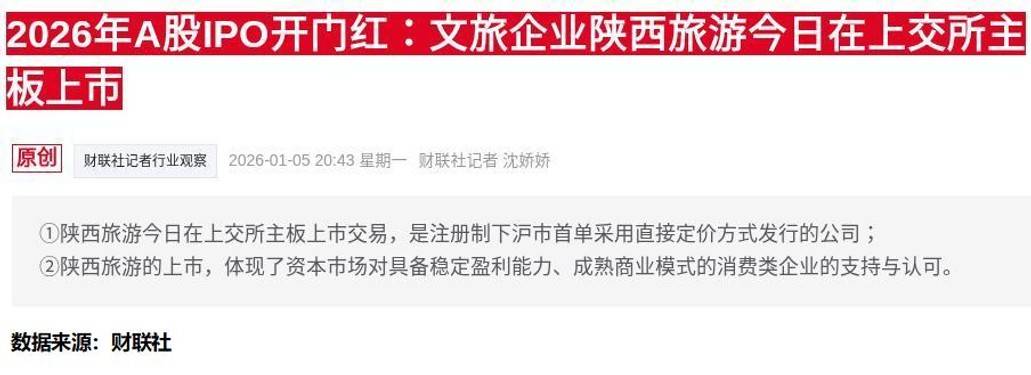
2026年首只文旅股上市 你忽略的市场本质在这里
Sou Hu Cai Jing· 2026-01-06 07:20
Core Viewpoint - The article discusses the dynamics of stock market reactions to news, emphasizing that the underlying behavior of institutional funds is more critical than the news itself in determining stock price movements [1][2]. Group 1: Market Reactions to News - The A-share market experienced a unique start in 2026 with the listing of Shaanxi Tourism, which saw its opening price rise by 63% from the issue price of 80.44 yuan, marking it as the first cultural tourism company to list in the past five years [1]. - The common confusion among investors arises from the phenomenon where positive news does not always lead to price increases, and negative news does not always result in declines, highlighting the importance of understanding market sentiment and institutional behavior [2][7]. Group 2: Institutional Behavior - The article emphasizes that the activity level of institutional funds can be tracked through their trading characteristics rather than just the volume of transactions, indicating whether they are actively participating in the market [5][8]. - The concept of "institutional inventory" is introduced, which reflects the ongoing trading activity of institutional investors; its presence indicates continued interest, while its absence suggests a lack of support for price movements [5][7]. Group 3: Investment Strategy - Investors are advised to focus on the attitude of institutional funds rather than solely on news, as the true market dynamics are driven by sustained institutional participation rather than short-term speculative trading [7][8]. - The article suggests that understanding the active involvement of institutions can help investors discern which price movements are genuine and supported versus those that are merely temporary fluctuations [8].

10万亿消费潜力激活!涨工资不是口号,2026经济转轨改写收入格局
Sou Hu Cai Jing· 2026-01-06 05:43
Economic Policy Shift - The central economic work conference in December 2025 announced a shift from encouraging income growth to implementing a specific plan for increasing urban and rural residents' income, marking a significant policy change [1] - The new policy aims to address the long-standing issue of low resident income as a percentage of GDP, which has hindered economic growth [3] Investment and Consumption Trends - Fixed asset investment in China decreased by 2.6% in the first 11 months of 2025, with real estate development investment plummeting by 15.9%, indicating a shift in economic drivers from investment and exports to consumption [3] - The consumer spending rate in China stands at 39.9%, significantly lower than the average of 54% in developed countries, suggesting a substantial potential for consumption growth [5] Wage Increases and Employment Dynamics - Minimum wage standards in provinces like Shanxi and Sichuan were raised by 8% to 12%, while major companies like ByteDance and JD Technology implemented aggressive salary increases, with JD reporting an average salary hike of 20% [6] - The wage increase trend is skewed towards low-income workers and those with critical skills, while high-paying sectors like finance and real estate show little to no wage growth [8] Urban-Rural Income Disparity - The income disparity between urban and rural residents remains significant, with urban disposable income at 42,991 yuan compared to 17,686 yuan for rural residents, leading to a ratio of 2.43:1 [10] - Efforts to increase rural income through land reform and market access face challenges due to existing structural barriers [10] Consumer Behavior and Economic Stimulus - A high savings rate persists among residents, with 65% of new disposable income allocated to savings or debt repayment, and only 12% directed towards consumption [12] - Policy measures include lowering LPR rates to ease mortgage burdens and providing consumption and childbirth subsidies to stimulate spending [12] Geographic and Sectoral Disparities - The distribution of income growth is uneven, with significant differences in housing market dynamics between tier-3 cities and major urban centers like Shenzhen [14] - The survival of small and medium enterprises is under pressure due to rising social security costs and reduced funding, leading to potential market consolidation [14]

场景跨界上新“加速跑” 花样新“夜”态点亮夜经济托举消费升级
Yang Shi Wang· 2026-01-06 03:31
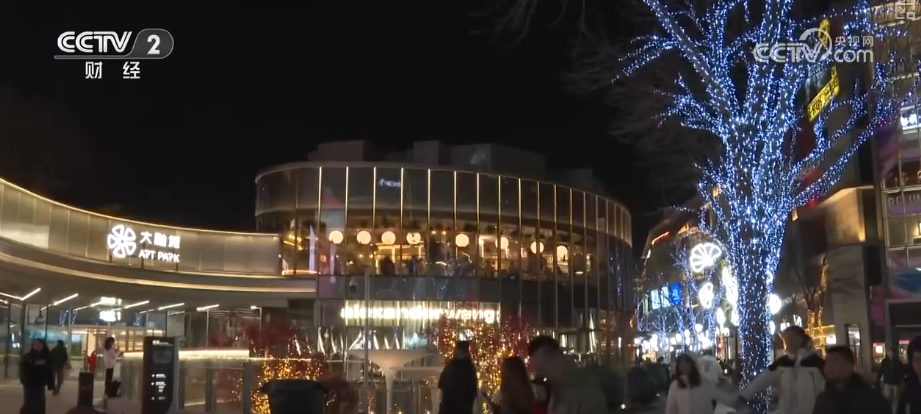
央视网消息:即便是寒冷的冬夜,各地的夜间消费也是一片暖意融融的景象。在北京,从潮流商业体到河边市集,市民游客冬夜休 闲有了新的选择。 当商圈夜潮涌动之时,北京的户外夜市同样热力十足。在通州运河畔的月亮河小镇,冬日市集上的特色美食与文创潮玩,与艺术景 观和灯光构建出夜间消费乐园。 这里是通州月亮河夜市的美食市集。尽管现在天气有些冷,但可以看到还是有许多前来游玩逛吃的朋友。这里汇聚了100多家美食 摊位,可以实现"一站式"打卡多地风味。 在蓝色港湾商区,非遗剪纸化作流光溢彩的灯组,吸引游人驻足。作为"夜京城"核心地标,这里融合文旅、购物、餐饮、娱乐等多 元业态,夜间消费持续升温。 夜幕降临,灯火璀璨的中关村大融城已成为客流聚集地。这里集结了70余家时尚零售与特色餐饮首店,引入众多国际潮流品牌和各 色特色店铺,让购物升级为兼具时尚气息与生活美学的休闲场景。消费者步入主题美食街区,沉浸式感受社交型美食体验的乐趣。 在丰富的消费业态基础上,中关村大融城还"把公园搬进商场",屋顶花园和下沉广场串联成游园动线,为消费者带来独特的休闲体 验。 中国社科院大学商学院教授魏翔表示,夜经济实质上是在时间上托举消费升级,白天和夜间通 ...
扩内需政策信号传导至资本市场 结构性机会陆续涌现
Jing Ji Ri Bao· 2026-01-06 02:57
Group 1 - The 2025 Central Economic Work Conference prioritizes "domestic demand as the main driver, building a strong domestic market," signaling a positive outlook for the A-share retail and food and beverage sectors, which have recently surged [1] - Analysts note that the current domestic demand expansion policy features "income enhancement, supply optimization, and precise investment," presenting a dual opportunity for valuation recovery and performance growth in related sectors [1] - The focus of policy is shifting from traditional "stimulating consumption" to a deeper logic of "income enhancement and supply optimization," indicating that consumption opportunities will exhibit structural characteristics [1] Group 2 - The implementation of urban and rural resident income enhancement plans is expected to directly boost consumer spending capacity, benefiting mass consumer goods and inclusive finance sectors [1] - Data from the National Bureau of Statistics shows that in November 2025, the core CPI rose by 1.2% year-on-year, with air ticket and housekeeping service prices increasing by 7.0% and 2.4%, respectively [1] - The retail sales of services grew by 5.4% year-on-year in the first eleven months of 2025, outpacing the growth of goods retail sales by 1.3 percentage points, with segments like cultural and sports leisure services maintaining double-digit growth [1] Group 3 - From the perspective of consumption upgrading, domestic brands, health care, and cultural tourism are entering a rapid development phase due to rising incomes and changing consumer attitudes [2] - The "concert economy" and health tourism are emerging as new business models with long-term growth logic, indicating a shift in the consumption market from quantitative growth to qualitative leaps [2] - The 2025 Central Economic Work Conference's emphasis on "stabilizing and recovering investment" is gaining attention, with a focus on enhancing "efficiency and structure" in investment projects [2]
陕西旅游IPO今日登陆上交所主板,“景区+文旅”龙头开启高质量发展新篇章
Zheng Quan Shi Bao Wang· 2026-01-06 02:36
Core Viewpoint - Shaanxi Tourism officially listed on the Shanghai Stock Exchange on January 6, marking a significant milestone for the company as it aims to enhance its core business and expand nationally with the funds raised from its IPO [1] Group 1: Business Overview - Shaanxi Tourism focuses on tourism performance, cable cars, and dining, leveraging top-tier resources like Huaqing Palace and Mount Huashan to create a competitive barrier through deep integration and specialized operations [2] - The company has developed renowned cultural performances, including the large-scale historical dance drama "Chang Hen Ge," which has been a significant success since its debut in 2007, contributing to both social and economic benefits [2] - The Huashan West Peak Cableway is recognized as an industry benchmark, enhancing visitor experience and serving as a major profit source for the company [2] Group 2: Financial Performance - For the fiscal year 2024, Shaanxi Tourism is projected to achieve a revenue of 1.263 billion yuan and a net profit of 512 million yuan, with a net profit margin and return on equity (ROE) significantly higher than peers like Huangshan Tourism and Lijiang Shares [4] - The company has demonstrated strong operational resilience, maintaining robust financial metrics despite external challenges such as extreme weather [4] Group 3: Strategic Plans - The funds raised from the IPO will primarily be used for acquiring stakes in Taihua Cableway and Yaoguang Pavilion, as well as for the construction of the second phase of Taishan Xiucheng and the South Line Cableway of Shaohua Mountain [5][6] - These strategic acquisitions and projects are aimed at enhancing net profit, improving management efficiency, and expanding the company's footprint nationally, transitioning from a regional player to a leading provider of comprehensive leisure tourism services [5][6] - The company aims to leverage capital market resources for both organic growth and external expansion, aspiring to become a top-tier provider of leisure tourism experiences across the country [6]
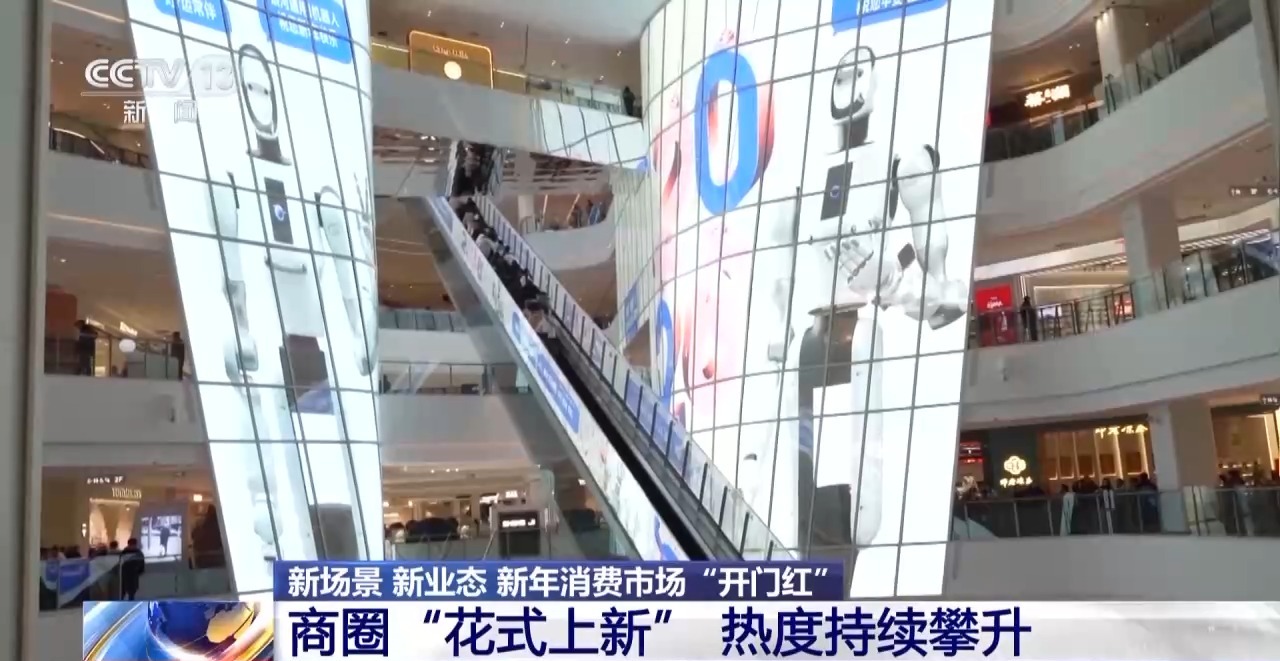
视频丨商圈“花式上新”、电影火热开年 消费市场迎“开门红”
Yang Shi Xin Wen Ke Hu Duan· 2026-01-06 01:32
Group 1 - The core viewpoint of the articles highlights a significant increase in consumer activity during the New Year holiday, with key shopping districts experiencing a 5.9% rise in daily foot traffic and a 4.9% increase in sales compared to the previous year [1] - The emergence of new shopping experiences, such as pop-up stores and interactive events, is enhancing consumer engagement and driving sales growth [2] - In Wuhan, a new park-style super complex attracted over 120,000 visitors on New Year's Day, showcasing diverse activities and services aimed at families and pet owners [4] Group 2 - The film market had a strong start to the year, with box office revenues reaching 739 million yuan and over 18.57 million moviegoers during the New Year period, indicating a shift towards a more integrated consumption ecosystem [9][11] - The "movie+" model is expanding, linking cinema experiences with dining and tourism, thus enhancing overall service consumption [17] - New consumer demands, such as ice and snow experiences and smart technology, are driving supply-side innovations, creating a dynamic market environment [18][20] Group 3 - The holiday period saw a notable increase in service consumption, with restaurant sales growing by 2.8% and ski resort revenues surging over 50% [15] - The demand for elder-friendly products and services is evolving, with innovative offerings like smart sleep monitoring devices gaining popularity [22] - The integration of artificial intelligence in consumer experiences is becoming more prevalent, with sales of smart health devices and wearables increasing by over 20% and 15%, respectively [24]
锚定“十五五”开局 实干践诺谋发展
Zheng Zhou Ri Bao· 2026-01-06 00:49
Core Points - The Zhengzhou Municipal Economic Work Conference emphasizes high-quality economic development goals and practical paths, aligning with the "14th Five-Year Plan" and central government directives [1][10][19] Group 1: Economic Development Strategies - Various districts are implementing the conference's spirit by establishing specific measures tailored to local conditions, aiming for practical outcomes [2][19] - The focus is on innovation-driven development, enhancing modern industrial systems, and fostering new business models and consumption patterns [2][3][6] - The conference outlines a framework for urban development, aiming to optimize city functions and create core growth areas within metropolitan circles [4][10] Group 2: Project and Infrastructure Development - Key projects are being accelerated, including the establishment of industrial parks and logistics centers to boost local economies [5][10][14] - The development of specific areas, such as the cold chain logistics and modern food industries, is prioritized to enhance regional economic strength [5][10] - Urban renewal initiatives are being implemented to improve living conditions and infrastructure, focusing on enhancing the quality of urban environments [5][15] Group 3: Innovation and Technology - The establishment of research institutions, such as the Zhongke Big Data Research Institute, aims to integrate industry, academia, and research to drive innovation [7][11] - Emphasis is placed on developing new production capabilities and fostering a culture of innovation within local enterprises [6][7][13] Group 4: Consumer Market Activation - The conference highlights the importance of creating an international consumer center to stimulate market vitality and develop new consumption scenarios [8][13] - Local initiatives are being launched to enhance consumer experiences and promote strategic projects in technology and green industries [8][13] Group 5: Social Welfare and Governance - The focus on improving public services and ensuring social welfare is a key aspect of the economic strategy, aiming to enhance the quality of life for residents [15][16][18] - Governance models are being refined to ensure effective community engagement and responsiveness to public needs [15][16][18]
2026,四大消费赛道丨尼尔森IQ年度报告同步首发
吴晓波频道· 2026-01-06 00:29
Core Insights - The article discusses the evolving consumer landscape in China, particularly focusing on the dual strategy of "first-time purchases + upgrade activation" in the context of county-level economies and the growing significance of lower-tier markets [3][14][16]. Group 1: Consumer Trends - During the New Year holiday, domestic tourism revenue reached 847.89 billion yuan, recovering to 112.3% of 2019 levels, with 1.35 billion domestic tourists, reflecting a strong rebound in consumer activity [3]. - In Hainan, post-"closure," tourism revenue surged to 32.8 billion yuan, a 28.9% year-on-year increase, with duty-free shopping reaching 7.12 billion yuan, up 128.9% [4]. - The consumer base is increasingly divided into "carefree" and "cautious spending" types, with 24% and 39% of the population respectively identified in 2024, and the "carefree" segment expected to grow to 31% by 2025 [7][9]. Group 2: Market Dynamics - The lower-tier cities are experiencing significant growth in tourism, with cities like Jingzhou and Huaihua seeing over 30% year-on-year increases in visitor numbers, outpacing first-tier cities [5]. - The report highlights that 68% of companies in lower-tier markets have seen stagnant or negative growth in market share over the past two years, indicating challenges in maintaining momentum [16]. - The demand for durable goods in lower-tier markets is growing, with a 12% year-on-year increase in sales, and the importance of these markets is rising by 38% [16]. Group 3: Product and Brand Strategies - The report emphasizes the importance of "first-time purchases" and "upgrade activation," suggesting that brands should focus on attracting consumers making their first significant purchases, such as smart appliances and electric vehicles [17]. - 57% of consumers in lower-tier markets have not upgraded their appliances in over three years, indicating a need for strategies to stimulate replacement purchases through trade-in programs and experiential upgrades [17]. - Key consumer preferences include price sensitivity, product performance, and the desire for smart technology, with a notable increase in sales of energy-efficient appliances by 38% on platforms like JD.com [4][21]. Group 4: Sales Channels - Emerging sales channels are gaining traction, with content e-commerce and membership warehouse stores showing significant growth, while traditional channels like hypermarkets are declining [24][25]. - The top five sales channels with year-on-year growth include content e-commerce (27%), membership warehouse stores (25%), and snack stores (20%) [24]. - The shift in consumer behavior is towards valuing unique products and experiences, with 69% of consumers believing private label brands offer better value [27]. Group 5: Future Outlook - The article suggests that the next growth wave in consumer goods will be driven by AI and smart technology, with a focus on health and convenience [43][44]. - The new round of national subsidies will target high-efficiency products, particularly in the tech and appliance sectors, which are expected to stimulate further growth [34]. - The report concludes that brands that can adapt to consumer preferences and provide meaningful experiences will define the future of the market [56].

郑州“场景焕新”激活消费新增长极 ——透视一座城的消费升级之路
He Nan Ri Bao· 2026-01-05 23:25
Core Insights - Zhengzhou's new commercial projects are moving beyond traditional shopping models to create complex consumption hubs that integrate culture, art, social interaction, and leisure, marking a clear sign of consumption upgrade in the city [2] Group 1: New Consumption Scenes - The "park park" district has quickly become a popular leisure destination for young people, featuring unique stores and a relaxed atmosphere that caters to the needs of the younger consumer demographic [1] - Other new consumption scenes are emerging in Zhengzhou, such as Zhengdong Wanda Plaza and Bo Du New Image Street, which incorporate local cultural elements and artistic designs to enhance the shopping experience [1] Group 2: Policy and Market Dynamics - Zhengzhou is accelerating its development as an international consumption center, supported by policies that promote new consumption formats and innovative market practices [2] - Since 2025, Zhengzhou has hosted over 1,100 consumption promotion events, stimulating market potential and driving significant sales, including 410 million units of products exchanged through trade-in programs, resulting in a consumption boost of 48.2 billion yuan [2] Group 3: Commercial Innovation - The emergence of first-store and first-launch economies is enhancing the city's commercial appeal, with both international and local brands establishing a presence in Zhengzhou [3] - New business models such as instant retail and live e-commerce are rapidly gaining traction, contributing to the dynamic commercial landscape [3] Group 4: Economic Growth - Zhengzhou's total retail sales of consumer goods reached 608.85 billion yuan in the first eleven months of 2025, reflecting a year-on-year growth of 5.2% [5] - The rise of new consumption scenes is attributed to the interplay of urban function updates, industrial upgrades, and demographic changes, indicating a shift in consumer focus from basic needs to quality and experience [5]

旅游消费以40%增长意愿登顶榜首
Jiang Nan Shi Bao· 2026-01-05 23:18
Core Insights - Consumption is a persistent driver of economic growth and reflects the quality of life for residents in Jiangsu, with a significant shift towards high-quality, intelligent, and green consumption patterns expected by 2026 [1] Group 1: Consumer Trends - The survey indicates that by 2026, tourism is expected to see a nearly 40% increase in spending, making it the top area of growth, followed by education and health-related consumption [2] - 46% of respondents plan to increase their investment in quality education, with this figure rising to 51.6% in rural areas, highlighting a collaborative improvement in educational consumption perspectives between urban and rural residents [2] - The younger demographic (ages 18-25) and women are identified as the main consumers, with 51.8% of young individuals planning to increase their travel expenditures in 2026 [2] Group 2: Health and Wellness Consumption - The shift in health consumption from disease treatment to preventive measures is evident, with expected growth in sports and wellness spending ranking third and fourth respectively by 2026 [3] - Different age groups exhibit varying preferences, with younger consumers favoring smart wearables and image management, while older consumers are willing to pay a premium for high-end nutritional products and traditional Chinese medicine [3] - 59.6% of residents prefer home-based elderly care, but 48.2% prioritize community health services, indicating a strong demand for integrated healthcare solutions [3] Group 3: Emerging Consumption Areas - The cultural and entertainment sector shows robust growth, with Jiangsu being the second-largest movie ticket market in China, where 58% of respondents choose to spend on films [4] - The demand for home services is expanding, particularly among the 26-45 age group, which constitutes 66.7% of high-spending consumers, reflecting a trend towards professional and customized services [4] - The "pet economy" is gaining traction, with 64.1% of pet owners being from the post-80s and post-90s generations, indicating a shift from functional to emotional spending on pets [4]