高端化

Search documents
2025港口钢丝绳索具船用钢丝绳索具推荐合作厂家-上海正申金属制品
Sou Hu Cai Jing· 2025-09-25 04:45
Company Overview - Shanghai Zhengshen Metal Products Co., Ltd. was established in 1994 and specializes in the research, production, and testing of wire ropes and wire rope accessories [1] - The company is headquartered in Shanghai and has a production facility located in Kunshan, Jiangsu, with an annual production capacity exceeding thousands of tons and over a thousand partners [1] Main Products and Applications - The core products include various types of wire ropes and accessories, such as crane wire rope accessories, galvanized wire rope accessories, smooth wire rope accessories, port wire rope accessories, marine wire rope accessories, elevator wire rope accessories, fishing wire rope accessories, and high-strength wire rope accessories [2] - The company has developed eight product systems covering applications in shipping, oil, mining, construction machinery, elevators, cable cars, and special purposes, with specifications ranging from φ6.0mm to φ180mm [2] Technology R&D and Process Features - The company has conducted long-term research on wire rope manufacturing processes, including compaction, roller die, and internal injection molding technologies [3] - Equipped with advanced international production and testing equipment, the company can process and test various specifications of wire ropes, ensuring stability in mass production [3] Standards Development and Industry Contribution - Shanghai Zhengshen has taken on significant responsibilities in standardization, including leading the development of national and industry standards [4] - The company has contributed to multiple national and industry standards, reflecting its technical position in the industry and its role in standardizing wire rope manufacturing and usage [4] Quality and System Certifications - The company has obtained various international and domestic certifications, including ISO9001:2015, ISO14001:2015, and ISO45001:2018 [5][6] - Certifications from multiple classification societies and recognition as a high-tech enterprise further enhance the company's credibility and market access [6] Research and Testing Capabilities - The company possesses advanced experimental conditions for mechanical performance testing and fatigue testing, along with an independent R&D and technical team [7] - This technical capability allows the company to meet conventional demands while exploring applications in extreme environments and special uses [7] Corporate Culture and Development Philosophy - The company adheres to the philosophy of "technological innovation and win-win cooperation," emphasizing quality control and standard formulation [9] - The brand image of "Wang Zhang wire rope" reflects a commitment to meticulous production processes [9] Industry Background and Development Trends - The wire rope industry is experiencing increased demand due to global infrastructure construction and energy development, with a shift towards high-strength and high-reliability products [10] - The industry is transitioning from traditional manufacturing to high-end and intelligent production, driven by sustainability and environmental requirements [10] Summary - Since its establishment in 1994, Shanghai Zhengshen Metal Products has evolved into a comprehensive wire rope manufacturing enterprise, integrating R&D, production, testing, and standard formulation [11] - The company's product range and technological advancements position it as a significant player in the wire rope industry, supported by international certifications and contributions to industry standards [11]

雷军称自己正是闯的年纪
Xin Lang Cai Jing· 2025-09-25 00:44
Core Viewpoint - The company, Xiaomi, has faced numerous challenges over the past five years but has decisively embarked on ventures into electric vehicles, chip manufacturing, and high-end product development, emphasizing that there is no time for hesitation at this stage of life [1]. Group 1 - Xiaomi has experienced a tumultuous journey over the last five years, characterized by both struggles and significant developments [1]. - The company has initiated ambitious projects in electric vehicle production, chip development, and enhancing its high-end product offerings [1]. - The founder, Lei Jun, expresses a strong belief in taking bold steps at this stage of life, indicating a proactive approach to business growth [1].

世运电路创始人佘英杰:以创新与稳健向着“百年老店”前行
Shang Hai Zheng Quan Bao· 2025-09-24 19:44
Core Viewpoint - The company, Shiyun Circuit, has maintained its focus on the PCB industry for 40 years, leveraging industry trends and a commitment to stable operations to aim for leadership in high-tech sectors [2][3]. Group 1: Company History and Development - Shiyun Circuit was founded by She Yingjie in 1985, coinciding with the growth of the PCB industry in China, which was seen as a future-oriented sector due to the increasing demand for electronic products [3]. - The company initially established itself in Hong Kong before relocating to Shenzhen in 1991, benefiting from the region's industrial support and policies that encouraged manufacturing [3]. - By 2000, the factory area expanded to 15,000 square meters with an annual output value nearing 300 million yuan, leading to a strategic move to Jiangmen for better environmental conditions and resource availability [3]. Group 2: Business Strategy and Focus - Despite opportunities to diversify, the company chose to remain focused on the PCB sector, believing that deepening expertise in its core business would mitigate risks associated with blind diversification [4]. - This commitment has allowed Shiyun Circuit to become a leading provider of PCB solutions across various sectors, including new energy vehicles, robotics, and drones [4]. Group 3: Innovation and R&D - Continuous investment in research and development is a cornerstone of Shiyun Circuit's strategy, with approximately 4% of revenue allocated to R&D, which is considered high for the PCB industry [5][6]. - The company has been proactive in developing PCB products for the new energy vehicle sector for over a decade and has established itself as a supplier for major international companies like Tesla and Dyson [6]. - A significant investment of 1.5 billion yuan is planned for a new PCB manufacturing base, aimed at scaling production of embedded chip PCBs and enhancing high-density interconnect (HDI) product capacity [6]. Group 4: Market Expansion and Partnerships - Since its listing on the Shanghai Stock Exchange in 2017, Shiyun Circuit has raised over 4 billion yuan, which has supported its R&D and capacity expansion efforts [7]. - The introduction of state-owned capital in 2024 has been pivotal, increasing domestic market orders and enhancing the company's ability to navigate industry policies and collaborative projects [7]. - The company has maintained a strong international market presence, with 90% of its revenue coming from overseas, while also accelerating its domestic market expansion [6][7]. Group 5: Future Outlook - Looking ahead, Shiyun Circuit aims to become a high-tech leader in the PCB industry over the next 40 years, focusing on high-end product development and industry exploration [8]. - The company anticipates that the PCB industry will evolve towards high-end and intelligent solutions, with embedded chip PCBs and semiconductor packaging becoming key growth areas [8]. - Shiyun Circuit is committed to integrating its capabilities across PCB, semiconductor, and packaging sectors through a dual-driven strategy of technological collaboration and industry chain integration [8].

中集集团发布科技创新白皮书 解码跨国企业创新之路
Zhong Zheng Wang· 2025-09-24 08:41
Core Viewpoint - CIMC Group celebrates its 43rd anniversary and releases its first "Technology Innovation White Paper," highlighting its commitment to technological innovation as a driver for high-quality development and national strategy service [1] Group 1: Company Overview - Since producing its first container in 1982, CIMC Group has evolved from a small container manufacturer to a multinational enterprise with operations in over 100 countries and annual revenue exceeding 100 billion yuan [2] - The company has implemented a "champion product leading strategy," developing over 30 star products across key sectors such as logistics equipment and energy chemicals [2] - CIMC Group has cultivated 8 national-level manufacturing single champion products and operates 16 national-level specialized "little giant" enterprises, forming a sustainable innovation ecosystem [2] Group 2: Strategic Transformation - CIMC Group has established "high-end, digital, and green" as the core strategies for its transformation and upgrade, contributing over 100 billion yuan in revenue from more than 30 businesses and products aligned with these strategies [3] - The "Blue Whale No. 1" semi-submersible drilling platform, built by CIMC Raffles, represents a leading level in the global field and aids in the successful trial extraction of combustible ice [3] - The company has initiated a digital transformation since 2018, integrating industrial internet, artificial intelligence, and 5G technologies to significantly enhance manufacturing automation [3] - CIMC Anrui's bio-green methanol demonstration plant in Zhanjiang is expected to start production in Q4 this year, with an initial capacity of 50,000 tons/year and a future total capacity of 250,000 tons/year [3] Group 3: Future Outlook - CIMC Group aims to embrace global technological innovation with an open attitude, implementing a technology-driven enterprise strategy and advancing its high-end, digital, and green transformation [4] - The company plans to consolidate its advantages in logistics and energy equipment while actively exploring new fields and accelerating the construction of new productive forces [4]

国产新能源品牌转向技术战
Bei Jing Shang Bao· 2025-09-23 16:18
Core Viewpoint - The article highlights the significant technological advancements made by BYD's brand, Yangwang, particularly with the Yangwang U9X, which has achieved a new world record speed of 496.22 km/h, surpassing the previous record held by Bugatti Chiron Super Sport [1][2]. Group 1: Technological Breakthroughs - The Yangwang U9X is equipped with a fully self-developed disruptive technology solution, including the world's first mass-produced 1200V ultra-high voltage platform and a race-level blade battery with a discharge rate of 30C [2][5]. - The vehicle's performance is further enhanced by four high-speed motors, each capable of 30,000 RPM, resulting in a total power output exceeding 3,000 horsepower [2][5]. - The U9X has also demonstrated impressive track performance, achieving a lap time of 6 minutes and 59.157 seconds at the Nürburgring Nordschleife, a highly challenging racing circuit [3]. Group 2: Industry Trends - The automotive industry is shifting from price competition to a focus on technological innovation, with companies increasingly investing in R&D to build competitive advantages [4][7]. - BYD is transitioning from a phase of price wars to a technology-driven strategy, with plans to enhance its high-end offerings and maintain its market leadership in the electric vehicle sector [4][6]. - The Chinese government is encouraging this shift by promoting the development of key technologies such as automotive chips and solid-state batteries, aiming to create high-quality supply that meets consumer demands [6][7]. Group 3: R&D Investment - BYD's R&D investment reached 30.9 billion yuan in the first half of 2025, marking a 53% increase year-on-year, solidifying its position as a leader in R&D spending within the A-share market [5]. - The company has cumulatively invested over 210 billion yuan in R&D, supported by a team of 120,000 engineers focused on core technologies [5][6]. - Continuous R&D investment is seen as crucial for creating new demand and strengthening technological barriers in the competitive landscape of the automotive industry [6][7].

嘉麟杰上半年净利大增27% 轻工业稳增长方案促出口新机遇
Zhong Jin Zai Xian· 2025-09-23 10:48
Core Viewpoint - The Chinese light industry is experiencing a new development opportunity due to precise growth policies, with Shanghai Jialinjie Textile Co., Ltd. exemplifying success through high-end and intelligent strategies, as evidenced by significant profit and cash flow increases in the first half of 2025 [1]. Group 1: Financial Performance - The company reported a net profit increase of 27.38% in the first half of 2025, with operating cash flow surging over 30 times, indicating a strong recovery and operational efficiency [1][2]. - The net cash flow from operating activities reached 62.58 million yuan, a substantial increase of 3005.17% year-on-year, reflecting enhanced collection capabilities [2]. - The weighted average return on net assets rose to 2.82%, an increase of 0.58 percentage points year-on-year, while earnings per share grew by 27.76% to 0.0359 yuan per share, showcasing excellent cost control and operational efficiency [2]. Group 2: Business Segmentation - The company achieved a total revenue of 616 million yuan in the first half of 2025, with the apparel business contributing 427 million yuan, a year-on-year growth of 8.66%, accounting for 69.29% of total revenue [3]. - Despite a slight adjustment in fabric business revenue, the gross margin increased by 3.02 percentage points, indicating successful product structure optimization and high-end strategy implementation [3]. - The company demonstrated significant profitability resilience compared to the industry, which faced a 7.6% year-on-year decline in profits for large enterprises from January to May 2025, thanks to high-value-added products like functional fabrics and wool knits [3]. Group 3: Market Outlook and Policy Support - Recent joint announcements from the Ministry of Industry and Information Technology, the Ministry of Commerce, and the State Administration for Market Regulation provide favorable expectations for the export business, supporting new foreign trade formats like cross-border e-commerce [4]. - The policies aim to promote generative artificial intelligence in product design and production, fostering new growth points in sectors like sports and leisure, which will benefit light industry companies like Jialinjie [4]. - The global trend of consumption upgrading and the rise of health and fitness culture present vast opportunities for functional textiles, aligning with the company's ongoing high-end and intelligent strategies, which are well-supported by domestic growth policies [4].

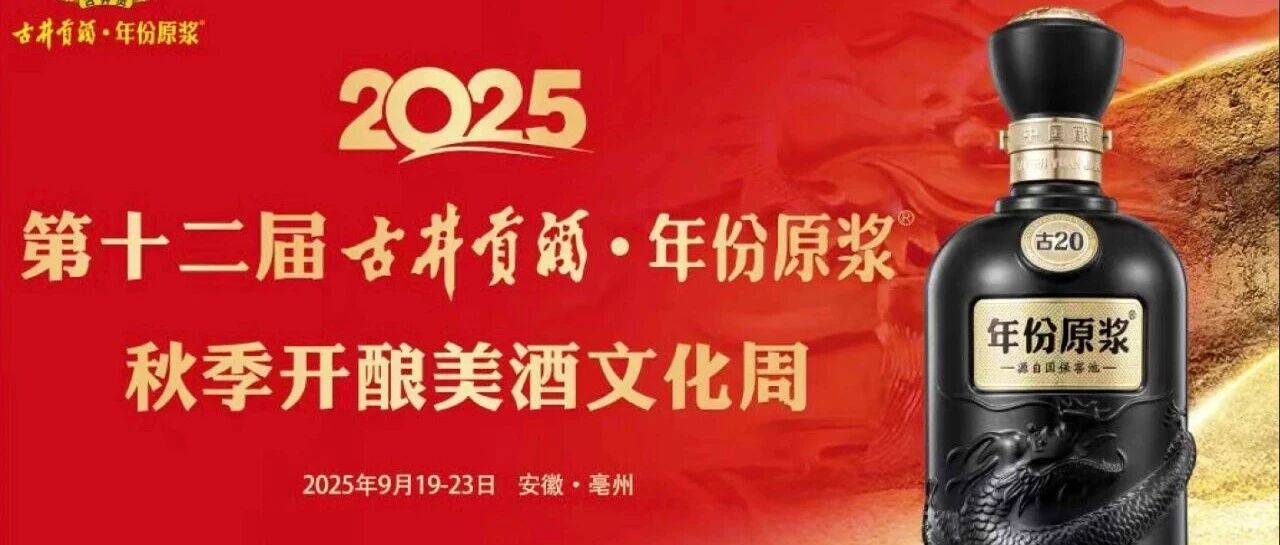
九月金秋开酿,古井贡酒香飘2025世界制造业大会
新华网财经· 2025-09-23 10:10
Core Viewpoint - The article highlights the integration of ancient and modern wine culture through the 2025 12th Gujing Gongjiu Autumn Brewing Cultural Week, showcasing Gujing Gongjiu's significant role in the manufacturing industry and its commitment to innovation and sustainability [5][10]. Group 1: Event Overview - The Gujing Gongjiu Autumn Brewing Cultural Week took place from September 19 to 23, featuring a dual-city event in Bozhou and Hefei [5]. - The World Manufacturing Conference, as part of the autumn brewing activities, presented a journey through wine culture, emphasizing the blend of tradition and future innovation [7]. Group 2: Company Achievements - Gujing Gongjiu ranked 413th on the list of China's top 500 manufacturing enterprises this year, reaffirming its status in the industry [10]. - The company has been deeply involved in the preparation and operation of the World Manufacturing Conference, marking its eighth year of collaboration [10]. Group 3: Thematic Focus - The theme of "Green Brewing and Intelligent Manufacturing" was showcased, highlighting Gujing Gongjiu's efforts in quality construction and its transition towards high-end, intelligent, and green production [13]. - The event featured various exhibitions, including traditional brewing techniques and interactive activities, allowing attendees to experience the cultural significance of Chinese brewing [18]. Group 4: Consumer Engagement - A special tasting event titled "Encounter Hefei" was held, inviting consumers to explore the city while enjoying innovative cocktail experiences [22]. - The event included a diverse range of products, from health-oriented beverages to cultural experiences, aimed at engaging younger audiences [16][18].

新乡化纤部分产线有序停产改造90天 预减营收1.85亿元和利润4800万元
Chang Jiang Shang Bao· 2025-09-23 09:05
Group 1 - The core viewpoint is that Xinxiang Chemical Fiber (000949.SZ) is undergoing a planned production line shutdown for transformation, which will temporarily impact the company's performance [1] - The shutdown will affect a production capacity of 31,200 tons per year of biomass cellulose filament, leading to an estimated reduction in revenue of approximately 185 million yuan and a decrease in total profit of about 48 million yuan by 2025 [1] - The company aims to minimize negative impacts on operational results by negotiating with suppliers and customers, ensuring safety during the shutdown, and preparing for subsequent production recovery [1] Group 2 - In the first half of 2025, Xinxiang Chemical Fiber reported a revenue of 3.738 billion yuan, a year-on-year decrease of 1.52%, and a net profit of 62.7469 million yuan, down 58.58% year-on-year [2] - The decline in net profit is primarily attributed to pressure on profitability from biomass cellulose filament and spandex fiber businesses, with rising raw material prices increasing unit costs and reducing gross margins [2] - The domestic biomass cellulose filament industry is characterized by high market concentration, with major players including Jilin Chemical Fiber, Xinxiang Chemical Fiber, Yibin Silia, and Aoyuan Meigu [2] Group 3 - The biomass cellulose filament industry is facing significant performance challenges, with a shift towards high-end and green transformation in the chemical fiber sector [3] - As a leading company in the biomass cellulose filament field, Xinxiang Chemical Fiber's equipment upgrades through the shutdown align with industry policy directions, enhancing product technology and environmental performance [3]

中集集团首发《科技创新白皮书》 确立高端化、数智化、绿色化转型升级战略
Zheng Quan Shi Bao Wang· 2025-09-23 07:36
Core Insights - CIMC Group has launched its "Technology Innovation White Paper," establishing "high-end, digital, and green" as the core strategies for transformation and upgrade, with over 30 new business initiatives contributing to revenue exceeding 100 billion yuan [1] - The year 2025 is identified as a critical year for the implementation of CIMC's new five-year strategic plan and the acceleration of new productive forces [1] - CIMC aims to enhance its global influence in high-end equipment sectors through technological innovation and product upgrades, alongside increased R&D investment and international cooperation [1] High-End Transformation - CIMC's subsidiary, CIMC Raffles, constructed the "Blue Whale No. 1" semi-submersible drilling platform, aiding China's first successful trial extraction of combustible ice [2] - The company has developed the latest generation of deep-sea integrated large wind power installation vessel "Boqiang 3060" and has undertaken the EPC general contracting project for the first FPSO upper core module, breaking foreign market monopolies [2] - CIMC Qinglong has independently developed the first RAP active temperature-controlled air cargo box in China, ensuring precise temperature control for pharmaceutical transport [2] Digital Transformation - Since 2018, CIMC has initiated a comprehensive digital transformation, integrating industrial internet, AI, and 5G technologies [2] - The company has established a national-level intelligent manufacturing demonstration factory and multiple intelligent factories, achieving a leap from Industry 3.0 to 4.0 [2][3] - CIMC has implemented AI solutions across various business scenarios, significantly reducing response times for maintenance issues [3] Green Development - CIMC Anruike is constructing South China's first bio-green methanol demonstration plant, expected to produce 50,000 tons per year, with a future total capacity of 250,000 tons [4] - The collaboration with Ansteel on a coke oven gas hydrogen production project aims to produce 15,000 tons of hydrogen and 100,000 tons of LNG annually, reducing carbon emissions by 470,000 tons [4] - CIMC is actively involved in clean energy sectors, including hydrogen, offshore wind power, and energy storage, contributing to national low-carbon initiatives [4] Innovation Ecosystem - CIMC has established a unique "small team operations, large platform support" innovation system, with an annual R&D investment growth rate of 18.2% since 2018 [5] - The company collaborates with top universities and research institutions to create joint R&D platforms, achieving breakthroughs in several core technologies [5] - CIMC has set up 20 overseas R&D centers, building a global innovation network [5]
中联重科(000157) - 000157中联重科投资者关系管理信息20250923
2025-09-23 04:10
Revenue and Profitability - In the first half of 2025, the company achieved a revenue of 24.855 billion CNY, a year-on-year increase of 1.30% [1] - The net profit attributable to shareholders was 2.765 billion CNY, reflecting a year-on-year growth of 20.84% [1] - The net profit margin improved to 11.12%, an increase of 1.80 percentage points year-on-year [1] - The non-recurring net profit reached 1.925 billion CNY, up 30.08% year-on-year, with a significant second-quarter increase of 50% [1] - Operating cash flow net amount was 1.752 billion CNY, showing a substantial year-on-year growth of 112.46% [1] Global Market Strategy - The company has shifted focus towards global markets, with overseas revenue reaching 13.815 billion CNY, a year-on-year increase of approximately 15%, accounting for 55.58% of total revenue [2] - The overseas market has shown significant growth, particularly in Africa with an increase of over 179% [7] - The company is implementing a "globalization, diversification, and digitalization" strategy to enhance its market presence [1] Agricultural Machinery Development - The company is restructuring its agricultural machinery strategy, focusing on high-end, international, and new energy products [2] - In the first half of 2025, the company maintained a leading market share in domestic wheat machinery and achieved growth in tractor and rice machinery product lines [3] - The company is advancing electric and hybrid technology in agricultural machinery, with a focus on hybrid technology due to its suitability for rural environments [4] Overseas Expansion Plans - The company is committed to a localized global development strategy, enhancing its overseas sales and service networks [5][6] - Plans include expanding the number of secondary service points and optimizing the global sales network to improve service response capabilities [8] - The company has established over 30 primary business airports and more than 430 secondary and tertiary service points globally, covering over 170 countries and regions [8]