地缘政治局势

Search documents
车主注意!油价今晚要上调,加满一箱油将多花3.5元
Sou Hu Cai Jing· 2026-01-20 10:23
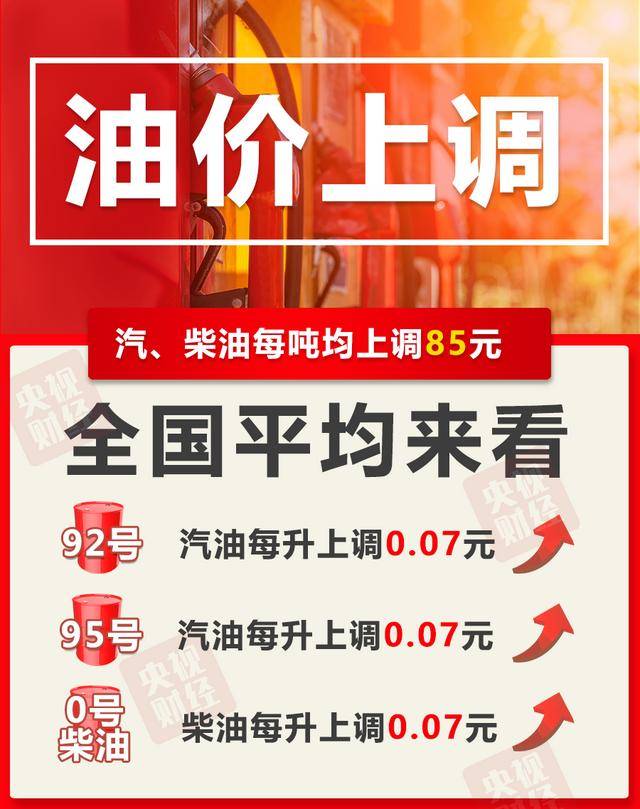
Core Viewpoint - The domestic fuel price adjustment window will open on January 20, with gasoline and diesel prices set to increase for the first time in 2026 due to rising international oil prices [1]. Group 1: Price Adjustments - From January 20, gasoline and diesel prices will each increase by 85 yuan per ton, translating to an average increase of 0.07 yuan per liter for 92-octane gasoline, 95-octane gasoline, and 0-octane diesel [1]. - Filling a 50-liter tank with 92-octane gasoline will cost an additional 3.5 yuan [3]. Group 2: International Oil Market Dynamics - The National Development and Reform Commission's Price Monitoring Center indicates that international oil prices experienced fluctuations during the adjustment cycle from January 6 to January 19, initially rising and then falling [3]. - Geopolitical situations, particularly in Iran and Venezuela, are identified as major factors influencing the volatility of international oil prices. The ongoing instability in Iran and the significant reduction in Venezuela's oil exports due to long-term sanctions are key concerns [4]. - The recent announcement by the U.S. to accept millions of barrels of sanctioned Venezuelan oil has heightened market expectations for a long-term increase in supply, although the actual recovery of Venezuelan oil exports remains uncertain due to ongoing regulatory actions [4].

金属行业周报:地缘局势扰动,金价仍有支撑-20260120
BOHAI SECURITIES· 2026-01-20 06:47
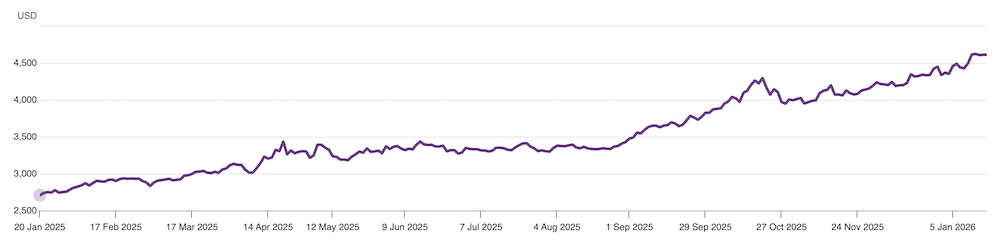
Investment Rating - The report maintains a "Positive" rating for the steel industry and a "Positive" rating for the non-ferrous metals industry, with "Buy" ratings for specific companies including Luoyang Molybdenum, Zhongjin Gold, Huayou Cobalt, Zijin Mining, and China Aluminum [7][8]. Core Insights - The geopolitical situation continues to create volatility, but gold prices are expected to remain supported due to ongoing tensions [3][52]. - The steel industry is anticipated to see improved profitability due to the implementation of growth policies and an optimistic demand outlook in sectors like shipbuilding and construction [4][5]. - The copper market is expected to tighten due to supply constraints from major mines, while demand is projected to increase in sectors such as electric power grids and new energy vehicles [4][41]. - The aluminum sector faces challenges with oversupply in alumina and potential short-term price corrections, but the demand from the new energy vehicle sector remains a key focus [4][48]. - The rare earth industry is expected to see a revaluation of related companies due to China's export controls and the strategic importance of rare earth resources [7][4]. Summary by Sections Steel Industry - Current steel mill inventory pressure is not significant, and short-term demand decline is limited, with expectations of price support before the Spring Festival [5][19]. - As of January 16, 2026, the total steel inventory was 12.4955 million tons, a decrease of 0.39% from the previous week, but an increase of 7.72% year-on-year [26][27]. - The comprehensive price index for steel on January 16, 2026, was 3,457.46 CNY/ton, reflecting a 0.15% increase from the previous week [39][40]. Copper Industry - The copper market is facing a lack of driving force for price increases, but expectations for 2026 remain positive due to anticipated demand growth [3][41]. - As of January 16, 2026, LME copper prices were 13,000 USD/ton, with SHFE copper prices at 101,900 CNY/ton, showing a slight decrease in LME prices but an increase in SHFE prices [46]. Aluminum Industry - The aluminum processing sector is currently in a contraction phase, with a PMI of 42.4% as of December 2025 [48]. - The average price of alumina on January 16, 2026, was 2,666 CNY/ton, down 1.00% from the previous week [49]. Precious Metals - The geopolitical landscape and mixed economic data from the U.S. are influencing gold prices, which are expected to remain supported [52]. - As of January 16, 2026, COMEX gold prices were 4,601.10 USD/oz, reflecting a 1.83% increase from the previous week [53].





原油成品油早报-20260120
Yong An Qi Huo· 2026-01-20 03:27
Group 1: Investment Rating - No investment rating information is provided in the report. Group 2: Core Viewpoints - This week, oil prices fluctuated at high levels due to geopolitical events. Although Trump's stance has become more rational, the risk of military intervention cannot be completely ruled out. Fundamentally, global on - land oil inventories are accumulating in the off - season, while the total waterborne inventory has decreased month - on - month but is higher year - on - year. The North Sea market has tightened recently, and the Dubai market is loose, with the WTI and Brent markets decoupled. In terms of refinery profits, the sharp rise in European natural gas has strengthened the cracking of European diesel, and the overall profits of European and American refineries are under downward pressure due to the rising crude oil prices. In the short term, attention should be paid to the geopolitical situation, and the absolute price center in the first quarter will remain high [5]. Group 3: Summary by Directory 1. Daily News - Ukraine's DTEK power company reported that its energy facilities in Odessa were "severely" damaged in a Russian night attack [3]. - International oil prices fell as the risk of supply disruption decreased. As of 21:58 Beijing time on January 19, the March Brent crude oil futures contract dropped $0.37 or 0.58% to $63.76 per barrel, and the US crude oil futures contract fell $0.28 or 0.47% to $59.16 per barrel. The market is also concerned about the tariff threat from Greenland and the potential trade war between the US and Europe, as well as the risk of damage to Russian infrastructure and distillate supply due to cold weather [4]. - Russia's seaborne oil product exports in December increased by 17% compared to November. Angola's crude oil exports in March are expected to be 1.09 million barrels per day. Oil exports through the Caspian Pipeline Consortium (CPC) in December decreased from 5.09 million tons in November to 3.98 million tons. The restart of the No. 6 unit of Japan's Kashiwazaki - Kariwa Nuclear Power Station may be postponed due to a malfunction in the control rod extraction prevention function [4][5]. 2. Inventory - According to the EIA report, in the week ending January 9, US crude oil exports increased by 43,000 barrels per day to 4.306 million barrels per day, domestic crude oil production decreased by 58,000 barrels to 13.753 million barrels per day, commercial crude oil inventories excluding strategic reserves increased by 3.391 million barrels to 422 million barrels (a 0.81% increase), the four - week average supply of US petroleum products was 19.98 million barrels per day (a 1.14% decrease year - on - year), strategic petroleum reserve (SPR) inventories increased by 214,000 barrels to 413.7 million barrels (a 0.05% increase), and commercial crude oil imports excluding strategic reserves were 7.092 million barrels per day, an increase of 753,000 barrels per day from the previous week [5]. - US EIA gasoline inventories for the week ending January 9 were 8.977 million barrels, higher than the expected 3.565 million barrels and the previous value of 7.702 million barrels. EIA distillate inventories were - 29,000 barrels, lower than the expected 512,000 barrels and the previous value of 5.594 million barrels [5]. 3. Weekly Viewpoints - Oil prices fluctuated at high levels due to geopolitical events this week. Although Trump's attitude has become more rational, the risk of military intervention cannot be fully excluded. Fundamentally, global on - land oil inventories are accumulating in the off - season, the overall waterborne inventory has decreased month - on - month but is higher year - on - year. The North Sea market has tightened recently, and the Dubai market is loose, with the WTI and Brent markets decoupled. In terms of refinery profits, the sharp rise in European natural gas has strengthened the cracking of European diesel, and the overall profits of European and American refineries are under downward pressure due to the rising crude oil prices. In the short term, attention should be paid to the geopolitical situation, and the absolute price center in the first quarter will remain high [5].
国泰海通:特朗普扰动地缘政治局势 建议战术性超配A/H股、美股、黄金
智通财经网· 2026-01-19 22:33
Core Viewpoint - The report suggests a tactical overweight in A/H shares, U.S. stocks, and gold, while recommending an underweight in U.S. Treasuries and crude oil due to various economic and geopolitical factors. Group 1: U.S. Treasury and Monetary Policy - The uncertainty surrounding the new Federal Reserve chairperson is increasing, leading to heightened market speculation regarding U.S. monetary policy, which makes U.S. Treasuries less attractive compared to risk assets [1][3] - The U.S. labor market is cooling, and lower energy prices along with slow wage growth are likely to reduce inflationary pressures, providing the Federal Reserve with more room to adjust monetary policy [3] - U.S. Treasury yields are expected to decline moderately, but the uncertainty regarding the Federal Reserve's leadership is causing a lower risk-return ratio for Treasuries compared to risk assets [3] Group 2: Chinese Equity Market - Multiple factors support the performance of Chinese equities, leading to a recommendation for an overweight in A/H shares [2] - The upcoming economic work conference and the start of the 14th Five-Year Plan in 2026 are expected to result in an expansion of the fiscal deficit and more aggressive economic policies [2] - The anticipated interest rate cut by the Federal Reserve in December and the stable appreciation of the RMB will create favorable conditions for monetary easing in China at the beginning of 2026 [2] Group 3: Gold Market - The geopolitical turmoil is increasing uncertainty, which enhances gold's resilience and safe-haven attributes, leading to a recommendation for an overweight in gold [4] - Continuous gold purchases by central banks support the long-term price stability of gold, despite fluctuations driven by speculative trading [4] - The Trump administration's policies are perceived to undermine U.S. international credibility, further bolstering gold's appeal [4] Group 4: Crude Oil Market - Short-term volatility in the crude oil market is expected to increase, leading to a recommendation for an underweight in crude oil [5] - Investor expectations regarding crude oil supply and demand are relatively aligned, with OPEC+ maintaining moderate production adjustments [5] - Geopolitical events in South America may increase U.S. influence on global oil prices, while the Trump administration's policies are inclined towards lower oil prices, suggesting continued pressure on crude oil prices [5]

国泰海通|策略:特朗普扰动地缘政治局势,建议超配黄金
国泰海通证券研究· 2026-01-19 14:03
Core Viewpoint - The article suggests a tactical overweight in A/H shares, US stocks, and gold, while recommending an underweight in US Treasuries and crude oil due to geopolitical tensions and economic conditions [1][2]. Group 1: A/H Shares and US Stocks - Multiple factors support the performance of Chinese equities, with a recommendation to overweight A/H shares. The upcoming economic work conference and the start of the 14th Five-Year Plan in 2026 are expected to lead to an expansion of the fiscal deficit and more aggressive economic policies [1]. - The Federal Reserve is anticipated to lower interest rates in December, and the stability and appreciation of the RMB will provide favorable conditions for monetary easing in early 2026. Reforms are expected to boost market risk appetite in China [1]. - Chinese equities offer a higher risk-return profile compared to other major asset classes [1]. Group 2: US Treasuries - The uncertainty surrounding the new Federal Reserve chairperson is increasing market speculation regarding US monetary policy, leading to a recommendation for an underweight in US Treasuries [1]. - The US labor market is cooling, and lower energy prices along with moderate wage growth are likely to reduce endogenous inflation, providing more room for the Fed to adjust monetary policy [1]. - The resilience of the US economy suggests that the Fed's monetary policy guidance may be relatively cautious, with US Treasury yields expected to decline moderately. However, the uncertainty regarding the new chairperson increases the risk-return ratio of Treasuries compared to risk assets [1]. Group 3: Gold - In the context of geopolitical upheaval, gold is recommended for overweight due to its strong resilience and safe-haven attributes. The rising uncertainty in global geopolitical situations and continued central bank purchases of gold support a long-term price floor for gold [2]. - Despite fluctuations driven by speculative trading, gold prices maintain strong resilience amid the Trump administration's hegemonic policies, which further undermine US international credibility [2]. Group 4: Crude Oil - Short-term volatility in crude oil is expected to increase, leading to a recommendation for an underweight in crude oil. Investor expectations regarding supply and demand for oil are relatively consistent, and OPEC+ has made moderate adjustments to production [2]. - Geopolitical events in South America may increase the US's influence on global oil prices, while the Trump administration's policies are inclined towards lower oil prices, suggesting continued pressure on crude oil prices [2].

国泰海通:特朗普扰动地缘政治局势,建议超配黄金
Sou Hu Cai Jing· 2026-01-19 13:18
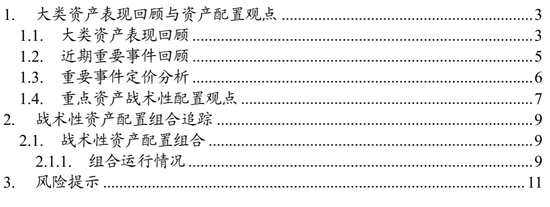
Core Viewpoint - The Trump administration's implementation of hegemonic policies has led to further deterioration of international geopolitical situations, which is favorable for gold performance. Tactical overweighting of A/H shares, US stocks, and gold is recommended, while underweighting US bonds and oil is advised [1]. Group 1: Asset Performance and Allocation Insights - Multiple factors support the performance of Chinese equities, suggesting an overweight in A/H shares. The upcoming economic work conference and the start of the 14th Five-Year Plan in 2026 are expected to lead to further expansion of the broad deficit and more proactive economic policies. The Fed's expected rate cut in December and the stable appreciation of the RMB provide favorable conditions for monetary easing in early 2026 [2][8]. - The uncertainty surrounding the new Fed chairperson has increased market speculation regarding US monetary policy, suggesting an underweight in US bonds. The cooling labor market, declining energy prices, and slow wage growth are conducive to a decrease in endogenous inflation stickiness, allowing for more flexibility in Fed policy adjustments. The resilience of the US economy may lead to a cautious direction in Fed policy guidance, with US bond yields expected to decline moderately [2][8]. - In the context of geopolitical upheaval, gold exhibits strong resilience and safe-haven attributes, recommending an overweight in gold. The rising uncertainty in global geopolitical situations and continued central bank purchases of gold support a long-term price floor for gold. Despite speculative inflows temporarily increasing gold volatility, the price remains resilient amid the Trump administration's hegemonic policies and the erosion of US international credibility [2][8]. Group 2: Recent Important Events Review - The uncertainty regarding the Fed chair candidates has risen again, with Trump indicating that Kevin Hassett may remain in his position. This could impact market expectations for monetary policy [6][7]. - Trump's imposition of tariffs on eight European countries and the push for the purchase of Greenland has escalated geopolitical tensions, significantly undermining US international credibility and reflecting hegemonic behavior [6][7]. Group 3: Tactical Asset Allocation Recommendations - The recommendation to overweight A/H shares is based on multiple supportive factors for Chinese equities, including anticipated proactive economic policies and favorable monetary conditions [9]. - An underweight in US bonds is advised due to the increasing uncertainty surrounding the new Fed chairperson and the relatively low risk-return ratio compared to risk assets [9]. - Gold is recommended for overweighting due to its strong resilience and safe-haven characteristics amid rising geopolitical uncertainties [9].
瑞达期货集运指数(欧线)期货日报-20260119
Rui Da Qi Huo· 2026-01-19 09:11
| | 集运指数(欧线)期货日报 | 2026/1/19 | | --- | --- | --- | | 项目类别 数据指标 | 最新 环比 数据指标 最新 | 环比 | | EC主力收盘价 | 1132.200 -20.4↓ EC次主力收盘价 1318 | -31.40↓ | | 期货盘面 EC2604-EC2606价差 | -185.80 +4.40↑ EC2604-EC2608价差 -326.80 | +17.80↑ | | EC合约基差 | 821.99 -13.40↓ | | | 期货持仓头寸(手) EC主力持仓量 | 41888 -744↓ | | | SCFIS(欧线)(周) | 1954.19 -2.10↓ SCFIS(美西线)(周) 1,305.27 | -18.71↓ | | SCFI(综合指数)(周) | 1574.12 -73.27↓ 集装箱船运力(万标准箱) 1,227.97 | 0.00↑ | | 现货价格 CCFI(综合指数)(周) | 1209.85 14.96↑ CCFI(欧线)(周) 1,582.60 | 14.85↑ | | 波罗的海干散货指数(日) | 1567.00 ...

金价普遍上扬!2026年1月19日国内品牌金店行情速递!
Sou Hu Cai Jing· 2026-01-19 07:59
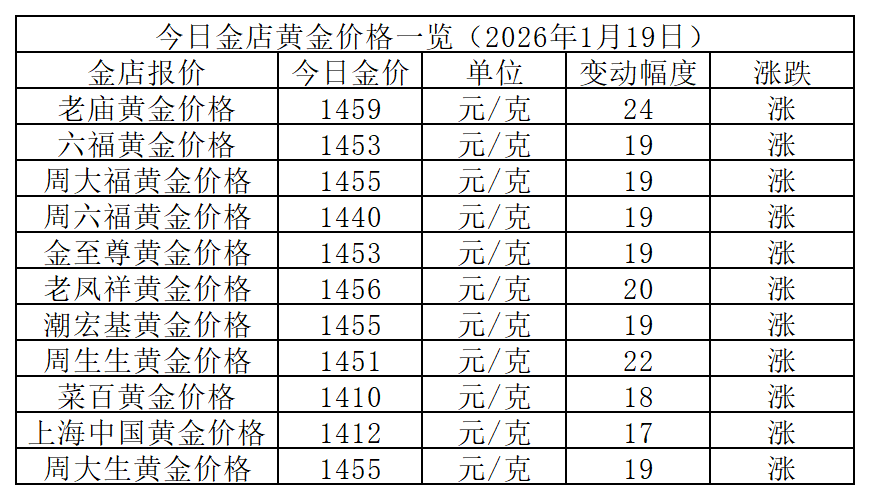
Group 1: Domestic Gold Prices - Domestic gold prices have rebounded across the board, with notable increases in various brands. Lao Miao gold rose by 24 yuan to 1459 yuan per gram, leading the price increase [1] - Other brands such as Chao Hong Ji, Zhou Da Sheng, and Zhou Da Fu are closely following, with prices around 1455 yuan per gram. Cai Bai gold remains the lowest at 1410 yuan per gram, having increased by 18 yuan [1] - The price difference between high and low brands has expanded to 49 yuan per gram, indicating a growing disparity in the market [1] Group 2: Platinum Prices - Platinum jewelry prices have also seen an increase, with Zhou Da Fu's platinum price rising by 15 yuan to 940 yuan per gram [1] Group 3: Gold Recycling Prices - The gold recycling prices have also surged, with significant variances among brands. The recycling price for gold is reported at 1033.70 yuan per gram, while Cai Zi gold is at 1069.70 yuan per gram [2] - Other notable recycling prices include Zhou Sheng Sheng at 1058.50 yuan per gram and Zhou Da Fu at 1011.00 yuan per gram [2] Group 4: International Gold Prices - Last Friday, spot gold experienced fluctuations, dropping to a low of 4537.79 USD per ounce before closing at 4596.44 USD per ounce, reflecting a decline of 0.41%. However, today it has reached a new high of 4673.45 USD per ounce, with an increase of 1.71% [4] - The recent drop in gold prices was attributed to easing tensions in the US-Iran situation, which reduced market risk aversion. However, geopolitical uncertainties have since supported a rebound in gold prices [4] - Analysts suggest that the ongoing geopolitical uncertainties and the trend of central banks diversifying their reserves away from the US dollar by increasing gold holdings are key factors driving gold prices higher [4]
BCA Research首席新兴市场策略师:金价年底冲刺5000美元,大宗商品与美元逻辑生变
Di Yi Cai Jing· 2026-01-18 10:28
Core Viewpoint - The article discusses the diverging fates of gold compared to cyclical commodities like copper and oil, predicting a significant rise in gold prices driven by structural demand, U.S. macroeconomic policies, and the need to suppress real interest rates [1][2]. Group 1: Key Drivers of Gold Prices - The first key driver is the structural increase in global demand, particularly from central banks, with China's diversification of foreign reserves significantly impacting the market [4]. - The second driver is the "currency devaluation cycle," where institutional investors favor gold as the U.S. seeks to devalue its currency amid a dual crisis of public debt and fiscal deficits [4]. - The third and most critical variable is the suppression of real interest rates, which the U.S. government aims to achieve to manage public debt repayment pressures [5]. Group 2: Divergence from Other Commodities - The traditional correlation between a weak dollar benefiting all commodities is deemed ineffective, with gold and cyclical commodities like copper and oil heading towards different outcomes [2][6]. - Despite a weak dollar, the correlation logic between the dollar and cyclical commodities is breaking down, indicating that the expected commodity supercycle may not materialize [6][8]. - The article emphasizes that in a period of weak global growth and a declining dollar, emerging markets and cyclical commodities may not perform well, as their key driver is growth rather than currency [8].
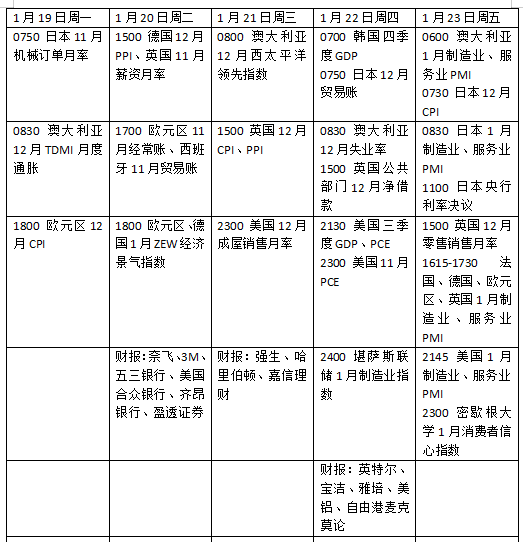
下周外盘看点丨美国PCE或搅动美联储 特朗普亮相达沃斯会说什么
Di Yi Cai Jing· 2026-01-18 02:31
Market Overview - The U.S. stock market experienced a decline, with the Dow Jones falling by 0.29%, the Nasdaq by 0.66%, and the S&P 500 by 0.38% during the week [1] - European stock indices showed mixed results, with the UK FTSE 100 rising by 1.09%, the German DAX 30 by 0.14%, and the French CAC 40 dropping by 1.23% [1] Economic Indicators - Attention will shift to the U.S. GDP data, PCE inflation data, and consumer confidence index, which may provide insights into the Federal Reserve's policy direction [3] - The PCE inflation data for November is set to be released, which is a key indicator for the Federal Reserve [3] - The U.S. third-quarter GDP revision data will also be released, with the initial growth rate reported at 4.3%, exceeding market expectations [3] Earnings Reports - The second week of the earnings season will feature reports from major companies, including Netflix and Intel, as well as other industry leaders like Johnson & Johnson and Abbott [4] Commodity Market - Oil prices continued to rise, with WTI crude increasing by 0.54% to $59.44 per barrel and Brent crude by 1.25% to $64.13 per barrel [5] - Gold futures for January delivery rose by 2.18% to $4588.40 per ounce, while silver futures surged by 11.69% to $88.09 per ounce [6] European Economic Outlook - The Eurogroup finance ministers' meeting and the EU finance ministers' meeting are scheduled, focusing on fiscal stimulus policies, particularly from Germany [7] - The European Central Bank's monetary policy meeting minutes will be released, with expectations that no rate changes will occur this year [7] Upcoming Events - The annual World Economic Forum in Davos will take place, with discussions expected to revolve around global economic cooperation and U.S. trade policies [1]