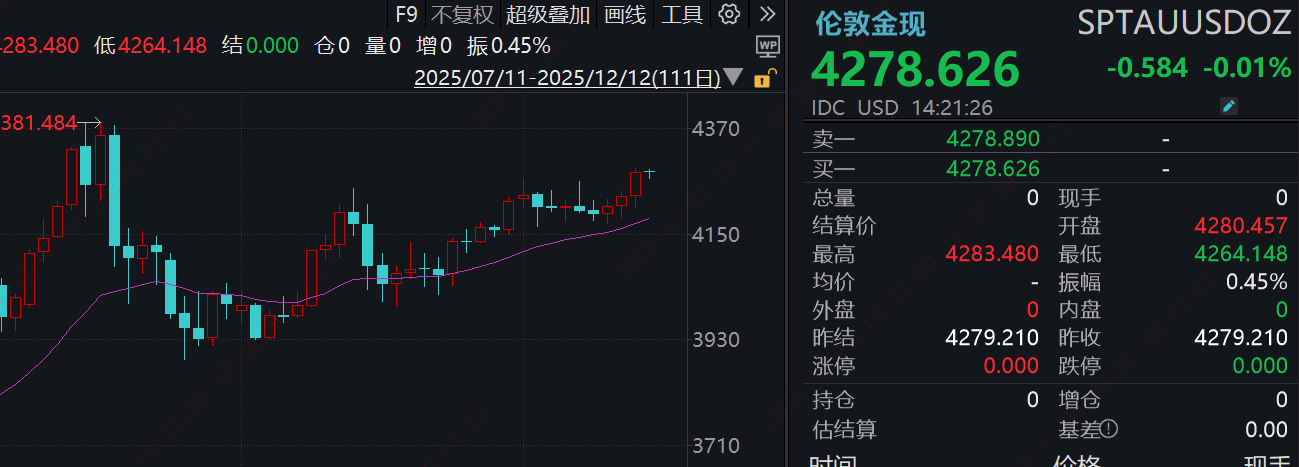
抗通胀

Search documents
“圣诞老人行情”将至!标普500有望冲刺6920点
Sou Hu Cai Jing· 2025-12-25 09:28
Group 1 - The "Santa Claus Rally" phenomenon refers to the tendency for stock markets to rise during the last five trading days of the year and the first two trading days of the new year, with an average return of 1.3% and an 80% probability of positive returns since 1950 [3][4]. - Historical data shows that when the "Santa Claus Rally" occurs, it often indicates a stable market sentiment for the following year's first quarter, while its absence suggests a higher risk of market pullbacks [5][7]. - The 2025 "Santa Claus Rally" is expected to be influenced by a favorable liquidity environment following a 25 basis point rate cut by the Federal Reserve, with the S&P 500 potentially breaking the historical high of 6920 points by the end of 2025 [7][8]. Group 2 - In 2026, the U.S. economy may enter a delicate balance as the Federal Reserve seeks to balance "preventive rate cuts" with "anti-inflation" measures, with inflation having decreased to 2.7% as of November 2025 [8][9]. - The market anticipates two rate cuts in 2026, but there is a possibility that the Federal Reserve may adopt a more accommodative policy, potentially cutting rates three times throughout the year [9]. - The stock market in 2026 is expected to be driven by "profit growth and moderate valuation expansion," with a focus on sectors like artificial intelligence infrastructure and space economy, while emphasizing the importance of stock selection over market trends [10][11]. Group 3 - The artificial intelligence sector is expected to face challenges due to high capital expenditures and debt levels, with companies needing to demonstrate tangible performance rather than speculative concepts [10][11]. - Companies with deteriorating financial conditions and high valuations in the AI application space may face sell-offs, particularly if the financing environment does not meet expectations [11][12]. - The market in 2026 is anticipated to be selective, favoring companies that can generate immediate cash flow, while avoiding high-valuation stocks that may be vulnerable to valuation corrections [12].

金银铂钯齐涨,贵金属缘何连创新高
He Nan Ri Bao· 2025-12-24 22:24
Group 1 - The core viewpoint of the articles highlights the significant rise in precious metal prices, with gold surpassing $4500 per ounce for the first time, driven by various factors including market sentiment and industrial demand [2][3]. - The Shanghai Gold Exchange reported that the price of gold reached 1017 RMB per gram, while gold jewelry prices exceeded 1410 RMB per gram, indicating a strong domestic market response [2]. - Silver prices have surged nearly 50% in the fourth quarter, breaking the $70 per ounce mark and continuing to rise above $72, while platinum and palladium have also seen over 30% increases in the past month [2][4]. Group 2 - The substantial increase in precious metals is attributed to multiple factors beyond traditional safe-haven and anti-inflation motives, including concerns over U.S. dollar credit and sovereign debt [3]. - Industrial demand for silver, driven by its applications in photovoltaic and electric vehicle industries, is a key factor supporting its price increase [4]. - The rise in precious metal prices has led to increased investment, with significant inflows into gold and silver ETFs, indicating strong market interest [4].

贵金属缘何连创新高?
Xin Lang Cai Jing· 2025-12-24 17:46
Core Insights - The price of gold has reached a historic high, surpassing $4500 per ounce for the first time, driven by international market trends and increasing industrial demand for precious metals [2] - Silver, platinum, and palladium have seen even greater price increases recently, with silver prices rising nearly 50% in Q4 and surpassing $70 per ounce [2][4] - The strong performance of precious metals has exceeded many institutions' expectations, with gold prices hitting record highs over 40 times this year alone [2] Group 1: Factors Driving Precious Metal Prices - The significant rise in gold and other precious metals is attributed to multiple factors, including concerns over the creditworthiness of the US dollar and market sentiment, rather than just traditional safe-haven and anti-inflation motives [2][3] - The expansion of US debt has made gold and other precious metals appear as safer assets, contributing to their rising prices [3] Group 2: Industrial Demand and Market Dynamics - The industrial demand for silver and platinum has been a key driver of their price increases, with silver being essential for the transition to a green economy, particularly in solar and electric vehicle sectors [4] - Platinum's future is also promising due to its use in catalysts, with new opportunities arising from the hydrogen energy sector [4] Group 3: Market Sentiment and Future Outlook - The sustainability of the current bullish trend in precious metals will depend on the continued resonance between market demand and investor sentiment [4] - Analysts caution that the volatility of precious metal prices may lead to rapid profit-taking by investors, potentially resulting in price corrections [4]

金银铂钯齐涨 贵金属缘何连创新高?
Xin Hua Wang· 2025-12-24 09:50
Core Viewpoint - The precious metals market, particularly gold, silver, platinum, and palladium, has experienced significant price increases driven by multiple factors including market sentiment, concerns over the U.S. dollar's credibility, and rising industrial demand for silver and platinum [1][2]. Group 1: Gold Market Performance - On December 24, gold prices reached a historic high, surpassing $4,500 per ounce for the first time [1]. - In China, the price of gold hit 1,017 yuan per gram, with gold jewelry prices rising to 1,410 yuan per gram [1]. - The gold market has seen over 40 record highs this year, with prices increasing by more than 70% year-to-date [2]. Group 2: Silver and Other Precious Metals - Silver prices have surged nearly 50% in Q4, breaking the $70 per ounce mark and continuing to rise above $72 [1]. - Year-to-date, silver and platinum prices have increased by over 140%, while palladium has risen by more than 100% [1]. - The industrial demand for silver, particularly in sectors like photovoltaics and electric vehicles, is a key driver of its price increase [2]. Group 3: Market Dynamics and Investor Sentiment - The rise in precious metal prices is attributed to a combination of factors, including concerns over U.S. dollar credit and sovereign debt, as well as geopolitical tensions [2]. - The demand for precious metals has led to increased inflows into ETFs, with significant increases in holdings reported on December 23 [3]. - Analysts suggest that the sustainability of the current bullish trend in precious metals will depend on ongoing market demand and investor sentiment [3].
资金放量进场 A 股飘红 现货黄金再创历史新高
Sou Hu Cai Jing· 2025-12-23 02:40
Group 1: A-Share Market Performance - The A-share market experienced a strong performance with all three major indices rising, and the total trading volume exceeding 1.8 trillion yuan, marking an increase of 136 billion yuan from the previous trading day [2][3] - The Shanghai Composite Index rose by 0.69% to close at 3917.36 points, the Shenzhen Component increased by 1.47% to 13332.73 points, and the ChiNext Index surged by 2.23% to 3191.98 points [2] - The market saw nearly 3000 stocks rise, with over a hundred stocks hitting the daily limit, particularly in the Hainan sector, which became one of the hottest areas with multiple stocks reaching their limit [2] Group 2: Sector Performance and Fund Flows - The technology-related sectors attracted significant capital inflows, with the communication equipment sector leading with a net inflow of 8.505 billion yuan [3] - Other sectors such as electronic components and consumer electronics also received considerable attention, while sectors like commercial retail and aerospace saw notable capital outflows, with the commercial retail sector experiencing a net outflow of 2.38 billion yuan [3] Group 3: International Gold Market - The international gold market saw a significant breakthrough, with London spot gold prices reaching a new historical high of 4419.82 USD/ounce, reflecting a year-to-date increase of 67% [4] - The rise in gold prices is attributed to favorable macroeconomic factors, including a slowdown in U.S. job growth and expectations of a dovish monetary policy from the Federal Reserve [4][5] - Analysts noted that the demand for gold as a safe-haven asset has increased due to rising economic uncertainties and consumer confidence issues, as indicated by the Michigan Consumer Sentiment Index hitting a historical low [5] Group 4: Future Gold Price Predictions - Short-term predictions suggest that gold prices may experience strong upward momentum, with expectations of reaching between 4750 USD/ounce and 4900 USD/ounce by 2026, driven by structural supply-demand imbalances and continued central bank purchases [6][7] - However, there are warnings about potential risks, including the possibility of a market demand decline from 2025 to 2030 if global economic conditions improve significantly [7]
易方达黄金ETF布局贵金属跨年行情
Sou Hu Cai Jing· 2025-12-23 02:16
Group 1 - The A-share precious metals sector showed strong performance, with the precious metals index rising by 2.6%, particularly driven by the gold sub-sector [1] - Internationally, the London spot gold price reached a three-month high of $4,320 per ounce during Asian trading hours, with silver prices also increasing [1] - The strong performance of the sector is supported by multiple macro factors, including expectations of the Federal Reserve starting a rate cut cycle in the first half of 2026 and a continued weak dollar index, which provides upward momentum for gold priced in dollars [1] Group 2 - The E Fund Gold ETF continued its strong performance with an intraday increase of 0.85%, reflecting sustained market demand for safe-haven assets; it has accumulated a 27.31% increase over the past six months and a year-to-date return of 60.54%, leading among commodity ETFs [2] - The ETF has seen a net inflow of 180 million yuan over the last ten trading days, with its latest scale growing to 35.56 billion yuan and a year-to-date net inflow of 12.754 billion yuan, indicating strong long-term allocation intentions [2] - The fund closely tracks the Shanghai Gold Exchange Au99.99 spot contract, directly linked to high-purity physical gold prices, and benefits from global central bank gold purchases, rising Fed rate cut expectations, and geopolitical risk premiums, reinforcing gold's position as a key asset for inflation hedging and risk avoidance [2]
【宝藏】倒计时!最高可省税5400元
中国建设银行· 2025-12-23 02:03
Core Viewpoint - The article emphasizes the importance of personal pension contributions, highlighting the deadline for contributions and the potential tax savings associated with them [2][8]. Group 1: Personal Pension Contribution Guidelines - Individuals must complete their personal pension contributions by December 31, 2025, to qualify for tax deductions, with a maximum potential tax saving of 5,400 yuan [2]. - The contribution process involves three steps: making the contribution, declaring tax deductions, and completing the final settlement [2]. Group 2: Incentives for Contributions - There are various rewards for making contributions, including a maximum reward of 568 yuan for contributions of 10,000 yuan or more, and 88 yuan for contributions of 500 yuan [3]. - Additional rewards are available for referring friends to participate in the program, with potential earnings of up to 2,000 yuan for existing customers [3]. Group 3: Investment Options for Pension Funds - The article discusses different types of pension fund investments, including aggressive, balanced, and conservative options, each with varying risk levels [6][7]. - Specific funds mentioned include the "Jianxin Youxiang Jinqi Five-Year FOF" and "Xingquan Antai Active Pension Five-Year Holding FOF," which aim to balance returns and volatility [6][7].

今年暴涨近70%!现货黄金,再创历史新高!什么情况?
Sou Hu Cai Jing· 2025-12-22 08:27
Core Viewpoint - The recent surge in gold prices, reaching historical highs, is driven by macroeconomic factors, geopolitical risks, and increased demand from central banks and investors [1][4][5]. Group 1: Gold Price Trends - As of December 22, the London spot gold price has surpassed $4,400 per ounce, marking a 67% increase from early 2025 when it was below $2,600 [1]. - International gold prices have shown a volatile upward trend since early December, with a cumulative increase of approximately 4% since the beginning of the month [2]. - COMEX gold prices reached a new historical high of $4,425 per ounce on December 22, indicating strong market momentum [4]. Group 2: Factors Influencing Gold Prices - The U.S. labor market data, including a higher-than-expected non-farm employment increase and a rising unemployment rate, has led to expectations of a dovish monetary policy in 2026, supporting gold prices [2]. - Central banks globally have continued to increase their gold holdings, with a net addition of 1,045 tons in 2024, providing fundamental support for gold prices [4]. - Geopolitical tensions, particularly in the Middle East and the Russia-Ukraine conflict, have heightened demand for gold as a safe-haven asset [4]. Group 3: Future Outlook - Long-term projections suggest that gold prices could exceed $4,750 to $4,900 per ounce by 2026, driven by persistent demand and limited supply [5]. - The market anticipates a structural imbalance between rigid demand and elastic supply, which will continue to support gold prices in the coming years [5]. - However, there are concerns about potential market corrections and geopolitical developments that could impact gold prices in the short term, with expectations of a trading range between $4,250 and $4,550 per ounce [5].
BBMarkets:法兴银行继续看涨黄金,预计年底将达到5000美元
Sou Hu Cai Jing· 2025-12-17 01:16
Core Viewpoint - Societe Generale's latest investment strategy report indicates that gold will maintain an advantage over U.S. bonds and the dollar until 2026, recommending investors to buy on dips to secure long-term investment value in gold [1][3]. Group 1: Gold Investment Strategy - Societe Generale has maintained a stable allocation of 10% for gold in its multi-asset investment portfolio, making it the only asset class with a high allocation [3]. - The bank expects the international spot gold price to rise to $5,000 per ounce by the end of 2025, driven by increasing demand from retail investors and central banks [3]. - Retail investors are diversifying their assets, with significant funds flowing into the gold market through physical gold and gold ETFs [3]. Group 2: Central Bank and Economic Factors - Global central banks are reducing their dollar asset holdings in favor of gold, which is viewed as a preferred asset for diversification of foreign exchange reserves [3]. - The potential shift to a dovish monetary policy by the Federal Reserve, especially after personnel changes, is expected to enhance gold's appeal as an inflation hedge and a safeguard against currency depreciation [3][4]. Group 3: Market Dynamics - The correlation between the U.S. stock and bond markets remains significantly higher than historical norms, diminishing the effectiveness of traditional stock-bond diversification [4]. - Gold exhibits low correlation with stocks and bonds, even showing negative correlation during market volatility, making it a key tool for optimizing risk-return profiles in investment portfolios [4].

穿越经济周期的压舱石,黄金ETF长期配置逻辑
Sou Hu Cai Jing· 2025-12-15 09:19
Core Viewpoint - In the context of a shifting global economic landscape and increasing market volatility, investors are increasingly focusing on the stability and risk resistance of their asset portfolios. Gold, as a time-tested hard currency, plays a crucial role as a "ballast" in asset allocation, and the emergence of gold ETFs allows ordinary investors to conveniently capture the long-term value of gold [1]. Group 1: Economic Context and Federal Reserve Actions - On December 11, 2025, the Federal Reserve lowered the federal funds rate by 25 basis points to a range of 3.50%–3.75%, marking the third rate cut of the year. Following the announcement, the 10-year U.S. Treasury yield declined, the dollar index weakened, and gold prices shifted from a decline to an increase, maintaining high volatility [1]. - The FOMC's voting results showed 9 votes in favor and 3 against, indicating a division in the committee regarding inflation pressures and economic slowdown assessments. The committee also announced a monthly purchase plan of $40 billion in short-term Treasury bonds starting December 12 to maintain ample reserves [4]. Group 2: Gold's Unique Attributes - Gold is recognized for its strong safe-haven properties, providing stability during geopolitical conflicts, global economic crises, and unexpected market events. Unlike traditional financial assets, gold's intrinsic value is less affected by a single economy or financial system, making it a reliable asset during times of uncertainty [9]. - Gold serves as an effective hedge against inflation, as its value is closely tied to physical commodities. In environments of monetary expansion and rising inflation, gold can maintain its value, helping investors preserve purchasing power [9]. - The low correlation of gold with traditional assets enhances its appeal for risk diversification. Gold's pricing logic is distinct from that of stocks and bonds, allowing it to act independently and even provide a counterbalance during traditional asset downturns [10]. Group 3: Gold ETFs as an Investment Tool - Gold ETFs address the challenges of traditional physical gold investment, such as storage issues, high transaction barriers, and limited liquidity, making them an optimal tool for ordinary investors to engage in gold investment [12]. - Gold ETFs facilitate convenient and low-cost investment in gold, allowing investors to trade gold as easily as stocks without the burdens of physical gold ownership, such as storage and transportation costs [12]. - The high liquidity of gold ETFs supports dynamic portfolio adjustments, enabling investors to buy or sell based on market conditions without facing liquidity constraints [13]. - Gold ETFs are designed to closely track gold prices, ensuring that investors can capture long-term appreciation without the risks associated with gold-related stocks or funds [13]. Group 4: Conclusion on Gold's Role in Asset Allocation - In the current complex market environment, the focus of asset allocation has shifted from "pursuing high returns" to "achieving stable appreciation." Gold, with its safe-haven, anti-inflation, and low-correlation attributes, serves as a "ballast" for navigating economic cycles, while gold ETFs provide accessible, low-cost, and highly liquid investment options for ordinary investors [15][16].