
经济结构转型

Search documents
宏观经济周报:服务业与制造业的共赢逻辑-20251129
Guoxin Securities· 2025-11-29 11:53
Group 1: Economic Structure and Trends - The service and manufacturing sectors are not in opposition but rather have a symbiotic relationship, as evidenced by the increase of over 7 percentage points in the service sector's share of global GDP from 1980 to 1996, while manufacturing remained stable[1] - From 2002 to 2019, both sectors exhibited a synchronized trend of rise and fall, indicating their interdependence rather than a zero-sum game[1] - Manufacturing acts as an incubator for service industries, with many productive services like logistics and R&D initially emerging from within manufacturing firms[1] Group 2: Support and Demand Dynamics - The large service sector constitutes the core consumer base for manufacturing products, creating significant demand for items ranging from medical equipment to educational materials[2] - Services play a crucial role in enhancing human capital, which is essential for the quality of manufacturing inputs, thereby supporting innovation and breakthroughs in the manufacturing sector[2] - The current economic transition in China highlights the need for high-quality development in manufacturing to create more opportunities for productive services like R&D and digital services[2] Group 3: Current Economic Indicators - Fixed asset investment has decreased by 1.70% year-on-year, indicating a contraction in investment activities[4] - Retail sales have shown a modest increase of 2.90% year-on-year, reflecting some resilience in consumer spending[4] - Exports have declined by 1.10% year-on-year, suggesting pressure on external demand[4] - The M2 money supply has grown by 8.21%, indicating a continued expansionary monetary policy[4]
公募基金投资逻辑深度重构: “主题投资”风行一时 “全市场选股”暂避锋芒
Zheng Quan Shi Bao· 2025-11-23 21:45
Core Viewpoint - The investment style of public funds has shifted from core assets to high-growth stocks under the backdrop of economic transformation, moving from "full market stock selection" to "thematic investment" strategies [1][3][10] Group 1: Shift in Investment Strategies - Public funds previously favored large-cap stocks like Sany Heavy Industry and Kweichow Moutai, achieving significant returns through a diversified portfolio [2] - The "full market stock selection" strategy has become less prominent, with thematic products dominating annual performance rankings [2][3] - Changes in the investment environment, including economic deceleration and structural adjustments, have led to a decline in the profitability of traditional consumer and manufacturing leaders [3][5] Group 2: Rise of Thematic Investment - Thematic funds have gained popularity due to structural opportunities concentrated in high-growth sectors, outperforming traditional industries [5][6] - Thematic investment allows investors to engage with long-term trends more intuitively, simplifying complex macro and industry logic [6][9] - The focus on specific high-growth sectors, such as AI and innovative pharmaceuticals, has led to significant capital inflows and heightened competition among funds [4][5] Group 3: Challenges of Thematic Investment - Thematic investment requires deeper industry understanding and foresight, raising the bar for fund managers [7][8] - The need for rigorous valuation and risk management frameworks is critical, as concentrated portfolios can be significantly impacted by individual stock performance and market events [8][12] - The complexity of managing risks in highly concentrated portfolios necessitates advanced strategies to maintain overall risk within acceptable limits [8][12] Group 4: Future of Investment Strategies - The "full market stock selection" strategy is not expected to disappear, as it offers unique advantages in capturing structural opportunities across various sectors [10][11] - The market's aesthetic preferences will continue to evolve, but the fundamental capabilities of "full market stock selection" will remain relevant [11] - Thematic investment can lead to high volatility and potential reputational risks for fund companies, emphasizing the need for careful asset allocation and risk management [12]
近期债市波动核心:反内卷交易缓和与费率新规冲击有限
Mei Ri Jing Ji Xin Wen· 2025-11-20 01:11
Core Insights - The commodity market has shown signs of recovery since July, breaking the downward trend observed from 2022 to mid-2025, influenced by the implementation of anti-involution policies [1] - The bond market is expected to face new adjustment pressures if PPI turns positive next year, but current indicators suggest a slowdown in production, with the next peak likely in the "golden March and silver April" period of next year [1][2] - The demand for black commodities remains weak due to limited investment in traditional infrastructure and manufacturing, as funds are directed towards debt reduction [2] - The new sales fee regulation is anticipated to impact the public bond fund industry, potentially leading to asset sell-offs, but the market seems prepared for this adjustment [3][4] Market Dynamics - The market's concern over the sales fee regulation has decreased as long-term bond products have rebounded, indicating a balanced risk appetite [4] - The current monetary environment is favorable, with expectations of a stable bond market and potential for structural recovery in November [4][5] - Ten-year government bonds are viewed as a valuable investment opportunity, providing stable yields while reducing overall portfolio volatility [5][6] Future Outlook - If the Federal Reserve lowers interest rates in December and the domestic central bank follows suit, it could lead to a significant market reaction, pushing down the yield of ten-year government bonds [6] - The bond market is expected to maintain a low-volatility, oscillating pattern next year, with fiscal policies constraining long-term interest rate increases [6] - The ten-year government bond ETF is highlighted as an optimal tool for investors to participate in the bond market and benefit from long-term returns [7]
2025年上半年波黑外国直接投资减少约1亿马克
Shang Wu Bu Wang Zhan· 2025-11-19 17:22
Core Insights - Foreign direct investment (FDI) in Bosnia and Herzegovina (BiH) decreased to approximately 780 million marks in the first half of this year, down from 891 million marks in the same period last year, representing a decline of 111 million marks [1] - The top investing countries in BiH for the first half of 2025 were Croatia (203 million marks), Germany (174 million marks), and Serbia (108 million marks) [1] - The primary sectors attracting foreign investment were financial services (503.8 million marks), followed by retail trade (219.8 million marks) and wholesale trade (205 million marks) [1] Investment Trends - The trend of declining foreign investment is not unique to BiH, as other countries in the Western Balkans are experiencing similar challenges [1] - The reduction in investment is attributed to economic stagnation or decline in major EU economies, which are the primary investors in the Western Balkans, and a shift of capital towards more competitive production cost destinations outside Europe [1] - The impact of declining foreign investment on BiH's economic growth is relatively minor, as the country had previously attracted a limited amount of FDI compared to countries like Serbia [1] Future Recommendations - It is essential for BiH to align its foreign investment policies with economic structural transformation to attract investments that provide higher added value, create quality jobs, and enhance economic competitiveness [2] - Investment in vocational education is crucial, as skilled labor is a key factor in attracting investors from technologically advanced sectors [2]
最新数据大跌眼镜!
Sou Hu Cai Jing· 2025-11-14 15:45
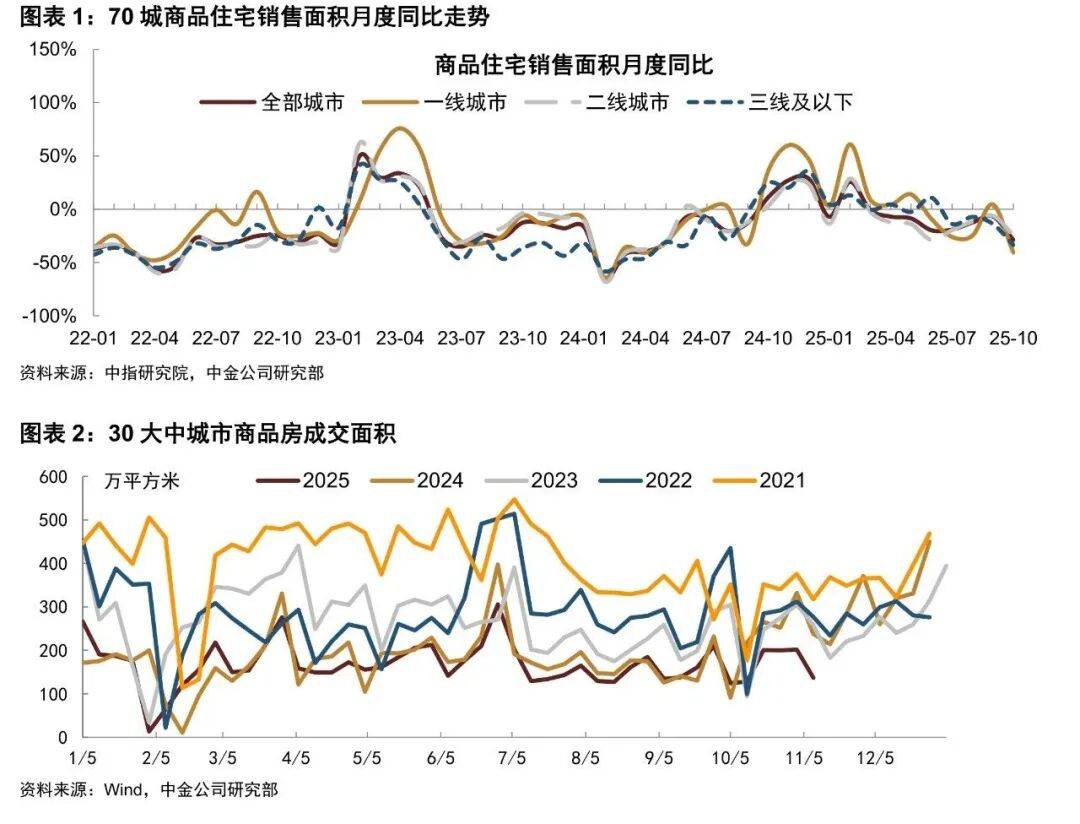
Economic Overview - The economic data for October shows a significant slowdown across multiple sectors, with industrial output, exports, and investments all experiencing declines [2][4] - Industrial value-added growth fell from 6.5% in September to 4.9% in October, while fixed asset investment decreased by 1.7% year-on-year and 1.62% month-on-month [2] - Consumer spending growth was impacted by the withdrawal of government subsidies, with retail sales growth slowing to 2.9% [2] Real Estate Sector - The real estate market continues to face challenges, with both sales volume and sales area declining, indicating a persistent "cold air" in the sector [3][5] - Real estate development investment dropped by 14.7%, with new residential sales area at 71.982 million square meters, down 6.8% year-on-year, and sales revenue at 690.17 billion yuan, down 9.6% [6] - The confidence crisis in the real estate market is more critical than policy changes or interest rate adjustments, affecting both sales and land auction markets [12][15] Investment Trends - Excluding real estate, fixed asset investment actually grew by 1.7%, with private investment showing a slight increase of 0.2% [17] - Notable growth was observed in information services investment, which surged by 32.7%, and aerospace manufacturing, which grew by 19.7% [17] - The shift in economic growth drivers indicates a transition from traditional construction to high-tech industries, marking a significant structural change towards "high-quality development" [17][18] Trade Dynamics - The total import and export volume saw a slight increase of 0.1%, with exports of mechanical and electrical products rising by 8.7%, now constituting 60.7% of total exports [17][18] - Private enterprises accounted for 57% of total exports, reflecting their agility and responsiveness in the current economic climate [17] Future Outlook - The current economic pain is viewed as a necessary adjustment for past development models, while the ongoing transformation is seen as laying the groundwork for future growth [19]

数读A股|三季度外资调仓:科技制造吸金 摩根士丹利增持超三成
Xin Jing Bao· 2025-11-14 08:55
Group 1 - Foreign capital in A-shares decreased by 166 million shares in Q3, totaling 1.161 billion shares, but the total market value increased by 12.4% to 2.73 trillion yuan [4][5] - The electronic, chemical, and automotive sectors saw significant increases in foreign holdings, with increases of 19.6 million shares, 5.04 million shares, and 3.62 million shares respectively [8][10] - Major foreign institutions such as Morgan Stanley and Goldman Sachs increased their holdings by over 15%, with Morgan Stanley's holdings increasing by 33.1% [22][24] Group 2 - The electronic industry had the highest increase in foreign holdings, with a market value increase of 161.35 billion yuan, ranking first among all sectors [10][12] - Traditional sectors like banking, construction decoration, and non-bank financials faced significant reductions in foreign holdings, with declines of 67.68 million shares, 22.54 million shares, and 18.75 million shares respectively [12][21] - QFII/RQFII increased their holdings in the real estate sector by 361.1% compared to the previous quarter [15][18] Group 3 - The overall trend shows foreign capital is shifting from traditional consumer and financial sectors to technology and manufacturing sectors, reflecting confidence in China's economic transformation [25][32] - Foreign capital's interest in sectors like new energy and semiconductors continues to grow, while traditional blue-chip stocks are experiencing phase-out reductions [29][33] - The top foreign institutions are increasingly favoring high-end manufacturing and energy technology stocks, indicating a strategic shift in investment focus [22][25]







国泰海通首席方奕:2026中国股市还会再上一个台阶,5200点!
Ge Long Hui· 2025-11-10 11:26
Group 1 - The core viewpoint is that the Chinese stock market is expected to experience significant growth, with a target of 5200 points by 2026, following the achievement of 4000 points in 2023 [1] - The annual strategy report indicates that 2025 will mark a major development cycle for the Chinese stock market, characterized by capital market reforms and economic structural transformation, which is referred to as a "transformation bull" market [1] - The upward trend of the "transformation bull" market is anticipated to continue into 2026, with the potential for the market to exceed consensus expectations and challenge the historical high of 5178.19 points set in June 2015 [1]

2025年债券ETF规模连续突破6个千亿关口,30年国债ETF(511090)盘中上扬0.21%,最新规模超322亿
Sou Hu Cai Jing· 2025-11-05 02:07
Group 1 - The 30-year Treasury ETF (511090) has seen a recent increase of 0.21% as of November 5, 2025, with a trading volume of 9.40 billion yuan and a turnover rate of 2.9% [1] - The latest scale of the 30-year Treasury ETF reached 32.291 billion yuan, with a total of 2.69 million shares outstanding [1] - Over the past five trading days, the 30-year Treasury ETF has experienced net inflows on four occasions, totaling 1.039 billion yuan [1] Group 2 - The total scale of bond ETFs has surpassed 700 billion yuan, reaching 700.044 billion yuan, marking a significant increase since it crossed the 600 billion yuan threshold in late September [1] - The bond ETF scale has consistently crossed multiple significant thresholds throughout the year, including 400 billion, 500 billion, 300 billion, and 200 billion yuan [1] Group 3 - Low interest rates are expected to become a long-term norm in the economy, driven by a structural transformation from a labor-intensive economy to a new economy centered on high-tech industries [2] - The central bank's resumption of bond purchases is anticipated to create short-term investment opportunities in the bond market, despite ongoing economic pressures [2] - The 30-year Treasury ETF closely tracks the China Bond 30-Year Treasury Index, which consists of publicly issued 30-year treasury bonds [2]
国泰海通:中国“转型牛”,远望又新峰
Ge Long Hui· 2025-11-04 05:14
Core Viewpoint - The Chinese stock market is entering a significant growth phase starting in 2025, characterized by capital market reforms and economic structural transformation, leading to a "transformation bull" market [1][2] Group 1: Market Dynamics - The Shanghai Composite Index reached 4000 points on October 28, 2025, marking a new high in ten years and indicating the ongoing momentum of the "transformation bull" [1][2] - The underlying logic of the Chinese stock market is shifting, with three core factors that previously led to valuation discounts—concerns over US-China conflicts, declining economic visibility, and asset-liability contraction—now being dismantled and reshaped [2][3] - The transition in the underlying logic suggests that the Chinese stock market is entering a phase of valuation repair and expansion [3] Group 2: Drivers of Growth - The "transformation bull" is driven by three main factors: 1. The decline of risk-free returns, as traditional asset returns are unlikely to return to previous highs due to the end of rapid urbanization and the reduction of high-yield, risk-free financial assets [3] 2. Capital market reforms that enhance the investability of Chinese assets and markets, initiated by the "New National Nine Articles" [3] 3. Increased certainty in China's transformation and development, with new technologies and industries emerging, leading to a potential recovery in economic expectations and asset returns [3] Group 3: Investment Opportunities - The market re-evaluation is broad, with opportunities in both technology and non-technology sectors, shifting from a barbell strategy to a quality strategy [4] - Key recommendations include: 1. Technology growth sectors such as internet, robotics, semiconductors, media, computing, and communication [4] 2. Global expansion of Chinese manufacturing, focusing on sectors like power equipment, consumer electronics, machinery, automotive, and innovative pharmaceuticals [4] 3. Cyclical consumption sectors showing signs of bottoming out, with a focus on non-involution and new materials [4] 4. Continued optimism for financial stocks, driven by economic stabilization and surging asset management demand, recommending brokers, insurance, and banks [4] Group 4: Thematic Recommendations - Emphasis on investing in China's innovative potential across various themes: 1. New technological momentum in AI, robotics, commercial aerospace, and advanced materials [4] 2. New opportunities in domestic consumption, particularly in service consumption and anti-involution trends [4] 3. New energy strategies focusing on new energy storage, hydrogen, and nuclear fusion [4] 4. New patterns in overseas expansion and regional economic development, particularly in innovative pharmaceuticals and western infrastructure [4]
博时基金张李陵:新的宏观范式与资产价格
Xin Lang Ji Jin· 2025-11-03 10:02
Core Viewpoint - The current investment environment in China is characterized by a shift in asset pricing logic, focusing on "debt resolution, stable growth, and improved capital returns" as key policy themes [2][3] Group 1: Macroeconomic Environment - The leverage ratio in China's non-financial sectors has exceeded 300%, necessitating a focus on "debt reduction" [2] - China's policy response has been proactive, maintaining an M2 growth rate of 8%-9%, significantly higher than Japan's 3%-4% during its deleveraging phase [2] - The real estate market serves as a critical indicator of policy effectiveness, with first-tier city housing prices retracting about 20%, lower than the 30% and 50% declines seen in the U.S. and Japan, respectively [2][3] Group 2: Capital Market Dynamics - The A-share market has experienced a relatively mild adjustment compared to the severe market shocks seen in Japan and the U.S. during their deleveraging phases, with new highs reached post "9.24" [3] - Successful deleveraging is expected to anchor long-term housing price growth between 0%-3%, while stock performance may surpass that of real estate [3] Group 3: Economic Structural Transition - China's economic structure is undergoing a significant transformation, with investment's contribution to GDP dropping from approximately 70% a decade ago to around 30%, while consumption now accounts for nearly 50% [4] - This shift is expected to keep interest rates under pressure while maintaining ample liquidity in the market [4] Group 4: Future Market Outlook - The stock market has seen substantial gains, driven by abundant liquidity and reduced macroeconomic tail risks, with external demand emerging as a key catalyst [6] - The structure of China's export market is shifting towards emerging markets, which are becoming the main contributors to export growth, surpassing traditional markets like Europe and the U.S. [6] Group 5: Investment Logic in New Paradigm - The new investment logic suggests that domestic profit elasticity is generally weak, but liquidity may remain abundant, leading to a continued shift of household assets towards financial assets [7] - Growth sectors such as technology and pharmaceuticals are expected to follow U.S. economic and technological cycles, while capital goods and commodities may align with emerging market cycles [7]