财政紧缩

Search documents
华尔街银行为“大漂亮”法案站台:这是美国经济的福音
Jin Shi Shu Ju· 2025-07-01 08:53
Core Viewpoint - The "OBBBA" bill, which focuses on comprehensive tax reform and targeted incentives, has passed the Senate with a narrow vote of 51-49, expected to expand the federal deficit, drawing warnings from rating agencies and criticism from various parties, while some banks believe it could boost the U.S. economy [2] Advantages - The OBBBA is seen as crucial for extending the expiration of key tax provisions from the 2017 Tax Cuts and Jobs Act, which, if left unaddressed, could suppress household consumption and business investment [3] - The bill allows for faster capital investment deductions, potentially enhancing investment in the coming years, although it may sacrifice future investment [3] - Analysts from Citigroup anticipate that the passage of the bill, along with recent trade agreements, will improve growth sentiment, and they expect the Federal Reserve to ease monetary policy [3] Disadvantages - Critics highlight concerns over the projected increase of at least $3 trillion in the deficit over the next decade, as estimated by the nonpartisan Congressional Budget Office [4] - Morgan Stanley points out that while the tax provisions may benefit key sectors, they could raise concerns about fiscal sustainability [4] - Erica York from the Tax Foundation criticizes the bill as irresponsible fiscal policy that will significantly increase budget deficits and debt, noting that many tax cuts are poorly designed and may create administrative burdens for the IRS [4]


高盛警告:美债直逼“二战”巅峰,再不行动恐迎史上最惨烈紧缩!
Jin Shi Shu Ju· 2025-06-20 00:44
Core Viewpoint - Goldman Sachs indicates that Trump's spending plan cannot prevent the U.S. national debt from rising to "unsustainable" levels, with current debt levels only second to those during World War II [1][2]. Group 1: Debt and Interest Payments - The U.S. will need to pay $1 trillion in interest on $36 trillion of national debt next year, which exceeds the total spending on Medicare and defense combined [1]. - The current path of debt accumulation is unsustainable, with primary deficits far exceeding normal levels, and the debt-to-GDP ratio approaching post-World War II peaks [1][2]. - Interest payments on the national debt are projected to become the second-largest government expenditure after Social Security next year [1]. Group 2: Fiscal Policy and Political Challenges - Goldman Sachs warns that if debt continues to grow, the government will need to maintain historically rare and politically challenging fiscal surpluses to stabilize the debt-to-GDP ratio [2]. - The Congressional Budget Office estimates that the Republican spending bill will increase the deficit by $2.8 trillion over the next decade [2]. - The complexity of increasing taxes or cutting spending poses significant political challenges, making it difficult to address the debt issue effectively [2]. Group 3: Potential Consequences of Inaction - Delaying action on the debt issue may force Congress to make more difficult decisions in the future, potentially leading to extreme austerity measures that could negatively impact GDP [2]. - There is a risk that politicians may resort to excessive money printing to pay off debts, which could lead to hyperinflation and social unrest, as evidenced by historical precedents [2].

宋雪涛:马斯克之后,DOGE何去何从?
雪涛宏观笔记· 2025-06-20 00:25
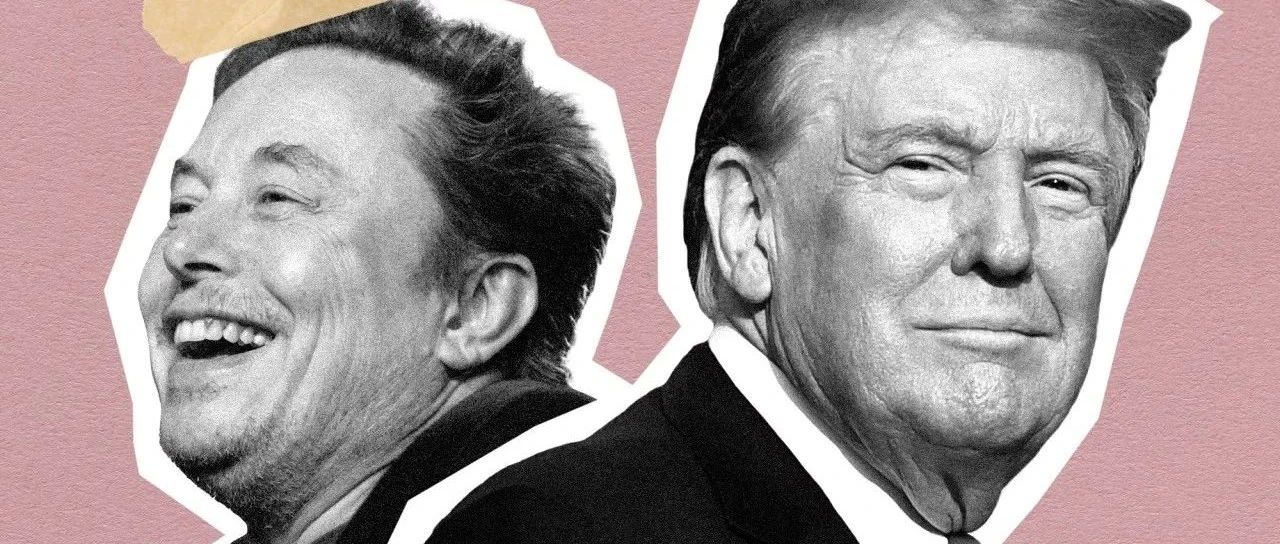
Group 1 - The article discusses the evolution of the relationship between Trump and Musk, highlighting their initial close alliance and subsequent public fallout due to ideological differences and personal conflicts [4][5][7] - Musk's role in the Trump administration was initially seen as pivotal, addressing key economic issues like inflation and national debt, but conflicts over tariffs and fiscal policies led to a gradual deterioration of their relationship [3][6][8] - The article emphasizes that the breakdown of their partnership was not sudden but rather a result of systemic erosion of trust and influence, driven by policy decisions that conflicted with Musk's business philosophy [7][8] Group 2 - The "DOGE" initiative, which aimed for significant budget cuts, achieved approximately $175 billion in spending reductions during Musk's tenure, representing 8.75% of the $2 trillion target [11] - Despite these achievements, the article notes that the entrenched structural resistance within the U.S. government limits the effectiveness of top-down reforms like those attempted by Musk [11][14] - The article suggests that the future of "DOGE" may transition into a more systematic and institutionalized phase under Trump's leadership, focusing on fiscal sustainability and efficiency improvements [15][16] Group 3 - The article critiques the systemic inefficiencies of the U.S. government, attributing them to a culture of over-regulation that fosters a compliance-driven mentality among civil servants, which ultimately hampers effective governance [12][14] - Examples of inefficiencies, such as the prolonged delays in major projects like the California high-speed rail and the new Air Force One, illustrate the challenges faced in government operations [13] - The article posits that for "DOGE" to succeed, it must address these deep-rooted structural issues rather than merely implementing superficial cost-cutting measures [14] Group 4 - The article discusses the misjudgment of Wall Street regarding Trump's economic policies, particularly the "TACO" trade, which underestimated his commitment to fiscal tightening and debt sustainability [17][18] - It highlights the potential for Trump's future policies to diverge from market expectations, particularly if he pursues aggressive spending cuts alongside tax reductions, which could lead to economic recession [18] - The overarching narrative suggests that Trump's fiscal strategies are aimed at ensuring long-term financial health and maintaining the global status of the U.S. dollar, despite short-term economic pain [18]

马斯克之后,DOGE何去何从?
SINOLINK SECURITIES· 2025-06-18 05:38
Group 1: Relationship Dynamics - The initial close relationship between Trump and Musk was characterized as a "honeymoon period," with Musk seen as a key asset in addressing inflation and national debt issues[5] - The relationship deteriorated due to fundamental ideological conflicts, particularly Musk's global business philosophy clashing with Trump's protectionist policies[6] - Musk's exit was catalyzed by significant policy disagreements, including the "Big Beautiful Bill" expected to add $3 trillion to the deficit, undermining Musk's debt reduction efforts[7] Group 2: DOGE Initiative and Impact - During Musk's 130-day tenure, the DOGE initiative achieved approximately $175 billion in spending cuts, equating to 8.75% of the $2 trillion target[13] - Approximately 280,000 personnel were laid off or voluntarily left during this period, highlighting the aggressive management style Musk employed[13] - Despite these achievements, systemic resistance within the bureaucratic structure limited the effectiveness of Musk's reforms, indicating deep-rooted inefficiencies in the U.S. government[14] Group 3: Future Outlook and Risks - Trump's commitment to fiscal sustainability remains strong, with potential shifts towards a more systematic DOGE 2.0 phase led by insiders like Russell Vought[3] - The market's perception of Trump's fiscal discipline may be underestimating his resolve to address long-term debt sustainability, which could lead to significant asset revaluation risks[3] - Risks include potential government re-engagement in fiscal stimulus and Trump's interference with Federal Reserve independence, which could alter deficit reduction priorities[4]
中金:特朗普2.0“大财政”再进一步
中金点睛· 2025-05-26 23:37
Core Viewpoint - The "One Big Beautiful Bill" passed in the House is expected to significantly increase the U.S. fiscal deficit over the next decade, confirming previous analyses that the U.S. is unlikely to effectively reduce its deficit due to structural issues like income inequality and re-industrialization [1][3][6]. Summary by Sections Overview of the "One Big Beautiful Bill" - The bill includes tax cuts, spending reductions, an increase in the debt ceiling, and policies on defense and immigration [1][3]. Key Components of the Bill - **Tax Cuts**: The bill aims to permanently extend and expand the Tax Cuts and Jobs Act (TCJA), with an estimated static reduction in fiscal revenue of approximately $4.3 trillion over the next decade [3][5]. - **Spending Cuts**: It proposes significant cuts to social welfare programs, including about $1 trillion in Medicaid cuts and $230 billion in cuts to the Supplemental Nutrition Assistance Program (SNAP) [5][6]. - **Defense and Immigration Policies**: Increased spending on defense and border security is included, supporting Trump's initiatives [6]. - **Debt Ceiling Increase**: The bill proposes raising the debt ceiling by $4 trillion [6]. Fiscal Impact - The bill is projected to increase the static fiscal deficit by approximately $2.8 trillion from FY2025 to FY2034, with dynamic adjustments raising this figure to about $3.2 trillion [6][9]. - The Congressional Budget Office (CBO) anticipates a deficit increase of $3.7 trillion over the same period [6]. Short-term and Long-term Implications - In the short term, the bill may lead to a slight decrease in the deficit for FY2025, but overall, the deficit is expected to remain high, around $1.9 trillion, with a deficit rate of 6.4% [9]. - The long-term outlook suggests that the U.S. will continue to face challenges in reducing the deficit due to ongoing structural issues and the need for fiscal stimulus to address income inequality and infrastructure deficits [11][15]. Market and Policy Responses - The anticipated increase in debt issuance may lead to liquidity pressures in the market, potentially prompting the Federal Reserve to consider measures such as restarting quantitative easing (QE) [25][26]. - The bill's passage could also accelerate financial reforms aimed at stabilizing the market and increasing liquidity in the U.S. Treasury market [26].

交易员:市场对特朗普政府能否缩减开支持怀疑态度
news flash· 2025-05-22 02:46
Group 1 - The market shows skepticism regarding the Trump administration's ability to implement spending cuts and tax reduction proposals [1] - Despite a decline in the stock market, traditional safe-haven demand for the US dollar has not been observed, with gold, euro, and yen benefiting instead [1] - There may be potential fiscal tightening as the spending and tax cut proposals are submitted to the Senate, but market sentiment indicates doubt about this outcome [1]
党内鹰派意外反转 特朗普减税法案获通过!小摩却警告:险胜背后暴露致命分歧
智通财经网· 2025-05-19 10:37
智通财经APP获悉,上周,众议院预算委员会以21:16的投票结果否决了特朗普力推的全面减税法 案"One Big, Beautiful Bill",虽然后续投下反对票的强硬保守派议员中有四位选择了"弃权",使得法案 最终以17:16的投票结果通过,但摩根大通认为,这暴露出共和党内部在财政政策优先级和立法时间表 上的深刻分歧。 法案核心内容与争议焦点 摩根大通在一份报告中表示,该法案旨在落实特朗普竞选承诺,核心内容包括: 税收政策:永久降低个人和企业税率,临时取消小费和加班费征税,将州和地方税收(SALT)抵扣上限 从1万美元提高至3万美元(适用于年收入低于40万美元的家庭),并计划将债务上限提高4万亿美元。 财政紧缩:拟削减约1.5万亿美元开支,主要来自医疗补助(Medicaid)削减,预计未来十年可节省超9000 亿美元,但可能导致2034年至少860万人失去医疗保险。 经济影响:联合税收委员会(JCT)预测,法案未来十年将增加3.7万亿美元联邦债务;税收基金会则认为, 这对长期GDP增长的推动作用仅为0.6%,远低于2017年税改法案的 1.7%。负责任联邦预算委员会 (CRFB)进一步指出,如果法案中的 ...

英国央行面临政策转向 贸易风险或迫其加快降息
Jin Tou Wang· 2025-05-08 04:18
周四(5月8日)亚盘早盘,英镑兑美元暂报1.3345,涨幅0.44%,昨日收盘报1.3287。英国央行今日预 计降息25个基点,将基准利率降至4.25%,累计降息幅度达100个基点。 关注焦点转向英国央行是否会暗示未来几个月加快降息步伐。贸易战争风险已显现,财政政策路径也要 求货币政策进行对冲,这意味着未来降息速度可能更快、幅度更大。英国央行此前强调"渐进和谨慎"的 降息方式,但贸易战争和财政风险表明需要改变这一策略。市场已从预期季度降息转向连续降息, SONIA数据显示市场已完全定价5月降息,并且6月、8月、9月和11月降息的可能性也较高。经济前景 仍不明朗,尽管增长风险偏向下行,但英国央行内部可能仍需看到更多证据才会发出明确的降息信号。 无论贸易战争、财政紧缩还是全球增长放缓,英国经济增长可能进一步放缓,这将推动更快的通缩,从 而增加连续降息的风险。如果不加快降息速度,预计降息周期将延续至2026年,终端利率可能降至 2.75%。6月更有可能成为英国央行转向鸽派立场的时间点,届时可能确认连续降息的开始。 英镑兑美元日线图上,布林带指标显示上轨位于1.3580,中轨位于1.3154,下轨位于1.2728,当 ...
特朗普对等关税整体力度大超预期,全球股市普跌,美联储或进一步放缓降息步伐,关注关税反制措施|宏观经济
清华金融评论· 2025-04-03 10:56
Core Viewpoint - The new round of tariffs announced by Trump has led to a significant decline in global stock markets, with Vietnam and Japan experiencing the largest drops, while gold prices reached new highs [1][2]. Tariff Details - The new tariff policy consists of a baseline tariff increase of 10% effective from April 5, which is lower than market expectations. The retaliatory tariffs, effective from April 9, are significantly higher than anticipated, with China facing a 34% tariff (totaling 54%), the EU 20%, Japan 24%, Vietnam 46%, India 26%, and South Korea 25% [3][6]. Market Reactions - Following the announcement, stock markets globally fell, with Vietnam's market plummeting by 7% and Japan's by 3%. The A-share and H-share markets also continued to adjust, with the Shanghai Composite Index down 0.24% and the Hang Seng Index down 1.52%. The Chinese yuan depreciated to 7.35 against the US dollar [3][6]. Reasons for Tariff Increases - The Trump administration's rationale for increasing tariffs includes addressing trade imbalances, national security concerns, domestic political factors, and economic benefits. The administration believes that unfair trade practices by China contribute to the trade deficit and that tariffs can protect U.S. industries and generate government revenue [6][7]. Economic Implications - The tariffs pose a risk of "stagflation" for the U.S. economy, as consumers may face higher costs leading to reduced demand and increased economic pressure. The tariffs are expected to raise price levels and create upward pressure on inflation in the short term. Consumer inflation expectations have surged, with a significant increase noted in March [9]. The Federal Reserve may find it challenging to lower interest rates in the short term due to these economic pressures [9].

如何看待近期美股市场调整︱重阳问答
重阳投资· 2025-03-13 06:26
Q: 请问重阳投资, 如何看待近期美股市场调整 ? 3. 美国经济发生深度衰退的可能性很低。受益于过去几年的财政扩张,居民和企业部门的资产 负债表目前非常健康,财政紧缩可能使美国经济受到一定冲击,但演变为深度衰退的可能性很 低。 总的来看,我们倾向于美国本轮下跌调整(跌幅10-15%)的概率大于熊市(跌幅20%)的概 率。后续市场走势一方面取决于特朗普政府财政紧缩和关税等方面的实际动作,更重要的是观 察特朗普政府主要官员对股市评论措辞的变化,观察政策期权何时出现。 免责声明 2. 财政紧缩预期压制增长前景。马斯克主导的政府效率部DOGE冻结了大量政府外包合同,计 划大规模削减联邦雇员,其影响已经在2月美国挑战者裁员报告等数据上开始显现。 3. 政策叙事转向"经济排毒论"。特朗普政府官员近期频繁提及"美国经济需要转型期",财长贝 森特称"过去依赖财政扩张、移民红利和全球化红利的增长模式不可持续"。这种叙事转变动摇 了市场对"高增长-高估值"逻辑的信仰。 但从现实来看,美国经济恶化速度并没有那么快。 1. 关税对消费影响有限。据测算,美国进口消费品仅占私人消费支出的4%,即便对墨、加、中 全面加征25%关税,受影 ...