
情绪消费

Search documents
东北证券:情绪消费催生嗅觉经济 东方香氛重塑市场新格局
Zhi Tong Cai Jing· 2025-06-30 03:31
Core Viewpoint - The Chinese fragrance market is transitioning from material consumption to emotional consumption, with domestic brands like Mao Geping gaining traction by aligning with national trends and offering differentiated products [1][2]. Industry Overview - The Chinese fragrance market is projected to reach 26.1 billion yuan in 2023, with a CAGR of 12.82% from 2023 to 2028. The market size has grown at a CAGR of 12.32% from 2018 to 2023 [1]. - China's share of the global fragrance market is increasing, reaching 3.68% in 2023 and expected to rise to 5.67% by 2028, indicating strong growth potential [1]. Market Trends - The low penetration rate of fragrances in China is a temporary phenomenon linked to economic development stages. In 2023, the per capita fragrance expenditure in China is only 16 yuan, significantly lower than in the US (423 yuan), UK (406 yuan), South Korea (170 yuan), and Japan (47 yuan) [1][2]. Competitive Landscape - The market is currently dominated by international brands like Chanel and Dior, which have established a strong presence in China. However, domestic brands such as "Guanxia" and "Wenxian" are breaking through by incorporating local cultural elements and modern design, appealing to consumers [3]. Company Focus: Mao Geping - Mao Geping plans to launch a regular fragrance line by May 8, 2025, targeting the 300-500 yuan price range for 30ml, positioning itself above traditional domestic brands while offering better value than international ones [4]. - The brand will introduce 13 types of eau de parfum to create a comprehensive fragrance matrix, catering to various consumer needs [4]. - Mao Geping leverages its strong brand recognition as an "Oriental Makeup Master," aligning with national trends and offering a higher cultural resonance compared to international brands [4]. - The company has a broad online and offline sales network, facilitating a seamless experience for consumers to test and purchase fragrances [4].

情绪消费催生嗅觉经济,东方香氛重塑市场新格局
NORTHEAST SECURITIES· 2025-06-30 00:45
Investment Rating - The report recommends a "Buy" rating for the company Mao Geping, with a target price positioned in the range of 300-500 RMB for 30ml products, targeting the upper middle class [5]. Core Insights - The Chinese perfume market is projected to reach 26.1 billion RMB in 2023, with a CAGR of 12.82% from 2023 to 2028, indicating strong growth potential [1][45]. - The market penetration of perfumes in China is currently low, with a per capita spending of only 16 RMB in 2023, significantly lower than that of developed countries, suggesting substantial room for growth as consumer awareness and acceptance increase [2][50]. - The competitive landscape is dominated by international brands like Chanel and Dior, while local brands such as "Guanxia" and "Wenxian" are emerging by integrating Eastern cultural elements and modern design [3]. Summary by Sections Market Overview - The Chinese perfume market is experiencing rapid growth, with a CAGR of 15% from 2018 to 2023, significantly outpacing global market growth [40]. - The market share of China in the global perfume market is expected to rise from 3.68% in 2023 to 5.67% by 2028, reflecting the increasing importance of the Chinese market [45]. Market Trends - The shift from material consumption to emotional consumption is driving the growth of the perfume market, with consumers increasingly valuing emotional experiences [4]. - The rise of online shopping and social media platforms is reshaping the perfume purchasing landscape, with online sales expected to grow at a CAGR of 22% from 2023 to 2028 [53][54]. Competitive Landscape - International brands currently dominate the market, but local brands are gaining traction by offering products that resonate with Chinese cultural values [3]. - Mao Geping is expanding its product line into perfumes, leveraging its brand recognition and cultural elements to differentiate itself from international competitors [3]. Future Outlook - The report highlights the potential for significant growth in the perfume sector, particularly in lower-tier cities and through online channels, as consumer preferences evolve [50][54]. - The increasing focus on emotional value and self-expression among consumers is expected to further drive the demand for perfumes in China [4][39].
国泰海通 · 晨报0630|策略、海外策略
国泰海通证券研究· 2025-06-29 14:56
Group 1 - The core viewpoint emphasizes that after breaking through key points, the stock market still has room for growth, with a focus on growth sectors rather than indices [1][2] - The reduction in the risk-free interest rate and the shift in expectations for the RMB from depreciation to stability or slight appreciation are significant drivers for the revaluation of Chinese assets [1][2] - The article highlights the importance of macro policies that prioritize investor returns and capital market reforms, which are crucial for changing investors' conservative attitudes towards risks [1][2] Group 2 - Economic policies and innovation support are expected to improve risk appetite and drive growth performance, with new business opportunities emerging in China [2] - The article notes that the financial sector's recent strong performance is influenced by multiple factors, including the ongoing development of stablecoin concepts and favorable domestic policies [6] - Historical analysis shows that financial stock rallies are often driven by liquidity, fundamentals, or policy events, with the sustainability of these drivers determining future market trends [8]


绿地国金天地:以 “非标商业+情绪消费” 重构济南商业新范式
Sou Hu Cai Jing· 2025-06-29 12:39
Core Insights - The conference highlighted the shift towards "emotional consumption" as a new market trend, emphasizing the need for innovative commercial strategies to reshape the retail landscape [1][5][8] - The concept of "non-standard commercial" was discussed as a means to pursue uniqueness and create social currency, moving away from traditional retail metrics [6][7] Group 1: Emotional Consumption - Emotional consumption is becoming a central theme in consumer behavior, where the value of products is increasingly tied to emotional recognition and social capital rather than just the products themselves [5][8] - The traditional shopping center is facing an identity crisis, with consumers prioritizing experiences and emotional connections over mere transactions [5][8] Group 2: Non-Standard Commercial Strategies - Non-standard commercial focuses on the extreme pursuit of uniqueness, aiming to create independent commercial IPs that resonate with consumers [6][7] - Successful commercial spaces are now seen as content producers rather than mere product displays, emphasizing the importance of generating shareable content for social media [6][7] Group 3: Industry Transformation - The retail industry is undergoing a paradigm shift, where traditional performance metrics like sales per square meter are being replaced by new dimensions such as user-generated content and social media exposure [6][7] - The ultimate goal of non-standard commercial is to achieve a balance between emotional resonance, community engagement, and spatial design, creating a unique and replicable commercial identity [8]

华映资本管理合伙人王维玮:消费投资“热”了,估值尚未明显变化
Jing Ji Guan Cha Wang· 2025-06-29 08:11
Core Insights - The article discusses the evolution of Pop Mart's business model and the broader changes in consumer investment trends, emphasizing the importance of long-term perspectives in investment decisions [2] Group 1: Business Model Evolution - Pop Mart's initial business model was a "store within a store" concept focused on creative products, which has evolved through multiple iterations to its current form [2] - The management partner of Huaying Capital, Wang Weiwei, highlights that investment should not only focus on the present but also consider long-term cycles [2] Group 2: Consumer Investment Trends - After a surge in consumer investment from 2021 to 2022, the sector is expected to face a downturn in 2024, with a potential recovery in 2025 as leading Hong Kong consumer stocks see significant valuation increases [2] - Huaying Capital has accelerated its investment pace this year, with total investments reaching three times that of the previous year, focusing on efficiency-driven companies and emotional consumption sectors [2] Group 3: Market Dynamics - The consumer industry faces inherent efficiency bottlenecks, with offline consumption limited by geographical constraints, creating opportunities for small and medium enterprises [3] - Wang Weiwei notes that the competitive landscape in the consumer sector is intense, requiring companies to excel in product, brand, channel, and capital operations [3] Group 4: Investment Strategy and Valuation - The valuation logic in consumer investment has shifted from price-to-sales (PS) to price-to-earnings (PE) methods, with a general cap of 10 times PE expected in 2024 [4] - Despite the changing landscape, the overall valuations of consumer projects have not shown significant changes this year [4] Group 5: Exit Strategies and M&A Opportunities - Huaying Capital is increasingly favoring Hong Kong listings for exits, as the market offers high certainty and low opportunity costs, especially with the recovery of consumer sector valuations [4] - The next five years are anticipated to witness a wave of industry consolidation, with five key M&A opportunities identified, including the scaling of small enterprises and the modernization of family business governance [5]

潮玩品牌真正价值是什么
Jing Ji Ri Bao· 2025-06-27 22:05
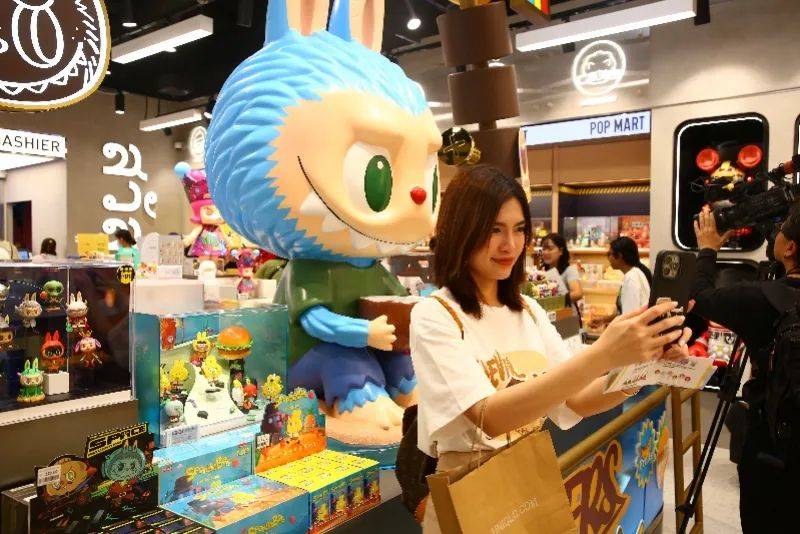
Group 1 - The core viewpoint of the articles highlights the volatility of the collectible toy market, particularly focusing on the LABUBU series from Pop Mart, which saw a significant price drop in the secondary market despite initial high demand and auction success [1][2] - Pop Mart's strategy to increase supply of popular products aims to stabilize the market and retain core customers, moving away from a reliance on artificial scarcity [1][2] - The concept of "emotional consumption" has gained traction in China, with Pop Mart successfully tapping into the unique desires of younger consumers through limited releases and blind box mechanisms [2][3] Group 2 - Pop Mart is establishing a robust IP incubation mechanism, allowing for continuous innovation and the development of new characters, which is essential for maintaining market relevance [2] - The company is creating immersive consumer experiences, such as the LABUBU wishing tree in Chengdu, to foster emotional connections with consumers and enhance brand loyalty [3] - Pop Mart is exploring a diversified commercial ecosystem, aiming to expand the IP value beyond toys into various sectors, thereby creating a more substantial cultural identity for its products [3]

80后、90后、00后,谁更愿意为情绪买单?
Sou Hu Cai Jing· 2025-06-27 15:35
Core Insights - The rise of emotional economy is reshaping consumer behavior, with young generations prioritizing emotional satisfaction in their purchasing decisions [1][4][3] - A significant 64% of Chinese consumers consider emotional fulfillment as their primary need, indicating a shift from functional to emotional consumption [4][3] - The emotional economy is becoming a new economic engine, with notable growth in sectors like trendy toys, pets, and outdoor activities [3][4] Emotional Consumption Trends - Over 80% of respondents reported engaging in emotional consumption in the past year, with preferences varying by age group [12][5] - The survey revealed that 92.53% of 90s generation consumers prefer tangible products like fragrances and toys, while 00s generation favors virtual experiences and social engagement [11][10] - Emotional consumption motivations include seeking companionship and emotional resonance, with 97.34% of respondents citing these as primary reasons [11][21] Market Dynamics - The emotional economy is reflected in the explosive growth of brands and stores, with 453 brands achieving over 100 million in sales during recent shopping events [3] - The emotional marketing landscape is influenced by factors such as live streaming, celebrity endorsements, and consumers' current moods, particularly among younger demographics [21][3] - The emotional economy is characterized by a focus on personalized needs, with over 65% of respondents believing it meets individual desires [21]
食品饮料行业2025年中期策略报告:悦己需求焕新颜,传统消费激活力-20250627
Ping An Securities· 2025-06-27 13:11
Group 1 - The core viewpoint of the report emphasizes the transformation of consumer demand from "pleasing others" to "self-pleasing," indicating a structural change in consumption patterns that favors new consumption trends over traditional ones [4][9] - The report identifies three main lines of investment focus: new demand, new products, and new channels, suggesting that companies that can quickly adapt to these changes will outperform in the market [4][6] - The report highlights the government's ongoing efforts to stimulate consumption through various policies, which are expected to enhance consumer confidence and income, leading to a gradual recovery in the consumption market [7][8] Group 2 - New demand is characterized by a focus on cost-effectiveness, emotional value, and health consciousness among consumers, driven by generational differences in spending intentions [4][14][23] - The report notes that health-oriented products are gaining traction, with companies innovating in healthy snacks and beverages to meet rising consumer expectations for health benefits [28][36] - The emergence of new sales channels, such as bulk snack stores and membership-based supermarkets, is reshaping the retail landscape, allowing companies to better meet consumer demands for quality and convenience [57][63] Group 3 - The report discusses the rapid growth of the bulk snack store sector, which has become the leading channel for snack sales in China, reflecting a shift in consumer shopping habits [57][59] - Membership-based supermarkets are also highlighted as a growing trend, providing high-quality products at competitive prices, which appeals to consumers seeking value [63][66] - Traditional supermarkets are undergoing significant transformations to adapt to the competitive landscape, with successful case studies demonstrating substantial sales increases following strategic adjustments [69][70]
广州零售市场回暖:核心商圈空置率下降,情绪消费狂飙
2 1 Shi Ji Jing Ji Bao Dao· 2025-06-27 12:39
Core Insights - The retail market in Guangzhou is experiencing a significant recovery, with a total retail sales of social consumer goods reaching 469.994 billion yuan from January to May, marking a year-on-year growth of 5.1% [1] - The report from JLL indicates that the retail market in Guangzhou is expected to continue its upward trend, with shopping center stock surpassing 6 million square meters and a slight decrease in vacancy rates to 5.6% [1][2] - Emotional consumption is identified as a key driver of market vitality, with retail categories such as cultural and recreational products showing substantial growth [2][3] Retail Market Performance - The retail sales of sports and entertainment products increased by 36.2%, while cultural and office supplies surged by 57.6%, and electronic publications and audio-visual products doubled [1] - The average rent in shopping centers decreased by 1.6% to 673 yuan per square meter [1] Future Developments - Approximately 1.5 million square meters of quality shopping centers are planned to open in Guangzhou over the next three years, with significant contributions from the Panyu and Liwan districts [2] - New commercial projects are set to enter the market, focusing on "emotional value" as a core positioning strategy, which aims to provide differentiated experiences [3] REITs Performance - Consumer-related REITs have shown impressive performance, with an average first-day increase of 26% for eight REITs listed in 2025, and a total return of nearly 90% since their listing [3] - The report anticipates continued interest from investors in the REITs market, with several consumer-related REITs expected to be approved for listing in 2025 [3]
香港海产消费市场长青 大洋环球控股逆风下彰显盈利韧性
Zhi Tong Cai Jing· 2025-06-27 07:51
Group 1: Market Overview - The Hong Kong consumer market is experiencing a shift, with "new consumption" brands like Pop Mart gaining significant market value, while traditional high-end brands are losing their appeal [1] - The local retail sector is under pressure due to a decline in consumer spending, with March retail sales expected to drop by 3.5% year-on-year, marking the 13th consecutive month of decline [1] - Despite the overall market challenges, certain resilient consumption trends are emerging, indicating potential opportunities within the sector [1] Group 2: Company Performance - Ocean Global Holdings, a supplier of frozen seafood in Hong Kong and Macau, has shown stable profitability despite the weak local dining market, with a revenue of approximately HKD 396 million and a net profit increase of 2.3% to HKD 41.686 million for the fiscal year 2025 [2] - Since its listing, Ocean Global has achieved a revenue growth of 65% and a net profit increase of approximately 5.3 times over eight years, demonstrating strong financial fundamentals and consistent dividend payouts [2] Group 3: Seafood Consumption Trends - Hong Kong's seafood consumption remains stable, with an average annual import volume exceeding 350,000 tons from 2012 to 2021, indicating a consistent demand rather than a fleeting trend [3] - Hong Kong residents consume an average of 65 kg of seafood per person annually, significantly higher than the global average of 20 kg, ranking fifth globally and third in Asia [3] Group 4: Future Prospects - Ocean Global is exploring the possibility of transferring to the main board of the Hong Kong Stock Exchange, with market optimism reflected in a nearly 36% increase in its stock price this year [3] - The company's value may not yet be fully recognized by the market, and the anticipated move to the main board could lead to a new phase in its stock performance, making it a potential focus for investors [4]