新型城镇化

Search documents
天风证券:2025年中央城市工作会议召开 关注智慧城市等相关领域
智通财经网· 2025-07-15 23:36
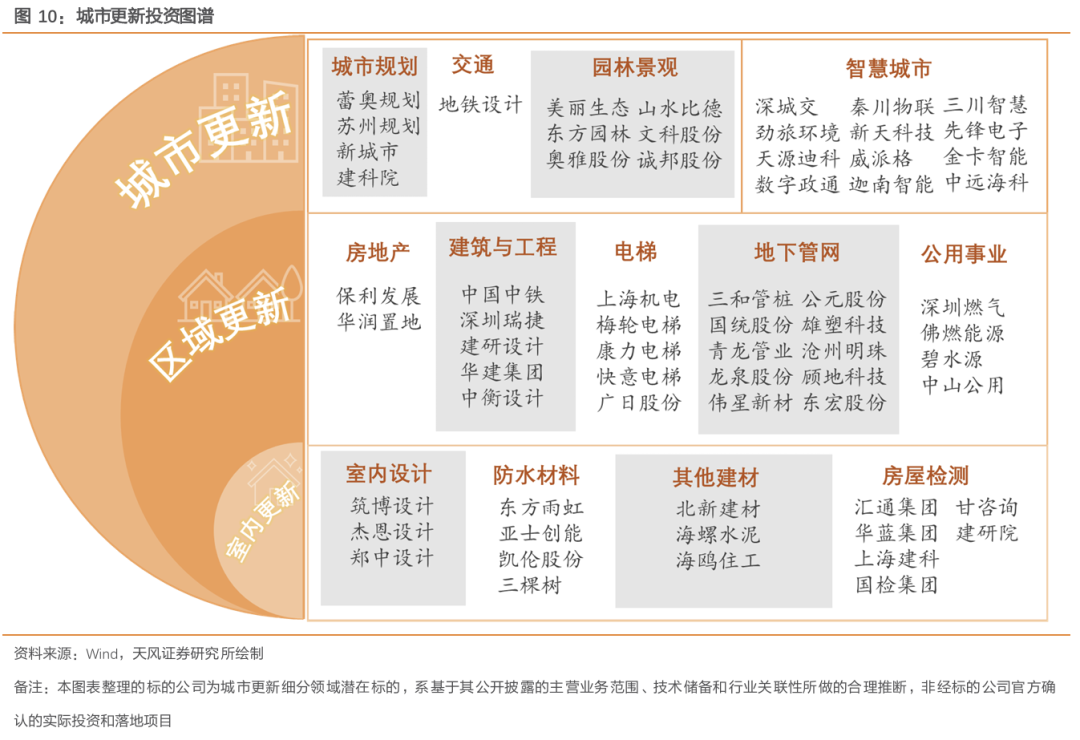
Group 1 - The core viewpoint emphasizes the goal of building innovative, livable, beautiful, resilient, civilized, and smart modern cities, focusing on high-quality urban development and urban renewal as a key strategy [1][2] - The recent Central Urban Work Conference highlighted the shift in urban development from expansion to quality improvement, prioritizing the satisfaction and value judgments of the people [2][3] - The new urbanization strategy focuses on people-centered approaches, regional coordination, and urban renewal as essential components for high-quality urbanization [3] Group 2 - Urban renewal is defined as a systematic process of spatial reconstruction and functional upgrading, transitioning from expansion to enhancement of existing urban areas [4][5] - The policy goals of urban renewal have evolved from addressing basic livelihood issues to constructing livable, resilient, and smart cities, emphasizing sustainable and multi-layered urban renewal mechanisms [4][5] - The recent guidelines for urban renewal stress optimizing urban structure, enhancing functionality, and preserving historical cultural heritage while promoting digital, green, and intelligent urban governance [4][5] Group 3 - The investment landscape for urban renewal includes various sectors such as urban planning, transportation, landscape architecture, and smart city initiatives, indicating a comprehensive approach to urban development [6] - Companies involved in urban planning and related sectors are highlighted, showcasing a diverse range of players in the market, including those specializing in design, construction, and infrastructure [6]





中央城市工作会议的学习解读:变了
Huachuang Securities· 2025-07-15 13:41
Group 1: Key Continuities from 2015 - The meeting had a high-level attendance with all 7 Politburo Standing Committee members present, similar to 2015[2] - Both meetings mark the starting point for new five-year national plans, specifically the "13th Five-Year" and "15th Five-Year" plans[2] Group 2: Key Changes Observed - A significant shift in urbanization judgment, moving from rapid growth to stable development, with the current urbanization rate at 67% and a target of nearly 70% by the end of the "15th Five-Year" period[3][17] - The focus on "high-quality urban renewal" in 2025, contrasting with the 2015 emphasis on large-scale housing renovations[4][14] - Increased attention to urban "safety," with new directives to maintain safety standards and enhance urban resilience[4][21] - Identification of new industrial opportunities, including urban renewal, service industries, and pollution reduction initiatives[4][24]
城市存量提质增效怎么干?中央城市工作会议划定七大任务
2 1 Shi Ji Jing Ji Bao Dao· 2025-07-15 13:35
Core Insights - The central urban work conference held on July 14-15 marks the first high-level meeting on urban development in nearly a decade, indicating a shift in China's urbanization strategy from rapid growth to stable development [1][2] - The meeting emphasizes the need for urban development to focus on improving existing urban stock rather than expanding new construction, highlighting a transition from "big infrastructure" to "big renewal" [2][3] Summary by Categories Urbanization Trends - China's urbanization rate increased from 53.1% in 2012 to 67% by the end of 2024, with over 944 million people living in urban areas [2] - The number of cities in China has risen to 694, but the pace of urbanization growth has slowed since 2021, indicating a transition to a stable development phase [2] Development Goals - The conference set forth the goal of building a modern, innovative, livable, beautiful, resilient, civilized, and smart city, expanding on previous goals of creating livable and resilient cities [3][4] - The six aspects of urban development goals are interconnected, addressing the need to balance technological advancement with the quality of life for citizens [3][4] Key Tasks for Urban Development - Seven key tasks were outlined, with the optimization of the modern urban system being the top priority, focusing on enhancing the capacity of cities to support population and economic growth [5][6] - The tasks include fostering vibrant innovation cities, creating comfortable and convenient living environments, developing green and low-carbon cities, ensuring safety and resilience, promoting moral and civilized urban spaces, and establishing efficient smart cities [6][7] Collaborative Development - The future urban development strategy emphasizes regional collaboration, moving away from isolated city competition to coordinated development among cities and rural areas [5][6] - The focus will be on creating modern urban clusters and metropolitan areas that leverage the unique characteristics and needs of different cities [7]
(经济观察)中央城市工作会议释城市发展三大信号
Zhong Guo Xin Wen Wang· 2025-07-15 13:18
Group 1 - The central urban work conference held in Beijing from July 14 to 15 outlines three key signals for future urban development in China [1] - The shift from "scale expansion" to "quality improvement of existing stock" indicates a new phase of urban development focused on efficiency and human-centered approaches [1][2] - By the end of 2024, the urbanization rate in China is expected to reach 67%, with 940 million people living in urban areas, marking a transition to stable development [1] Group 2 - The conference emphasizes the importance of county-level urbanization as a key node for economic development and urban function integration [2] - Enhancing infrastructure and public services in county towns can stimulate economic vitality and support new urbanization efforts [2] Group 3 - The conference highlights the need to cultivate an innovative ecosystem to enhance urban vitality and achieve breakthroughs in new productive forces [3] - Major cities like Beijing, Shanghai, and Shenzhen are becoming global innovation hubs, but there is a need to address the imbalance in innovation resources across different city tiers [3] Group 4 - The focus on addressing citizens' urgent needs through improved urban governance and smart city initiatives is emphasized [4] - The concept of "precision governance" is introduced, aiming to solve urban issues effectively and enhance the quality of life for residents [4][5]
中国经济半年报释放了什么信号
和讯· 2025-07-15 10:16
Economic Growth and Indicators - China's GDP growth rate for the first half of 2025 is reported at 5.3%, with industrial added value increasing by 6.4% and fixed asset investment rising by 2.8% [1] - Social retail sales grew by 5.0% year-on-year, with a notable increase in June [1] - The total social financing scale reached 22.83 trillion yuan, an increase of 4.74 trillion yuan compared to the previous year [1] Urbanization and Structural Changes - The Central Urban Work Conference emphasized the need for integrated planning in population, industry, and urban development, transitioning from rapid growth to stable development [2] - The focus is on improving public services and developing a new model for real estate, particularly in urban villages and dilapidated housing [2] Consumption and Investment Dynamics - In the first half of the year, final consumption expenditure contributed 52% to economic growth, indicating that domestic demand, especially consumption, is the main driver of GDP growth [3] - Investment growth has been volatile, with fixed asset investment growth slowing to 2.8%, largely due to a significant decline in real estate investment [5][6] - Private investment decreased by 0.6%, but other sectors excluding real estate saw a 5.1% increase [6] Price Trends and Inflation - The Consumer Price Index (CPI) showed a slight increase of 0.1% in June, ending a four-month decline, while the Producer Price Index (PPI) fell by 3.6% [7][8] - The CPI's marginal recovery is attributed to stable industrial consumer goods prices and a relatively stable service price environment [9] Industry Challenges and Opportunities - Traditional industries are facing downward pressure on prices due to overcapacity and low-price competition, particularly in sectors like cement and steel [10][11] - The "anti-involution" strategy aims to address structural issues in supply and demand, promoting orderly exit of outdated capacities [11] - New growth drivers are emerging, but their impact is currently limited, necessitating a transition period for traditional industries [12]
房地产风向标系列:人民城市建设:新型城镇化与城市更新
Tianfeng Securities· 2025-07-15 09:15
Group 1 - The report outlines the evolution of urban development in China, transitioning from population control in the 1960s to a focus on quality improvement and the concept of "People's City" by 2015 [1][12][14] - The new urbanization strategy emphasizes a people-centered approach, regional coordination, and urban renewal as key components for high-quality development [2][28] - The report highlights the importance of urban renewal in reshaping urban functions, enhancing living quality, and preserving historical culture, marking a shift from expansion to upgrading existing urban areas [3][35] Group 2 - The urban renewal policy has evolved from addressing basic living conditions to creating "livable, resilient, and smart cities," indicating a shift towards sustainable and multi-dimensional urban renewal mechanisms [3][42] - The report suggests that urban renewal will focus on upgrading old residential areas, improving infrastructure, and enhancing cultural heritage protection, aligning with the broader goals of urban modernization [4][34] - The investment landscape for urban renewal includes sectors such as interior design, building materials, underground utilities, elevators, urban planning, and smart city technologies [4][28]
快评|中央城市工作会议有关房地产的五点解读
克而瑞地产研究· 2025-07-15 07:52
Core Viewpoint - The article emphasizes the need for a transformation in the real estate industry towards a "high-quality, low-risk, and sustainable" development model, supported by coordinated efforts on both supply and demand sides to stabilize the market in the short term and guide long-term growth [1][14]. Summary by Sections Urbanization and Housing Demand - The urbanization rate in China has increased from 53.1% in 2012 to 67% in 2024, with 940 million people living in urban areas. This urbanization has led to over 150 million new jobs and a stable influx of agricultural migrants into cities, which continues to support housing demand [2][3]. - The gap between the permanent urban population and registered urban population remains significant, indicating ongoing demand for housing driven by the urbanization of agricultural migrants [3]. Urban Development Strategy - The recent Central Urban Work Conference outlines a shift from rapid urban growth to stable development, focusing on improving existing urban areas rather than expanding them. This includes a more human-centered approach and efficient urban development [3][5]. - The conference emphasizes the importance of regional coordination in urban development, particularly in major urban clusters like the Beijing-Tianjin-Hebei region, the Yangtze River Delta, and the Guangdong-Hong Kong-Macau Greater Bay Area [5]. County-Level Urbanization - A significant portion of county-level cities (over 50%) have urbanization rates below 60%, indicating substantial potential for growth and housing demand in these areas, where 610 million residents live with an average urbanization rate of only 44% [6]. Supply-Side Adjustments - The strategy includes optimizing the supply structure by controlling new land supply and enhancing the quality of existing urban areas. This involves revitalizing underutilized land and increasing the supply of high-quality residential properties [8][10]. - The government aims to improve housing quality through new regulations that enhance safety and comfort standards in residential buildings, marking a shift towards providing "good housing" [12][13]. Market Dynamics and Future Outlook - The focus on urban renewal and the improvement of living conditions in older neighborhoods is expected to stimulate demand for improved housing, contributing to a new equilibrium in the real estate market [9][10]. - The article concludes that the ongoing urbanization will continue to support housing demand, with market share likely concentrating in core urban clusters. The coordinated efforts on both supply and demand will help stabilize the market and promote a sustainable development model in the real estate sector [14].
利好突袭!刚刚,直线涨停!
券商中国· 2025-07-15 07:35
Core Viewpoint - The article highlights a sudden surge in A-share and Hong Kong real estate stocks driven by favorable policy expectations from the Central Urban Work Conference held on July 14-15, which emphasizes the construction of livable cities and a new model for real estate development [2][7]. Group 1: Market Reaction - On July 15, A-share real estate and new urbanization concept stocks collectively surged, with companies like Tianbao Infrastructure and Chongqing Development hitting the daily limit [5]. - The Hong Kong real estate sector also saw significant gains, with Midea Real Estate initially soaring over 60% before closing with a 16% increase [6]. Group 2: Policy Insights - The Central Urban Work Conference outlined a shift in urban development from rapid growth to stable development, focusing on improving existing urban structures rather than expanding [7]. - Key tasks from the conference include optimizing modern urban systems, fostering innovative cities, creating comfortable living environments, and promoting green and resilient urban development [8][9][10]. Group 3: Real Estate Market Trends - Recent data indicates that the overall real estate market is stabilizing, with a narrowing decline in new home prices across major cities [12]. - The National Bureau of Statistics reported that the sales area and prices of real estate are still declining year-on-year, but the trend towards stabilization is evident [13]. - Analysts suggest that 2025 will be a pivotal year for the real estate sector, with a focus on high-quality housing and stable cash flow for leading real estate companies [14].

A股收评 | A股走势分化!创业板指收涨1.73% 资金抱团算力产业链
智通财经网· 2025-07-15 07:14
7月15日,A股走势分化,沪指于3500点关口震荡,创业板指表现偏强,市场逾4000股飘绿。全天成交1.6万亿,较上个交易日放 量1533.1亿。截至收盘,沪指跌0.42%,深成指涨0.56%,创业板指涨1.73%。 值得关注的是,今日市场热点主要围绕算力产业链上涨。据中证报报道,主要有以下利好催化: 首先,龙头股中报业绩预告超市场预期。7月14日晚间,新易盛发布业绩预告,上半年净利同比预增328%-385%。此外,工业富 联、沪电股份、华工科技等算力股也相继发布中报业绩预告,均有较大幅度增长。 其次,据央视新闻报道,应中国贸促会邀请,美国英伟达公司创始人兼首席执行官黄仁勋将于7月16日出席第三届中国国际供应 链促进博览会开幕式,并参加相关活动。英伟达创始人兼首席执行官黄仁勋表示,将开始向中国市场销售H20芯片。 最后,多个大模型于近期发布。中信建投表示,大模型的竞争与迭代仍在持续,意味着算力投资大概率维持较高强度,继续推荐 算力板块:一是业绩持续高增且估值仍处历史较低水平的北美算力链核心标的;二是有望享受外溢需求、取得客户或份额突破的 公司;三是上游紧缺的环节;四是1.6T光模块及CPO产业链。 盘面上,资 ...




中央城市工作会议在北京举行 习近平发表重要讲话
证券时报· 2025-07-15 05:02
Core Viewpoint - The meeting emphasized the importance of urban development in China, highlighting the need for a modernized urban system that aligns with the principles of socialism with Chinese characteristics, focusing on high-quality development and people's well-being [1][2][4]. Summary by Sections Achievements and Current Situation - Since the 18th National Congress, significant achievements have been made in urban development, including improvements in urbanization levels, governance, livability, cultural heritage protection, and ecological quality [1]. Overall Requirements for Urban Work - The meeting outlined the overall requirements for urban work, emphasizing adherence to Xi Jinping's thoughts, the importance of people's participation, and the need for a balanced approach to urbanization that focuses on quality rather than quantity [2]. Key Tasks for Urban Development - Seven key tasks were identified for urban development: 1. Optimize the modern urban system to enhance capacity for population and economic development. 2. Build vibrant innovation cities by fostering an innovative ecosystem and enhancing urban dynamics through reform and opening up. 3. Create comfortable and convenient livable cities with integrated planning for population, industry, and transportation. 4. Develop green and low-carbon cities by consolidating ecological governance and addressing pollution issues. 5. Establish resilient cities with safe infrastructure and effective disaster prevention measures. 6. Promote civilized cities by protecting cultural heritage and enhancing civic values. 7. Build efficient smart cities through innovative governance and effective public service mechanisms [3]. Leadership and Implementation - The meeting stressed the necessity of strengthening the Party's leadership in urban work, improving policy coordination, and enhancing the capabilities of urban work teams to ensure effective implementation of urban development strategies [4].