特朗普关税政策

Search documents
闪评|特朗普为什么执意解雇库克?
Sou Hu Cai Jing· 2025-08-26 12:20
Core Viewpoint - The article discusses the dismissal of Lisa Cook from the Federal Reserve Board by former President Trump, highlighting the legal and political implications of this action, as well as the potential motivations behind it [1][4][7]. Group 1: Dismissal Details - Trump claims authority under the U.S. Constitution and the Federal Reserve Act to remove Cook from her position [1]. - Cook, the first African American woman on the Federal Reserve Board, intends to continue her duties in stabilizing the U.S. economy despite the dismissal [4]. - The Federal Reserve Act stipulates that a Federal Reserve Board member can only be dismissed for "cause," which has historically not been applied to any sitting member [6]. Group 2: Political Context - Cook's questioning of Trump's tariff policies, which she believes could harm U.S. productivity, is seen as a key reason for her dismissal [7]. - The potential reshaping of the Federal Reserve by Trump is discussed, with implications for monetary policy and the independence of the institution [11]. - The dismissal occurs amid ongoing debates between the White House and the Federal Reserve regarding interest rate decisions, with Cook voting to maintain the current rate, contrary to the administration's preferences [11]. Group 3: Implications for Federal Reserve - The Federal Reserve Board consists of seven members, all nominated by the President and confirmed by the Senate, with Cook's term expected to last until January 31, 2038 [8]. - Trump's ability to reshape the Federal Reserve through such dismissals is questioned, as the current chair, Powell, was also nominated by Trump [10]. - The independence of the Federal Reserve is emphasized, with legal procedures required for a presidential dismissal, indicating that Trump's actions may serve as a warning to other board members [12].


特朗普自夸数百亿收入,欧尔班一番言论揭底,美国已经输给了中俄
Sou Hu Cai Jing· 2025-08-25 03:41
Group 1 - Hungarian Prime Minister Orban's comments suggest that China may surpass the US in economic trade, while Russia could potentially defeat the US in military conflicts, raising concerns about the current international landscape [1] - Orban emphasized that Ukraine cannot win against Russia, and he compared Russia's military experience with China's economic advantages, highlighting the severity of the competitive landscape [1] - Trump's response to Orban's comments included boasting about his tariff policies, claiming they generated over $100 billion for the US, but analysis shows that American consumers bear the brunt of these tariffs [2][4] Group 2 - The urgency for Trump to sign relevant agreements stems from the understanding that renewed tariffs would increase economic pressure on consumers and could undermine international investor confidence in the US market [4] - Trump's attitude towards China shifts depending on the context; he has praised China for its assistance on issues like fentanyl while maintaining a hardline stance on trade with other nations [6][7] - Orban's assertion that Russia could defeat the US through warfare can be viewed in light of the ineffective sanctions and military aid strategies employed by the West against Russia [7][10]
美联储宣布投降!特朗普又赢了?鲍威尔暗示降息?如何影响中国?
Sou Hu Cai Jing· 2025-08-23 10:23
Group 1 - Federal Reserve Chairman Powell indicated a shift in focus towards employment support, suggesting potential interest rate cuts in response to economic slowdown risks [1][4][9] - The market reacted positively to Powell's speech, with major U.S. stock indices rising significantly, reflecting increased expectations for a rate cut in September [6][9][14] - Powell emphasized that the Fed's decisions would be data-driven, highlighting the importance of monitoring employment and inflation data [1][12][14] Group 2 - Trump's pressure on the Federal Reserve has intensified, with public criticisms aimed at Powell's rate decisions and calls for immediate rate cuts [2][5][9] - The uncertainty surrounding Trump's tariff policies has been identified as a key variable affecting the Fed's decision-making process, potentially leading to prolonged high interest rates [4][7][9] - The Fed's cautious stance reflects a balancing act between inflation control and economic growth, with internal divisions among Fed officials regarding the timing of potential rate cuts [4][9][12]
宏观经济专题:对等关税2.0后,行业关税或将成关键新变量
KAIYUAN SECURITIES· 2025-08-20 11:44
Trade Agreements Overview - The Trump administration has reached trade agreements with the UK, EU, Japan, and South Korea, covering 38.6% of total US goods imports and 49.8% of the US trade deficit in 2024 (excluding the UK) [3] - The US-UK trade agreement includes a 10% base tariff and industry export quotas, with ongoing negotiations on specific details [4] - The US-Vietnam trade agreement proposes a 20% base tariff and a 40% tariff on re-exported goods, reflecting a significant imbalance in tariff rates [5] Tariff Structures and Economic Impact - The US-Japan trade agreement imposes a 15% base tariff on exports, with Japan committing to invest $550 billion in the US, aiming to boost domestic industrial production [5] - The US-EU agreement also includes a 15% base tariff, with the EU required to invest $600 billion in the US and purchase $750 billion in US energy by 2028 [5] - The tariffs on steel, aluminum, and copper range from 25% to 50%, with an estimated $70.7 billion in tariffs expected from these metals in 2024 [5] Future Implications - Industry tariffs are likely to become a central focus of Trump's trade policy, aimed at reducing the trade deficit and promoting domestic manufacturing [5] - The potential for increased tariffs on sectors such as pharmaceuticals, semiconductors, and rare minerals is anticipated, with ongoing investigations into these industries [5] - The overall tariff revenue for the US is projected to exceed $28 billion by July 2025, indicating a significant reliance on tariff income [5]
有色及贵金属周报合集-20250817
Guo Tai Jun An Qi Huo· 2025-08-17 11:36
1. Report Industry Investment Rating No information provided. 2. Core Views of the Report Copper - The fundamentals of copper show marginal improvement, but there is uncertainty in the macro - environment, leading to price fluctuations within the range of 77,000 - 81,000 yuan/ton. Unilateral operations should be cautious, while domestic inventory reduction is favorable for term positive spreads [6][10]. Aluminum - Shanghai Aluminum continues to oscillate within a narrow range of 20,500 - 20,700 yuan/ton. There is no need to be overly concerned about inventory accumulation before the traditional peak season. The core strategy is to wait for buying opportunities on price pull - backs, and there may be opportunities to layout for increasing volatility in the future [87]. Alumina - Although the price of alumina rose significantly due to news from Shanxi mines during the week, the actual impact is limited. The price may reach equilibrium at the 3,000 - 3,200 yuan/ton platform [88]. 3. Summary by Directory Copper Trading End - Volatility: The volatility of copper in various markets has declined, with COMEX copper price volatility dropping to around 60% [16]. - Term Spreads: The term structure of Shanghai copper has strengthened, while the spot discount of LME copper has widened [19]. - Positions: Shanghai copper and LME copper positions have increased, while international copper and COMEX copper positions have decreased. CFTC non - commercial long net positions have increased [23][29]. - Spot Premiums: Domestic copper spot premiums have strengthened, and Southeast Asian copper premiums have rebounded [32]. - Inventory: Global total copper inventory has increased, but domestic social inventory has decreased [35]. - Position - to - Inventory Ratio: The LME copper position - to - inventory ratio has declined, weakening the logic of spot tightness [38]. Supply End - Copper Concentrate: Import volume has increased year - on - year, and processing fees have marginally rebounded [41]. - Recycled Copper: Import volume has significantly increased year - on - year, domestic production has slightly increased year - on - year. Ticket points are low, the refined - scrap spread has widened, and import losses have narrowed [44][49]. - Blister Copper: Import volume has increased, and processing fees are at a low level [55]. - Refined Copper: Production has increased more than expected, import volume has increased, and the profit of copper spot imports has risen [58]. Demand End - Operating Rate: The operating rate of copper product enterprises in July has weakened month - on - month [63]. - Profit: Copper rod processing fees are at a relatively low level in the same period of history, and copper tube processing fees have weakened [66]. - Raw Material Inventory: The raw material inventory of wire and cable enterprises has remained at a low level [71]. - Finished Product Inventory: The finished product inventory of copper rods has decreased, and the finished product inventory of wire and cable has decreased [74]. Consumption End - Apparent Consumption: Apparent consumption is good, and power grid investment is an important support. Air - conditioner production growth has rebounded, and new energy vehicle production is at a high level in the same period of history [78][81]. Aluminum & Alumina Trading End - Term Spreads: A00 spot premiums have strengthened, while alumina spot premiums have weakened. The near - month spreads of Shanghai Aluminum have remained stable [91][94]. - Positions: Shanghai Aluminum positions have decreased while trading volume has rebounded. Alumina positions and trading volume have both increased significantly [96]. - Position - to - Inventory Ratio: The position - to - inventory ratio of Shanghai Aluminum and alumina has declined [101]. Inventory - Bauxite: Port inventory and inventory days have decreased. The inventory of alumina enterprises has increased in July. Port shipping volume and sea - floating inventory have declined, and outbound and inbound port volumes have slightly decreased [106][111][112]. - Alumina: Inventory has continued to accumulate, and the accumulation rate has increased [88]. - Electrolytic Aluminum: Social inventory has continued to accumulate, but the range is relatively moderate [87]. - Processed Materials: The weekly total output of aluminum plate, strip and foil has continued to decline [87].
特朗普:欧尔班告诉我,中国在贸易上打败我,俄罗斯在战争上打败我
Guan Cha Zhe Wang· 2025-08-13 07:45
Group 1 - The article discusses President Trump's comments regarding his conversation with Hungarian Prime Minister Viktor Orbán about the Russia-Ukraine conflict and trade dynamics between the U.S., Russia, and China [1] - Trump indicated that Orbán provided insights on the military capabilities of Russia compared to China's trade strength, suggesting that Russia wins through warfare while China wins through trade [1] - The article highlights Trump's defensiveness regarding U.S.-China trade relations, asserting that China would not defeat the U.S. through trade during his presidency, contrasting with President Biden's approach [2] Group 2 - A report from Goldman Sachs challenges Trump's claims about the benefits of his tariff policies, indicating that U.S. companies have borne 64% of tariff costs, with consumers expected to shoulder 67% of these costs by October [4][5] - The report warns that rising prices due to tariffs will exacerbate domestic inflation, with 64% of CEOs planning to pass on increased costs to consumers [5] - Trump's reaction to the Goldman Sachs report included personal attacks on the firm's CEO, dismissing the report's findings and maintaining that tariffs do not lead to inflation or economic harm [6][7]
邓正红能源软实力:季节性需求走弱 油价陷入政策博弈与基本面拉锯的敏感漩涡
Sou Hu Cai Jing· 2025-08-13 05:05
Group 1 - The core issue in the oil market is the conflict between OPEC's efforts to manage demand expectations to maintain price floors and the demand collapse risk triggered by tariff policies [3] - India's oil consumption has decreased by 0.5% year-on-year in the first seven months of the year, reflecting the impact of U.S. punitive tariffs [2][3] - OPEC has raised its forecast for global oil demand in 2026 to an increase of 1.38 million barrels per day, up from the previous estimate of 1.28 million barrels per day, driven by stronger economic activity in key regions [2] Group 2 - The geopolitical variable of the U.S.-Russia meeting could potentially lead to a loosening of sanctions, with a probability of 58% for the lifting of oil sanctions if a ceasefire agreement is reached [4] - OPEC's strategy to raise demand forecasts serves as a "demand anchoring" tactic to counter potential supply increases from geopolitical developments [4] - The current oil price volatility has decreased to 18.5%, indicating a market shift towards a "wait-and-see" balance amid ongoing tariff impacts and geopolitical tensions [5]

铜产业链周度报告-20250810
Guo Tai Jun An Qi Huo· 2025-08-10 08:14
Report Industry Investment Rating - Not provided in the content Core Viewpoints - The fundamentals of copper are currently weak, but there is still macro risk sentiment, leading to price fluctuations. The price is expected to range between 77,000 - 81,000 yuan/ton, with a neutral strength analysis [3]. - Global copper inventories have increased significantly on the margin, and the macro situation is uncertain but not yet negative. Unilateral operations should be cautious, while long-term inventory depletion logic favors forward contract term positive spreads [6]. Summary by Directory 1. Trading End - Volatility: Volatility in SHFE copper, international copper, LME copper, and COMEX copper has all declined, with COMEX copper price volatility dropping to around 60% [10]. - Term Spread: The term structure of SHFE copper has weakened, and the LME copper spot discount has widened. The COMEX copper C structure has narrowed [12][15]. - Position: Positions in SHFE copper, LME copper, international copper, and COMEX copper have all decreased, with SHFE copper positions decreasing by 18,600 lots to 464,000 lots [16]. - Capital and Industry Positions: The net long position of CFTC non-commercial traders has decreased, and the net short position of LME commercial traders has increased [22]. - Spot Premium: The domestic copper spot premium has weakened, and the Southeast Asian copper premium has declined [26]. - Inventory: Global total copper inventories have increased, with a significant increase in LME inventories. Domestic social inventories have increased, bonded area inventories have decreased, and COMEX inventories have increased [29][32]. - Position-Inventory Ratio: The LME copper position-inventory ratio has declined, weakening the logic of spot tightness [33]. 2. Supply End - Copper Concentrate: Copper concentrate imports have increased year-on-year, port inventories have increased, and processing fees have marginally rebounded, but smelters are still in a loss-making state [36][38]. - Recycled Copper: Recycled copper imports have increased year-on-year, while domestic production has decreased significantly. The scrap-to-refined spread is weak, and import losses have widened [39][44]. - Blister Copper: Blister copper imports have increased, and processing fees are at a low level [49]. - Refined Copper: Domestic refined copper production has increased more than expected, imports have increased, and spot import losses have widened [52][53]. 3. Demand End - Operating Rate: The operating rate of copper product enterprises weakened in July on a month-on-month basis. The operating rate of wire and cable enterprises rebounded in the week of August 7th [56]. - Profit: Copper rod processing fees are at a low level compared to the same period in history, and copper tube processing fees have weakened [59][62]. - Raw Material Inventory: The raw material inventory of wire and cable enterprises remains at a low level [63]. - Finished Product Inventory: Copper rod finished product inventories have declined, and wire and cable finished product inventories have decreased [66]. 4. Consumption End - Consumption: Apparent copper consumption is good, and grid investment is an important support. Grid investment has accelerated, and the air conditioning output growth rate has rebounded. New energy vehicle production is at a high level compared to the same period in history [71][73].
美国发布“关税实施指南”,经济数据警报已拉响
Jin Shi Shu Ju· 2025-08-05 04:00
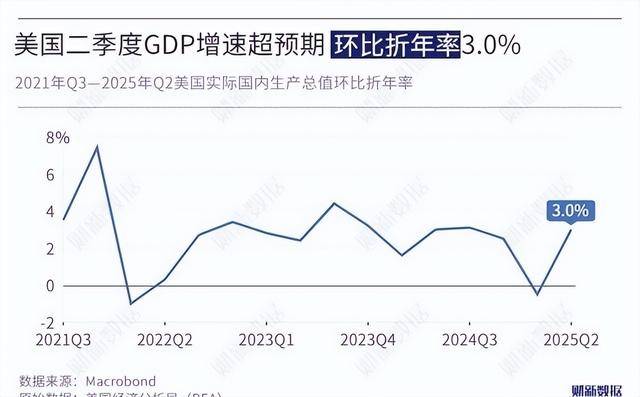
Group 1 - The core point of the news is the expansion of tariffs by Trump, which will not apply to goods shipped to the U.S. before a specific deadline, indicating a strategic approach to trade negotiations [2][3] - The new tariffs are expected to raise the average tariff rate in the U.S. to 15.2%, up from 13.3%, and significantly higher than the 2.3% rate before Trump's presidency [3] - The tariffs are part of Trump's broader strategy to reduce trade deficits and encourage domestic manufacturing, with ongoing negotiations with countries like Switzerland and India to potentially lower these tariffs [3][4] Group 2 - Trump is expected to announce separate tariffs on pharmaceuticals, semiconductors, and critical minerals in the coming weeks, creating ongoing uncertainty for businesses and investors [4] - The economic impact of the tariffs is becoming clearer, with key economic indicators showing deterioration, leading to concerns about rising costs for consumers and businesses, and potential inflation [5][6] - Manufacturing jobs have decreased by 37,000 since April, highlighting the negative impact of tariffs on raw material costs for U.S. factories [6] Group 3 - The recent economic data suggests that while GDP growth appears to accelerate, it is largely due to fluctuations in imports caused by tariffs, masking underlying slowdowns in business investment and consumer spending [5][6] - The political narrative around the tariffs is shifting towards a "data war," as the administration faces scrutiny over the accuracy and reliability of economic statistics [7][9] - The Federal Reserve is under pressure to respond to economic slowdowns potentially exacerbated by tariffs, raising questions about the politicization of economic data collection [8][9]

美国在重构财政收入?
Hu Xiu· 2025-08-03 05:55
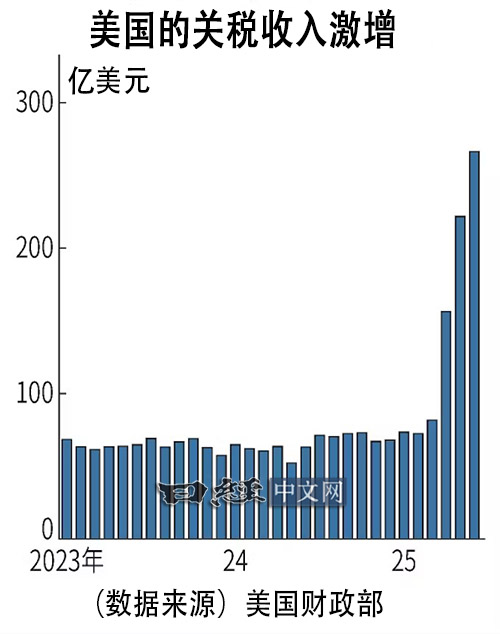
Group 1 - The core issue for a regime is fundamentally about "where the money comes from and where it intends to spend" [1] - The main sources of revenue for the U.S. federal government include individual income tax, payroll taxes, and corporate income tax [2][6][8] - Individual income tax accounts for approximately 45% of federal revenue and has remained stable since the 1980s [2] - Payroll taxes, which support social security and Medicare, contribute about 35% to federal revenue [6] - Corporate income tax is the third largest source, making up around 10% of federal revenue [8] Group 2 - Tariff revenue has surged since the implementation of "reciprocal tariffs," reaching $26.6 billion in June, four times the average level of previous years [13] - As of June 30, tariff revenues from reciprocal tariffs (10%) and auto tariffs (25%) generated over $17.7 billion and $10.7 billion, respectively [14] - The average effective tariff rate in the U.S. reached 20.6%, the highest since 1910 [15] - Monthly tariff revenue could potentially rise to between $30 billion and $40 billion with the full implementation of higher tariffs [16] - Tariff revenue may approach $400 billion annually, nearing the total amount of corporate income tax [17] Group 3 - Trump's tax structure is unique, as it relies more on tariffs compared to traditional models where developed countries typically do not emphasize tariff revenue [20][21] - The World Bank data shows that as of 2023, tariffs account for 2.8% of U.S. tax revenue, compared to lower percentages in other developed countries [21] - The article suggests that tariff revenue could reach 6.8% of total tax revenue, with a possibility of being in the 8% to 10% range based on current trends [23] Group 4 - If tariffs become a stable source of revenue, it may be difficult for future administrations to reduce or eliminate them, as they could become entrenched in the fiscal structure [25][26] - The political implications of removing tariffs could lead to significant backlash from industries that benefit from them, making it a contentious issue in future elections [28][29] Group 5 - The article discusses the winners and losers of Trump's tariff policies, noting that few countries outside the U.S. have benefited from the tariff situation [35] - Countries like Vietnam and Taiwan are particularly affected, with Vietnam facing a significant reduction in its export competitiveness due to high tariffs [41][42] - Japan and South Korea are also deeply impacted, with Japan seeking to reduce its reliance on the U.S. market as a response to tariff pressures [44][46]