
财政政策

Search documents
年内税收累计增幅首次转正——财政收入延续增长态势
Jing Ji Ri Bao· 2025-09-17 22:07
Group 1 - In August, the national general public budget revenue continued to grow, with a total of 1.24 trillion yuan, representing a year-on-year increase of 2% [1] - For the first eight months, the total general public budget revenue reached 14.82 trillion yuan, growing by 0.3%, with the tax revenue turning positive for the first time [1] - Key tax categories such as domestic value-added tax, domestic consumption tax, and personal income tax showed stable growth rates of 3.2%, 2%, and 8.9% respectively [1] Group 2 - National general public budget expenditure maintained growth, with total expenditure for the first eight months at 17.93 trillion yuan, a year-on-year increase of 3.1% [2] - Expenditure in key areas such as social security and employment grew by 10%, while education expenditure increased by 5.6% [2] - The acceleration of bond fund issuance and utilization contributed to a 30% increase in government fund budget expenditure [2] Group 3 - Overall, the fiscal operation in the first eight months was stable, with an optimized revenue structure and strong support for key expenditure areas [3] - The need for a continued proactive fiscal policy is emphasized to enhance economic and fiscal interaction [3]
前8个月全国一般公共预算收入同比增长0.3%
Xin Hua Wang· 2025-09-17 09:37
从主要支出科目来看,前8个月,教育支出27078亿元,同比增长5.6%;科学技术支出5874亿元,同比 增长3.1%;文化旅游体育与传媒支出2272亿元,同比增长4.3%;社会保障和就业支出30723亿元,同比 增长10%;卫生健康支出13717亿元,同比增长5.1%;节能环保支出3315亿元,同比增长6.6%。 全国政府性基金预算收支方面,前8个月,全国政府性基金预算收入26449亿元,同比下降1.4%;全国 政府性基金预算支出62602亿元,同比增长30%。 【纠错】 【责任编辑:谷玥】 从主要税收收入项目来看,前8个月,国内增值税47389亿元,同比增长3.2%;国内消费税11523亿元, 同比增长2%;企业所得税31477亿元,同比增长0.3%;个人所得税10547亿元,同比增长8.9%。 财政支出方面,前8个月,全国一般公共预算支出179324亿元,同比增长3.1%。分中央和地方看,中央 一般公共预算本级支出26570亿元,同比增长8%;地方一般公共预算支出152754亿元,同比增长2.3%。 各级财政部门认真落实更加积极的财政政策,加大支出强度,优化支出结构,持续加强对重点领域的支 出保障。 新华 ...
政策与大类资产配置周观察:海外央行分化逐步收敛
Tianfeng Securities· 2025-09-17 08:16
Group 1: Domestic Policy Developments - Vice Premier Ding Xuexiang attended the 2025 China International Service Trade Fair Global Service Trade Summit, emphasizing China's commitment to high-level opening-up and service trade development [10][12] - Premier Li Qiang chaired a State Council meeting on September 12, focusing on measures to promote private investment and enhance the overseas comprehensive service system [13][17] - The National Development and Reform Commission (NDRC) released a plan to support the high-quality development of new energy storage from 2025 to 2027 [24][17] Group 2: Equity Market Analysis - In the second week of September, major A-share indices rose, with the CSI 100 and CSI 500 indices increasing by 4.45% and 6.33% respectively, and net inflows from southbound funds exceeding 55 billion yuan [25][26] - The China Securities Regulatory Commission (CSRC) announced the revision of the "Futures Company Classification Evaluation Regulations" to improve the regulatory framework for the futures industry [26][27] Group 3: Fixed Income Market Analysis - The People's Bank of China (PBOC) conducted a net fund injection of 196.1 billion yuan through open market operations, maintaining ample liquidity in the market [4][27] - The M1-M2 scissors gap continued to narrow, indicating a potential shift in monetary policy dynamics [4][27] Group 4: Commodity Market Analysis - In the second week of September, non-ferrous metals rebounded, while crude oil prices increased, and pork prices saw a slight uptick [4][27] - The Ministry of Industry and Information Technology (MIIT) is actively promoting the rectification of market competition order, which may impact commodity pricing [4][27] Group 5: Foreign Exchange Market Analysis - The US dollar index fell to 97.62, a decrease of 0.12% week-on-week, while the Chinese yuan appreciated slightly to 7.12 [5][19] - The European Central Bank maintained its key interest rates unchanged, which may influence the exchange rate dynamics between the euro and the yuan [19][20]
“大国财政”系列之四:财政“下半场”,可能的“后手”?
Shenwan Hongyuan Securities· 2025-09-17 06:42
Group 1: Economic Support and Fiscal Performance - In the first half of 2025, broad fiscal expenditure growth reached 8.9%, significantly higher than the nominal GDP growth of 4.3% and the average annual growth of 1-3% since 2022[1] - By June 2025, the broad fiscal revenue and expenditure gap was -5.3 trillion yuan, the highest for the same period historically, indicating strong support from government bonds and special bonds[1] - Social security and employment expenditures increased by 9.2% year-on-year, while scientific and technological expenditures rose by 9.1%, reflecting a focus on industry upgrades and consumer welfare[2] Group 2: Future Fiscal Strategies and Challenges - If economic pressure increases in the second half of 2025, there may be a need for fiscal stimulus, especially to meet the annual GDP growth target of around 5%[3] - The broad fiscal revenue and expenditure gap in July was -5.6 trillion yuan, indicating a slight increase of only 0.4 trillion yuan from June, suggesting a potential slowdown in fiscal support[3] - The issuance of new government debt is nearing its limit, which may hinder the ability to maintain high growth rates in fiscal expenditure moving forward[3] Group 3: Key Areas of Fiscal Support - The fiscal policy is increasingly focused on risk prevention, transformation promotion, and consumer protection, with significant attention on resolving hidden debt issues[5] - The government has allocated approximately 900 billion yuan for child-rearing subsidies, with central government covering about 90% of this amount[5] - Emerging industries such as marine economy, artificial intelligence, and commercial aerospace are identified as key areas for future policy support[5]
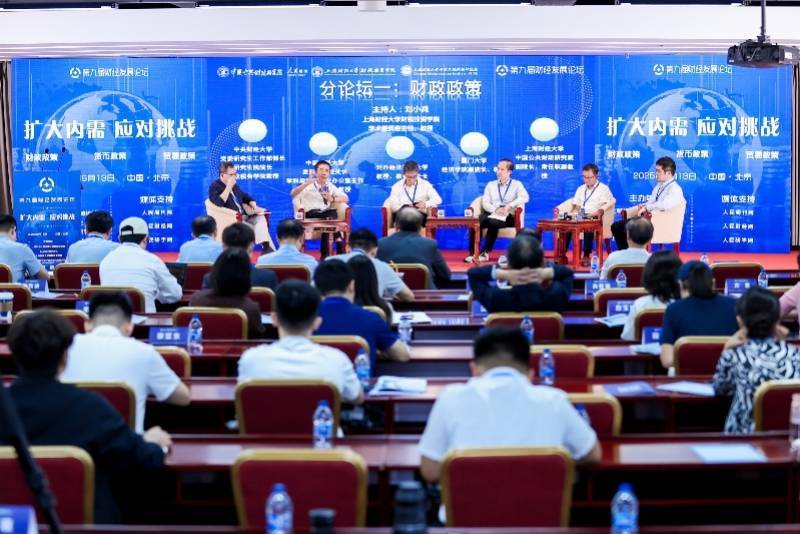
扩大内需财政政策还能做什么?个税减免还有空间吗?专家热议
Sou Hu Cai Jing· 2025-09-17 03:01
Core Viewpoint - The United States leverages its position as the world's largest consumer market to exert pressure on other countries through tariffs, as highlighted by Liu Xiaochuan during the recent Economic Development Forum [1][4]. Group 1: Economic Policies and Domestic Demand - Expanding domestic demand is crucial for economic growth, and effective policy measures, including fiscal, monetary, and trade policies, are essential to achieve this goal [1][4]. - Tax reduction is often considered a primary method to stimulate demand, but experts suggest a more targeted approach, focusing on direct taxes like corporate and personal income taxes to effectively boost domestic consumption [4][5]. - The relationship between fiscal policy and macroeconomic conditions is vital, as factors like inflation can significantly impact consumer spending and overall economic health [4][5]. Group 2: Innovation and Supply-Side Dynamics - High-quality supply can drive consumption, with consumers increasingly demanding better quality products, especially in the context of technological advancements and new industries [7][8]. - Fiscal policies should encourage innovation on the supply side to create demand, while also avoiding pitfalls such as excessive competition and fraudulent practices [7][8]. - A balanced approach is necessary, where fiscal policies do not disproportionately favor large enterprises, ensuring fair competition and fostering innovation across the market [8]. Group 3: Special Bonds and Employment - Special bonds issued by local governments are a significant tool for fiscal policy, capable of stimulating infrastructure investment and job creation [10][11]. - Research indicates that approximately 50,800 yuan of special bond investment can create one job, highlighting the potential of these bonds to enhance domestic demand through employment [10]. - As of this year, 2.78 trillion yuan in new local government special bonds have been issued, with a focus on supporting local debt management and infrastructure projects [11][12].

盛松成:我国降准优于降息 但降息仍有空间
Bei Jing Shang Bao· 2025-09-16 16:53
Group 1 - The forum held by Ant Group and Caixin Media focused on the relationship between capital markets and technological innovation, with an emphasis on the current economic situation in China [1] - Professor Sheng Songcheng highlighted that in the current economic climate, adjusting the reserve requirement ratio (RRR) is preferred over interest rate cuts [2][3] - Since 2016, the RRR has been adjusted downwards 23 times, decreasing from 17.5% to 9.0% for major deposit-taking financial institutions, while policy interest rates have only been adjusted 14 times [2] Group 2 - The average weighted reserve requirement ratio for Chinese financial institutions is approximately 6.2%, indicating significant room for further RRR cuts compared to major economies [3] - A 0.5 percentage point reduction in the RRR could release around 1 trillion yuan into the economy, enhancing liquidity [3] - Lowering the RRR can facilitate better coordination between fiscal and monetary policies, as commercial banks hold a significant portion of government bonds [4] Group 3 - Interest rate cuts in China have limited effectiveness in stimulating consumption and investment due to low interest elasticity [5] - The decline in interest rates has led to a reduction in household deposits, with a decrease of 1.11 trillion yuan in July, indicating a relationship between lower interest rates and reduced savings [5][6] - Structural monetary policy tools have been increasingly important, with innovations aimed at supporting weak economic sectors and promoting high-quality economic development [6]
九部门发文扩大服务消费,稳增长的财政政策仍可加码
Hua Xia Shi Bao· 2025-09-16 12:43
Economic Growth and Demand - China's economic growth remains strong, but domestic demand is slightly below expectations, with key production and demand indicators showing stable growth in the first eight months of the year [2] - In August, there was a marginal decline in economic performance, with year-on-year growth rates for industrial value added, service production index, retail sales, fixed asset investment, and export amounts all weakening [2] - The internal driving force for economic growth has not yet solidified, with ongoing transitions between old and new growth drivers, particularly due to household deleveraging impacting economic circulation [2] Service Consumption Policies - The Ministry of Commerce and nine other departments issued policies on September 16 to expand service consumption, enhancing consumer credit support and promoting collaboration between financial institutions and businesses [3][4] - Service consumption is identified as a crucial support for improving livelihoods and upgrading consumption, with a projected 6.2% year-on-year growth in service retail sales for 2024, outpacing goods retail sales by 3 percentage points [5] - The government aims to attract more foreign consumers and reduce restrictions in high-end medical and leisure sectors to increase quality service supply [6] External Trade and Export Dynamics - In August, China's total goods imports and exports grew by 3.5% year-on-year, with both exports and imports achieving three consecutive months of growth [7] - The export of electromechanical products saw a significant increase, with a 9.2% year-on-year growth in the first eight months [7] - Despite a decline in export growth rate, the resilience of exports is expected to exceed expectations due to adjustments in export markets, particularly with ASEAN and EU countries compensating for reduced exports to the US [7][8] Economic Outlook and Policy Implications - The economic growth is primarily supported by policy measures and structural highlights, but challenges remain due to weak internal and external demand, low corporate profit expectations, and funding constraints [8] - The fourth quarter is seen as a critical period for economic stabilization, with the effectiveness of policy financial tools, local government projects, and consumption stimulus policies being pivotal for maintaining growth [8]

8月经济观察:“反内卷”影响显现,政策加码窗口临近
Xin Lang Cai Jing· 2025-09-16 07:13
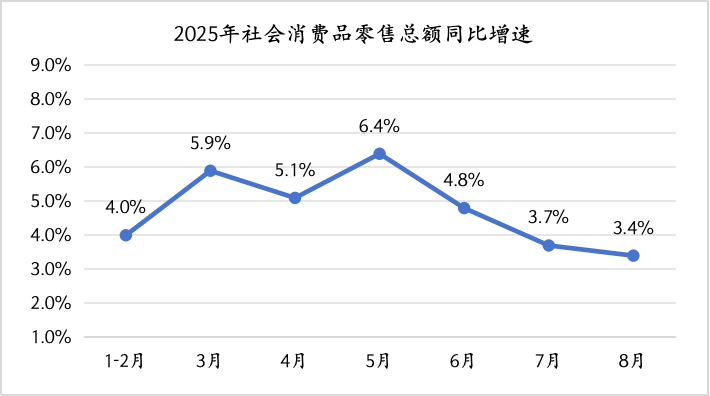
Economic Growth Overview - In August, China's economic growth momentum slowed down, with both supply and demand sides experiencing a decline in growth rates. Analysts suggest that due to high base effects and tariff uncertainties, along with the waning effects of the "trade-in" policy, downward pressure on the domestic economy is expected to increase in the fourth quarter, necessitating new policies to stabilize investment and promote consumption to achieve the annual growth target of around 5% [1][11]. Production Sector Analysis - In August, the industrial added value for large-scale enterprises grew by 5.2% year-on-year, a decrease of 0.5 percentage points from the previous month. The service production index growth rate was 5.6%, down 0.2 percentage points from the previous month [1]. - The "anti-involution" policy is identified as a primary reason for the cooling of industrial production. The industrial production intensity has declined for two consecutive months, influenced by extreme weather and the effects of the "anti-involution" policy [2]. - The added value of upstream production sectors showed strong performance, with non-ferrous metal smelting and rolling industries growing by 9.1% year-on-year, while coal mining and washing industries grew by 5.1% [2]. Demand Side Insights - In August, the total retail sales of consumer goods and exports in USD grew by 3.4% and 4.4% year-on-year, respectively, both showing declines from the previous month [3]. - The retail sales growth rate has been declining for three consecutive months, primarily due to the diminishing effects of the "trade-in" policy. The largest month-on-month declines were seen in home appliances and communication equipment, with decreases of 14.4% and 7.6% respectively [3][5]. Investment Trends - Investment growth has slowed for five consecutive months, with real estate, infrastructure, and manufacturing investments all experiencing varying degrees of decline [6]. - Infrastructure investment growth fell to 2.0% year-on-year for the first eight months, a decrease of 1.2 percentage points from the previous month. Manufacturing investment growth dropped to 5.1%, the lowest level since early 2021 [9]. - Analysts indicate that the decline in manufacturing investment is influenced by extreme weather and rising global trade uncertainties, which suppress the willingness of downstream enterprises to expand production [7]. Policy Recommendations - Analysts suggest that maintaining stable economic growth is becoming increasingly challenging, and timely policy adjustments are necessary. The potential for new incremental policies is anticipated, possibly by the end of September, including new policy financial tools and early allocation of local government debt quotas to improve infrastructure investment [12].
经济数据点评:增长放缓,债市不反应?
Tianfeng Securities· 2025-09-16 04:11
1. Report Industry Investment Rating No relevant content provided. 2. Core View of the Report - The economic growth in August continued to slow down, with industrial production, consumption, and investment all showing signs of weakness. Insufficient effective demand remains the core contradiction [1][8]. - Given the slowdown in economic growth, macro - policies need to play a role in promoting economic recovery. Fiscal, consumption, and real - estate policies are expected to be further adjusted [2][9]. - The bond market is supported by insufficient effective demand and weak fundamental recovery, but potential risks from subsequent policy efforts need to be noted. Bond market fluctuations may depend more on marginal changes in institutional behavior and capital flows [3][12]. 3. Summary by Directory 8 月经济数据:经济增长再放缓 - In August, industrial增加值 was 5.2% year - on - year (expected 5.7%, previous value 5.7%), social retail sales were 3.4% year - on - year (expected 3.8%, previous value 3.7%), and fixed - asset investment cumulative year - on - year was 0.5% (expected 1.3%, previous value 1.6%). Manufacturing, infrastructure, and real - estate investment all declined [8]. 工业生产韧性尚存,环比动能略降 - In August, the year - on - year growth of the added value of industrial enterprises above designated size was 5.2%, 0.5 percentage points lower than the previous month, and the cumulative growth from January to August was 6.2%. The growth of the service industry production index was 5.6%, slightly down 0.2 percentage points from the previous month [14]. - The year - on - year growth rates of the electrical machinery and chemical industries increased significantly, while those of the special equipment and transportation equipment industries declined. The added value of the equipment manufacturing and high - tech manufacturing industries was 8.1% and 9.3% respectively, 2.9 and 4.1 percentage points faster than the overall industrial added value [16][17]. - The output of emerging products such as robot reducers, industrial robots, 3D printing equipment, and industrial control computers and systems increased rapidly [17]. 消费增速延续回落,增量政策箭在弦上 - In August, the total retail sales of consumer goods were 39668 billion yuan, a year - on - year increase of 3.4%, 0.3 percentage points lower than in July, the lowest increase this year. The growth rate of commodity retail sales decreased by 0.4 percentage points, and the growth rate of catering revenue increased by 1.0 percentage point but remained at a relatively low level [19]. - The effect of the "trade - in" policy weakened, and the subsidy method adjustment in some areas affected the policy's immediate pulling effect. The weak performance of commodity sales, especially the sluggish automobile consumption, also dragged down the overall retail sales [21][22]. - The Ministry of Finance and other departments issued the "Implementation Plan for the Fiscal Interest Subsidy Policy for Personal Consumption Loans", and the State Council Information Office will hold a press conference on expanding service consumption policies [10][24]. 投资增速出现下行,继续低位磨底 - From January to August, the year - on - year growth rate of fixed - asset investment was 0.5%, 1.1 percentage points lower than from January to July, showing a downward trend. The investment structure was characterized by "slowing manufacturing, declining infrastructure, and real - estate drag" [25]. - Manufacturing investment cumulative year - on - year was 5.1%. The policy effect of large - scale equipment renewal continued to be released, with equipment purchase investment growing rapidly. However, in the short term, corporate investment motivation may decline, and corporate medium - and long - term loans increased less year - on - year [28]. - Infrastructure investment (excluding electricity) cumulative year - on - year was 2.0%, with the construction progress of major traditional infrastructure projects slowing down. The high - temperature and rainy weather in August affected construction, and the capital in - place situation of some projects may not meet expectations due to local government debt - resolution pressure [28][29]. - Real - estate investment cumulative year - on - year was - 12.9%. The decline in sales area and sales volume of new commercial housing widened, and real - estate development investment reached the largest decline this year. The real - estate market was still in the stage of "trading price for volume", and real - estate relaxation policies may need to be actively implemented in the second half of the year [29].
财政政策发力空间依然充足
Zheng Quan Ri Bao· 2025-09-15 16:28
Group 1 - The core viewpoint is that fiscal policy will increase investment in technology, consumption, investment, education, and health sectors to promote development while managing risks [1][2] - The Ministry of Finance plans to implement a more proactive fiscal policy, ensuring sustained and efficient financial support through various fiscal tools [1][2] - Fiscal policy is expected to further support technological innovation, focusing on basic research, applied research, and national strategic technology tasks [2][3] Group 2 - During the "14th Five-Year Plan" period, national fiscal science and technology expenditure is projected to reach 5.5 trillion yuan, a 34% increase from the "13th Five-Year Plan" period [2] - Basic research investment is expected to total 730 billion yuan, with an annual growth rate of 12.3% [2] - The fiscal policy aims to stimulate consumption and investment, utilizing fiscal and tax policy tools to enhance domestic demand [2][3] Group 3 - The central government allocated 318.6 billion yuan for employment support during the "14th Five-Year Plan," a 29% increase from the previous period, resulting in over 50 million new urban jobs [3] - Continuous fiscal policy efforts are crucial for promoting economic growth, supporting industrial upgrades, and improving people's livelihoods [3] - The fiscal policy is driving China's economy towards an "innovation-driven" transformation, emphasizing the need for coordination between fiscal, monetary, and industrial policies [3]