
美联储货币政策

Search documents
Vatee万腾:卢比汇率连日窄幅波动,为何迟迟难走出区间?
Sou Hu Cai Jing· 2025-11-11 09:25
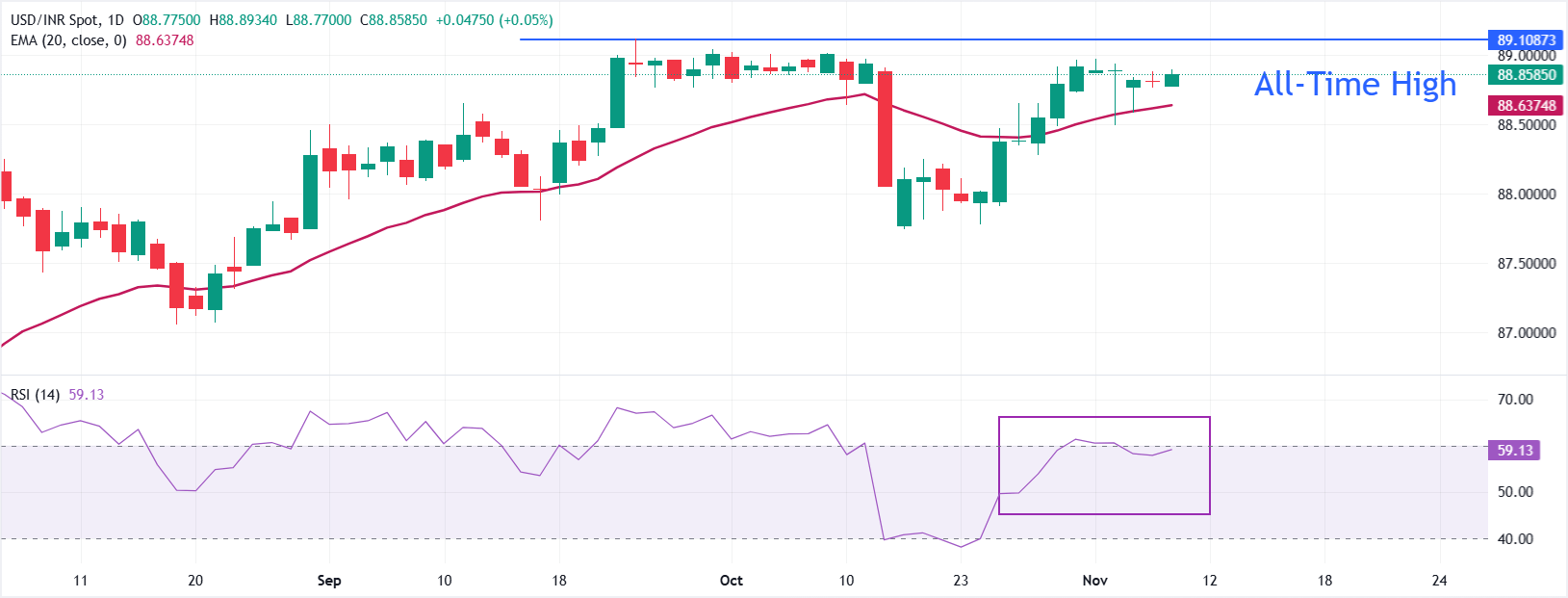
Group 1 - The Indian Rupee remains stable against the US Dollar, fluctuating around 88.85, with market activity being relatively subdued as investors await progress in US-India trade negotiations [1] - US and Indian negotiators have expressed optimism, indicating that discussions are nearing completion, although the lack of a formal agreement keeps market sentiment cautious [1] - Foreign institutional investors have shown reduced enthusiasm for the Indian stock market, with net sales of approximately 41.14 billion Rupees, reflecting short-term confidence issues [1] Group 2 - The US Dollar Index is stable around 99.65, with limited overall volatility following the Senate's approval of a temporary funding bill, which alleviates some market uncertainty [2] - The market anticipates the release of delayed economic data as US government operations resume, which may lead to significant fluctuations in the Dollar [2] - There is a 62.4% probability that the Federal Reserve will lower interest rates in December, indicating a general expectation for a more accommodative monetary policy [2] Group 3 - From a technical analysis perspective, the USD/INR exchange rate is currently above the short-term moving average, with key indicators suggesting a potential breakout from the recent trading range [4] - Important resistance is noted at the historical high of 89.12, while downward support is focused on the August low of 87.07 [4]

香港第一金交易思路解析:黄金行情反复多空难辨?
Sou Hu Cai Jing· 2025-11-11 07:51
Core Viewpoint - The recent fluctuations in the gold market have been intense, characterized by rapid changes in price and sentiment, leading to challenges for investors, particularly newcomers [1] Market Dynamics - Gold prices surged by 2.8% on Monday, closing at $4,111.39 per ounce, marking the highest closing level in over two weeks [3] - Weak U.S. economic data has shifted market expectations towards a dovish stance from the Federal Reserve, with a 64% probability of a rate cut in December and 77% by January [3] Price Forecast - Analysts predict that gold prices could reach the range of $4,200 to $4,300 per ounce by the end of the year, with a reasonable target of $5,000 in the first quarter of next year [4] Technical Analysis - Gold has broken through the key resistance level of $4,080, indicating a potential return to a bullish trend, but caution is advised due to possible cooling of market sentiment after the government shutdown ends [5][7] - Key price levels to watch include the resistance zone of $4,150 to $4,180 and support around $4,080 [7] Trading Strategy - Investors are advised to adopt a cautious approach in the current volatile market, focusing on risk management and avoiding emotional trading decisions [8] - Specific trading strategies include shorting lightly if prices test the $4,140 to $4,150 range, and considering long positions if prices pull back to around $4,080 [9]
美元债双周报(25年第45周):美国政府重启在即,美元流动性压力有望缓解-20251110
Guoxin Securities· 2025-11-10 08:08
Report Industry Investment Rating - The industry investment rating is "Underperform the Market" [1][5] Core Viewpoints - The US service sector activity rebounded significantly in October, with inflation pressure rising. The ISM Services PMI reached 52.4, a new eight - month high, and the price index soared to 70, a three - year high. The employment index is still in the contraction range, but the decline rate has slowed [1] - There is a growing divergence among Fed voting members on the future path of interest rate cuts. There are sharp differences between "doves" and "hawks", and the probability of a 25bp rate cut in December is 67% [2] - The US government is about to end the shutdown, and the liquidity pressure is expected to ease. Once the government restarts, the frozen fiscal expenditure will be released, and nearly $1 trillion in the TGA account will flow back into the market [3] - The current market features economic resilience, inflation pressure, and policy uncertainty. It is recommended to use a short - to - medium - duration strategy to capture returns, while guarding against long - term interest rate risks and maintaining portfolio flexibility. The investment strategy for US Treasuries is still mainly defensive and secondarily aggressive [4] Summary by Directory US Treasury Benchmark Interest Rate - Figures include 2 - year and 10 - year US Treasury yields, the Treasury yield curve, bid - to - cover ratios for various maturities of Treasuries, issuance winning bid rates for 2 - 30 - year Treasuries, monthly Treasury issuance, and the implied interest rate cut expectations in the federal funds futures market [12][16][18] US Macroeconomic and Liquidity - Figures cover US inflation year - on - year trends, the US federal government's annual cumulative fiscal deficit (fiscal year), the US economic surprise index, ISM PMI, consumer confidence index, financial conditions index, housing rent growth rate, number of unemployment benefit claimants, hourly wage year - on - year growth rate, non - farm payroll data, new housing approvals, starts, and sales year - on - year growth rates in the real estate market, personal consumption expenditure year - on - year growth rate, break - even inflation expectations, and new ADP employment [24][26][28] Exchange Rates - Figures show the one - year trend of non - US currencies, the two - week changes in non - US currencies, the Sino - US sovereign bond yield spread, the US dollar index and the 10 - year US Treasury yield, the US dollar index and the RMB index, and the one - year locked - in exchange cost changes of the US dollar against the RMB [50][55][57] Chinese - Issued US Dollar Bonds - Figures display the return trends of Chinese - issued US dollar bonds since 2023 (by rating and industry), the yield and spread trends of investment - grade and high - yield Chinese - issued US dollar bonds, and the two - week returns (by rating and industry) [64][66][69] Rating Actions - In the past two weeks, the three major international rating agencies took 12 rating actions on Chinese - issued US dollar bond issuers, including 5 rating withdrawals, 3 initial ratings, 2 rating downgrades, and 2 rating upgrades [72]
非农数据怎么解读?
Sou Hu Cai Jing· 2025-11-10 07:45
Core Insights - The article emphasizes the importance of the Non-Farm Payroll (NFP) data as a key indicator of the U.S. economy's health, influencing various financial markets including the dollar, gold, and silver [3][4][37] Group 1: Understanding Non-Farm Data - Non-Farm Payroll (NFP) data is released monthly by the U.S. Department of Labor, reflecting employment changes in all sectors except agriculture, making it a crucial economic health indicator [3][4] - The NFP data is vital for assessing economic conditions, predicting Federal Reserve monetary policy, and guiding short-term trading strategies [3][4][37] Group 2: Key Components of Non-Farm Data - The three critical indicators in the NFP report are: new jobs added, unemployment rate, and average hourly earnings [4][12] - New jobs added is the most sensitive indicator, with higher-than-expected figures indicating a strong job market and economic activity [5][6] - The unemployment rate serves as a stability signal for the labor market, with a decrease indicating improvement and an increase suggesting economic weakness [10][12] - Average hourly earnings reflect inflation and consumer spending power, with rapid growth indicating rising inflation pressures [12][13] Group 3: Analyzing the Data Combinations - A combination of strong employment, low unemployment, and fast wage growth signals a robust labor market, typically leading to a stronger dollar and weaker gold prices [18][19] - Conversely, weak employment, high unemployment, and slow wage growth suggest economic slowdown, leading to a weaker dollar and stronger gold prices [20][21] - Mixed signals, such as strong employment with rising unemployment, indicate market volatility and uncertainty [22][23] Group 4: Market Reactions to Non-Farm Data - Strong NFP data typically results in a rising dollar index, while weak data leads to a declining dollar [24] - Gold and silver prices generally move inversely to the dollar, with strong NFP data causing short-term declines in these precious metals [25] - U.S. Treasury yields react similarly, with strong data leading to rising yields and falling bond prices [26] Group 5: Practical Trading Strategies - Investors are advised to prepare for NFP data by observing market expectations and setting strict stop-loss levels to manage risks [29][30] - Following the data release, it is recommended to wait for market stabilization before entering trades, confirming the direction of the initial market reaction [31][32] Group 6: Integrating Other Economic Indicators - NFP data should not be analyzed in isolation; it should be considered alongside other indicators like ADP employment data and initial jobless claims for a comprehensive view [35] - Establishing a systematic approach to track related economic indicators can enhance predictive accuracy regarding NFP outcomes [35]

宏观周谈:全球市场在交易什么?
2025-11-10 03:34
Summary of Key Points from Conference Call Records Industry Overview - The macroeconomic environment is heavily influenced by the Federal Reserve's monetary policy, which has a direct correlation with global capital market performance. The current market dynamics are characterized by a unified beta phenomenon across global markets, closely tied to the Fed's policy stance [1][3][4]. Core Insights and Arguments - **Market Performance**: The global capital markets have shown strong performance in 2025, particularly in South Korea, where the index rose by 71.18% until October. This surge is attributed to the Fed's loose monetary policy and the AI industry's growth. However, a cooling trend has been observed since October, indicating potential risks [2][4]. - **AI Industry Impact**: AI is recognized as a key driver of the fourth industrial revolution, significantly affecting traditional industries. The demand for AI chips has led to increased prices for consumer electronics chips, and rising electricity demand in the U.S. has escalated manufacturing costs, potentially leading to stagflation [1][8]. - **Liquidity and Asset Prices**: Recent fluctuations in asset prices, including cryptocurrencies and precious metals, are driven by changes in liquidity. Prior to October 2025, liquidity expansion supported asset price increases, but a shift to a stock game has resulted in volatility [6][7]. - **U.S. Stock Market Risks**: The U.S. stock market, particularly in relation to AI, is facing significant risks. The rapid expansion of AI has led to concerns about a potential bubble, especially if liquidity fails to support both emerging and traditional industries [8][11]. - **Federal Reserve's Role**: The Fed's monetary policy is crucial in determining market stability. If inflation remains high and employment data does not deteriorate significantly, the Fed may tighten policies, which could burst the stock market bubble [11][12]. Additional Important Insights - **Cross-Border Capital Flows**: The relationship between U.S. equities and non-U.S. equity assets is influenced by the dollar's depreciation. Even without significant dollar depreciation in 2025, non-U.S. equity assets have performed well, indicating a potential shift in capital flows [5]. - **Historical Context**: The historical context of market performance post-QE3 and the subsequent tightening of monetary policy illustrates the cyclical nature of market reactions to Fed policies [4][10]. - **Political Factors**: The upcoming U.S. midterm elections may influence economic policies and market performance, with potential implications for the Fed's approach to monetary policy [16][17]. - **China's Economic Outlook**: Factors affecting China's effective exchange rate include total factor productivity, private sector leverage, and PPI fluctuations. A potential recovery in productivity could lead to an appreciation of the yuan and a rise in the CSI 300 index [14][15]. This summary encapsulates the critical insights and arguments presented in the conference call records, highlighting the interconnectedness of monetary policy, market dynamics, and geopolitical factors.
贵金属周报:金银维持震荡,调整尚未结束-20251110
Tong Guan Jin Yuan Qi Huo· 2025-11-10 02:39
Report Information - Report Title: Precious Metals Weekly Report [1][13][23][44] - Report Date: November 10, 2025 [2] Investment Rating - No investment rating for the industry is provided in the report. Core Views - Last week, precious metal prices were in a volatile consolidation. Although the US private employment data in October exceeded expectations, gold and silver were supported. Market sentiment was affected by two uncertainties: the ongoing US government shutdown and the US Supreme Court's questioning of the legality of Trump's comprehensive tariff collection [3][6]. - The AI revolution has accelerated the wave of layoffs. The number of Challenger job cuts in the US in October increased by 175.3% year-on-year, reaching the highest level in the same period in twenty years. The private data provider Revelio Labs reported that non-farm payrolls turned negative in October, with a decrease of 9,100 jobs [3][7]. - Fed officials' statements showed a divergence on monetary policy. This year's Fed voters were cautious due to the government shutdown, and the direction of a December rate cut was unclear. Next year's voters were more concerned about inflation risks, and monetary policy may remain in a tightening stance for a longer time [3][7]. - Currently, gold and silver prices are in a volatile state, waiting for more information for further guidance. In the short term, prices may rebound due to data fluctuations, but the rebound space is expected to be limited. The view that gold and silver prices are in a phased adjustment is maintained [3][7]. Summary by Directory 1. Last Week's Trading Data | Contract | Closing Price | Change | Change Rate (%) | Total Volume (Lots) | Total Open Interest (Lots) | Price Unit | | --- | --- | --- | --- | --- | --- | --- | | SHFE Gold | 921.26 | -0.66 | -0.07 | 136,660 | 178,255 | Yuan/gram | | Shanghai Gold T+D | 917.64 | -2.56 | -0.28 | 37,088 | 254,462 | Yuan/gram | | COMEX Gold | 4007.80 | -5.60 | -0.14 | - | - | US dollars/ounce | | SHFE Silver | 11484 | 43 | 0.38 | 522,479 | 634,627 | Yuan/kilogram | | Shanghai Silver T+D | 11480 | 38 | 0.33 | 619,304 | 4,294,018 | Yuan/kilogram | | COMEX Silver | 48.23 | -0.02 | -0.05 | - | - | US dollars/ounce | [4] 2. Market Analysis and Outlook - The US government shutdown has broken the previous record and become the longest in history. Some Senate Democrats are ready to advance a package to end the shutdown, showing the most significant breakthrough in bipartisan negotiations in over a month [6]. - On November 5, the Supreme Court debated the legality of Trump's large - scale tariff collection. Most justices initially thought Trump overstepped his authority. The specific judgment time is undetermined [6]. - The Fed's officials have different views on monetary policy. Governor Milan called for more aggressive rate cuts, while Governor Cook said that each Fed meeting is real - time for monetary policy, and the risk on both sides of the Fed's dual mandate has increased [7]. - This week, attention should be paid to the US October CPI and PPI data, Fed speeches, the progress of the US government shutdown, and the Supreme Court's "tariff ruling" on Trump [8] 3. Important Data Information - The US ADP employment in October increased by 42,000, significantly exceeding the expected 30,000, but overall labor demand is still slowing, and wage growth is stagnant [9]. - As of September this year, the number of job cuts announced by US companies has approached 950,000, the highest level in the same period since 2020, with the government sector being the hardest - hit area [9]. - The US ISM manufacturing PMI in October was 48.7, contracting for the eighth consecutive month and lower than the expected 49.5 [9]. - The US ISM services PMI in October rose 2.4 points to 52.4, reaching an eight - month high, far exceeding the expected 50.8 [9]. - The eurozone's October manufacturing PMI was 50, with new orders stagnant and exports declining for four consecutive months. German and French manufacturing PMIs remained in the contraction zone [10]. - The eurozone's October services PMI was 53%, better than the initial value, pushing the composite PMI to the highest level since May 2023. Germany's service industry recovered strongly, while France's contracted for 14 consecutive months [10]. - The China Securities Regulatory Commission approved the registration of platinum, palladium futures, and options on the Guangzhou Futures Exchange [10]. - Indian gold ETFs have seen record capital inflows this year, with purchases approaching $3 billion, equivalent to about 26 tons of gold [10]. - China's foreign exchange reserves at the end of October were $3.343 trillion, and the gold reserves were 74.09 million ounces, increasing by 30,000 ounces month - on - month, the 12th consecutive month of increase [11] 4. Related Data Charts - The report provides multiple charts showing the price trends of SHFE and COMEX gold and silver, inventory changes, non - commercial net long positions, ETF holdings, price spreads, and the relationships between gold prices and other factors such as the US dollar, copper prices, inflation expectations, and interest rates [16][18][22][25][29][30][36][40][42]
金价大拐点!今天行情拐点已现,黄金市场或将迎来更大变盘?
Sou Hu Cai Jing· 2025-11-08 18:46
Core Viewpoint - The recent changes in gold tax policy in China have led to significant price discrepancies in the gold market, affecting both retail prices and recovery rates, with a notable increase in costs for consumers [1][7]. Market Phenomenon - The price of gold jewelry has surged to 1268 yuan per gram, while bank investment gold bars hover around 930 yuan per gram, indicating a clear distinction based on purchase intent: consumption versus investment [3]. - Consumers are exhibiting caution in their purchasing decisions, with some opting to delay purchases until after the release of CPI data, reflecting concerns over potential price corrections [3]. - The gold recovery market is active but characterized by significant price gaps, with recovery prices from major brands being substantially lower than retail prices, leading to potential losses for consumers [3]. Data Insights - As of November 8, 2025, international gold prices have stabilized above 4000 USD per ounce, with a daily increase of 0.33% [5]. - The Shanghai Gold Exchange reported a closing price of 917.42 yuan per gram, reflecting a minor increase, while the price fluctuations indicate a growing divergence between bullish and bearish market sentiments [5]. Policy Impact - The new tax regulations effective from November 1 have increased the tax burden on gold used for investment, leading to a rapid increase in retail prices in various markets [7]. - The policy has caused temporary confusion in market pricing, prompting industry associations to issue guidelines for compliance [7]. Institutional Movements - Central banks globally have significantly increased their gold purchases, with China's central bank holding a record 2304 tons of gold as of October, indicating a strategic shift towards gold accumulation [10]. - Emerging market central banks are becoming the primary drivers of gold demand, reflecting a broader trend towards diversifying foreign exchange reserves [10]. International Factors - The direction of the Federal Reserve's monetary policy is a key factor influencing short-term gold price fluctuations, with market expectations leaning towards a potential interest rate cut [12][13]. - Geopolitical risks have shown a cooling effect on gold prices, as recent developments have reduced immediate demand for gold as a safe-haven asset [13]. Investment Strategies - Current technical analysis suggests that gold prices are at a critical juncture, with key resistance and support levels identified [15]. - The growing popularity of gold ETFs among younger investors highlights a shift towards more flexible investment options that do not require physical storage [15]. - Significant price differences between various purchasing channels indicate that consumers need to be aware of the cost implications when investing in gold [15]. Market Outlook - The gold market is currently experiencing a tension between long-term support from central bank purchases and short-term pressures from changing monetary policies and geopolitical stability [17]. - Analysts predict that gold prices could test higher levels in the future, but caution that the market has not yet reached critical thresholds that typically signal a market downturn [17].
全球经济观察第18期:美国流动性告急
CAITONG SECURITIES· 2025-11-08 12:12
Group 1: Global Asset Prices - Global major stock markets experienced more declines than gains, with the S&P 500, Dow Jones, and Nasdaq indices falling by 1.6%, 1.2%, and 3% respectively[4] - WTI and Brent crude oil prices decreased by 1.9% and 2.5% respectively, while London gold price fell by 0.1%[4] - The 10-year U.S. Treasury yield remained stable compared to the previous week[4] Group 2: U.S. Economic Dynamics - The U.S. Supreme Court raised concerns about the legality of tariffs, which could lead to a potential return of $100 billion in tariff revenue if deemed unconstitutional[5] - The liquidity crisis in the U.S. intensified, with SOFR soaring to 4.22% at the end of October, indicating a significant tightening of financial conditions[5] - The ADP reported an increase of 42,000 jobs in October, suggesting initial stabilization in the labor market, despite ongoing layoffs in the tech sector[5] Group 3: Central Bank Policies - The Federal Reserve showed increasing division regarding interest rate cuts, with some officials advocating for a cautious approach due to missing inflation data[5] - The European Central Bank announced that the Bulgarian central bank governor will gain voting rights in the governing council starting January 1, 2026[5] Group 4: Other Economic Indicators - Eurozone retail sales fell by 0.1% in September, primarily due to weak demand for fuel and non-food items[5] - The Eurozone manufacturing PMI remained at 50%, indicating a slight stabilization in the sector, although new export orders and employment levels continued to decline[5]
铜月报:矿端紧张格局延续,重心抬升-20251107
Wu Kuang Qi Huo· 2025-11-07 14:40
Report Summary 1. Report Industry Investment Rating No information provided on the industry investment rating. 2. Core View of the Report In November, China's refined copper production is expected to stabilize, and consumption is expected to seasonally recover. With an increase in scrap copper substitution, supply and demand are expected to be in a tight balance. Overseas demand is expected to be neutral, and the increase in smelter maintenance and production cuts will ease the supply pressure. Meanwhile, changes in US imports need to be monitored. At the macro - level, Sino - US economic and trade relations have entered a period of relaxation, and the Fed's monetary policy will remain in a loose direction. Therefore, although the US government's continued shutdown and the correction of the US stock market at a high level are expected to be only short - term shocks, the reopening of the US government is expected to boost market sentiment again. Overall, with the tight supply pattern at the mine end, the center of copper prices will rise compared to before. If the macro - pessimistic sentiment eases, copper prices are expected to strengthen again in a volatile manner. The operating range of the main contract of SHFE copper this month is 84,000 - 90,000 yuan/ton, and that of LME 3M copper is 10,400 - 11,200 US dollars/ton. The operation suggestion is to try to go long on dips. [9] 3. Summary According to the Directory 3.1 Monthly Highlights Summary - **Supply**: In Q3, overseas copper mine production fell short of expectations, and copper mine supply remained tight, while the supply of blister copper was marginally relaxed. In October, China's refined copper production decreased, and it is expected to stabilize in November. - **Demand**: In October, the apparent consumption of refined copper in China is estimated to have declined year - on - year, and the apparent consumption in November is expected to continue to decline year - on - year. Overseas manufacturing prosperity is differentiated, and demand expectations are neutral. - **Imports and Exports**: In October, the export window for进料加工 of SHFE copper opened, the price difference between US copper and LME copper narrowed, and the arbitrage window for US copper closed. - **Inventory**: In October, the inventories of SHFE, bonded areas, and COMEX increased, while LME inventory decreased, and the total inventory rose. It is estimated that China's inventory will not change much in November. [9] 3.2 Futures and Spot Market - **Market Review**: In October, copper prices fluctuated upwards. Supply disruptions in copper mines, progress in Sino - US economic and trade negotiations, and the Fed's interest - rate cut expectations drove copper prices to hit record highs. During the month, the main contract of SHFE copper rose 4.69%, and the LME 3M contract rose 5.78%. The US dollar index rose, and the offshore RMB appreciated slightly. At the beginning of November, copper prices fell from record highs. - **Price Differences between Markets**: In October, the import loss of SHFE copper first widened and then narrowed, and the export window opened once. At the beginning of November, the import loss further narrowed. In October, the price difference between COMEX and LME copper fluctuated and declined. Although the expectation of future tariffs continued to support the price difference, the continuous inventory build - up in COMEX gradually closed the import arbitrage window. - **Inventory and Basis**: As of the end of October, the total inventory of the three major exchanges plus the Shanghai bonded area was about 680,000 tons, an increase of 67,000 tons from the end of September. The total inventory was at a relatively high level in recent years, but there were still structural inventory problems (COMEX inventory accounted for a high proportion, about 47.5%). LME copper inventory decreased, and COMEX copper inventory continued to rise. In terms of basis, in October, the Cash/3M in the LME market first rose and then fell; the domestic basis first rose and then declined, and at the beginning of November, the spot price had a slight premium over the futures price. - **Fund Sentiment**: As of the end of October, the proportion of long positions of LME investment funds increased, and the sentiment remained relatively positive. The position of SHFE copper first rose and then fell, and the current position was still at a relatively high level, with intense long - short games. In November, the impact on market sentiment is expected to mainly come from inventory and changes in US policies. [17][20][23][26][29] 3.3 Supply and Demand Analysis - **Supply - Copper Mine**: The copper mine production of 17 medium - and large - sized copper mine enterprises in Q3 was about 3.497 million tons, a year - on - year decrease of 2.2%. Mine accidents, ore grade problems, etc. led to production falling short of expectations, and the year - on - year decline in mine production in Q4 is expected to further expand. In September, Chile's copper production decreased year - on - year and rebounded month - on - month, and the production was at a low level. In October, the inventory of copper concentrates at major ports in China first decreased and then increased, and the spot supply at ports was first tight and then loose. In terms of processing fees, the spot TC of copper concentrates fluctuated and declined in October, and the spot TC at the end of October was reported at around - 42 US dollars/ton. In November, it is the time for long - term contract negotiations, and it is expected that both supply and demand sides will be in a stalemate. [34][37] - **Supply - Refined Copper**: In October, the processing fee for domestic blister copper turned up, and the rise in copper prices drove up the processing fee. The supply of raw materials for refined copper production was marginally relaxed. The price of sulfuric acid, a by - product of smelting in mainstream domestic regions, fluctuated and rebounded, remaining at a relatively high level, making a positive contribution to smelting revenue. In October, the number of smelter maintenance activities increased, and China's refined copper production continued to decline month - on - month. In November, the impact of copper smelter maintenance is still there but is decreasing marginally. Coupled with the increase in the number of scrap copper to produce blister copper/anode plates due to the rise in copper prices, refined copper production is expected to stabilize. [42][44] - **Supply - Recycled Copper**: In October, the average price difference between refined and scrap copper in China was about 3,580 yuan/ton, widening month - on - month. Without the full implementation of local tax refund policies, scrap copper had a good substitution advantage. In October, the operating rate of recycled copper rod enterprises fluctuated and rebounded. The widening of the refined - scrap price difference and the marginal easing of policy impacts in some regions drove the operating rate to rebound, increasing the substitution for refined copper. [48] - **Demand - China**: Assuming a decrease in net imports, the apparent consumption of domestic refined copper in October is estimated to be 1.321 million tons, a slight year - on - year increase of 0.3%. From January to October, the cumulative apparent consumption was about 13.674 million tons, a year - on - year increase of 8.8%. From the perspective of leading economic indicators, both the official manufacturing PMI and the Caixin manufacturing PMI in China weakened month - on - month in October, and the manufacturing prosperity weakened marginally. In the first nine months of 2025, China's copper product output increased by about 9.6%, and the growth rate declined month - on - month. According to SMM data, the operating rate of copper products weakened in October and is expected to rebound in November. In October, the operating rate of China's refined copper rod enterprises was weak, and the average operating rate was lower than that of the same period last year. The current operating level has not returned to the level before the National Day. The operating conditions of domestic wire and cable enterprises in October were weaker than expected, and the operating rate is expected to rebound in November. In September, the year - on - year decline in power investment (power source + power grid) continued, and the decline slightly expanded. The newly installed photovoltaic capacity continued to decline year - on - year and increased month - on - month, while the newly installed wind power capacity declined month - on - month. Near the end of the year, relevant demand is expected to improve marginally. High - frequency data shows that in October, domestic real estate transaction data was weaker than that of the same period last year, and the production scheduling of household appliances at the back - end of the real estate market remained weak; the high - frequency sales performance of automobiles in October was strong. [51][54][57][60][65] - **Demand - Overseas**: In October, the manufacturing prosperity of major overseas developed economies was differentiated. India, the Eurozone, and the UK improved, while the manufacturing prosperity of the US and Japan weakened. According to ICSG data, in August 2025, the global refined copper consumption decreased month - on - month and continued to increase year - on - year. From January to August, consumption increased by about 5.9%. [68] 3.4 Macro Analysis - The US government shutdown led to the postponement of the release of non - farm data. Recently released ADP data and the number of corporate layoffs show that the US job market is weak. In September, inflation rose and core inflation declined. Due to the lack of data, the probability of the Fed cutting interest rates in December has decreased, but the probability is still close to 70%. At the same time, the Fed will stop shrinking its balance sheet on December 1st, and the marginal loosening direction of the policy remains unchanged. - In October, the US dollar index rebounded and is still oscillating within the range; the 10 - year inflation expectation in the US is running weakly, still deviating from the copper price trend. [72][74]
贵金属日报:通胀数据缺失,美联储官员释放偏鹰信号-20251107
Hua Tai Qi Huo· 2025-11-07 05:08
Report Industry Investment Rating - Gold: Cautiously bullish [8] - Silver: Cautiously bullish [8] - Arbitrage: Short the gold-silver ratio at high levels [9] - Options: On hold [9] Core Viewpoints - Due to the U.S. federal government shutdown, official inflation data is missing, causing some Fed officials to be concerned about the future monetary policy direction. Policy - makers should be more cautious in the case of data absence and reduced economic "visibility" [1] - The market's risk - aversion sentiment towards tariffs has subsided, which may slightly reduce the demand for gold investment. However, the increased volatility of risk assets may support the gold price in the short term. Gold is still a substitute for the U.S. dollar, so the gold price is expected to be in a slightly stronger oscillating pattern. The silver price shares the same macro - logic as gold, with slightly stronger fluctuations and the gold - silver ratio is expected to narrow [8] Summary by Relevant Catalogs Market Analysis - The U.S. federal government shutdown has led to the suspension of official inflation data release, making some Fed officials worried about the follow - up monetary policy. Chicago Fed President Goolsbee is increasingly uneasy about further rate cuts due to the lack of key price data. Cleveland Fed President Hammack believes that high inflation is not conducive to further rate cuts and thinks current monetary policy may not be well - prepared to deal with inflation [1] Futures Quotes and Trading Volumes - On November 6, 2025, the Shanghai gold futures main contract opened at 913.50 yuan/gram and closed at 917.80 yuan/gram, a 0.61% change from the previous trading day's close. The trading volume was 41,087 lots, and the open interest was 129,725 lots. In the night session, it opened at 920.30 yuan/gram and closed at 915.24 yuan/gram, a 0.28% decline from the afternoon close. The Shanghai silver futures main contract opened at 11,297.00 yuan/kilogram and closed at 11,427.00 yuan/kilogram, a 1.34% change from the previous trading day's close. The trading volume was 571,201 lots, and the open interest was 245,863 lots. In the night session, it opened at 11,449 yuan/kilogram and closed at 11,359 yuan/kilogram, a 0.60% decline from the afternoon close [2] U.S. Treasury Yield and Spread Monitoring - On November 6, 2025, the U.S. 10 - year Treasury yield closed at 4.081%, unchanged from the previous trading day. The 10 - year and 2 - year spread was 0.526%, also unchanged from the previous trading day [3] SHFE Gold and Silver Positions and Trading Volume Changes - On November 6, 2025, in the Au2512 contract, the long positions changed by 70 lots compared to the previous day, and the short positions changed by - 856 lots. The total trading volume of Shanghai gold contracts on the previous trading day was 323,905 lots, a - 30.13% change from the previous trading day. In the Ag2512 contract, the long positions changed by 515 lots, and the short positions changed by 837 lots. The total trading volume of silver contracts on the previous trading day was 1,027,806 lots, a - 26.10% change from the previous trading day [4] Precious Metal ETF Position Tracking - On the previous day, the gold ETF position was 1,038.63 tons, unchanged from the previous trading day. The silver ETF position was 15,151 tons, a decrease of 17 tons from the previous trading day [5] Precious Metal Arbitrage Tracking - On November 6, 2025, the domestic gold premium was - 2.60 yuan/gram, and the domestic silver premium was - 993.90 yuan/kilogram. The ratio of the main gold and silver contracts on the SHFE was about 80.32, a - 0.72% change from the previous trading day. The overseas gold - silver ratio was 83.28, a - 0.38% change from the previous trading day [6] Fundamentals - On November 6, 2025, the trading volume of gold on the Shanghai Gold Exchange T + d market was 40,590 kilograms, a - 31.84% change from the previous trading day. The silver trading volume was 460,064 kilograms, a - 9.58% change from the previous trading day. The gold delivery volume was 11,872 kilograms, and the silver delivery volume was 28,080 kilograms [7] Strategies - Gold: It is expected that the gold price will be in an oscillating and slightly stronger pattern, and the Au2512 contract may oscillate between 900 yuan/gram and 930 yuan/gram [8] - Silver: The silver price is also expected to be in an oscillating pattern, and the Ag2512 contract may oscillate between 11,100 yuan/kilogram and 11,600 yuan/kilogram [9] - Arbitrage: Short the gold - silver ratio at high levels [9] - Options: On hold [9]