
逆全球化

Search documents
白话拆解|是谁让美国两大港口“无人问津”?
Sou Hu Cai Jing· 2025-05-07 10:12
Core Viewpoint - The impact of high tariffs imposed by the U.S. government is leading to a significant decline in container traffic at the Port of Los Angeles and the Port of Long Beach, which together account for 40% of the nation's total container volume [1][4]. Group 1: Container Traffic Decline - The Port of Los Angeles has seen about 20% of ships scheduled to arrive in May canceled, with cargo volumes down approximately 35% compared to the same period last year [2]. - The Port of Long Beach, which was the largest container port in the U.S. in Q1 2025, anticipates a decline in throughput by 35% to 40%, with only 3 ships arriving this week instead of the usual 17, representing a reduction of over 50% [3]. Group 2: Impact on Importers - U.S. importers are struggling to place orders for consumer goods such as furniture, toys, and clothing due to high tariffs and unpredictable tariff policies, leading to a significant drop in demand [4]. - Approximately 125,000 importers operate around the Port of Los Angeles, none holding more than 5% market share, and many are unable to afford the increased costs of imports, which have risen by 2.5 times [5]. Group 3: Consumer Effects - Many imported goods are currently stuck in China, and consumers are facing price increases; for example, a pair of tennis shoes priced at $175 could rise to about $350 due to tariff changes [6]. - American consumers are likely to experience shortages and high prices for essential goods, as many retailers have only one to two months' worth of inventory left [8]. Group 4: Broader Economic Impact - The reduction in container volumes will lead to decreased logistics and retail activity, potentially resulting in job losses and lower incomes across the supply chain [10]. - The high tariffs are causing a ripple effect throughout the U.S. economy, impacting not just ports but also the broader industrial landscape, as companies reliant on imported materials face production challenges [10].
北方稀土股价上涨机构密集调研 产销量创新高首季扣非猛增116倍
Chang Jiang Shang Bao· 2025-05-06 23:31
Core Viewpoint - The price of rare earth metals has surged, leading to a significant increase in the stock price of Northern Rare Earth (600111.SH), which rose by 5.5% on May 6, 2025, following China's announcement of export controls on seven categories of medium and heavy rare earth items [1][3]. Company Performance - Northern Rare Earth reported a record high in production and sales volume in Q1 2025, achieving a net profit of 431 million yuan, a year-on-year increase of 727.3%, and a non-recurring net profit of 435 million yuan, with an astonishing growth rate of 11623% [4][5]. - The company's revenue for Q1 2025 reached 9.287 billion yuan, reflecting a year-on-year growth of 61.19% [4]. Market Dynamics - The rare earth market has shown increased activity due to a slowdown in upstream raw material supply and stimulus policies for downstream consumption, resulting in rising prices for key rare earth products [3][4]. - As of May 1, 2025, the price of dysprosium in Europe has doubled to 850 USD/kg, while terbium prices surged from 965 USD/kg to 3000 USD/kg, marking an increase of over 210% [2]. Industry Position - Northern Rare Earth holds nearly 70% of the total allocation for mining and separation indicators in the national rare earth industry, benefiting from its exclusive mining rights to the world's largest iron and rare earth coexisting mine, Baiyun Obo [5]. - The company has seen substantial growth in sales volumes across various rare earth products, including a 57.61% increase in rare earth oxides and a 52.95% increase in rare earth salts in Q1 2025 [5].

宝城期货贵金属有色早报-20250506
Bao Cheng Qi Huo· 2025-05-06 03:33
投资咨询业务资格:证监许可【2011】1778 号 宝城期货贵金属有色早报(2025 年 5 月 6 日) ◼ 品种观点参考 时间周期说明:短期为一周以内、中期为两周至一月 | 品种 | | 短期 | 中期 | 日内 | 观点参考 | 核心逻辑概要 | | --- | --- | --- | --- | --- | --- | --- | | 黄金 | 2508 | 震荡 | 震荡 | 震荡 偏强 | 观望 | 美国经济走弱,衰退预期上升,利 好金价 | | 镍 | 2506 | 下跌 | 震荡 | 震荡 偏弱 | 观望 | 上游镍矿强势,下游不锈钢弱势 | 说明: 1.有夜盘的品种以夜盘收盘价为起始价格,无夜盘的品种以昨日收盘价为起始价格,当日日盘收盘价为终点价格, 计算涨跌幅度。 2.跌幅大于 1%为下跌,跌幅 0~1%为震荡偏弱,涨幅 0~1%为震荡偏强,涨幅大于 1%为上涨。 3.震荡偏强/偏弱只针对日内观点,短期和中期不做区分。 主要品种价格行情驱动逻辑—商品期货 品种:黄金(AU) 日内观点:震荡偏强 中期观点:震荡 参考观点:观望 核心逻辑:五一假期间,金价先抑后扬,整体不跌反涨。纽约金由国内收 ...
当前时点,如何看待周期板块?
2025-05-06 02:27
Summary of Key Points from Conference Call Industry Overview - The conference call primarily discusses the commodity market, focusing on the impacts of tariffs and macroeconomic conditions on various sectors including metals, construction materials, and energy [2][3][4]. Core Insights and Arguments - **Commodity Market Dynamics**: The macroeconomic fluctuations have dominated the commodity market, particularly affecting industrial metals and black products. Precious metals have performed well due to cautious economic outlooks influenced by tariffs and a weakened dollar credit system [2][3]. - **Steel and Metal Demand**: Steel demand is negatively impacted by tariffs, while copper and aluminum are seen as undervalued with defensive attributes. Gold is highlighted as a key investment due to its low valuation and benefits from recession trading [3][5]. - **Rare Earth Materials**: Rare earth magnets are noted for their strategic importance amid export controls and quota policies, making them a focus despite valuation challenges [6]. - **Construction Materials**: The rise in quartz sand prices due to tariffs is pushing for domestic penetration, benefiting companies like China Liansu and Huaxin Cement. The increase in second-hand housing transactions supports demand for companies like Sankeshu and Beixin Building Materials [7]. - **Aviation and Logistics**: The decline in oil prices is favorable for domestic-focused sectors like aviation and logistics. The aviation sector is expected to see improved profitability due to rising passenger rates and the recovery of international routes [9][10]. - **Trade and Tariff Impacts**: The delay in U.S. tariffs on non-China imports shifts market focus to non-U.S. exposure companies, with firms like Seaspan International and DeXiang Shipping highlighted as potential beneficiaries [11]. Additional Important Insights - **Resource Market Outlook**: Short-term recovery is anticipated in the resource market due to easing tariff tensions, while long-term trends suggest a rise in commodity prices driven by a weakening dollar and monetary easing [4]. - **Energy Sector Trends**: The oil and gas sector is under pressure from geopolitical risks and tariff policies, with oil prices expected to stabilize below $65 per barrel. The U.S. gasoline sales season is anticipated to influence market dynamics positively [15][16]. - **Electric Power Sector**: The electric power industry is experiencing foreign capital fluctuations due to trade tensions, but long-term growth prospects remain strong despite short-term volatility [23]. - **Building Industry Focus**: The construction sector is advised to focus on domestic demand and the "Belt and Road" initiative, with state-owned enterprises expected to benefit from related stimulus policies [24][25]. Investment Recommendations - **Key Stocks to Watch**: Companies such as Shenhua, Yangu Fang, and Clean Energy are recommended for their high dividend yields and growth potential in the clean energy sector. In the coal sector, firms like Huamin are noted for their defensive characteristics amid potential policy stimuli [29].
金价,上涨!
Sou Hu Cai Jing· 2025-05-05 07:01
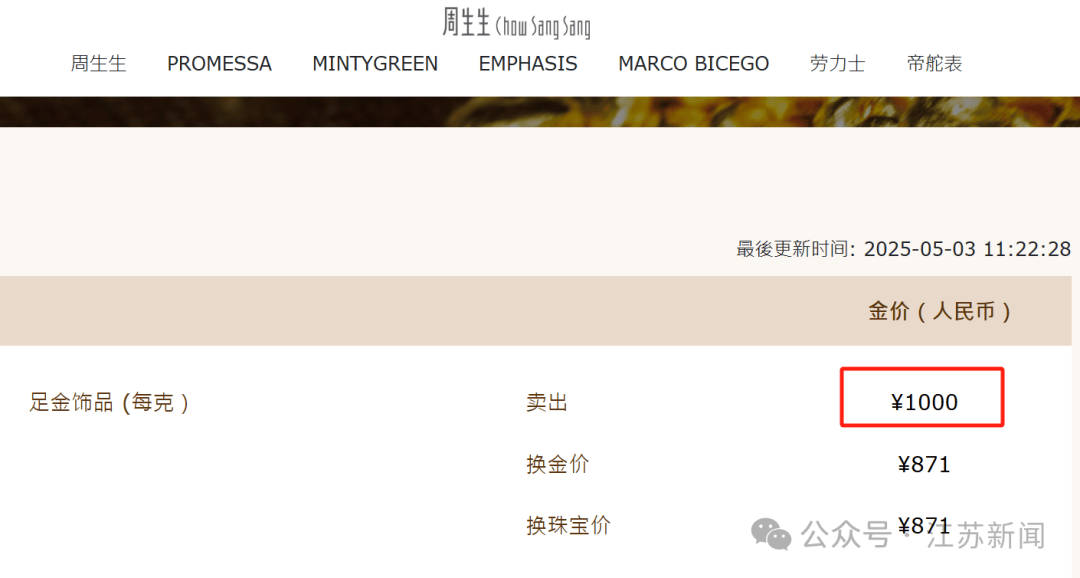
Core Viewpoint - The rapid increase in gold prices has led to a significant rise in investment demand, while consumer demand shows signs of fatigue, indicating a market divergence [5][6]. Group 1: Gold Price Trends - International gold prices have surged over 70% in less than a year, reaching around $3,500 per ounce from approximately $2,050 per ounce [5]. - In the first quarter of this year, gold prices increased by about 19%, a rise not seen since the 1970s and 1980s [5]. - Major financial institutions like Goldman Sachs and UBS have raised their gold price forecasts, with Goldman predicting prices could reach $3,700 per ounce by year-end and $4,000 by mid-2026 [5]. Group 2: Market Dynamics - The domestic market for gold ETFs has grown significantly, nearing 160 billion yuan, reflecting a strong investment demand [6]. - Conversely, the physical gold consumption market is showing weakness, with gold outflow from the Shanghai Gold Exchange dropping by 35.7% year-on-year in the first quarter [6]. - The rapid rise in gold prices has led to a booming gold buyback market, as investors sell high-value gold bars [7]. Group 3: Factors Influencing Gold Prices - Concerns over the credibility of the US dollar and geopolitical uncertainties are driving the demand for gold as a reserve asset [9]. - Structural changes in gold allocation, such as regulatory approvals for insurance funds to invest in gold, are supporting demand [9]. - Despite the rising demand, gold supply is not expected to increase significantly, with central bank purchases projected to remain above 1,000 tons for the third consecutive year [9]. Group 4: Investment Behavior and Risks - The surge in gold prices has led to increased speculative behavior among investors, with discussions around "gold trading" gaining traction on social media [11]. - Financial institutions are warning against using credit for gold investments, highlighting potential legal risks and financial losses if prices decline [12]. - Many domestic investors view gold as a short-term speculative tool rather than a long-term asset, which may lead to irrational investment behaviors [12].

苹果崩跌,库克紧急回应
Sou Hu Cai Jing· 2025-05-04 06:14
Core Viewpoint - Apple is facing significant challenges due to U.S. tariff policies, which are expected to result in a loss of approximately $900 million in the upcoming fiscal quarter, highlighting the adverse impact of "economic nationalism" on the company [1][3]. Financial Impact - Following the earnings report, Apple's stock price fell by 3.74% to $205.35, marking a cumulative decline of over 15% year-to-date [3]. - The company's production costs are rising due to new tariffs on key components such as displays, chip packaging, and motherboard modules, leading to compressed profit margins and uncertain delivery timelines [3][4]. Regulatory Challenges - Apple is also facing regulatory scrutiny from the European Union, which has identified violations of the Digital Markets Act, resulting in potential fines amounting to hundreds of millions of dollars [4]. - The company's previously advantageous "systemic dividends" from its closed ecosystem are now under threat from regulatory actions [4]. Market Position and Growth Concerns - Apple is losing its growth momentum and strategic advantage as it contends with a weakening iPhone market, lack of innovation in iPads, and regulatory pressures on its service business [6][8]. - The company's business model, which has relied on brand dominance, Chinese manufacturing, and global user profits, is being challenged by geopolitical tensions and a shift towards de-globalization [6][8]. Broader Implications - The situation with Apple reflects a larger collapse of the globalization structure that has supported U.S. tech companies for the past two decades, positioning Apple as a primary example of this trend [6][8]. - Investors are reassessing Apple's future, as the company struggles to maintain its valuation amid declining growth prospects and increasing regulatory pressures [8].


与中国较量,美国会“占上风”吗?
Sou Hu Cai Jing· 2025-05-04 02:16
中美"关税战"升级的程度,令全世界震惊!面对特朗普的挑衅,中国毫不妥协、坚决反制,短短一周左右的时间,中国对来自美国制造的商品关税从新增 34%,提高到84%,后来又提升至125%。 尼克·马罗,这位"经济学人"的亚洲区专家点评道:这可能是中美两国贸易完全脱钩的最明显迹象。不仅如此,中国的坚决反制还是对特朗普的口中妄言 ——"我管理美国,同时也管理世界"的直接回应。 即是"美国自己在破坏现有的世界体系",加剧了人们对华盛顿的信任忧虑与对抗性。与特朗普政府的逆全球化政策不同,中国才是推动自由贸易的重要捍卫 者,中国才是当今世界对抗霸权的旗手。 多国不相信美国会占上风,要和中国加强关系 尽管多位欧洲官员还是强调要和美国保持接触,继续谈判,但他们仍坦言道:结果可能非常不乐观,因为"不同的理念导致了不同的标准"。面对90天豁免期 后的高关税,欧盟声称正在制定报复措施。 越来越多的欧洲领导人希望选择新的道路,而不是像以往那样只是单纯地响应华盛顿的政策——欧盟委员会主席冯德莱恩在美国加征关税后不久与中国领导 人通话,确定7月举行中欧领导人峰会。 让多国不相信美国会在贸易战中"占据上风"的另外一个因素是"中国的心态更加平静 ...
全球化的丧钟为谁而鸣?
虎嗅APP· 2025-05-02 03:38
Core Viewpoint - The article discusses the evolution of globalization from 1.0 to 3.0, highlighting the impact of MAGAism and the rise of protectionism, leading to a potential collapse of the current global trade system and the emergence of a new, more inclusive globalization model driven by digital technology and emerging economies [1][2][3]. Group 1: Globalization 1.0 - Globalization 1.0 was established post-World War II, primarily led by the United States, focusing on rebuilding economies through international cooperation and the establishment of organizations like the IMF and World Bank [7][8]. - The General Agreement on Tariffs and Trade (GATT) was signed in 1947, leading to a significant reduction in global tariff levels, with an average annual trade growth rate of 7.8% from 1950 to 1973 [7][8]. - The period was characterized by a division between capitalist and socialist blocs, resulting in a structured but not fully globalized trade system [9]. Group 2: Globalization 2.0 - Globalization 2.0 began after the Cold War, marked by the establishment of the WTO in 1995, which facilitated a true global economic integration, particularly between the U.S. and China [11][12]. - The period saw rapid trade liberalization, with global tariffs dropping from 6.2% in 1991 to 3.2% in 2006, and significant growth in international investment [12][13]. - The rise of emerging economies, particularly China and India, began to reshape the global economic landscape, contributing to a multi-polar world [15]. Group 3: MAGAism and Its Impact - MAGAism has led to a rise in protectionist policies in the U.S., which may provide short-term benefits to certain industries but could disrupt global supply chains and increase consumer costs in the long run [20][21]. - The political polarization in the U.S. has intensified, with MAGAism exacerbating divisions between different social and economic groups, impacting political stability and governance [21][22]. - The global implications of MAGAism include a decline in U.S. leadership in international affairs and a shift towards a more fragmented global trade environment [22][23]. Group 4: Transition to Globalization 3.0 - The article posits that the world is transitioning towards Globalization 3.0, characterized by a more inclusive and technology-driven economic model, despite the challenges posed by de-globalization and protectionism [26][27]. - Emerging economies are advocating for a more open and cooperative global economic system, as seen in initiatives like the Belt and Road Initiative and RCEP [26]. - The future of globalization is seen as an inevitable trend, with the potential for a new economic order that is less dominated by major powers and more reliant on digital technologies [27].
外汇期货热点报告:美国一季度GDP增速转负,关税加大经济波动
Dong Zheng Qi Huo· 2025-05-01 10:54
Group 1: Report Industry Investment Rating - The rating for the US dollar is "oscillation" [2] Group 2: Core View of the Report - The US GDP growth rate turned negative in Q1 2025, with the annualized quarterly-on-quarter initial value at -0.3%, lower than the expected 0.3% and a significant drop from the previous quarter's 2.4%. Tariffs increased economic volatility, and the surge in imports due to enterprises stockpiling ahead of time dragged down the economic growth rate. As tariffs are implemented, enterprises' investment willingness weakens, and they need to digest inventory. Meanwhile, the consumption momentum of the household sector has significantly weakened, putting further downward pressure on the economy. The market's expectation of an interest rate cut has slightly increased, with the probability of a rate cut in June expected to rise to 64.2% [3][4] - In the short term, the market is trading around the progress of tariff negotiations and is insensitive to fundamental data. In the long term, the de - globalization under tariffs is hard to reverse, and the risk of stagflation in the US economy continues to accumulate. Without further progress in tax cuts and interest rate cuts, the market's risk appetite is difficult to improve significantly [5] Group 3: Summary by Relevant Catalogs 1. US Q1 GDP Growth Rate Turns Negative, Tariffs Increase Economic Volatility - **GDP Data**: The annualized quarterly - on - quarter initial value of US Q1 GDP was -0.3%, lower than the expected 0.3% and a significant drop from the previous quarter's 2.4%. Net exports dragged down the economic growth rate by 4.83%, with the import sub - item contributing -5.03%. Personal consumption expenditure grew at 1.8%, government expenditure at -1.4%, private investment at 21.9%, and imports at 41.3%. The core PCE price index rebounded from 2.6% to 3.5%, higher than expected [3][8] - **Contribution to GDP Growth**: Consumption, fixed investment, inventory, net exports, and government expenditure contributed 1.21%, 1.34%, 2.25%, -4.83%, and -0.25% respectively to the -0.3% GDP growth [3][16] - **Consumption**: Service consumption remained resilient, while commodity consumption declined significantly. The growth rate of commodity consumption dropped from 6.2% in Q1 to 0.5%, with durable and non - durable goods growing at -3.4% and 2.7% respectively. Service consumption was only weak in the accommodation and food sub - item [23] - **Investment**: Private investment increased by 21.9% quarter - on - quarter annualized, the highest since 2022. Equipment investment grew by 22.5%, mainly due to enterprises advancing equipment investment to avoid future tariff pressure and government regulations on the technology industry. Inventory also increased significantly due to pre - tariff stockpiling. However, long - term capital expenditure is showing signs of weakness [24] - **Government Expenditure**: The growth rate of government expenditure dropped to -1.4% in Q1, and the government's role in boosting the economy weakened due to debt ceiling, fiscal budget constraints, and the intervention of Trump's new government efficiency department [26] - **Inflation**: Inflation continued to rise in Q1. The GDP deflator rose to 3.7%, the PCE price index rebounded from 2.4% to 3.6%, and the core PCE rebounded from 2.6% to 3.5%. The process of inflation decline may be slower under tariff shocks [26] 2. Investment Advice - In the short term, the market is trading around the progress of tariff negotiations. After the news that the US wants to negotiate tariffs with China, the market's risk appetite has recovered. Gold has a correction space due to crowded long - positions, the US stock market is expected to be weak and oscillating after reaching the resistance level, and the US dollar and US Treasury yields will oscillate. In the long term, the risk of stagflation in the US economy continues to accumulate, and the market's risk appetite is difficult to improve significantly [5][30]