逆全球化

Search documents
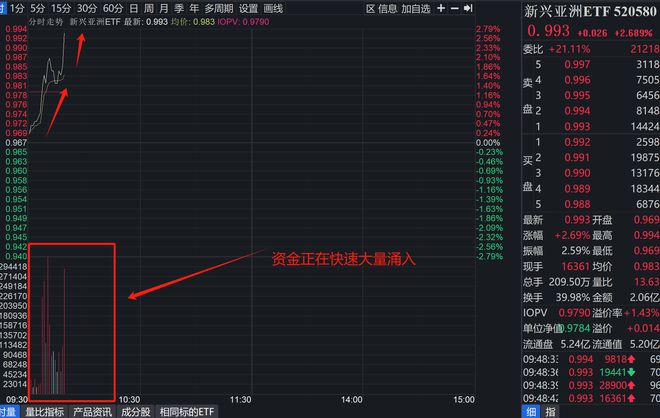
新兴亚洲ETF(520580)涨近2.5%!全球配置已成“必选项”
Jin Rong Jie· 2025-04-28 02:10
Group 1 - The AI competition between China and the US is intensifying, with the NITRD "Artificial Intelligence Action Plan" highlighting the irreconcilable nature of this rivalry, leading to accelerated de-globalization [1] - The Emerging Asia ETF (SH520580) has seen a significant increase, rising nearly 2.5% at the opening on April 28, driven by a surge of capital inflow [1][3] - Global trade growth is projected to slow to 1.2% in 2024, the lowest in a decade, with the risks of single markets becoming unsustainable [3] Group 2 - Emerging Asian markets are becoming strategic high grounds for global capital due to their regional economic integration, industrial capabilities, and resilient internal growth [3][5] - The Emerging Asia ETF has increased by 12% since April 8, with an average daily trading volume of 600 million yuan, reflecting strong investor interest [3][4] - ASEAN is expected to attract a 23% increase in foreign investment in 2024, with over 60% of investments focused on electronics, automotive, and new energy sectors [5] Group 3 - The demographic advantages of India and Indonesia, with a median age of 28.4 years and a population of 1.4 billion in India and 280 million in Indonesia, are expected to drive growth in e-commerce, fintech, and healthcare sectors [6] - Asian central banks are actively intervening to stabilize markets against dollar fluctuations, with India reducing interest rates by 50 basis points by 2025 [6] - The Emerging Asia ETF is strategically focused on leading companies in the four emerging countries, benefiting from trends in digital India and manufacturing upgrades [6][7] Group 4 - The ETF's underlying index has a low correlation of around 0.3 with US and A-shares, which can significantly reduce volatility when included in investment portfolios [7] - The ETF offers opportunities for premium arbitrage through T+0 trading mechanisms and the newly launched margin trading options, indicating substantial potential for returns [7]

广发证券:黄金剧烈波动 折射哪些信息?
智通财经网· 2025-04-28 00:10
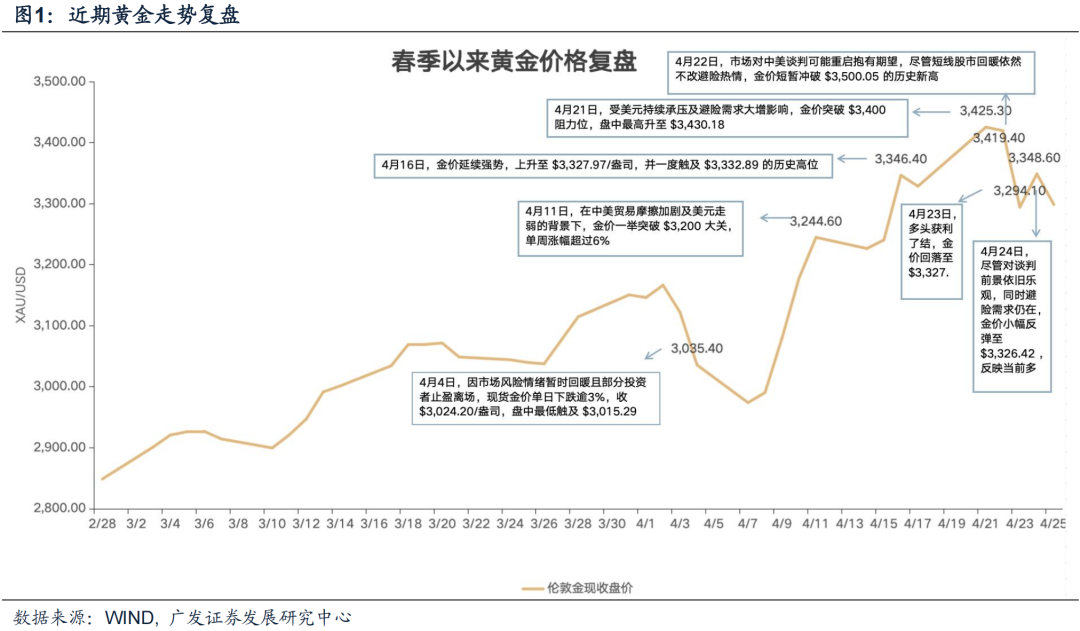
Group 1 - The core viewpoint is that after the implementation of tariff policies in April 2025, gold prices are expected to experience significant volatility, driven by escalating US-China tariff tensions, a pressured US dollar, cautious Federal Reserve policy expectations, and heightened global risk aversion [1] - Long-term support for gold prices is attributed to safe-haven demand, with tariffs and geopolitical instability acting as key factors [1] - The recent downturn in US equities has led to a strong asset allocation demand for gold from European and American funds, making gold a significant beneficiary of the current US stock market decline [1] Group 2 - The narrative of a collapse in dollar credit is emerging, with structural dollar depreciation benefiting gold as a primary asset, alongside central bank gold purchases reflecting this trend [2] - The pricing framework for TIPS has become ineffective, as market risk aversion has begun to dominate gold pricing, influenced by changes in the dollar credit system and central bank purchasing behavior [5] - Central banks view gold as an alternative to the dollar, with geopolitical factors driving its pricing, and concerns over weak US stocks and the dollar contributing to the recent increase in global ETF gold holdings [6] Group 3 - The pricing logic of gold is likely changing, with gold no longer being merely an appendage to the dollar system but gradually becoming a rival to it [8] - The true signal for asset price revaluation is found in gold prices rather than in the RMB to USD exchange rate or interest rate paths, indicating that RMB gold prices are becoming the true monetary anchor for China [8] - Current RMB gold prices are more aligned with a "Shanghai-led" pricing model rather than the previous "USD gold price and exchange rate" triangular conversion [8]

特朗普全面关税政策,谁要为“美国优先”买单,绝不是中国?
Sou Hu Cai Jing· 2025-04-27 04:23
Group 1 - The article discusses the resurgence of trade protectionism in the U.S. under Trump's administration, questioning whether it can lead to past economic successes [1] - Trump announced a 10% baseline tariff on all imported goods, effective April 5, with specific exemptions for a few North American countries [5] - The U.S. will impose reciprocal tariffs on its top 10 trade deficit countries, with Thailand facing the highest at 36%, followed by China at 34% and Indonesia at 32% [7] Group 2 - The average U.S. tariff rate is projected to rise from 2.5% to 9.8%, the highest since the Smoot-Hawley Tariff Act of 1930, with an estimated annual revenue increase of $162 billion [9] - The total U.S. goods imports for 2024 are expected to be $3.7 trillion, with significant contributions from China (18.2%), the EU (14.6%), and Mexico (13.8%) [9] - Consumers are expected to face an annual cost increase of $218 billion, averaging $1,700 per household, particularly affecting electronics, auto parts, and textiles [9] Group 3 - To implement these tariffs, Trump declared a national emergency, granting him expanded powers to address the fiscal deficit and national debt [10] - The trade policies may adversely affect traditional U.S. allies and the American public, with significant impacts on Southeast Asian economies and high-end manufacturing in South Korea and Japan [10][11] - European automakers and other industries are also expected to suffer, with potential price increases and contract risks due to the new tariffs [11] Group 4 - The article highlights the collapse of the global trade cooperation system led by the U.S., with 127 out of 164 WTO member countries initiating temporary trade barriers [12] - It suggests that the current trade protectionism may lead to a new global order, moving away from the previous mercantilist approach [12] - The article concludes that true prosperity comes from open trade rather than high tariffs, emphasizing the need for countries to respond to these protectionist measures [12]
国际金价升至3500美元/盎司后高位震荡,金市能否继续闪耀?
Xin Jing Bao· 2025-04-25 09:53
国际金价从每盎司3000美元一路升至3500美元附近后,多空激烈博弈,出现大幅震荡。受此影响,国内 现货金价23日高台跳水4.7%后24日收涨0.7%。 今年以来,国际、国内金价累计涨幅均达28%左右,均超2024年全年市场表现,金价为何涨势凌厉?面 对市场的不确定性,黄金还能否继续成为"避风港"? 金价势如破竹 继2024年国际金价上涨超26%后,今年金价迎来更强势的上涨。数据显示,2024年初,纽约、伦敦两地 的金价还在每盎司2050美元附近,不到一年半的时间,国际金价已升至最高每盎司3500美元附近,涨幅 一度超70%。 拉长时间轴看,金价出现如此大的涨幅在历史上也是少见的。"今年一季度金价上涨了约19%,历史上 超过这一同期涨幅的还要追溯到上世纪80年代和1972年至1974年间。"南华期货分析师夏莹莹表示。 去年以来,高盛、瑞银、摩根大通等国际金融机构纷纷看多黄金,对金价的预测也不断上调。高盛预计 现货黄金价格到今年年底将升至每盎司3700美元,到2026年年中将升至每盎司4000美元。 金价的快速上涨,让不少消费者措手不及。"今年足金饰品从每克800元左右一路跳涨到每克1000多元, 不仅没能等来 ...

申万宏源:关税态度出现反复 未来黄金价格是否还具备上行空间?
智通财经网· 2025-04-25 08:00
Core Viewpoint - The report from Shenwan Hongyuan indicates that after the unexpected tariff policy on April 2, 2025, which caused liquidity shocks, gold prices surged and briefly exceeded $3,500 per ounce, before quickly retreating to $3,300 due to fluctuating attitudes from Trump regarding tariffs. The medium to long-term trend for gold prices remains upward, with a projected range of $3,209 to $3,905 per ounce in 2025 [1][3]. Group 1: Recent Gold Price Trends - Recent rapid increases in gold prices are characterized by significant volatility, driven by physical demand, Asian capital inflows, and a substantial decline in the US dollar index [2]. - Gold price volatility has risen sharply, currently at the 89.2 percentile historically, as uncertainty surrounding Trump's policies has led to increased safe-haven investments in gold [2]. - The divergence between COMEX gold net long positions and gold price trends indicates a shift from speculative pricing to a supply-demand pricing model, with physical investment funds like SPDR Gold ETF increasing their holdings [2]. Group 2: Future Outlook - In the short term, after adjustments, a favorable allocation window for gold is anticipated, with a focus on monitoring gold price volatility trends [3]. - If Trump's tariff stance significantly eases or if negotiations with other countries progress positively, gold prices may experience high-level fluctuations and a downward trend in volatility [3]. - Key fundamental events to watch include the progress of US tariff policy negotiations and short-term fluctuations in central bank gold purchases, which have been a core driver of gold price increases in 2023 [3]. Group 3: Medium-Term Considerations - The ongoing decline in the credibility of the US dollar and its reserve status may lead to a sustained increase in gold price levels [4]. - The backdrop of de-globalization suggests a long-term downtrend for the US dollar index, exacerbated by rising fiscal deficits and the challenges of implementing tax cuts [4]. - High policy uncertainty surrounding Trump's tariff policies is expected to continue supporting gold prices, as the current environment is markedly different from 2018 [4]. Group 4: Quantitative Analysis - The quantitative model projects that gold prices will fluctuate between $3,209 and $3,905 per ounce in 2025, based on a framework that has shown a high correlation with historical gold prices [5]. - The model identifies four key pricing factors for gold since 2022: global central bank gold reserves, US fiscal deficit rates, economic policy uncertainty in the US, and the real yield on 10-year US Treasury bonds [5].

大宗商品,走向
2025-04-25 02:44
Summary of Conference Call Records Industry Overview - The records discuss the **commodities market**, highlighting the current trends and historical comparisons to the 1970s and 1930s [1][2][3]. Key Points and Arguments 1. **Globalization and Economic Trends**: - Increasing trade frictions are exacerbating the trend of de-globalization, resembling the 1930s and 1970s, with the current situation more akin to the 1970s stagflation environment [1][2]. - The current asset price structure reflects a stagflation bull market, with significant increases in gold and copper prices, while the dollar and U.S. stock markets are declining [1][4]. 2. **Supply Shocks**: - Supply shocks are a natural outcome of the de-globalization trend, with resource-rich countries implementing export bans on commodities like nickel, bismuth, cobalt, and tin [1][5]. - Historical parallels are drawn to the 1978 weather extremes and Middle Eastern geopolitical uncertainties that caused supply shocks [5]. 3. **Demand Dynamics**: - Despite economic downturns, the apparent consumption of industrial metals like copper and aluminum has not significantly decreased, indicating structural demand stability [8]. - Strategic reserve policies, similar to the 1979 U.S. mineral reserve amendments, are driving commodity demand upward [8][9]. 4. **Geopolitical Influences**: - The current geopolitical landscape, including the Russia-Ukraine conflict, has led to increased inventory levels across industries, with countries like China, the U.S., and Europe boosting resource strategic reserves [9]. 5. **Dollar Supply and Inflation**: - The oversupply of dollars, driven by fiscal expansion, has historically led to rising resource prices, a trend that is currently being observed due to extensive fiscal stimulus measures [10][11]. - The current U.S. national debt exceeds 120% of GDP, significantly impacting interest expenses and indicating a more severe dollar crisis compared to the 1980s [14]. 6. **Comparison with Historical Context**: - The current situation is contrasted with the 1970s, where the latter part of that decade saw a commodity bull market followed by a prolonged downturn, while the present may mark the beginning of a long-term commodity bull market [13][16]. 7. **Investment Recommendations**: - It is advised to invest in dollar-denominated short-duration assets like gold and copper, as their pricing is expected to rise due to the weakening dollar [17]. - Long-duration assets priced in RMB are also recommended, anticipating an increase in the value of future cash flows due to China's rising power and currency appreciation [17]. Other Important Insights - The long-term impact of tariffs imposed by the Trump administration could lead to a 1-2% increase in U.S. CPI, affecting inflation dynamics beyond his term [16]. - The transition of certain metals from industrial to financial assets due to the depreciation of the dollar index has increased their market demand [12].
买了黄金后价格跌了,该怎么办?
Sou Hu Cai Jing· 2025-04-24 08:07
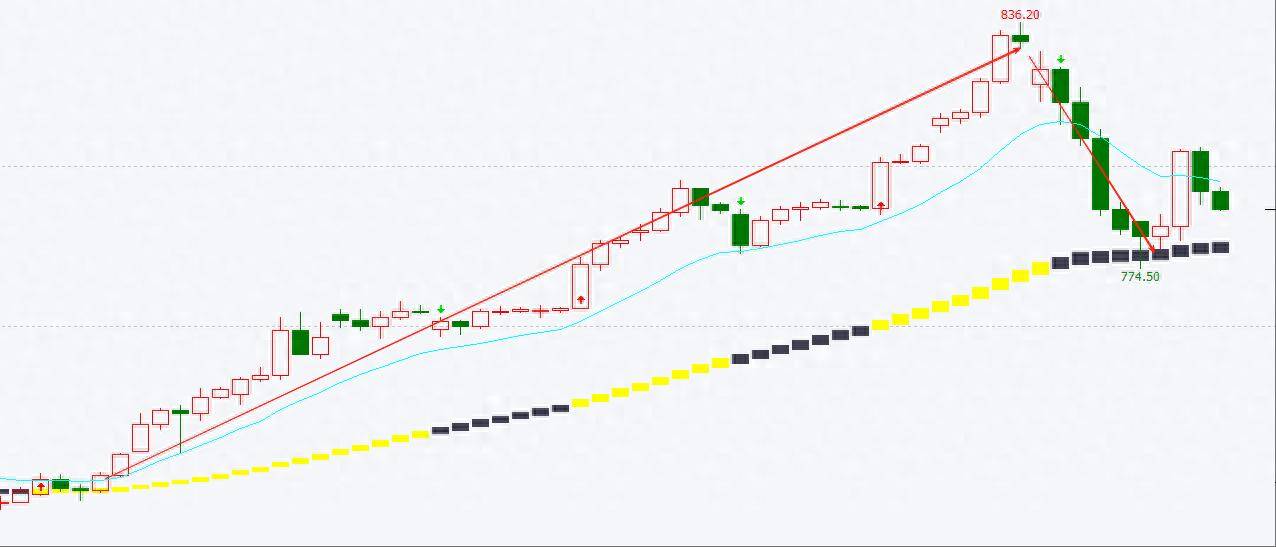
Core Viewpoint - The article discusses the volatility of gold prices and provides strategies for investors who experience price declines after purchasing gold, emphasizing the importance of maintaining a calm and informed approach to investment decisions [4][5]. Group 1: Reasons for Gold Price Fluctuations - Gold prices have been influenced by geopolitical events, such as Trump's comments on the Federal Reserve and interest rate policies, leading to significant price swings [4]. - The recent price drop of gold, which fell sharply after reaching a historical high of 830 yuan per gram, illustrates the sensitivity of gold prices to market sentiment and political statements [4]. Group 2: Strategies for Investors - Investors are advised to remain calm and avoid hasty decisions to sell when prices drop, as short-term fluctuations do not necessarily indicate long-term trends [7]. - It is crucial for investors to assess their investment goals and risk tolerance, as those investing for the long term may not need to react to short-term price changes [8]. - The option to average down by purchasing more gold at lower prices is discussed, but investors should be cautious and ensure that the price drop is temporary before committing additional funds [9]. - Diversifying investments across different asset classes, such as stocks, bonds, and real estate, can help mitigate risks associated with gold price declines [12]. - Staying informed about market dynamics, including global economic conditions and central bank policies, is essential for making informed investment decisions regarding gold [13]. Group 3: Specific Considerations for Gold Jewelry - For those who purchased gold jewelry, the article notes that the value is not solely based on the gold price, as it also includes craftsmanship and brand premiums, making it less sensitive to gold price fluctuations [16].
奉陪到底!63岁奥巴马终于表态,特朗普被催下台,美联储也没辙了
Sou Hu Cai Jing· 2025-04-24 02:59
哈佛大学(资料图) 美国前总统奥巴马在社交媒体上发文,赞扬哈佛大学拒绝白宫要求其改变政策否则将失去联邦资金资助的决定。这是自特朗普就职典礼以来,奥巴马首次 在社交媒体上批评特朗普政府。美国总统特朗普冻结了超过20亿美元的联邦资金,原因是哈佛大学拒绝对其招聘、招生和教学实践做出调整,而特朗普政 府称这些调整是打击校园反犹太主义的关键。身为哈佛校友的奥巴马称这一冻结举措"违法且笨拙"。他呼吁其他机构效仿哈佛,不屈从于特朗普的要求。 据智通财经报道,针对美国总统唐纳德·特朗普的新政,民主党高层开始打出"组合拳"。继美国前财长珍妮特·耶伦批评特朗普关税政策、前国务卿安东尼· 布林肯抨击特朗普破坏美国盟友关系、前总统约瑟夫·拜登怒斥特朗普政府要摧毁美国社保系统后,另一名美国民主党前总统贝拉克·奥巴马也公开发声。 奥巴马的最新发声没有针对特朗普政府的关税政策和外交政策,而是在哈佛大学与特朗普政府的对峙中力挺哈佛大学。 据悉,近日哈佛大学校长艾伦·加伯的声明犹如一记惊雷——这所创办388年的常春藤盟校,正面临建校史上最严峻的政治施压。联邦政府要求提交2007年 以来所有录取学生数据、对全校5000余名教职员工展开剽窃审查、 ...

经济大省一季报出炉,特斯拉净利润锐减40% | 财经日日评
吴晓波频道· 2025-04-24 00:27
IMF全面调降全球经济增速预期 点击上图 ▲立即报名 |点评| 整体而言,六个经济大省的一季度GDP增速表现尚可。今年的经济形势面临较大不确定性,全年经济增长目标下,年初各地抢开工、 抓生产,工业投资对于经济增长的贡献显著。增速排名靠前的山东、浙江和江苏,工业增长都比较亮眼,通信电子、汽车制造这些产业都发挥 了明显的带动作用。 从绝对值上看,广东依然稳坐经济第一大省的位置。经济总量庞大,一定程度加大了广东保持高增长的难度。加上受到传统产业疲软以及房地 产市场调整的影响,近年广东的GDP增速明显放缓。从一季度表现来看,目前广东仍面临一定的产业转型压力,但在外贸方面还是表现出了较 强韧性。GDP增速并不能反映经济发展的全貌,各地追求经济增长,还需要关注民生改善、可持续性等多个维度。 美国或将面临学生贷款违约潮 4月23日消息,国际货币基金组织(IMF)近日发布《世界经济展望报告》,鉴于贸易政策的不确定性,报告中久违地再次给出多种情境假设。 在最基本的参考预测情境下,贸易政策的不确定性预计将持续到2025年和2026年。短期内,根据参考预测,全球经济增长预计将从2024年的 3.3%降至2025年的2.8%,然后在 ...


经济大省一季报出炉,特斯拉净利润锐减40% | 财经日日评
吴晓波频道· 2025-04-24 00:27
4月23日消息,国际货币基金组织(IMF)近日发布《世界经济展望报告》,鉴于贸易政策的不确定性,报告中久违地再次给出多种情境假设。 在最基本的参考预测情境下,贸易政策的不确定性预计将持续到2025年和2026年。短期内,根据参考预测,全球经济增长预计将从2024年的 3.3%降至2025年的2.8%,然后在2026年恢复到3%。这比2025年1月WEO的预测分别低0.5个百分点(2025年)和0.3个百分点(2026年),几 乎所有国家经济增速预测都被下调。 IMF预计美国2025年的经济增长率将降至1.8%,比2024年的增长率低1个百分点,比1月WEO大幅调低0.9个百分点。IMF多年来首次强调,各 国国内失衡和政策差异,导致全球失衡,也给全球经济前景酝酿了一些潜在脆弱性。(第一财经) 点击上图 ▲立即报名 IMF全面调降全球经济增速预期 |点评| 尽管美国的关税政策仍有较多变数,但其对全球经济的负面影响已经可以预见。无论关税政策最后走向为何,现阶段都已对国际贸易 形势形成较多干扰。如果美国政府仍坚持将关税作为谈判筹码,摇摆不定,那么全球贸易更将被置于风雨飘摇的境地,短期内国际贸易规模萎 缩几乎难以逆转。 ...