AI泡沫

Search documents
英伟达力挽AI泡沫论
Bei Jing Shang Bao· 2025-11-20 14:57
Core Viewpoint - The recent earnings report from Nvidia has temporarily alleviated concerns about a potential AI bubble, showcasing strong financial performance while also revealing some underlying risks [1][3]. Financial Performance - For the third quarter of fiscal year 2026 (ending October 26, 2025), Nvidia reported a revenue increase of 62.5% year-over-year, with net profit rising by 65% [3]. - The data center business achieved a quarterly revenue exceeding $50 billion for the first time [3]. - Nvidia's guidance for the next quarter anticipates total revenue of $65 billion, surpassing analyst expectations of $61.7 billion [4]. Demand Signals - Nvidia's Blackwell series chips are in high demand, and cloud GPUs are sold out, addressing market concerns about peak AI demand [3]. - However, Nvidia's accounts receivable have been rising, reaching $33.391 billion in the third quarter, with 65% coming from four major clients [5]. - Inventory levels have also increased to $19.784 billion, with inventory turnover days rising to 117.5 days, significantly higher than the average of the past five years [6]. Customer Concentration Risks - Nvidia's revenue is heavily reliant on a few major clients, with four direct customers contributing 61% of total revenue, up from 56% in the previous quarter [6][7]. - This high customer concentration poses risks to revenue stability if these clients alter their capital expenditure plans [7]. Market Sentiment - Analysts maintain a positive outlook on Nvidia, with firms like Morgan Stanley and UBS reiterating buy ratings and optimistic revenue forecasts [8]. - Conversely, notable investors like Peter Thiel and Bridgewater Associates have significantly reduced their holdings in Nvidia, indicating caution regarding its high valuation [9].



银行带头护盘
Tebon Securities· 2025-11-20 13:28
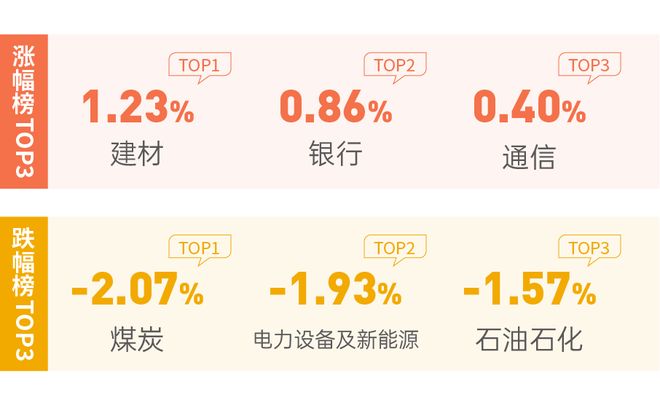
Market Analysis - The A-share market experienced a decline on November 20, 2025, with the Shanghai Composite Index falling by 0.4% to 3931.05 points, and other indices such as the Shenzhen Component and ChiNext Index also showing declines of 0.76% and 1.12% respectively [8][9] - The overall market sentiment remains low, with trading volume at 1.72 trillion yuan, slightly down from the previous day's 1.74 trillion yuan [8][9] - The banking sector showed strong performance, supported by government policies aimed at stabilizing the real estate market, including new measures announced in Foshan to promote healthy development [9] Bond Market - The bond futures market showed overall fluctuations, with the 30-year bond contract dropping by 0.21% to 115.870 yuan, while the 10-year and 5-year contracts saw slight increases [15] - The People's Bank of China maintained a net liquidity injection of 110 billion yuan through reverse repos, indicating a continued loose monetary policy [15] - The Loan Prime Rate (LPR) remained unchanged for six consecutive months, with the one-year LPR at 3.0% and the five-year LPR at 3.5%, reflecting stable expectations in the bond market [15] Commodity Market - The commodity market saw a majority of declines, with significant drops in energy products and black metals, while lithium carbonate prices surged past 100,000 yuan due to strong demand from the battery sector [11][15] - The demand for lithium carbonate has been robust, with a year-on-year increase in consumption of approximately 44.5% in September, driven by high production rates in the power battery and energy storage sectors [15] Investment Opportunities - The report highlights several investment themes, including dividends, artificial intelligence, nuclear fusion, quantum technology, domestic chips, and robotics, all showing potential for growth [17] - The focus on policy-driven defensive sectors and the anticipated recovery in consumer spending are emphasized as key areas for investment [18] - The report suggests maintaining a balanced portfolio with an emphasis on dividend stocks and sectors benefiting from structural trends, while keeping an eye on international commodity prices [18]
年底了,聪明钱在干什么?
Mei Ri Jing Ji Xin Wen· 2025-11-20 13:27
Group 1 - Nvidia reported Q3 revenue of $57.01 billion, a year-over-year increase of approximately 62%, exceeding market expectations of $55.19 billion [2] - The data center segment generated $51.2 billion in revenue, up 66% year-over-year, surpassing the market forecast of $49.34 billion [2] - The professional visualization segment earned $760 million, exceeding the expected $612.8 million [2] Group 2 - The gaming and AI PC segment reported revenue of $4.3 billion, slightly below the market expectation of $4.42 billion [2] - The automotive and robotics segment generated $592 million, falling short of the anticipated $620.9 million [2] - Nvidia provided Q4 revenue guidance of $63.7 billion to $66.3 billion, with the market median expectation at $61.98 billion [2] Group 3 - Nvidia's performance challenges the narrative of an "AI bubble," as stated by CEO Jensen Huang [3] - CFO Colette Kress indicated that the company has visibility on $500 billion in revenue from the Blackwell and Rubin platforms through the end of 2026 [3] - The Rubin platform is expected to launch in the second half of 2026, promising significant performance improvements over Blackwell [3] Group 4 - Despite strong earnings, some analysts believe Nvidia's results may not fully alleviate concerns about a potential market bubble [4]
英伟达业绩打脸AI泡沫论?分析师:该担心的不是英伟达,而是用债务堆起来的数据中心
美股IPO· 2025-11-20 13:09
Core Viewpoint - Concerns about an AI bubble are not primarily an issue for Nvidia, but rather for companies that are heavily borrowing to build data centers, which may face liquidation in two to three years when capacity becomes saturated [1][3]. Group 1: Nvidia's Performance and Market Sentiment - Nvidia's revenue and forecasts have exceeded market expectations, with CEO Jensen Huang stating that the situation observed is different from the AI bubble narrative [3][6]. - Nvidia has secured $500 billion in orders for advanced chips before 2026, indicating strong demand from major clients like Microsoft, Amazon, Google, and Meta [3][4]. - Some analysts believe that the strong performance of Nvidia only reflects robust infrastructure spending and does not indicate the true maturity of the AI economy [3][6]. Group 2: Debt and Data Center Concerns - Analysts warn that the real risk lies in the financing model of data centers, which are often funded through significant debt by major cloud service providers [5][6]. - The speculative nature of data center investments may lead to challenges when global capacity reaches saturation in two to three years [6][8]. - Concerns are raised about the thin revenue of AI developers like OpenAI compared to their substantial expenditures, which may unsettle investors [6][8]. Group 3: Market Dynamics and Future Outlook - Despite potential challenges for AI startups, Nvidia is expected to continue selling products to large cloud service providers and sovereign AI projects, supporting its market valuation [7][8]. - Analysts express a divided view on whether the current infrastructure boom is sustainable or indicative of a bubble, with some seeing Nvidia's results as a positive signal for long-term growth in AI demand [8][9]. - Nvidia's CEO has countered the AI bubble narrative, emphasizing a different perspective on the market's trajectory [9].

别被当下行情吓跑:牛没走,只是休息一下
雪球· 2025-11-20 13:01
Group 1 - The current market is in a consolidation phase of a slow bull market, allowing for a temporary pause before resuming upward momentum [6][7][20] - The slow bull market is characterized by alternating phases of growth and consolidation, with significant market movements observed in specific time frames [8][11][13][15] - Key factors driving the slow bull market include supportive policies, focus on economic development, and ongoing global liquidity [22][25][26] Group 2 - The market is expected to oscillate between the high points of November and the low points of September during the consolidation phase [28] - Dividend-paying assets are likely to perform well during this period, while growth-style assets should be accumulated at lower prices [29] - Potential catalysts for breaking out of the consolidation phase include economic stimulus policies, breakthroughs in key technology sectors, and funding flows driven by higher-level decisions [29]

美股大型科技股盘前普涨,英伟达大涨5%
2 1 Shi Ji Jing Ji Bao Dao· 2025-11-20 11:59
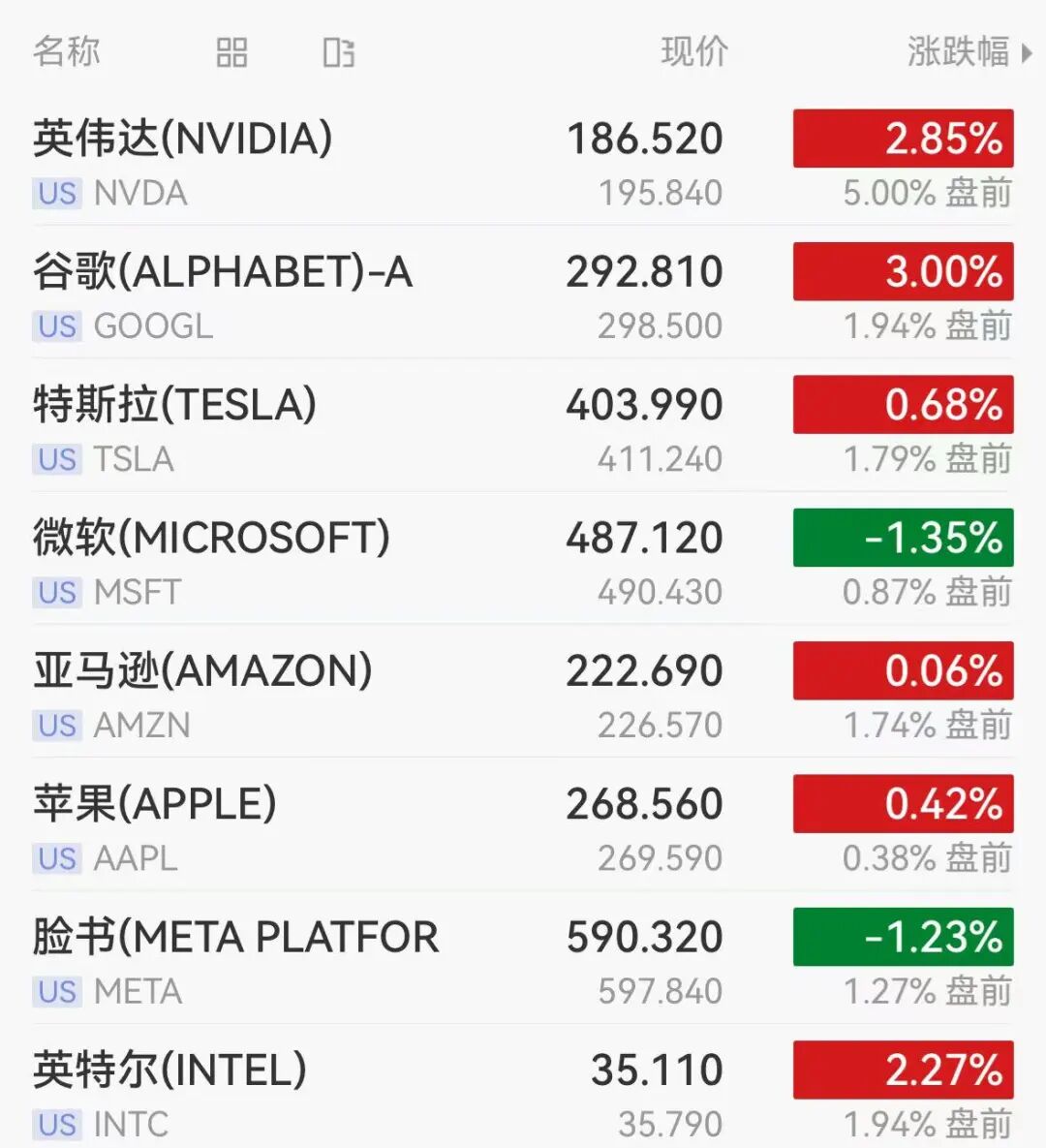
中概股方面,文远知行盘前涨超4%,消息面上,该公司旗下Robotaxi拿下瑞士纯无人牌照,获准在苏黎世弗尔塔尔地区公路上开展纯无人运营。 从财报整体数据看,英伟达以远超预期的成绩回击了"增长见顶"与"AI泡沫"的市场质疑。同时,英伟达给出强劲的业绩指引,预计第四季度销售额将达到 650亿美元,上下浮动2%,高于普遍预期的620亿美元。 也就是说,在经历了数个季度持续超预期增长后,英伟达仍然能在高基数上保持增长势能。这对资金面紧绷、科技股波动加大的当前市场而言,无疑是一 剂强心针。 11月20日,美股大型科技股盘前普涨,其中,英伟达、AMD大涨5%,特斯拉、谷歌A、亚马逊、英特尔涨近2%。消息面上,19日盘后,英伟达交出了一 份力度十足的第三财季财报。 | 名称 品 li | 现价 | 涨跌幅 ▶ | | --- | --- | --- | | 英伟达(NVIDIA) | 186.520 | 2.85% | | US NVDA | 195.840 | 5.00% 盘前 | | 谷歌(ALPHABET)-A | 292.810 | 3.00% | | US GOOGL | 298.500 | 1.94% 盘前 | ...
英伟达业绩打脸AI泡沫论?分析师:该担心的不是英伟达,而是用债务堆起来的数据中心
Hua Er Jie Jian Wen· 2025-11-20 11:29
尽管英伟达的业绩被广泛视为AI产业健康的重要指标,但多位分析师指出,真正的风险并非来自芯片 制造商本身,而是那些举债建设数据中心的企业。 据华尔街见闻文章,这家AI芯片巨头公布的营收和预期均超出市场预期,其CEO黄仁勋在财报电话会 议上明确表示"我们看到的情况截然不同",试图打消AI泡沫论。英伟达披露其先进芯片在2026年前已获 得5000亿美元订单,微软、亚马逊、谷歌和Meta等主要客户已明确计划加速AI芯片采购。 然而,11月20日,据报道,D.A. Davidson科技研究主管Gil Luria警告称,对人工智能泡沫的担忧并非英 伟达的问题,真正的问题在于企业为了建设数据中心而举借大量债务。他指出,数据中心本质上是投机 性投资,可能在两到三年后全球产能达到饱和时面临清算。 有分析师指出,英伟达的亮眼业绩只能证明AI基础设施支出旺盛,但并不能说明AI经济已真正成熟。 更关键的指标是微软、Adobe等平台上AI服务的实际变现能力和客户需求,而非单纯的芯片销售数据。 不过,也有分析师认为,AI基础设施需求持续超过供给,并引用英伟达2026年前5000亿美元订单称"这 只是开始"。Wedbush Securit ...
资管一线 | “AI泡沫”实为产业升级催化剂?机构布局现分歧
Xin Hua Cai Jing· 2025-11-20 11:12
新华财经上海11月20日(记者魏雨田)三季度全球资本市场波动加剧,随着美股机构投资者三季度13F 报告披露陆续收官,头部投资机构的调仓路径正式浮出水面。从调仓逻辑来看,科技与消费龙头成为机 构加仓的核心标的,而英伟达则在机构间引发分歧。当前市场围绕"AI泡沫"的争论愈演愈烈,不过机构 普遍认为,当下AI领域的高预期实为产业升级的重要催化剂,且技术商业化进程已实质性启动,具备 核心优势的头部平台将持续受益。 加仓聚焦核心标的科技消费龙头获青睐 三季度以来,全球资本市场波动加剧,多家头部投资机构将加仓重心明确指向科技及消费领域的龙头企 业。 从知名投资人段永平旗下H&H International Investment公布的13F文件来看,尽管该机构对苹果进行了小 幅减持,但这一动作并未动摇苹果的核心持仓地位。截至三季度末,苹果依旧是其第一大重仓股,持仓 占比达60.42%,对应持仓市值约88.69亿美元。在减持苹果的同时,段永平三季度对伯克希尔·哈撒韦进 行了幅度超53%的增持,目前持仓占比为17.78%,持仓市值为26.1亿美元,展现出段永平对伯克希尔·哈 撒韦投资逻辑的坚定信心。 机构持仓分歧凸显 AI龙头 ...
降息没戏了,黄金多空生死线!
Jin Tou Wang· 2025-11-20 10:45
Group 1: Gold Market - Gold prices experienced a significant spike, reaching a high of $4132.66 before closing at $4077.79, with a brief increase of 1.6% [1] - Currently, gold is trading around $4067, indicating a slight decline in the European market [1] Group 2: Federal Reserve Insights - The Federal Reserve's October meeting minutes revealed a notable division among officials regarding the appropriateness of a rate cut in December, with many favoring maintaining the current rate of 3.75% to 4% [3] - The probability of a 25 basis point rate cut in December is estimated at 32.7%, while the likelihood of maintaining the current rate stands at 67.3% [3] Group 3: Employment Data and Economic Indicators - Due to the longest government shutdown in U.S. history, the Labor Statistics Bureau announced that the unemployment rate for October will not be published, and the employment reports for October and November will be combined and released on December 16 [5] - The September non-farm payroll report is expected to show an increase of 55,000 jobs [5] Group 4: Nvidia's Financial Performance - Nvidia reported a revenue of $57.01 billion for the third quarter of fiscal year 2026, marking a substantial year-over-year growth of 62%, surpassing analyst expectations [5][7] - The CEO of Nvidia stated that the sales of their latest Blackwell architecture chips exceeded expectations, with all cloud server GPUs sold out [7] Group 5: Geopolitical Developments - Ukraine is responding to large-scale attacks from Russia, with reports of missile launches targeting civilian areas [8] - The U.S. has approved a $105 million maintenance project for the Patriot air defense system at Ukraine's request, which is crucial for countering Russian missile threats [9] - A potential framework agreement to end the Russia-Ukraine conflict is reportedly nearing completion, with discussions taking place directly between the U.S. and Russia [11]
【留言红包】继续调整,美元指数持续压制
Xin Lang Cai Jing· 2025-11-20 10:41
Market Overview - The market opened high but closed lower, with the Shanghai Composite Index down by 0.4% and the CSI 300 down by 0.51%. The total trading volume for the A-shares was approximately 1.72 trillion yuan, a decrease of 0.02 trillion yuan from the previous day [1]. Company Earnings - Nvidia's Q3 FY2026 earnings report showed revenue of $57.01 billion, exceeding Wall Street's expectation of $55.19 billion. The data center revenue was $51.2 billion, above the expected $49.34 billion, while gaming revenue was $4.3 billion, slightly below the expected $4.42 billion. Adjusted earnings per share were $1.30, surpassing the forecast of $1.25. Nvidia expects Q4 revenue to be around $65 billion, higher than the analyst expectation of $61.66 billion [3]. Semiconductor Industry - The Dutch Minister of Economic Affairs announced the suspension of an administrative order against Nexperia. The Chinese side welcomed this move but noted that it is only a first step towards resolving the underlying issues affecting the global semiconductor supply chain. The erroneous court ruling that stripped Wingtech of control over Nexperia remains a significant obstacle to a comprehensive solution [4]. Economic Indicators - The expectation for a Federal Reserve interest rate cut in December has decreased, with the dollar index surpassing the 100 mark. The U.S. Labor Department announced that it will no longer release the October non-farm payroll report, and the November data will be delayed until after the December FOMC meeting. This situation limits the Fed's access to key economic data that could influence its neutral stance [5]. Market Sentiment - Since November, a structural "rebalancing" has been observed in global stock markets, with funds rotating from previously leading technology sectors to lower-performing sectors such as resources, consumption, and pharmaceuticals. The lingering effects of the U.S. government shutdown continue to impact global liquidity and risk appetite. Despite the government reopening, negative impacts from the absence of economic data have not dissipated immediately. Additionally, pessimism regarding the "AI bubble" is affecting valuations of global tech stocks [6].