
反内卷政策

Search documents
股指期货周报-20260213
Rui Da Qi Huo· 2026-02-13 09:19
瑞达期货研究院 「2026.2.13」 股指期货周报 作者:廖宏斌 期货从业资格号F30825507 期货投资咨询证号:Z0020723 联系电话:4008-8787-66 关 注 我 们 获 取 更 多 资 讯 业务咨询 添加客服 目录 1、行情回顾 2、消息面概览 3、周度市场数据 4、行情展望与策略 「摘要」 • 周度观点:A股主要指数本周集体上涨,科创50涨幅最大超3%。四期指表现分化,中小盘股 强于大盘蓝筹股,从涨幅看IM>IC>IF>IH。本周为春节假期前最后一个交易周,周一受上周 美股科技股反弹影响,股指跳空高开;周二至周四,除1月通胀数据外,市场消息面平淡, 股指呈现整理态势;周五,受到即将到来的春节假期影响,投资者情绪较为谨慎,多持观望 态度,股指回落,尾盘加速下行。本周,市场成交活跃度较上周进一步回落。 3 来源:瑞达期货研究院 1、行情回顾 2020.06.30 厦门 「行情回顾」 | 期货 | 合约名称 | 周涨跌幅% | 周五涨跌幅% | 收盘价 | | --- | --- | --- | --- | --- | | | IF2603 | -0.23 | -1.92 | 4627.0 ...
节后上涨概率70%,外资集体看多,4100点下A股红包行情有何不同?
Sou Hu Cai Jing· 2026-02-13 04:35
Group 1 - The A-share market is expected to experience a "red envelope" effect post-Spring Festival, with historical data showing a higher probability of gains after the holiday [1][6][7] - Various institutions suggest holding stocks during the holiday to capitalize on post-holiday capital inflows and policy catalysts, while some recommend a cautious approach with light positions to manage volatility [1][6] - Historical trends indicate that the A-share market tends to favor high-dividend, defensive sectors before the holiday, with a shift towards small-cap and growth sectors after [7][12] Group 2 - Goldman Sachs predicts a 20% increase in the MSCI China Index by the end of 2026, driven primarily by earnings growth supported by AI, overseas expansion, and anti-involution policies [3] - Five major capital flows are expected to support the market, including record net inflows from southbound funds, domestic asset reallocation, and significant share buybacks [3] - Foreign institutions anticipate a gradual diversification away from USD assets towards Chinese markets over the next 3 to 5 years, highlighting China's complete industrial chain and strong innovation capabilities [4] Group 3 - The average performance of the Shanghai Composite Index in the ten trading days following the Spring Festival is better than in the first five days, indicating a warming trend in the market [6][7] - Analysts emphasize the importance of the last trading day before the holiday as a key window for positioning, with expectations of a trend reversal starting in the last five trading days before the holiday [12] - The current market environment suggests a focus on both cyclical and growth sectors, with a recommendation to maintain a balanced portfolio that includes resource assets like gold [9][10]


石油板块投资布局:把握石油ETF(561360)“看涨期权”价值
Sou Hu Cai Jing· 2026-02-13 01:41
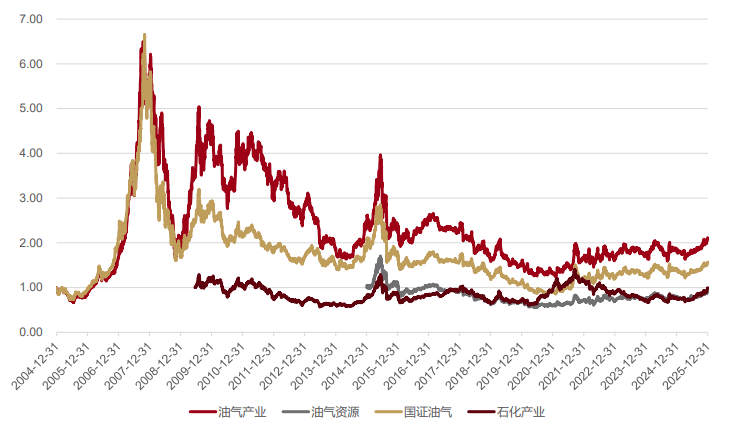
Core Viewpoint - The oil and gas industry is experiencing a potential recovery driven by rising oil prices, with investment opportunities across the entire industry chain, including upstream exploration, extraction, and downstream refining sectors [1][3]. Group 1: Oil Price and Industry Outlook - The current investment in the oil sector is akin to buying call options on oil prices, as all segments of the industry are expected to benefit from a bullish sentiment surrounding oil price increases [1]. - The oil industry is preparing for further investments in anticipation of improved profitability, despite skepticism regarding the narrative of oversupply in crude oil [1]. - The petrochemical sector is expected to benefit from anti-involution policies that control new capacity and eliminate outdated production, fostering collaboration among companies and reducing chaotic competition [2]. Group 2: Market Trends and Investment Opportunities - The oil and gas industry is showing signs of recovery, with capital inflows into the chemical sector indicating investor confidence in future growth opportunities [3]. - Recent inflows into domestic oil-related ETFs and continued net inflows into overseas oil ETFs suggest a global investor interest in the recovery of the oil and gas sector [3]. - The petrochemical sector is likely to see increased activity due to the emergence of new opportunities and the influence of leading stocks and market sentiment [3]. Group 3: ETF and Index Performance - The oil ETF (561360) tracks the CSI Oil and Gas Industry Index, which includes high-quality listed companies in the oil industry, providing stability and dividend attributes [4]. - The CSI Oil and Gas Industry Index has outperformed other similar indices historically, particularly during industry upturns, indicating strong upward elasticity [4]. - The index's current valuation is relatively high at 1.6 times, but there remains potential for further appreciation compared to global oil leaders [6]. Group 4: Dividend Yield and Investment Strategy - The CSI Oil and Gas Industry Index has a 12-month dividend yield of 3.1%, offering a solid income-generating investment opportunity [7]. - Investors interested in the oil sector are encouraged to consider the oil ETF (561360) for a comprehensive exposure to the industry [7].
申通快递发布2025年Q3财报,净利润同比增长超40%
Jing Ji Guan Cha Wang· 2026-02-13 01:39
Financial Performance - Shentong Express reported Q3 2025 revenue of 13.546 billion yuan, a year-on-year increase of 13.62% [1] - Net profit for the same period was 302 million yuan, reflecting a year-on-year growth of 40.32% [1] - The growth was primarily driven by the industry's "anti-involution" policy, which improved single-ticket prices, and the consolidation of Daniao Logistics starting from November 2025 [1] Recent Events - On February 6, 2026, Shentong Express announced a change in general manager, with Wang Wenbin promoted to vice chairman and Han Yongyan taking over as general manager [2] - A legal dispute involving the company's actual controller, Chen Xiaoying, has arisen due to a divorce property settlement, potentially affecting 2.65% of shares (approximately 40.56 million shares) [2] - The company announced a tiered price increase for personal parcels during the Spring Festival period (February 14-20, 2026), with the first weight surcharge of 2-3 yuan per ticket and additional weight surcharges of 0.3-1.5 yuan per kilogram [2] Stock Performance - Over the past 7 days (as of February 12, 2026), Shentong Express's stock price has shown a slight decline of 0.15%, with a price of 12.98 yuan [3] - The stock has a technical resistance level at 13.91 yuan and a support level at 12.46 yuan, with recent MACD indicators showing a positive trend but overall moving averages indicating a bearish pattern [3] - On February 12, 2026, there was a net outflow of 10.69 million yuan from institutional investors, while retail investors showed slight inflows, indicating cautious market sentiment [3] Institutional Insights - Huachuang Securities noted that the express delivery industry is experiencing a continued differentiation, with Shentong's business volume growth reaching 11.09% in December due to the merger with Daniao Logistics, increasing its market share to 13.7% [4] - Analysts are optimistic about profit recovery for leading companies under the "anti-involution" policy, predicting a 31.25% year-on-year increase in Shentong's net profit for 2025, with a target price of 19 yuan, representing a potential upside of 45.9% from the current price [4]

毕马威展望中国经济:政策蓄力构建再平衡
Zhong Guo Xin Wen Wang· 2026-02-12 08:53
Economic Overview - The report indicates that China's economy successfully concluded 2025, but structural disparities in supply and demand, domestic and external demand, and the performance of new versus old drivers are evident [1] - For 2026, domestic economic growth is expected to remain robust, with an anticipated acceleration in the convergence of supply and demand disparities [1] Output Analysis - In 2025, the manufacturing value added grew by 6.1% year-on-year, driven by strong export demand and domestic equipment renewal policies [1] - The rapid development of artificial intelligence and a recovering capital market have supported fast growth in the information technology and financial services sectors, leading to the tertiary industry growth surpassing that of the secondary industry [1] - The initiation of "two heavy" projects and the first round of "two new" subsidies at the beginning of 2026 is expected to boost production in upstream raw materials and downstream consumer goods [1] Consumption Trends - The trend of self-consumption continues to rise, with a shift in consumer structure towards quality and experience, resulting in moderate recovery in the growth of gold and silver jewelry, cosmetics, and clothing [1] - Service consumption remains resilient, and the "old-for-new" policy will continue to be implemented with a focus on green, smart, and senior consumer upgrades in 2026 [1] Export Performance - In 2025, China's foreign trade achieved stable volume and quality under complex external conditions, with a record trade surplus that supported the annual economic growth target [2] Fiscal and Monetary Policy - A significant amount of surplus funds is expected to be released at the beginning of 2026 to meet budgeted investment needs [2] - The central bank is anticipated to implement a combination of "interest rate cuts + incremental + expansion" through structural tools at the start of 2026, with conditions for stabilizing the RMB exchange rate and bank net interest margins allowing for future comprehensive reductions [2] Policy Outlook - The central economic work conference has set higher quality requirements for economic growth, with macro policies expected to maintain stable expansion in scale while emphasizing the stimulation of domestic demand and optimizing supply [2] - There will be a focus on supporting private investment stability by lowering financing thresholds and easing access for major projects [2] - On the supply side, policies will promote the large-scale development of emerging industries while accelerating the digital transformation of traditional industries [2]
华商基金杜钧天:力争驾驭市场预期差 在复杂债市中构建平衡组合
Xin Lang Cai Jing· 2026-02-12 05:13
Core Viewpoint - The bond market is experiencing discussions amid a recovering economy, with structural characteristics becoming increasingly evident [1][6]. Economic Environment - Since the fourth quarter, the domestic macroeconomic performance has shown a weak yet stable trend, with GDP growth gradually declining throughout the year [3][8]. - Inflation recovery is exhibiting structural characteristics, with household sectors remaining a weak point in the economy [3][8]. Market Sentiment - Despite the economic shortfalls, the bond market's expectations for economic growth and inflation in the coming year have improved, supported by positive policy changes that have boosted market confidence [3][9]. Government Policies - The government's "anti-involution policy" aims to reduce ineffective competition and stabilize supply-side prices, particularly in certain industrial products, providing a clearer policy bottom for prices [9]. - Signals from important meetings in December indicate that broad fiscal spending is expected to maintain strength, with a policy tilt towards household sectors and service consumption, positively supporting market prospects [4][9]. External Factors - A temporary easing of geopolitical disturbances and the spillover effects of overseas policy easing are expected to continue supporting exports [4][9]. - Potential external inflation inputs are also providing support for the recovery of domestic price indicators, further enhancing market recovery expectations [4][9]. Market Dynamics - In the context of mixed fundamentals and liquidity, the influence of institutional behavior in the bond market has increased [4][9]. - Concerns about supply-demand imbalances in ultra-long bonds may negatively impact the bond market until clear support emerges, but there is no need for excessive worry about future supply issues given the reliance on government credit expansion and moderately loose monetary policy [4][9]. Investment Strategy - The fund's portfolio has been adjusted to a bullet structure at year-end, aiming to capitalize on curve convexity and riding opportunities to build a more robust portfolio structure for 2026 [4][9].

恒星科技收监管函,关注业务进展与年报披露
Jing Ji Guan Cha Wang· 2026-02-12 05:06
Regulatory Situation - The Shenzhen Stock Exchange issued a regulatory letter to the company on December 5, 2025, due to violations in corporate governance, insider information management, and financial accounting, requiring the company and responsible individuals to rectify the issues. The subsequent rectification may impact market confidence [2] Industry Policy Status - On January 16, 2026, the company responded to inquiries on its investor platform, indicating that the exit of Dow Chemical from production capacity may improve the global supply-demand balance of organic silicon. Additionally, domestic "anti-involution" policies could have a positive impact on the business. The Longshan Gold Mine project is still in the detailed exploration phase [3] Fund Movements - The company plans to use no more than 300 million yuan of idle self-owned funds to purchase financial products (including bank wealth management and trusts), with the authorization period extending until the end of 2026. This matter has been approved by the board of directors and is pending approval from the shareholders' meeting [4] Performance and Operating Conditions - The company stated that details regarding the operation of organic silicon products for 2025 will be disclosed in the annual report, which is expected to be published in the first half of 2026 [5]

有色金属日度策略-20260212
Fang Zheng Zhong Qi Qi Huo· 2026-02-12 03:46
1. Report Industry Investment Rating No relevant content provided. 2. Core Views of the Report - The non - ferrous metals sector has adjusted significantly and then repaired, with differentiated trends. After the adjustment pressure is fully released, it can still be mainly long - biased on dips according to the strength of fundamentals [13]. - This week, attention should be paid to the rare simultaneous release of non - farm payrolls and CPI in the US due to the short - term government shutdown. In China, the January social financing and inflation data will be released to verify the "good start" of the economy. Additionally, the US and Iran plan to hold a new round of negotiations [13]. 3. Summary by Directory 3.1 First Part: Non - ferrous Metals Operating Logic and Investment Suggestions Macro Logic - The non - ferrous metals market is generally volatile, with the holiday atmosphere becoming stronger and trading turning lighter. There is still volatility despite capital leaving the market as the holiday approaches. The market narrative has shifted from confidence in synchronous growth and abundant liquidity to uncertainties brought by volatility, a weak labor market, and AI - driven disruptions. The Middle East situation remains unstable, and there is still a possibility of fluctuations in overseas commodities during the holiday [12]. - China's January CPI year - on - year increase fell to 0.2%, and PPI year - on - year decline narrowed to 1.4%. Before the important non - farm payroll report, the White House gave a "pre - warning", indicating that employment growth may be lower than expected. US retail sales in December unexpectedly stagnated month - on - month, showing weak consumption at the end of the holiday season [12]. Investment Suggestions for Each Variety | Variety | Operating Logic | Support Area | Pressure Area | Market Judgment | Strategy | Recommendation Intensity | | --- | --- | --- | --- | --- | --- | --- | | Copper | Multiple factors including weak US retail data, dovish Fed stance, potential large - scale downward revision of non - farm payrolls, strategic reserve plan by Trump, and domestic macro - logic. Supply is currently strong but may decline in February due to the holiday, and demand is in a seasonal off - peak. | 98000 - 99000 | 108000 - 110000 | Oscillating upward | Buy on dips | +1 | | Zinc | Dollar adjustment, overseas gas price decline, and uncertainties in Iran negotiations. Supply is expected to increase, and demand is weakening. | 23800 - 24000 | 25000 - 25500 | Phase adjustment | Buy on dips | +0.5 | | Aluminum Industry Chain | For aluminum, there are new capacity releases and changes in demand in different sectors. For alumina, production capacity is increasing. For recycled aluminum alloy, there are both cost - support weakening and some positive factors. | Aluminum: 22000 - 22300; Alumina: 2300 - 2600; Recycled Aluminum Alloy: 21000 - 21500 | Aluminum: 26000 - 27000; Alumina: 2900 - 3000; Recycled Aluminum Alloy: 24000 - 26000 | Aluminum: Oscillating consolidation; Alumina: Oscillating weakly; Cast Aluminum Alloy: Oscillating consolidation | Wait and see | +0.5/ - 0.5/ +0.5 | | Tin | Supply is affected by factors such as tight raw materials and approaching holidays. Demand shows a downward trend in some sectors. | 330000 - 350000 | 450000 - 460000 | Oscillating consolidation | Wait and see | +0.5 | | Lead | Supply is increasing slightly, and demand is weak. The market is affected by holiday factors and inventory changes. | 16400 - 16500 | 17000 - 17300 | Range - bound rebound | Buy on dips | +0.5 | | Nickel | Affected by geopolitical factors, Indonesian policy adjustments, and changes in supply and demand. | 125000 - 128000 | 13800 - 140000 | Phase adjustment | Buy on dips | +1 | | Stainless Steel | Affected by Indonesian policies, cost changes, and seasonal supply - demand patterns. | 12800 - 13000 | 13800 - 14000 | Phase adjustment | Buy on dips | +1 | [14][15][16][17][18] 3.2 Second Part: Non - ferrous Metals Market Review | Variety | Closing Price | Change Percentage | | --- | --- | --- | | Copper | 102180 | 0.61% | | Zinc | 24585 | 0.53% | | Aluminum | 23660 | 0.62% | | Alumina | 2842 | 0.25% | | Tin | 394700 | 3.32% | | Lead | 16740 | 0.45% | | Nickel | 139360 | 4.51% | | Stainless Steel | 14040 | 2.18% | | Cast Aluminum Alloy | 22205 | 0.38% | [19] 3.3 Third Part: Non - ferrous Metals Position Analysis The analysis includes various non - ferrous metals futures contracts, showing information such as price changes, net long - short strength comparison, net long - short position base values, changes in net long and net short positions, and influencing factors [20]. 3.4 Fourth Part: Non - ferrous Metals Spot Market The report provides spot prices and price change percentages of various non - ferrous metals, including copper, zinc, aluminum, alumina, nickel, stainless steel, tin, lead, and cast aluminum alloy [22]. 3.5 Fifth Part: Non - ferrous Metals Industry Chain It presents multiple charts related to the industry chain of each non - ferrous metal, such as inventory changes, processing fees, and price trends [23][25][29][36][44][48][51][55]. 3.6 Sixth Part: Non - ferrous Metals Arbitrage It shows various charts for arbitrage analysis of different non - ferrous metals, including price ratios and basis spreads [58][59][61][65][69][71]. 3.7 Seventh Part: Non - ferrous Metals Options It provides charts related to option historical volatility, weighted implied volatility, trading volume, open interest, and the ratio of call to put open interest for different non - ferrous metals [75][76][77][79][82].
CPI放缓、PPI加快,什么信号
HUAXI Securities· 2026-02-12 00:52
Inflation Data Summary - In January 2026, the CPI year-on-year growth was 0.2%, lower than the expected 0.4% and down from 0.8% in the previous month[1] - The core CPI, excluding food and energy, increased by 0.8% year-on-year, down from 1.2% previously, while the month-on-month growth was 0.3%[1] - The PPI year-on-year change was -1.4%, better than the expected -1.5% and improved from -1.9% in the previous month[1] Structural Changes in Price Index - The new weight distribution for the CPI shows a shift towards services, with food and beverage (29.5%), housing (22.1%), and transportation and communication (14.3%) being the largest categories[2] - The weight of pork in the food category was increased from 1.4% to 1.9%, enhancing its contribution to CPI[2] - The average impact of the base period switch on CPI and PPI year-on-year was only 0.06 and 0.08 percentage points, respectively, ensuring continuity in price statistics[2] Seasonal and Structural Influences - January's CPI month-on-month performance was weaker than seasonal trends, recording only 0.2% due to the late timing of the 2026 Spring Festival[3] - Food prices were a significant drag on the index, with fresh vegetable prices dropping 4.8% month-on-month, while pork prices rose 1.2%[4] - Core CPI showed strength, driven by rising gold prices and the effects of "anti-involution" and "national subsidy" policies, with a month-on-month increase of 0.3%[4] PPI Recovery and Market Signals - The PPI month-on-month growth accelerated to 0.4%, up from 0.1-0.2% in the previous quarter, indicating a structural recovery in industrial prices[6] - The broadening of price increases across 30 major industries, with 13 showing month-on-month increases, suggests improving profitability expectations in the manufacturing sector[8] - The report anticipates a potential rise in CPI to around 1.0% in February due to the Spring Festival purchasing effect, while PPI is expected to remain around -1.4% year-on-year[9]
——2026年1月价格数据点评:涨价开始向下游传导
EBSCN· 2026-02-11 11:42
CPI Analysis - In January 2026, the CPI year-on-year growth rate dropped to +0.2%, down from +0.8% in the previous month, and below the market expectation of +0.4%[2] - The food prices decreased by 0.7% year-on-year, compared to an increase of 1.1% in the previous month, contributing to a decline of 0.32 percentage points in CPI[4] - The core CPI year-on-year growth rate fell to +0.8%, down from +1.2% in the previous month, influenced by the Spring Festival timing[5] PPI Analysis - The PPI month-on-month growth rate increased to +0.4% in January 2026, up from +0.2% in the previous month, marking the fourth consecutive month of increase[6] - The year-on-year PPI decline narrowed to -1.4%, a reduction of 0.5 percentage points from the previous month[6] - The prices in the non-ferrous metal mining sector rose by 5.7% month-on-month, driven by international price increases[6] Market Outlook - The upward trend in CPI is expected to continue, supported by rising raw material prices affecting durable consumer goods[3] - The central government's focus on regulating pig production capacity is anticipated to lead to a moderate improvement in pork prices in the second half of the year, supporting CPI readings[3] - The PPI is projected to turn positive year-on-year in the second quarter of 2026, influenced by global commodity price increases and domestic policy adjustments[11]