
猪周期

Search documents
国投期货农产品日报-20251223
Guo Tou Qi Huo· 2025-12-23 12:01
| | | | | 操作评级 | 2025年12月23日 | | --- | --- | --- | | 豆一 | | 杨蕊霞 农产品组长 | | | な☆☆ | F0285733 Z0011333 | | 豆粕 | な女女 | 吴小明 首席分析师 | | 豆油 | な女女 | | | | | F3078401 Z0015853 | | 棕榈油 | な女女 | 董甜甜 高级分析师 | | 薬粕 | な☆☆ | | | | | F0302203 Z0012037 | | 菜油 | な☆☆ | | | | | 宋腾 高级分析师 | | 玉米 | ななな | | | | | F03135787 Z0021166 | | 生猪 | ★☆☆ | | | 鸡蛋 | な女女 | 010-58747784 | | | | gtaxinstitute@essence.com.cn | 【豆一】 豆一主力经过短暂的跳空之后,盘面再度回升,盘面仍然在进行移仓。本周中储粮计划竞价拍卖大豆2.1万吨, 成交1.3万吨,底价3950元/吨,成交均价4027元/吨,溢价0-160元/吨。由于拍卖溢价成交,给豆一价格带来一 定的支撑,价格表 ...
市场观察:年底消费旺季到来,肉类蔬菜价格上涨,为何只有猪价持续低迷?
Sou Hu Cai Jing· 2025-12-23 10:21
Core Insights - The demand for pork is increasing as the Southern region enters the curing season, with traditional consumption peaks during New Year and Spring Festival, yet pork and live pig prices remain low [1] - The average price of live pigs nationwide is between 5.5 to 6 yuan per jin, which is below the cost line, while prices for other meats and vegetables are rising [1] - The wholesale price of pork has decreased by 23.7% year-on-year, contrasting with price increases for beef, lamb, chicken, and vegetables [1] Supply and Demand Analysis - The warm winter in the Southern region has led to a dispersed demand for cured and sausage products, and the late timing of the Spring Festival has also contributed to a scattered demand for pork [1] - High levels of breeding sows in the previous year have resulted in an abundant supply of market pigs, particularly during the fourth quarter, leading to a low price fluctuation for pork [1] Changes in Farming Practices - There is a notable decline in the number of small-scale pig farmers, with many exiting the market, despite high levels of breeding sows and pig supply [2] - The rise of the代养 (substitute breeding) model allows small farmers to raise pigs for large enterprises, reducing their market risk while enabling large companies to expand without significant infrastructure investment [2] Market Dynamics - The代养 model is contributing to increased pig production capacity and output, which is affecting pork price trends [3] - Large farming enterprises are currently in a "land grab" phase, offering attractive conditions to increase market share, which has accelerated the adoption of the代养 model [3] - As pork prices remain low, the industry may undergo a shakeout, with potential price recovery as some companies scale back or exit the market [3] Cost Management Recommendations - It is crucial for farming operations to focus on cost control, as production costs vary significantly, with efficient farms averaging around 10 yuan per kilogram, while most are around 13 yuan [3]
河南湖南四川调研归来,生猪行业深度汇报
2025-12-22 01:45
Q&A 2026 年生猪养殖行业的前景如何? 2026 年,生猪养殖行业将面临一系列挑战和机遇。首先,从供应端来看,目 前生猪供应量较大,出栏均重也在增加。这主要是由于去年四季度以来仔猪盈 利状况良好,母猪补栏和配种率积极。同时,非洲猪瘟的影响有所减弱,生产 效率提升显著。例如,有公司从 2021 年的每头母猪产子数 11 个提升到现在 的 13 个以上,PSY(每头母猪年提供断奶仔猪数)从去年的 28.3 提高到今年 的 29.3%。 然而,由于过剩供给问题严重,加之消费需求疲软,即便在腌腊 旺季期间,整体供需失衡依然存在。预计今年四季度生猪价格仍将低迷,在 12 元以下震荡,而全行业平均成本接近 13 元,这意味着目前全行业处于亏损状 态,每头生猪亏损约 300 元。 展望明年上半年,由于消费断档式下滑可能导致 更深层次的价格下跌,不排除部分时间点价格跌至 10 元甚至以下。这将进一 饲料原料价格(豆粕和玉米)虽受天气因素影响中枢或抬升,但全球产 量丰收限制涨幅,对行业成本影响有限,疫病控制和生产效率提升是关 键。 疫病程度介于 2023 年和 2024 年之间,主要集中在散户,集团厂防疫 情况需重点关注 ...
巨头刹车、散户离场背后,谁在“操控”猪周期?
虎嗅APP· 2025-12-18 00:09
Core Viewpoint - The article discusses the ongoing challenges in China's pig farming industry, highlighting the prolonged downturn in pig prices and the impact of the pig cycle on the market dynamics [3][4][11]. Group 1: Pig Price Trends - Since April 2022, the current pig cycle has been marked by a prolonged low point, with the average purchase price of live pigs dropping to 13.11 yuan per kilogram by late November 2025, reflecting a 0.9% decrease month-on-month and a 27% decrease year-on-year [4][9]. - The lack of seasonal demand during the year-end peak indicates a persistent supply-demand imbalance in the market [4]. Group 2: Industry Responses - Major pig farming companies like Tian Kang Biological, Shennong Group, and others have halted their pig farming projects, while leading firms such as Muyuan, Wens, and others have also suspended multiple projects due to cash flow pressures [5][6]. - The overall asset-liability ratio of listed pig companies has increased, indicating heightened financial stress within the industry [6]. Group 3: Smallholder Challenges - Traditional small-scale pig farmers face dire circumstances due to their limited purchasing power for feed and veterinary supplies, resulting in higher production costs compared to large-scale operations [7]. - The cost of raising pigs for smallholders has significantly increased, with a notable difference in costs compared to large-scale farmers, leading to greater financial losses during the current price downturn [7]. Group 4: Market Dynamics - The number of breeding sows in China has remained above the normal level of 39 million, with recent figures showing around 40.4 million, contributing to the oversupply in the market [8][9]. - The prolonged low prices are attributed to the high number of breeding sows and the inability of the market to absorb the excess supply, exacerbated by competition from alternative proteins like chicken and beef [14]. Group 5: Future Outlook - The current pig cycle is seen as a potential turning point, not in terms of price recovery, but in the structural changes within the pig farming industry due to increased scale and consolidation [15]. - Companies are shifting from merely raising pigs to integrating downstream operations such as slaughtering and meat processing to mitigate cyclical risks and enhance profitability [17][18].





农产品日报-20251217
Guo Tou Qi Huo· 2025-12-17 12:38
Report Industry Investment Ratings - Soybean: ★☆★, suggesting a bullish bias but limited trading opportunities [1] - Soybean oil: ☆☆☆, indicating a bearish trend [1] - Palm oil: ☆☆☆, suggesting a bearish outlook [1] - Rapeseed meal: ★☆☆, showing a bullish inclination but low operability [1] - Rapeseed oil: ★☆☆, indicating a bullish tendency with poor operability [1] - Corn: ★★★, representing a clear bullish trend and suitable investment opportunities [1] - Live pigs: ★★★, suggesting a clear bullish trend and appropriate investment chances [1] - Eggs: ★☆☆, indicating a bullish bias but limited trading space [1] Core Views - The short - term policy is releasing supply to the market, while the new domestic soybean crop has a tightening supply and market hoarding sentiment [2] - The trading logic has changed, with concerns about US soybean exports and expectations of a South American bumper harvest. Wait for South American weather changes and consider going long on the main 05 contract [3] - The main contracts of soybean and palm oil are falling, facing short - term downward pressure and high inventory pressure in the overseas palm oil market [4] - The domestic rapeseed sector is in a bearish trend dominated by supply, and attention should be paid to changes in trade policies [6] - The spot price of corn in the Northeast and North Ports has slightly declined, with the short - term Dalian corn futures 03 contract oscillating at a high level [7] - The live pig futures have increased in positions, and the spot price is strong, but there may be a second bottoming in the first half of next year [8] - The egg futures fluctuate narrowly, and the far - month contracts lack upward momentum. The industry fundamentals are gradually improving [9] Summary by Related Categories Soybean - Domestic soybean decline has slowed down, with a trading average price of 4030 yuan/ton and a rotation - in floor price of 4000 yuan/ton. Imported soybeans had an auction volume of 513,000 tons, with an average transaction price of 3852.1 yuan/ton and a transaction ratio of 62.9% [2] Soybean & Soybean Meal - South American weather has improved, and the US soybean futures price has fallen to a key position. Wait for South American weather changes to go long on the main 05 contract [3] Soybean Oil & Palm Oil - The main contracts of soybean and palm oil have fallen below the lower edge of the range, and there is short - term downward pressure. The Malaysian palm oil market faces high inventory pressure [4] Rapeseed Meal & Rapeseed Oil - The domestic rapeseed sector has fallen significantly. The Australian rapeseed is about to be pressed, and the Canadian rapeseed price is low. The sector is in a supply - dominated bearish trend [6] Corn - The spot price of corn in the Northeast has slightly declined, and the procurement in North China has cooled down. The short - term Dalian corn 03 contract oscillates at a high level [7] Live Pigs - The live pig futures have added over 10,000 lots. The spot price is strong this weekend, but there may be a second bottoming in the first half of next year [8] Eggs - The egg futures fluctuate narrowly, and the far - month contracts lack upward momentum. The industry is in a fundamental improvement stage [9]
巨头刹车、散户离场,谁在“操控”猪周期?
Xin Lang Cai Jing· 2025-12-17 07:29
文|红餐网 2020年,20元/斤的猪肉令人咋舌,但到了2025年,一斤猪肉想卖到10块钱以上都很难。 今年以来,天康生物、神农集团、天邦食品已先后表示中止养猪项目,邦基科技终止了筹划中的重大资 产重组事项。而在此之前,牧原、温氏、唐人神、金新农、东瑞股份等也已宣布终止多个生猪养殖项 目。 2025年第三季度财报数据则显示,上市猪企的整体资产负债率出现回升,行业现金流压力加剧。包括牧 原、温氏、新希望六和、天邦食品等头部猪企纷纷通过降低出栏均重、禁止商品猪流入二次育肥环节、 关停猪场等方式调整产能。 相比这些养猪规模企业,传统中小养猪户的生存处境更不容乐观。由于采购体量小,散户在饲料、疫 苗、兽药等投入方面缺乏议价权,导致养殖成本更高。 湛江科技学院生猪产业研究所曾统计,2010年养一头111公斤左右的生猪,散户需要花费1250元,大规 模养殖户的成本为1164元,相差64元。到了2021年,散户的生猪出栏重量是126公斤,成本为2709元, 大规模养殖户的生猪长到了129公斤,成本却只需要2387元,每斤成本比散户低了近14%。 几年里,猪肉价格好比坐上了过山车。几倍的价差背后,其实都是猪周期在作祟。 自2 ...
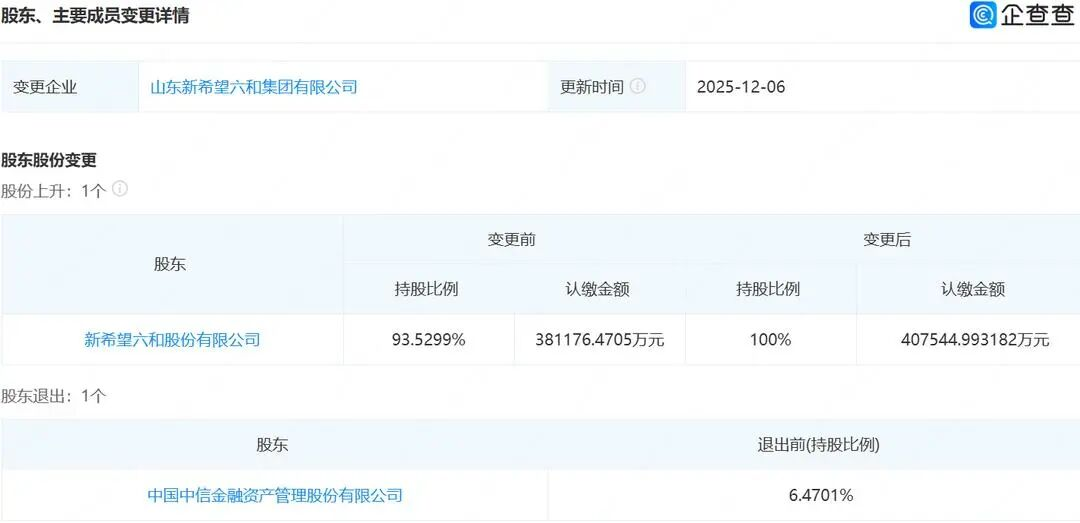
国资退潮与抄底,猪周期下的冰与火
Xin Lang Cai Jing· 2025-12-16 14:03
Core Insights - The recent developments in the pig farming industry highlight contrasting strategies among state-owned capital, with CITIC Financial Asset Management exiting Shandong New Hope Liuhe Group and TianKang Biological acquiring a 51% stake in Qiangdu Animal Husbandry for over 1.2 billion yuan [1][10]. Group 1: Short-term Financial Investment vs. Long-term Industrial Layout - CITIC Financial Asset Management, which held a 6.47% stake in Shandong New Hope Liuhe for less than nine months, opted to exit as the company underwent significant asset adjustments and attempted to pivot towards biotechnology, which may not align with the financial investor's preference for quick returns [2][11]. - The full acquisition of Shandong Liuhe by New Hope Group reflects a strategic focus on consolidating control and optimizing resources to enhance its core operations in feed, food processing, and biotechnology, aiming to navigate industry challenges more effectively [3][13]. Group 2: Strategic Positioning and Regional Deepening in a Downturn - Despite the ongoing low pig prices and industry losses, TianKang Biological's acquisition of Qiangdu Animal Husbandry represents a strategic move by state-owned capital to expand during a market downturn, leveraging its backing from the Xinjiang Production and Construction Corps [4][10]. - The acquisition is not merely about scaling but involves integrating quality production capabilities, with TianKang's annual output expected to reach 5 million heads, thereby reinforcing its position as a leading player in the western pig farming sector [7][16]. Group 3: Implications for Industry Practitioners - The contrasting decisions of state-owned capital provide insights into industry trends, indicating that financial investors like CITIC are more sensitive to market fluctuations and may exit based on strict financial assessments [8][18]. - Conversely, the entry of companies like TianKang during low periods signals opportunities for consolidation and upgrading within the industry, suggesting that firms with strong management and cost control may find more collaboration or integration opportunities [18].

天康生物斥资12.75亿元并购:9月以来售价再度跌破成本 猪价低迷下对外扩张将带来什么?
Xin Lang Cai Jing· 2025-12-16 10:20
Core Viewpoint - TianKang Biological has officially completed the acquisition of 51% of Xinjiang Qiangdu Animal Husbandry Technology Co., Ltd. for 1.275 billion yuan, despite facing declining pig prices and significant financial pressure [1][2]. Financial Performance - TianKang Biological's net profit has significantly declined, with a 74.58% drop in the third quarter compared to the previous year, leading to lowered profit forecasts for 2025 and 2026 by several brokerages [5][7]. - The company's cash and short-term debt situation shows a cash ratio of 1.17, indicating potential financial strain from the acquisition [1][6]. Acquisition Details - The acquisition involves a total valuation of 3.511 billion yuan for Qiangdu Animal Husbandry, with a 69.54% premium over the assessed value [2]. - Qiangdu is expected to contribute approximately 136,000 pigs in 2024 and over 150,000 in 2025, which will increase TianKang's total output to 480,000 pigs [2][3]. Market Conditions - The pig farming industry is currently experiencing a downturn, with prices dropping below production costs, which poses risks to profitability for both TianKang and Qiangdu [4][6]. - The recent pig price fluctuations have shown a significant decline from a peak of over 20 yuan per kilogram to below 13 yuan, impacting the financial health of pig farming companies [3][4]. Strategic Implications - The acquisition is seen as a strategy to bypass current production capacity control policies by rapidly expanding scale [2][3]. - Despite the potential for increased revenue from the acquisition, the ongoing low prices in the pig market raise concerns about future profitability and operational stability for TianKang [7].
农产品日报-20251215
Guo Tou Qi Huo· 2025-12-15 12:43
| | | | SDIC FUTURES | | | | --- | --- | --- | | | 操作评级 | 2025年12月15日 | | | | 杨蕊霞 农产品组长 | | 息一 | な女女 | F0285733 Z0011333 | | 豆粕 | ★☆☆ | 吴小明 首席分析师 | | 豆油 | な☆☆ | | | 棕櫚油 | な女女 | F3078401 Z0015853 | | | | 董甜甜 高级分析师 | | 薬粕 | ★☆☆ | | | 菜油 | ★☆☆ | F0302203 Z0012037 | | | | 宋腾 高级分析师 | | 玉米 | ななな | | | | | F03135787 Z0021166 | | 生猪 | な女女 | | | 鸡蛋 | ★☆☆ | 010-58747784 | | | | gtaxinstitute@essence.com.cn | 【豆一】 国产大豆表现为震荡偏强,现货价格坚挺,国产大豆新作供应端收紧,市场也存在惜售情绪,对大豆价格一直 是存在支撑的。政策端本周仍然在进行购销双向竞价交易,进口大豆方面也在进行拍卖。短期持续关注政策和 现货端的表现。 ...
《光大投资时钟》第二十七篇:总量研究“猪周期”投资的新范式
EBSCN· 2025-12-15 11:26
2025 年 12 月 15 日 总量研究 "猪周期"投资的新范式 ——《光大投资时钟》第二十七篇 作者 分析师:赵格格 执业证书编号:S0930521010001 0755-23946159 zhaogege@ebscn.com 稳定币:从数字美元到霸权上链 ——《大国 博弈》系列第八十八篇(2025-07-25) 特朗普为何加速推进 232 调查?——《大国 博弈》第八十七篇(2025-07-09) 关税大限将至,特朗普如何抉择?——《大 国博弈》系列第八十六篇(2025-07-03) 以斗争求合作,中方打到美方筹码底线—— 《大国博弈》系列第八十五篇(2025-05- 12) 中美会晤前哨观察:特朗普的交易底线—— 《大国博弈》系列第八十四篇(2025-05- 10) 关税互搏,中美谁的经济韧性更强?—— 《大国博弈》系列第八十二(2025-04- 09) 分析师:刘星辰 执业证书编号:S0930522030001 021-52523880 liuxc@ebscn.com 相关研报 黄金"狂欢"未歇,铜价能否共舞?—— 《光大投资时钟》系列报告第二十六篇 (2025-10-21) 黄金周:黄金上涨的三个 ...