
空头回补

Search documents
国新国证期货早报-20250813
Guo Xin Guo Zheng Qi Huo· 2025-08-13 01:35
Report Industry Investment Rating No relevant content provided. Core Views - On August 12, 2025, A-share major indices closed up collectively, with the Shanghai Composite Index achieving a seven - day consecutive rise and hitting a new high for the year. The trading volume of the Shanghai and Shenzhen stock markets reached 1881.5 billion yuan, an increase of 54.5 billion yuan from the previous day [1]. - The policies related to coal production verification have affected supply, with some coal mines shutting down. There are expectations of tightened coking coal supply and steel mill production restrictions [2]. - Due to large net short positions of speculators, there was short - covering in the US sugar market, leading to the upward movement of the Zhengzhou sugar 2601 contract [2]. - The 90 - day suspension of the 24% reciprocal tariffs between China and the US boosted market sentiment, causing the upward movement of Shanghai rubber [3]. - The USDA lowered the forecast of US soybean production, leading to a 2.18% increase in CBOT soybeans on August 12. In the domestic market, although there is high supply pressure in the short - term, concerns about future supply shortages support the strong and volatile adjustment of soybean meal prices [3][5]. - The current low - season for pork consumption, high - temperature weather, and expected increase in group - farm pig slaughter are keeping the pig market in a state of loose supply and demand [5]. - On August 12, the palm oil market had many fundamental positive factors, and its price continued to rise [6]. - The 90 - day extension of the Sino - US tariff truce supported copper prices. The supply and demand situation made the copper price show an oscillatory trend [6]. - Positive news in the steel market, including macro - level agreements and industry - level production restriction expectations, drove steel prices to run strongly in the short term [6]. - The supply of iron ore tightened, and the demand was resilient, resulting in an oscillatory trend of iron ore prices [7]. - The asphalt market had low demand but was supported by low inventory, with prices oscillating in the short term [7]. - The log market had a game between strong expectations and weak reality, with weak spot trading, and prices were affected by multiple factors [7][8]. - The cotton inventory decreased, and the price of the Zhengzhou cotton main contract showed certain trends [8]. - The adjustment of mineral resource policies and the tightening of the Guinean bauxite mining policy increased the risk of bauxite supply interruption, and the Shanghai aluminum market was oscillating [9]. Summary by Variety Stock Index Futures - On August 12, the Shanghai Composite Index rose 0.50% to 3665.92 points, the Shenzhen Component Index rose 0.53% to 11351.63 points, the ChiNext Index rose 1.24% to 2409.40 points, and the Science and Technology Innovation 50 Index rose 1.91% to 1069.81 points. The CSI 300 Index closed at 4143.82, a rise of 21.31 [1]. Coke and Coking Coal - On August 12, the coke weighted index closed at 1792.3, a rise of 80.7; the coking coal weighted index closed at 1292.3 yuan, a rise of 85.6 [1]. Zhengzhou Sugar - Affected by short - covering in the US sugar market and an increase in spot prices, the Zhengzhou sugar 2601 contract moved up on August 12. Brazil's sugar and molasses exports in July 2025 were 3.5937 million tons, a decrease of 4.98% compared to the same period last year [2]. Rubber - The 90 - day suspension of the 24% reciprocal tariffs between China and the US boosted market sentiment. On August 12, Shanghai rubber oscillated upward. In the first half of 2025, US tire imports increased by 6.8% year - on - year, and the estimated total tire shipments in 2025 increased by 0.9% compared to 2024 [3]. Soybean Meal - Internationally, on August 12, CBOT soybeans rose 2.18%. The USDA lowered the forecast of US soybean production for the 2025/26 season. Domestically, on August 12, the M2601 main contract closed at 3091 yuan/ton, a rise of 0.62%. Although there is high supply pressure in the short - term, concerns about future supply shortages support the price [3][5]. Live Pigs - On August 12, the live pig futures price oscillated. The LH2511 main contract closed at 14230 yuan/ton, a rise of 0.64%. The current low - season for pork consumption and expected increase in group - farm pig slaughter keep the market in a state of loose supply and demand [5]. Palm Oil - On August 12, the palm oil price continued to rise. The main contract P2509 closed at 9362, a rise of 1.56%. From August 1 - 10, 2025, Malaysia's palm oil exports increased by 23.67% compared to the same period last month [6]. Shanghai Copper - The 90 - day extension of the Sino - US tariff truce supported copper prices. The supply and demand situation made the copper price show an oscillatory trend [6]. Steel - On August 12, rb2510 closed at 3258 yuan/ton, and hc2510 closed at 3484 yuan/ton. Positive news drove steel prices to run strongly in the short term [6]. Iron Ore - On August 12, the iron ore 2509 main contract rose 1.7% to 807.5 yuan. The supply tightened, and the demand was resilient, resulting in an oscillatory trend [7]. Asphalt - On August 12, the asphalt 2510 main contract rose 0.57% to 3506 yuan. The low - demand but low - inventory situation made the price oscillate in the short term [7]. Logs - On August 12, the log 2509 contract had certain price movements. The spot prices in Shandong and Jiangsu remained unchanged. The market had a game between strong expectations and weak reality, and prices were affected by multiple factors [7][8]. Cotton - On the night of August 12, the Zhengzhou cotton main contract closed at 14090 yuan/ton. The cotton inventory decreased by 85 contracts [8]. Alumina and Shanghai Aluminum - On August 12, ao2509 closed at 3308 yuan/ton. Policy adjustments increased the risk of bauxite supply interruption. al2509 closed at 20735 yuan/ton, and the market was oscillating [9].
市场情绪升温,棕油领涨油脂
Zhong Xin Qi Huo· 2025-08-06 03:17
1. Report Industry Investment Ratings - Oils and Fats: Oscillating Bullish [7] - Protein Meal: Oscillating [8] - Corn/Starch: Oscillating Bearish [9] - Live Pigs: Oscillating [10] - Natural Rubber: Oscillating [10] - Synthetic Rubber: Oscillating [13] - Cotton: Oscillating [14] - Sugar: Oscillating [15] - Pulp: Oscillating [16] - Logs: Oscillating Bearish [17] 2. Core Views of the Report - The oils and fats market is affected by multiple factors, and it is likely to operate strongly in the near future under the stabilization of market sentiment [2][3][7]. - The protein meal market shows a pattern of near - term weakness and long - term strength, with the far - month contracts expected to strengthen [8]. - The corn/starch market is currently in a weak state, with short - term uncertainties in old crop de - stocking and a downward trend after new crop listing [9][10]. - The live pig market presents a situation of "weak reality + strong expectation", with high inventory pressure in the short - term and potential supply reduction in the long - term [10]. - The natural rubber market rebounds due to some speculative sentiment, and the short - term performance is expected to follow the macro - wide fluctuations [10][12]. - The synthetic rubber market is supported by the short - term tightness of butadiene, and it is expected to maintain range - bound oscillations [13]. - The cotton market returns to fundamental trading, with the price expected to oscillate within a certain range [14]. - The sugar market is under downward pressure due to the increasing supply pressure [15]. - The pulp market remains weak, and the strategy is to pay attention to the reverse spread during the decline [16]. - The log market has limited fundamental changes and is mainly treated within a range [17][18]. 3. Summaries According to Relevant Catalogs 3.1 Oils and Fats - **Logic**: Affected by factors such as short - covering, US policy uncertainty, OPEC+ production increase, good growth of US soybeans, and the production and inventory situation of palm oil and rapeseed oil [2][7]. - **Outlook**: It is likely to operate strongly in the near future, and attention should be paid to the performance of upper technical resistance [3][7]. 3.2 Protein Meal - **Logic**: Internationally, the good rate of US soybeans is 69%, and there are still weather risks. Domestically, the short - term supply is sufficient, and there may be a supply gap in the long - term [8]. - **Outlook**: The spot and basis may oscillate at a low level, and the far - month contracts are expected to strengthen [8]. 3.3 Corn/Starch - **Logic**: The supply side has inventory digestion and import auction issues, and the demand side has low acceptance of high - priced grains. The new crop situation is normal [9][10]. - **Outlook**: There are uncertainties in short - term old crop de - stocking, and there is a downward trend after new crop listing [10]. 3.4 Live Pigs - **Logic**: The supply is strong in the short, medium, and long - term, and the demand is weak. The policy has a guiding effect on capacity reduction [10]. - **Outlook**: The market presents a "weak reality + strong expectation" pattern, and attention should be paid to reverse spread strategies [10]. 3.5 Natural Rubber - **Logic**: Driven by some speculative sentiment, the short - term fundamentals have no major contradictions [10][12]. - **Outlook**: The short - term performance follows the overall commodity sentiment, and attention should be paid to capital sentiment [12]. 3.6 Synthetic Rubber - **Logic**: Supported by the short - term tightness of butadiene, the raw material market is in a weak downward trend [13]. - **Outlook**: It is expected to maintain range - bound oscillations, and attention should be paid to device changes [13]. 3.7 Cotton - **Logic**: The supply is expected to be loose, the demand is in the off - season, and the inventory is at a low level. The price oscillates within a certain range [14]. - **Outlook**: The single - side oscillates, and the range operation is recommended. The reverse spread of the monthly difference is stopped profit at the stage [14]. 3.8 Sugar - **Logic**: The global sugar supply is expected to be in surplus in the 25/26 season, and the short - term supply pressure increases [15]. - **Outlook**: It is expected to oscillate weakly in the long - term, and the short - term strategy is to short on rebounds [15]. 3.9 Pulp - **Logic**: The supply pressure of hardwood pulp is high, the demand is weak, and the overseas market is also weak. The price is expected to oscillate within a range [16]. - **Outlook**: The recent fluctuations follow the macro - situation, and it is expected to oscillate widely [16]. 3.10 Logs - **Logic**: The cost increases, the supply pressure eases, and there are both long and short factors in the market [17][18]. - **Outlook**: The fundamentals change little, and it is mainly operated within the range of 800 - 850 [18].
豆粕:隔夜美豆小幅收涨,连粕偏强震荡,豆一:反弹震荡
Guo Tai Jun An Qi Huo· 2025-08-05 02:34
Group 1: Investment Ratings - No investment ratings for the industry are provided in the report. Group 2: Core Views - Overnight, US soybeans closed slightly higher, and the Dalian soybean meal futures showed a relatively strong and volatile trend; the soybean No.1 futures showed a rebound and oscillation trend [1]. - On August 4, CBOT soybean futures closed higher due to short - covering, but the abundant global supply, including the Brazilian soybean harvest and strong US soybean production prospects, continued to suppress the upward momentum of soybean prices. Concerns about Sino - US trade tensions also limited market sentiment. The US soybean crop was still in good condition in early August, and the short - term weather in the US Midwest was expected to be mild and dry, with more mild and rainy weather possible in the next 6 - 15 days. As of August 3, the US soybean good - to - excellent rate was 69%, down 1 percentage point from a week ago, in line with market expectations [3]. Group 3: Summary by Relevant Content 1. Futures Prices - DCE soybean No.1 2509 closed at 4117 yuan/ton during the day session, down 9 yuan (-0.22%), and 4133 yuan/ton during the night session, up 7 yuan (+0.17%) [1]. - DCE soybean meal 2509 closed at 3024 yuan/ton during the day session, up 20 yuan (+0.67%), and 3045 yuan/ton during the night session, up 24 yuan (+0.79%) [1]. - CBOT soybean 11 closed at 994.5 cents per bushel, up 6.5 cents (+0.66%) [1]. - CBOT soybean meal 12 closed at 285.1 dollars per short - ton, up 4.7 dollars (+1.68%) [1]. 2. Spot Prices - In Shandong, the soybean meal price was 2940 - 2960 yuan/ton, with various basis adjustments compared to the futures contract M2509 and M2601, and price changes were mostly flat or up by 10 yuan compared to the previous day [1]. - In East China, the price was 2920 - 2980 yuan/ton, up 20 yuan compared to the previous day, with different basis levels for different contract months [1]. - In South China, the price was 2940 - 2970 yuan/ton, up 20 - 30 yuan compared to the previous day, and also had different basis adjustments for different contract months [1]. 3. Industrial Data - The trading volume of soybean meal was 16.7 million tons per day on the previous trading day, compared to 15.5 million tons two trading days ago [1]. - The inventory data for the previous week was not available, and the inventory two weeks ago was 96.1 million tons [1]. 4. Trend Intensity - The trend intensity of soybean meal was +1, and that of soybean No.1 was 0, referring to the price fluctuations of the main - contract futures on the day session of the reporting day [3].
|安迪|&2025.7.29黄金原油分析:金价逼近3300美元关口徘徊,等待方向选择!
Sou Hu Cai Jing· 2025-07-29 07:02
Group 1: Gold Market Analysis - Gold prices have experienced a significant decline, approaching a three-week low near $3300, influenced by a strong dollar and expectations of prolonged high interest rates from the Federal Reserve [3][4] - A "multiple top" formation has been identified in the gold price chart, indicating strong resistance above $3434, with a critical support level at $3300; a breach of this level could lead to further technical selling [3][4] - If the support at $3300 is lost, further declines towards $3200 may occur, while a rebound could face initial resistance at $3340 and stronger resistance at $3370 [4] Group 2: Federal Reserve and Economic Data Impact - The upcoming FOMC meeting is crucial; if no dovish signals are released, gold may enter a new technical downtrend [5] - Investor sentiment remains cautious, focusing on the FOMC meeting and key U.S. economic data [3] Group 3: Oil Market Dynamics - International oil prices are supported by strong summer demand and tight inventories, with potential for price increases if key resistance levels are broken [8] - Geopolitical factors, including U.S. pressure on Russia and upcoming trade policy changes, contribute to market uncertainty [7][10] - Technical indicators suggest that if WTI crude oil prices break above $68.30, they could reach $70, while a drop below $65.20 may lead to a sideways trading pattern [8]


Centene Stock Showing Signs of Life After Revenue Beat
Schaeffers Investment Research· 2025-07-25 15:09
Core Insights - Centene Corp (NYSE:CNC) stock increased by 3.9% to $27.75 despite reporting an adjusted second-quarter loss of 16 cents per share, which was worse than the projected loss of 11 cents per share. However, revenue exceeded estimates, leading to a recovery in stock price after significant premarket gains [1] - The stock has been recovering from a 55% year-to-date deficit, primarily due to a 40% drop on July 1 when the company withdrew its 2025 forecast. The shares reached an eight-year low of $26.66 but are now testing the 10-day moving average [2] - Options trading activity has shown a strong preference for calls, with 83,508 calls purchased compared to 12,760 puts over the past two weeks, resulting in a call/put volume ratio of 6.53, indicating high call buying activity [3] - Recently, there has been a shift towards puts, with 58,000 puts traded, which is 26 times the average intraday volume and more than double the number of calls. The September 22.50 put is particularly popular, suggesting some traders may be hedging against potential declines [4] - Short interest has increased by 26% in the last two reporting periods, indicating growing bearish sentiment amidst the stock's technical challenges [4]


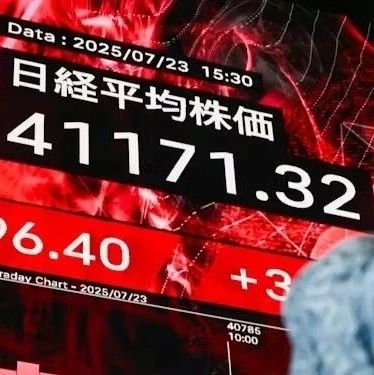
日经平均股指大涨3.51%,汽车股反攻
日经中文网· 2025-07-23 07:26
Core Viewpoint - The recent agreement between the US and Japan on a 15% reciprocal tariff is seen as a positive surprise, boosting market sentiment and leading to a significant rebound in Japanese stocks, particularly in the automotive sector [1][2]. Group 1: Agreement Details - The US will implement a 15% reciprocal tariff on Japan, while Japan will invest $550 billion in the US and open its markets for rice and automobiles [2]. - The initial plan was to impose a 25% tariff on Japanese imports starting August 1, but the new agreement is viewed positively for Japanese companies, allowing them to absorb the lower tariff rate [2][3]. Group 2: Market Reaction - Following the announcement, the Nikkei index surged by 1,396 points, closing at 41,171 points, marking a 3.51% increase, the highest in about a year [1]. - Automotive stocks, which had been heavily sold off, saw strong rebounds, with Toyota's stock rising by 13.65% and Honda by 10.34% [3]. - Financial stocks also experienced significant gains, with Mitsubishi UFJ Financial Group up 4.67% and Sumitomo Mitsui Financial Group up 5.52% [3]. Group 3: Future Outlook - Analysts believe this agreement could mark a turning point in market dynamics, with July 23 potentially being remembered as a key historical date [5]. - The upcoming earnings season is expected to bring more positive outlooks from companies, further supporting market growth [3].
【期货盯盘神器专属文章】CBOT农产品晚间分析:美豆价格回落,贸易协议能否成为新的支撑点?美玉米价格波动加剧,天气问题会否引起空头回补?
news flash· 2025-07-21 13:04
Core Insights - The article discusses the recent decline in soybean prices and questions whether trade agreements can provide new support for the market [1] - It highlights increased volatility in corn prices, raising concerns about whether weather issues might trigger short covering [1] Group 1: Soybean Market - Soybean prices have experienced a downturn, prompting discussions on potential support mechanisms such as trade agreements [1] - The impact of trade agreements on soybean prices remains uncertain, indicating a need for close monitoring of market developments [1] Group 2: Corn Market - Corn prices are showing heightened volatility, which could be influenced by weather-related factors [1] - There is speculation that adverse weather conditions may lead to short covering among traders, affecting overall market dynamics [1]

美联储罕见持续呛声,大A又要受牵连了!
Sou Hu Cai Jing· 2025-07-17 07:20
Group 1 - The core message from the Federal Reserve's John Williams indicates that the impact of tariffs on the economy will soon become apparent, leading to a slowdown in economic growth and a cautious stance on monetary policy [3][12] - The market's reaction to macroeconomic changes, such as tariffs and economic slowdown, will ultimately be reflected in trading behaviors within capital markets [3][12] Group 2 - Ordinary investors often focus on surface-level news and fail to recognize the true actions of market participants, which can lead to anxiety over trading decisions [5][10] - Two case studies illustrate the difference in trading behaviors: "Shenzhou Cell" showed clear institutional involvement in short covering, while "Hua Dong Pharmaceutical" appeared to be driven by short-term funds [6][9] Group 3 - Quantitative data can reveal market patterns, with specific indicators showing the level of institutional activity in trading behaviors [11][12] - Understanding how funds will respond to macroeconomic factors is crucial for determining investment returns, rather than solely focusing on the economic indicators themselves [12][14] Group 4 - Recommendations for investors include avoiding being swayed by surface news, distinguishing between market noise and real signals, and valuing quantitative data in trading behavior analysis [16]

Duolingo Stock Posing Attractive Entry Points for Bulls
Schaeffers Investment Research· 2025-07-16 18:20
Core Insights - Duolingo Inc's shares have experienced a decline of 4.7%, currently priced at $360.67, marking the eighth consecutive weekly loss and a significant drop from the record high of $544.93 on May 14, although still showing an 11% year-to-date gain [1] Group 1 - The stock is approaching its 200-day moving average, indicating a historically bullish signal for potential buyers [2] - Duolingo's stock is within 0.75 of the trendline's 20-day average true range (ATR), having spent over 80% of the last 10 days and two months above this level. In the past three years, similar conditions led to an average gain of 26.2% one month later, potentially bringing the stock back to $455 [3] Group 2 - Short interest has increased, now representing 6.1% of the stock's available float, suggesting potential for a short squeeze if the stock rebounds [4] - The 50-day put/call volume ratio of 1.67 indicates a higher level of pessimism among options traders, ranking above 93% of readings from the past year, which could provide tailwinds for the stock [4]


【期货热点追踪】丰产预期抑制抄底买盘和空头回补,CBOT大豆价格能否站稳10关口?
news flash· 2025-07-15 02:33
Core Viewpoint - The expectation of a bumper harvest is suppressing both bottom-fishing buying and short-covering in the soybean market, raising questions about whether CBOT soybean prices can stabilize above the $10 mark [1] Group 1 - The anticipation of high yields is impacting market dynamics, leading to reduced buying interest from investors looking to capitalize on lower prices [1] - Short-covering activities are also being restrained due to the prevailing outlook of abundant supply in the soybean market [1] - The critical price level of $10 for CBOT soybeans is under scrutiny as market participants assess the balance between supply expectations and demand [1]