
结构性牛市

Search documents
铜的结构性牛市
2025-12-01 16:03
摘要 受关税情绪改善和 AI 投资远期消费预期的推动,铜价在经历 KK 事件干 扰后反弹,但因缺乏持续利好兑现,价格在接近历史新高时开始调整, 目标价位设定在 83,000 元/吨,旨在挤出 AI 叙事泡沫。 美国库存累积对伦敦和中国市场产生虹吸效应,影响市场交易行为。智 利国家铜业公司 Codelco 签署 2026 年长单深水报价大幅提升,表明贸 易商押注 COMEX 价格持续高于 LME 价格。 中国原材料联合谈判小组计划降低 2026 年度冶炼厂产能负荷 10%以上, 可能导致短期供应紧张,共同驱动近期铜价破位上行,显示结构性缺口 行情仍然存在。 尽管全球铜供应总量可能在 2026 年保持平衡,但由于下游消费和供应 均存在弹性,实际缺口未必显现,然而,关税威胁、Codelco 高额长单 和中国冶炼厂减产等事件引发了对结构性短缺的关注。 Codelco 大幅提高 2026 年长单深水报价,贸易商预期 COMEX 价格将 持续高于 LME 价格,导致大量货物将流向美国市场,锁定部分供应,加 剧其他地区供应紧张。 Q&A 2025 年铜市场的结构性牛市是如何形成的? 2025 年的铜市场经历了显著的波动,形 ...
ETF日报:中长期看黄金上涨的核心驱动因素仍未改变,关注黄金基金ETF和黄金股票ETF
Xin Lang Ji Jin· 2025-11-26 14:26
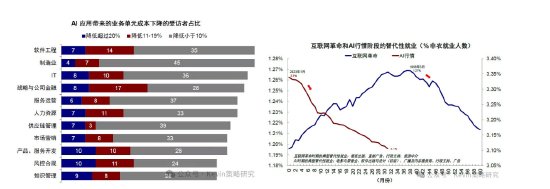
Market Overview - A-shares experienced fluctuations with the Shanghai Composite Index down 0.15% and the Shenzhen Component Index up 1.02% [1] - The overall trading volume in the Shanghai and Shenzhen markets was 1.7972 trillion yuan, a decrease of 29 billion yuan from the previous day [1] - Technology sectors showed strong performance, particularly in communications, artificial intelligence, and consumer electronics, while military, oil, and gaming sectors lagged [1] Investment Sentiment - The risk appetite in the market is currently neutral, with over 3,500 stocks declining [1] - The market is stabilizing after a decline last week, with H-shares showing a higher recovery [2] - The expansion of excess liquidity and sustained investor optimism are seen as key drivers for the ongoing bull market [2] AI and Technology Sector - Google is entering competition with Nvidia by negotiating with Meta for the use of TPU chips, potentially capturing 10% of Nvidia's annual revenue [3] - Alibaba's cloud business exceeded expectations with a 34% year-on-year revenue growth, and AI-related products have seen triple-digit growth for nine consecutive quarters [4] - The demand for AI applications is leading to significant cost savings across various industries, with estimates suggesting a reduction of 9-11% in costs [4] Economic Indicators - Recent comments from U.S. Federal Reserve officials indicate a rising expectation for interest rate cuts, with the likelihood of a 25 basis point cut in December increasing from 40% to 80% [6] - The bond market is showing weakness despite favorable conditions, with the 30-year treasury yield rising by 2.2 basis points [9] Geopolitical Developments - U.S. President Trump is advancing a new peace plan for Ukraine, with ongoing negotiations and potential concessions from Russia [8] - The geopolitical landscape continues to influence market dynamics, particularly in safe-haven assets like gold, which has recently surpassed $4,100 per ounce [7]



11月26日大盘简评
Sou Hu Cai Jing· 2025-11-26 10:35
Market Overview - The A-share market experienced fluctuations today, with the Shanghai Composite Index down by 0.15% to 3864.18 points, while the Shenzhen Component Index rose by 1.02%, and the ChiNext Index increased by 2.14% [1] - The total trading volume in the Shanghai and Shenzhen markets was 1.7972 trillion yuan, a decrease of 29 billion yuan compared to the previous day [1] - Technology sectors showed strong performance, particularly in communications, artificial intelligence, and consumer electronics, while sectors like oil and gaming lagged behind [1] Investment Sentiment - The overall risk appetite in the market is neutral, with more than 3,500 stocks declining [1] - Small-cap stocks underperformed compared to large-cap stocks, and growth stocks outperformed value stocks, indicating a preference for growth-oriented investments [1] Structural Market Dynamics - Despite a slight stabilization in the A-share market since last Friday's decline, the H-share market has shown a higher degree of recovery [1] - The primary drivers for the A-share market's upward movement are the expansion of excess liquidity and sustained investor optimism, suggesting that the bull market is not over yet [1] Equity Market Insights - The outlook remains cautiously optimistic for the equity market, with a structural bull market anticipated, focusing on sectors with growth potential and dividend yields [2] - Key sectors to watch include AI, anti-involution, and exports, with recommendations for specific ETFs in communications, chips, and renewable energy [2] Bond Market Analysis - The bond market has shown weaker performance than expected, despite favorable conditions such as lower PMI and ongoing deflationary pressures [3] - The yield on 30-year government bonds has increased by 2.2 basis points, indicating a lack of strong buying momentum [3] - Future movements in the bond market may depend on the central bank's decisions regarding interest rate cuts, with the potential for delayed easing due to manageable growth targets [3]
研究所日报-20251125
Yintai Securities· 2025-11-25 02:56
Group 1 - The core viewpoint of the report indicates that the Chinese stock market is entering a "slow bull market" phase, with expectations of a 30-40% increase in key indices by the end of 2027, driven by policy support, profit growth, and valuation recovery [8] - The report highlights that 800 listed companies have seen significant shareholder increases totaling 115.82 billion yuan, a year-on-year increase of 44.69%, with transportation and banking sectors showing the highest increases [3] - The report notes that the MSCI China index has rebounded 80% from its 2022 low, although it has faced four major pullbacks, indicating a volatile recovery path [8] Group 2 - The report emphasizes that the Chinese stock market is transitioning from a "hope" phase to a "growth" phase, with profit realization becoming a key driver [8] - It mentions that the expected EPS growth rate will accelerate to 12% from 2025 to 2027, supported by AI capital expenditure, government policies to reduce internal competition, and increased overseas revenue for Chinese companies [9] - The report states that the valuation of the Chinese stock market is not overvalued, with a forward P/E ratio around 13 times, indicating significant room for valuation recovery compared to global equities [10] Group 3 - The report identifies that domestic capital is structurally migrating towards the stock market, with household financial assets in equities at only 14%, suggesting a potential reallocation space of trillions of yuan [11] - It highlights that retail sentiment indicators are not at extreme levels, leaving room for incremental capital inflows into the market [11] - The report suggests an investment strategy of "buying on dips" and focusing on sectors such as internet/AI technology, services, insurance, and materials [11]
中国银河证券:结构性牛市适配“核心+卫星”策略 建议布局国企、科技、消费三大主题
智通财经网· 2025-11-24 00:57
Group 1 - The core viewpoint is that with the implementation of the "Action Plan for Promoting the High-Quality Development of Public Funds" and the A-share market entering a "slow bull" phase, the market environment has significantly improved, leading to a potential revaluation of active equity funds [1][2] - Despite a weak performance of active equity funds from 2022 to 2024, 2025 is expected to be a crucial turning point, with many active funds showing positive stock selection capabilities and achieving significant excess returns in a structural market [1][2] - The report emphasizes the importance of focusing on thematic investments in state-owned enterprises, technology, and consumption sectors, while also identifying high-scoring individual stocks based on solid fundamentals to uncover stable alpha [1][2] Group 2 - The active fund performance is expected to improve in 2025, with 66% of active funds outperforming the CSI 800 index, particularly those concentrated in advanced manufacturing themes, indicating that a "core + satellite" investment strategy is effective in the current structural bull market [2] - The ETF market has seen a significant breakthrough in both quantity and scale since 2025, with the total ETF scale surpassing 5.7 trillion yuan, an increase of over 2 trillion yuan from the end of 2024, particularly in broad-based and leading industry themes [3] - The report outlines a multi-dimensional ETF quantitative allocation strategy that captures diverse returns, focusing on macro timing strategies, momentum strategies, and advanced techniques to achieve stable risk-adjusted returns in 2026 [4]

暴跌后!A股的天真变了
Sou Hu Cai Jing· 2025-11-24 00:14
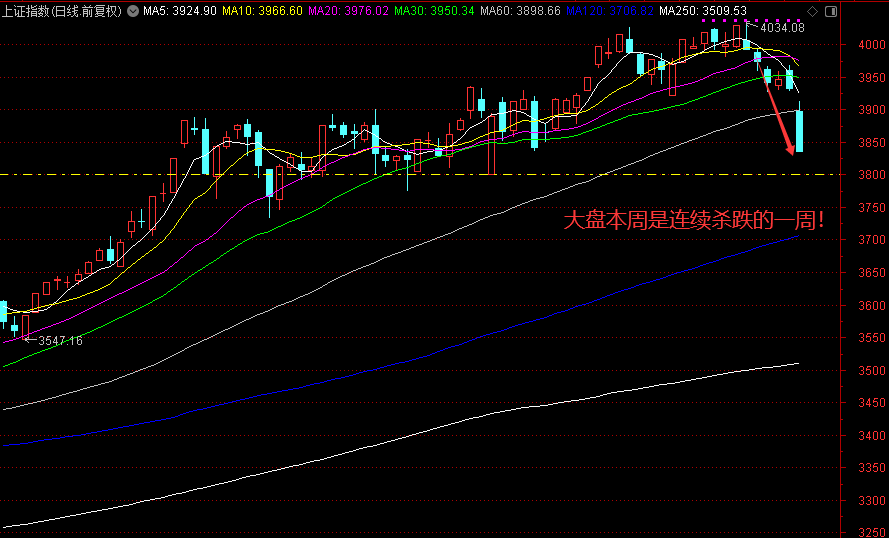
大盘在4000点三次磨蹭后,果然又是横久必跌、再次败阵下来。而本以为周一黑的,但没想的是一周黑,盘面个股从周二到周 五四日,每日都差不多8成个股杀跌,周五更是超过九成的杀跌,且还是暴风雨的重挫。 而经过周五的杀跌,很多人的心态都炸了。龙轩身边有部分朋友就很沮丧,有的说把全年的利润都打没了、有的则直接说这轮 不是牛市、还有人被套较深,咨询龙轩怎么办? 对此,龙轩之前就说这是结构性的牛市,因此对于本周的持续杀跌,我们要分开来看。另外就是仓位的问题,只要不是重仓 的,其实本周这种级别的杀跌根本就是小儿科。 首先科技股方面,这是市场天,而经过周五暴跌后,龙轩认为天已经变了。主要导火线之一就是美股科技也在全线回落,且像 软银等机构都开始全线清仓英伟达,说明机构对后市科技的谨慎,美股闪迪周四更是一夜暴跌20%! 但当前这些板块最大的问题是,阶段性涨幅巨大,很多个股从4月贸易战地点算起,都是大几倍、甚至十几倍的涨幅,这把未 来几年的业绩预期都打满了。 而2020-2021新能源迎来戴维斯双击的时候,也是出现如此爆发的。当时机构也普遍看好业绩,但过后大家都知道迎来了杀估 值,然后只有宁王、阳光电源等少数龙头今年走出。当前的A ...
A股:大涨前的最后砸盘,大家做好准备,不出意外,周一,股市会迎来新行情
Sou Hu Cai Jing· 2025-11-23 18:04
当前这轮下跌,从市场结构和资金行为角度看,更接近于: 在阶段性牛市框架下,高位品种的集中出货 + 指数维稳下的结构性换手。 不是典型的流动性危机式崩盘,而是: 通过"指数护住、个股先跌"的方式, 实现高位筹码向后手资金、尤其是中小投资者的有序转移, 为后续一轮指数级别的反弹乃至趋势延伸,腾出"空间"和"换手基础"。 "最后砸盘"更多是盈利兑现+筹码再分配的技术动作,而不是趋势逆转的根本性信号。 二、市场表象与核心差异:指数没怎么跌,持股体验很差 1. 指数层面:被权重股"托着"走 最近一段时间,上证指数在银行、保险、白酒等权重板块的轮番拉升下,表面波动有限: 银行、保险:估值在1倍PB附近,处于"政策维稳+高股息"功能性角色; 白酒、部分消费龙头:在盈利相对稳定+情绪修复下,阶段性担当"护盘工具"。 结果是: 指数回撤不深,看上去"风险不大"; 但权重护盘掩盖了中小市值、高弹性品种的持续阴跌。 2. 个股层面:提前下跌 + 指数跌时再补刀 这次大家难受在两点: 很多个股从 9 月起就开始阴跌,尤其是高位的科技资产; 当指数这几天开始补跌时,个股并不是提前跌完,而是"继续大跌"——体验远比指数曲线惨烈。 市场结 ...

牛市还在吗,如何应对市场下跌?
雪球· 2025-11-21 13:01
Core Viewpoint - The article discusses the current phase of the A-share market, analyzing it through the lens of the classic bull market three-stage theory, and emphasizes the importance of balancing offensive and defensive strategies in investment as the market transitions from valuation recovery to performance-driven growth [4][6][25]. Group 1: Bull Market Phases - The bull market is divided into three stages: valuation recovery, performance-driven growth, and emotional-driven bubble [6][7]. - The first stage, characterized by policy shifts and risk appetite recovery, has been completed as of October 2024, with the market returning to historical valuation levels [7][9]. - The second stage, currently in progress, focuses on performance verification, with A-share companies' profits growing by 5.4% year-on-year in the first three quarters of 2025, and significant growth in sectors like TMT and manufacturing [9][10]. Group 2: Sector Performance - The TMT sector showed strong performance, with electronic profits up 45.3% year-on-year, and AI-related indices seeing profits increase by 83.3% [10]. - The midstream manufacturing sector also performed well, with profits in the power equipment and new energy sectors growing by 52.5% [10]. - The energy and materials sector benefited from policy changes, with industrial metals and precious metals seeing profit increases of 45.2% and 58.7%, respectively [10]. Group 3: Market Dynamics and Strategy - The current market dynamics suggest a need for a balanced strategy, moving from an aggressive "only attack" approach to a more defensive "balance attack and defense" strategy [18][25]. - A suggested allocation strategy includes maintaining a 50% equity position, diversifying across growth, stable, high-dividend, and cyclical sectors to mitigate risks [19][20]. - The article warns that if the market enters the third phase characterized by bubble-like valuations and extreme market sentiment, a shift to a defensive strategy will be necessary [22][23]. Group 4: Long-term Considerations - The article highlights the importance of sustainable performance growth, questioning whether the current high growth in tech stocks can be maintained amid macroeconomic challenges [13][14]. - It draws parallels with the U.S. market's slow bull experience, emphasizing the need for solid earnings support for a sustainable bull market [14]. - The article concludes that for the A-share market to transition into a long-term bull market, several factors, including macroeconomic stability and improved corporate governance, must be addressed [16][25].

杨德龙:大盘走势持续震荡调整 不会改变中长期向上走势
Xin Lang Ji Jin· 2025-11-20 10:19
Group 1 - The market is experiencing fluctuations around the 4000-point mark, indicating significant divergence between bulls and bears as investors take profits towards year-end [1][2] - This bull market is characterized by a "dumbbell" structure, with low valuation, high dividend sectors like banks driving the index up, while tech innovation sectors such as AI and semiconductors show strong performance [2][3] - The current bull market is supported by policy initiatives and capital inflows, with A-shares and H-shares being seen as undervalued compared to US stocks, attracting global investment [3] Group 2 - The ongoing bull market is expected to stimulate consumer spending, with a potential shift from a structural bull market to a comprehensive bull market by 2026, enhancing consumer confidence and economic growth [4] - The evolution of the bull market is anticipated to follow a sequence where tech stocks lead, followed by mid-cap stocks, and finally traditional sectors, with a focus on balanced portfolio allocation [5] - In the tech sector, the demand for computing power is expected to rise, with significant partnerships highlighting the strategic importance of computing infrastructure, suggesting investment opportunities in related technologies [6][7]
宗馥莉“消耗”娃哈哈,千亿外卖没输家,巴菲特也有“困境”...热点商业大事件全解析
Sou Hu Cai Jing· 2025-11-20 10:03
Group 1 - The article highlights the dynamic nature of the market, emphasizing the interplay between capital, business, and consumer choices in the digital economy [1] - It discusses the structural bull market and the rotation of sectors, indicating a growing trend in global tech stocks and emerging new directions [2] - The article notes the ongoing competition in the food delivery market, suggesting that major players have gained valuable insights and strategic advantages despite the intense rivalry [15] Group 2 - The article points out the challenges faced by Wahaha, particularly regarding brand trust and profit margins for distributors, which are significantly lower than industry averages [6] - It mentions the shift in consumer behavior towards self-directed travel and the decline of traditional packaged tours, indicating a fundamental change in the tourism industry [18] - The rise of the rental market is highlighted as a new consumption trend, where renting is becoming a primary mode of consumption rather than a supplementary option [20][21] Group 3 - The gaming industry in China is experiencing a boom, with domestic companies focusing on high-quality game development and international expansion, supported by favorable policies [24] - The article discusses the structural nature of the current stock market, where certain sectors, particularly technology and banking, are performing well while others lag behind [26] - It raises concerns about Berkshire Hathaway's cash reserves and investment strategy, particularly in relation to the missed opportunities in the tech sector [28]
