经济衰退

Search documents
昨夜,“史诗级”暴跌
Shang Hai Zheng Quan Bao· 2025-04-04 01:25
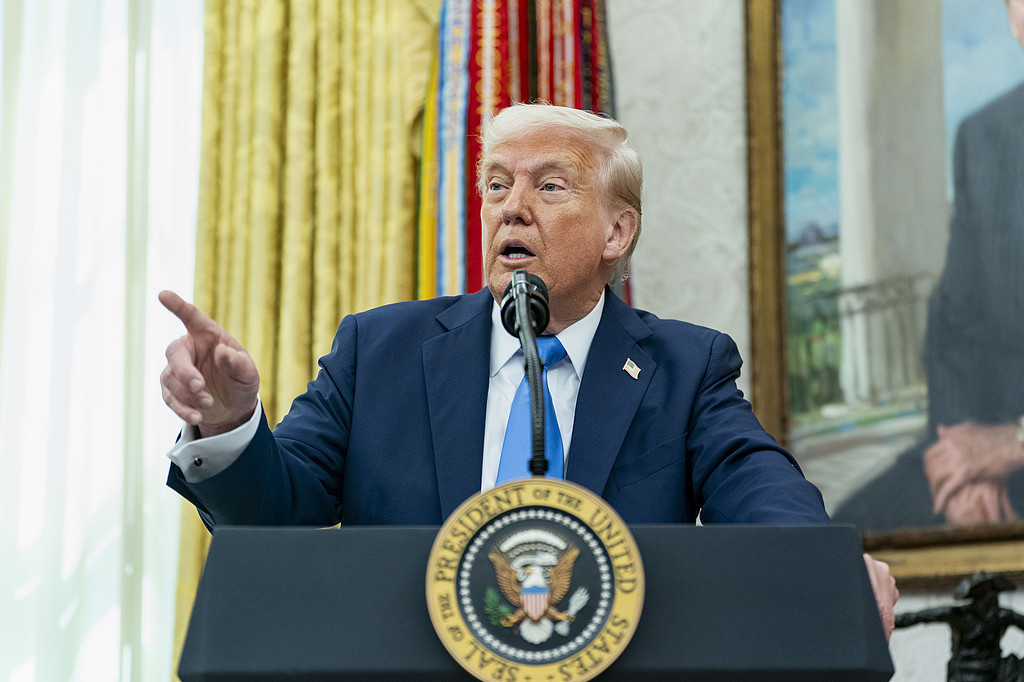
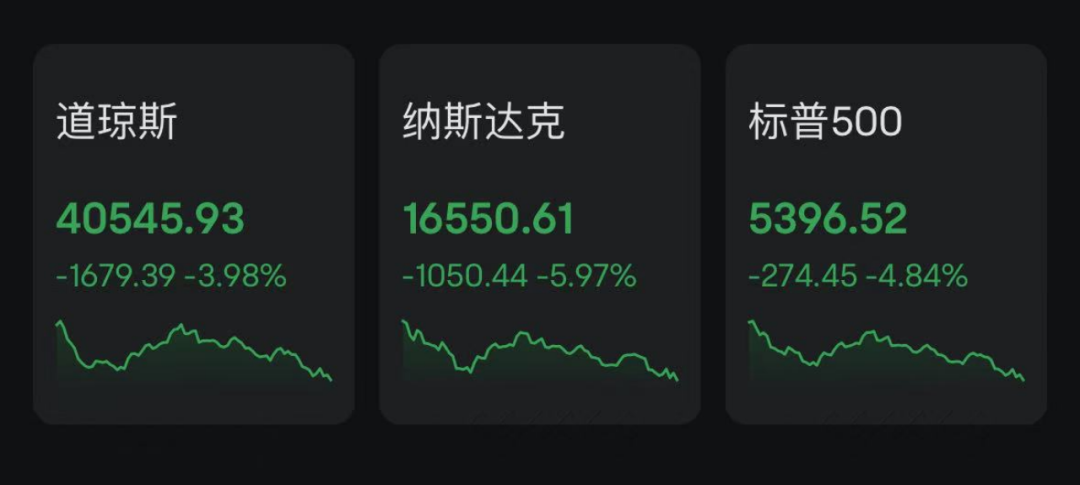
当地时间周四,特朗普"对等关税"措施血洗市场,美股主要指数暴跌,刷新近5年来最大单日跌幅。纳指跌5.97%,创2020年3月以来最大单日跌幅;标普 500指数跌4.84%,道指跌3.98%,均为2020年6月以来的最大单日跌幅。其中,标普500指数中超过80%的公司股价下跌,超过三分之二的公司股价下跌至 少2%,市值总计蒸发约2.5万亿美元。 大型科技股全线重挫,七巨头(包括苹果、亚马逊、英伟达、Meta、特斯拉、谷歌、微软)市值一日蒸发约1.03万亿美元(约合人民币7.5万亿元)。 特朗普关税政策落地后,市场出现恐慌性抛售,股市、汇市、商品市场遭到全线冲击,投资者对经济衰退的担忧进一步升温。摩根大通首席经济学家卡斯 曼表示,如果特朗普政府宣布对美国贸易伙伴征收的关税持续,将可能在2025年将美国乃至全球经济推入衰退。卡斯曼表示:"今年全球经济衰退的风险 从40%提高到了60%。" 美股三大股指创近5年来最大单日跌幅 美元指数尾盘跌超1.6%,报102.073点。 十年期美债收益率盘中跳水超10个基点,半年来首次下破4.0%,日内交投于4.0984%—3.9966%区间。 欧洲三大股指收盘全线下跌,德国DAX ...




债券动态跟踪报告:玫瑰园里的“贸易革命”对大类资产的影响
Ping An Securities· 2025-04-03 08:13
Group 1: Report Industry Investment Rating No relevant content provided. Group 2: Core Views of the Report - Trump set a 10% benchmark tariff for all countries and higher reciprocal tariffs for 50 countries with large trade deficits with the US, which account for 70% of the US total imports in 2024. After the reciprocal tariff increase, the average US tariff rate will rise by 27%, significantly increasing the risk of US economic recession and secondary inflation. This will also increase China's export pressure, and China's export growth rate may turn negative in 2025 [3]. - The performance of US major asset classes remains uncertain, depending on the US economic resilience, other countries' counter - measures, etc. Other countries may choose monetary easing and currency depreciation, which will support the US dollar to gradually bottom out, and US Treasury bonds may tend to flatten. Gold and inflation - protected bonds are favored, while US stocks are bearish, and there are both bullish and bearish impacts on the US dollar and US Treasury bonds [3]. - In the short term, domestic risk - aversion sentiment prevails in China. The bond market may break through in April, and policy statements should be monitored. The export pressure caused by tariffs has increased significantly, leading to a pattern of strong bonds and weak stocks in the short term [3]. Group 3: Summary by Related Catalogs Trump's Tariff Policy Details - On April 2, Trump set a 10% benchmark tariff for all countries and higher reciprocal tariffs for 50 countries with large trade deficits. The reciprocal tariffs are "equivalent" but calculated by considering factors such as tariffs, unfair taxes, non - tariff barriers, and exchange - rate manipulation. Canada and Mexico are excluded from the reciprocal tariff list, and for China, the reciprocal tariff may be cumulative with the previous 20% tariff due to the fentanyl issue, reaching 54% [3][5]. Impact on the US Economy - The reciprocal tariff increase will raise the US average tariff rate by 27%, pulling up core PCE inflation by 2.7% in the next year and dragging down the US real GDP by 1.1% - 2.4%. It also increases the risk of recession and the possibility of wage - inflation spiral and secondary inflation, which restricts the Fed's dovish attitude [3][9][10]. Impact on China - The US reciprocal tariff means greater export pressure for China. It is estimated that China's export growth rate in 2025 may turn negative. The additional 26% tariff on China compared with other major US trading partners may lead to a 4.6 - percentage - point decline in China's export year - on - year and a 0.9 - percentage - point drag on GDP. Considering the global manufacturing PMI decline, the export growth rate may be even lower [3][11]. Impact on Asset Classes - For US assets, the performance is uncertain. Other countries' possible monetary easing and currency depreciation may support the US dollar to bottom out, and US Treasury bonds may flatten. Gold and inflation - protected bonds are favored, while US stocks are bearish, and there are both bullish and bearish impacts on the US dollar and US Treasury bonds [3][22]. - In China, in the short term, risk - aversion sentiment prevails, resulting in a pattern of strong bonds and weak stocks. The bond market may break through in April, and the 10 - year Treasury bond interest rate is expected to be in the range of 1.7% - 1.85% [3][23]. Market Pricing Pattern Changes - The market's pricing pattern for tariff news has changed from a strong - dollar, weak - stock - and - bond scenario to a strong - Treasury - bond, weak - dollar - and - US - stock scenario, which is a shift from dollar - safe - haven trading to US - recession trading. The reasons include increased policy uncertainty, a weaker - than - expected tax - cut framework, and excessive tariff increases on Mexico and Canada [20].

突然,盘中大跳水!超16万爆仓!
券商中国· 2025-04-03 06:26
Core Viewpoint - The article discusses the significant impact of President Trump's new tariff policy on risk assets, particularly the cryptocurrency market, leading to a sharp decline in prices and a surge in gold prices as investors seek safe-haven assets [1][4][7]. Group 1: Cryptocurrency Market Reaction - On April 2, President Trump announced "reciprocal tariffs," exceeding market expectations, which led to a massive sell-off in risk assets, including cryptocurrencies [1][4]. - Bitcoin plummeted over $4,000, dropping from $86,900 to $82,100, while Ethereum fell from $1,950 to $1,790 [1][4]. - The total liquidation in the cryptocurrency market reached $500 million within 24 hours, affecting over 160,000 traders [1][5]. Group 2: Gold Market Surge - Concurrently, funds flowed into the gold market, with spot gold prices surpassing $3,160 per ounce, setting a new historical high [2][7]. - Analysts suggest that Trump's aggressive tariff policies may slow U.S. economic growth and increase inflation, driving investors towards gold as a hedge against instability [7][8]. Group 3: Economic Implications of Tariffs - Trump's tariffs, which include a 10% baseline tariff and higher rates for specific countries, are expected to raise consumer prices and potentially lead to a recession, with a 40% probability of economic downturn predicted by JPMorgan [4][8]. - The tariffs could increase U.S. personal consumption expenditure prices by 1.7% to 2.1%, depending on retaliatory measures from other countries, and could reduce actual GDP growth by 0.6% to 1% [8]. Group 4: Global Reactions to Tariffs - The European Union and various trade partners have expressed intentions to retaliate against the U.S. tariffs, indicating a potential escalation in trade tensions [9][10][11]. - Leaders from Australia, Japan, and South Korea have voiced concerns over the implications of the tariffs on their economies and are considering countermeasures [10][11].
LSEG跟“宗” | 美元金价再创新高见3100 美股4/5月再现大跌
Refinitiv路孚特· 2025-04-02 05:47
Core Viewpoint - The article discusses the recent trends in gold prices, highlighting the potential for gold to reach $3,200, influenced by various factors including U.S.-China relations, interest rate movements, and the economic environment in the U.S. [4][28] Summary by Sections CFTC Data and Market Sentiment - The article emphasizes the importance of the CFTC data released weekly, which reflects market sentiment towards precious metals and short/medium-term price judgments [3][4]. Gold Price Trends - As of March 31, international gold prices reached a new high of $3,100, with a potential to stabilize around $3,200 before further movements depending on market focus [4][28]. - The article notes that gold prices have risen significantly since last November, when they dropped to around $2,590 [4][28]. Fund Positioning - As of March 25, net long positions in COMEX gold decreased by 3.7% to 599 tons, marking the 76th consecutive week of net long positions [5][9]. - The article indicates that the net long positions in silver also fell, while platinum saw a significant increase in short positions [5][9]. Market Dynamics - The article highlights that despite rising gold prices, there is currently a lack of excessive greed in the market, which could indicate further upward potential [4][27]. - It also mentions that the performance of gold and other risk assets may be affected by fluctuations in the U.S. stock market [4][28]. Economic Indicators - The article discusses the probability of the U.S. Federal Reserve cutting interest rates in June, which could further influence gold prices [26][28]. - It suggests that the market is currently pricing in multiple rate cuts, which could lead to increased volatility in the dollar and subsequently benefit gold prices [26][28]. Future Outlook - The article predicts that geopolitical risks and economic conditions will play a crucial role in shaping the future of gold prices, with a particular focus on the potential for a significant downturn in copper prices due to changing demand dynamics [19][29]. - It concludes that the next 12 to 24 months will be critical for the U.S. economy, especially if inflation pressures resurface alongside interest rate cuts [32][28].

中辉有色观点-2025-04-02
Zhong Hui Qi Huo· 2025-04-02 01:51
中辉有色观点 | 品种 | 核心观点 | 主要逻辑及价格区间 | | --- | --- | --- | | 黄金 | 强劲 | 靴子即将落地,对等关税幅度或超预期,避险情绪高涨,俄乌谈判停滞,博弈 加剧,未来特朗普变数仍然较大,长期不确定困扰仍在,中长期看全球旧秩序 | | | | 破坏,黄金配置价值长存,长多可介入【715-744】 | | 白银 | 高位震荡 | 白银需求受多国刺激经济、美国欧洲中国等货币政策预期宽松等影响有增量, 但是短期情绪过度反应,短期需求面有反复,商品属性比重较多,白银品种弹 | | | | 性大,关注 8550 附近表现,如果冲破,则新的交易空间打开。【8350-8550】 | | 铜 | 承压回落 | 特朗普关税冲击增加,美国数据疲软,经济衰退和需求不足担忧重现,短期多单止 盈落袋增加,铜延续回落,跌破 8 万整数关口支撑,建议投机等待充分回调后再背 | | | | 靠均线入场,中长期铜上行趋势仍在,沪铜关注区间【79000-81000】 | | 锌 | 回落 | 有色板块回调,海外锌矿复产,锌精矿加工费继续上移,锌震荡回落,前期高位空 单继续持有,部分可止盈落袋,中长期看, ...
“4月2日”前夜止跌,美股在赌什么?
Hua Er Jie Jian Wen· 2025-04-02 00:47
"4月2日"大限将至,美股的平稳走势似乎显露出,投资者正在押注明确的贸易政策有助于稳定市场。 隔夜美股主要股指有所回落,但远未达到市场预期经济走向衰退时的程度。虽然标普500指数较2月份创 下的历史高点下跌约8%,但在过去两天已经回升,延续了几周前从低点反弹的趋势。 投资者之所以保持相对乐观,主要基于几点理由: 相信特朗普不会坚持任何会严重拖累经济增长的关税政策。 认为除非看到更明显的经济衰退信号,否则不会押注衰退风险。 相信更多关于特朗普关税计划的信息将减少市场的不确定性。 值得注意的是,虽然市场表现出乐观情绪,但是华尔街大行仍难掩忧心。并且即便更多关税信息正在得 到确定,市场也承认依旧难以把握特朗普政府真正的政策意图,有分析认为关税的"不确定性"可能成为 特朗普团队的谈判筹码。 此前摩根士丹利分析曾认为,4月2日或许不会带来市场期待的确定性,建议关注两个关键问题:公告是 否能明确关税政策,将其从未知变为已知;以及关税增加会否进一步恶化经济前景。 市场困境:特朗普到底想要什么? 投资者面临的一个重大难题是他们仍不清楚特朗普对关税的真实意图。 如果关税确实旨在筹集大量收入并推动制造商在美国建立生产基地,那么进 ...
特朗普的“解放日” 美国衰退“倒计时”?
Xin Hua She· 2025-04-01 09:44
Group 1 - The core viewpoint of the articles highlights concerns over President Trump's proposed tariffs, which are seen as potential triggers for a new economic recession in the U.S. [2][3][4] - The S&P 500 and Nasdaq indices experienced their worst quarterly performance in over two years, with Nasdaq down 10.4% and S&P 500 down 4.6% in Q1 2023 [3] - Moody's chief economist Mark Zandi increased the probability of a U.S. recession occurring this year to 40%, up from an earlier prediction of 15% [4] Group 2 - Goldman Sachs raised the probability of a U.S. recession in the next 12 months to 35%, up from 20%, and revised its forecast for U.S. economic growth in 2025 down to 1.5% from 2.0% [4] - Trump's tariffs on imported cars and the upcoming "reciprocal tariffs" are expected to exacerbate economic conditions, leading to higher inflation and reduced consumer confidence [5][8] - The average tariff rate in the U.S. is projected to increase by 15 percentage points this year, significantly higher than previous estimates [5]
中泰期货晨会纪要-2025-04-01
Zhong Tai Qi Huo· 2025-04-01 03:42
交易咨询资格号: 证监许可[2012]112 2025 年 4 月 1 日 | | [Table_Finance] | | | | | | --- | --- | --- | --- | --- | --- | | 联系人:王竣冬 | 2025/4/1 | | 基于基本面研判 | | | | 期货从业资格:F3024685 | 趋势空头 | 震荡偏空 | 震 荡 | 震荡偏多 | 趋势多头 | | 交易咨询从业证书号:Z0013759 | | | | | | | | | 上证50股指期货 | 生猪 | 五债 | | | 研究咨询电话: | | 沪深300股指期货 | 纯碱 | 原油 | | | 0531-81678626 | | 中证500股指期货 | 玻璃 | 十债 | | | | | 碳酸锂 | 烧碱 | 三十债 | | | 客服电话: | | 中证1000指数期货 | 豆粕 | 二债 | | | 400-618-6767 | | 氧化铝 | 铝 | 燃油 | | | | | 焦煤 | 棉花 | 苹果 | | | 公司网址: | | 焦炭 | 沥青 | | | | www.ztqh.com | | 塑料 ...
融达期货宏观日报0401
Hua Rong Rong Da Qi Huo· 2025-04-01 00:40
Economic Indicators - In March, China's manufacturing PMI, non-manufacturing PMI, and composite PMI were 50.5%, 50.8%, and 51.4%, respectively, all showing an increase of 0.3 to 0.4 percentage points from the previous month, indicating a clear economic recovery trend[2] - Goldman Sachs raised the probability of a U.S. recession from 20% to 35% and lowered the 2025 GDP growth forecast from 2% to 1.5%[2] Market Reactions - Following the announcement of a potential 20% special tariff on all imports by President Trump, the Nikkei 225 index fell over 4%, closing below 36,000 points, marking a decline of over 10% from its peak in December[2] - The Hang Seng Index dropped by 1.31%, while the Dow Jones Industrial Average increased by 1.00%[4] Commodity Performance - NYMEX crude oil rose by 3.42% to $71.40, while LME copper fell by 1.07% to $9,690.00[4] - Agricultural products mostly increased, with notable gains in cotton and sugar, while black metals saw declines, with coking coal down by 1.5%[3] Bond Market - The yield on 10-year Chinese government bonds was 1.82%, reflecting a 0.29% increase, while the 2-year yield rose by 2.35% to 1.57%[4] - The U.S. 10-year Treasury yield was at 4.23%, showing a slight decrease of 0.04%[4] Currency Trends - The U.S. dollar index stood at 104.19, with a minor increase of 0.15%[4] - The offshore RMB exchange rate against the U.S. dollar was 7.27, reflecting a decrease of 0.06%[4]
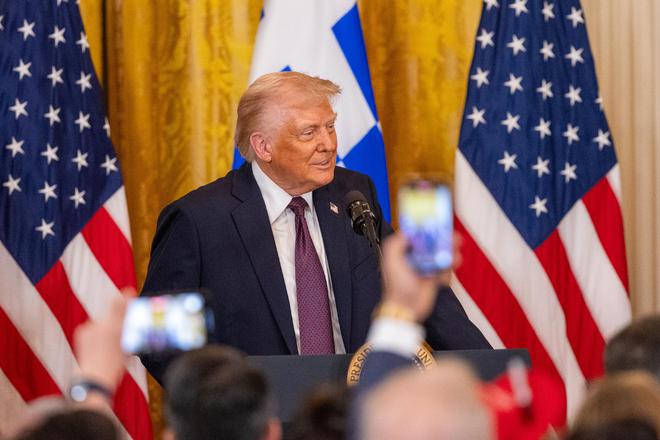
寻求第三次总统任期?特朗普称“有办法可以做到”
Mei Ri Jing Ji Xin Wen· 2025-03-31 03:11
Group 1 - Trump has expressed the possibility of seeking a third presidential term, stating that it is too early to consider it seriously, and mentioned that "there are ways to do it" [1] - The 22nd Amendment of the U.S. Constitution limits presidents to two four-year terms, making it extremely difficult to overturn this amendment, requiring a two-thirds majority in both houses of Congress and approval from three-fourths of state legislatures [1] - Trump, at the age of 78, became the oldest president to assume office, surpassing Biden's record [1] Group 2 - Trump has run for president three times, first winning the election in 2016 and later losing in 2020, before announcing his candidacy again in 2022 [2] - Trump's political career began in 2015 when he announced his candidacy as a Republican, and he was officially nominated as the Republican candidate for the 2024 election in July 2024 [2] Group 3 - Concerns over a potential "Trump recession" have significantly impacted the U.S. stock market, with the market capitalization of the "Tech Seven" dropping by $2.7 trillion in three weeks [3] - Analysts warn that Trump's escalating tariff policies could lead to a recession or stagflation, drawing parallels to the policies of President Hoover during the Great Depression [3] - Goldman Sachs reported that the price-to-earnings ratio of the S&P 500 has increased by 25% over the past two years, indicating a potentially risky valuation for investors, with the current P/E ratio around 28 times [3] Group 4 - The cyclically adjusted P/E ratio of the S&P 500 is approximately 35 times, and historically, when this ratio exceeds 30, major U.S. stock indices have experienced declines ranging from 20% to 89% [4]