供给侧改革

Search documents
中原期货晨会纪要-20250714
Zhong Yuan Qi Huo· 2025-07-14 07:32
1. Report Industry Investment Rating No information about the report industry investment rating is provided in the given content. 2. Core Viewpoints of the Report - The global trade pattern is at a critical turning - point in 2025. The US's erratic tariff policies are driving the global trade system towards greater diversification, and the influence of the US in global trade is gradually weakening [7]. - Some economic policies and events, such as the extension of the EU's suspension of counter - measures against US tariffs, the possible implementation of US tariffs on other countries, and the acceleration of local special bond land acquisition projects, are having an impact on the market [8]. - Different sectors in the market, including agriculture, energy, industry, and finance, are showing various trends and challenges, and investment strategies need to be adjusted according to different situations [10][11][19] 3. Summary by Relevant Catalogs 3.1 Commodity Index Daily Market Tracking - **Macro Indicators**: On July 14, 2025, compared with July 11, the Dow Jones Industrial Average dropped by 279.13 points (-0.625%), the Nasdaq Index decreased by 45.13 points (-0.219%), and the S&P 500 declined by 20.71 points (-0.330%). The US dollar index rose slightly by 0.026 (0.027%), while the US dollar against the Chinese yuan (CFETS) remained unchanged [2]. - **Foreign Contracts**: COMEX gold rose by 37.3 (1.119%), COMEX silver increased by 1.45 (3.854%), NYMEX crude oil went up by 1.88 (2.811%), and ICE Brent crude oil rose by 1.54 (2.236%). Some metals like LME copper, LME aluminum, etc., showed small declines [2]. - **Domestic Contracts**: In the metal category, gold and silver prices increased, while copper, zinc, and other metals decreased slightly. In the chemical industry, most products such as coke, plastic, and PTA rose, while some like natural rubber and 20 - number glue declined. In the agricultural products sector, some products like yellow soybean No. 1 and palm oil increased, while others like corn and corn starch decreased [2][4] 3.2 Macro News - Global trade is evolving, with the US's position weakening and emerging economies becoming new growth points. Diplomatic activities, such as the meeting between Chinese Foreign Minister Wang Yi and Russian Foreign Minister Lavrov, are promoting international cooperation [7]. - Domestic economic research and policy - related activities are underway, like the National Development and Reform Commission's research in Hebei and the proposal of interest - rate cuts by a former Fed official [7]. - Trade policies and tariff issues are the focus of international attention, including the possible implementation of US tariffs and the EU's response [8] 3.3 Morning Meeting Views on Major Varieties 3.3.1 Agricultural Products - The peanut market is in a state of weak supply and demand, with prices expected to be slightly strong in the short - term but still on a downward trend. The oil market is trading lightly, with prices expected to fluctuate. Corn prices are under pressure due to factors like wheat substitution, and short - term bearish thinking is recommended [10]. - The price of live pigs has peaked and declined. Egg prices are rising, and there is a certain support for the spot market, but there are still pressures such as production capacity release and delivery [10][11] 3.3.2 Energy and Chemicals - The price of caustic soda is expected to be stable and slightly strong in the short - term, and attention should be paid to the pressure in the range of 2500 - 2600 yuan/ton. The urea market price is stable, and the UR2509 contract should pay attention to the pressure around 1780 - 1800 yuan/ton [11] 3.3.3 Industrial Metals - Copper prices are under pressure due to factors such as the proposed US tariff increase and Fed policy uncertainty. Aluminum prices are supported by low inventory but may be restricted by weak orders and export difficulties. Alumina prices are rising, and attention should be paid to the pressure at the May high [11][13] - The prices of steel products such as rebar and hot - rolled coils are expected to fluctuate, and the prices of ferroalloys are short - term bullish and long - term bearish. The prices of coking coal and coke are expected to be firm in the short - term, and attention should be paid to the pressure levels. The lithium carbonate market is multi - empty intertwined, and band operation is recommended [13][15][16] 3.3.4 Options and Finance - The A - share market has a positive trading sentiment, and the financial sector is expected to be the main driving force in the short - term. Options trading shows certain characteristics, and different investment strategies are recommended for trend and volatility investors [18][21][23]
国泰君安期货所长早读-20250714
Guo Tai Jun An Qi Huo· 2025-07-14 07:01
1. Report Industry Investment Rating No relevant content provided. 2. Core Viewpoints of the Report - This week, both China and the US will release a series of important economic data. In the US, the June CPI and PPI data, as well as the July Michigan Consumer Sentiment Index preliminary value, are highly noteworthy. Economists expect the June CPI to rise 2.7% year - on - year, higher than the previous value of 2.4%, and the core CPI to rise 3% year - on - year and 0.3% month - on - month. Market expectations for a Fed rate cut in July are less than 7%, but an unexpected inflation data may force the Fed to act. In China, the June import and export data, June M2 year - on - year, January - June new RMB loans, and social financing scale increment are all important [8]. - The stock index futures are in a long - position pattern. Last week, the market continued to rise due to expectations of supply - side reform and rumors of the restart of shantytown renovation. The current policy focus on the supply side is conducive to the repair of price indicators and has a positive impact on corporate profits. As long as there is no unexpected negative news, the long - position pattern is expected to continue. However, the trend may be reversed by external risk disturbances or a shift in domestic policies towards structural adjustment [9]. - For various commodities, different trends are predicted, such as gold showing an upward trend in a volatile manner, silver breaking through and rising, and copper prices being under pressure due to weak spot markets [13]. 3. Summary According to Relevant Catalogs 3.1 US and China Economic Data Focus - **US Data**: The June CPI and PPI data are crucial. Economists expect the June CPI to rise 2.7% year - on - year, core CPI to rise 3% year - on - year and 0.3% month - on - month. The July Michigan Consumer Sentiment Index preliminary value also deserves attention. Market expectations for a Fed rate cut in July are less than 7%, but lower - than - expected inflation data may lead to an emergency rate cut [8]. - **China Data**: The June import and export data, June M2 year - on - year, January - June new RMB loans, and social financing scale increment are all worthy of high attention [8]. 3.2 Stock Index Futures - The current market is in a long - position pattern. The core changes last week came from expectations of supply - side reform and rumors of shantytown renovation restart, leading to a joint upward movement of cyclical and growth stocks. The policy focus on the supply side is beneficial for price indicator repair and corporate profit improvement. Without unexpected negative news, the long - position pattern is likely to continue. The trend may be reversed by external risk disturbances or a shift in domestic policies towards structural adjustment. This week, the release of domestic economic data and the impact of mid - year report earnings announcements on growth - style stocks should be monitored [9][10]. 3.3 Commodity Market 3.3.1 Precious Metals (Gold and Silver) - Gold is expected to rise in a volatile manner, and silver is expected to break through and rise. The trend strength of both is 1 [13][19][21]. 3.3.2 Base Metals - **Copper**: The spot market is weak, and prices are under pressure. The trend strength is 0 [13][23][25]. - **Zinc**: It is bearish in the medium - term, with a trend strength of - 1 [13][26][27]. - **Lead**: Supported by peak - season expectations, the trend strength is 0 [13][29]. - **Tin**: The price is weakening, with a trend strength of 0 [13][31][34]. - **Aluminum**: The inventory is low, and the virtual - to - real ratio is high. Alumina requires attention to the inventory accumulation amplitude, and cast aluminum alloy follows the trend of electrolytic aluminum. The trend strength of all three is 0 [13][36][38]. - **Nickel**: The support from the ore end is loosening, and global refined nickel is marginally accumulating inventory. Stainless steel prices are oscillating due to the game between reality and macro factors. The trend strength of both is 0 [13][39][44]. 3.3.3 Energy - related Commodities - **Coke**: A first - round price increase has started, and it is expected to be strong in a volatile manner, with a trend strength of 0 [13][66][68]. - **Coking Coal**: Affected by news, it is expected to be strong in a volatile manner, with a trend strength of 1 [13][66][68]. - **Steam Coal**: The daily consumption is recovering, and the price is stabilizing in a volatile manner, with a trend strength of 0 [13][69][71]. 3.3.4 Other Commodities - **Carbonate Lithium**: The fundamentals show strong supply and weak demand, and macro and warehouse - receipt disturbances may occur repeatedly. The trend strength is 0 [13][45][48]. - **Industrial Silicon**: Attention should be paid to changes in the supply side. The trend strength is 1. Polysilicon is affected by policy disturbances, with increased market volatility, and the trend strength is 0 [13][49][51]. - **Iron Ore**: Supported by macro expectations, it is expected to be strong in a volatile manner, with a trend strength of 0 [13][52]. - **Rebar and Hot - Rolled Coil**: The sector sentiment remains strong, and prices are oscillating in a wide range. The trend strength of both is 1 [13][55][60]. - **Ferrosilicon and Manganese Silicon**: Both are expected to oscillate in a wide range, with a trend strength of 0 for both [13][61][64].
需求的相对不足与绝对不足
Hu Xiu· 2025-07-14 06:24
Group 1 - The core argument of the article is that the issue of demand can be categorized into relative insufficiency and absolute insufficiency, which requires different reform approaches [1] - Relative demand insufficiency indicates that consumers have the money but are unable to find desirable products, necessitating supply-side reforms [1][8] - Absolute demand insufficiency suggests that consumers lack the financial means to purchase goods, indicating a need for demand-side reforms focused on income distribution [1][9] Group 2 - The article highlights the disparity in savings perception across different demographics, where some perceive a surplus of savings while others feel a shortage [2][3][4] - It emphasizes that regardless of demographic differences, the common sentiment is one of "wanting to consume but lacking money" rather than "having money but not consuming" [5] - The article discusses the phenomenon of consumers prioritizing certain types of spending, such as luxury items, even when overall financial resources are limited, illustrating a shift in consumption patterns [6]
盘面整体情绪有所缓和,现货贴水走阔
Zheng Xin Qi Huo· 2025-07-14 05:36
盘面整体情绪有所缓和,现货贴水走阔 研究员:王艳红 投资咨询号:Z0010675 研究员:袁 棋 投资咨询号:Z0019013 第一部分 核心观点 第二部分 氧化铝-产业基本面 第三部分 电解铝-产业基本面 目 录 核心观点 宏观:美国非农就业人数大超预期,7月降息概率迅速下滑;国内以旧换新政策将继续,反内卷和供给侧改革声音出现,对盘面影响较大;美国对 外关税政策出台,比例较前期提升,但后续不确定性仍较大。 氧化铝-产业基本面总结: 电解铝-产业基本面总结: 2.1.1 氧化铝产能:6月在产产能同比增加9.14%,环比增加365万吨 据阿拉丁数据,2025年6月中国氧化铝总产能为11292万吨,同比增加8.56%,环比增加50万吨; 2025年6月中国氧化铝在产 产能为9315万吨,同比增加9.14%,环比增加365万吨。 0.00 2.00 4.00 6.00 8.00 10.00 12.00 14.00 6,000.00 7,000.00 8,000.00 9,000.00 10,000.00 11,000.00 12,000.00 2018-04 2018-09 2019-02 2019-07 2019 ...
宝城期货甲醇早报-20250714
Bao Cheng Qi Huo· 2025-07-14 05:10
Report Summary 1) Report Industry Investment Rating No relevant content provided. 2) Report's Core View - The methanol 2509 contract is expected to run strongly, with short - term and medium - term trends being oscillatory and the intraday trend being oscillatory and strong. The core logic is that after the release of bearish sentiment from the previous sharp correction, a new round of supply - side reform may boost domestic commodity futures, and the rebound in coal futures prices drives the methanol futures to maintain an oscillatory and strong trend [1][5]. 3) Summary by Related Content Price and Trend - The domestic methanol futures 2509 contract closed 0.17% lower at 2376 yuan/ton last Friday night, and is expected to maintain an oscillatory and strong trend on Monday [5]. - For the methanol 2509 contract, the short - term trend is oscillatory, the medium - term trend is oscillatory, and the intraday trend is oscillatory and strong, with a reference view of strong operation [1][5]. Market Supply and Demand - With the continuous release of domestic methanol production capacity, the internal supply pressure is increasing. Overseas shipments are constantly arriving at ports, increasing external supply expectations. The ports are in a inventory - building cycle, while downstream demand has entered the off - season, resulting in a loose supply - demand structure [5]. Market Driving Factors - A new round of supply - side reform may come as the domestic high - level meeting emphasized governing low - price disorderly competition and promoting the orderly exit of backward production capacity, which boosts domestic commodity futures [5]. - The rebound in coal futures prices drives the domestic methanol futures [5].
宝城期货橡胶早报-20250714
Bao Cheng Qi Huo· 2025-07-14 03:43
1. Report Industry Investment Rating - No relevant content provided 2. Core Viewpoints of the Report - For both Shanghai Rubber (RU) and Synthetic Rubber (BR), short - term and medium - term views are "oscillation", while the intraday view is "oscillation with a slight upward bias", and the reference view is "running with a slight upward bias" [1][5][7] 3. Summary by Related Catalogs Shanghai Rubber (RU) - **Market Situation**: On the night of last Friday, the 2509 contract of domestic Shanghai Rubber futures showed an oscillation with a slight downward trend, and the futures price slightly decreased by 0.42% to 14,325 yuan/ton. It is expected that on Monday, the 2509 contract of domestic Shanghai Rubber futures may maintain an oscillation and stabilization trend [5] - **Core Logic**: The recent domestic high - level meeting set the tone, including governing low - price disorderly competition and promoting the orderly withdrawal of backward production capacity. A new round of supply - side reform may boost domestic commodity futures. Currently, the supply side of the rubber market is in the peak tapping season with strong incremental expectations and large month - on - month output pressure. At the same time, downstream demand is weak, the growth rate of tire production and sales has slowed down, and terminal demand has entered the off - season [5] Synthetic Rubber (BR) - **Market Situation**: On the night of last Friday, the 2509 contract of domestic synthetic rubber futures showed an oscillation and consolidation trend, and the futures price slightly decreased by 0.56% to 11,520 yuan/ton. It is expected that on Monday, the 2509 contract of domestic synthetic rubber futures may maintain an oscillation with a slight upward trend [7] - **Core Logic**: The recent domestic high - level meeting set the tone, including governing low - price disorderly competition and promoting the orderly withdrawal of backward production capacity. A new round of supply - side reform may boost domestic commodity futures. Recently, the operating loads of some private butadiene rubber plants in East and South China have slightly increased, driving the further improvement of domestic butadiene rubber production and capacity utilization. At the same time, downstream demand is weak, the growth rate of tire production and sales has slowed down, and terminal demand has entered the off - season [7]
天风证券:石化行业面临产能过剩压力 “十五五”需推动减量置换与审批收紧
智通财经网· 2025-07-14 03:40
Group 1 - The petrochemical industry in China is facing structural overcapacity challenges due to peak demand and declining refined oil needs, leading to excess refining capacity and overproduction of chemicals like ethylene and aromatics [1] - The average profit percentile for major chemical products in the first half of 2025 is expected to be below 50%, with PDH profits dropping to a historical low of 0% [1] - The industry needs to eliminate outdated capacity and tighten new project approvals to achieve high-quality transformation [1] Group 2 - The refining sector is experiencing peak demand and decline in refined oil, necessitating a net elimination of capacity during the 14th Five-Year Plan, rather than just controlling new capacity [2] - The ethylene sector is facing overcapacity due to new oil conversion capacities and requires control over new capacity and project approvals, as well as the elimination of small projects that do not meet energy and carbon standards [2] - Unlike coal, which may not have absolute overcapacity but requires control over operating rates, the petrochemical sector is experiencing overcapacity that necessitates capacity reduction and new project approval controls [2]

股指期货:多头格局,边走边看
Guo Tai Jun An Qi Huo· 2025-07-14 03:04
Report Industry Investment Rating No relevant content provided. Core Viewpoints - The market continued to rise last week, with cyclical sectors leading the gains. The real estate, steel, and non-bank finance sectors were among the top three gainers, while coal, banking, and automotive sectors were among the top three losers. The core driver of the market was the expectation of supply-side reform and the "small essay" about the restart of shantytown renovation on the demand side, which led to a joint upward movement of cyclical and growth sectors. With the policy focusing on the supply side, the supply and demand are moving towards balance, which is beneficial for price index repair and has a positive impact on the stock market's profitability. The strong market last week was also supported by a high market risk appetite, including factors such as the non-escalation of trade friction risks, new highs in the US stock market, and positive domestic policy paths. The bullish pattern of the market is expected to continue as long as there are no unexpected negative factors. The factors that could reverse the trend may be intensified external risk disturbances or a shift in domestic policies towards structural adjustment, which need to be dynamically tracked. This week, attention should be paid to the release of domestic economic data [1][2]. Summary by Relevant Catalogs Market Review and Outlook - **Market Performance**: Last week, the market continued to rise, with cyclical sectors leading. The real estate, steel, and non-bank finance sectors were the top three gainers, while coal, banking, and automotive sectors were the top three losers. The market's core driver was the expectation of supply-side reform and the "small essay" about the restart of shantytown renovation on the demand side, leading to a joint upward movement of cyclical and growth sectors. The market's strength was also supported by a high market risk appetite, including factors such as the non-escalation of trade friction risks, new highs in the US stock market, and positive domestic policy paths [1]. - **Future Outlook**: Currently, although the index is at a relatively high level, the market risk appetite remains positive. Without unexpected negative factors, the bullish pattern of the market is expected to continue. The factors that could reverse the trend may be intensified external risk disturbances or a shift in domestic policies towards structural adjustment, which are difficult to predict in advance and need to be dynamically tracked. This week, attention should be paid to the release of domestic economic data [2]. - **Factors to Watch**: Domestic economy, progress of the "anti-involution" policy implementation, and expectations of the Federal Reserve's policies [3]. Strategy Recommendations - **Short-term Strategy**: For intraday trading, the 1-minute and 5-minute K-line charts can be used as a reference. The stop-loss and take-profit levels for IF, IH, IC, and IM can be set at 76 points/95 points, 58 points/31 points, 66 points/121 points, and 84 points/142 points respectively [4]. - **Trend Strategy**: Adopt a strategy of buying on dips. The core operating ranges for the IF2507, IH2507, IC2507, and IM2507 contracts are expected to be between 3894 and 4095 points, 2686 and 2810 points, 5842 and 6234 points, and 6227 and 6646 points respectively [4]. - **Cross-variety Strategy**: Due to the unclear trend, it is recommended to wait and see [5]. Market Data Review - **Global Stock Index Performance**: Last week, global stock indices showed mixed performance. In the US, the Dow Jones Industrial Average fell 1.02%, the S&P 500 index fell 0.31%, and the Nasdaq Composite Index fell 0.08%. In Europe, the UK's FTSE 100 index rose 1.34%, Germany's DAX index rose 1.97%, and France's CAC40 index rose 1.73%. In the Asia-Pacific market, the Nikkei 225 index fell 0.61%, and the Hang Seng Index rose 0.93%. The Shanghai Composite Index rose 1.09% [8]. - **Domestic Index Performance**: Since 2025, major domestic indices have all risen. Last week, all major market indices also showed an upward trend [8]. - **Industry Performance in Spot Market**: In the CSI 300 index, most industries rose last week, with the pharmaceutical, telecommunications, and industrial sectors leading the gains. In the CSI 500 index, most industries also rose, with the financial real estate, energy, and raw material sectors leading the gains [10]. - **Stock Index Futures Performance**: Last week, the IM2507 contract of stock index futures had the largest increase and the largest amplitude among the main contracts. The trading volume and open interest of stock index futures both increased. The basis (futures - spot) of the main contracts of stock index futures and the cross-variety ratios also showed certain trends [12][14][20]. - **Index Valuation**: Based on weekly data, the price-to-earnings ratio (TTM) of the Shanghai Composite Index is 14.93 times, the CSI 300 index is 13.02 times, the SSE 50 index is 11.18 times, the CSI 500 index is 27.66 times, and the CSI 1000 index is 36.02 times [21][22]. - **Market Fundamentals**: The number of new investors in the two markets and the share of newly established equity funds showed certain trends. The capital interest rate declined last week, and the central bank had a net capital withdrawal [24].
1秒钟,20%涨停!
中国基金报· 2025-07-14 02:55
Core Viewpoint - The article highlights the recent performance of the A-share market, focusing on the surge in specific sectors such as precious metals and electric power stocks, alongside significant corporate developments like the acquisition of a majority stake in a company. Group 1: Market Overview - On July 14, the A-share market opened with all three major indices rising, with the Shanghai Composite Index up by 0.35%, while the Shenzhen Component and ChiNext indices fell by 0.14% and 0.67% respectively [2] - Precious metal stocks experienced a rally, while sectors like multi-finance, stablecoins, and real estate showed fluctuations [4] Group 2: Corporate Developments - On July 8, Upwind New Materials announced that Zhiyuan Robotics would acquire at least 63.62% of its shares, leading to a change in the controlling shareholder and actual controller to Deng Taihua and his core team, including Zhi Hui Jun [5] Group 3: Precious Metals Sector - Precious metal stocks saw significant gains, with Hunan Silver achieving two consecutive trading limits, and companies like Zhongjin Gold and Shengda Resources also rising [8] - Recent market conditions have driven the price of silver to exceed $38 per ounce, marking the highest level since 2011 [9] - Analysts noted that the increase in tariffs has heightened demand for safe-haven assets, contributing to the bullish trend in precious metals [11] Group 4: Electric Power Sector - Electric power stocks collectively rose, with companies like Jiantou Energy and YN Holdings hitting their daily price limits [13] - The surge in the electric power sector is attributed to the upcoming summer peak in electricity demand and expectations surrounding supply-side reforms [14] - A report from the China Electricity Council forecasts a 5% to 6% year-on-year growth in national electricity consumption by 2025 [14]



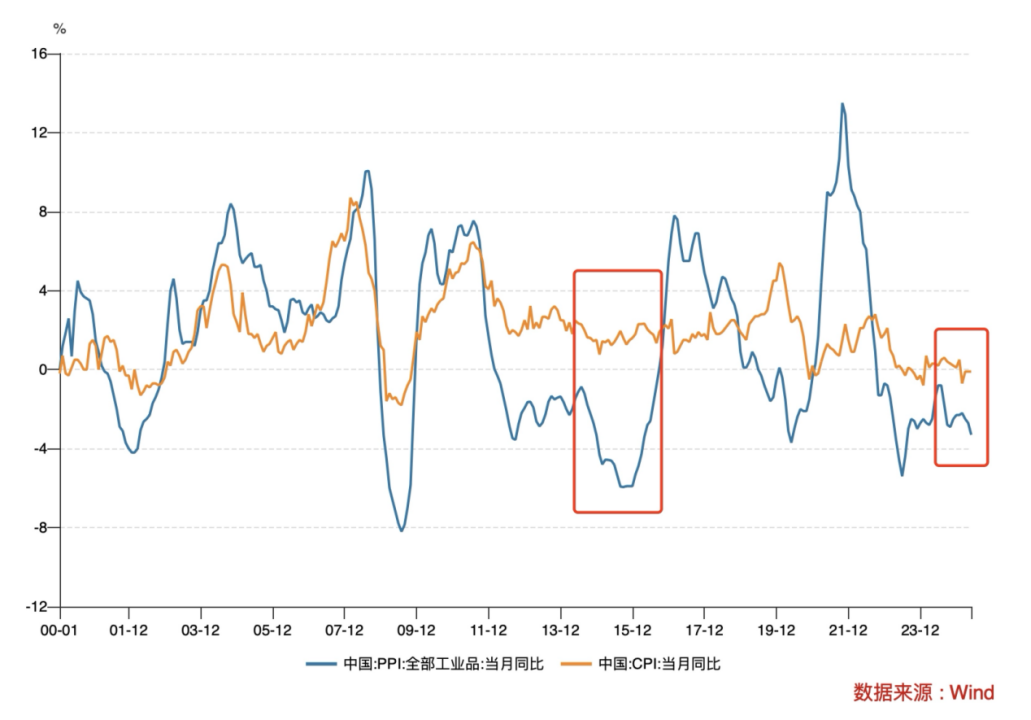
供给侧改革会卷土重来吗?
Hu Xiu· 2025-07-14 02:41
Group 1 - The current economic situation is more complex than a decade ago, with issues extending from production to consumption, affecting PPI and CPI [3][5][6] - The decline in consumer confidence is linked to deteriorating asset-liability balances due to real estate downturns and corporate profit declines, leading to increased unemployment and suppressed consumption [5][11][12] - The need for reform is recognized, but a straightforward approach to reduce production capacity may not be feasible due to the current macroeconomic conditions [10][11][60] Group 2 - The shift in economic structure has led to a decrease in the demand for labor, with the service sector's share of GDP increasing significantly over the past nine years [12][14] - Demand-side reforms are considered more effective than supply-side reforms, as increasing demand is seen as a better solution than merely cutting production [15][39] - The current economic model shows a structural imbalance between consumption and investment, with a significant portion of economic benefits not reaching the average consumer [37][38] Group 3 - Stimulating consumer confidence is crucial, as current policies like subsidies may only provide temporary relief without addressing underlying issues [41][43] - The distribution of wealth and consumer spending power is highlighted as a key factor in improving consumption levels, with a focus on creating a more balanced distribution mechanism [43][49] - The stock market's potential to improve consumer sentiment is noted, as an increase in stock market participation could enhance the perception of economic stability [64][65]