牛市

Search documents
A股风向与牛市解读,八月操作难度加大(内含下一步提醒
老徐抓AI趋势· 2025-08-10 04:03
Group 1: A-shares Performance and Economic Data - A-shares have shown decent performance with significant gains, but manufacturing PMI has remained low, at 49.3 in July, indicating contraction in the manufacturing sector [4] - The non-manufacturing PMI is just above 50, suggesting a lack of clear recovery signals in the overall economy [4] - Real estate sales continue to decline sharply, reflecting ongoing weakness in the real estate market [4] Group 2: Opportunities and Risks in the Innovative Drug Sector - The pricing policy for innovative drugs under medical insurance is becoming more flexible, benefiting innovative drug companies, but stock prices have already risen significantly in anticipation of this news [5] - Current valuations in the innovative drug sector are high, leading to potential risks of chasing prices [5] Group 3: Policy Signals and the Photovoltaic Industry - Recent government signals regarding "anti-involution" can be seen as a new round of supply-side reform, particularly affecting competitive sectors like new energy vehicles and photovoltaics [6] - If policies are implemented, leading companies in the photovoltaic sector may benefit, and the sector is currently in a phase of early positioning [7] Group 4: Value Positioning in the Liquor Industry - Investment in the liquor sector is driven by low valuations, with a percentile of only 3%, indicating suppressed expectations [8] - Despite being considered a "sunset industry," low-valuation defensive stocks like liquor can provide a buffer during corrections in high-valuation growth sectors [8] Group 5: Market Reactions to Hong Kong Stablecoin Regulations - The implementation of stablecoin regulations in Hong Kong has led to significant declines for non-compliant companies, reflecting a market correction following the announcement [9] - High-yield stocks in the Hang Seng Index have performed well but are now at historical high valuations, suggesting reliance on momentum rather than fundamental support [9] Group 6: Adjustments in the CSI 300 and Bull Market Assessment - The recent significant adjustments in the CSI 300 are typical in a bull market, with a preference for viewing this as a bull market correction rather than the start of a bear market [10] - The banking index has reached a new high since October last year, indicating support from the financial sector, which may lead to further gains in other industries [10] Group 7: Dividend Portfolio Valuation and Strategy - The dividend sector has shown stable performance but is at a high valuation, with a percentile of 98% and a price-to-book ratio of 81% [11] - Investors are advised to maintain reasonable positions, with suggestions to hold or reduce exposure based on individual circumstances [11] Group 8: Hang Seng Index Performance and Positioning Advice - The Hang Seng Index has shown strong performance, with a valuation percentile of 79%, slightly lower than the dividend sector [12] - Investors should be cautious of high valuation risks and adjust their positions flexibly based on technical trends and valuation levels [12] Group 9: Conclusion on Current Market Environment - The current macroeconomic environment is complex, with a divergence between A-share performance and economic fundamentals, necessitating a more cautious and flexible investment approach [13] - Sectors like photovoltaics and liquor have unique characteristics worth monitoring, while the CSI 300 and dividend portfolios, despite high valuations, still have potential for growth [13]


申万宏源:A股牛市氛围不会轻易消失 科技、制造业反内卷或成牛市主线结构
智通财经网· 2025-08-10 01:26
Core Viewpoint - The bullish sentiment in the A-share market is expected to persist, supported by stable conditions, despite short-term market divergences and uncertainties [1][4]. Market Sentiment and Structure - Investors generally expect a bull market, but there is significant disagreement regarding short-term market movements. The consensus is that the bull market is gradually starting, but confidence in demand remains low, which may hinder upward index breakthroughs [2][4]. - The main structural narrative of the bull market has not yet been established, with current high-performing sectors like pharmaceuticals and overseas computing likely not being the core drivers of the bull market [2][3]. Sector Analysis - Short-term strong sectors include pharmaceuticals and overseas computing, which reflect high expectations for the bull market. However, their relative value has decreased, suggesting that these sectors may move in tandem with the broader market in the future [5][6]. - New consumption is identified as a relatively high-value sector that may see rotation and catch-up in the near term [5][6]. - The mid-term structural focus is expected to shift towards domestic technology and manufacturing sectors, particularly those addressing "anti-involution" trends, which may become the main narrative of the bull market [3][6]. Market Dynamics - The A-share market is anticipated to experience fluctuations before early September, with potential internal adjustment pressures afterward. However, the overall bullish atmosphere is expected to remain intact [5][6]. - The Hong Kong stock market is viewed as a leading market in the bull cycle, with pricing more aligned with fundamental expectations, making it a relatively attractive option in the short to medium term [1][6]. Future Outlook - The macroeconomic environment is projected to improve by 2026, with potential fiscal stimulus from major economies possibly exceeding market expectations. This could enhance China's economic influence on non-U.S. countries [4][5]. - Despite potential market adjustments, opportunities are expected to arise, particularly in sectors with high micro-level activity and small-cap growth stocks [4][5].

申万宏源策略一周回顾展望(25/08/04-25/08/09):牛市氛围不会轻易消失
Shenwan Hongyuan Securities· 2025-08-09 15:29
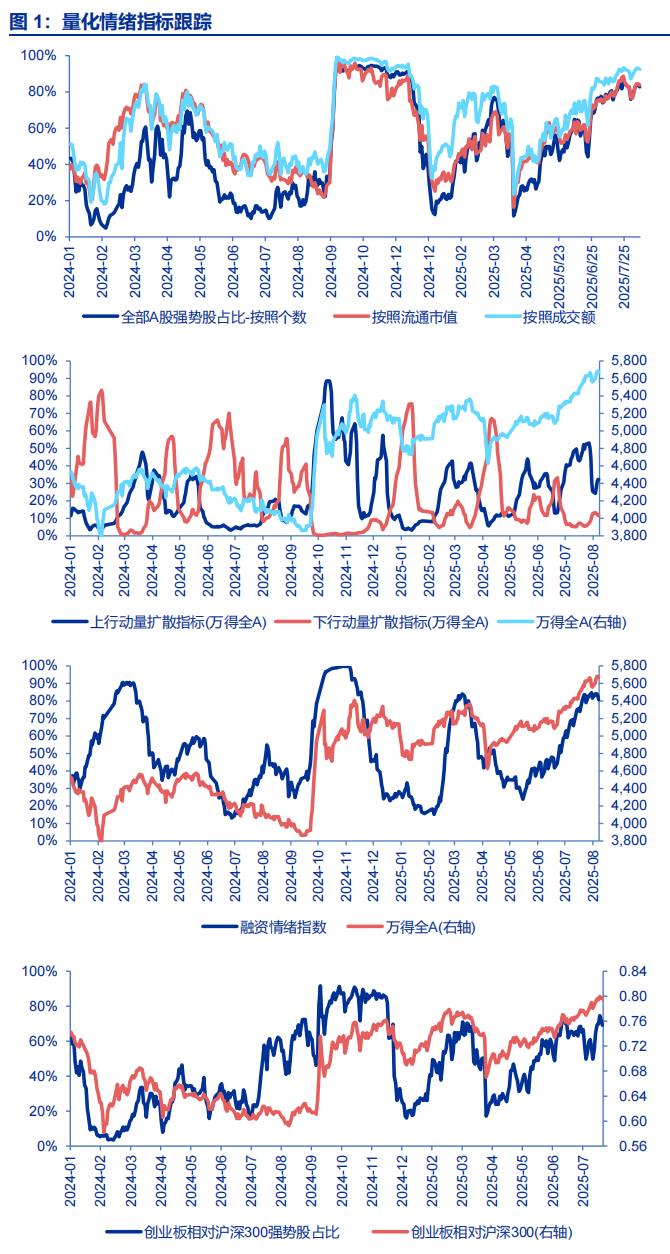
Group 1 - Investors generally expect a bull market, but there is increasing divergence regarding the short-term market outlook. Key short-term obstacles include economic downturn expectations for Q3 2025 and a policy focus on structural adjustments, which temporarily do not support an upward breakthrough of the index. The main bull market structure has yet to be established, with potential directions being domestic technological breakthroughs and high global market share manufacturing reversing inward competition [1][5][6] Group 2 - The bull market atmosphere is unlikely to disappear easily. Although the macroeconomic combination in Q3 is unfavorable, it will not affect the expected improvement in the supply-demand structure in 2026, only leading to minor adjustments. Key factors that could genuinely impact the bull market atmosphere include significant demand decline around mid-2026 and the competitiveness of Chinese manufacturing. If the competitive advantage of Chinese manufacturing is constrained, it could undermine the bull market atmosphere [7][8][9] Group 3 - Even if the market experiences adjustments, there will still be opportunities. Before the bull market main line is established, the market can maintain characteristics seen in recent times, such as sector rotation and high micro-activity, with small-cap growth continuing to outperform. This environment is characterized by a lack of demand highlights, a need for time in supply adjustments, and controllable risks in the stock market [9][10] Group 4 - The core view of the market remains unchanged: A-shares may experience fluctuations before early September, with inherent adjustment pressures afterward. Policies to stabilize capital market expectations may be re-initiated. Time is a friend of the bull market, as it supports fundamental improvements and incremental capital inflows. The expectation is that Q4 2025 will perform better than Q3 2025, with 2026 showing further improvements [10][11] Group 5 - Short-term strong sectors such as pharmaceuticals and overseas computing are high-prosperity directions that reflect market expectations for the bull market. However, the relative cost-effectiveness of these sectors has decreased, indicating that future performance may align more closely with the overall market. New consumption is currently a relatively high-cost-effective direction that may see a rotation in the near term [10][11]
要盯紧保险资金动向了
Ge Long Hui· 2025-08-09 12:00
Market Overview - Since July, the A-share market has shown strong performance, recovering from a dip and reaching new highs for the year, approaching the previous peak of 3674 points from October 8, 2022 [3] - There are mixed sentiments among investors, with some optimistic about breaking through 3674 points and potentially reaching 4000 points, while others are concerned about high valuations and overly optimistic economic growth expectations [3] Fund Flows and Market Dynamics - The direction of the market is ultimately determined by the flow of funds, with net inflows driving market uptrends [4] - In 2017, the A-share market experienced a significant rally led by blue-chip stocks, with the Shanghai Stock Exchange 50 Index rising nearly 30% [4] - In 2020-2021, the A-share market saw extreme volatility, with the CSI 300 Index reaching a historical high of 5930 on February 18, 2021, with a PE ratio of 17.5, significantly above the 10-year average of 12.3 [5] Institutional Investment Trends - The expansion of actively managed public funds has been a key driver of the recent market rally, with public funds' share of A-share free float market value increasing from 11.6% in 2020 to 13.6% in 2021 [7] - As of 2024, the banking sector has shown strong performance, with the Shanghai Composite Index and other indices posting gains of 22.2%, 19.6%, 16.5%, and 16.2% respectively [7] - The A-share ETF market has grown significantly, with a total market size of 3.7 trillion yuan, reflecting an 83% increase since the beginning of the year [8] Future Fund Inflows - Insurance funds are expected to become a major source of incremental capital in the market, with their holdings in stocks increasing from over 2 trillion yuan to nearly 3 trillion yuan [9] - The potential for insurance funds to drive market trends is supported by recent policy changes encouraging long-term investments in A-shares [18] - The shift in focus towards high-dividend stocks is anticipated, particularly in the banking sector, as insurance funds seek stable returns [9][10] Sector Performance and Outlook - The market may see a shift back to conservative styles, focusing on dividend-related sectors, particularly banks, utilities, and cyclical stocks [20][21] - The cyclical dividend stocks are viewed as a better investment choice due to their potential for recovery and growth, especially in light of ongoing economic reforms [22] - Recent performance has shown significant gains in cyclical sectors, with steel up 20.8% and construction materials up 17.9%, while utilities and banks have lagged behind [22]

这波牛市的核心驱动力是什么?——极简投研
Mei Ri Jing Ji Xin Wen· 2025-08-09 09:16
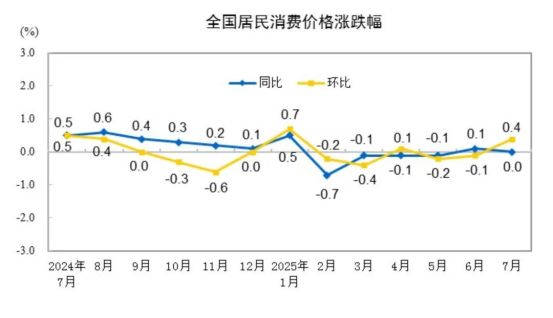
Group 1 - The core driving force of the current bull market is being questioned, whether it is based on fundamentals or valuations [5][20] - The Consumer Price Index (CPI) remained flat year-on-year in July 2025, with a month-on-month increase of 0.4%, indicating a stable inflation environment [3][12] - The Producer Price Index (PPI) showed a month-on-month decline of 0.2%, but the rate of decline has narrowed, suggesting a positive feedback effect from consumption policies [3][4] Group 2 - Historical analysis of companies like Kweichow Moutai and Yangtze Power indicates that valuation-driven performance often outweighs fundamental performance over the years [6][8] - The stock price performance of Kweichow Moutai shows that valuation contributed in 13 out of 23 years, while performance only contributed in 5 years [6][7] - For Yangtze Power, valuation also played a significant role, with valuation-driven years outnumbering performance-driven years [8][10] Group 3 - The A-share market's core driving force is predominantly valuation, with significant liquidity expected to continue supporting the market [11][15] - The monthly trading volume in the A-share market has shown substantial differences, with recent averages exceeding 1.68 trillion yuan, indicating strong market activity [17][18] - The current total market value to GDP ratio stands at 80.92%, suggesting room for growth in the market [22]

杠杆资金10年新高!大A下跌信号出现了?
大胡子说房· 2025-08-09 06:03
以下文章来源于大胡子财研社 ,作者湾区区长 大胡子财研社 . 独到的财经观点,深度的金融分析,助你抓住最新财富机会,实现资产稳步增长! 今天大A又涨了。 指数回到了3600点以上,接近今年的新高,如果后面两天再涨一点,就能再创今年年内的新高,牛市气息扑面而来。 但是,在一片牛市的氛围中,我却观察到了一条信息: 根据最新的数据显示,当下 A股的融资融券余额已经达到20002.59亿元。 | | | | A股融资交易情况 | | | | --- | --- | --- | --- | --- | --- | | 序号 | 截止日 | 融资余额(亿元) | 期间买入额(亿元) | 期间偿还额(亿元) | 期间库头人 F | | 1 | 2025/8/5 | 19863. 11 | 1635. 60 | 1548. 53 | 87. 06 | | 2 | 2025/8/4 | 19776. 05 | 1524. 21 | 1410. 90 | 113. 30 | | SD | 2025/8/1 | 19662. 74 | 1575. 22 | 1622. 75 | -47.53 | | 4 | 2025/7/31 | ...

超6成私募产品业绩创新高!15只“双十基金”产品在列!盛丰私募旗下产品排名居前!
私募排排网· 2025-08-09 03:05
Core Insights - The private equity products have reached record highs in performance, with 60.43% of the 2761 products achieving historical net value highs in July 2025 [1][2] - The A-share market showed a strong upward trend in July 2025, with the Shanghai Composite Index rising by 3.74%, the Shenzhen Component Index by 5.20%, and the ChiNext Index by 8.14% [1] - The majority of high-performing products are equity strategy products, particularly subjective long and quantitative long strategies, which account for approximately 60% of the total [1][2] Product Types - Among the 2761 private equity products, 1214 are quantitative products and 1547 are non-quantitative products [1] - The top strategy is equity strategy products, with 1654 products, followed by multi-asset strategy products (393), futures and derivatives strategy products (327), bond strategy products (290), and combination fund products (97) [1] Company Scale - The largest number of high-performing products comes from private equity firms with assets under management (AUM) below 500 million, totaling 1122 products, which is over 40% of the total [2] - There are 379 products from firms with AUM exceeding 10 billion [2] Long-Established Products - Among the high-performing products, 21 have been established for over 10 years, with 15 of them being subjective long products and 3 being quantitative CTA products [2] - Notably, 15 of these long-established products have annualized returns exceeding 10% [2] Performance Rankings - The article lists the top-performing products in various strategies, including equity, multi-asset, futures, and bond strategies, highlighting their respective managers and performance metrics [4][5][10][15][19][23] - For example, the top products in the subjective long strategy are from Nengjing Investment Holdings, while the leading products in the quantitative long strategy are from companies like Jingqi Investment and Huanrong Investment [10][15] Market Outlook - The current market conditions are described as being in the second phase of a bull market, characterized by a focus on quality growth stocks, particularly in sectors like innovative pharmaceuticals, AI, and stablecoin financial innovations [5]

牛市狂欢中,我选择默默离场!
集思录· 2025-08-08 14:28
Core Viewpoint - The article discusses the current bull market and the author's decision to reduce positions, emphasizing the importance of recognizing market peaks and the risks associated with chasing profits at high valuations [1][2][3]. Market Analysis - The current bull market is characterized by a significant increase in margin trading, surpassing 2 trillion, raising concerns about who will buy stocks from new investors [2]. - Historical bull markets show varying durations and returns, with the shortest being a 107% increase from 1664.93 to 3454.02 between November 2008 and July 2009, and the longest being a 513.5% increase from 998 to 6124.04 from June 2005 to October 2007 [2]. - The current market sentiment is compared to the 5.19 market, which also occurred under poor economic conditions, driven by policy, liquidity, and technology narratives [2]. Investment Strategy - The author has adopted a balanced investment strategy, achieving approximately 200% returns in a high-risk account and over 10% in a defensive account, indicating a cautious approach to market fluctuations [3]. - The article emphasizes the importance of realizing profits rather than holding onto paper gains, suggesting that the peak of market greed often coincides with the highest risks [3]. - The author plans to allocate freed-up capital towards new stock subscriptions on the Beijing Stock Exchange, indicating a shift in focus towards new investment opportunities [3]. Market Dynamics - The article posits that bull markets primarily result in wealth transfer, where new entrants often lose money to those who have held positions since market lows [3][5]. - It highlights that the stock market, in the short term, operates as a zero-sum game, where the gains of some come at the expense of others [3]. - Long-term, the stock market is viewed as a positive-sum game, with rising company revenues and profits leading to increased market valuations [4].

ETF日报|慢牛已来,“旗手”蛰伏待涨!量能创纪录,国防军工人气飙升,“AI双子星”意外杀跌
Sou Hu Cai Jing· 2025-08-08 14:18
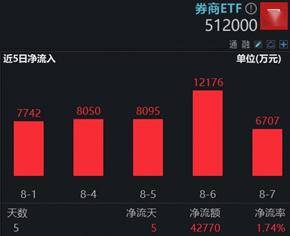
Market Overview - A-shares experienced a slight consolidation with major indices fluctuating around the waterline, and the Shanghai Composite Index reached a new high for the period [1] - The total trading volume in the two markets was 1.71 trillion yuan, with over 2400 stocks rising [1] - The non-ferrous metals sector showed strong performance, with COMEX gold futures hitting a historical high and the People's Bank of China increasing gold reserves for nine consecutive months [1] - The technology sector saw a significant pullback, particularly in artificial intelligence, with major ETFs in this area declining [1][2] - The military industry sector remained relatively stable, with the National Defense and Military Industry ETF showing slight declines but high popularity [1][4] Sector Performance Defense and Military Industry - The National Defense and Military Industry ETF (512810) recorded a historic weekly trading volume, with significant gains in stocks like Aerospace Science and Technology [4][6] - Despite recent short-term adjustments, the overall trading activity in the defense sector increased, with historical patterns suggesting heightened activity around military parades [6] - Analysts believe that the 14th Five-Year Plan and military trade developments will support a long-term upward trend in the defense sector [6] Securities Sector - The securities sector has been relatively subdued, with the top securities ETF (512000) underperforming compared to the broader market [2][9] - Analysts suggest that the current market phase has shifted from a "crazy bull" to a "slow bull," indicating a more sustainable growth trajectory for the securities sector [9][11] - Recent data shows that the securities ETF has attracted over 4.2 billion yuan in net inflows over the past five days, indicating ongoing investor interest [2][11] Technology Sector - The technology sector, particularly focused on AI, faced a significant downturn, with the AI-focused ETF (589520) dropping 2.57% amid market corrections [1][13] - Factors contributing to this decline include profit-taking at market highs and significant capital outflows from key technology sectors [14] - Despite the recent pullback, analysts remain optimistic about the long-term potential of AI, citing ongoing developments in domestic AI models and the importance of self-sufficiency in core technologies [15][18]