
美联储降息

Search documents
策略师:实际利率仍然高企或为美联储很快降息提供理据
Sou Hu Cai Jing· 2026-01-29 06:49
Group 1 - The core viewpoint of the article is that actual interest rates may still be too high, potentially leading the Federal Reserve to lower rates again soon [1] - Scott Helfstein, the investment strategy director at Global X, believes that the Federal Reserve's stance may remain more accommodative than market expectations, with a possible rate cut in the first quarter [1] - The market is likely driven by fundamentals, and the current earnings season has met high market expectations, with many companies reaffirming their performance forecasts [1] Group 2 - The Federal Reserve maintained interest rates as expected, following a pause after three consecutive rate cuts [1]
——2026年1月FOMC会议点评:一季度美联储重启降息概率不高
EBSCN· 2026-01-29 06:10
Monetary Policy - The Federal Reserve maintained the federal funds rate target range at 3.50%-3.75% during the January meeting, aligning with market expectations[2] - The market anticipated a pause in rate cuts with a probability exceeding 97% prior to the meeting[5] Economic Conditions - After three rate cuts in 2025, the current U.S. interest rate is close to the neutral rate, with a stabilizing job market and improved liquidity in financial markets, but inflation has not yet shown a downward trend[3] - The unemployment rate decreased from 4.5% in November 2025 to 4.4% in December 2025, indicating a stabilizing job market[7] Inflation and Future Projections - The Consumer Price Index (CPI) for December 2025 was 2.7%, unchanged from November, still above the Fed's 2% target, with expectations of a potential rise to 3.0% in March 2026[7] - The Fed is expected to maintain a cautious approach to rate cuts, with potential cuts of 2-3 times in 2026, particularly if tariff-related inflation shows signs of easing by mid-year[15] Market Reactions - Following the January meeting, the Dow Jones Industrial Average, S&P 500, and Nasdaq Composite Index showed minor fluctuations, with changes of +0.02%, -0.01%, and +0.17% respectively[4] - The 10-year Treasury yield rose by 2 basis points to 4.26%, while the 2-year yield increased by 3 basis points to 3.56%[4] Risks - Key risks include faster-than-expected inflation, economic downturns, potential interference in Fed appointments, and escalating international trade conflicts[17]
国盛宏观:美联储如期暂停降息,下任美联储主席人选之一沃勒投下反对票
Sou Hu Cai Jing· 2026-01-29 05:37
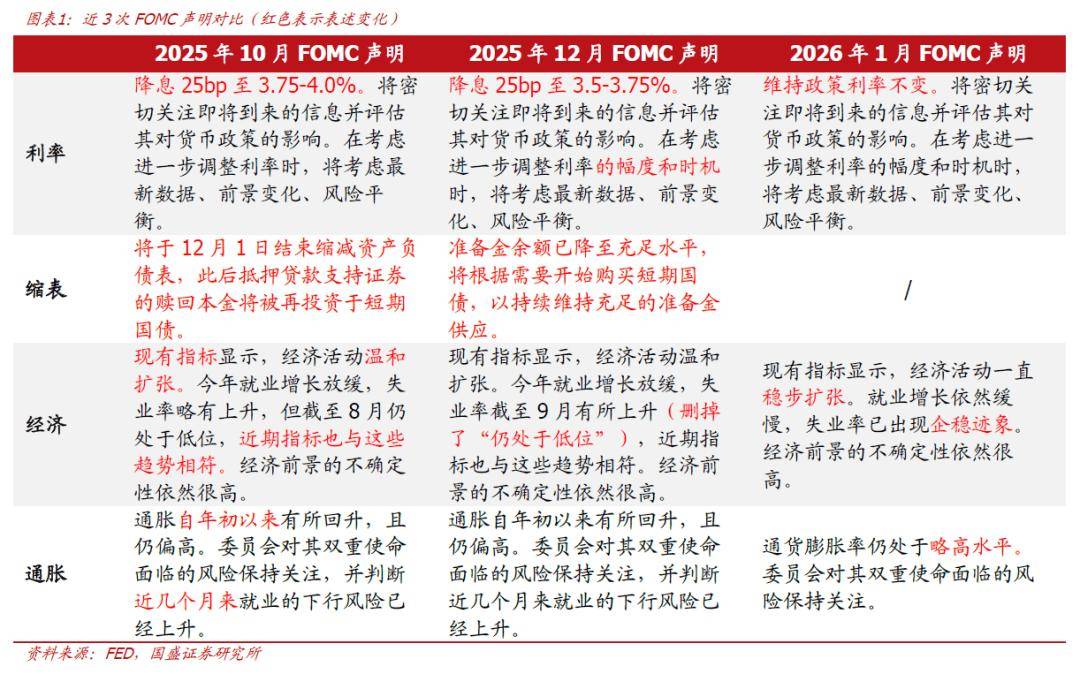
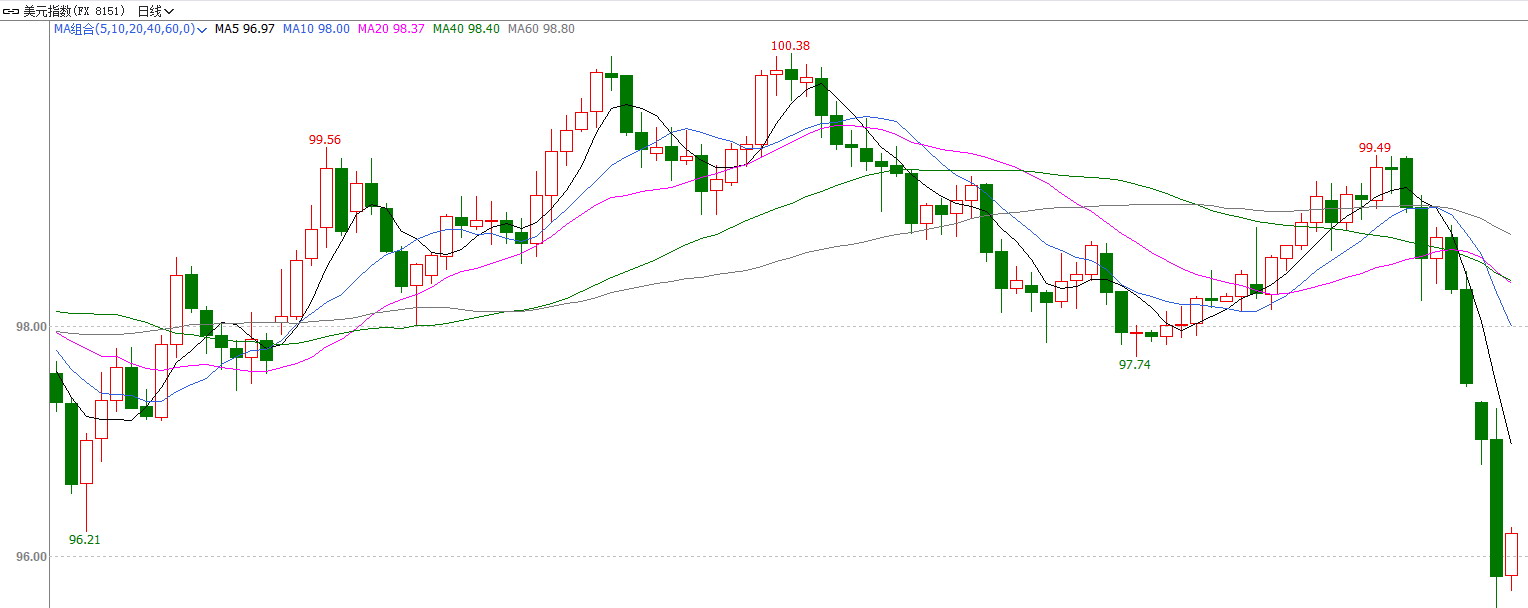
Core Viewpoint - The Federal Reserve has decided to pause interest rate cuts, maintaining the benchmark rate at 3.50%-3.75%, which aligns with market expectations. This marks the first pause after three consecutive meetings of rate cuts since September 2025, indicating a shift in focus towards inflation in the dual mandate of employment and price stability [1][2][3]. Summary by Sections Federal Reserve Decision - The Federal Reserve's decision to maintain the interest rate at 3.50%-3.75% was passed with a vote of 10-2, with dissent from Waller who favored a 25 basis point cut. The statement reflected a change in economic outlook from "moderate expansion" to "steady expansion" and indicated signs of stabilization in the unemployment rate, reducing previous concerns about employment risks [2][3]. Economic Outlook - Powell's remarks during the press conference were restrained, avoiding political commentary and emphasizing that the next chair should remain apolitical. He noted that the economy remains solid, with recent data showing improved economic activity. The labor market is stabilizing, and both inflation and employment risks have diminished. Inflation pressures from tariffs are expected to peak mid-year [4][5]. Market Reactions - Following the meeting, U.S. equities, bonds, and gold prices rose, while the U.S. dollar index fell. The implied probability of a rate cut in March 2026 remained below 20%, and the probability for June dropped from 83% to 74%. The market continues to expect approximately 1.9 rate cuts for the year, indicating a potential for two cuts [5][9]. Signals from the Meeting - The overall tone of the meeting was neutral to hawkish, with a reduced urgency for further easing as inflation remains above target and economic momentum improves. The urgency for rate cuts in the first half of 2026 appears to be diminishing [12]. Chair Nomination Developments - The prediction market indicates a shift in the potential candidates for the next Federal Reserve chair, with Rieder emerging as a frontrunner due to alignment with Trump's policy preferences. Waller's chances have increased following his dissenting vote, while Hassett's prospects have declined significantly. The nomination process remains uncertain, influenced by internal party divisions and the need for Senate confirmation [13].

“新债王”冈拉克:鲍威尔主席任内美联储将不会再降息
Feng Huang Wang· 2026-01-29 04:59
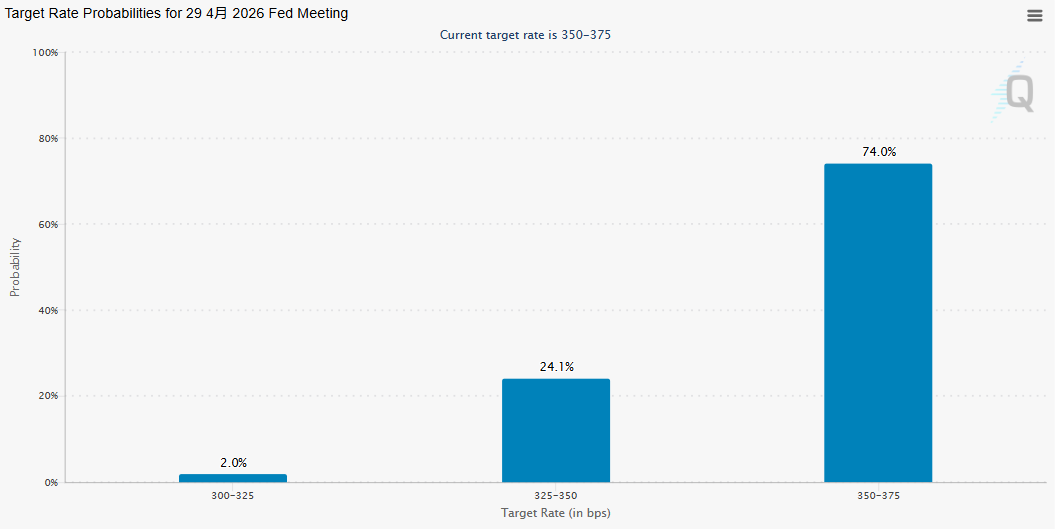
Group 1 - The CEO of DoubleLine Capital, Jeffrey Gundlach, predicts that the Federal Reserve will maintain interest rates unchanged for the remainder of Powell's term, emphasizing that inflation is not as concerning as previously thought and unemployment rates are stabilizing [1][2] - The Federal Reserve's current federal funds rate is held steady at a range of 3.5% to 3.75%, with economic activity expanding at a robust pace and signs of stabilization in the labor market [1] - The probability of a rate cut at the upcoming April meeting is approximately 26%, while the likelihood of maintaining the current rate is as high as 74% [3] Group 2 - Gundlach agrees with Powell's view that the conflict between the dual mandate of price stability and full employment is easing, suggesting that Powell is paving the way for this [2] - Gundlach recommends that investors consider allocating 30%-40% of their portfolios to unhedged international stocks, which may benefit from local currency appreciation against the dollar [2] - Oxford Economics' Chief U.S. Economist, Michael Pearce, anticipates that the Federal Reserve will remain on hold, with current rates close to neutral and labor market conditions stabilizing, predicting potential rate cuts in June and September under the next chairperson [5]
美联储暂停降息,6月新主席到任前大概率将按兵不动
Sou Hu Cai Jing· 2026-01-29 04:51
Group 1: Federal Reserve's Monetary Policy - The Federal Open Market Committee (FOMC) decided to maintain the federal funds rate target range at 3.50%-3.75%, marking the first pause in rate cuts since September of the previous year [1] - The FOMC's statement indicates a more optimistic view on the economy, with employment growth showing signs of stabilization and inflation remaining high [2][4] - Analysts suggest that the Fed is unlikely to cut rates again in the near term, with potential rate cuts expected around June and December of this year [2][3] Group 2: Economic Indicators - U.S. GDP growth for Q3 2025 is projected at an annualized rate of 4.3%, an increase from 3.8% in Q2 [2] - The unemployment rate decreased by 0.1 percentage points to 4.4% in December, while the Consumer Price Index (CPI) remained stable at a year-on-year increase of 2.7% [2] - The impact of tariffs on inflation is expected to peak around mid-2026, with a gradual decline thereafter [3] Group 3: Leadership and Succession - Jerome Powell's term as Fed Chair will end in May, with four potential successors being considered, including Rick Riedel, who has gained significant attention as a frontrunner [5][6] - Riedel's lack of prior government experience is viewed as an advantage, although he has expressed a preference for a lower ideal policy rate than some in the Trump administration [7] - The new Fed Chair will face increased pressure from the President and Treasury, emphasizing the importance of maintaining the Fed's independence [8]

美联储降息门槛抬升
Qi Huo Ri Bao Wang· 2026-01-29 03:26
Group 1: Economic Resilience - The US economy shows resilience with strong macro indicators such as GDP, private consumption, and exports experiencing growth, despite declining consumer confidence and a shrinking manufacturing sector [2][5] - The fiscal expansion, driven by increased tariff revenues, has provided funding for government spending, with projected tariff revenues reaching $287 billion by 2025, reducing the deficit from $1.83 trillion to $1.76 trillion [2][5] Group 2: Monetary Policy and Interest Rates - The urgency for interest rate cuts by the Federal Reserve has decreased significantly, with a 97.2% probability that rates will remain between 3.5% and 3.75% in January [6][10] - Historical trends indicate that the Fed is more focused on the employment market, and current inflation is relatively mild, suggesting that further rate cuts will depend on labor market conditions [6][10] Group 3: Market Liquidity and Stock Performance - The liquidity in the dollar market remains ample, with the secured overnight financing rate (SOFR) declining to 3.66%, indicating no immediate liquidity crisis [7][10] - The risk of a significant stock market downturn is low, as approximately 70% of companies that have reported earnings exceeded expectations, indicating stable corporate performance [9][10] Group 4: Policy Uncertainty - Recent market volatility is attributed to heightened uncertainty surrounding US policies, including pressures on the Federal Reserve's independence and fiscal sustainability concerns [10] - The current economic environment is characterized by a "K-shaped" recovery, where growth is uneven across sectors, with traditional industries lagging behind technology sectors [2][10]
石油ETF(561360)连续5日资金净流入超9亿元,资金积极布局,淡季不淡,库存周期酝酿切换
Sou Hu Cai Jing· 2026-01-29 03:14
Group 1 - The core viewpoint of the article highlights a significant increase in China's crude oil imports despite the traditional demand off-season in the Northern Hemisphere, indicating resilient global oil demand [1] - The International Energy Agency (IEA) has revised upward its global oil demand growth forecast for 2025/2026, driven primarily by non-OECD countries, with China being a key contributor [1] - In December 2025, China's crude oil imports saw a substantial year-on-year increase of 17.4% and a month-on-month increase of 10.0%, reflecting the release of demand for replenishing inventories following the issuance of new import quotas [1] Group 2 - In the West, U.S. refinery utilization rates have risen to near four-year highs after a period of concentrated maintenance, with refined oil inventories beginning to accumulate, indicating steady downstream consumption [1] - Although European demand remains relatively weak, emerging markets are driving global demand, supported by the Federal Reserve entering a rate-cutting cycle, which is expected to boost demand expectations for crude oil and other commodities, particularly in interest-sensitive regions like Africa and Asia [1] - The oil ETF (561360) tracks the oil and gas industry index (H30198), which includes companies involved in oil and gas extraction and related services, reflecting the overall performance of the energy industry [1]
美债买点将至
2026-01-29 02:43
Summary of Key Points from the Conference Call Industry Overview - The discussion primarily revolves around the U.S. Treasury bond market and its dynamics, influenced by various macroeconomic factors and monetary policy decisions [2][4][6]. Core Insights and Arguments - **Rising U.S. Treasury Yields**: U.S. Treasury yields are experiencing upward pressure due to multiple negative factors, including the exhaustion of rate cut benefits, market recovery, inflation expectations, and geopolitical events impacting the credibility of U.S. dollar assets [2][4][5]. - **Short-term Outlook**: In the short term, U.S. Treasury yields may fluctuate at high levels, but there are trading opportunities throughout the year. Current yields are relatively high, and after the release of exchange rate pressures, a buying opportunity may arise [2][6]. - **Long-term Projections**: Long-term expectations indicate that U.S. Treasury yields have significant downward potential due to mismatches between U.S. economic growth and current interest rates. The anticipated decline in AI-related capital expenditures and challenges in traditional consumption sectors suggest that the Federal Reserve will likely continue to lower rates [2][6][7]. - **Inflation Expectations for 2026**: Inflation pressure in the U.S. for 2026 is expected to be low, driven by peak tariff impacts on goods, low weight of commodities in the CPI, and a cooling housing market. The labor market's supply-demand dynamics also suggest minimal risk of a wage-price spiral [9][10]. Additional Important Insights - **Impact of Currency Exchange Rates**: The exchange rate of the Chinese yuan is a critical factor for domestic investors considering U.S. Treasury bonds. A potential appreciation of the yuan could enhance the attractiveness of U.S. bonds when priced in yuan [12][13]. - **Investment Timing Recommendations**: It is recommended that domestic investors gradually enter the U.S. Treasury bond market from after the Spring Festival to March, as this period is expected to see reduced interest rate and exchange rate risks, making it an opportune time for investment [12][13]. - **Market Conditions**: The supply-demand dynamics for U.S. Treasury bonds are expected to be favorable this year, with a significant decrease in net supply of coupon-bearing bonds anticipated due to rising deficits and the Federal Reserve's short-term bond purchase program [10][11]. This summary encapsulates the key points discussed in the conference call, focusing on the U.S. Treasury bond market and its influencing factors, along with strategic recommendations for investors.
降息暂缓,前紧后松——1月美联储议息会议解读【华福宏观·陈兴团队】
陈兴宏观研究· 2026-01-29 02:19
Core Viewpoint - The Federal Reserve has decided to maintain interest rates in the range of 3.5%-3.75%, ending a series of rate cuts since September 2025, with a generally optimistic outlook on economic growth and a stabilizing labor market [2][10]. Group 1: Employment and Labor Market - The employment growth remains weak, but there are signs of stabilization in the unemployment rate, which has previously been on the rise [5][6]. - The labor market is experiencing a structural decline in both supply and demand, with factors such as reduced immigration and a declining labor participation rate contributing to this trend [6]. - Despite the challenges, there are positive indicators such as a rebound in wage growth, suggesting some resilience in the labor market [6][10]. Group 2: Inflation Trends - Inflation is still considered somewhat elevated, although it has decreased from previous highs, remaining above target levels [5][6]. - The core Personal Consumption Expenditures (PCE) index, excluding the impact of tariffs, is slightly above 2%, indicating a healthy progress in inflation management [6]. - The overall trend suggests that inflation is likely to continue decreasing, driven by factors such as a slowdown in housing inflation [6][10]. Group 3: Economic Growth Outlook - The Federal Reserve has upgraded its assessment of economic activity to "expanding at a solid pace," indicating stronger growth than previously expected [7]. - Recent data shows that the U.S. economy is likely to stabilize, with consumer spending and investment showing signs of improvement [7]. - The positive impact of previous interest rate cuts on consumer spending is beginning to manifest, with retail sales rebounding unexpectedly [7][10]. Group 4: Interest Rate Expectations - Market expectations for further rate cuts have diminished, with probabilities for the Fed maintaining rates in March and April rising to 86.5% and 74%, respectively [10]. - The current labor market shows signs of stabilization, reducing the necessity for further rate cuts in the near term [10]. - However, the long-term outlook suggests that inflation trends and labor market imbalances may lead to increased pressure for rate cuts later in the year [10].

——2026年1月美联储议息会议解读:降息暂缓,前紧后松
Huafu Securities· 2026-01-29 02:09
Monetary Policy - The Federal Reserve paused interest rate cuts, maintaining the target range at 3.5%-3.75%, aligning with expectations[1] - Two members voted against the pause, advocating for a 25 basis point cut, while the remaining ten supported the decision[1] Employment and Inflation - The Fed removed previous language indicating increased downside risks to employment, suggesting some stabilization in the unemployment rate[2] - Inflation remains elevated, with core PCE slightly above 2% after excluding tariff impacts, indicating persistent inflationary pressures[2] Economic Growth Outlook - The Fed upgraded its economic outlook to "expanding at a moderate pace," reflecting improved economic data compared to previous assessments[2] - The U.S. economy shows signs of stabilization, driven by resilient consumer spending and reduced negative impacts from investment[2] Market Reactions and Future Projections - Market expectations for rate cuts in March and April have decreased, with probabilities rising to 86.5% and 74% respectively[3] - The necessity for further rate cuts by the Fed is diminishing, as the labor market shows signs of stabilization and inflation lacks upward momentum[3] Risks - Potential risks include unexpected increases in inflation, tighter monetary policy from the Fed, and a downturn in the U.S. economy exceeding expectations[3]