
长期主义

Search documents
老牌公募基金公司换帅!
Guo Ji Jin Rong Bao· 2025-08-30 16:37
Group 1 - The chairman of Nord Fund, Mr. Pan Fuxiang, has officially retired due to reaching retirement age, after serving the company for over 19 years [1] - Under Mr. Pan's leadership, the company's asset management scale increased nearly ninefold from the end of 2015 to the end of July 2025 [1] - The new chairman, Mr. Zheng Chengwu, has extensive experience in various leadership roles within companies associated with Tsinghua University and will take over the position [2] Group 2 - Nord Fund was established in 2006 and has undergone changes in its shareholder structure, currently being led by local state-owned assets [3] - The company emphasizes a core development philosophy centered on stable investment, value discovery, and long-termism, aiming to provide diverse product offerings to investors [3] - Nord Fund plans to enhance its investment research capabilities and improve its performance metrics while adhering to a culture of integrity and responsibility [3][4] Group 3 - The company aims to leverage its professional investment capabilities to support the transformation and upgrading of the real economy, contributing to national strategies and regional development [4]
长城汽车的长期胜利法则:不是爆款刺激,是体系进化
Tai Mei Ti A P P· 2025-08-30 11:27
Core Insights - Great Wall Motors achieved record revenue and profit in Q2 2025, with revenue of 52.316 billion yuan and net profit of 4.586 billion yuan, alongside a total sales volume of 312,000 vehicles, marking its best Q2 performance in history [1][2] - The company has entered a new cycle of high-quality growth, successfully increasing both sales volume and average vehicle price, which reached 175,400 yuan, reflecting a 2.1% year-on-year increase and a 6.3% quarter-on-quarter increase [1][2] Financial Performance - In Q2 2025, Great Wall Motors reported a 161.87% increase in profit compared to the previous quarter, showcasing its resilience amid market challenges [1] - The average selling price of vehicles has risen, indicating a growing acceptance of the brand among higher-end consumer segments [1][2] Market Strategy - Great Wall Motors is focusing on high-value models and has successfully launched the new Wei brand model, Gao Shan, which has gained significant traction in the mid-to-large MPV market [4][5] - The company is not engaging in price wars but is instead enhancing product value and maintaining quality, as demonstrated by the performance of models like the Haval Menglong and Haval Big Dog Plus [6][8] Product Development - The new models, such as the Tank 500 and Gao Shan, are designed to meet diverse consumer needs, combining luxury, performance, and practicality [5][6] - Great Wall Motors is leveraging its technological advancements, such as the Hi4 intelligent hybrid system, to enhance vehicle performance and efficiency [6][12] Competitive Advantage - The company is building a competitive moat through three main pillars: technology, off-road capabilities, and globalization, rather than relying on short-term marketing tactics [9][11] - Great Wall Motors is committed to a long-term strategy that emphasizes sustainable growth and brand trust, as evidenced by its international expansion and local manufacturing initiatives [11][15] Future Outlook - The company is expected to continue its growth trajectory by integrating smart technology into more models and expanding its presence in international markets [16] - Great Wall Motors is not just focused on immediate sales but is also working on establishing a long-term brand value and consumer trust [16]



水井坊(600779):收入及时调整 毛销承压拖累盈利
Xin Lang Cai Jing· 2025-08-29 13:20
Core Viewpoint - The company reported a decline in revenue and net profit for the first half of 2025, indicating challenges in the current macroeconomic environment and a need for strategic adjustments to maintain market stability [1][2]. Financial Performance - For the first half of 2025, the company achieved revenue of approximately 1.498 billion yuan, a year-on-year decrease of about 12.8%, and a net profit attributable to shareholders of approximately 105 million yuan, down 56.5% year-on-year [1]. - In Q2 2025, revenue declined by 31.4% year-on-year, while net profit saw a significant drop of 251.2% year-on-year [1]. - The fiscal year 2025 ended with a slight revenue decline of 2.9% compared to the previous year, indicating a stable performance despite industry adjustments [1]. Product Performance - In Q2 2025, the main products, including Zhenniang No. 8 and Jingtai, faced pressure with high-end liquor revenue down by 37.0% year-on-year, while mid-range liquor Tianhao Chen saw a recovery with a 67.7% increase in revenue due to adjustments made in Q1 [1]. - The company maintained significant promotional efforts for its products, particularly in banquet and opening scenarios, which impacted profit margins [2]. Marketing and Sales Strategy - The company implemented a dynamic pricing monitoring system and channel profit protection mechanisms to stabilize market order and address issues of price chaos in specific regions [3]. - Promotional activities such as "buy six, get one free" were used to enhance the popularity of products in banquet settings [2][3]. Profitability and Cost Management - The sales net profit margin decreased by 7.1 percentage points year-on-year in the first half of 2025, primarily due to narrowing gross sales margins and fluctuations in operating taxes [2]. - The gross profit margin for the first half of 2025 was 79.3%, down 1.7 percentage points year-on-year, attributed to increased promotional discounts [2]. Future Outlook - The company has adjusted its net profit forecasts for 2025 to 950 million yuan, with subsequent years projected at 830 million yuan and 900 million yuan, reflecting changes in the consumption environment [3]. - The current market valuation corresponds to a price-to-earnings ratio of 24, 28, and 26 for the years 2025 to 2027, maintaining an "overweight" rating based on historical valuation levels [3].

舍得酒业(600702):2025年秋季策略会速递-精细化经营 静待需求恢复
Xin Lang Cai Jing· 2025-08-29 09:02
Core Insights - The company emphasizes long-termism and focuses on channel health and inventory reduction, maintaining a positive fundamental trend and stable operations as it enters the second half of 2025 [1] Product Performance - In the first half of the year, the company faced external challenges leading to a contraction in business consumption demand, but it achieved its expected targets. The product structure saw minimal changes, with core products focusing on business consumption facing pressure, while mass-market products like Shezhidao and the bottle wine brand T68 showed significant growth [2] - The company continues to pursue high-end product development and has seen substantial growth in its collectible series, with a notable increase in the first half of 2025 due to a low base [2] Channel Strategy - The company enhances sales through platform push and consumer pull, focusing on base markets. In 2025, it will primarily target six key base markets (Suining, Chengdu, Mianyang, Liaocheng, Dezhou, Tianjin) with significant investments in channel construction and consumer engagement [2] - The company aims to increase its e-commerce share over the next two years through differentiated products and marketing strategies [2] Recent Operational Feedback - The company has seen a notable recovery in sales, with improved performance in key products like Shezhidao and T68. The opening rate has significantly improved from a large decline in June to positive growth in August [3] - Increased investments in banquet markets and expansion into township markets are ongoing, along with enhancements in group purchasing channels. The company is also streamlining its internal organization to improve execution and communication [3] Future Outlook - The company is focused on long-term strategies, concentrating on four core products and innovating cultural products for younger demographics. It plans to enhance brand influence and find growth in existing markets while adhering to its strategy of "downward channels, upward brands, and comprehensive focus on consumers" [3] - The company anticipates a gradual recovery in consumer spending, which will positively impact sales and profitability [3] Profit Forecast and Valuation - The company maintains revenue projections for 2025-2027 at 4.69 billion, 4.90 billion, and 5.21 billion yuan, with year-on-year changes of -12.5%, +4.5%, and +6.4% respectively. EPS estimates for the same period are 1.47, 1.57, and 1.71 yuan [4] - The company is assigned a target price of 79.42 yuan based on a 54x PE ratio for 2025, maintaining a "buy" rating [4]

五粮液上半年实现营收527.71亿元 稳健增长展现名酒“韧性”
2 1 Shi Ji Jing Ji Bao Dao· 2025-08-29 06:55
Core Viewpoint - Wuliangye has demonstrated resilient growth in the first half of 2025, achieving a revenue of 52.771 billion yuan and a net profit of 19.492 billion yuan, amidst a challenging environment for the liquor industry [1][2]. Financial Performance - In the first half of 2025, Wuliangye reported a revenue of 52.771 billion yuan, a year-on-year increase of 4.19%, and a net profit of 19.492 billion yuan, up 2.28% [1]. - The main product line generated 40.998 billion yuan in revenue, while other liquor products contributed 8.122 billion yuan, reflecting growth rates of 4.57% and 2.73% respectively [3]. Market Strategy - Wuliangye is focusing on marketing execution and channel development to adapt to market competition and changing consumer trends [3][4]. - The company has implemented a marketing reform by restructuring its brand division and enhancing its sales team, which has led to a significant increase in retail outlets and consumer engagement [4][6]. Innovation and Consumer Engagement - The company is targeting younger consumers through innovative marketing strategies, including the launch of new products and experiential stores [5]. - The introduction of the 29° Wuliangye product has generated significant pre-launch interest, indicating a successful approach to attract younger demographics [5]. Operational Excellence - Wuliangye is committed to quality control and technological innovation, with R&D expenses reaching 210 million yuan, a 31.2% increase year-on-year, focusing on biotechnology and intelligent brewing [11][12]. - The company has made progress in major construction projects, including a 100,000-ton ecological brewing project, which will enhance production capacity [9]. Brand Value and Market Position - Wuliangye's brand value has reached 487.657 billion yuan, with recognition in various global brand rankings, reflecting its strong market presence and consumer trust [14]. - The company has maintained a high dividend payout ratio, distributing 22.3 billion yuan in cash dividends in 2024, which is a record high since its listing [13]. Future Outlook - Analysts remain optimistic about Wuliangye's growth potential, citing its strong brand positioning and ability to navigate industry challenges [15].

稳字当头,浙商银行2025上半年资产质量持续向好
Zhong Guo Jing Ji Wang· 2025-08-29 03:24
Core Viewpoint - Zhejiang Commercial Bank's mid-year report for 2025 highlights its commitment to long-termism and risk management, achieving stable growth despite industry challenges [1][4]. Group 1: Financial Performance - Total assets reached 3.35 trillion yuan, a 0.63% increase from the end of the previous year [2][3]. - Operating income for the first half of the year was 33.248 billion yuan, with net profit attributable to shareholders at 7.667 billion yuan, reflecting a year-on-year decline of 5.76% and 4.15% respectively [4][5]. - The non-performing loan ratio improved to 1.36%, down 0.02 percentage points from the previous year [2][4]. Group 2: Business Strategy - The bank shifted its focus from "asset-driven" to "liability-driven" growth, optimizing its asset-liability structure to support sustainable development [2][4]. - A new three-year action plan (2025-2027) was launched to deepen its presence in Zhejiang, with financing services in the province totaling 1.12 trillion yuan, an increase of 98.5 billion yuan since the beginning of the year [2][4]. - The bank's strategy emphasizes low-risk, balanced returns, with significant growth in loans for green finance and agriculture, increasing by 10.31% and 9.14% respectively [2][4]. Group 3: Operational Efficiency - The bank's total liabilities reached 3.14 trillion yuan, a 0.62% increase, with deposits surpassing 2 trillion yuan, growing by 7.47% [3][4]. - The net interest margin was reported at 1.69%, a decrease of 2 basis points from the previous year, while the deposit interest rate fell by 31 basis points [4][5]. - The bank's management expenses decreased by 5.77% to 9.375 billion yuan, driven by digital transformation efforts [4][5]. Group 4: Future Outlook - The bank plans to maintain strategic focus and enhance its financial services to the real economy, leveraging digitalization and differentiated service offerings [7][8]. - Supply chain finance has become a key area of growth, serving over 85,000 small and medium enterprises, with a non-performing rate of only 0.17% [7][8]. - The bank aims to continue improving its profitability and service quality through strategic initiatives and digital upgrades [6][8].

华勤技术:深耕研发与制造 锻造全球化运营能力
Zhong Guo Zheng Quan Bao· 2025-08-29 00:54
Core Insights - The article highlights the remarkable transformation of the company from a small team focused on mobile phone motherboards to a global smart hardware platform valued at hundreds of billions, serving over 100 countries [1][2] - The company's strategic evolution is marked by three significant transitions, each accompanied by challenges, yet reinforcing its position in the global smart hardware market [5][8] Group 1: Strategic Evolution - The first strategic leap occurred when the company transitioned from Independent Design House (IDH) to Original Design Manufacturer (ODM) around 2005, achieving profitability in its first full year [5][7] - The second leap involved expanding from single-category to multi-category ODM, including entry into the tablet and laptop markets, despite initial losses in the laptop segment [7][8] - The third leap is the evolution into a "3+N+3" global smart product platform, enhancing customer and product ecosystems [8][12] Group 2: Core Competencies - The company has developed a robust ODMM (Operational Efficiency, Research and Design, Advanced Manufacturing, Precision Components) capability matrix, essential for its transition from a contract manufacturer to a platform enterprise [9][10] - Continuous investment in R&D is evident, with a reported R&D expenditure of 2.96 billion yuan in the first half of 2025 and a workforce of over 16,000 R&D personnel [9][10] - The company emphasizes flexible production capabilities, utilizing modular production lines to adapt quickly to changing product demands [10][11] Group 3: Globalization and Future Outlook - The company has established a dual supply system with domestic manufacturing bases and overseas facilities in Vietnam, Mexico, and India, enhancing its resilience against external uncertainties [11][12] - Looking ahead, the company aims to leverage its accumulated capabilities to explore new growth areas such as automotive electronics, robotics, and software, with a projected revenue of over 20 billion yuan from data services in 2024 [12][13] - The company acknowledges the challenges of balancing growth and profitability while ensuring the successful incubation of new businesses in a complex global supply chain environment [12][13]

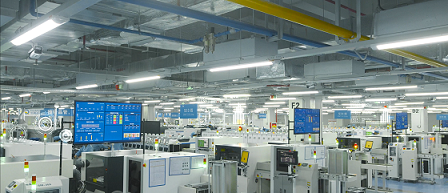
华勤技术: 深耕研发与制造 锻造全球化运营能力
Zhong Guo Zheng Quan Bao· 2025-08-28 22:05
Core Insights - The article highlights the remarkable transformation of Huqin Technology from a small mobile motherboard company to a billion-dollar smart platform over 20 years, emphasizing its strategic focus on continuous iteration and innovation [1][2][3] Group 1: Strategic Evolution - Huqin Technology's development history showcases three significant strategic transitions: from IDH to ODM, from single-category to multi-category, and from hardware manufacturing to a technology platform [2][3] - The first transition occurred in the early years when the company shifted from IDH to ODM, achieving profitability in its first full year by leveraging market insights and rapid R&D capabilities [3][4] - The second transition involved expanding into multi-category ODM, including entering the notebook computer market, despite facing initial losses [5][6] Group 2: Core Competencies - The company has established a robust ODMM (Operational Efficiency, R&D Design, Advanced Manufacturing, Precision Components) capability matrix, which serves as the foundation for its transformation into a platform enterprise [6][7] - Continuous investment in R&D is evident, with a reported R&D expenditure of 2.96 billion yuan in the first half of 2025 and a workforce of over 16,000 R&D personnel [6][7] - Huqin Technology's flexible production capabilities, such as modular production lines, enhance manufacturing efficiency and adaptability to market demands [7][8] Group 3: Globalization and Supply Chain - The company has developed a dual supply system with domestic manufacturing bases and overseas VMI (Vietnam, Mexico, India) facilities, enhancing its resilience against external uncertainties [8][9] - Huqin Technology's global operations extend beyond sales to encompass R&D, manufacturing, and supply chain management, reflecting a comprehensive approach to internationalization [8][9] Group 4: Future Growth and Challenges - Looking ahead, Huqin Technology aims to leverage its "3+N+3" strategy, focusing on emerging sectors such as automotive electronics, robotics, and software, with data business revenue expected to exceed 20 billion yuan in 2024 [10][11] - The company recognizes the challenges of balancing growth and profitability while ensuring the successful incubation of new businesses in a complex global supply chain environment [10][11]
深耕研发与制造 锻造全球化运营能力
Zhong Guo Zheng Quan Bao· 2025-08-28 20:17
Core Insights - The article highlights the remarkable transformation of the company from a small mobile motherboard design team to a global smart hardware platform valued at over 100 billion yuan, serving more than 100 countries [1][2] - The company's strategic evolution is marked by three significant transitions, emphasizing a long-term commitment to innovation and market adaptation [2][4] Group 1: Strategic Evolution - The first strategic leap occurred when the company transitioned from Independent Design House (IDH) to Original Design Manufacturer (ODM) around 2005, achieving profitability in its first full year [2][3] - The second leap involved expanding from single-category to multi-category ODM, including entry into the tablet and laptop markets, despite facing initial losses in the laptop segment [3][4] - The third leap is the evolution into a "3+N+3" global smart product platform, enhancing customer and product ecosystems [4][7] Group 2: Core Competencies - The company has developed a robust ODMM (Operational Efficiency, Design R&D, Advanced Manufacturing, Precision Components) capability matrix, which serves as the foundation for its transition from a contract manufacturer to a platform enterprise [5][6] - Continuous investment in R&D is evident, with 2.96 billion yuan allocated in the first half of 2025 and a workforce of over 16,000 R&D personnel, accounting for nearly 30% of total employees [5][6] - The company has enhanced its precision component production capabilities through acquisitions, improving its overall design and manufacturing efficiency [6] Group 3: Future Growth and Challenges - The company aims to leverage its past 20 years of experience to explore new growth areas, particularly in automotive electronics, robotics, and software, as part of its "3+N+3" strategy [7][8] - The data business is projected to exceed 20 billion yuan in revenue by 2024, marking it as a new core business [7][8] - The company acknowledges the challenges ahead, including balancing growth with profitability and ensuring the successful incubation of new businesses in a complex global supply chain environment [8]
追寻时间的玫瑰 探究公募长期主义密码
Zhong Guo Zheng Quan Bao· 2025-08-28 20:16
Core Insights - The public fund industry in China is witnessing a significant presence of experienced fund managers who have been in the industry for over ten years, demonstrating robust performance and investment capabilities across market cycles [1][2] - These seasoned managers embody a long-term investment culture supported by a systematic and platform-based research and investment ecosystem, which includes talent cultivation, collaborative platforms, and incentive designs aligned with investor interests [1][3] Group 1: Long-term Investment Strategies - The emergence of "double ten" fund managers, who have over ten years of experience and an annualized return exceeding 10%, highlights the effectiveness of long-term investment strategies in the public fund sector [1][2] - Value-oriented fund managers focus on undervalued assets and prioritize intrinsic value and safety margins, particularly in traditional sectors like finance and utilities, emphasizing the importance of low valuations for long-term returns [2][3] - Growth-oriented fund managers target high-growth sectors such as technology and renewable energy, utilizing independent and forward-thinking investment approaches to navigate market style shifts successfully [2][3] Group 2: Talent Development and Team Structure - Fund companies are increasingly investing in cultivating their research and investment talent, establishing clear growth paths from junior to senior roles to ensure alignment with corporate culture and long-term investment philosophies [4][5] - A systematic approach to talent development, including mentorship programs and collaborative management structures, is being adopted to foster a culture of shared growth and innovation within investment teams [4][5] Group 3: Performance Evaluation and Incentives - The industry consensus is shifting towards long-term performance evaluation mechanisms that prioritize multi-year performance metrics and incorporate non-financial indicators to enhance the focus on sustainable investment outcomes [5][6] - Fund companies are implementing compensation structures that tie performance incentives to long-term results, ensuring that fund managers are aligned with the interests of investors over extended periods [6][7] - The emphasis on long-term evaluation is complemented by mechanisms that allow for flexibility in assessing fund managers' performance during market mismatches, promoting stability in investment strategies [6][7] Group 4: Industry Development and Challenges - The public fund industry is transitioning from rapid growth to a focus on high-quality development, emphasizing investor interests, core research capabilities, and improved performance evaluation mechanisms [7][8] - The industry faces challenges such as significant short-term performance volatility and the need for enhanced investor satisfaction, necessitating a shift towards sustainable growth and responsible investment practices [7][8]