
绿色转型

Search documents
时时皆绿 金融有为:中国银行深圳市分行2000亿元绿色贷款赋能生态建设
2 1 Shi Ji Jing Ji Bao Dao· 2025-12-15 23:11
Core Viewpoint - Shenzhen is recognized as a leading city in green transformation and development, supported by robust green finance initiatives from the Bank of China Shenzhen Branch, which has achieved significant milestones in green loans and bonds [1][2]. Group 1: Green Finance Achievements - As of November, the Bank of China Shenzhen Branch's green loan balance exceeded 200 billion yuan, leading the market in Shenzhen [1]. - During the 14th Five-Year Plan period, the bank's cumulative green bond underwriting exceeded 33 billion yuan, serving over 700 green enterprises [1]. - The bank has established itself as a pioneer in green finance innovation and a leader in the growth of green finance scale [1]. Group 2: Support for Green Projects - The bank has supported the carbon-neutral experimental park "Biocircle No. 3" with a 10 million yuan loan, enabling it to achieve an 85% green electricity usage rate [2]. - The bank has a long-standing partnership with BYD Group, expanding its services from traditional credit to bond underwriting and supply chain financing as the company leads global electric vehicle sales [2][3]. - The bank's collaboration with companies like Grinmei has spanned over 15 years, providing loans for battery recycling and resource utilization [3]. Group 3: Innovative Financial Products - In July 2024, the bank issued Shenzhen's first 30 million yuan "carbon reduction loan" to a clothing company, linking loan rates to emission reduction outcomes [4]. - The Shenzhen government launched 1 billion yuan offshore RMB green bonds, with the bank serving as the sole global coordinator and green structure advisor [4]. Group 4: Mechanisms and Institutional Support - Shenzhen has established a comprehensive ecological civilization system, with the green finance framework being a critical component [6]. - The implementation of the first green finance regulation in March 2021 has encouraged the establishment of specialized green finance systems within banks [6]. - The bank has formed a green finance committee and has been publishing environmental information disclosure reports for four consecutive years, setting a transparency benchmark [6][7]. Group 5: Integration into Urban Development - The bank is integrating green finance into urban development through targeted green credit support, product innovation, and transparent environmental disclosures [7]. - The bank's headquarters is set to achieve carbon neutrality by 2024, becoming the first zero-carbon financial institution in Shenzhen [6][7].

加强合作,推动构建韧性地球(国际视点)
Ren Min Ri Bao· 2025-12-15 22:52
Group 1 - The seventh United Nations Environment Assembly concluded in Nairobi, Kenya, focusing on sustainable solutions for building a resilient planet, with nearly 6,000 representatives discussing global environmental governance and sustainable actions [1] - A ministerial declaration was adopted, along with the "2026-2029 Midterm Strategy," addressing key areas such as climate action, biodiversity conservation, land and desertification management, and pollution and waste management [1] - The latest "Global Environment Outlook" report highlighted that land degradation affects over 3 billion people globally, with annual losses of productive land equivalent to the size of Colombia or Ethiopia [1] Group 2 - Discussions were held regarding the funding implementation of the "30x30" target under the "Kunming-Montreal Global Biodiversity Framework," revealing that developing countries face a funding gap of billions of dollars annually [2] - The international funding for marine ecosystems is significantly insufficient, with developing island nations receiving only $48 million per year [2] - Resolutions passed during the assembly aim to enhance cooperation in critical areas such as coral reef protection, sustainable management of minerals and metals, and international collaboration on wildfire response [2] Group 3 - Kenya's Minister of Environment, Climate Change, and Forestry emphasized the country's commitment to the 2030 Sustainable Development Agenda and the promotion of circular economy solutions [3] - Brazil's Secretary of State for Environment and Climate Change highlighted the importance of cooperation among Global South countries to address pollution and ecological degradation [3] - A side event organized by China's Ministry of Ecology and Environment focused on global environmental governance and released a report advocating for China's approach to climate change [3] Group 4 - China's Vice Minister of Ecology and Environment stated that the three major environmental crises—climate change, biodiversity loss, and pollution—are deepening their impact on humanity [4] - The Director of the UN Environment Programme's Asia-Pacific Office acknowledged China's significant achievements in improving air quality and promoting energy transition [4] - The Vice Chair of the UN Environment Assembly emphasized the need for long-term sustainable solutions to ensure genuine green transformation [4]
向绿而行 向海图强 山东港口书写绿色转型新篇章
Ren Min Ri Bao· 2025-12-15 22:17
Core Viewpoint - Shandong Port Group is committed to achieving the "dual carbon" goals through green transformation, driving high-quality development and promoting a new model of integrated development among ports, industries, and cities [1] Group 1: Green Port Foundation - Under the guidance of the "dual carbon" goals and the marine power strategy, Shandong Port released a green low-carbon port plan for the 14th Five-Year Plan period in 2021, establishing a systematic framework for green transformation [2] - Various ports under Shandong Port are implementing tailored practices, such as Qingdao Port's development of a hydrogen energy supply system, Rizhao Port's relocation of coal operations to create ecological corridors, and Yantai Port's construction of a green logistics system [2] Group 2: Financial Support for Green Initiatives - The Qingdao branch of Bank of Communications is providing comprehensive financial support to Shandong Port, including a credit approval of 20 billion yuan for the upgrade of automated terminals and hydrogen energy initiatives [3] - The bank has established a shipping finance center and a green finance committee to continuously align with Shandong Port's development needs [3] Group 3: Expanding Business and Collaborative Ecosystem - Shandong Port is advancing green transformation across logistics, shipping, equipment, and cultural tourism, fostering a collaborative ecosystem to reduce carbon emissions [4] - The logistics sector is enhancing infrastructure for distributed solar power and electric vehicle charging stations, while the shipping sector is initiating the construction of electric ships [4] Group 4: Cultural Tourism as a Growth Driver - Cultural tourism is recognized as a key area for Shandong Port's green transformation, with initiatives like the establishment of a cruise tourism group and the acquisition of hotels to innovate the "cruise+" model [5] - The port is transforming industrial landmarks into tourism resources, facilitating the integration of the regional new energy industry chain through innovative logistics models [5] Group 5: Continued Commitment to Green Development - Shandong Port aims to continue its green development efforts, contributing to national strategies and regional high-quality development, thereby injecting sustainable green momentum into the construction of a marine power [6]
部分钢铁产品纳入出口许可证管理
Zheng Quan Ri Bao· 2025-12-15 16:19
Core Viewpoint - The Ministry of Commerce and the General Administration of Customs of China announced adjustments to the "Export License Management Goods Catalog (2025)", including certain steel products, effective from January 1, 2026. This policy aims to drive industry upgrades amid the ongoing expansion of China's steel exports [1]. Group 1: Policy Impact - The new policy is expected to help transition steel exports from "scale expansion" to "value enhancement" [1]. - In the first eleven months of 2025, China's steel export volume reached 107.7 million tons, a year-on-year increase of 6.7%, indicating the steel industry's deep integration into the global market [1]. - The inclusion of steel products in the export license management covers the entire industry chain, which is beneficial for long-term industry development [1]. Group 2: Industry Transformation - The policy aims to curb the disorderly export of low-value-added products and assist companies in facing international trade barriers [1]. - Analysts suggest that the policy will lead to a reduction in the export of low-value-added products, impacting the "volume compensates for price" model [2]. - The focus on compliance and quality will push companies towards high-value-added products, fostering technological innovation and enhancing competitiveness [2]. Group 3: Recommendations for Companies - Steel companies are encouraged to increase R&D investments in high-performance products such as bearing steel, gear steel, and high-temperature alloys [3]. - Some leading domestic companies have begun exporting "green steel" products, achieving a carbon reduction of 50% per ton of steel through full-process carbon verification [3].
华夏基金与紫顶联合发布《中国ESG投资发展创新白皮书》
Zhong Zheng Wang· 2025-12-15 13:22
Core Insights - The report "China ESG Investment Development Innovation White Paper (2025)" indicates a significant shift in China's ESG landscape, moving from passive compliance to value creation driven by market forces [1][4] - The ESG ecosystem in China is evolving into a collaborative phase characterized by policy support, corporate leadership, and capital empowerment, reshaping the foundation for sustainable development [1] Group 1: Market Dynamics - Over 63% of surveyed A-share listed companies plan to maintain or increase their investments in carbon reduction, with the raw materials sector showing a strong growth intention [2] - The core drivers for corporate investment in emissions reduction have diversified, with energy costs (81%), customer demands (45%), and green financing (30%) emerging as new engines for green transformation [2] - Nearly 70% of companies are using green energy in their operations to reduce carbon emissions, while over 60% are improving energy efficiency through process upgrades and equipment enhancements [2] Group 2: International Expansion and Governance - ESG has become a critical capability for Chinese companies expanding overseas, with 55% of companies with international operations increasing emissions reduction investments due to downstream customer requirements [3] - Institutional investors are playing a more active role in corporate governance, transitioning from passive shareholders to engaged participants, with 90% of companies favoring shareholder communication as a governance method [3] - A significant 84% of companies recognize financial health as the primary concern of institutional investors, fostering a proactive management approach in listed companies [3] Group 3: Historical Context and Contributions - This is the fifth consecutive year that the report has been published, providing insights into the evolution of ESG policies and practices in China [4] - 华夏基金 has been a pioneer in ESG investment in China, becoming a signatory to the UN Principles for Responsible Investment in 2017 and engaging in over 170 ESG communications with more than 70 listed companies [4][5] - 紫顶股东服务 has established itself as a leader in voting rights management services in China, supporting institutional investors in participating in corporate governance [4][5]
双奖加持,东鹏饮料“十四五”高质量发展成行业标杆
Quan Jing Wang· 2025-12-15 12:36
Core Insights - The conference in Zhengzhou focused on the achievements of the food industry during the 14th Five-Year Plan and the outlook for the 15th Five-Year Plan, emphasizing the theme "Crossing Cycles, Creating New Patterns" [1] - Dongpeng Beverage was awarded the "Benchmark Enterprise" title and its leader Lin Muqin was recognized as a "Leading Figure," highlighting the company's high-quality development during the 14th Five-Year Plan [1] Product Innovation - Dongpeng Beverage has adopted a differentiated innovation strategy to break through market competition, transitioning from a niche player to a multi-category growth matrix [2] - The company launched PET bottled Dongpeng Special Drink in 2009, addressing unmet consumer needs and quickly gaining market share in lower-tier cities [2] - During the 14th Five-Year Plan, Dongpeng expanded its product innovation strategy to a "1+6" multi-category matrix, with Dongpeng Special Drink as the cornerstone and other products like Dongpeng Water and fruit tea contributing to growth [2][3] Financial Performance - According to Frost & Sullivan, Dongpeng Special Drink has maintained the top position in China's functional beverage market for four consecutive years since 2021 [3] - For the first three quarters of 2025, Dongpeng Beverage reported a cumulative revenue of 16.844 billion yuan, a year-on-year increase of 34.13%, with Dongpeng Water contributing 2.847 billion yuan, increasing its market share significantly [3] Digital Transformation - Dongpeng Beverage established a comprehensive digital operation platform early in the 14th Five-Year Plan, transitioning from a traditional fast-moving consumer goods company to a data-driven enterprise [4] - The "Five-Code Association" technology system allows for full lifecycle tracking of products, enhancing production efficiency and reducing risks [4][5] - The company has built a digital network connecting over 3,200 distributors and 4.2 million retail outlets, enabling real-time inventory and sales data management [5] Consumer Engagement - Dongpeng's digital marketing initiatives, such as "Scan to Win Red Packets," have connected 250 million consumers, enhancing brand loyalty and driving sales [6][7] - The "One Yuan Enjoyment" campaign has seen high consumer participation and a 47.5% repurchase rate, creating a closed-loop growth model [7] Green Transformation - Dongpeng Beverage is committed to green transformation, implementing solar power systems in production bases and reducing carbon emissions significantly [8] - The company has improved resource efficiency by using biodegradable packaging and optimizing logistics to lower carbon footprints [8] Social Responsibility - Dongpeng actively engages in social responsibility initiatives, providing support in disaster relief, healthcare, and education, demonstrating its commitment to societal value [9] Strategic Leadership - Lin Muqin's strategic vision has been pivotal in Dongpeng's growth, focusing on multi-category, all-channel, and digital strategies to adapt to market changes [10] - His leadership emphasizes the importance of a data-driven approach and the establishment of a symbiotic ecosystem among brands, channels, and consumers [10] Conclusion - Dongpeng Beverage's evolution from a local enterprise to a leading player in the beverage industry exemplifies the shift in China's food industry from scale expansion to value creation, providing a replicable model for high-quality development [11][12]


环保行业跟踪周报:中央经济工作会议强化双碳转型,优质运营资产迎市场化改革、国际化拓展-20251215
Soochow Securities· 2025-12-15 11:04
Investment Rating - The report maintains an "Accumulate" rating for the environmental protection industry [1] Core Viewpoints - The Central Economic Work Conference emphasizes a comprehensive green transition and energy independence, with expectations for market-oriented reforms and international expansion in the environmental sector [9][10] - The environmental industry is set to benefit from debt resolution and market-oriented pricing reforms, which are expected to enhance cash flow and return on equity (ROE) [10][12] - The report highlights the importance of green trade and international expansion, particularly in Southeast Asia and Central Asia, where opportunities in waste incineration and wastewater treatment are significant [10][11] Summary by Relevant Sections Industry Trends - Key recommendations include companies such as Hanlan Environment, Longjing Environmental Protection, and High Energy Environment, among others [4] - The report tracks policies from the Central Economic Work Conference that guide the development of the environmental industry, including a focus on carbon market construction and solid waste management [10][11] - The report notes a significant increase in sales of new energy sanitation vehicles, with a 61.32% year-on-year growth and a penetration rate increase to 18.02% [24] Investment Suggestions - The report suggests focusing on clean energy and recycling resources, recommending companies like Longjing Environmental Protection and High Energy Environment for hazardous waste resource recovery [12][13] - It emphasizes the potential for cash flow improvement in the water sector, with companies like Yuehai Investment and Xingrong Environment highlighted for their growth prospects [18] - The report also points to opportunities for overseas expansion in waste incineration, recommending companies such as Weiming Environmental Protection and Sanfeng Environment [13] Market Performance - The environmental industry is expected to see a resonance of value and growth driven by the dual carbon goals, with a focus on optimizing operational efficiency and marketization [16][20] - The report indicates that the solid waste sector is likely to see enhanced dividend capabilities and improved cash flow due to national subsidies and market reforms [17] - The water sector is projected to experience a significant increase in free cash flow, with market pricing reforms expected to drive growth and valuation improvements [18]
科技创新引领 绿色转型赋能,中国一汽擘画高质量发展新答卷
Zhong Guo Qi Che Bao Wang· 2025-12-15 09:13
Core Insights - The article emphasizes the transformation of China's automotive industry from "scale expansion" to "quality improvement," guided by the strategic deployment of the 20th National Congress of the Communist Party of China, which focuses on accelerating the development of new productive forces and promoting high-quality development [1][16] Group 1: Technological Innovation - China FAW Group prioritizes technological innovation as its foundation for development, implementing the "SUCCEED 531" strategic framework to enhance core technology autonomy, innovation systematization, and green transformation [1][5] - The company has achieved over 500 breakthroughs in key core technologies since 2024, significantly increasing the localization rate of automotive chips and achieving over 90% autonomy in its vehicle-level operating system, FAW.OS [5][6] - The introduction of the "Red Flag 1" chip marks a significant advancement in computing power for intelligent vehicles, reducing reliance on external supply chains [6][7] Group 2: Green Transformation - China FAW Group is committed to the "dual carbon" goals, with over 70% of new vehicle production capacity focused on new energy vehicles during the 14th Five-Year Plan period, and aims to reduce energy consumption and carbon emissions significantly by 2025 [9][12] - The company is establishing a comprehensive carbon footprint monitoring system throughout the product lifecycle, promoting green manufacturing practices and leading the industry's low-carbon transformation [14][12] Group 3: Market Competitiveness - The integration of core technological breakthroughs into product and brand development is crucial for enhancing market competitiveness, with the Red Flag brand offering a complete product lineup across various energy types [7][8] - China FAW Group's approach to innovation and technology is designed to elevate the brand's image and break through price ceilings, demonstrating that mastery of core technologies is essential for defining brand identity and development [7][8] Group 4: Digital Transformation - The company is leveraging digitalization as a key driver for comprehensive upgrades across the industry, enhancing operational efficiency and resilience through a full-scenario digital management system [17][16] - The establishment of intelligent factories and digital production lines has set benchmarks for smart manufacturing in the industry, enabling flexible production and real-time monitoring of supply chains [17][19] Group 5: Future Outlook - The deep integration of technological innovation and green development is reshaping product forms and user experiences, leading to the evolution of vehicles into mobile intelligent terminals [18][22] - China FAW Group aims to transition from a traditional automotive manufacturer to a world-class mobility technology company, reflecting a significant shift in the automotive industry's value focus from hardware to software and services [16][22]

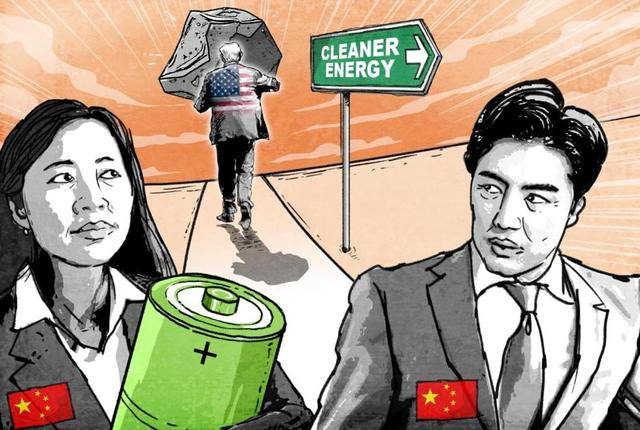
特朗普带美国重走“大清老路”,给14亿中国人看了出好戏
Sou Hu Cai Jing· 2025-12-15 08:55
Core Viewpoint - The article critiques the U.S. government's shift away from clean energy policies under the Trump administration, likening it to a historical regression that could jeopardize the country's energy future and global standing in clean technology [1][3][20]. Energy Policy Shift - The Trump administration has publicly reversed the previous encouragement of clean energy, announcing a significant investment in coal and terminating tax incentives for electric vehicles and renewable energy sources [3][5]. - The approval process for wind and solar projects has been centralized at the federal level, leading to delays and increased bureaucratic hurdles for new projects [5][12]. Stability and Supply Concerns - The shift in energy policy raises concerns about the stability of electricity supply, with reports indicating potential severe shortages and increased frequency of power outages in extreme weather conditions [7][9]. - The administration attributes rising electricity prices to renewable energy sources, despite evidence suggesting that clean energy could enhance supply capacity [7][9]. Industry and Global Position - U.S. clean energy companies face challenges due to increased tariffs and barriers, which hinder their competitiveness and long-term planning [9][11]. - The U.S. withdrawal from the green transition could diminish its influence in global energy markets, allowing countries like China to fill the void and advance their own clean energy initiatives [11][20]. Internal Resistance and State-Level Actions - Despite federal policy changes, several states, particularly those leading in energy transition, continue to pursue their own clean energy projects, indicating a disconnect between federal and state-level policies [12][14]. - There is notable dissent within the Republican Party regarding the energy policy, with some members advocating for the continuation of wind energy projects due to their economic benefits [14][16]. Market Dynamics and Future Implications - The declining costs of wind and solar energy mean that many projects can remain profitable without government subsidies, suggesting that market forces may continue to drive clean energy development despite federal opposition [14][16]. - The article emphasizes that the U.S. is at risk of falling behind in the global energy transition, as its policy reversals create uncertainty for businesses and investors [18][20].
重卡年产销30万辆!山东重工中国重汽集团2026年合作伙伴大会即将启幕
Zhong Zheng Wang· 2025-12-15 05:54
Core Insights - In 2025, China National Heavy Duty Truck Group (CNHTC) is expected to achieve a significant milestone with heavy truck production and sales exceeding 300,000 units, surpassing the historical peak of 2021 [1] - The upcoming 2026 Global Partner Conference, themed "Technology Leads to Win-Win Across the Entire Chain," will focus on CNHTC's development logic behind its leading position and unveil transformative technologies and strategies [1] Group 1 - The conference will feature over 10 core exhibition areas, showcasing a comprehensive one-stop solution and presenting more than 100 key products across various vehicle categories, including special vehicles, cargo trucks, engineering vehicles, and new energy technologies [1] - The event aims to construct a complete closed-loop from technology to value, highlighting advancements from traditional power optimization to breakthroughs in new energy technology and high-level intelligent services [1] Group 2 - The conference will delve into the underlying logic and application potential of cutting-edge technologies in the digital and new energy sectors, demonstrating how CNHTC's innovations can enhance operational efficiency and deliver tangible benefits to users [2] - The core intention of the conference is to reconstruct the industrial value ecosystem, focusing on the entire lifecycle value of users, and fostering collaboration across the entire ecological chain [2] - The event will not only showcase new technologies, products, and services but also aim to redefine cooperation paradigms and experiences with partners, exploring pathways for sustainable and high-quality value growth [2]
