贸易保护主义

Search documents
千亿关税大棒砸向70国,巴西大豆烂港口,印度工厂急裁员,美国自己反被割
Sou Hu Cai Jing· 2025-08-13 04:59
美国中西部钢铁厂因加拿大报复性关税被迫停产,超市里一双普通运动鞋价格飙涨40%。 美国工厂的倒闭潮从汽车业蔓延开来。通用汽车将8亿美元的关税 成本转嫁给消费者,销量暴跌导致俄亥俄州工厂裁员2000人;重型机械巨头卡特彼勒直接关停伊利诺伊州的百年老厂,将生产线迁往印尼。 德国精密机床 困在海关导致底特律汽车厂停产,日本零件商将越南产能紧急转向泰国。 美国对印度购买俄油追加25%的"二级关税",让印度出口商总税率飙升至75%,穆 迪报告显示,这场关税风暴可能导致印度经济增长率跌破6%。更令人担忧的是,美国海关仓库里,仿制药缺货警报已响彻三天,而印度供应着全美65%的 仿制药。 科技封锁的反噬也开始显现。 特朗普宣布对半导体征收100%关税后,苹果连夜承诺追加千亿美元在美投资,但台积电亚利桑那工厂的成本比台湾高出6 倍,最终导致iPhone价格上涨23%。 宾夕法尼亚大学的模型显示,每保护一个钢铁岗位,会导致其他行业流失五个就业机会。 特朗普的"对等关税"清单,如同精准的屠刀,狠狠地切割着全球贸易版图。 巴西和印度首当其冲,大豆、咖啡、医药和纺织品面临高达50%的关税,印度珠 宝商90亿美元的年出口额瞬间化为泡影。 ...

【观天下】当“凯尔特之虎”遭遇美国关税威胁
Sou Hu Cai Jing· 2025-08-13 04:13
Core Insights - Ireland's economy, once reliant on low GDP, has transformed into a major player in the pharmaceutical sector, becoming the largest exporter of medical products in the EU, with a significant dependency on the US market for exports [1][2][3] Economic Growth and Dependency - Ireland's GDP per capita has surpassed traditional economic powers like France and Germany, earning the nickname "Celtic Tiger" due to its strong growth driven by globalization and an export-oriented economy [1] - In 2024, Ireland's total goods export is projected to reach nearly €224 billion, with medical and pharmaceutical products accounting for €99.9 billion, nearly 45% of total exports [2] - The US is the largest market for Irish exports, with over €72 billion in goods exported, of which €58 billion are pharmaceutical products, representing approximately 60% of total exports to the US [2] Foreign Direct Investment - Ireland has attracted a cumulative foreign direct investment of €1.3 trillion, equivalent to 255% of its GDP, significantly higher than the EU average [2] - US investments account for €897 billion, making up 69% of total foreign direct investment in Ireland, highlighting the critical nature of the US market for Ireland's economy [2] Trade Vulnerability - The Irish economy is highly sensitive to changes in US trade policy, with potential tariffs posing a significant risk to its export-driven model [2][3] - The Irish government and industry express concerns that proposed high tariffs on imported pharmaceuticals could severely impact the economy, with predictions of a 1.5% contraction in economic activity over five years and the loss of 56,000 to 70,000 jobs [3] Market Reactions - In anticipation of potential tariffs, Irish pharmaceutical exports to the US surged in early 2023, with March exports reaching €23.6 billion, a 243.3% increase year-on-year [3] - There are fears that this spike in exports may lead to a sharp decline once tariffs are implemented, resulting in a significant drop in export volumes [3] Economic Fluctuations - Ireland's economy experienced significant fluctuations, with a 1% decline in GDP in Q2 2023, contrasting sharply with a 7.4% growth in Q1 2023, indicating the volatility introduced by external trade pressures [4] - The current geopolitical climate necessitates a reevaluation of Ireland's reliance on the US market, as the country faces challenges in maintaining its growth trajectory amid rising protectionism [4]
11国联手反美!抢在莫迪来中国之前,80岁总统下令,直接盯上美国!中国必须做好准备
Sou Hu Cai Jing· 2025-08-13 03:08
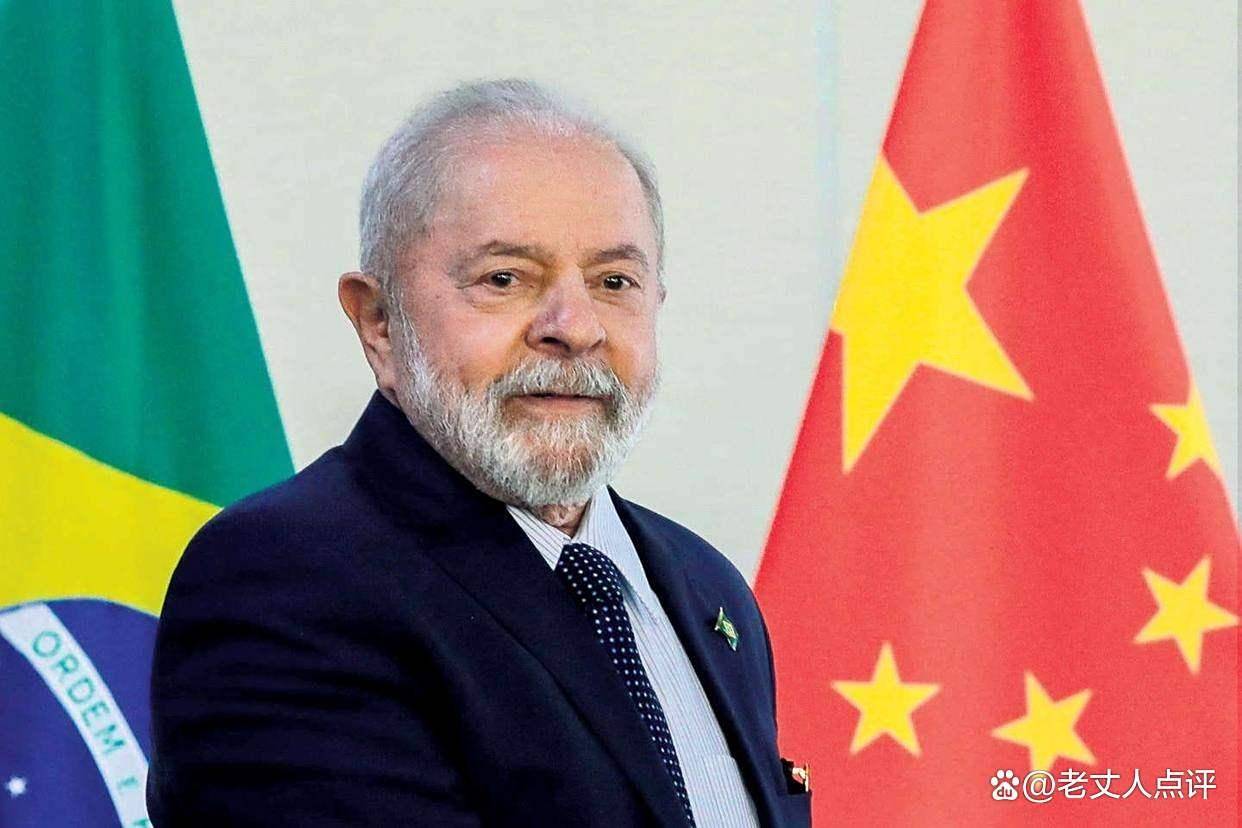
Core Points - The recent international situation has seen 11 countries unite against the U.S., particularly in response to aggressive tariff policies imposed by the U.S. government [1][3] - Brazil's President Lula has taken a strong stance against U.S. tariffs, which have significantly impacted trade relations, marking the lowest point in U.S.-Brazil relations in 200 years [3] - Brazil and India are collaborating to counter U.S. tariffs, aiming to increase bilateral trade to $20 billion by 2030 and expand trade agreements [3][5] - The 11 BRICS nations have collectively criticized the U.S. for its unilateral tariff actions, indicating a growing resistance to U.S. economic dominance [3][5] - Brazil is actively seeking to strengthen trade ties with emerging economies and has filed a request with the WTO to discuss U.S. tariffs [3][5] - India has also expressed its discontent with U.S. tariffs, emphasizing the need to protect its domestic industries while maintaining a firm stance against U.S. pressure [5] - The actions of these countries reflect a broader trend towards de-dollarization and a desire to reduce reliance on the U.S. dollar in international trade [5][7] - China plays a crucial role in supporting these nations, as evidenced by its quick response to U.S. tariffs on Brazilian coffee, allowing exports to China [7] Summary by Sections U.S. Tariff Policies - The U.S. has imposed significant tariffs on Brazilian and Indian products, with rates reaching as high as 50% [1][3] - These actions have provoked strong reactions from both Brazil and India, leading to discussions on how to respond collectively [3][5] Brazil's Response - Brazil is enhancing trade relations with emerging economies and has initiated discussions to expand trade agreements with Mexico [3] - The Brazilian government has also approached the WTO regarding U.S. tariffs and is considering joint actions with other countries [3][5] India's Position - India has declared U.S. tariffs as unfair and is committed to protecting its domestic industries, despite internal pressures to concede [5] - The Indian government is prepared to take necessary actions to safeguard its economic interests [5] BRICS Coalition - The 11 BRICS nations have united to challenge U.S. economic policies, indicating a shift towards greater cooperation among emerging economies [3][5] - This coalition reflects a growing sentiment against U.S. economic hegemony and a push for a more balanced global trade system [5][7] De-dollarization Efforts - The collective actions of these countries signify a move towards reducing dependence on the U.S. dollar, with agreements to conduct trade in local currencies [5][7] - This trend is expected to reshape global trade dynamics and reduce U.S. influence in international markets [7]
特朗普捅马蜂窝,11国加入战局美国遭围攻,认定咱们是唯一赢家
Sou Hu Cai Jing· 2025-08-12 23:20
Core Argument - The article argues that Trump's tariff policy, while seemingly beneficial in the short term, ultimately sows the seeds of America's decline in global hegemony, leading to a loss of trust among allies and a strengthening of adversaries [1][4]. Group 1: Impact on Allies - Trump's tariff policy has resulted in a complete breakdown of trust among allies, with countries like the EU and Japan feeling betrayed and seeking more reliable partnerships, such as with China [10]. - The once steadfast allies are now distancing themselves from the U.S., which has led to a significant erosion of loyalty and trust [3][10]. - The actions taken by the Trump administration have pushed allies towards alternative alliances, marking a shift in global cooperation dynamics [10]. Group 2: Response from Adversaries - In response to U.S. trade policies, BRICS nations (Brazil, Russia, India, China, South Africa, and others) are uniting to form a counterforce against American hegemony, indicating a profound shift in the global power structure [3][5]. - Brazilian President Lula's strong stance against U.S. tariffs exemplifies the growing resistance among emerging markets, as they seek to challenge U.S. dominance [3][5]. Group 3: Historical Parallels - The article draws parallels between Trump's tariff policies and Argentina's protectionist measures under President Perón, which initially appeared successful but ultimately led to economic decline [12]. - Historical lessons suggest that isolationism and protectionism can accelerate decline, as seen in the case of Argentina, which serves as a cautionary tale for current U.S. policies [4][12].
中美贸易战胜负几乎已定,人民日报向世界宣布喜报,特朗普钦点继任者
Sou Hu Cai Jing· 2025-08-12 15:03
Group 1 - China's economy grew by 5.3% in the first half of the year, while the US GDP growth was only 1.25%, highlighting a significant disparity in economic performance [1][3][5] - The International Monetary Fund's data indicates that China's manufacturing and consumption are stable, contrasting with the US's slowing consumer spending and investment [3][5] - The Chinese market is described as the fastest-growing increment area globally, reflecting confidence in its economic trajectory [3][5] Group 2 - The US's tariff policy, which has led to an average tariff rate of 18.3%, has resulted in increased costs for American households, with an additional annual burden of $2,400 [5][7][10] - The tariffs are seen as a modern version of harmful economic policies, ultimately transferring costs to consumers and leading to inflationary pressures [7][10][11] - The US's trade surplus with China stands at $586 billion, overshadowing the $50 billion in tariff revenue, indicating a misalignment in trade benefits [5][9] Group 3 - The US's trade protectionism has prompted countries to seek new partnerships, diminishing its influence in global trade [15][17] - China's strategic response to the trade war includes diversifying its export markets and reducing reliance on the US, which has shown positive results in trade data [17][21] - Historical parallels are drawn between current US policies and past protectionist measures that led to economic downturns, suggesting a potential repeat of history [19][21] Group 4 - The "Belt and Road" initiative by China is gaining traction, contrasting with the US's approach, and is seen as a model of cooperative economic development [21][23] - The article emphasizes that cooperation and win-win strategies are essential for sustainable economic growth, while confrontation leads to mutual losses [21][23]
美官员:特朗普认为中国会最早投降,当中方反击时,美国已经输了
Sou Hu Cai Jing· 2025-08-12 15:03
Group 1: U.S. Trade Policy and Misjudgments - The Trump administration's decision to impose tariffs on Chinese goods was based on the belief that China would quickly capitulate due to its reliance on the U.S. market, with exports to the U.S. accounting for 19% of China's total exports [3][8] - The initial tariff rate was raised from 34% to 84%, affecting over $300 billion in goods, which was framed as a key step to make America great again [3][5] - The U.S. underestimated China's economic resilience and the interconnectedness of global supply chains, leading to significant miscalculations in the trade war [7][10] Group 2: China's Economic Response - China's countermeasures included imposing equivalent tariffs on U.S. goods, which highlighted the flaws in the U.S. strategy and resulted in increased costs for American consumers [5][18] - The Chinese economy demonstrated strong resilience, with a 9.7% year-on-year growth in high-tech manufacturing and a 45.4% increase in new energy vehicle production in Q1 2025 [8][18] - China's strategic responses targeted key U.S. industries, such as agriculture and automotive, effectively pressuring U.S. companies to advocate for negotiations [15][19] Group 3: Global Economic Impact - The trade war led to job losses in the U.S., with approximately 180,000 jobs lost in the first half of 2025, predominantly in manufacturing [21] - The U.S. trade deficit actually widened to $120 billion in the first half of 2025, indicating that tariffs did not achieve their intended effect [24] - Internationally, the U.S. faced backlash, with allies like the EU imposing retaliatory tariffs, and countries like India accelerating trade talks with China [22][24] Group 4: Long-term Strategic Shifts - China's focus on reducing dependency on U.S. markets and enhancing its domestic consumption was evident, with retail sales surpassing 12 trillion yuan in Q1 2025 [18] - The establishment of trade agreements with ASEAN and advancements in technology, such as the production of 7nm chips by Huawei, showcased China's strategic pivot [17][18] - The trade war underscored a shift in global economic dynamics, where the U.S. could no longer dictate terms without considering the resilience and adaptability of other nations [26]
真当中国不会出手?美国传出重要风声,关税或猛增100%!中方:九三阅兵不必给特朗普留座
Sou Hu Cai Jing· 2025-08-12 09:33
Core Viewpoint - The recent announcement by Trump regarding the consideration of additional tariffs on Chinese goods has raised significant concerns about the future of US-China trade relations [1][3]. Group 1: Trade Relations and Negotiations - Previous US-China economic talks had shown promise, with Trump initially expressing approval and hinting at a visit to China to further bilateral trade relations [3]. - However, Trump's subsequent demands for unreasonable conditions have escalated tensions, reversing the previously improving atmosphere of negotiations [3]. - The US's unilateral adjustments to tariff rates in the Japan-US trade agreement highlight a pattern of unpredictability in trade agreements, which may affect future negotiations with China [3]. Group 2: Impact of Tariff Threats - Trump's proposed tariffs would significantly disrupt the ongoing US-China trade talks, leading to increased costs for Chinese exporters and higher prices for American consumers [5]. - The interconnectedness of global supply chains means that escalating trade tensions could have far-reaching consequences, potentially destabilizing global trade and affecting economic recovery [5][7]. - The potential for economic friction to spill over into other areas of bilateral relations adds complexity to the US-China relationship [5]. Group 3: Global Economic Context - The rise of trade protectionism poses challenges to the global economy, and while competition exists between the US and China, there remains substantial room for cooperation on global issues [7]. - The US's tariff threats are seen as unilateral actions that contradict the principles of economic globalization, which emphasizes interdependence among nations [7]. - Stability in US-China trade relations is crucial not only for the two countries but also for the global economy, necessitating rational dialogue and cooperation to foster a healthier trade environment [7].
新闻分析丨产量持续下降折射英国汽车产业困局
Xin Hua Wang· 2025-08-12 05:43
虽然英美两国近期达成一项新的贸易协议,但业内人士普遍认为,这难以从根本上缓解英国汽车制 造业面临的外部压力。根据协议,每年从英国出口到美国的前10万辆汽车将按照10%的额外关税税率征 税,超过部分则按25%的额外关税税率征税。 "与原先相比,这仍是一种倒退。"贝利指出,仅捷豹路虎一家企业的出口量就可能超过10万辆的上 限。 新华社伦敦7月9日电 新闻分析|产量持续下降折射英国汽车产业困局 新华社记者赵家淞 赵小娜 英国汽车制造商与贸易商协会日前发布的数据显示,5月英国汽车总产量同比大幅下降32.8%至 49810辆,创下自1949年以来除2020年疫情年份外的同期最低水平。分析人士指出,受美国加征关税、 全球产业链动荡与投资信心不足等多重因素影响,英国汽车制造业正滑向数十年来的发展低谷。 数据显示,英国汽车总产量已经连续5个月下滑。今年前5个月,英国汽车总产量约为34.82万辆, 同比下降12.9%,为1953年以来同期最低水平。 英国伯明翰大学经济学教授戴维·贝利表示,英国汽车业正陷入"低产能危机",工厂普遍生产不饱 和、成本高企,全球竞争力持续下滑。"(全球)汽车产业正被迫重塑结构,英国在其中的位置正变得 ...
不忍了!美国持续打压,中国放下“道德包袱”,雷霆反击让西方胆寒
Sou Hu Cai Jing· 2025-08-12 02:08
Core Points - The ongoing economic and geopolitical rivalry between the US and China has created significant uncertainty in the global economy, affecting ordinary citizens with high prices and economic instability [1] - The trade conflict is rooted in long-standing tensions that escalated after the Trump administration adopted a comprehensive strategy to pressure China, starting from January 2025 [2] - The US has implemented a series of tariffs and trade restrictions on Chinese goods, significantly increasing the total tariff level and impacting Chinese exports [2] - In response to US actions, China has enacted strong countermeasures, including export bans on critical materials and increased tariffs on US goods, which have disrupted US supply chains [6][10] - The trade war has led to a rise in effective tariff rates in the US, reaching the highest level since 1934, and has resulted in market volatility and negative employment data [12] Trade Policies - The US imposed a 10% tariff on all Chinese imports in March 2025, which escalated to a total tariff level of 54% by April 2025, affecting various sectors from agriculture to electronics [2] - The US further increased tariffs on Chinese goods to 104% and initiated investigations into Chinese maritime logistics and shipbuilding, targeting key industries [2] - China's countermeasures included banning exports of gallium, germanium, and other critical materials to the US, which are essential for various advanced technologies [6] Geopolitical Dynamics - The US has sought to strengthen alliances in the Indo-Pacific region to counter China's influence, criticizing China's actions in the Taiwan Strait and South China Sea [5] - Despite tensions, there remains potential for cooperation between the US and China in areas such as climate change and technology exchange, depending on the US's approach [14] Economic Impact - The trade war has resulted in an additional tax burden of approximately $1,300 per American household due to the tariffs imposed by the Trump administration [2] - The escalation of tariffs has led to increased costs for US consumers and businesses, contributing to economic instability and market downturns [12]
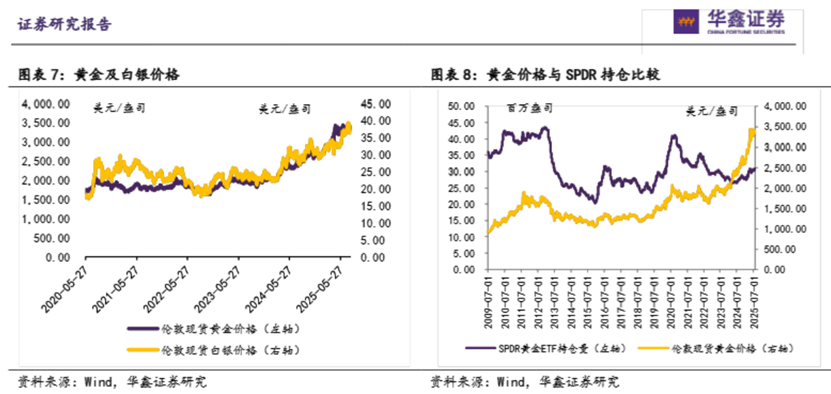
国际金价大跌2.80%,但多家券商机构仍看多金价预期
Huan Qiu Wang· 2025-08-12 01:37
Group 1 - The international gold price experienced a significant drop of 2.80%, settling at $3,393.7 per ounce after reaching a record high of $3,534.1 per ounce [1] - Market analysts noted limited reactions to geopolitical events, such as the upcoming video conference on Ukraine, and highlighted increased uncertainty in U.S. monetary policy due to the search for a new Federal Reserve chair [1] - Despite short-term fluctuations, several institutions remain optimistic about gold's long-term performance, citing factors like "rate cut trades" and geopolitical tensions as strong support for gold prices [1][2] Group 2 - The U.S. Customs and Border Protection has classified major gold products, including one-kilogram and 100-ounce gold bars, as import items subject to tariffs, which initially caused gold prices to spike above $3,500 per ounce [1] - The Trump administration is expected to clarify that gold bars should not be subject to tariffs, with an executive order anticipated to address misinformation regarding tariffs on gold and other specialty products [1] - China's central bank reported purchasing 1.86 tons of gold in July, marking nine consecutive months of gold purchases, which aligns with market expectations of three interest rate cuts by the Federal Reserve this year, indicating potential for further increases in precious metal prices [5]