贸易战

Search documents
美国50%关税对印度影响几何?穆迪:制造业雄心受挫、经济增长放缓
Feng Huang Wang· 2025-08-08 10:45
Group 1 - The trade war initiated by President Trump has severely impacted India, the world's fifth-largest economy, with a new 50% tariff on Indian goods due to its continued purchase of Russian oil [1][2] - Moody's has indicated that the high tariffs could significantly harm India's manufacturing ambitions and slow down economic growth, projecting a potential reduction of approximately 0.3 percentage points in India's GDP growth forecast for the fiscal year ending March 2026 [2] - The substantial tariff disparity compared to other Asia-Pacific countries may undermine India's efforts to develop its manufacturing sector, particularly in high-value industries like electronics, and could reverse recent gains in attracting related investments [2] Group 2 - Moody's also noted that if India reduces its oil imports from Russia to avoid punitive tariffs, it may struggle to secure sufficient alternative oil supplies, which could hinder economic growth and exacerbate inflation due to rising global oil prices [2] - The increased import bills resulting from tariffs are expected to widen India's current account deficit, especially as weakened tariff competitiveness may deter foreign investment [2] - Despite these challenges, Moody's anticipates that India may negotiate a compromise solution, as the Reserve Bank of India has maintained a neutral policy stance amid ongoing trade uncertainties [3]
道和环球(00915)发盈警 预期上半年取得不少于90万美元的亏损
智通财经网· 2025-08-08 09:36
Core Viewpoint - Daohe Global (00915) expects to incur a loss of no less than $900,000 in the first half of 2025, compared to nearly breakeven in the same period last year [1] Summary by Relevant Sections - **Financial Performance** - The company anticipates a loss of at least $900,000 for the upcoming reporting period [1] - Last year's performance was close to breakeven [1] - **Reasons for Loss** - The board attributes the expected loss primarily to the intensified challenges and uncertainties in the business environment due to the trade war, resulting in a decline in sales compared to the same period last year [1] - The trade and supply chain management services segment recorded a one-time restructuring cost of approximately $400,000 [1]
美欧贸易协议使德国汽车工业获“短暂喘息”,15%关税阵痛难解
Di Yi Cai Jing· 2025-08-08 07:07
Core Insights - The German automotive industry is facing significant challenges due to U.S. tariffs, with a call for immediate implementation of trade agreements to alleviate pressures [1][3][4] - Recent data indicates a slight recovery in the automotive business climate in Germany, although uncertainty remains high [1][5] - Major European automakers have revised their financial forecasts downward due to tariff impacts, with Volkswagen and Mercedes-Benz notably adjusting their profit expectations [3][4][6] Group 1: Tariff Impact - The U.S. has imposed a 25% tariff on automobiles, alongside increased tariffs on steel and aluminum, creating unprecedented pressure on the automotive sector [3] - Volkswagen reported a profit reduction of approximately $1.5 billion in the first half of the year due to tariffs, leading to a downward revision of its sales growth forecast from 5% to flat [3] - Mercedes-Benz expects a significant drop in revenue for 2025, attributing a 50% decline in profits in the first half of the year to tariff impacts [3][6] Group 2: Economic Uncertainty - Economic uncertainty is expected to persist until the end of the year, as the details of the recently announced trade agreement between the EU and the U.S. are still awaited [1][4] - The Ifo Institute reported a slight improvement in the export expectations index for German automotive companies, but the overall sentiment remains cautious [5] - Even with a potential reduction in tariffs, the German automotive industry could face additional costs amounting to billions annually [4][5] Group 3: Production Challenges - The automotive industry is capital-intensive, and the uncertainty surrounding tariffs makes long-term investment decisions difficult for manufacturers [6][7] - Companies like Ford are experiencing significant losses due to tariffs, despite a high percentage of their vehicles being produced domestically [8] - The current production capacity in the U.S. is not optimized, and the establishment of new factories is unlikely due to the high costs associated with tariffs on imported components [8]


健盛集团(603558):俏尔婷婷盈利能力改善,上半年高分红
HUAXI Securities· 2025-08-08 05:31
证券研究报告|公司点评报告 [Table_Date] 2025 年 08 月 08 日 [Table_Title] 俏尔婷婷盈利能力改善,上半年高分红 [Table_Title2] 健盛集团(603558) | [Table_DataInfo] 评级: | 买入 | 股票代码: | 603558 | | --- | --- | --- | --- | | 上次评级: | 买入 | 52 周最高价/最低价: | 11.86/7.88 | | 目标价格: | | 总市值(亿) | 34.05 | | 最新收盘价: | 9.64 | 自由流通市值(亿) | 34.05 | | | | 自由流通股数(万) | 353.18 | [Table_Summary] 事件概述 2025H1 公司收入/归母净利/扣非净利/经营性现金流分别为 11.70/1.42/1.36/2.52 亿元、同比增长 0.19%/-14.46%/-15.84%/146.96%,净利下降我们分析主要由于关税反复、市场疲软影响下而产能端人员配备 超配,叠加引入新高管导致管理费用增加;经营性现金流净高于归母净利主要由于经营性应收项目减少。 25Q2 收 ...

美国开启贸易竞争时代 美经济学家:关税错误比大萧条时期更严重
Zhong Guo Xin Wen Wang· 2025-08-08 03:27
1930年,《斯穆特-霍利关税法》开启了一场全球贸易灾难。近百年后,美国再次站在了类似的岔路 口。 8月7日午夜,美国对多个贸易伙伴加征的新一轮关税正式生效。根据总统特朗普签署的行政令,数十个 国家和地区被征收10%-50%不等税率,将美国整体关税水平推至1935年以来的最高点。 "将特朗普的政策与当年类比,对胡佛政府反而不公。"希克斯强调,当今人们对关税危害的认知远胜上 个世纪,因此,特朗普所犯的错误比当年更为严重。 美国桑福德大学经济学教授阿尔特·卡登也认为,特朗普正在犯与大萧条时期同样的错误。但不幸的 是,这些错误在政治上很受欢迎。人们只关注肉眼可见的好处,却忽视了难以察觉的成本。 与关税政策同步推进的,是一套以投资换取豁免的谈判机制。多个国家和地区宣布巨额投资或采购承 诺,以期换得较低税率。韩国称将在美投资3500亿美元,欧盟则声称企业将投入至少6000亿美元,日本 也推出了5500亿美元基金。 希克斯认为,这些所谓的让步多数本就存在,如今只是为安抚特朗普而刻意摆上台面。此前许多声势浩 大的投资承诺最后都化为泡影,因此本轮贸易谈判,并不意味着美国赢得了胜利。 特朗普称这些关税为美国"赚来了数万亿美元" ...
刚被特朗普“罚”就让步?印度被爆还没打算报复、抓紧21天窗口期谈判
Hua Er Jie Jian Wen· 2025-08-08 00:05
Core Viewpoint - The Indian government is considering trade concessions to the U.S. in response to newly imposed tariffs, aiming to avoid escalating trade tensions while maintaining strategic autonomy [1][4]. Trade Negotiations - India is evaluating potential trade concessions, particularly in agriculture and dairy sectors, to satisfy U.S. demands while minimizing domestic impact [3][6]. - The Indian government views the 21-day window before the tariffs take effect as a critical opportunity for negotiations with the Trump administration [4][7]. Economic Impact - The U.S. is India's largest export market, with exports projected to reach nearly $87 billion in 2024. A 50% tariff could significantly impact key sectors such as textiles, automotive parts, and steel [2][6]. - Indian exporters are concerned about the severe repercussions of the tariffs, with estimates suggesting that nearly 55% of goods exported to the U.S. could be affected [6][7]. Agricultural Concerns - Agriculture is a highly sensitive area for the Indian government, with farmers forming a powerful political lobbying group. The government is resistant to importing genetically modified products [6][7]. - Prime Minister Modi has expressed a firm stance on protecting farmers' interests, indicating a willingness to face personal and political costs for this commitment [6]. Strategic Autonomy - The Indian government aims to achieve a bilateral agreement that preserves its strategic autonomy while addressing U.S. trade concerns [4][5]. - Despite domestic calls for a strong response to U.S. actions, the Indian government is prioritizing diplomatic solutions over retaliatory measures [4][7].
刚被特朗普“罚”就让步?印度被爆还没打算报复、抓紧21天窗口期继续谈判
Hua Er Jie Jian Wen· 2025-08-07 22:14
Core Points - The article discusses India's response to the additional tariffs imposed by the U.S. on Indian goods, particularly in light of India's continued purchase of Russian oil [1][2][4] - India is considering trade concessions in agriculture and dairy sectors to negotiate a bilateral agreement with the U.S. instead of retaliating [3][4][6] - The potential impact of the U.S. tariffs on India's economy is significant, especially for industries like textiles, automotive parts, and steel [2][6][7] Group 1: Trade Negotiations - India is evaluating possible trade concessions to satisfy U.S. demands while minimizing the impact on domestic producers [3][4] - The Indian government views the 21-day window before the tariffs take effect as a critical opportunity for negotiations [4][7] - Officials are discussing limited imports of genetically modified corn for non-human consumption as part of the negotiations [3][6] Group 2: Economic Impact - The U.S. is India's largest export market, with exports projected to reach nearly $87 billion in 2024 [2] - If the 50% tariffs are implemented, it could severely impact Indian exports, particularly in textiles, apparel, and automotive sectors [2][6] - Indian exporters are concerned about the potential economic repercussions, with some industries likely to face significant challenges [6][7] Group 3: Domestic Political Considerations - Agriculture is a highly sensitive area for the Indian government, with farmers forming a powerful political lobbying group [6] - Prime Minister Modi has expressed a firm stance on protecting farmers' interests, indicating a reluctance to compromise on agricultural imports [6] - Despite domestic pressures, the Indian government is currently prioritizing diplomatic solutions over retaliatory measures [4][7]
印美“硬碰硬”,为了什么?
第一财经· 2025-08-07 14:56
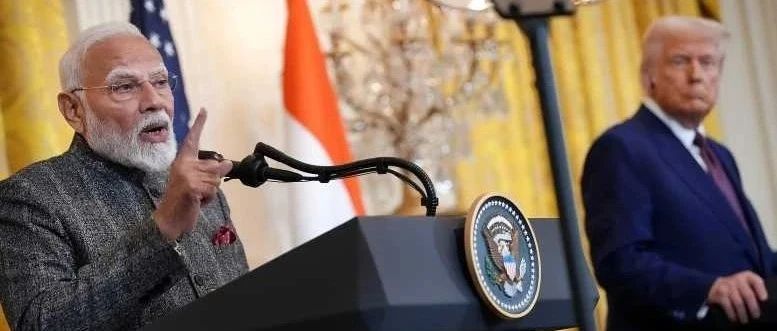
2025.08. 07 本文字数:1926,阅读时长大约4分钟 作者 | 第一 财经 钱 小岩 据新华社报道,根据白宫6日发布的公告,特朗普称俄罗斯政府的行为和政策继续对美国国家安全和外交政策构成"异常威胁",为应对俄乌冲突引发的 国家紧急状态,"对直接或间接进口俄罗斯石油的印度征收额外从价关税是必要和合适的"。 新的关税措施将在行政令公布21天后(即8月27日)实施 ,届时印度的纺织品、珠宝首饰、汽车零部件、海产品等主要出口商品将课以50%的重税, 而像苹果手机等电子产品,以及医药产品仍将享受关税豁免待遇。 特朗普近日多次以印度购买俄罗斯石油为由,威胁大幅提高对印度产品的关税。他称,印度不仅大量购买俄罗斯石油,还在二级市场上销售并获取大额 利润。 半年前美国总统特朗普还将印度总理莫迪称之为"伟大的朋友",如今双方关系在贸易战的硝烟下,露出了明显的裂痕。 据新华社报道,特朗普6日签署行政令,以印度"以直接或间接方式进口俄罗斯石油"为由,对印度输美产品征收额外的25%关税。 此前特朗普已经签署行政令,美国从8月7日开始对印度输美商品征收25%的关税。两者叠加后,印度输美商品将总体适用50%的关税税率。印度也由 ...
【UNFX课堂】美元的脆弱基石:贸易战、联储变局与就业困境
Sou Hu Cai Jing· 2025-08-07 10:28
Core Viewpoint - The recent stability of the US dollar is misleading, as underlying risks are accumulating, with significant declines earlier in the year and temporary support factors now appearing weak [1][4]. Group 1: Economic Factors - The US dollar experienced a nearly 11% decline from January to April, followed by a brief recovery due to strategic concessions on tariffs and stable employment data [1]. - Recent tariff measures introduced by President Trump, particularly on semiconductors and pharmaceuticals, are raising concerns about economic protectionism and potential price increases [1][2]. - The US employment market is showing signs of fatigue, with non-farm payroll reports failing to exceed 100,000 for three consecutive months, historically a recession indicator [2][4]. Group 2: Federal Reserve Independence - The independence of the Federal Reserve is under scrutiny, with recent resignations and potential political influences on monetary policy [2]. - Speculation about future Fed leadership includes candidates who may prioritize political objectives over traditional monetary policy, potentially undermining the credibility of the Fed [2][4]. Group 3: Market Reactions - The reduction in short positions against the dollar suggests a temporary stabilization, but ongoing fundamental deterioration and rising political risks indicate clear downward pressure on the dollar [3][4]. - The euro is largely reacting to US macroeconomic changes, with limited upward movement despite some narrowing of interest rate differentials [3]. Group 4: Summary of Risks - The foundations supporting the dollar's recent resilience—tariff adjustments, temporary stability from Powell, and reliable employment data—are now crumbling, leading to increased risks for the dollar [4][5]. - The market is now focused on which negative factor will trigger the dollar's downward trend first [5].
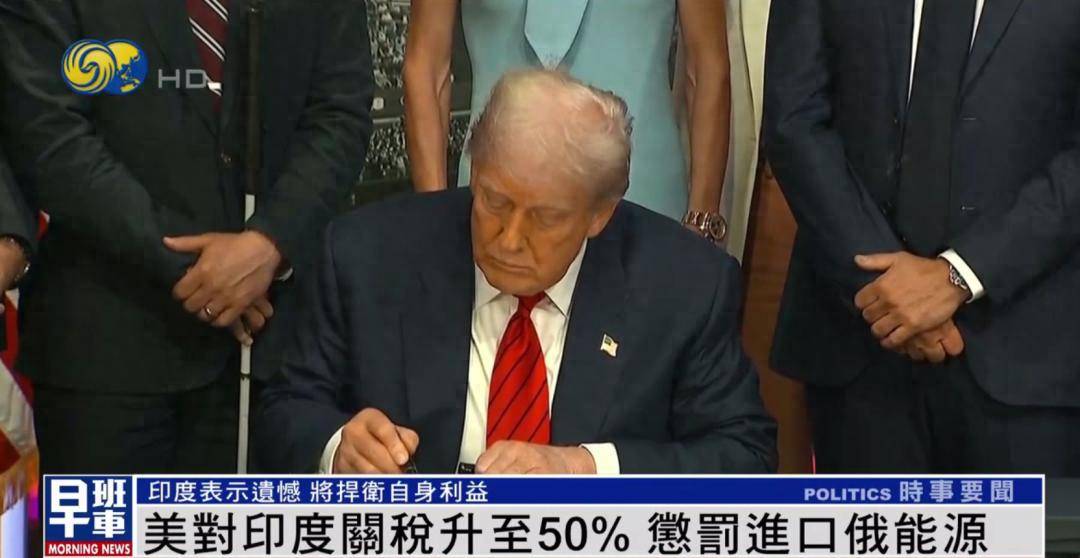
特朗普对印度关税翻倍升至50% 印度:将采取一切必要措施捍卫利益
Sou Hu Cai Jing· 2025-08-07 05:47
Core Points - The article discusses the announcement by President Trump to double tariffs on India from 25% to 50% due to India's continued purchase of Russian oil, marking an escalation in the trade conflict between the U.S. and India [1][4] - This new executive order represents the first instance of secondary sanctions imposed by the U.S. on a country identified as aiding Russia's war efforts [1][4] - The combined tariffs will result in the highest tariff rate currently imposed by Trump, affecting a wide range of imports from India [1] Group 1 - The new tariffs will take effect 21 days after the executive order is signed, significantly increasing the total tariff rate on imports from India to 50% [1] - In the previous year, the total value of goods imported by the U.S. from India was $87 billion, while India imported $42 billion worth of goods from the U.S. [6] - Major imports from India to the U.S. include pharmaceuticals, communication equipment like smartphones, and clothing, with smartphones being exempt from the new tariffs [6] Group 2 - The Indian government has expressed regret over the U.S. actions, emphasizing that its imports of Russian oil are based on market factors and aimed at ensuring energy security for its 1.4 billion citizens [3] - The new tariffs are expected to impact the long-standing efforts to deepen bilateral relations between Washington and New Delhi [4] - The U.S. exports to India primarily consist of various types of oil and gas, chemicals, and aerospace products and components [6]