反内卷

Search documents
“反内卷”十大制度硬核护航 全链条筑基市场公平竞争
Chang Jiang Shang Bao· 2026-01-12 01:20
Core Viewpoint - The "involution" competition disrupts market signals, reduces resource allocation efficiency, and undermines long-term competitiveness of enterprises, affecting industrial structure optimization and high-quality development [1][2] Regulatory Developments - The National Market Regulation Administration has announced ten institutional achievements for the comprehensive rectification of "involution" competition by 2025, covering aspects such as unfair competition, platform governance, and standard leadership [1][2] - The ten institutions form a governance loop that covers pre-event, in-event, and post-event stages, providing a solid institutional guarantee for innovative development of various business entities [3] Implementation and Impact - The new regulations include the revised Anti-Unfair Competition Law, guidelines for internet platform anti-monopoly compliance, and standards for product and service quality on online trading platforms [3][4] - Initial effects show a positive trend in regulating improper interventions, leading to more rational and orderly market competition, and curbing phenomena like "subsidy wars" and "lowest price" strategies [4] Future Directions - The regulatory bodies will continue to strengthen the implementation of new regulations to ensure they translate into effective governance, supporting the deepening of a unified national market and achieving high-quality development [4][5] - A new round of "anti-involution" efforts is set to begin in 2026, with ongoing discussions in industries such as power and energy storage batteries to address irrational competition behaviors [5][6] Platform Economy Regulations - Recent regulations for the platform economy include the Network Trading Platform Supervision Management Measures and the Live E-commerce Supervision Management Measures, aimed at creating a fair and transparent online trading ecosystem [7] - These new rules are expected to enhance platform governance responsibilities and ensure compliance with legal standards, thereby protecting consumer rights and maintaining competitive order [7]

看好2026年A股表现!证券时报2025年四季度经济学家问卷调查:经济预期进一步改善
证券时报· 2026-01-12 00:13
Core Viewpoint - The survey indicates an optimistic outlook for China's economy in 2026, with a focus on stability and growth, as well as the need for supportive policies in the real estate sector [1][3][4]. Economic Outlook - Over 70% of economists believe that China's economic growth in the past year met expectations, with 21% stating it exceeded them [3][13]. - The expected GDP growth for 2025 is around 5%, with the total economic output projected to reach approximately 140 trillion yuan [3]. - The "Securities Times Economic Expectation Heat Index" has risen for three consecutive quarters, reflecting improved expectations for the economy [3]. International Trade and Investment - More than 60% of respondents expect the international trade environment to stabilize, with manageable impacts on China's economy [4][13]. - Fixed asset investment growth is anticipated to slightly increase in the first half of 2026, with 57% of respondents expressing optimism [4][14]. Stock Market Expectations - 96% of respondents rated the stock market outlook for the first half of 2026 positively, scoring 3 or above on a scale of 5 [6][19]. - Nearly 60% expect a slight inflow of cross-border capital, with A-shares and precious metals being the most favored asset classes [7][19]. Fiscal and Monetary Policy - Over 60% of economists believe there is room to increase the fiscal deficit rate, which is expected to remain above 4% [9][21]. - The next round of monetary easing, such as interest rate cuts, is anticipated to occur between the Lunar New Year and the end of the first quarter [9][21]. Real Estate Market Policies - A majority of respondents suggest implementing more supportive policies for the real estate market, including the establishment of a national housing stock purchase fund and lowering existing mortgage rates [10][22]. - 61% recommend the removal of restrictions in first-tier cities to stabilize the housing market [10][22].


中信证券:电池出口退税政策调整 整体影响预计可控
Mei Ri Jing Ji Xin Wen· 2026-01-12 00:11
每经AI快讯,1月12日,中信证券研报指出,1月9日,财政部、税务总局公告调整电池产品出口退税政 策。我们认为,本次政策是国家坚定推进"反内卷"、防止"内卷外化"的具体举措,政策连续性较强。从 影响来看,对于短期政策设置退税税率梯度式下降和过渡期的安排,企业可通过电池价格调整对冲影 响,同时海外需求有望迎来抢出口局面;中长期来看,在海外拥有电池产能的中国头部电池企业有望进 一步提升全球竞争力、获取更多的海外市场份额和更高的盈利水平。继续推荐中国头部电池企业。 ...
——交运周专题2026W2:航空反内卷提速推进,重申顺丰&同城底部机会
Changjiang Securities· 2026-01-11 23:30
Investment Rating - The report maintains a "Positive" investment rating for the transportation industry [11] Core Insights - The 2026 National Civil Aviation Work Conference outlines a strategic plan for the aviation sector, emphasizing a shift from recovery to high-quality development, with a focus on reducing internal competition and improving pricing regulations [6][40] - The report highlights significant growth in the aviation sector, with a projected increase in passenger transport volume to 810 million in 2026, representing a 5% year-on-year growth [40] - The logistics sector is expected to benefit from Alibaba's increased investment in instant retail, particularly for SF Express and Same City, which are positioned to capture a growing share of the market [7][49] Summary by Sections Civil Aviation - The conference reviewed the achievements of the 14th Five-Year Plan, noting that China has become the world's largest aviation population with over 500 million people [20] - For 2026, the focus will be on high-level openness and clearer allocation of international air rights, alongside measures to curb excessive competition [25][40] - The report suggests investment opportunities in major airlines such as Hainan Airlines, Spring Airlines, China Xinhua Airlines, and Juneyao Airlines due to expected improvements in revenue [6][40] Logistics - Alibaba's strategy for Taobao Flash Purchase aims for market share growth, with a focus on high-value users and retail categories, which is expected to drive significant order volume increases for SF Express [7][49] - SF Express Same City has seen a 55% year-on-year increase in daily order volume during the New Year period, indicating strong demand in the instant retail sector [53] - The report anticipates that SF Express will improve its profitability in Q4 2025 as it shifts focus to high-value services and reduces discounts on capacity [55] Passenger Transport - Domestic passenger volume has shown a 3% year-on-year increase, while international passenger volume has increased by 5% [58] - The average load factor for domestic flights has improved by 2.1 percentage points, and for international flights, it has increased by 3.3 percentage points [66] - The report notes a decline in oil prices, which is expected to positively impact operational costs for airlines [66] Maritime Transport - The report indicates a stabilization in oil shipping rates, with VLCC-TCE rates rising by 50.3% to $60,000 per day [9] - The container shipping index has seen a slight decline, but rates for routes to Europe and the US continue to rise due to seasonal demand [9]
趋势仍在,结构再平衡
Ge Long Hui· 2026-01-11 22:55
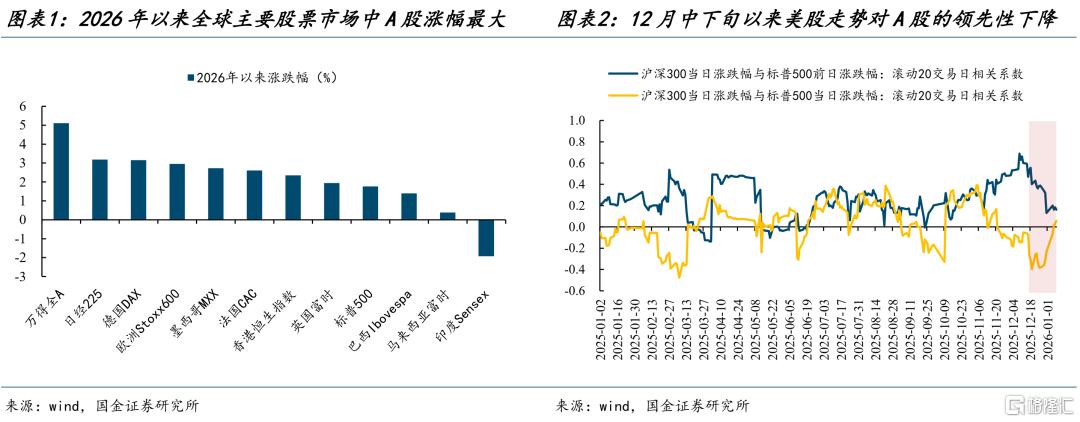
Group 1 - The recent improvement in market liquidity has driven the A-share market's rise, with a notable increase in margin trading balance by over 125 billion yuan in just half a month, leading to a more than 35% increase in trading volume [2][8] - Historical data indicates that similar market conditions have occurred six times in the past decade, with a high probability of continued strength in the A-share market over the next 10, 20, and 250 trading days following such volume increases [9][12] - However, there are signs of structural overheating, particularly in the commercial aerospace index, which has seen a significant increase in turnover rate and trading volume share, indicating a need for fundamental support for such rapid trading concentration [2][9] Group 2 - The negative impact of AI on the U.S. employment market is becoming evident, with December's non-farm payrolls falling short of expectations and a cumulative reduction of 340,000 jobs in sectors heavily affected by AI [3][15] - The ongoing concerns about a prolonged interest rate cut cycle by the Federal Reserve are alleviating fears of a second inflation wave, benefiting commodity prices as the demand-supply gap becomes more pronounced [3][23] - The geopolitical tensions are altering inventory behaviors among market participants, leading to increased stockpiling and a significant rise in copper and silver inventories since 2025 [24][27] Group 3 - Domestic policies aimed at reducing "involution" are being implemented, with industrial PPI showing a positive trend, indicating a shift from price drag to support for corporate revenues [4][35] - The recent regulatory focus on the photovoltaic industry has raised concerns about the commitment to anti-involution policies, but the overall direction remains focused on improving corporate profitability through reasonable policy guidance [4][40] - The market is expected to see improvements in corporate earnings as the anti-involution policies take effect, with a focus on preventing monopolistic practices while fostering innovation [4][42] Group 4 - The report maintains an optimistic outlook for the A-share market, suggesting that the ongoing liquidity improvements and fundamental changes will drive future performance [5][43] - Recommendations include focusing on industrial resource products that resonate with AI investments and global manufacturing recovery, as well as sectors benefiting from domestic consumption recovery [5][43]
首席经济学家热议2026资本市场新机遇
Xin Lang Cai Jing· 2026-01-11 21:22
Group 1 - The AI and related industries are the most anticipated sectors for investment opportunities in 2026, with a focus on application implementation to drive sustained capital expenditure [1][2] - The "domestic substitution" trend is expected to be a significant investment theme for the next five years, leveraging China's core advantage in efficiently transforming technology into productivity [1][2] - The chemical industry is viewed positively due to its healthy competitive landscape, featuring both quality state-owned and private enterprises, as well as international chemical giants focused on the Chinese market [3] Group 2 - The energy storage sector is gaining attention, with expectations of recovery starting from the third or fourth quarter of 2025, alongside a favorable outlook for hydrogen energy, where China holds a leading position in production [2] - The aerospace sector is identified as a critical area for future competition, with numerous commercial opportunities in the Chinese market [2] - The ongoing "anti-involution" policies are anticipated to create new market opportunities, particularly in industries facing price pressures, such as construction, new energy, and electronics [2][3] Group 3 - The "14th Five-Year Plan" period is crucial for achieving carbon peak targets by 2030, necessitating clear carbon accounting standards to facilitate effective international trade coordination [3] - The expansion of carbon markets and the differentiation of electricity markets, with a clear value distinction between green and non-green electricity, are expected to drive the marketization and application of green energy [3]
物价回升意味着什么?
Zheng Quan Ri Bao· 2026-01-11 17:08
Group 1 - The Consumer Price Index (CPI) in December 2025 increased by 0.8% year-on-year, marking the highest level since March 2023, with a month-on-month increase of 0.2% [1] - The Producer Price Index (PPI) showed a positive trend with a month-on-month increase for three consecutive months, indicating a narrowing year-on-year decline and positive price changes in certain industries [1] - The rise in CPI and PPI reflects a reasonable recovery in price operations, signaling economic recovery, increased demand, and enhanced corporate vitality [1] Group 2 - The core CPI, excluding food and energy, rose by 1.2% year-on-year, maintaining above 1% for four consecutive months, indicating improved market dynamics and corporate development [2] - The positive PPI trend alleviates concerns about continuous industrial profit contraction, suggesting that stable prices can lead to positive feedback in investment, employment, and credit [2] - Looking ahead to 2026, the focus will be on balancing price stability and industrial transformation, with macroeconomic policies aimed at stabilizing supply and enhancing corporate competitiveness [2]
工业硅、多晶硅周报:将取消光伏等产品增值税,出口退税-20260111
Hua Lian Qi Huo· 2026-01-11 15:19
期货交易咨询业务资格:证监许可【2011】1285号 请务必阅读正文后的免责声明。本报告的信息均来自己公开信息,关于信息的准确性与完整性,建议投资者谨慎判断,据此入市,风险自担。 华联期货工业硅、多晶硅周报 将取消光伏等产品增值税出口退税 20260111 作者:陈小国 0769-22116880 从业资格号:F03100622 交易咨询号:Z0021111 审核:萧勇辉,从业资格号:F03091536,交易咨询号:Z0019917 2 行业格局 3 期现市场 4 库存 1 周度观点及热点资讯 8 进出口 5 成本利润 6 供给 7 需求 请务必阅读正文后的免责声明。本报告的信息均来自己公开信息,关于信息的准确性与完整性,建议投资者谨慎判断,据此入市,风险自担。 请务必阅读正文后的免责声明。本报告的信息均来自己公开信息,关于信息的准确性与完整性,建议投资者谨慎判断,据此入市,风险自担。 周度观点及热点资讯 热点资讯 请务必阅读正文后的免责声明。本报告的信息均来自己公开信息,关于信息的准确性与完整性,建议投资者谨慎判断,据此入市,风险自担。 u 自2026年4月1日起,取消光伏等产品增值税出口退税。自2026年 ...
外卖反内卷,国家这次动真格的了
虎嗅APP· 2026-01-11 14:06
Core Viewpoint - The article emphasizes the urgent need to address the "involution" in the food delivery industry, as highlighted by the central government's focus on expanding domestic demand, promoting innovation, and combating involution in the economy [5][6]. Group 1: Market Saturation and Competition - The food delivery market in China is nearing saturation, with online food delivery users reaching 592 million by the end of 2024, accounting for 53.4% of the total internet users [8][10]. - The competition in the food delivery sector has shifted to a zero-sum game, where growth is no longer driven by increased demand but rather by existing market share [8][11]. Group 2: Impact on Stakeholders - The ongoing price wars have not benefited any stakeholders in the food delivery ecosystem. Merchants have seen a rise in order volume but a decline in actual revenue, with a reported average decrease of 4% in daily revenue despite a 7% increase in total orders since July 2025 [12][15]. - Delivery riders are also facing increased workloads without corresponding income growth, leading to a significant drop in average monthly earnings [13][15]. Group 3: Regulatory Response - The government has initiated investigations into the chaotic competition in the food delivery market, indicating a serious approach to curbing involution and ensuring fair competition [6][20]. - Previous attempts to regulate the market through discussions with major platforms like Meituan and JD have had limited success, necessitating a more robust regulatory framework [16][18]. Group 4: Long-term Implications - The article argues that the current trajectory of excessive marketing expenditures over long-term capital investments could undermine the long-term value of Chinese internet companies [21][27]. - The call for a shift from price wars to differentiated services and technological innovation is seen as essential for sustainable growth in the industry [27][25]. Group 5: Conclusion - The initiation of market investigations is viewed as a critical step towards meaningful reform in the food delivery sector, signaling the end of unsustainable competition driven by short-term gains [22][27]. - The article concludes that the future of the food delivery industry will depend on platforms' ability to adapt their strategies towards building a healthier ecosystem and enhancing core competitiveness [27][28].