
资产配置

Search documents
人民币大涨!人民币升值会让财富大洗牌吗?对普通人有啥影响?
Sou Hu Cai Jing· 2025-12-05 20:32
Core Viewpoint - The recent surge in the offshore RMB against the USD has raised questions about its implications for wealth and purchasing power, with mixed reactions from different sectors of society [1][3]. Group 1: Economic Context - The RMB's rise is attributed to the weakening of the USD as the Federal Reserve has begun to lower interest rates due to economic pressures, leading to a shift in capital towards more attractive assets [3][4]. - China's economic resilience, particularly in manufacturing upgrades and high-value exports like electric vehicles and biomedicine, has strengthened the RMB's position in international markets [4][6]. Group 2: Market Reactions - The appreciation of the RMB has created winners and losers; those holding quality RMB assets, such as real estate and blue-chip stocks, are seeing their wealth increase, while low-end exporters are struggling with reduced profit margins due to the stronger currency [8][10]. - Import businesses benefit from the stronger RMB, allowing them to lower prices or increase inventory without raising costs significantly, thus enhancing profit margins [10]. Group 3: Investment Strategies - Investors are advised to avoid blindly converting to USD, as the RMB's strength may be a long-term trend, making RMB-denominated assets a safer choice [12][14]. - There is a growing interest in domestic investments, particularly in sectors benefiting from the RMB's appreciation, such as aviation and consumer goods, as well as in RMB-denominated bonds [14]. Group 4: Societal Impact - The RMB's rise has improved purchasing power for individuals studying abroad or engaging in international purchases, effectively increasing their disposable income [8][10]. - Conversely, overseas workers earning in USD are feeling the pinch as their remittances convert to less RMB, prompting some to hold onto their foreign currency in hopes of future rate adjustments [12]. Group 5: Long-term Outlook - The appreciation of the RMB signifies a shift away from China's "cheap factory" image towards becoming a global market leader, reflecting the country's growing economic strength [18]. - The stability of the RMB is seen as a positive indicator for the overall economic health of China, suggesting that ordinary citizens' wealth is becoming more robust in the international arena [18].


动态丨上海国际信托长三角财富杭州沙龙焕新启幕:FOF策略洞见投资机遇,传统香韵传递人文温度
Sou Hu Cai Jing· 2025-12-05 13:16
Core Insights - The Shanghai International Trust's Yangtze River Delta Wealth Department successfully held a client salon in Hangzhou, focusing on core FOF strategy products while integrating traditional Chinese fragrance culture for a high-end exchange experience [1][6]. Group 1: Event Overview - The event featured a presentation by Dr. Yang Chen from the Securities Trust Division, discussing the principles of asset allocation, manager selection evaluation, and current market conditions affecting asset allocation strategies [3]. - The salon provided a platform for clients to engage in discussions about FOF product mechanisms and practical asset allocation techniques, enhancing their understanding of asset allocation concepts and the core value of FOF strategies [6]. Group 2: Product Insights - The FOF products discussed are based on a scientific asset allocation framework, selecting high-quality managers and underlying assets to offer clients stable and reliable investment options, particularly in volatile market conditions [3]. - The event highlighted the advantages and allocation logic of series products like "Shangrong FOF" and "Xinshi FOF," emphasizing their core strengths in the current investment landscape [3]. Group 3: Cultural Integration - The salon included an interactive experience with traditional Chinese fragrances, allowing clients to engage with various aromatic products, enhancing the cultural connection and emotional bond with the company [6]. - The combination of professional investment communication and culturally rich experiences received widespread acclaim from clients, indicating a successful integration of investment and cultural elements [6]. Group 4: Future Directions - The Yangtze River Delta Wealth Department plans to continue focusing on core client needs by launching more innovative and professional client activities, aiming to provide higher quality and diverse services and experiences [6].

关键数据来了,黄金静待破局!
Jin Tou Wang· 2025-12-05 11:16
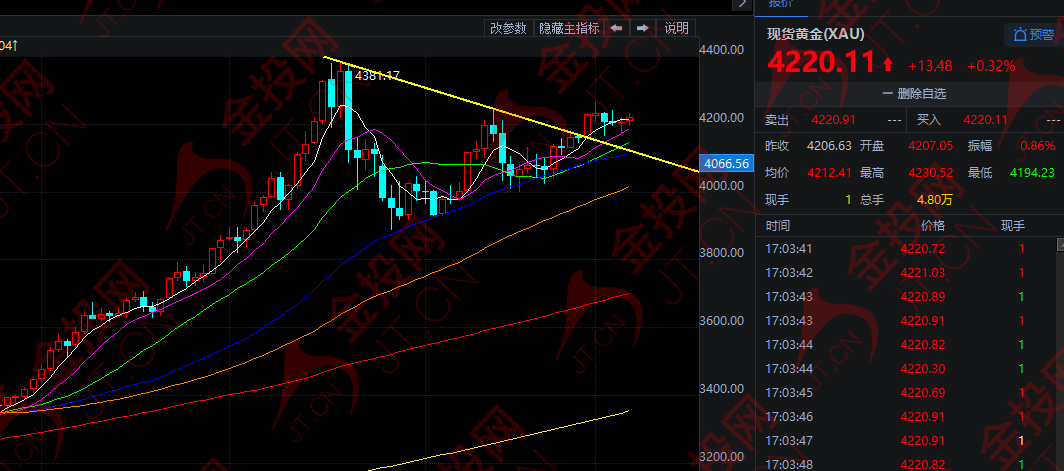
Group 1: Gold Market - Spot gold experienced a slight increase of 0.13%, with a low of $4,175 and a rebound to a high of $4,219, closing at $4,208.60 [1] - Currently, gold is trading around $4,218 in the European market [1] Group 2: U.S. Labor Market and Federal Reserve - The U.S. Labor Department reported a decrease of 27,000 in initial jobless claims to 191,000, the lowest level in over three years, below the expected 220,000 [3] - The number of continuing claims remains above 1.9 million, indicating structural pressures in the labor market [4] - Revelio Labs reported a decrease of 9,000 in non-farm payrolls for November, with October's data revised to a loss of 15,500 jobs, leading traders to bet on further rate cuts by the Federal Reserve [5] - Goldman Sachs indicated that the labor market is showing signs of cooling, with a 25 basis point rate cut by the Fed in December being highly likely [5][6] - The next Federal Reserve meeting is scheduled for December 9-10, with an 87% probability of a 25 basis point cut [6] Group 3: Inflation Data and Market Outlook - The upcoming PCE inflation data is considered crucial, with expectations for core PCE to rise by 0.2% and maintain an annual rate close to 3% [7] - A stable inflation reading would suggest "inflation is stable," while a higher reading could lead to a market re-evaluation [7] - The outlook for the stock market suggests a lower risk of a tech bubble burst compared to 2000, but emphasizes the need for balanced asset allocation to mitigate potential risks [7] Group 4: Military Developments - The Iranian Revolutionary Guard conducted military exercises in the Persian Gulf, showcasing new defense and offensive capabilities, including AI technology for target identification [8] - The U.S. Central Command announced the formation of a squadron of one-way attack drones in the Middle East, based on the Iranian "Witness-136" drone [10] - The U.S. military conducted an attack on a vessel in the Eastern Pacific, resulting in four fatalities, as part of a broader anti-drug operation in the region [11][12]
对话富达基金赵强:富达FOF的背后不是一个团队在“战斗”
Sou Hu Cai Jing· 2025-12-05 04:03
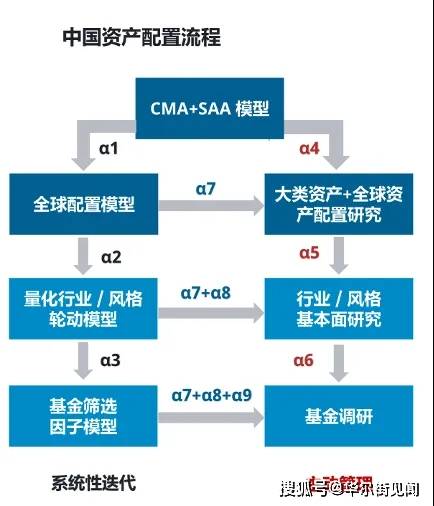
Core Insights - Public FOF products are expected to become a prominent category in the fund industry by 2025, driven by their inherent "diversified investment" and "asset allocation" capabilities [1] - The market is increasingly recognizing that stable product positioning and clear allocation logic, managed by experienced teams, make FOF products appealing as "one-stop" investment options for the general public [1] - However, there is a growing awareness that high-quality FOF products are scarce, and exceptional FOF managers are rare [1] Group 1: FOF Management and Team Structure - Zhao Qiang, head of the Multi-Asset Department at Fidelity, emphasizes that FOF management involves not just the fund manager's decisions but also teamwork and the support of a robust research system [2][3] - Fidelity's FOF management is supported by a comprehensive financial technology system that provides real-time strategy performance, risk alerts, and AI investment tools for portfolio optimization [2] - Fidelity China has developed the "NEMO" system to assist fund managers in managing investment processes from strategic to tactical allocation [2] Group 2: Investment Philosophy and Framework - Zhao Qiang's investment philosophy is influenced by his education at the University of Chicago, where he learned from Nobel laureates, shaping his views on quantitative and active investing [5] - He emphasizes the importance of accumulating a "framework" through practical experience, which helps in refining investment principles and response patterns [7] - Zhao Qiang's early experiences with Go have also influenced his approach to problem-solving and investment challenges, reinforcing the idea that difficulties often have systematic solutions [8] Group 3: Investment Strategy and Market Insights - Zhao Qiang initially focused on cash flow-related assets, prioritizing investments in markets and products with strong cash flow, such as high-yield overseas bonds and high-dividend stocks in Hong Kong [9] - After joining Fidelity, he recognized the importance of a balanced approach to FOF management, moving away from aggressive strategies that do not align with the product's design philosophy [9] - The FOF products are ultimately driven by asset allocation thinking, tailored to meet client wealth management needs [10] Group 4: Fidelity's Competitive Advantages - Fidelity's long-term strategic investments and commitment to its non-public company structure allow for sustained focus on long-term goals, which is rare in the industry [14] - The company places significant emphasis on human resources, fostering global team collaboration and integration to enhance strategic asset allocation [14] - Fidelity's investment systems, such as NEMO, facilitate collaboration among research teams, enabling effective portfolio construction and optimization [15] Group 5: Decision-Making Process in FOF Management - Fidelity employs a dual decision-making approach in FOF management, integrating both quantitative systems and subjective team insights to achieve balanced investment strategies [17] - Each asset allocation decision involves multiple layers of analysis, ensuring that both quantitative and qualitative perspectives are considered [17] - This structured approach minimizes emotional decision-making among research personnel, maintaining product integrity and optimizing performance [18] Group 6: New Product Launch and Market Positioning - The "Fidelity Renyuan Conservative Pension FOF" is notable for being the first pension FOF in the market to include overseas market indices in its benchmark [19] - Historical backtesting indicates that incorporating global assets like gold and overseas indices improves both returns and drawdowns compared to traditional asset mixes [19] - As a leading global player in pension investment, Fidelity's new FOF product is expected to attract significant interest regarding its performance and net value trajectory [20]
全球最大的黄金ETF增加持仓,黄金ETF华夏(518850)规模再创新高
2 1 Shi Ji Jing Ji Bao Dao· 2025-12-05 03:17
Core Viewpoint - International gold prices experienced fluctuations and a slight decline, while related ETFs showed modest gains, indicating ongoing investor interest in gold and precious metals [1] Group 1: ETF Performance - As of the report, the 华夏黄金ETF (518850) increased by 0.33%, the 黄金股ETF (159562) rose by 0.75%, and the 有色金属ETF基金 (516650) gained 0.87% [1] - Notably, the 华夏黄金ETF (518850) saw net inflows in 17 out of the last 20 trading days, accumulating over 1.363 billion yuan in total [1] - The latest share count for the 华夏黄金ETF reached 1.103 billion, with a total scale of 10.079 billion yuan, marking a new high [1] Group 2: Global ETF Holdings - As of December 4, 2025, the SPDR Gold Trust, the world's largest gold ETF, held 1,050.58 tons of gold, an increase of 4.00 tons from the previous trading day [1] - The iShares Silver Trust, the largest silver ETF globally, reported a holding of 16,094.45 tons, up by 95.90 tons from the previous trading day [1] Group 3: Market Outlook - According to a recent report from 中金公司, the cyclical demand and structural trends are expected to continue to resonate, suggesting that gold and silver prices may remain in an upward channel through 2026 [1] - 恒泰期货 indicated that due to the deterioration of the US credit system, global monetary system restructuring, and asset revaluation, non-US assets are likely to outperform, with gold remaining a long-term asset allocation choice [1]

利率迈入“0字头”时代“新三金”成年轻人理财新配置
Nan Fang Du Shi Bao· 2025-12-04 23:14
Core Viewpoint - The article highlights the decline in deposit interest rates in China, leading to the rise of a new asset allocation strategy called "New Three Golds," which includes money market funds, bond funds, and gold ETFs, particularly among younger generations [2][3][5]. Group 1: Interest Rate Environment - Several state-owned banks have recently removed five-year large-denomination certificates of deposit, with three-year deposit rates generally falling to the range of 1.5% to 1.75% [2][4]. - The current interest rate environment in China is at historical lows, with the six major state-owned banks reducing the interest rates on demand deposits to 0.05% and one-year fixed deposit rates dropping below 1% [3][5]. Group 2: Rise of "New Three Golds" - "New Three Golds" refers to a diversified asset allocation strategy involving money market funds, bond funds, and gold ETFs, aimed at achieving better returns than traditional deposits while controlling overall volatility [3][6]. - As of April 2025, over 9.37 million individuals born in the 1990s and 2000s have adopted the "New Three Golds" strategy on the Ant Wealth platform [2][3]. Group 3: Shift in Investment Behavior - There is a noticeable shift in investment behavior among residents, particularly young individuals, as they seek to preserve and grow their wealth amid declining deposit rates. In October 2025, household deposits decreased by 1.34 trillion yuan, while deposits in non-bank financial institutions increased by 1.85 trillion yuan [5][6]. - Discussions about asset allocation strategies, including "New Three Golds," are increasingly prevalent in online communities frequented by young people, indicating a growing interest in diversified investment approaches [3][6]. Group 4: Expert Insights and Recommendations - Experts suggest that the preference for "New Three Golds" among young investors may indicate a structural long-term change in investment behavior rather than just a temporary response to low interest rates [6][7]. - Financial experts recommend that investors should assess their risk tolerance and investment goals before diversifying their asset allocation, emphasizing the importance of rational decision-making over impulsive investments [6][7].

中证报价开展场外债券投资交易业务展业情况排查
Zhong Guo Zheng Quan Bao· 2025-12-04 20:22
Core Viewpoint - The China Securities Regulatory Commission (CSRC) is conducting a review of off-market bond investment trading activities among securities and fund management institutions to ensure compliance and accurate data reporting [1][2]. Group 1: Regulatory Review - The review focuses on two main aspects: the accuracy of the institution names registered in the off-market bond investment trading data reporting system and whether institutions have actually engaged in bond trading activities with their own funds and asset management businesses [1][2]. - Institutions are required to report their bond investment trading data monthly, and those not engaged in any bond-related business must register on the monitoring platform and provide basic information [2]. Group 2: Off-Market Bond Trading - Off-market bond trading includes activities such as cash bond trading, bond repurchase, bond forwards, and bond lending, conducted by securities and fund management institutions using their own funds and asset management [2]. - Institutions that have not obtained public fund qualifications must report their completed rectifications according to specific guidelines [2]. Group 3: Derivative Products - Off-market derivatives provide customized, flexible, and finely managed tools for professional investors, meeting diverse investment needs [3]. - These derivatives serve as effective risk management tools, helping investors mitigate investment volatility while maintaining their underlying asset positions [3]. - The development of off-market derivatives is driving strategic transformation and service upgrades for trading firms, enhancing their core capabilities in risk management and digital empowerment [3].
12月如何配置抢占先机?聚焦A股,我们要抱紧哪些产业趋势主线
Sou Hu Cai Jing· 2025-12-04 12:11
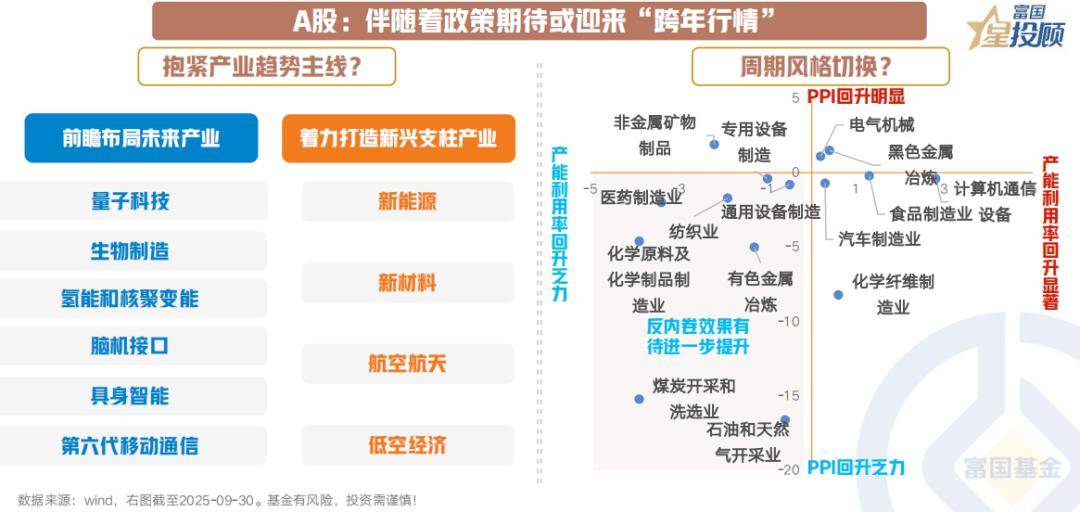
Group 1 - The article discusses the calendar effect observed in December over the past decade, indicating a significant opportunity for asset allocation this month [1] - In November, global liquidity disturbances impacted major risk assets, with concerns over USD liquidity and AI narratives affecting global tech growth stocks [1] - The A-share market followed the trend of major global markets, experiencing a monthly decline, with two key meetings in December potentially influencing the year-end market dynamics [1] Group 2 - In the Hong Kong stock market, liquidity issues have been a significant reason for recent adjustments, with the market experiencing earlier and deeper declines compared to A-shares [3] - Certain sectors in the Hong Kong market, such as internet and innovative pharmaceuticals, may have reached attractive valuation levels, as indicated by reduced trading congestion and significant pullbacks [3] - The market is also awaiting the implementation of domestic policies in December, trends in AI applications, and the resolution of uncertainties surrounding the Federal Reserve [3] Group 3 - Historically, institutional allocation intentions are strong at the year-end, with a significant opening period for fixed-term bond funds in December, exceeding 100 billion [5] - The focus is on structural opportunities in credit bonds, while monitoring institutional allocation behaviors and the impact of open-ended bond funds [5] - The market for long-term bonds has limited trading opportunities, with a primary focus on earning coupon interest, as insurance institutions show strong allocation intentions at year-end [6] Group 4 - The balance of bank wealth management products typically increases at the end of the quarter, enhancing allocation power [6] - The data indicates that credit spreads may remain low and fluctuate, with potential for further compression if driven by market conditions [6]
利率迈入“0字头”时代,“新三金”配置成年轻人理财新选择
Sou Hu Cai Jing· 2025-12-04 07:37
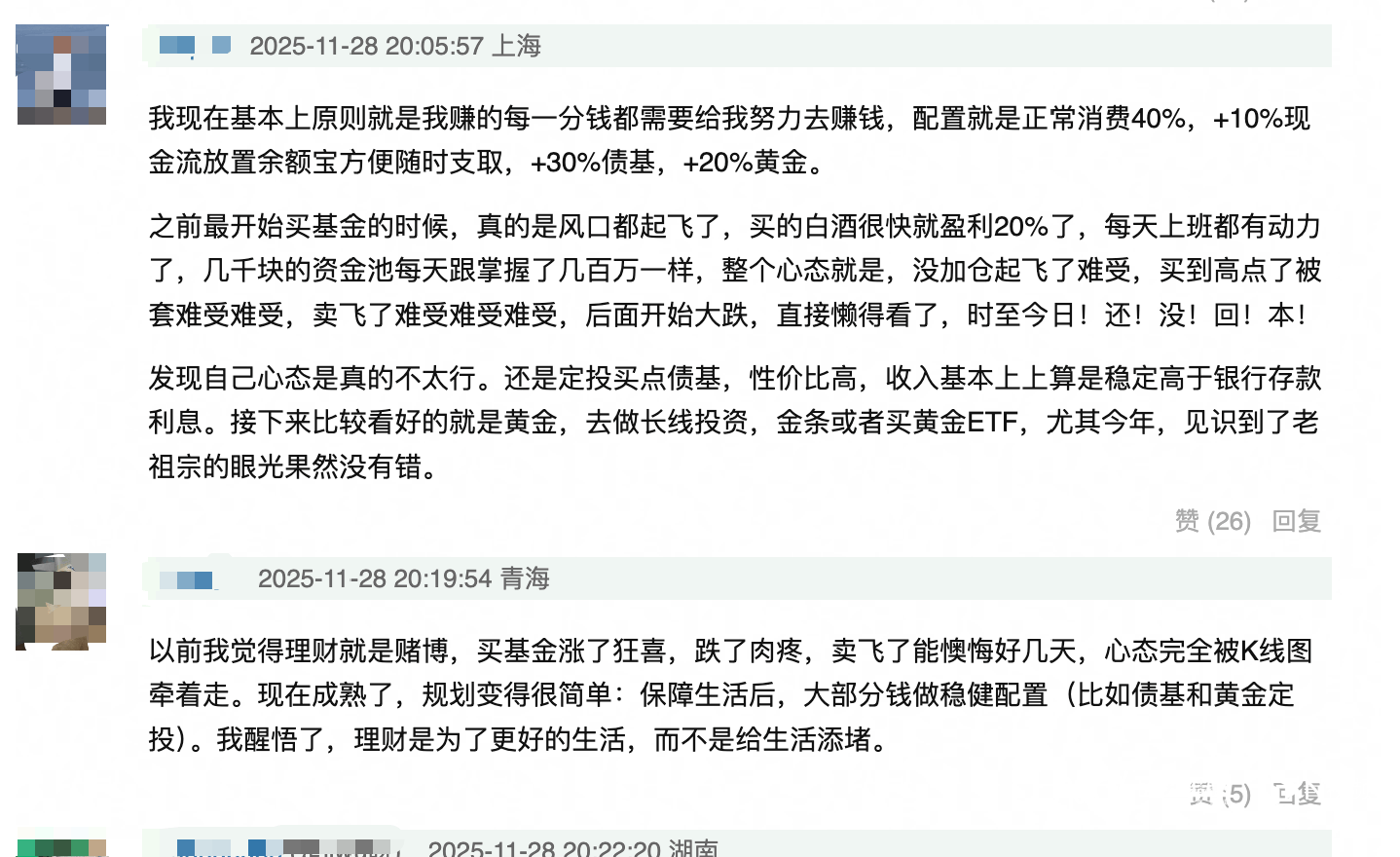
Core Viewpoint - The article discusses the emergence of a new asset allocation strategy called "New Three Golds," which includes money market funds, bond funds, and gold ETFs, particularly among the younger generation in response to declining deposit interest rates [1][2][3]. Group 1: Market Trends - Major state-owned banks have recently removed five-year large-denomination certificates of deposit, and the interest rates for three-year deposits have dropped to a range of 1.5% to 1.75% [1][3]. - The current low interest rate environment has led to a shift in residents' asset allocation behavior, with a growing interest in investment and wealth management among the public [3][4]. - As of October 2025, household deposits decreased by 1.34 trillion yuan, while deposits in non-bank financial institutions increased by 1.85 trillion yuan, indicating a movement of funds from traditional savings to investment markets [3]. Group 2: Young Investors' Behavior - Over 9.37 million individuals born in the 1990s and 2000s have adopted the "New Three Golds" strategy on the Ant Financial platform by the end of April 2025 [2]. - Discussions about asset allocation strategies, including "New Three Golds," are increasingly popular in online communities frequented by young people [2]. - Young investors are shifting from relying on deposit interest to actively seeking diversified asset allocations, reflecting a change in financial awareness and behavior [5][7]. Group 3: Financial Institutions' Response - Financial institutions are encouraged to adapt their strategies to align with the preferences of young investors by developing more intelligent and scenario-based financial products [6]. - Suggestions include lowering investment thresholds and enhancing operational flexibility to attract younger clients [6]. - The wealth management industry is transitioning from a product-centric model to a customer-centric approach, focusing on personalized asset allocation solutions [7].
个人养老金账户购买储蓄国债有哪些益处?
Jin Rong Shi Bao· 2025-12-04 03:07
Core Points - The inclusion of savings bonds in personal pension accounts is a significant development aimed at enhancing investment options for individuals [1][2] - The policy will be implemented starting June 2026, allowing investors to purchase electronic savings bonds through their personal pension accounts [1][2] - This move is expected to diversify low-risk investment options and provide stable returns, aligning with the needs of conservative investors and the elderly [2] Group 1: Benefits for Residents - The inclusion of savings bonds increases the variety of investment products available in personal pension accounts, which now encompass five major categories: funds, wealth management, savings, insurance, and bonds [1][2] - Savings bonds are characterized by fixed returns and high safety, making them suitable for conservative investors and those seeking stable long-term growth [2] - The expansion of the product pool in personal pension accounts is anticipated to enhance investor engagement and address the current issue of low contribution rates despite high account openings [2] Group 2: Investment Process - Investors will need to open a dedicated savings bond account at a financial institution authorized to offer personal pension services, which includes 40 commercial banks from 2024 to 2026 [3] - The dedicated account will track the purchase details of electronic savings bonds and will be linked to the investor's personal pension fund account [3] - The purchasing process is designed to be user-friendly, with services available through various channels such as bank branches, mobile banking, and online banking [3]