中美贸易协议

Search documents
西南期货早间评论-20250808
Xi Nan Qi Huo· 2025-08-08 02:52
Report Industry Investment Rating No relevant content provided. Report's Core View - The report analyzes various futures markets, including bonds, stocks, precious metals, and commodities, and provides investment suggestions based on market trends and fundamental analysis [5][7][9]. Summary by Relevant Catalogs Treasury Bonds - Last trading day, most treasury bond futures closed higher, with the 30 - year, 10 - year, and 5 - year contracts rising, and the 2 - year contract unchanged [5]. - The central bank conducted 160.7 billion yuan of 7 - day reverse repurchase operations, with a net withdrawal of 122.5 billion yuan on the day [5]. - S&P maintained China's sovereign credit rating and outlook. China's macro - policies will continue to support the economy [5]. - China's exports and imports in July increased year - on - year. The macro - economic recovery momentum needs strengthening, and treasury bond futures are expected to have no trend and require caution [6]. Stock Index Futures - Last trading day, stock index futures showed mixed performance. Although the domestic economic recovery momentum is weak, considering the low valuation of domestic assets and China's economic resilience, the long - term performance of Chinese equity assets is optimistic, and long positions in stock index futures are considered [7]. Precious Metals - Last trading day, gold and silver futures rose. China's gold reserves increased for the 9th consecutive month in July. Due to the complex global trade and financial environment, the "de - globalization" and "de - dollarization" trends, and the possible Fed rate cut, the long - term bull market of precious metals is expected to continue, and long positions in gold futures are considered [9]. Steel Products (Rebar, Hot - Rolled Coil) - Last trading day, rebar and hot - rolled coil futures fluctuated. Policy changes currently dominate the market, and prices may return to the industrial supply - demand logic in the medium term. The downward trend of the real estate industry suppresses rebar prices, while potential steel industry policies may be positive. Investors can pay attention to buying opportunities on dips and manage positions [11]. Iron Ore - Last trading day, iron ore futures fluctuated. Policy affects the market, and iron ore prices follow coking coal. The short - term supply - demand pattern is strong, but may weaken in the medium term. Technically, it is supported, and investors can pay attention to buying opportunities on dips and manage positions [13]. Coking Coal and Coke - Last trading day, coking coal and coke futures rose. After previous fluctuations, they are returning to the industrial supply - demand logic. A coal production inspection policy has affected supply, and they may continue to be strong. Investors can pay attention to buying opportunities on dips and manage positions [15]. Ferroalloys - Last trading day, manganese silicon and silicon iron futures fell. Manganese ore supply has fluctuations, and ferroalloy production is rising while demand is weak, with high inventory. After a decline, investors can consider long positions at low levels [17]. Crude Oil - Last trading day, INE crude oil declined due to the progress of US - Russia negotiations. OPEC+ increased production, and the market is waiting for the September meeting. The US non - farm data was poor, and geopolitical risks decreased. The main contract is recommended to be on the sidelines [20][21]. Fuel Oil - Last trading day, fuel oil declined, blocked by the 5 - day moving average. Singapore's high - sulfur fuel oil inventory is high, and Asian supply is abundant. The market expects more fuel oil arrivals, and the main contract is recommended to short the spread between high - and low - sulfur fuel oil [23]. Synthetic Rubber - Last trading day, synthetic rubber rose. Raw material prices recovered, and the industry's capacity utilization increased. Wait for the market to stabilize and then participate in the rebound [25]. Natural Rubber - Last trading day, natural rubber rose. Supply disturbances slowed down, and the market corrected. The decline space is limited, and long positions can be considered on dips [27]. PVC - Last trading day, PVC rose. The supply - demand imbalance persists, but the downward space is limited, and it will continue to fluctuate at the bottom [30]. Urea - Last trading day, urea fell. In the short term, it will fluctuate with the spot, and in the medium term, it is considered bullish [34]. PX - Last trading day, PX fluctuated. The supply - demand balance is tight in the short term, and the cost support from crude oil weakens. It may fluctuate, and interval trading is considered [37]. PTA - Last trading day, PTA fell. Supply changes little, demand may weaken, and the cost support from crude oil weakens. However, due to the pressure on processing fees and increased production cuts by large manufacturers, the downside is supported, and interval trading is considered [38]. Ethylene Glycol - Last trading day, ethylene glycol fell. The overall supply is high, but overseas maintenance may reduce imports, and inventory is decreasing. Interval trading is considered, focusing on port inventory and imports [40]. Short - Fiber - Last trading day, short - fiber fell. Supply is high, demand has improved, and it may follow cost fluctuations [41]. Bottle Chips - Last trading day, bottle chips fell. Raw material prices fluctuate, device maintenance increases, and inventory is stable. The market is expected to follow cost fluctuations [44]. Soda Ash - Last trading day, soda ash fell. Production increased this week, and inventory rose. The downstream demand is weak, and the market is expected to be stable in the short term [45]. Glass - Last trading day, glass fell. The number of production lines is stable, and inventory is increasing. The destocking speed slows down, and the downstream demand is weak [46]. Caustic Soda - Last trading day, caustic soda fell. Production increased after previous maintenance, and inventory rose. The demand for aluminum products provides some support, and the market is returning to the fundamental logic [47]. Pulp - Last trading day, pulp rose. High port inventory and international shipping suppress the market. The demand for household paper is weak, and the supply - demand balance is weak [49]. Lithium Carbonate - Last trading day, lithium carbonate rose. The supply is uncertain due to mining license issues. The supply - demand pattern remains unchanged, with high production and consumption improving, but high inventory. It is recommended to observe and control risks [50]. Copper - Last trading day, Shanghai copper rose. The copper concentrate is in short supply, and the domestic smelting cost has no room to decline. The Chinese stimulus policy is not satisfactory, but the Fed rate - cut expectation supports the price. The main contract is recommended to be on the sidelines [53]. Tin - Last trading day, Shanghai tin rose. The supply of tin ore is tight, and the production may increase in the fourth quarter. The overall supply is still short, and the price is expected to fluctuate [55]. Nickel - Last trading day, Shanghai nickel fell. The price of nickel ore is weakening, and the supply of refined nickel is in surplus. The price is expected to fluctuate [57]. Soybean Oil and Soybean Meal - Last trading day, soybean meal and soybean oil rose. The low price stimulates demand, and the soybean crushing volume is high. The inventory of soybean meal and soybean oil is rising. Consider long positions in soybean meal after adjustment and exiting long positions in soybean oil at high levels [58]. Palm Oil - Malaysian palm oil prices fell due to concerns about inventory and production increases and weak export demand. Consider long positions in palm oil [60]. Rapeseed Meal and Rapeseed Oil - Canadian rapeseed prices rebounded. China's imports of rapeseed decreased in June, while imports of rapeseed oil and rapeseed meal increased. Consider long positions in rapeseed products [62]. Cotton - Last trading day, domestic cotton fluctuated, and overseas cotton fell. The global and domestic cotton supply is expected to be loose, and the demand is weak. Short positions are recommended after a rebound [64]. Sugar - Last trading day, domestic sugar fluctuated weakly, and overseas sugar fell due to crude oil. The sugar production in India and Brazil is expected to increase. China's sugar imports increased in June. It is recommended to observe [67]. Apples - Last trading day, apple futures fluctuated. The expected apple production in the new season will increase slightly. Short positions are recommended after a rebound [69]. Pigs - Yesterday, the national average pig price fell. The supply is increasing, and the demand is weak in the summer. Consider reverse - spread strategies [72]. Eggs - Last trading day, the egg price was stable in the main production areas and fell in the main sales areas. The production cost is high, and the profit is low. The egg supply is expected to increase in August. Consider reverse - spread strategies [75]. Corn and Corn Starch - Last trading day, corn and corn starch rose. The domestic corn supply - demand is approaching balance, and the consumption is recovering. The new - season corn is expected to be abundant, and the price has pressure. Consider call options for old - crop contracts. Corn starch follows corn [77]. Logs - Last trading day, logs rose. The import of New Zealand logs is expected to increase, and the price is rising. The demand from downstream factories is increasing, and the short - term market sentiment is bullish [80].
棕榈油:宏观情绪反复,低位布多为主,豆油:高位震荡,关注中美贸易协议
Guo Tai Jun An Qi Huo· 2025-08-08 01:52
Report Summary 1. Investment Ratings The report does not provide an overall industry investment rating. 2. Core Views - Palm oil: With the repeated macro - sentiment, it is advisable to build long positions at low levels [2]. - Soybean oil: It will fluctuate at a high level, and attention should be paid to the Sino - US trade agreement [2]. - Soybean meal: Due to good exports and the rise of US soybeans, the Dalian soybean meal may follow and rebound [2]. - Soybean: During the position transfer period, the market will fluctuate [2]. - Corn: It will operate weakly [2]. - Sugar: It is in an oscillation period [2]. - Cotton: It will fluctuate in a narrow range [2]. - Eggs: There is a rebound sentiment in the spot market [2]. - Pigs: The trading volume is poor, and the reverse spread strategy should be maintained [2]. - Peanuts: Attention should be paid to the weather in the producing areas [2]. 3. Summary by Commodity Palm oil - **Fundamentals**: The closing price of the palm oil main contract was 8,950 yuan/ton during the day session with a decline of 0.22%, and 9,012 yuan/ton at night with an increase of 0.69%. The trading volume decreased by 112,797 hands, and the open interest decreased by 27,119 hands. The spot price in Guangdong increased by 50 yuan/ton, and the basis was 50 yuan/ton [4]. - **News**: Malaysian palm oil giant SD Guthrie Berhad expects the crude palm oil price to stabilize at around 4,000 ringgit per ton for the rest of the year, supported by Indonesia's biodiesel policy [5][6]. Soybean oil - **Fundamentals**: The closing price of the soybean oil main contract was 8,406 yuan/ton both during the day and at night, with no change. The trading volume increased by 51,881 hands, and the open interest decreased by 49,208 hands. The spot price in Guangdong increased by 50 yuan/ton, and the basis was 264 yuan/ton [4]. - **News**: As of July 31, 2025, the net increase in US soybean oil export sales was 0.7 million tons, meeting expectations [10]. Soybean meal - **Fundamentals**: The closing price of DCE soybean meal 2509 was 3,031 yuan/ton during the day with an increase of 0.13%, and 3,036 yuan/ton at night with an increase of 0.53%. The trading volume of soybean meal in the main producing areas was 9.6 million tons per day, and the inventory was 97.76 million tons per week [15]. - **News**: On August 7, CBOT soybeans rose due to strong export sales data. As of July 31, 2025, the net sales volume of US soybeans in the 2024/25 and 2025/26 fiscal years exceeded expectations [17]. Corn - **Fundamentals**: The closing price of C2509 was 2,267 yuan/ton during the day with an increase of 0.53%, and 2,260 yuan/ton at night with a decrease of 0.31%. The trading volume decreased by 44,239 hands, and the open interest decreased by 37,908 hands. The spot price in Jinzhou decreased by 10 yuan/ton [18]. - **News**: The northern corn collection price remained stable, and the Northeast enterprise corn price declined slightly [19]. Sugar - **Fundamentals**: The raw sugar price was 16.03 cents per pound, the mainstream spot price was 5,950 yuan/ton, and the futures main - contract price was 5,667 yuan/ton [21]. - **News**: Brazil's central - southern sugarcane crushing progress accelerated, and India's monsoon precipitation was higher than the long - period average. CAOC predicted the domestic sugar production, consumption, and import volume for the 24/25 and 25/26 fiscal years [21][22]. Cotton - **Fundamentals**: The closing price of CF2601 was 13,835 yuan/ton during the day with a decrease of 0.11%, and 13,825 yuan/ton at night with a decrease of 0.07%. The trading volume decreased by 52,459 hands, and the open interest decreased by 2,804 hands. The spot price of cotton in most regions changed slightly [25]. - **News**: The domestic cotton spot trading was sluggish, and the ICE cotton futures fell due to the rising US dollar and weak new - crop exports [26][27]. Eggs - **Fundamentals**: The closing price of egg 2509 was 3,391 yuan/500 kg with an increase of 1.16%, and the closing price of egg 2601 was 3,576 yuan/500 kg with a decrease of 1.41%. The spot prices in major producing areas remained stable [32]. Pigs - **Fundamentals**: The spot prices in Henan, Sichuan, and Guangdong decreased. The closing prices of futures contracts such as LH2509, LH2511, and LH2601 increased year - on - year. The trading volume of LH2509 decreased, while that of LH2511 increased. The market is under pressure, and the reverse - spread strategy is maintained [35][37]. Peanuts - **Fundamentals**: The spot prices of peanuts in major producing areas were mostly stable, with the price of Sudan refined peanuts increasing by 200 yuan/ton. The closing prices of PK510 and PK511 increased slightly. The trading volume and open interest of the futures market increased [39]. - **News**: New peanuts in some areas are gradually on the market, and the current price is stable. Attention should be paid to the weather in the producing areas [40].
国泰君安期货商品研究晨报:农产品-20250805
Guo Tai Jun An Qi Huo· 2025-08-05 02:04
Report Industry Investment Rating No relevant content provided. Core Views of the Report - Palm oil: Given the volatile macro - sentiment, the strategy is to go long at low levels [2]. - Soybean oil: It is expected to fluctuate at high levels, and attention should be paid to the Sino - US trade agreement [2]. - Soybean meal: After overnight trading, US soybeans closed slightly higher, and the Dalian soybean meal futures are expected to fluctuate strongly [2]. - Soybean: It is expected to rebound and fluctuate [2]. - Corn: It is expected to operate weakly [2]. - Sugar: It is expected to trade in a narrow range [2]. - Cotton: Attention should be paid to the impact of external markets [2]. - Eggs: The bullish expectation for the spot market has failed, leading to a collapse in sentiment [2]. - Live pigs: The pattern of near - term weakness and long - term strength will be maintained [2]. - Peanuts: Attention should be paid to the weather in the producing areas [2]. Summary by Related Catalogs Palm oil and Soybean oil - **Fundamental data**: Palm oil's day - session closing price was 8,838 yuan/ton with a decline of 0.81%, and night - session closing price was 8,890 yuan/ton with an increase of 0.59%. Soybean oil's day - session closing price was 8,250 yuan/ton with a decline of 0.29%, and night - session closing price was 8,280 yuan/ton with an increase of 0.36% [4]. - **Macro and industry news**: In July, India's palm oil imports decreased by 10% month - on - month to 858,000 tons, while soybean oil imports increased by 38% to 495,000 tons. Malaysia's expected palm oil exports from July 1 - 31 decreased by 25.01% compared to the previous month. The Malaysian government plans to allocate 1.4 billion ringgit in five years to support small - scale palm oil replanting [5][7]. - **Trend strength**: The trend strength of palm oil and soybean oil is 0, indicating a neutral outlook [9]. Soybean meal and Soybean - **Fundamental data**: DCE soybean meal 2509's day - session closing price was 3,024 yuan/ton with an increase of 0.67%, and night - session closing price was 3,045 yuan/ton with an increase of 0.79%. DCE soybean 2509's day - session closing price was 4,117 yuan/ton with a decline of 0.22%, and night - session closing price was 4,133 yuan/ton with an increase of 0.17% [10]. - **Macro and industry news**: On August 4, CBOT soybean futures closed higher due to short - covering. However, Brazil's soybean harvest and the strong US soybean production outlook are suppressing price increases. As of August 3, the US soybean good - to - excellent rate was 69%, and the corn good - to - excellent rate was 73% [12]. - **Trend strength**: The trend strength of soybean meal is +1 (strong), and that of soybean is 0 (neutral) [12]. Corn - **Fundamental data**: C2509's day - session closing price was 2,284 yuan/ton with a decline of 0.52%, and night - session closing price was 2,258 yuan/ton with a decline of 1.14%. The price of Jinzhou's corn for shipping decreased by 10 yuan/ton to 2,340 yuan/ton [13]. - **Macro and industry news**: The northern corn port - collection price decreased by 10 yuan/ton, and the price in Guangdong Shekou also decreased by 10 yuan/ton [14]. - **Trend strength**: The trend strength of corn is 0, indicating a neutral outlook [15]. Sugar - **Fundamental data**: The raw sugar price was 16.25 cents/pound, the mainstream spot price was 5,990 yuan/ton, and the futures main - contract price was 5,718 yuan/ton [16]. - **Macro and industry news**: Brazil's central - southern sugarcane crushing progress has accelerated. India's monsoon rainfall is higher than the long - period average. China imported 420,000 tons of sugar in June [16]. - **Trend strength**: The trend strength of sugar is - 1, indicating a bearish outlook [19]. Cotton - **Fundamental data**: CF2509's day - session closing price was 13,675 yuan/ton with an increase of 0.66%, and night - session closing price was 13,655 yuan/ton with a decline of 0.15%. The price of northern Xinjiang's 3128 machine - picked cotton increased by 90 yuan/ton to 14,992 yuan/ton [21]. - **Macro and industry news**: The cotton spot trading has slightly weakened, and the cotton yarn market has not changed much. The ICE cotton futures rose by 0.3% [22]. - **Trend strength**: The trend strength of cotton is 0, indicating a neutral outlook [25]. Eggs - **Fundamental data**: The closing price of egg 2509 was 3,360 yuan/500 kg with a decline of 4.03%. The price of Liaoning's spot eggs decreased from 3.00 yuan/jin to 2.90 yuan/jin [27]. - **Trend strength**: The trend strength of eggs is 0, indicating a neutral outlook [27]. Live pigs - **Fundamental data**: The spot price of live pigs in Henan was 14,130 yuan/ton, and the futures price of live pigs 2509 was 13,940 yuan/ton [31]. - **Market logic**: The market's expectation of price increases from late July to early August has failed. The supply pressure in August is high, and the 9 - month contract is expected to be weak. The far - end is supported by macro - sentiment, and the spread structure has switched to a reverse spread [33]. - **Trend strength**: The trend strength of live pigs is - 1, indicating a bearish outlook [32]. Peanuts - **Fundamental data**: The price of Liaoning's 308 common peanuts decreased by 200 yuan/ton to 8,400 yuan/ton. PK510's closing price was 8,084 yuan/ton with a decline of 0.12% [35]. - **Spot market focus**: In Henan, the inventory trading is the main activity, and the new peanut growth is affected by drought in some areas. In Jilin, the new peanut growth is good [36]. - **Trend strength**: The trend strength of peanuts is 0, indicating a neutral outlook [37].
棕榈油:宏观及原油退潮,等待低位布多,豆油:震荡调整为主,关注中美贸易协议
Guo Tai Jun An Qi Huo· 2025-08-04 02:17
Report Summary 1. Report Industry Investment Rating - No information provided 2. Report's Core View - For palm oil, with the ebb of macro and crude oil factors, wait for low levels to go long [1] - For soybean oil, the market will mainly fluctuate and adjust, and attention should be paid to the China-US trade agreement [1] 3. Summary by Related Catalogs 3.1 Fundamental Tracking - **Futures Prices and Changes**: Palm oil's day - session closing price was up 0.11%, night - session down 1.41%; soybean oil's day - session up 1.00%, night - session down 0.58%; rapeseed oil's day - session up 0.15%, night - session down 0.60%. Malaysian palm oil (BMD) was up 0.35%, and CBOT soybean oil was down 1.53% [2] - **Trading Volume and Open Interest**: Palm oil trading volume increased by 33,046 lots, open interest decreased by 342 lots; soybean oil trading volume increased by 128,812 lots, open interest increased by 22,566 lots; rapeseed oil trading volume decreased by 44,456 lots, open interest decreased by 5,524 lots [2] - **Spot Prices and Changes**: Palm oil (24 - degree, Guangdong) price remained unchanged; first - grade soybean oil (Guangdong) increased by 30 yuan/ton; fourth - grade imported rapeseed oil (Guangxi) remained unchanged; Malaysian palm oil FOB price decreased by 5 dollars/ton [2] - **Basis and Spreads**: Palm oil basis in Guangdong was 10 yuan/ton; soybean oil basis in Guangdong was 136 yuan/ton; rapeseed oil basis in Guangxi was 6 yuan/ton. The spread between rapeseed oil and palm oil futures was 614 yuan/ton, between soybean oil and palm oil was - 636 yuan/ton [2] 3.2 Macro and Industry News - **US Labor Market**: US non - farm payrolls in July increased by 73,000, lower than the expected 110,000. The unemployment rate rose slightly, and the total number of new jobs in May and June was revised down by 258,000 [3][4] - **Fed's Stance**: 2026 FOMC voter and Cleveland Fed President Harmaque said the July employment report was "disappointing" but did not mean the Fed should cut rates at the policy meeting [4] - **OPEC+ Output**: OPEC+ is expected to approve a new round of production increase on Sunday. Some members may increase daily production by 548,000 barrels in September, but the final increase may be lower [4] - **Palm Oil Production**: Malaysian palm oil production from July 1 - 31, 2025, increased by 7.07% month - on - month [5] 3.3 Trend Intensity - The trend intensity of palm oil and soybean oil is - 1, indicating a weak outlook [6]
国泰君安期货商品研究晨报:农产品-20250801
Guo Tai Jun An Qi Huo· 2025-08-01 03:39
Report Industry Investment Rating No relevant content provided. Core Views - Palm oil: High - level gaming intensifies, waiting for a callback opportunity [2] - Soybean oil: Mainly fluctuating, focus on the China - US trade agreement [2] - Soybean meal: Concerns about trade, weak US soybeans, Dalian soybean meal fluctuates [2] - Soybean: Fluctuating [2] - Corn: Fluctuating [2] - Sugar: Brazil's sugarcane crushing progress accelerates [2] - Cotton: Sentiment cools down, Zhengzhou cotton futures callback [2] - Eggs: Weak sentiment [2] - Live pigs: End - of - month volume - shrinking rally, focus on sustainability [2] - Peanuts: Focus on weather in production areas [2] Summary by Commodity Palm Oil and Soybean Oil - **Fundamentals**: Palm oil's daily - session closing price was 8,900 yuan/ton with a - 0.91% decline, and night - session closing price was 8,868 yuan/ton with a - 0.36% decline. Soybean oil's daily - session closing price was 8,192 yuan/ton with a - 0.58% decline, and night - session closing price was 8,198 yuan/ton. Malaysia's palm oil exports in July decreased compared to the previous month. Indonesia will raise the reference price and export tax of crude palm oil in August. The trend intensity of palm oil and soybean oil is 0 [4][5][6][8][12] Soybean Meal and Soybean - **Fundamentals**: DCE soybean 2509's daily - session closing price was 4,131 yuan/ton with a - 0.51% decline, and night - session closing price was 4,133 yuan/ton with a - 0.10% decline. DCE soybean meal 2509's daily - session closing price was 3,000 yuan/ton with a - 0.03% decline, and night - session closing price was 3,002 yuan/ton with a - 0.13% decline. CBOT soybeans fell due to good weather and weak demand. The trend intensity of soybean meal and soybean is 0 [13][15] Corn - **Fundamentals**: The closing price of C2509 was 2,288 yuan/ton with a - 0.95% decline in the daily session and 2,296 yuan/ton with a 0.35% increase in the night session. The closing price of C2511 was 2,230 yuan/ton with a - 0.54% decline in the daily session and 2,213 yuan/ton with a - 0.76% decline in the night session. Corn prices in different regions showed different trends. The trend intensity of corn is 0 [16][17][18] Sugar - **Fundamentals**: The raw sugar price was 16.35 cents/pound with a - 0.11 decline year - on - year. Brazil's sugarcane crushing progress in the central - southern region accelerated. The trend intensity of sugar is - 1 [20][23] Cotton - **Fundamentals**: CF2509's daily - session closing price was 13,650 yuan/ton with a - 0.76% decline, and night - session closing price was 13,655 yuan/ton with a 0.04% increase. ICE US cotton 12 fell. Cotton spot trading was good, but the cotton yarn market and fabric orders were weak. The trend intensity of cotton is 0 [25][26][29] Eggs - **Fundamentals**: The closing price of egg 2508 was 3,259 yuan/500 kg with a - 1.36% decline, and the closing price of egg 2510 was 3,298 yuan/500 kg with a - 1.96% decline. The trend intensity of eggs is 0 [30] Live Pigs - **Fundamentals**: Henan's live - pig spot price was 14,330 yuan/ton, Sichuan's was 13,600 yuan/ton, and Guangdong's was 15,640 yuan/ton. The market is in a pattern of weak reality and strong expectation. The trend intensity of live pigs is 0 [33][34][35] Peanuts - **Fundamentals**: The price of Liaoning 308 general peanuts was 8,600 yuan/ton. The closing price of PK510 was 8,082 yuan/ton with a - 0.39% decline, and the closing price of PK511 was 7,948 yuan/ton with a - 0.60% decline. The peanut market in different regions showed different trends. The trend intensity of peanuts is 0 [37][38][39]
棕榈油:高位博弈加剧,等待回调时机,豆油:震荡为主,关注中美贸易协议
Guo Tai Jun An Qi Huo· 2025-08-01 01:42
Report Overview - The report focuses on the palm oil, soybean oil, and rapeseed oil markets, providing fundamental data, macro and industry news, and trend analysis [1]. Key Points 1. Industry Investment Rating - Not mentioned in the report. 2. Core Viewpoints - Palm oil is in a high - level game, and investors should wait for a callback opportunity; soybean oil is mainly volatile, and attention should be paid to the China - US trade agreement [1]. 3. Summary by Directory 3.1 Fundamental Tracking - **Futures Data**: Palm oil主力 closed at 8,900 yuan/ton (down 0.91% in the day - session) and 8,868 yuan/ton (down 0.36% in the night - session); soybean oil主力 closed at 8,192 yuan/ton (down 0.58% in the day - session) and 8,198 yuan/ton in the night - session; rapeseed oil主力 closed at 9,510 yuan/ton (down 1.15% in the day - session) and 9,480 yuan/ton (down 0.32% in the night - session). The trading volume and open interest of each variety also changed [1]. - **Spot Data**: The spot price of 24 - degree palm oil in Guangdong was 8,920 yuan/ton, down 70 yuan; the spot price of first - grade soybean oil in Guangdong was 8,380 yuan/ton, down 40 yuan; the spot price of fourth - grade imported rapeseed oil in Guangxi was 9,530 yuan/ton, down 80 yuan [1]. - **Basis and Spread Data**: The basis and various spreads of palm oil, soybean oil, and rapeseed oil were provided, such as the basis of palm oil in Guangdong was 20 yuan/ton, and the spread between rapeseed oil and palm oil futures was 610 yuan/ton [1]. 3.2 Macro and Industry News - **Palm Oil Export**: ITS reported that Malaysia's palm oil exports from July 1 - 31 were 1,289,727 tons, a 6.71% decrease from the previous month; AmSpec reported a 9.58% decrease to 1,163,216 tons [2][3]. - **Indonesia's Policy**: Indonesia set the reference price of crude palm oil (CPO) in August at $910.91 per metric ton, up from $877.89 in July, and the export tax will increase from $52/ton in July to $74/ton in August. The EU may give zero - tariff treatment to 1 million tons of Indonesian CPO exports annually when the free - trade agreement is approved [6]. - **Soybean - related News**: About 5% of the US soybean - growing area was affected by drought as of July 29, down from 8% the previous week. The 2025/26 US soybean production is estimated to be around 118 million tons. Brazil's soybean, soybean meal, and corn exports from July 27 - August 2 are expected to be 2.5504 million tons, 0.3864 million tons, and 1.7742 million tons respectively. Ukraine's 2025 soybean production may decrease by over 1 million tons due to a 24% reduction in planting area [7][8]. - **Rapeseed News**: Kazakhstan's rapeseed exports in the first 10 months of the 2024/25 season (September - August) reached 117,900 tons, a three - fold increase from the previous year [9]. 3.3 Trend Intensity - The trend intensity of palm oil and soybean oil is 0, indicating a neutral trend [10].
下游消费端一般 棉花期货价格跌破14000元支撑
Jin Tou Wang· 2025-07-30 07:05
Core Viewpoint - The cotton futures market is experiencing a downward trend, with prices showing weakness and uncertainty due to various factors including trade negotiations and demand fluctuations [1][2]. Group 1: Market Performance - Cotton futures opened at 13,900.00 CNY/ton, with a trading range between 13,750.00 CNY and 13,920.00 CNY, reflecting a decline of approximately 1.75% [1]. - The market sentiment is weak, with a notable decrease in demand from textile enterprises, leading to a significant drop in orders to near a five-year low [1]. Group 2: Supply and Demand Dynamics - In the U.S., while the condition of cotton crops has slightly deteriorated, the overall growth remains good, with a small decline in quality ratings but still ahead of the previous year [1]. - Domestic new cotton planting area and yield are both increasing, which is expected to raise the baseline production levels [1]. - The pace of commercial inventory reduction is accelerating, but the replenishment of downstream products has significantly slowed in the latest week [1]. Group 3: Trade Negotiations Impact - Recent U.S.-China trade talks resulted in an extension of the existing tariff measures for 90 days, indicating a lack of definitive agreement and creating uncertainty in the market [2]. - The cotton market is particularly sensitive to these negotiations, as the upcoming three months are typically a peak demand season for cotton [2]. - The price of Zheng cotton has fallen below the 14,000 CNY support level, reflecting weakened confidence among long positions due to the uncertain trade environment [2].
美股前瞻 | 三大股指期货齐涨,美欧达成15%关税协议,“超级周”来袭
智通财经网· 2025-07-28 12:22
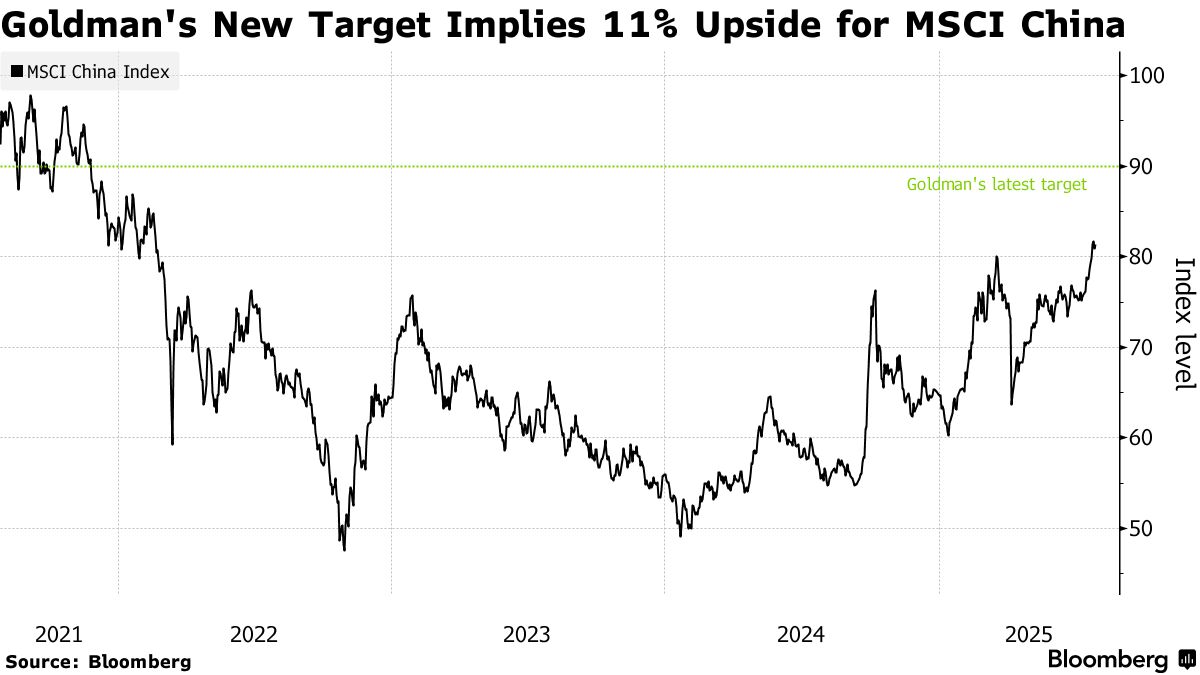
Market Overview - US stock index futures are all up ahead of the market opening, with Dow futures up 0.07%, S&P 500 futures up 0.20%, and Nasdaq futures up 0.37% [1] - European indices show mixed results, with Germany's DAX down 0.11%, UK's FTSE 100 down 0.15%, France's CAC40 up 0.24%, and Europe's Stoxx 50 up 0.50% [2][3] - WTI crude oil prices increased by 1.86% to $66.44 per barrel, while Brent crude oil rose by 1.73% to $68.83 per barrel [3][4] Upcoming Events - A significant week is anticipated for the US market, with the Federal Reserve's meeting and earnings reports from major tech companies like Amazon, Apple, Meta, and Microsoft [5] - Key economic indicators, including GDP and non-farm payroll data, will also be released throughout the week [5] Trade and Economic Predictions - A new trade agreement between the US and EU could lead to a predicted 46% drop in global exports to the US by 2027, amounting to a decrease of $2.68 trillion [6] - Goldman Sachs forecasts an 11% increase in Chinese stocks if a trade agreement between the US and China is reached, raising the MSCI China Index target from 85 to 90 [9] Company News - Tesla has confirmed a $16.5 billion semiconductor supply agreement with Samsung [9] - Heineken reported a 0.4% decline in Q2 beer sales due to retail disputes in Europe, affecting their ability to capitalize on summer sales [10][11] - US LNG developers saw stock prices rise collectively after the EU committed to purchasing $250 billion worth of LNG from the US over the next three years [11] - Citigroup launched a new high-end credit card, Strata Elite, targeting high-net-worth individuals, competing with American Express and JPMorgan Chase [12]



高盛:若中美达成贸易协议 中国股市或上涨11%
智通财经网· 2025-07-28 07:02
Group 1 - Goldman Sachs raised its target for Chinese stocks, citing improved prospects for a US-China trade agreement, which would eliminate a key market uncertainty [1][4] - The 12-month target for the MSCI China Index was increased from 85 to 90 points, indicating an 11% upside from last Friday's closing price [1] - The report highlighted that a potential US-China trade agreement could act as a market catalyst, similar to recent agreements with other countries [4] Group 2 - Other positive factors include a strengthening yuan, reduced regulatory risks for private enterprises, and improved market liquidity [4] - The MSCI China Index has risen nearly 8% since Goldman Sachs previously raised its target price to pre-tariff levels announced by President Trump [4] - Chinese stocks have seen three consecutive weeks of gains, partly due to successful trade agreements between the US and other countries, raising expectations for a similar agreement with China [4] Group 3 - Geopolitical stability signs have also boosted market sentiment, with investors closely watching the upcoming Politburo meeting that will set the tone for policy measures in the second half of the year [4] - Although strong stimulus measures may not be immediately forthcoming, some supportive measures could be introduced later this year [4] - Despite the MSCI China Index rising over 25% year-to-date, Goldman Sachs advises investors to focus on stock selection and has upgraded ratings for the insurance and materials sectors to "overweight" [4]
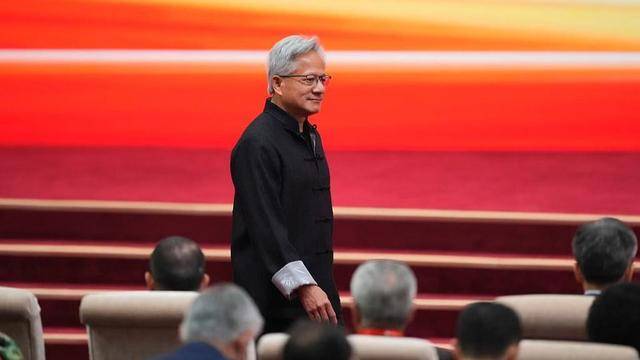
没辜负特朗普信任,黄仁勋换上唐装,替特朗普办好了一件大事
Sou Hu Cai Jing· 2025-07-24 03:49
Group 1 - Huang Renxun announced two major news upon arriving in China: the resumption of H20 chip sales in China and the creation of a dedicated RTX Pro GPU product for the Chinese market [1] - Nvidia's stock surged, reaching a market value of $4.17 trillion, surpassing Japan's GDP from the previous year, indicating strong market confidence [1] - The lifting of the H20 ban allowed multiple tech companies in China to quickly place orders, alleviating some chip supply issues [1] Group 2 - Prior to his visit to China, Huang Renxun met with Trump at the White House, likely to gauge China's stance towards the U.S. and facilitate his visit [2] - Recent reports suggest that Trump's attitude towards China has softened, aiming for a trade agreement and a potential summit with Chinese leaders [2][10] - Trump's administration has been under pressure from various sectors, particularly agriculture, due to the impact of tariffs, necessitating a more conciliatory approach towards China [8] Group 3 - Huang Renxun's visit is seen as a precursor to a larger business delegation led by Trump, indicating his role in fostering a positive atmosphere for U.S.-China dialogue [3] - During his visit, Huang Renxun engaged with several Chinese tech giants and officials, showcasing Nvidia's commitment to the Chinese market [3][5] - His actions, including wearing traditional Chinese attire and attempting to speak Chinese, were interpreted as efforts to strengthen ties with China [7] Group 4 - The Trump administration's need to ease tensions with China is driven by the impending expiration of a 90-day tariff ceasefire, with potential consequences for U.S. industries if no agreement is reached [8] - The rising costs from tariffs have led U.S. manufacturers and retailers to struggle, prompting the need for dialogue with China to alleviate economic pressures [8] - Huang Renxun's visit serves as a bridge for U.S. tech companies to signal their desire for continued cooperation with China, potentially easing trade tensions [8][10]