
实际利率

Search documents
巴西央行连续第二次将基准利率维持在15%
Shang Wu Bu Wang Zhan· 2025-10-08 17:28
Core Viewpoint - The Central Bank of Brazil has decided to maintain the benchmark interest rate at 15%, marking the second consecutive decision to keep the rate unchanged, aligning with market expectations [1] Summary by Category Monetary Policy - The decision to hold the interest rate steady at 15% reflects the Central Bank's strategy in managing economic conditions [1] - The current real interest rate in Brazil, adjusted for inflation, stands at 9.51%, making it the second highest globally, following Turkey's rate of 12.34% [1]
市场观察 | 黄金是否处于高位?—从历史、利率等多维度观察
私募排排网· 2025-09-30 03:37
Core Viewpoint - Recent discussions around gold prices indicate a strong upward trend, with concerns about whether gold has reached a high point. Factors such as the Federal Reserve's interest rate cuts, declining real interest rates, and global central bank purchases of gold support a bullish outlook for gold [3]. Group 1: Historical Valuation and Real Interest Rates - From June 1995 to September 2025, COMEX gold prices have shown an overall upward trend, particularly accelerating after 2020. However, when adjusted for inflation, the real price of gold has not significantly deviated from historical peaks in 1980, 2011, and 2020. This suggests that gold's purchasing power has not fully kept pace with nominal price increases due to inflation [5]. - The current decline in real interest rates, driven by the Federal Reserve's easing policies, supports an upward adjustment in gold's valuation [5]. Group 2: Gold as a Long-Term Asset - Gold is characterized as a "long-term upward-trending asset" when adjusted for inflation. The relationship between gold prices and real interest rates indicates that lower rates enhance gold's attractiveness as an investment [7][9]. Group 3: Currency Dynamics and Gold Prices - The inverse relationship between the US dollar index and gold prices has been noted, with a weakening dollar since 2025 enhancing gold's appeal. For domestic investors, fluctuations in the RMB exchange rate also play a crucial role in gold price movements, particularly during periods of RMB depreciation [10][11]. Group 4: Geopolitical Factors and Central Bank Purchases - Gold serves as a hedge during periods of geopolitical uncertainty, with historical events such as Middle Eastern conflicts and US-China trade tensions driving increased demand for gold as a safe-haven asset. Central banks in emerging markets, including China, India, and Turkey, have been increasing their gold reserves, providing a significant support for gold prices [13][14]. Group 5: Fund Products and Investment Outlook - Various public funds invest in gold-related assets, including spot gold ETFs and funds tracking gold industry stocks. Despite gold prices being near historical highs at approximately $3,800 per ounce, the real price remains elevated compared to the past decade. While short-term risks may exist, the long-term investment rationale for gold remains strong due to declining real interest rates and ongoing demand for safe-haven assets [16].


银行黄金战略升级,美联储降息预期加剧,3700美元金价背后全球财富版图巨变
Sou Hu Cai Jing· 2025-09-29 00:15
Core Insights - The price of gold has surged by 120% over the past three years, with a remarkable 40% increase in the first half of this year alone, significantly outpacing last year's 26% rise, reaching a historical high of $3,700 per ounce [1] - Central banks are increasingly diversifying their reserves by adding gold, with China's central bank increasing its holdings for ten consecutive months, reaching 74.02 million ounces by the end of August [2] - The decline in interest rates is reducing the opportunity cost of holding gold, making it a more attractive investment as market expectations suggest potential further rate cuts by the Federal Reserve [3] - Geopolitical tensions and policy risks are driving investors towards gold as a safe haven, with historical data indicating an average price increase of 5.5% within 8 to 20 days following major crises [4] - Technical analysis suggests that gold prices are breaking through key resistance levels, with bullish sentiment among investors at historical highs [6] Central Bank Strategies - Central banks are shifting their reserve strategies, moving away from a dollar-centric model to include more gold, reflecting a fundamental change in risk management philosophy [2] - The proportion of gold in central bank reserves has surpassed that of U.S. Treasury bonds for the first time since 1996, indicating a significant structural change in reserve asset allocation [2] Interest Rate Dynamics - The anticipated decline in interest rates is expected to lower the opportunity cost of holding gold, encouraging more investment in the asset [3] - The focus on real interest rates, which account for inflation, is crucial in understanding gold price movements, as lower real rates increase demand for gold as a store of value [3] Geopolitical Risks - Ongoing geopolitical conflicts and uncertainties are enhancing gold's status as a safe haven asset, with traditional safe assets like U.S. Treasuries facing increasing scrutiny [4] - The "event window effect" suggests that gold prices tend to rise significantly in the aftermath of geopolitical crises, reinforcing its appeal during turbulent times [4] Consumer Market Trends - The retail gold market is experiencing a decline in consumption despite rising investment demand, with significant drops in sales reported by major retailers [7][8] - Consumers are seeking more cost-effective alternatives in response to rising gold prices, indicating a shift in purchasing behavior [8] Investment Strategies - Investors are advised to avoid high-leverage instruments and consider more stable options like gold ETFs or physical gold, while maintaining a diversified asset allocation [9] - Monitoring key variables such as real interest rates, the strength of the dollar, and geopolitical events is essential for making informed investment decisions in gold [9] Supply Dynamics - The supply of gold is not as flexible as perceived, with mining investments taking time to ramp up, which can exacerbate price increases during demand surges [11] - A clear signal of demand reduction is necessary for gold price corrections, such as a slowdown in central bank purchases or significant drops in consumer demand [11] Historical Context - The current gold price trends reflect a broader historical narrative of wealth preservation during uncertain times, with central banks and consumers alike adjusting their strategies to enhance risk resilience [12] - The interplay of various factors, including central bank asset adjustments, interest rate changes, and geopolitical risks, collectively shapes the current gold market landscape [12]
机构:黄金首饰需求景气度有望持续
Zheng Quan Shi Bao Wang· 2025-09-23 00:09
Core Viewpoint - COMEX gold futures prices have reached a historic high of over $3760 per ounce, driven by ongoing commodity inflation trends in the U.S. and a weakening labor market [1] Group 1: Economic Indicators - U.S. commodity inflation continues to rise, while service sector inflation shows signs of easing [1] - The labor market is experiencing a downward trend, which may influence future monetary policy [1] Group 2: Market Predictions - The Federal Reserve's focus on the labor market, as indicated during the August global central bank meeting, suggests that moderate commodity inflation will not alter the pace of interest rate cuts [1] - The combination of rising tariffs contributing to inflation and declining nominal interest rates is expected to benefit precious metals in the near future [1] Group 3: Demand Factors - The recent surge in international gold prices coincides with the upcoming Mid-Autumn Festival and National Day, which is likely to sustain demand for gold jewelry [1]
低利率时代固收类产品面临的挑战——以海外货币市场基金为镜鉴
Sou Hu Cai Jing· 2025-09-19 02:34
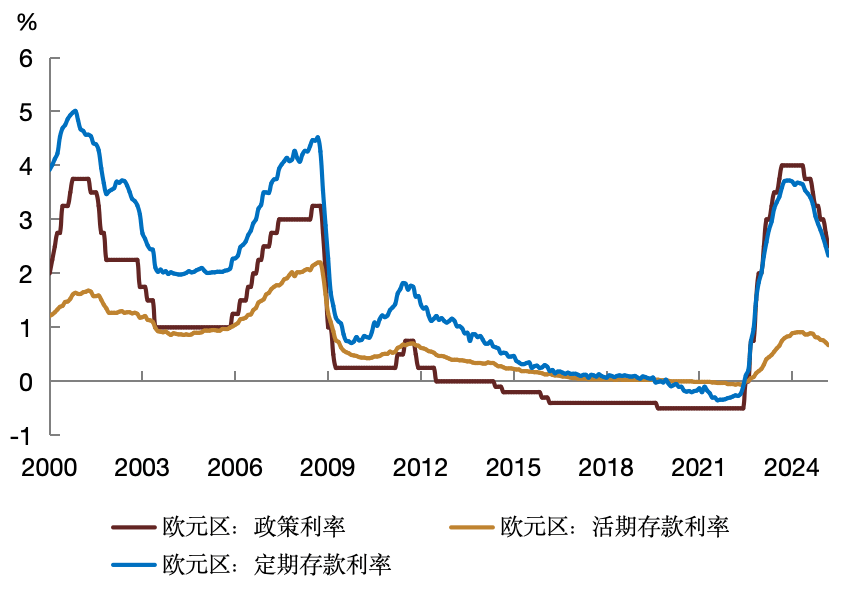
Core Viewpoint - The article discusses the challenges faced by fixed-income products in China due to declining interest rates, emphasizing the need for domestic money market funds to learn from international experiences in managing their scale and attractiveness [1]. Group 1: Changes in Money Market Fund Scale in Major Overseas Markets - In the U.S., during periods when money market fund yields fell below 1%, there were significant outflows from these funds, particularly noted in 2003-2004, 2009-2017, and 2020-2021 [2][3][5]. - The Eurozone experienced a decline in money market fund scale during the positive interest rate period from 2009 to 2014, with a contraction of 43%, but saw a rebound during the negative interest rate period from 2014 to 2022, with a 24% increase from historical lows [6][8]. - Japan's money market funds (MMF) faced extinction due to negative interest rates, while money reserve funds (MRF) thrived due to special regulatory arrangements that exempted them from negative rates [9][10]. Group 2: Factors Influencing Money Market Fund Scale Changes - The elasticity of nominal interest rates to policy rate changes leads to a "funds migration" effect, where money market fund yields are more sensitive to central bank rate adjustments compared to bank deposit rates [11][13]. - Different central bank policies regarding negative interest rates have resulted in divergent outcomes for MMFs in Europe and Japan, with Japan's MMFs ceasing operations while European MMFs expanded [19][20]. - Inflation impacts actual interest rates, influencing market preferences for low-risk assets; lower inflation typically leads to higher demand for money market funds and similar products [21]. Group 3: Implications for China's Money Market Funds - China's money market rates have historically shown a higher beta value compared to deposit rates, but this trend has reversed since 2023, indicating a potential shift in fund flows [22]. - The future of money market funds in China will depend on the central bank's ability to maintain attractive yields relative to deposit rates, especially as rates approach or fall below 1% [24]. - Anticipated adjustments in monetary policy could lead to a correction in the low beta environment of money market rates, potentially impacting fund flows and necessitating proactive strategies from fund managers [23][24].
世界黄金协会:滞胀预期上升 利率影响仍存 对金价的推动力或将进一步放大
智通财经网· 2025-09-18 11:02
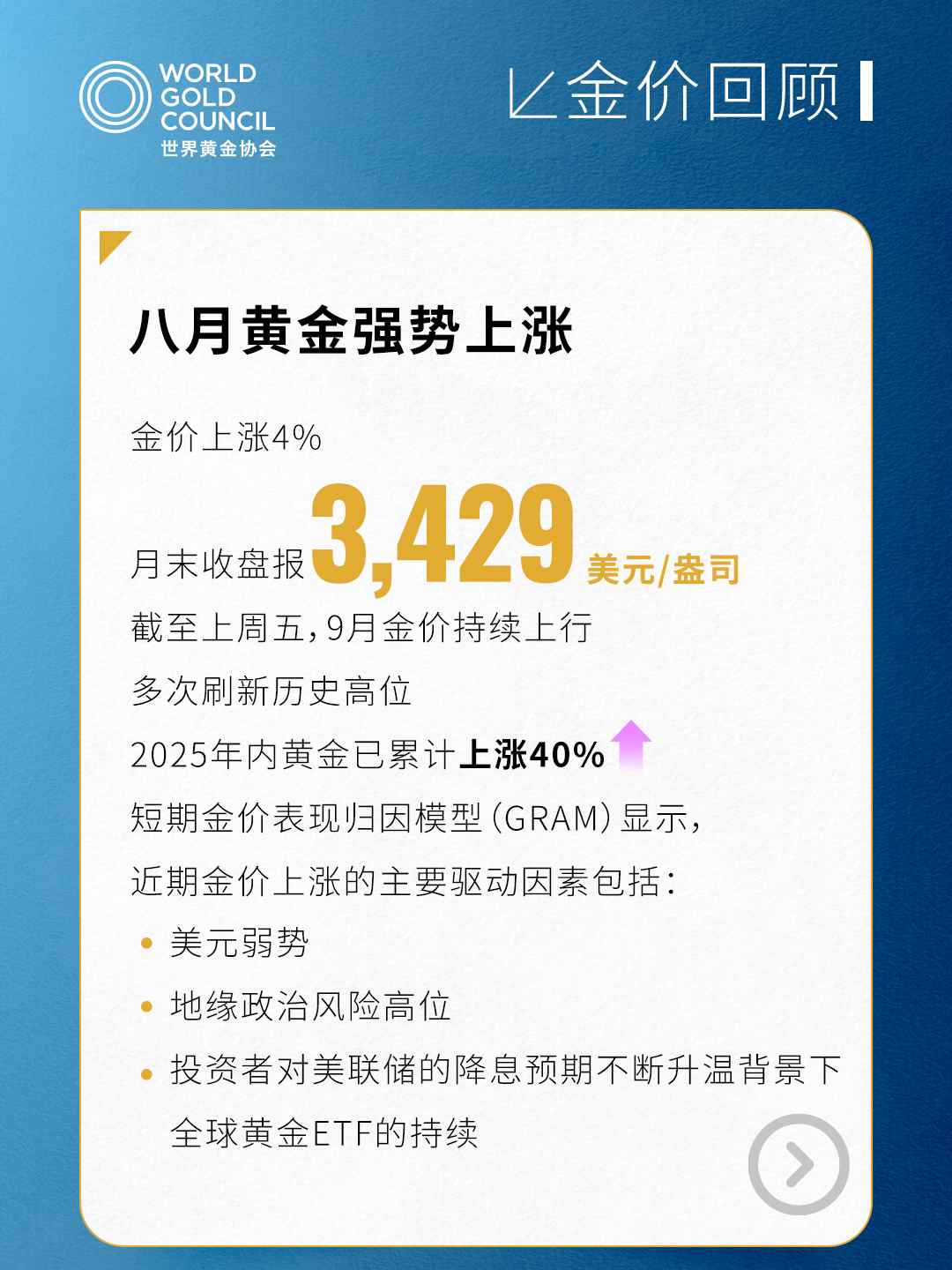
Core Insights - Recent adjustments in gold demand structure show a shift from emerging market buyers to U.S. investors, with concerns about stagflation driving gold ETF investments [1][4] - Gold prices have seen a significant increase, with a 40% rise in 2025, attributed to factors such as a weak dollar and geopolitical risks [3][4] Group 1: Gold Price Trends - Gold prices rose by 4% in August, continuing an upward trend into September, reaching historical highs [3] - The primary drivers for the recent increase in gold prices include a weak dollar, high geopolitical risks, and rising expectations for Federal Reserve rate cuts [3][4] Group 2: Investor Behavior - U.S. investors are increasingly taking over the gold market, with ETF investors most concerned about stagflation, followed by buyers of gold bars and coins [4][15] - Short-term traders in futures markets are more focused on interest rate paths rather than long-term trends [4][14] Group 3: Economic Indicators - Concerns about a potential return of stagflation are rising, which could further boost gold prices if actual interest rates begin to decline [6][11] - The relationship between gold prices and interest rates, which weakened since 2022, may strengthen again if emerging market demand diminishes [7][15] Group 4: Market Dynamics - The current market dynamics indicate a clear flow of funds into gold ETFs from Western investors, while emerging market demand is weakening [15] - The sensitivity of gold prices to actual interest rates is increasing, with stagflation expectations counteracting the pressure from interest rates [15]
通胀趋势上行而劳动力趋弱,联储降息节奏不改,黄金持续受益 | 投研报告
Zhong Guo Neng Yuan Wang· 2025-09-16 06:09
Core Viewpoint - The non-ferrous metal sector experienced a weekly increase of 3.76% from September 8 to September 12, ranking among the top in all primary industries, driven by improved demand and liquidity conditions [1][2]. Summary by Category Overall Market Performance - The non-ferrous metal sector's performance included a 5.13% increase in precious metals, a 1.35% rise in energy metals, a 4.10% increase in industrial metals, a 4.39% rise in minor metals, and a 2.45% increase in new metal materials [1][2]. Industrial Metals - Copper prices rose due to expectations of interest rate cuts, with LME copper closing at $10,068 per ton (up 1.72%) and SHFE copper at ¥81,060 per ton (up 1.15%) as of September 12 [3]. - Supply constraints are anticipated as domestic copper smelting plants undergo large-scale maintenance, and Japanese smelters may reduce output due to tight copper concentrate supplies [3]. - Demand for copper is showing slight improvement, particularly in photovoltaic component production and electric vehicle sales, although construction and home appliance sectors remain weak [3]. Aluminum - Aluminum prices increased with LME aluminum at $2,701 per ton (up 3.78%) and SHFE aluminum at ¥21,120 per ton (up 2.05%) as of September 12 [4][5]. - The operating rates of downstream aluminum processing enterprises have improved, and social inventory of electrolytic aluminum decreased by 0.27% to 629,800 tons [5]. Precious Metals - Gold prices benefited from rising inflation trends and a weakening labor market, with COMEX gold closing at $3,680.70 per ounce (up 1.12%) and SHFE gold at ¥834.22 per gram (up 2.28%) as of September 12 [6]. - The U.S. PPI for August recorded a year-on-year increase of 2.6%, while CPI showed a monthly increase of 0.4%, indicating ongoing inflationary pressures [6].
降息周期中黄金价格上涨的底层逻辑
Sou Hu Cai Jing· 2025-09-16 02:27
Group 1 - The core driving factors for the rise in gold prices during a rate cut cycle are multifaceted, involving economic, financial, and market psychology dimensions [2] - The decline in real interest rates is a key driver for gold valuation, as lower nominal rates reduce the opportunity cost of holding gold, which is a non-yielding asset [3][4] - The classic cost of carry model indicates that gold prices have an inverse relationship with real interest rates, leading to increased marginal demand for gold when real rates fall below a certain threshold [3] Group 2 - The weakening of the dollar's credit during a rate cut cycle typically results in a depreciating dollar index, which directly boosts gold prices due to the pricing effect [4][5] - Emerging market central banks may diversify their reserves by increasing gold holdings to reduce the proportion of USD in their foreign exchange reserves, reflecting a trend of "de-dollarization" [6] Group 3 - Market behavior is reinforced by both speculative and hedging demands, with hedge funds often positioning for long positions in gold futures ahead of rate cut expectations [7] - Increased volatility can trigger algorithmic buying strategies, further driving up gold prices [8] - Concerns about economic downturns lead to preemptive hedging in gold allocations, as rate cuts are often seen as a response to potential recessions [9] Group 4 - The long-term structural support for gold is influenced by financial repression effects, where low interest rates may lead to government debt expansion and concerns about currency devaluation [11] - The global scale of negative yield bonds has surpassed $18 trillion, enhancing the relative attractiveness of gold as a zero-yield asset [12] Group 5 - Historical data shows that in six rate cut cycles since 1970, gold prices have increased by 12%-35% in five instances, with the exception being during the 2007 financial crisis when liquidity issues led to asset sell-offs [13]
当钱不再是钱,黄金也不再是黄金
虎嗅APP· 2025-09-15 00:07
Core Viewpoint - The current gold bull market has reached its peak in the first half of this year, with significant participation from younger investors, indicating a shift in market dynamics [5][6][7]. Group 1: Economic Context - The rise in gold prices is seen as a reaction to the increasing debt levels and low interest rates globally, where governments continue to borrow despite rising debt [15][21][22][30]. - Since the 2008 financial crisis, global debt has surged, with total debt reaching $324 trillion, surpassing global GDP by 332.7% [38][39]. - The trend of low interest rates persists, with the U.S. experiencing a decline in rates despite rising debt levels, which has been a significant driver of economic growth [23][24][25]. Group 2: Gold Market Dynamics - The gold price has recently surged, breaking the $3700 per ounce mark, reflecting a growing fear among investors and a departure from traditional valuation metrics [10][11][12]. - The demand for gold has been driven by central banks, which purchased a record 1082 tons in 2022, indicating a shift in investment strategies [92][93]. - The traditional three-factor model for gold pricing, which includes actual interest rates and inflation expectations, has begun to fail, leading to unpredictable price movements [94][95][96]. Group 3: Future Implications - As governments continue to expand their debt, the need for "hard assets" like gold is expected to increase, suggesting a long-term bullish outlook for gold prices [50][85]. - The expectation of further monetary easing and potential negative interest rates could exacerbate the situation, making gold an attractive hedge against currency devaluation [80][81][82]. - The ongoing purchasing behavior of central banks indicates a strategic shift that could redefine the value of gold in the financial landscape [100].

当钱不再是钱,黄金也不再是黄金
Ge Long Hui· 2025-09-14 10:20
Group 1 - The current gold bull market peaked in the first half of this year, with significant participation from younger investors, including those born in the 1990s and 2000s, who are using loans and credit to invest in gold [1][3] - After a period of fluctuation, gold prices began to rise again in late August, surpassing $3,700 per ounce, marking a nearly 10% increase [3] - The dynamics of gold prices are now detached from traditional economic indicators, reflecting a broader sense of instability in the current financial era [3][12] Group 2 - The concept of investing in gold can be seen as a way to short credit currencies, as governments continue to increase their debt while maintaining low borrowing costs [4][6] - Since the late 1970s, global debt levels have surged, with government debt alone reaching $103.7 trillion, indicating a systemic reliance on credit [15][18] - The current economic environment is characterized by a significant expansion of debt, with total global debt reaching $324 trillion, which is 3 times the existing money supply [20][18] Group 3 - The expectation of interest rate cuts by central banks, particularly the Federal Reserve, is influencing market behavior, with a high probability of rate reductions anticipated [32][34] - The actual interest rates across major economies are currently below 2%, and there is a likelihood of returning to negative interest rates, which would further devalue existing debts [42][43] - The unprecedented scale of gold purchases by central banks, reaching record levels in 2022 and 2023, has led to a decoupling of gold prices from traditional valuation models [50][53] Group 4 - The ongoing large-scale acquisition of gold by central banks is a significant driver of gold price increases, as it reflects a shift in strategy to hedge against economic uncertainty [49][50] - The traditional three-factor model for gold pricing has become ineffective, leading to unpredictable surges in gold prices despite rising real interest rates [53][55] - The overarching trend suggests that as long as central banks continue to aggressively purchase gold, individual investors may benefit from following this trend [56][57]
