市场情绪

Search documents
刚刚,金价冲上5000美元/盎司关口!“黑马”,美联储主席最大热门人选出现!芳烃系领涨化工板块
Qi Huo Ri Bao· 2026-01-26 00:17
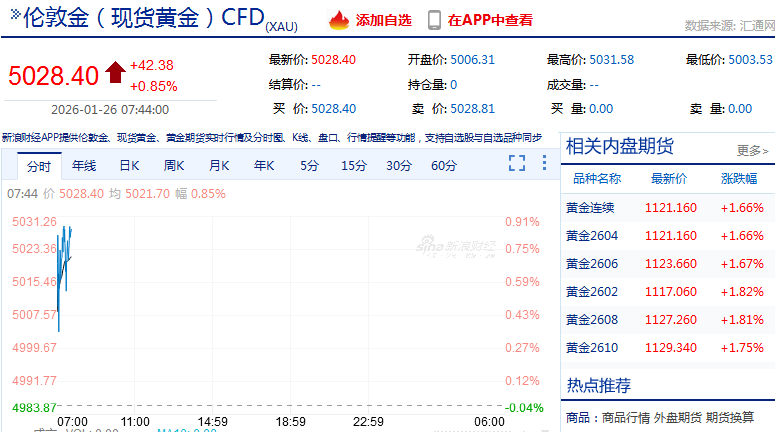
Group 1: Gold Market - Spot gold prices have historically surpassed $5000 per ounce for the first time, just over 100 days after breaking the $4000 mark, driven by central bank purchases, geopolitical tensions, and economic uncertainty [3] Group 2: Middle East Tensions - The Israeli Defense Forces have entered a state of high alert, closely monitoring regional tensions and preparing for potential U.S. military actions against Iran that could have repercussions for Israel [5] - Iranian armed forces have declared a state of full readiness, emphasizing their capability to respond to any military aggression, particularly in the strategic Strait of Hormuz [6] - Turkey's Foreign Minister has warned external powers against attempting regime change in Iran, asserting that the current situation will not lead to such outcomes [7] Group 3: Chemical Industry - The chemical futures market has shown a collective strengthening, with significant price increases in aromatics such as pure benzene and styrene, which have become the core drivers of the sector's growth [9] - Pure benzene futures rose from 5573 yuan/ton to 6056 yuan/ton, an increase of 8.67%, while styrene futures increased from 7124 yuan/ton to 7708 yuan/ton, up 8.19% [9] - The recent price surge in ethylene glycol futures is attributed to market interest in undervalued chemical assets, despite ongoing supply pressures from new production capacities expected in 2026 [10][13] - The price increases in pure benzene and styrene are driven by market sentiment and supply disruptions, with styrene prices reaching a six-month high due to unexpected plant outages [11] - Upcoming restarts of styrene production facilities are expected to increase supply, potentially exerting downward pressure on prices [12]

量化择时周报:市场情绪平稳,价量一致性高位震荡-20260125
Shenwan Hongyuan Securities· 2026-01-25 14:48
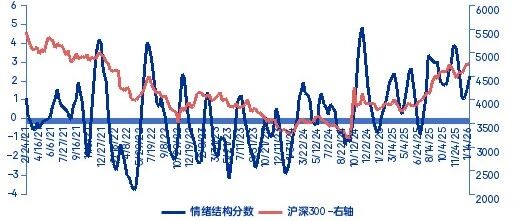
Group 1 - Market sentiment remains stable with a slight increase in the sentiment indicator to 2.35 as of January 23, up from 2.25 the previous week, indicating a neutral model perspective [2][9] - The consistency of price and volume remains high, reflecting strong market sentiment and a correlation between capital attention and stock price movements [3][16] - The trading volume of the entire A-share market decreased significantly by 19.22% week-on-week, with an average daily trading volume of 27,989.42 billion yuan [19] Group 2 - The sector score rankings show that non-ferrous metals, communications, national defense, comprehensive, and electronics industries are leading, with non-ferrous metals achieving the highest short-term score of 100.00 [45][46] - The model indicates a preference for small-cap and growth styles, with the 5-day RSI showing a decline relative to the 20-day RSI, suggesting potential weakening of signals [45][54] - The industry crowding indicator shows no significant correlation with weekly price changes, indicating that sectors like oil and gas, utilities, and media are experiencing notable gains despite high crowding [48][50]
情绪与估值1月第3期:成交活跃度下降,中证1000估值领涨
GUOTAI HAITONG SECURITIES· 2026-01-25 05:34
Core Insights - The report indicates a decline in trading activity, with the CSI 1000 index leading in valuation gains [1] - Valuation changes are mixed across broad indices, with the CSI 1000 showing a notable increase [4] - The report highlights that the PE valuation in the textile and apparel sector and the PB valuation in the oil and petrochemical sector are leading [4] Index Valuation - The CSI 1000 index leads with a PE-TTM increase of 4.2 percentage points, while the PB-LF valuation increased by 2.0 percentage points [4] - Among style indices, the cyclical style leads with a PE-TTM increase of 1.8 percentage points, and the mid-cap style leads with a PB-LF increase of 4.5 percentage points [4] Industry Valuation - The textile and apparel sector shows a PE increase of 2.5 percentage points, leading among industries [4] - The oil and petrochemical sector leads in PB valuation with a 9.5 percentage point increase [4] Market Sentiment - Trading activity has decreased, with a mixed change in turnover rates; the CSI 1000 index saw the largest increase of 1.5% [4] - Total trading volume across indices has declined, with the CSI 1000 experiencing a 21.8% drop [4] - The margin trading balance as of January 22, 2026, is 2.70 trillion, down 0.24% from January 16, 2026 [4] Risk Premium - The report notes a slight decrease in the equity risk premium (ERP), which stands at 3.92%, down 0.03 percentage points from January 16, 2026 [4][7]

双焦周报:预计盘面继续呈现偏强震荡,注意短期市场情绪扰动-20260124
Wu Kuang Qi Huo· 2026-01-24 13:46
Report Industry Investment Rating - Not provided in the content Core Viewpoints of the Report - The report anticipates that the short - term prices of coking coal and coke will continue to show a slightly stronger oscillating trend, while also highlighting the short - term impact of market sentiment and the current high - volatility risks [19] Summary by Relevant Catalogs 1. Weekly Assessment and Strategy Recommendation - **Market Review**: Last week, coking coal futures prices generally showed a trend of reaching the bottom and then rebounding, with a wide - range oscillation, and a weekly decline of 12.5 yuan/ton or - 1.06% for the weighted index. Coking coal prices were affected by factors such as the explosion accident at Baogang's plate factory, weak market sentiment, and Trump's tariff statement. Coking coal is in a daily - level rebound cycle, with support around 1130 - 1150 yuan/ton and resistance around 1260 yuan/ton. Coke futures prices also showed a similar trend, with a weekly increase of 5.5 yuan/ton or + 0.32% for the weighted index. Coke prices are approaching the long - term downward trend line since October 2021. If it breaks upward, the resistance around 1850 yuan/ton will be focused on, and the support around 1650 - 1700 yuan/ton will be monitored in the short term [14][17] - **Weekly Key Points Summary**: In terms of spot prices and basis, coking coal and coke have different price and basis changes. The coking coal main contract position is at a high level in the same period of the past six years, and non - main contract positions in March and April are abnormally high, so the pressure of warehouse receipts after price increases needs to be watched out for. Domestic coking coal production has slightly increased, and the Mongolian coal customs clearance volume at Ganqimaodu Port has rebounded to a high level. Australian coal imports are still unprofitable. Coke production is basically stable, iron - making water production has increased slightly, and the steel mill profitability rate has also increased. The apparent consumption of five major steel products has decreased, and steel inventory is still higher than the same period last year but within an acceptable range [18] - **Supply - Demand Structure and Outlook**: The estimated daily supply of coking coal in the country has slightly increased, and the estimated demand has also increased slightly. The supply - demand structure of coking coal has changed little compared with last week. The estimated demand for coke converted from iron - making water is slightly lower than the daily coke production, and the supply - demand structure of coke has also become marginally looser. In terms of inventory, the total coking coal inventory has increased, and the total coke inventory has also increased. Looking forward, the report believes that commodity bulls will continue, but the black sector currently lacks capital interest. Short - term price increases may be limited due to factors such as the marginal loosening of supply - demand structure and low downstream replenishment willingness, but the recent rise in Australian coal prices and the power shortage in the US may have a positive impact on sentiment [19] 2. Futures and Spot Market - **Spot Prices**: As of January 23, 2026, different types of coking coal and coke have different price changes. For example, the price of low - sulfur main - coking coal in Shanxi has increased by 9.4 yuan/ton, and the price of Rizhao Port's quasi - first - grade wet - quenched coke has decreased by 20 yuan/ton [23][34] - **Basis and Calendar Spread**: The basis of coking coal such as Shanxi low - sulfur main - coking coal and Jinquan Mongolian No. 5 coal has increased, and the basis of coke such as Rizhao Port's quasi - first - grade wet - quenched coke and Lvliang's quasi - first - grade dry - quenched coke has decreased. The 5 - 9 calendar spreads of coking coal and coke are negative, and both maintain a Contango structure [41][50] 3. Positions and Variety Ratios - **Positions**: As of January 23, 2026, the total unilateral position of coking coal is 636,600 lots, an increase of 18,800 lots compared with the previous week, and it is still at a relatively high historical level. The unilateral position of coke is 39,800 lots, a decrease of 500 lots compared with the previous week. The position of the coking coal main contract is at a high level in the same period of the past six years, and non - main contract positions in March and April are abnormally high [59][60] - **Variety Ratios**: This week, JM/I has increased by 0.02, HC/JM has increased by 0.02, J/I has increased by 0.05, HC/J has decreased by 0.01, and JM/J has decreased by 0.01. Coking coal is slightly stronger than iron ore and slightly weaker than hot - rolled coils, and coke is slightly stronger than iron ore, hot - rolled coils, and coking coal. Currently, both JM/I and J/I are at relatively low historical levels, indicating that the valuations of coking coal and coke are relatively low compared with iron ore [64][68] 4. Supply and Demand - **Domestic Coking Coal Production**: As of January 23, 2026, the daily average production of clean coal from 523 sample mines is 77.01 tons, a week - on - week increase of 0.16 tons, but the cumulative production in the sample is about 560,000 tons less than the same period last year, a decrease of 1.88%. The daily average production of clean coal from 314 sample coal - washing plants is 27.63 tons, a week - on - week increase of 0.28 tons, and the cumulative production in the sample has increased by about 1.15 million tons compared with the same period last year, an increase of 18.22% [73][75] - **Imported Coking Coal**: As of January 17, 2026, the Mongolian coal customs clearance volume at Ganqimaodu Port has rebounded to 198,000 tons/day, at an absolute high level in the same period. In 2025, the cumulative import of Mongolian coking coal was 60.074 million tons, a year - on - year increase of 3.2819 million tons or 5.78%. The estimated import profit of Australian Peak View hard coking coal is - 88.6 yuan/ton, and the import window is still closed. In 2025, the cumulative import of Australian coking coal was 8.8562 million tons, a year - on - year decrease of 1.4458 million tons or 14.03%. In 2025, the imports of Russian and Canadian coking coal increased, while the import of US coking coal decreased significantly and remained stagnant [78][87] - **Coke Production**: As of January 23, 2026, the total daily average production of coke from 247 steel enterprises and independent coking plants is 1.1021 million tons, a week - on - week increase of 0.04 tons, and the cumulative production in the sample is about 460,000 tons less than the same period last year, a decrease of 1.48%. The coking profit of independent coking plants is - 66 yuan/ton, a week - on - week decrease of 1 yuan/ton. The daily average coke production of 247 steel enterprises is 469,000 tons, a week - on - week increase of 0.18 tons, and that of independent coking plants is 633,100 tons, a week - on - week decrease of 0.14 tons [90][93] - **Downstream Steel Industry**: As of January 23, 2026, the daily average iron - making water production of 247 steel enterprises is 2.281 million tons, a week - on - week increase of 0.09 tons, and the steel mill profitability rate is 40.69%, a week - on - week increase of 0.86%. The estimated disk profits of rebar and hot - rolled coils are - 155 yuan/ton and - 97 yuan/ton respectively, and the disk profits continue to recover. The apparent consumption of five major steel products is 8.0952 million tons, a week - on - week decrease of 166,000 tons, but a year - on - year increase of 997,400 tons. The available steel inventory is 23.0322 million tons, a week - on - week decrease of 73,400 tons, and a year - on - year increase of 2.1633 million tons, still higher than the same period last year but within an acceptable range [96][106] - **Supply - Demand Structure**: The estimated daily supply of coking coal in the country is 1.5333 million tons, with a slight week - on - week increase. The estimated daily demand for coking coal converted from coke production and iron - making water has also increased slightly. The supply - demand structure of coking coal has changed little compared with last week. The estimated daily demand for coke converted from iron - making water is about 1.0949 million tons, still slightly lower than the daily coke production, and the supply - demand structure of coke has also become marginally looser [108] 5. Inventory - **Inventory Overview**: As of January 23, 2026, the total coking coal inventory has increased by 383,600 tons compared with the previous week, and the total coke inventory has increased by 189,400 tons compared with the previous week. Different sectors such as mines, coking plants, steel mills, and ports have different inventory changes [112][113]
财富观 | “初遇”4100点,新锐基金经理如何应对经验空白?
Sou Hu Cai Jing· 2026-01-23 11:40
Core Insights - The A-share market has returned to the 4100-point level after ten years, with over 80% of fund managers having never experienced this level before [2][3] - The current market dynamics are shaped by a new generation of fund managers who are navigating a "structural bull market" rather than a traditional bull market driven by leverage [3][4] Group 1: Market Dynamics - The Shanghai Composite Index first crossed the 4000-point mark on October 28, 2025, and reached 4100 points on January 9, 2026, marking a significant recovery since July 2015 [3] - Over 83% of fund managers, approximately 3429 out of 4108, have started their careers after 2016, indicating a generational shift in the investment landscape [3] - The current bull market is characterized by a focus on industry policies and technological innovation rather than the leverage-driven dynamics of previous bull markets [4][5] Group 2: Investment Strategies - New fund managers are adopting a balanced and disciplined approach, emphasizing the importance of maintaining their investment philosophy and avoiding impulsive trading behaviors [6][7] - Experienced fund managers stress the need for a return to fundamental research and a focus on valuation and performance matching, moving away from mere point comparisons [4][9] - The current market is seen as more resilient, driven by household savings and ETF allocations, contrasting with the leverage-driven market of 2015 [4][5] Group 3: Challenges and Opportunities - New fund managers face challenges such as a lack of historical market experience, which may lead to over-reliance on short-term data and insufficient risk management [8] - However, their lack of historical baggage allows them to embrace new technologies and adapt to current market demands more readily [8] - Experienced managers highlight the evolving role of experience, which now focuses more on risk management and emotional resilience rather than solely on stock selection [9][10] Group 4: Institutional Responses - Fund companies are addressing the experience gap through structured training and mentorship programs, pairing seasoned managers with newer ones to facilitate knowledge transfer [11] - The ideal fund manager team should combine different levels of experience to balance growth, value, and quantitative strategies [11] - Companies are adapting their strategies based on their risk appetite, with more aggressive firms favoring new talent while conservative firms prefer experienced managers [11]

招商期货-期货研究报告:商品期货早班车-20260122
Zhao Shang Qi Huo· 2026-01-22 01:23
2026年01月22日 星期四 商品期货早班车 招商期货-期货研究报告 基本金属 招商评论 铝 市场表现:昨日电解铝主力合约收盘价较前一交易日+0.86%,收于 24155 元/吨,国内 0-3 月差-295 元/吨, LME 价格 3135 美元/吨。 基本面:供应方面,电解铝厂维持高负荷生产,运行产能小幅增加。需求方面,周度铝材开工率小幅上升。 交易策略:消费端淡季特征显著,库存延续累积,供需矛盾叠加市场情绪趋于谨慎,铝价短期维持震荡调整。 风险提示:海外供应扰动、投机资金获利了结。 氧 化 铝 市场表现:昨日氧化铝主力合约收盘价较前一交易日+0.04%,收于 2672 元/吨,国内 0-3 月差-35 元/吨。 基本面:供应方面,氧化铝厂运行产能维持稳定。需求方面,电解铝厂维持高负荷生产。 交易策略:现货价格企稳,但远期供应过剩压力较大,叠加到期仓单集中注销,氧化铝盘面价格维持偏弱走 势。 风险提示:几内亚矿端扰动,大规模集中减产,反内卷政策刺激。 锌 市场表现:1 月 21 日日盘,锌、铅主力合约收于 24350 元/吨,17115 元/吨,较前一交易日收盘价分别-+60,-+110 元/克。国内 0 ...
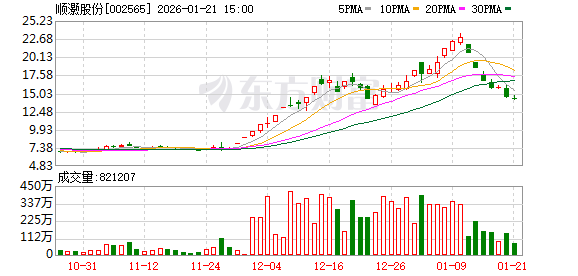
顺灏股份:二级市场股价波动受宏观经济、行业政策、市场情绪等多因素的综合影响
Zheng Quan Ri Bao· 2026-01-21 11:45
Group 1 - The company, Shunhao Co., stated that it strictly adheres to relevant laws and regulations regarding information disclosure obligations [2] - The fluctuations in the secondary market stock price are influenced by various factors including macroeconomic conditions, industry policies, and market sentiment [2] - The company urges investors to be aware of investment risks [2]

博时宏观观点:市场情绪偏热,注意规避高估值和题材板块
Xin Lang Cai Jing· 2026-01-20 03:58
Group 1: Market Overview - The bond market is expected to have short-term opportunities, while the A-share market sentiment is considered overheated, necessitating caution against high valuation and thematic sectors [1][11] - The Hong Kong stock market's performance is heavily reliant on the PPI trend, with the current phase characterized by weak fundamentals despite benefiting from liquidity [12][13] - Global oil demand remains weak, with ongoing supply releases and inventory accumulation putting pressure on prices, while geopolitical tensions may cause short-term volatility [13] Group 2: Economic Indicators - In December, the US CPI was slightly below expectations, and the rebound post-government shutdown was not strong, indicating that inflation does not pose a threat to the Federal Reserve's easing cycle [1][11] - Domestic exports exceeded expectations in December, driven by external demand, particularly in integrated circuits, consumer electronics, and automobiles [1][11] - The credit structure shows stronger performance on the corporate side compared to the household sector, with a decrease in social financing growth year-on-year due to the pace of bond issuance [1][11] Group 3: Investment Strategy - The recent cooling of the equity market has led to a recovery in the bond market, but the long-end interest rate opportunities are expected to wait for a clear decline in risk appetite [1][11] - The A-share market may experience a "mid-game break" in the spring rally due to regulatory impacts and earnings forecasts, prompting a shift in funds from high valuation sectors to those with solid performance support and reasonable valuations [12] - The outlook for gold remains positive in the long term, despite potential short-term price fluctuations due to reduced uncertainties from US-China trade tensions [13]
五矿期货有色金属日报-20260120
Wu Kuang Qi Huo· 2026-01-20 02:18
1. Report Industry Investment Rating No relevant content provided. 2. Core Viewpoints of the Report - The overall sentiment in the non - ferrous metals market is affected by factors such as tariff expectations and market liquidity. Although there are some negative factors, the sentiment is not overly pessimistic in the context of a bullish precious metals market and loose US financial market liquidity expectations. In the double - wide cycle, the non - ferrous metals sector is generally regarded positively. However, the prices of different metals will show different trends based on their own supply - demand fundamentals. [2][3][5] 3. Summary by Metal Copper - **Market Information**: On January 19th, LME copper 3M rose 1.28% to $12,987/ton, and the SHFE copper main contract closed at 101,680 yuan/ton. LME copper inventory increased by 3,850 tons to 147,425 tons, with the increase coming from Asian warehouses. The domestic electrolytic copper social inventory increased by about 10,000 tons compared to last Thursday. The SHFE copper spot import loss was about 1,300 yuan/ton, and the refined - scrap copper price difference was 3,440 yuan/ton, slightly widening month - on - month. [2] - **Strategy Viewpoint**: The expectation of Trump's additional tariffs on key minerals has weakened, and the US plan to impose additional tariffs on 8 European countries has cooled market sentiment. However, with the strong performance of precious metals and the expectation of loose liquidity in the US financial market, the sentiment is not pessimistic. The copper ore supply remains tight, the LME spot market is strong, but the refined copper supply is relatively excessive. The copper price is expected to fluctuate at a high level in the short term. The reference range for the SHFE copper main contract today is 100,000 - 103,500 yuan/ton; the reference range for LME copper 3M is $12,800 - 13,200/ton. [3] Aluminum - **Market Information**: On January 19th, LME aluminum closed up 1.12% at $3,165/ton, and the SHFE aluminum main contract closed at 24,225 yuan/ton. The SHFE aluminum weighted contract position slightly increased to 698,000 lots, and the futures warehouse receipts increased by 1,000 tons to 141,000 tons. The domestic aluminum ingot social inventory increased by 15,000 tons compared to last Thursday, and the aluminum bar social inventory increased by 9,000 tons. The LME aluminum ingot inventory decreased by 3,000 tons to 485,000 tons. [4] - **Strategy Viewpoint**: The precious metals market has strengthened again, and market sentiment has improved. The high spot premium of US aluminum and the low LME global aluminum inventory at multi - year lows limit the downside of aluminum prices. Although high prices still affect domestic downstream demand, as prices decline, downstream inventory replenishment may increase. Coupled with the expectation of "rush - to - export" in the photovoltaic industry, the aluminum price may be relatively strong in the short term. The reference range for the SHFE aluminum main contract today is 23,900 - 24,400 yuan/ton; the reference range for LME aluminum 3M is $3,120 - 3,200/ton. [5][6] Cast Aluminum Alloy - **Market Information**: On January 19th, the price of cast aluminum alloy stabilized. The main AD2603 contract closed up 0.68% at 22,890 yuan/ton. The weighted contract position decreased to 24,600 lots, and the trading volume was 11,100 lots, a decrease month - on - month. The warehouse receipts decreased by 400 tons to 69,700 tons. The price difference between the AL2603 and AD2603 contracts was 1,200 yuan/ton, slightly widening month - on - month. The average price of mainstream domestic ADC12 remained flat, and the price of imported ADC12 decreased by 100 yuan/ton. The inventory of aluminum alloy ingots in three regions decreased by 300 tons to 43,200 tons. [8] - **Strategy Viewpoint**: The cost of cast aluminum alloy is strong, and supply - side disturbances continue. However, demand is relatively weak. The price is expected to fluctuate and consolidate in the short term. [9] Lead - **Market Information**: On Monday, the SHFE lead index fell 1.65% to 17,185 yuan/ton, with a total unilateral trading position of 112,100 lots. As of 15:00 on Monday, LME lead 3S fell $26.5 to $2,048.5/ton compared to the previous day, with a total position of 166,000 lots. The SMM1 lead ingot average price was 17,025 yuan/ton, the average price of recycled refined lead was 16,900 yuan/ton, and the refined - scrap price difference was 125 yuan/ton. The SHFE lead ingot futures inventory was 27,600 tons, and the domestic primary basis was - 135 yuan/ton. The LME lead ingot inventory was 206,400 tons, and the LME lead ingot cancelled warehouse receipts were 43,700 tons. [11] - **Strategy Viewpoint**: The visible inventory of lead concentrates has declined, and the operating rate of primary lead has remained high and increased slightly. The raw material inventory on the recycling side has increased, and the weekly operating rate of recycled lead has increased marginally. The lead price is still close to the upper limit of the long - term oscillation range, and the supply of lead ingots has increased marginally. The operating rate of downstream battery manufacturers has improved marginally, and the social inventory of lead ingots has increased. After the winter cooling, the transportation of waste batteries has become difficult, the scrap pricing coefficient has increased, and the smelting profit of recycled lead has declined slightly. The lead price has given back some of its gains as the sentiment in the non - ferrous metals sector fades. However, in the double - wide cycle, the non - ferrous metals sector is still regarded positively. The subsequent trends of leading varieties in the sector and the SHFE - LME ratio need to be observed. [11][12] Zinc - **Market Information**: On Monday, the SHFE zinc index fell 1.17% to 24,456 yuan/ton, with a total unilateral trading position of 232,300 lots. As of 15:00 on Monday, LME zinc 3S fell $41.5 to $3,222.5/ton compared to the previous day, with a total position of 232,200 lots. The SMM0 zinc ingot average price was 24,420 yuan/ton, the Shanghai basis was 40 yuan/ton, the Tianjin basis was - 20 yuan/ton, the Guangdong basis was at par, and the price difference between Shanghai and Guangdong was 40 yuan/ton. The SHFE zinc ingot futures inventory was 33,800 tons, and the LME zinc ingot inventory was 106,500 tons. [13] - **Strategy Viewpoint**: The port inventory of zinc ore has decreased slightly, and the import TC of zinc concentrates has decreased slightly. However, the increase in zinc price has slightly increased zinc smelting profits, and the industrial situation has not improved significantly. The social inventory of zinc ingots has started to increase, and the SHFE - LME ratio has stopped rising and declined. Since December 24, 2025, the domestic zinc - copper ratio has reached a new low since the listing of SHFE zinc in 2007, and since January 9, 2026, the domestic zinc - aluminum ratio has reached a new low since 2013. The zinc price has a large potential for catch - up growth compared to copper and aluminum. The zinc price is still in the process of catching up with the macro - attribute of the sector. It has given back some of its gains as the sentiment in the non - ferrous metals sector fades. However, in the double - wide cycle, the non - ferrous metals sector is still regarded positively. The subsequent trends of leading varieties in the sector and the SHFE - LME ratio need to be observed. [14] Tin - **Market Information**: On January 19th, the tin price continued to weaken. The SHFE tin main contract closed at 389,500 yuan/ton, a 3.88% decrease from the previous day. The smelting operating rates of tin ingots in Yunnan and Jiangxi were generally stable at a high level. Yunnan was about 87.81%, basically unchanged and production was normal. Jiangxi's refined tin output was still low due to the shortage of scrap tin raw materials. The resumption of production in Wa State, Myanmar has accelerated, and the increase in tin price has boosted the enthusiasm for resumption. In addition, it is estimated that about 5,000 tons of tin ore will be imported in December, and the raw material shortage in Yunnan has significantly eased compared to the previous period, with an expectation of further import increases. However, after the two regions resumed from maintenance, there was insufficient upward momentum, and there were constraints on the scrap side and downstream high - price waiting - and - seeing. The short - term supply was difficult to increase significantly. As of January 16, 2026, the social inventory of tin ingots in major domestic markets was 10,636 tons, an increase of 2,560 tons from last Friday. [15][16] - **Strategy Viewpoint**: The supply - demand situation of tin has improved marginally, but the short - term inventory accumulation trend may continue to put pressure on the price. Coupled with the withdrawal of speculative funds, the tin price may continue to decline in an oscillatory manner. It is recommended to wait and see. The reference range for the domestic main contract is 360,000 - 400,000 yuan/ton, and the reference range for LME tin is $46,000 - 50,000/ton. [17] Nickel - **Market Information**: On January 19th, the nickel price rebounded after hitting a low. The SHFE nickel main contract closed at 142,710 yuan/ton, a 0.66% increase from the previous day. In the spot market, the premium and discount of each brand gradually declined. The average premium of Russian nickel spot to the near - month contract was 600 yuan/ton, unchanged from the previous day, and the average premium of Jinchuan nickel spot was reported at 7,850 yuan/ton, an increase of 1,350 yuan/ton from the previous day. The nickel ore price remained stable. The ex - factory price of 1.6% grade Indonesian domestic red clay nickel ore was reported at $54.54/wet ton, and the price of 1.2% grade Indonesian domestic red clay nickel ore was reported at $23/wet ton, both unchanged from the previous day. The price of nickel iron increased significantly, and the average price of 10 - 12% high - nickel pig iron was reported at 1,012 yuan/nickel point, unchanged from the previous day. [19] - **Strategy Viewpoint**: Although there is an expectation of an increase in refined nickel production in January, it has not been continuously reflected in the visible inventory in the short term. It is expected that the SHFE nickel will still fluctuate widely in the short term. It is recommended to wait and see. The short - term reference range for the SHFE nickel price is 130,000 - 160,000 yuan/ton, and the reference range for the LME nickel 3M contract is $16,000 - 19,000/ton. [20] Lithium Carbonate - **Market Information**: The MMLC lithium carbonate spot index closed at 144,461 yuan in the evening session, a 2.84% decrease from the previous working day. The MMLC battery - grade lithium carbonate was quoted at 143,500 - 146,300 yuan, with the average price decreasing by 4,100 yuan (- 2.75%) from the previous working day. The industrial - grade lithium carbonate was quoted at 140,600 - 143,700 yuan, with the average price decreasing by 3.30% from the previous day. The LC2605 contract closed at 147,260 yuan, a 0.73% increase from the previous day's closing price. The average premium and discount of battery - grade lithium carbonate in the trading market was - 1,600 yuan. [22][23] - **Strategy Viewpoint**: The optimistic sentiment has eased, and the lithium price fluctuated widely on Monday. The progress of mine type change in Jiangxi mines has been made, but even if the mining license is obtained, there are still procedures such as the safety production license and environmental impact assessment approval, and it is difficult to directly translate into supply at present. The impact of this event on the sentiment level should be mainly concerned. If the increase in lithium price is fully transmitted to the end - users, the increase in battery cost will suppress some energy - storage demand, and the current price still has a certain emotional premium. The lithium carbonate price has fluctuated greatly recently, and there are many disturbances in the industrial and macro aspects. It is recommended to wait and see or make a light - position attempt. Pay attention to the market atmosphere, demand policies, downstream acceptance willingness, and changes in position on the disk. The reference range for the GZFE lithium carbonate 2605 contract today is 140,200 - 151,000 yuan/ton. [23] Alumina - **Market Information**: On January 19, 2026, as of 3 pm, the alumina index fell 0.69% to 2,726 yuan/ton, with a total unilateral trading position of 704,400 lots, an increase of 12,000 lots from the previous trading day. In terms of basis, the Shandong spot price remained at 2,565 yuan/ton, at a discount of 168 yuan/ton to the main contract. Overseas, the MYSTEEL Australian FOB price remained at $305/ton, and the import profit and loss was reported at - 82 yuan/ton. In terms of futures inventory, the futures warehouse receipts on Monday were reported at 187,900 tons, an increase of 111,000 tons from the previous trading day. The CIF price in Guinea remained at $63/ton, and the CIF price in Australia remained at $60/ton. [25] - **Strategy Viewpoint**: After the rainy season, the shipments from Guinea are gradually recovering, and the resumption of production in the AXIS mine is expected to cause the ore price to decline in an oscillatory manner. Pay attention to the support at the import cost position of Guinea ore. The over - capacity pattern in the alumina smelting end is difficult to change in the short term, and the inventory accumulation trend continues. The National Development and Reform Commission has proposed to prevent blind investment and disorderly construction in alumina and copper smelting, and the market expectation for the implementation of supply - contraction policies in the future has increased. However, continued rebound still faces three difficulties: over - capacity in the smelting end, downward - moving cost support, and the pressure of expiring warehouse receipt delivery. It is recommended to wait and see in the short term. The cost - performance of chasing up is not high. One can wait for an opportunity to short the near - month contract at a high price. The reference range for the domestic main contract AO2605 is 2,650 - 2,800 yuan/ton. Pay attention to supply - side policies, Guinea ore policies, and the Fed's monetary policy. [26] Stainless Steel - **Market Information**: At 15:00 on Monday, the stainless - steel main contract closed at 14,305 yuan/ton, a 0.21% (+ 30) increase on the day, with a unilateral position of 263,700 lots, an increase of 2,294 lots from the previous trading day. In the spot market, the Delong 304 cold - rolled coil price in the Foshan market was reported at 14,050 yuan/ton, a decrease of 100 yuan from the previous day, and the Hongwang 304 cold - rolled coil price in the Wuxi market was reported at 14,300 yuan/ton, a decrease of 50 yuan from the previous day. The Foshan basis was - 455 (- 130), and the Wuxi basis was - 205 (- 80). The Foshan Hongwang 201 was reported at 9,200 yuan/ton, unchanged from the previous day, and the Hongwang annealed 430 was reported at 7,750 yuan/ton, unchanged from the previous day. In terms of raw materials, the ex - factory price of high - nickel iron in Shandong was reported at 1,015 yuan/nickel, unchanged from the previous day. The recycling price of 304 scrap steel industrial materials in Baoding was reported at 9,450 yuan/ton, unchanged from the previous day.
情绪继续修复,价量一致性维持高位——量化择时周报20260118
申万宏源金工· 2026-01-19 08:03
Core Viewpoint - The article emphasizes a positive market sentiment with increasing trading volume and consistency in price and volume, indicating a potential upward trend in the market [1][4]. Group 1: Market Sentiment Indicators - The market sentiment structure indicators include various metrics such as industry trading volatility, trading congestion, price-volume consistency, and others, which collectively suggest a positive sentiment direction [2]. - As of January 16, the market sentiment index reached 2.25, a significant increase from 1.6 the previous week, indicating a recovery in sentiment [4]. - The price-volume consistency indicator has shown a rapid increase, reflecting a strong correlation between market attention and price movements, suggesting an active market sentiment [6][10]. Group 2: Trading Activity and Volume - The total trading volume for the A-share market increased by 21.25% week-on-week, with an average daily trading volume of 34,650.61 billion yuan, highlighting heightened market activity [10]. - On January 14, a historical trading volume peak was recorded at 39,868.62 billion yuan, indicating strong market engagement [10]. Group 3: Sector Performance and Risk Appetite - The trading volatility between industries is on a downward trend, indicating a slowdown in capital switching between sectors, which may reflect a cautious market environment [13]. - The industry trend indicators remain stable, suggesting a high level of consensus on short-term value judgments across sectors, with a dominant beta effect in the market [16]. - The financing balance ratio remains high, indicating that leveraged capital sentiment is still elevated, reflecting a relatively positive risk appetite among investors [19]. Group 4: Short-term and Long-term Trends - The short-term scoring model indicates that sectors such as computers, pharmaceuticals, and media are showing upward trends, with the non-ferrous metals sector having the highest short-term score of 98.31 [25]. - The article notes that the correlation between industry congestion and weekly price changes is positive, suggesting that sectors with high congestion, like computers and media, are likely to experience significant price movements [28].