
本土化

Search documents
年产能600万套,海尔泰国春武里空调工业园投产
Xin Hua Cai Jing· 2025-09-23 23:48
Core Insights - Haier's new air conditioning industrial park in Thailand is the largest manufacturing base for Chinese brands in Southeast Asia, with an annual production capacity of 6 million units [1] - The industrial park emphasizes smart manufacturing and green operations, incorporating advanced quality inspection systems and solar power generation [1] - The establishment of the park is a significant milestone in the 50-year diplomatic relationship between China and Thailand, showcasing deepening cooperation in various fields [1][2] Group 1 - The industrial park covers approximately 324,000 square meters and aims to create over 3,000 local jobs in the next three years [1] - Haier has been operating in Thailand since 2002 and has become the leading brand in white goods, with air conditioning sales ranking first for four consecutive years [2] - The park is designed to be a "lighthouse" for the Southeast Asian home appliance industry, collaborating with 110 suppliers [1] Group 2 - The park integrates AI technologies for visual inspection and noise recognition, reflecting Haier's commitment to innovation [1] - The opening of the park is seen as a concrete example of the friendly cooperation between China and Thailand, marking a fruitful outcome of their partnership [1][2] - Haier's focus on local talent development and tailored products demonstrates its dedication to meeting local consumer needs [2]

星巴克卖股权只为换“国风”,谁会为它买单?
阿尔法工场研究院· 2025-09-18 00:07
Core Viewpoint - Starbucks and Burger King are adapting their strategies in the Chinese market to remain competitive against local brands, focusing on localization and strategic partnerships rather than merely seeking financial investment [3][5][9]. Group 1: Starbucks Strategy - Starbucks is seeking a strategic partner in China, not selling its business, aiming to enhance brand development through local expertise [12][14]. - The company has nearly 8,000 stores in China, its second-largest market, but faces increasing pressure from local competitors [15][16]. - Starbucks needs local insights to navigate the complex Chinese market, including collaboration with local delivery platforms and social media [18][20]. - The potential partners include major investment firms and tech companies, indicating a desire for more than just financial backing [19][20]. - Starbucks aims to retain a significant equity stake, indicating a desire for control while seeking collaboration [21][23]. - The valuation of Starbucks' Chinese business has reportedly increased from $5 billion to nearly $10 billion, reflecting its perceived value despite market competition [24]. Group 2: Burger King Strategy - Burger King's parent company, RBI, has taken full control of its China operations, moving away from a less effective franchise model [27][28]. - The company is also seeking a local partner to enhance its operational capabilities in the Chinese market [30][35]. - A new management team with extensive experience in the Chinese food and beverage sector has been established to drive local operations [31][32]. - Recent changes have led to a turnaround in performance, with same-store sales showing positive growth after several quarters of decline [32][41]. - Burger King is focusing on local product innovations and collaborations with popular culture to attract younger consumers [33][34]. Group 3: Market Dynamics - The Chinese market is rapidly evolving, with consumers demanding better value, novelty, and social engagement from brands [9][38]. - Both Starbucks and Burger King are recognizing the need for local adaptation to survive in a competitive landscape dominated by agile local brands [38][46]. - The future success of these brands will depend on their genuine commitment to localize operations and the effectiveness of their partnerships [47][48].


当奥迪率先放下身段,这一刻BBA已没有退路
Tai Mei Ti A P P· 2025-09-17 05:31
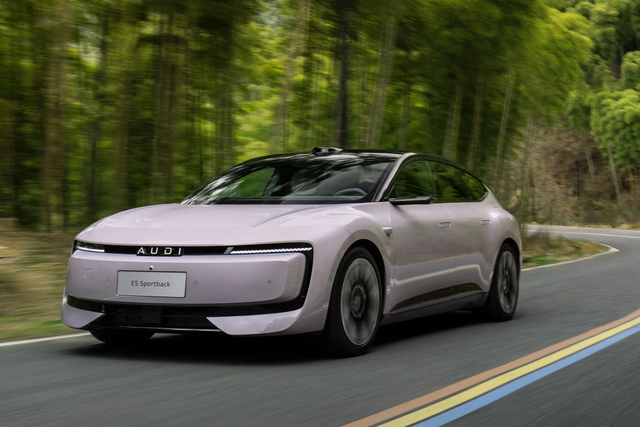
Core Insights - Audi E5 Sportback was launched on September 16, starting at 235,900 yuan, with promotional pricing bringing it down to the 220,000 yuan range, achieving over 10,000 pre-orders in just 30 minutes [2] - This launch represents a significant shift for Audi, marking a departure from traditional luxury pricing strategies in the electric vehicle market, aiming to gain market trust through competitive pricing and local supply chain integration [2][10] - The collaboration between Audi and SAIC is highlighted as a model of "German luxury's speed in China," with comprehensive localization in R&D, production, and supply chain for the E5 Sportback [2][5] Product Features - The E5 Sportback features a new AUDI OS developed by a Chinese team, utilizing the Qualcomm 8295 chip, and includes an advanced voice assistant comparable to Siri, enhancing user interaction [4] - Audi has partnered with Momenta to develop a unique driving assistance system, acknowledging the need for innovation in intelligent driving technology [4][5] - The design of the E5 Sportback is based on extensive user research, combining elements from the RS6 and TT models, and features a unique star diamond light curtain with 942 LED lights [5][6] Performance and Quality - The vehicle is equipped with dual motors, delivering 787 horsepower and 800 Nm of torque, achieving 0-100 km/h in 3.4 seconds, while maintaining Audi's quattro heritage [6][7] - Audi emphasizes that the E5 Sportback will adhere to high safety and quality standards, despite its lower price point, produced in a modern factory with over 70% automation [8][9] - The challenge remains for Audi to balance rapid development with maintaining the quality and safety standards expected of a luxury brand [9] Market Positioning - The E5 Sportback signifies a strategic shift in the competitive landscape among luxury brands in China, with Audi taking a more aggressive approach compared to Mercedes and BMW [10][11] - The pricing strategy and localization efforts may force competitors to reconsider their own strategies in the electric vehicle market [10][11] - The success of the E5 Sportback could redefine the luxury electric vehicle market, challenging existing norms and potentially leading to intensified competition among luxury brands [11]

当豪华品牌在中国学会“平权”:奥迪E5 Sportback进入22万级价格区间
Guan Cha Zhe Wang· 2025-09-16 14:43
Core Viewpoint - SAIC Audi's AUDI brand aims to break through the constraints faced by German luxury brands in China by localizing its offerings and avoiding global pricing restrictions [1][7]. Group 1: Product Launch - The first model from SAIC Audi, the E5 Sportback, was officially launched on September 16, 2025, with prices ranging from 235,900 to 319,900 yuan [1]. - A promotional offer includes a cash insurance benefit of 10,000 yuan, effectively placing the E5 Sportback in the 220,000 yuan price range [1]. - Additional financial incentives include a 5-year extended loan and 0% interest for the first 24 months for buyers before the end of the year [1]. Group 2: Technical Features - The E5 Sportback features an 800V electronic architecture for ultra-fast charging capabilities and is equipped with a high-level driver assistance system developed in collaboration with Momenta, available for lifetime free use [3]. - The vehicle includes a wide-screen display, Audi assistant, and a Qualcomm Snapdragon 8295 chip across all configurations [3]. Group 3: Competitive Positioning - The E5 Sportback is competitively priced against similar models like Zeekr 001 (259,000 to 329,000 yuan) and NIO ET5T (298,000 to 354,000 yuan) [5]. - Some features, such as the "Luxury Cabin Upgrade Package" and "Luxury Driving Upgrade Package," are available as optional add-ons, priced at 5,000 yuan and 25,000 yuan respectively [5]. Group 4: Strategic Collaboration - The AUDI brand is a result of a deep collaboration between SAIC Group and Audi, which signed a cooperation agreement last May to develop a new platform focused on the Chinese market, named the "Advanced Digitized Platform" [5]. - The E5 Sportback was developed on this platform, leveraging SAIC's strengths in new energy and intelligent network technologies while benefiting from Audi's established product design [5]. Group 5: Market Dynamics - German luxury brands face limitations in the Chinese market due to their global pricing strategies, which must consider overseas markets, restricting their competitive flexibility [7]. - The launch of the AUDI brand by SAIC Audi allows for a more tailored approach to meet the expectations of Chinese consumers for luxury brand transformation [7].
2025服贸会|出海先“看海” 中国企业聚焦“三化”策略筑牢竞争壁垒
Bei Jing Shang Bao· 2025-09-13 11:54
Group 1 - The conference emphasized the new paradigm of global brand development, highlighting the importance of brands as carriers of economic globalization and drivers of service trade [1] - Chinese brands have shown significant progress in recent years, becoming a vital link between domestic and international markets, driven by innovation and open cooperation [1][2] - The number and value of Chinese brands in the global top 500 continue to grow, with a leading position in patent and trademark applications, indicating a shift from "Made in China" to "Created in China" [2] Group 2 - High-quality development is centered on innovation and digitalization, with brand strength and influence as key indicators [3] - Companies are encouraged to adopt a "look before you leap" approach when entering international markets, considering local political, economic, and cultural factors [3] - The strategy for brands going global should focus on differentiation, digitalization, and localization, with examples of successful brand positioning and storytelling [3]
掌慧科技出海聚能学院首发:2025移动游戏数据洞察
Cai Fu Zai Xian· 2025-09-11 04:58
Core Insights - The live broadcast hosted by HuiiMedia focused on the growth of the global mobile gaming market by 2025, addressing challenges such as traffic saturation and rising acquisition costs [1] - Key industry figures discussed strategies for sustainable growth in a competitive landscape, emphasizing the importance of localization in global expansion [3][5] Group 1: Global Market Trends - The Chinese mobile gaming market is highly concentrated, with Tencent products dominating the top ten bestsellers in 2024, indicating an oligopolistic structure [3] - North America and Europe are projected to contribute nearly 60% of global mobile gaming revenue in 2024, making them critical markets for developers [3] Group 2: Game Genre Insights - Strategy games are expected to account for over 30% of the top 50 global games in 2025, highlighting their significance due to high monetization potential and long-term engagement [5] - Localization is crucial for success, as understanding local cultures can enhance user engagement and acceptance [5] Group 3: Target Demographics - The emergence of senior players in the U.S. mobile gaming market is identified as a new growth engine, with a focus on casual and puzzle games [7][9] - Effective marketing strategies should cater to the preferences of older demographics, emphasizing clarity and emotional resonance in advertising [9] Group 4: Industry Initiatives - HuiiMedia's "Overseas Empowerment Academy" aims to provide industry professionals with insights and foster community engagement through monthly sessions [11]
中金 • 全球研究 | 东南亚消费品研究:舌尖上的盛宴
中金点睛· 2025-09-10 23:59
Core Viewpoint - The article emphasizes the growing investment opportunities in localized industries in Southeast Asia, particularly in the food and beverage sector, driven by a favorable demographic structure and increasing purchasing power [2][3]. Group 1: Market Overview - The total addressable market (TAM) for key localized consumption segments in Southeast Asia is projected to grow at compound annual growth rates (CAGR) of 7.7% for alcoholic beverages, 8.4% for soft drinks, 6.0% for dairy products, 9.1% for staple foods, and 3.6% for food services from 2024 to 2029 [2]. - The consumer base in Southeast Asia consists of approximately 624 million people, with nearly 70% being millennials, Generation Z, and Generation Alpha, indicating a strong potential for future consumption growth [2][3]. Group 2: Consumer Spending Insights - In 2024, total consumption in Southeast Asia is expected to reach $2.1 trillion, accounting for 55% of GDP, with food and beverages representing 24% to 36% of personal consumption expenditures [3][26]. - The average annual spending on food and beverages in Southeast Asia is around $1,250, significantly lower than in mature East Asian markets like South Korea and Japan, suggesting substantial room for growth and premiumization [3][26]. Group 3: Key Drivers of Consumption - The young and growing population, particularly in Indonesia and Vietnam, supports robust private consumption, while rising income levels among millennials and Generation Z are expected to drive demand for modern retail and dining experiences [6][8]. - Government stimulus measures and overseas remittances from workers abroad are also crucial in supporting domestic consumption in countries like the Philippines and Indonesia [9][6]. Group 4: Alcoholic Beverages Market - The alcoholic beverage market in Southeast Asia is projected to reach $48.3 billion in 2024, with beer holding a dominant market share of 65% [32]. - Emerging markets like Indonesia, the Philippines, and Vietnam are expected to see double-digit growth rates in alcoholic beverage retail sales from 2024 to 2029, while more mature markets like Singapore and Thailand will experience slower growth [39][32]. Group 5: Soft Drinks Market - The soft drink market in Southeast Asia is anticipated to reach $39.3 billion in 2024, with carbonated drinks and bottled water being the leading categories [45]. - There is a growing demand for low-sugar and functional beverages, driven by health concerns and government policies like sugar taxes in countries such as Thailand and Malaysia [45][49]. Group 6: Dairy Products Market - The dairy market in Southeast Asia is expected to reach $24.7 billion in 2024, with fresh milk and infant formula being the largest segments [51]. - The region's per capita dairy consumption is low at 11 liters per year compared to the global average of 28 liters, indicating significant growth potential as income levels rise and health awareness increases [51][54].
“三朵金花”中报业绩亮眼 港股新消费进入下半场
Zhong Guo Zheng Quan Bao· 2025-09-02 22:31
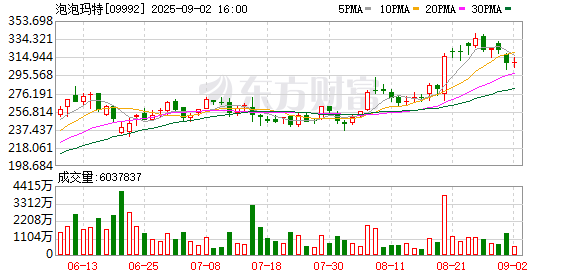
Core Viewpoint - The new consumption sector in the Hong Kong stock market has become a focal point in 2023, with several companies reporting impressive mid-year performance, particularly the "three golden flowers": Pop Mart, Lao Pu Gold, and Mixue Group [1][4]. Group 1: Company Performance - Pop Mart achieved a revenue of 13.876 billion yuan, a year-on-year increase of 204.4%, and a net profit of 4.682 billion yuan, up 385.6%. The plush toy category was a significant driver, generating 6.139 billion yuan, a staggering growth of 1276.2% [4]. - Lao Pu Gold reported a revenue of 12.354 billion yuan, a 251% increase, and a net profit of 2.35 billion yuan, up 290.6%. Same-store sales grew by 200.8% [4]. - Mixue Group's revenue reached 14.875 billion yuan, a 39.3% increase, with a net profit of 2.718 billion yuan, up 44.1% [5]. Group 2: International Expansion - Pop Mart's overseas revenue reached 2.851 billion yuan in the Asia-Pacific market (excluding China), a 257.8% increase, and 2.265 billion yuan in the Americas, up 1142.3%. The company operates 571 stores in 18 countries, with nearly 40% of total revenue coming from international markets [6]. - Lao Pu Gold's overseas revenue was 1.597 billion yuan, a 455.2% increase, with plans to expand into the Hong Kong and Macau markets [7][8]. - Mixue Group opened its first store in Kazakhstan and has around 4,700 overseas stores across 12 countries, optimizing operations in Indonesia and Vietnam [7]. Group 3: Market Trends and Consumer Behavior - The Hong Kong new consumption sector is transitioning from a "beta" market to a more differentiated "alpha" market, with a focus on building long-term competitive advantages [9]. - The shift in consumer focus from family to individual spending, particularly among younger generations, is driving demand for emotional and social value in consumption [10]. - The influx of capital into the Hong Kong new consumption sector is expected to continue, with public funds projected to flow into the sector significantly in 2025 [10].
2025成都国际车展8月29日启幕
Mei Ri Jing Ji Xin Wen· 2025-08-28 23:32
Group 1 - The 28th Chengdu International Auto Show will take place from August 29 to September 7, serving as a key platform for the automotive industry in the western region of China and linking global automotive supply chains [1] - The theme of the exhibition is "Leading the Trend, Moving Towards New Directions," with nearly 120 automotive brands expected to participate, covering an exhibition area of 220,000 square meters across 12 halls and outdoor areas [1] Group 2 - Domestic brands will showcase their innovations in dedicated pavilions, with Chery Group presenting five brands and highlighting the debut of its luxury electric hybrid off-road series [2] - BYD will present its full lineup, including new technologies such as the "God Eye" system and "Megawatt Flash Charge," along with interactive experiences in an outdoor area [2][3] Group 3 - International and joint venture brands are focusing on "electrification" and "localization," with Mercedes-Benz and BMW showcasing new models and technologies, including the AMG CLE 53 and a special edition M3 [4][5] - Toyota will present its "three-in-one" exhibition lineup, featuring the bZ series alongside its partners, while Ford will debut its first intelligent electric all-terrain SUV [5] Group 4 - The exhibition will feature advancements in AI and battery technology, with companies like CATL showcasing innovative products such as sodium-ion batteries and dual-core battery systems [6] - The event will also include activities that integrate automotive culture with urban life, creating a festival atmosphere for attendees [7] Group 5 - The Chengdu International Auto Show aims to stimulate consumer activity in the western market, with government subsidies for vehicle purchases and promotional activities to enhance the buying experience [8] - The event will also promote a new economic ecosystem that combines vehicle consumption with tourism and local commerce [8]

不懂外语但公司出口超2000万!小微外贸人“巧”闯市场
Di Yi Cai Jing· 2025-08-28 12:47
Core Viewpoint - Small and micro foreign trade operators in China are successfully navigating challenging international conditions using unconventional methods and local strategies, demonstrating resilience and adaptability in the face of market changes [1][2]. Group 1: Market Adaptation Strategies - Liu Chao, a foreign trader from Jiangxi, has achieved over 20 million yuan in export scale by employing simple methods and adapting to market needs without formal education or foreign language skills [1]. - Liu Min from Fujian has shifted from traditional lighting to the ceramic tile sector, utilizing unconventional strategies to maintain double-digit growth despite tariff fluctuations [1][2]. - Both traders exemplify the flexibility and resilience of small foreign trade businesses in adjusting to the evolving landscape of international trade [1]. Group 2: Localization and Technology Utilization - Liu Chao uses translation software and local resources to communicate effectively with clients, addressing specific needs through tailored product modifications [2][3]. - Liu Min emphasizes the importance of local social media for customer engagement and small-batch customization to build trust in emerging markets [2][3]. - The use of AI tools and digital platforms has enabled these traders to overcome language barriers and streamline operations, enhancing their market reach [3][6]. Group 3: Diversification and New Market Opportunities - Liu Chao has shifted his strategy from a reliance on the U.S. market to a localized approach, establishing local companies in various regions to adapt to changing market dynamics [4][5]. - The emergence of new markets has allowed for rapid growth, with localized stores yielding higher profits and stronger competitive advantages [4][5]. - The diversification into new product categories and markets is becoming essential for sustaining growth amid increasing competition and changing trade conditions [7][8]. Group 4: Emerging Market Trends - The demand for "new three items" (lithium batteries, new energy vehicles, solar cells) is rising, with significant export opportunities in Southeast Asia and other developing regions [9]. - The ongoing global shift towards green and low-carbon technologies presents new avenues for growth in the export sector, particularly in infrastructure development in Latin America and Africa [9].