
美元疲软

Search documents
贺博生:7.24黄金高位下跌今日行情还会涨吗?原油最新多空操作建议
Sou Hu Cai Jing· 2025-07-24 00:27
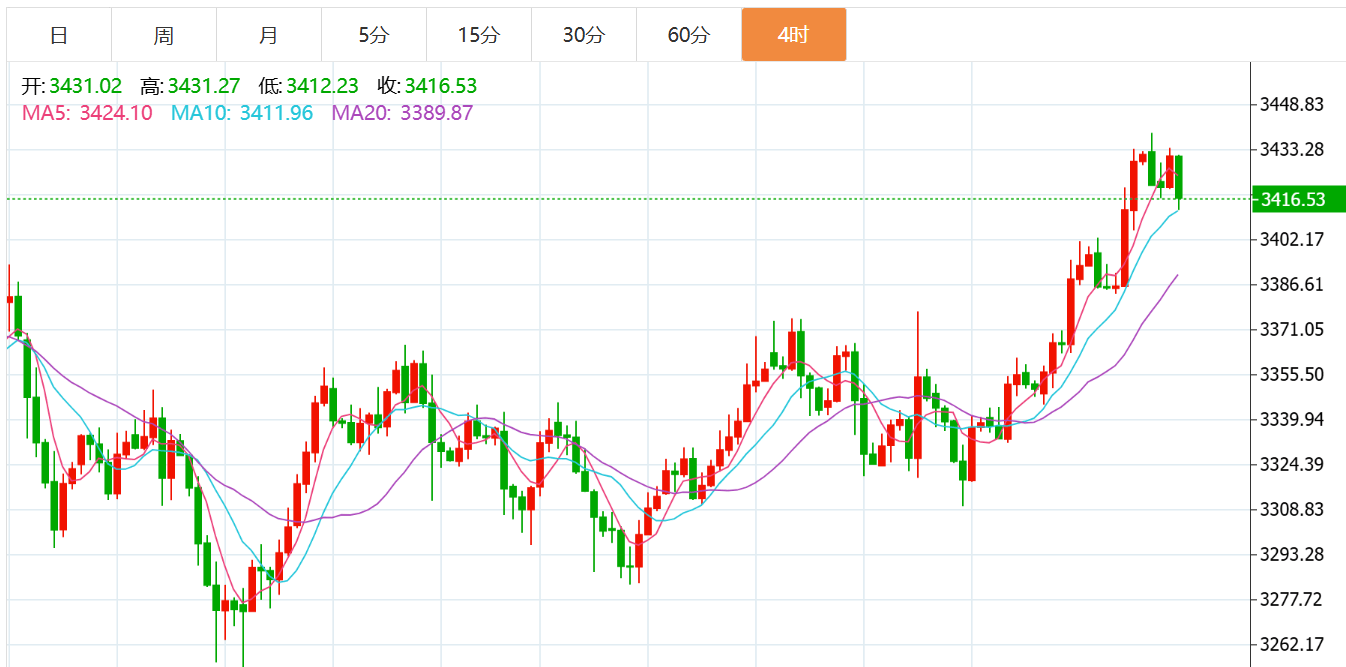
Group 1: Gold Market Analysis - Gold prices experienced a significant drop, trading around $3390.53 per ounce after reaching a high of $3433.37, the highest since June 16, with a closing price of $3431.59, marking a 1% increase [2] - The decline in the US dollar, which fell 0.3% to 97.545, contributed to the rise in gold prices, supported by global trade uncertainties and a decrease in US Treasury yields [2] - The upcoming tariff negotiations and the Federal Reserve meeting at the end of the month are critical variables for gold price movements, with potential for a pullback if negotiations yield positive results [2][3] Group 2: Technical Analysis of Gold - Gold has shown a strong upward trend, with three consecutive days of gains, indicating robust short-term momentum [3] - The market is currently in an overbought state, suggesting a need for price correction, but the lack of orderly trading may suppress short-term demand [3][5] - Key resistance levels are identified at $3410-$3420, while support levels are at $3370-$3360, indicating a complex trading environment [5] Group 3: Oil Market Analysis - Brent crude oil prices rebounded to around $69 per barrel, while WTI crude hovered around $66, following positive developments in trade negotiations [6] - The optimism surrounding new tariff agreements has improved market sentiment, although concerns about global economic slowdown continue to weigh on oil demand [6] - The current rebound in oil prices reflects short-term trading sentiment rather than a substantial recovery in demand, with ongoing pressures from weak global consumption and geopolitical risks [6] Group 4: Technical Analysis of Oil - The mid-term outlook for oil remains upward, with the potential to test $78, although short-term momentum indicators suggest a weakening bullish trend [7] - Short-term price movements are expected to be volatile, with resistance levels at $67.5-$68.5 and support levels at $63.5-$62.5 [7]

机构看金市:7月22日
Xin Hua Cai Jing· 2025-07-22 04:55
Core Viewpoint - The recent fluctuations in precious metal prices are influenced by market sentiment driven by tariff policies, with gold and silver showing mixed performance amid ongoing uncertainties [1][2][3]. Group 1: Market Analysis - Precious metal prices have shown slight divergence, with gold experiencing repeated fluctuations and silver showing a slight upward trend, primarily due to strong commodity prices [1]. - The London gold price has been oscillating between $3100 and $3500 per ounce since late April, with reduced demand for gold as a safe haven due to the cooling international trade situation and U.S. fiscal expansion [2]. - The U.S. dollar's recent decline has supported gold prices, with New York gold surpassing the $3400 mark, indicating strong upward momentum [2]. Group 2: Institutional Insights - Standard Chartered Bank noted that the net long positions in gold have remained around 31%, driven by uncertainties surrounding U.S. tariff policies, which support gold demand [3]. - Kitco Metals highlighted that the recent strong performance of gold was catalyzed by a significant weakening of the U.S. dollar and declining U.S. Treasury yields, creating an ideal environment for gold price increases [4]. - Concerns over rising U.S. debt continue to bolster interest in gold, as it is seen as a hedge against uncertainty in the current market conditions [3][4].
7.21黄金晚间走势分析
Sou Hu Cai Jing· 2025-07-21 11:46
Group 1 - The core theme for 2025 is the weakness of the US dollar, which has shown its worst performance since 1973 in the first half of this year [1] - The performance of US Treasury bonds has also been poor, with a noticeable slowdown in capital inflow during periods of heightened uncertainty [1] - In contrast, demand for gold ETFs has significantly increased, with total assets under management (AUM) rising by 41% to $383 billion, and total holdings increasing by 397 tons to 3,616 tons, marking the highest level since August 2022 [1] Group 2 - As of July 18, spot gold closed at $3,350.05, showing slight fluctuations, with a "deep V" pattern reflecting intensified market dynamics [1] - Economic data has been strong, suppressing rate cut expectations and boosting the dollar, while tariff policies have raised inflation expectations, driving investors to allocate to gold for risk hedging [1] - Gold is currently at a balance point between short-term economic strength and long-term inflation concerns, highlighting its safe-haven value [1] Group 3 - Recent reports indicate that US Treasury Secretary Mnuchin privately advised President Trump against attempting to dismiss Federal Reserve Chairman Powell, suggesting potential rate cuts by the Fed before the end of the year [2]

摩根士丹利:美元疲软如何可能带动美国股市上涨
摩根· 2025-07-19 14:02
Investment Rating - The report maintains a negative outlook on the US dollar, predicting a continued decline over the next 12 months, with an expected drop of 10% by the end of 2026 [1][2]. Core Insights - The report highlights that the weakening dollar will positively impact the earnings of US multinational companies due to the "translation effect," where overseas revenues in foreign currencies will increase when converted back to dollars [1][6]. - It emphasizes that large multinational corporations, particularly those in the S&P 500 index, which derive approximately 40% of their revenues from overseas, will benefit the most from the dollar's depreciation [1][7]. - The report suggests that investors should focus on sectors such as technology, materials, and industrials, as well as capital goods, software, and technology hardware, which are expected to gain the most from the weakening dollar [3][9]. Summary by Sections Dollar Outlook - Morgan Stanley predicts that the dollar will continue to weaken due to converging US interest rates and economic growth rates with the rest of the world, with a forecasted decline of 10% by the end of 2026 [1][2]. Impact of Tariffs - Tariffs are seen as having a positive effect on inflation but a negative impact on US economic growth, complicating the Federal Reserve's decisions regarding interest rates [3]. Foreign Investor Behavior - Foreign investors are increasing their foreign exchange hedging, leading to a sell-off of dollars, particularly among European investors holding significant amounts of unhedged US assets [5]. Sector Opportunities - The sectors most likely to benefit from the dollar's weakness include technology, materials, and industrials, with a focus on large multinational companies that have a high proportion of foreign revenues [7][8].
美元疲软与贸易战升级!黄金期权后市有什么交易机会?阿汤哥正在实时分析,点击观看
news flash· 2025-07-10 07:48
Core Insights - The article discusses the impact of a weakening US dollar and escalating trade tensions on gold options trading opportunities [1] Group 1: Market Conditions - The US dollar is experiencing weakness, which typically drives investors towards gold as a safe-haven asset [1] - The ongoing trade war is contributing to market volatility, further influencing gold prices and trading strategies [1] Group 2: Trading Opportunities - The article suggests that there may be potential trading opportunities in gold options due to the current market conditions [1] - Real-time analysis is being conducted to identify specific strategies for capitalizing on these opportunities [1]
“从ICU到KTV”后,下半年挡在美股牛市前方的三大风险
Hua Er Jie Jian Wen· 2025-07-10 04:07
Core Viewpoint - Goldman Sachs warns investors to be cautious of three "bear market" risks in the second half of the year, despite a rapid reallocation to risk assets in Q2, which has led to a return to a "golden girl" scenario pricing [1] Group 1: Key Risks - **Risk 1: Growth Shock** Economic growth may face significant downward pressure in the second half, particularly due to anticipated tariff impacts. The probability of a substantial market pullback is currently higher than that of a significant rise, driven by high valuations, weak leading indicators, and a slight deterioration in the business cycle score [2] - **Risk 2: Interest Rate Shock** Unexpected fluctuations in interest rates pose a second risk. If tariffs do not lead to a slowdown, inflation may rise again, exerting upward pressure on bond yields. The report suggests that long-term bond yields may decline moderately due to a more dovish Fed, but concerns over fiscal policy and rising yields in Europe and Japan could limit this downward space [3] - **Risk 3: Weak Dollar** A continued decline in the dollar may negatively impact multi-asset portfolios denominated in dollars. The report predicts further depreciation of the dollar over the next 12 months, reflecting concerns over fiscal policy and the independence of the Fed [4][5] Group 2: Investment Strategies - **Diversification Strategies** Investors are advised to reassess stock allocations, particularly in multi-asset portfolios dominated by U.S. assets. Diversification through low-volatility stocks, defensive quality stocks, and gold is recommended to mitigate potential losses from growth shocks [2] - **Short-Duration Bonds** To reduce duration risk, investors are encouraged to favor short-duration bonds. Financial stocks, such as bank stocks, may serve as effective hedges against interest rate shocks due to their ability to benefit from a steepening yield curve [3] - **Emerging Markets and Currency Hedging** In a weakening dollar environment, emerging market equities and local currency bonds are expected to perform better. Investors should consider currency hedging and allocating to emerging markets and gold to lower dollar risk [5]


景顺:美元疲软为亚洲各央行放宽政策添灵活性
Zhi Tong Cai Jing· 2025-07-09 12:31
Group 1 - The latest delay in the implementation of US tariffs provides an opportunity for further negotiations, with 14 countries, including Japan and South Korea, facing tariffs ranging from 25% to 40% [1] - Vietnam recently reached a trade agreement with the US, avoiding an initially proposed 46% tariff, with many goods now subject to a 20% tariff, while transshipped goods will incur a 40% tariff [1] - Japan and South Korea are the largest exporters to the US among the countries receiving tariff notifications, with export totals of $148 billion and $131.5 billion respectively [1] Group 2 - Emerging markets are significantly influenced by the dollar in their export or import pricing, with most investment inflows in these markets being dollar-based [2] - If the US imposes higher tariffs on Asian countries, the Asia-Pacific region appears more capable of withstanding the resulting economic pressure [2] - A weaker dollar should provide greater flexibility for Asian central banks to ease policies to support their economies without excessive concern over currency depreciation [2]
铂金涨幅超黄金 黄金还会继续亮眼吗
Zheng Quan Ri Bao Wang· 2025-07-06 13:06
Group 1: Platinum Market Dynamics - Platinum prices have surged significantly, with a year-to-date increase of 54.27% as of July 5, making it the standout performer in the precious metals sector, often referred to as the "gold alternative" [1] - In contrast, gold prices have seen a more modest increase of 27.16% year-to-date, with the current price at $3,336.94 per ounce, down 4.7% from a peak of $3,500.12 [1] - The rise in platinum prices is attributed to both supply constraints and increased demand, particularly as platinum substitutes gold in investment and jewelry sectors due to gold's high prices [1] Group 2: Gold Price Outlook - There is a divergence in short-term outlook for gold prices, with some analysts predicting a potential decline due to improved global economic prospects and reduced geopolitical tensions [2] - Citibank forecasts that gold prices may drop to between $2,500 and $2,700 per ounce by the second half of 2026, citing that the market has already priced in interest rate cuts [2] - Despite short-term concerns, long-term projections remain optimistic, with Goldman Sachs predicting gold prices could reach $3,700 per ounce by the end of 2025 and potentially $4,000 by mid-2026 [3] Group 3: Gold Demand Trends - The World Gold Council reported a decline in physical gold demand in China, with a 35% decrease in gold outflows from the Shanghai Gold Exchange in May [4] - Global physical gold ETFs experienced a net outflow of approximately $1.8 billion in May, marking the first monthly outflow since November of the previous year, leading to a 1% decrease in total assets under management [4] - Despite these challenges, the World Gold Council believes that gold may still attract investors seeking alternative safe-haven assets, suggesting a long-term positive outlook for gold demand [4]
美元疲软冲击,全球最大养老金一季度巨亏610亿美元
Hua Er Jie Jian Wen· 2025-07-04 08:56
Core Viewpoint - The Japanese Government Pension Investment Fund (GPIF) reported a significant loss of over 8.8 trillion yen (approximately 611 billion USD) in the first quarter of the year, primarily due to the depreciation of the yen against the dollar and a decline in domestic investments [1][2]. Group 1: Financial Performance - In the first quarter, GPIF experienced a total loss of 8.815 trillion yen, equating to a 3.4% decline [1]. - As of the end of March, GPIF's total assets stood at 249.8 trillion yen, with an annual return rate slightly increasing by 0.7% [1]. - All four major asset categories (Japanese stocks, Japanese bonds, overseas stocks, and overseas bonds) reported losses, marking the first time since Q3 2022 that all categories experienced declines [1]. Group 2: Market Conditions - The losses were attributed to a broader downturn in global stock markets, with the S&P 500 index falling by 4.6%, the MSCI All Country Index declining by 1.7%, and the Tokyo Stock Exchange index dropping by 4.5% [2]. - The bond market also faced challenges, with the 10-year U.S. Treasury yield decreasing by over 30 basis points, while Japanese government bond yields rose by approximately 40 basis points [2]. - The dollar-yen exchange rate fell by about 4.6%, exacerbating the losses in overseas assets when measured in yen [2]. Group 3: Management Response - GPIF President Kazuto Uchida indicated that the poor investment performance in Q1 was primarily due to the significant drop in overseas stocks and mentioned a consideration to increase the proportion of actively managed investments [4].
美元疲软触发机构避险升级:海外资管加速对冲美股汇率风险敞口
智通财经网· 2025-07-02 06:17
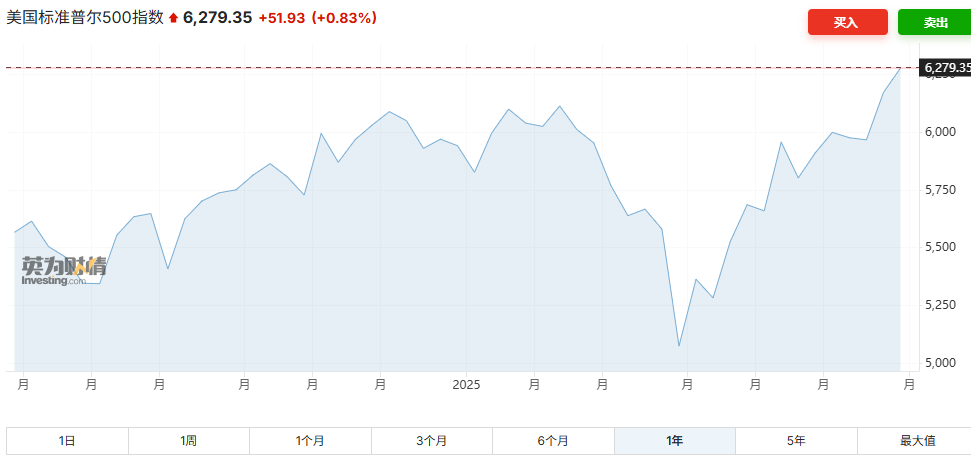
Group 1 - The core viewpoint is that overseas asset management institutions and pension funds are accelerating the construction of a firewall against a weakening dollar to mitigate the dual impact of exchange rate fluctuations on U.S. stock portfolios [1] - The traditional logic that "when U.S. stocks fall, the dollar strengthens to provide a buffer" has been challenged, particularly after the dollar index dropped 6.5% to a three-year low due to the Trump administration's global tariff policy [1] - Russell Investments revealed that about 10% of asset portfolios among pension clients in Europe and the UK have increased their hedging ratio for international stock investments, with some aggressive investors raising their risk coverage from 50% to 75% [1] Group 2 - BNP Paribas Asset Management is systematically reducing its dollar exposure by selling dollars through both equity and fixed income portfolios while building long positions in euros, yen, and Australian dollars [2] - Different institutions have varying judgments on dollar valuation; for instance, St. James's Place Capital has maintained its GBP hedging cap while reducing dollar hedging, believing the current dollar exchange rate is close to its long-term fair value [2] - The increase in hedging demand is driven by the widening cracks in asset risk correlation, as noted by Northern Trust's global currency management head [2] Group 3 - Data shows that the euro-hedged version of the MSCI U.S. Index achieved zero returns over the past 12 months, while the unhedged version plummeted by 8.3%, coinciding with a 13% drop in the dollar against the euro [3] - The volume of dollar forward contract sales has reached a four-year high, indicating that investors are opting to "vote with their feet" despite potential dollar rebounds from tariff policy fluctuations or geopolitical conflicts [3] - Asset managers are using foreign exchange derivatives as a core weapon in this currency defense strategy, employing forward contracts and options to build risk barriers against dollar depreciation [3]