人工智能(AI)

Search documents
当硅谷用AI“洗白”裁员决策,“岗位消失论”是一场幻觉吗?
第一财经· 2025-12-29 15:56
Core Viewpoint - The article discusses the complex relationship between job layoffs and the rise of artificial intelligence (AI), highlighting that while AI is a factor in job displacement, it also creates new opportunities and roles in the workforce [3][4]. Group 1: Job Displacement and AI - In 2025, approximately 55,000 layoffs in the U.S. are attributed to AI, with major tech companies like Amazon and Salesforce reducing thousands of positions [3]. - AI is capable of performing about 11.7% of jobs in the U.S. labor market, potentially saving up to $1.2 trillion in wage expenditures in sectors like finance and healthcare [3]. - The relationship between layoffs and AI is nuanced; while some jobs, particularly entry-level positions, are being automated, new roles are also emerging as a result of faster information flow [4][9]. Group 2: Corporate Perspectives on AI and Layoffs - Dr. Rumman Chowdhury, an AI expert, notes that layoffs are not solely driven by AI advancements but also by companies needing to cut costs after investing heavily in unprofitable technologies [6]. - IBM's CEO Arvind Krishna acknowledges that while AI may replace about 10% of jobs, it will not fully replace human workers and may ultimately lead to more hiring in new fields [7]. - The trend of layoffs is seen as a "natural correction" rather than purely an AI-driven phenomenon, with companies needing to address overhiring issues [6][7]. Group 3: Job Market Trends - Analysis from Indeed indicates that as of early 2025, hiring for senior and management tech positions has decreased by 19% compared to pre-pandemic levels, while entry-level tech positions have seen a 34% decline [10]. - The requirements for tech jobs are becoming stricter, with the proportion of positions requiring at least five years of experience rising from 37% to 42% between Q2 2022 and Q2 2025 [10]. - Amazon Web Services' CEO Matt Garman criticizes the trend of replacing junior engineers with new technology, arguing that it undermines the development of talent and innovation within companies [10]. Group 4: The Paradox of Work and AI - The article references the "Jevons Paradox," suggesting that technological advancements often lead to increased demand for resources rather than a reduction in workload [11]. - Despite the rise of AI, the culture in Silicon Valley is shifting towards longer working hours, contradicting the expectation that automation would reduce work demands [11]. - The notion that work is a finite resource is challenged, as the article posits that work is an expanding ecosystem rather than a diminishing bubble [11].


洗牌+革新!2026公募五大趋势勾勒行业新蓝图
证券时报· 2025-12-29 15:05
Core Viewpoint - The Chinese public fund industry is transitioning from "rapid growth" to "high-quality development," marking a critical shift in growth paradigms as it moves into 2026 after a significant "self-revolution" in 2025 [1] Group 1: Shift from Scale to Quality - The industry is moving from a "scale is king" mentality to prioritizing "investor satisfaction," driven by regulatory guidance and a focus on long-term investment returns [2] - Fund companies are expected to transition from a "sales-driven" model to a "service-driven" and "performance-driven" approach, emphasizing the importance of aligning interests with investors [2] - The introduction of floating fee rate funds and a revised evaluation system will focus on long-term risk-adjusted returns rather than short-term rankings and scale metrics [2] Group 2: Industry Restructuring - A new wave of industry consolidation is anticipated, with some fund companies expected to grow stronger through mergers and resource integration, aiming to create comprehensive financial institutions [3] - Smaller fund companies are finding success through differentiated competition, focusing on specialized areas such as quantitative indices and public REITs, while those lacking distinct identities face survival challenges [4] - The "Matthew effect" will become more pronounced, with leading firms leveraging brand and scale advantages, while smaller firms seek growth through niche positioning [4] Group 3: Tooling and Granularity - The trend of using tool-based products for asset allocation is becoming mainstream, with fund companies developing increasingly granular investment products to meet market demands [5] - Index products are evolving from broad categories to highly specialized offerings, providing low-cost entry points into specific industry sectors [5] - Active equity funds are undergoing a "tooling transformation," with new regulations expected to enhance the clarity of investment styles and their associated alpha generation capabilities [6] Group 4: AI in Investment Research - AI is expected to transition from a supportive role to a "second brain" in investment decision-making, enhancing cognitive boundaries and decision-making processes [7] - Fund companies are adopting AI technologies for various applications, including risk management and product innovation, which could fundamentally change business models [8] - AI will play a significant role in improving operational efficiency across governance, compliance, and customer service, leading to more refined product offerings [8] Group 5: Evolution of Fund Sales - The fund sales sector is set to undergo a comprehensive restructuring in 2026, focusing on customer-centric approaches rather than scale-driven growth [9] - Regulatory changes are pushing for a new assessment framework that prioritizes client outcomes over sales volume, marking a shift towards long-term value creation [9] - The sales strategy is evolving from "finding blockbuster funds" to "long-term companionship," aiming to enhance investor trust and address the issue of fund profitability versus investor returns [9]

【首席观察】2025年预测错了多少?2026年资本风口在哪里?
Jing Ji Guan Cha Wang· 2025-12-29 12:38
Group 1 - The year 2025 has been characterized by significant market volatility, with the S&P 500 index showing an annual increase of over 17%, while gold prices surged by more than 70% to reach $4,500 per ounce [2][4][6] - Despite predictions of a recession, the market did not follow the expected downturn, indicating that risk assets have not reacted as anticipated to economic fears [7][8] - The performance of various assets in 2025 revealed a stark contrast, with silver leading gains at 173.13%, followed by gold at 73.91%, while light crude oil experienced a decline of 19.63% [4][5] Group 2 - The market's resilience in 2025 was attributed to a shift in how fear is priced, with investors adapting to a new financial order where risks are managed through structured approaches [3][8] - The five key variables driving market behavior in 2025 included the revaluation of dollar credit risk, the rise of real assets, and the dynamics of energy pricing, which reflected broader economic uncertainties [9][10] - The focus on AI as a growth narrative has intensified, with capital increasingly concentrated in technology sectors, indicating a shift towards profitability and productivity validation in 2026 [10][13] Group 3 - The outlook for 2026 suggests a transition in asset pricing logic, moving from explaining the world to discounting future cash flows, emphasizing the importance of financial conditions and narrative realization [12][14] - The potential for a "power factory" model in AI investment is highlighted, where the focus shifts from merely acquiring GPUs to establishing sustainable computational infrastructure [13][14] - The anticipated economic environment in 2026 may lead to further interest rate cuts by the Federal Reserve, impacting the yield curve and creating opportunities in mid to short-duration assets [14][15]

美债市场“走钢丝”!特朗普政府勉力压低收益率 表面平静之下暗流涌动
智通财经网· 2025-12-29 12:04
Core Viewpoint - The U.S. bond market is experiencing a fragile state of calm amid concerns over long-term fiscal deficits and rising debt levels, with recent government actions aimed at controlling bond yields and maintaining market stability [1][2][4]. Group 1: Market Reactions and Government Actions - Following President Trump's announcement of significant tariffs in April, the bond market faced turmoil, leading to a notable increase in bond yields, which has since prompted the government to adjust its policies to prevent further market disruptions [1][5]. - On November 5, the U.S. Treasury hinted at increasing long-term debt issuance, causing a spike in the 10-year Treasury yield by over 6 basis points, reflecting investor concerns about rising yield pressures [1]. - Treasury Secretary Mnuchin emphasized the importance of lowering yields, particularly the 10-year Treasury yield, as it impacts various borrowing costs across the economy [2][3]. Group 2: Investor Sentiment and Market Dynamics - A survey of banking and asset management executives revealed a belief that a psychological battle is ongoing between the government and investors worried about high deficits and debt levels, as indicated by rising "term premiums" [2]. - Investors perceive the government's recent measures as temporary solutions, with ongoing concerns about the sustainability of fiscal policies and potential inflationary pressures from tariffs and AI-driven market dynamics [4][6]. - The Treasury's proactive engagement with investors regarding major decisions has led to a belief that the government is serious about controlling bond yields [3][7]. Group 3: Economic Indicators and Future Outlook - The current stability in the bond market is seen as a "fragile balance," dependent on moderate inflation expectations and the Treasury's reliance on short-term debt issuance to mitigate supply concerns [8]. - Analysts express concerns that if inflation rises or the Federal Reserve adopts a more hawkish stance, the attractiveness of U.S. Treasuries as a risk diversifier may diminish, leading to renewed demand worries [8][9]. - The reliance on short-term Treasury bills for deficit financing poses risks, as some demand sources, including stablecoin issuers, may be volatile [8].
“AI教父”辛顿发出警告:2026年AI会更强,将引发新一波失业潮
Feng Huang Wang· 2025-12-29 07:23
Group 1 - The core viewpoint is that AI is expected to replace a significant number of jobs by 2026, with advancements in AI capabilities leading to increased risks for white-collar positions [1] - AI's progress is accelerating, with the ability to complete tasks doubling approximately every seven months, evolving from writing one minute of code to completing full projects lasting up to an hour [1] - The transformation brought by AI is likened to the Industrial Revolution, which diminished the importance of physical labor, while AI is expected to have a similar impact on intellectual labor [1] Group 2 - Economists predict a "jobless boom" in 2026, where companies will rely on AI to enhance productivity without expanding their workforce [3] - A survey indicated that 67% of CEOs expect AI to drive recruitment growth in entry-level positions by 2026, while 58% plan to increase senior management roles [3] - AI is seen as reshaping the labor structure rather than eliminating the workforce, with companies focusing on engineering and AI-related positions as routine tasks become automated [4]

美媒开嘲:中国电网建设为其AI提供重要助力,而英国电网60年都没升级了
Xin Lang Cai Jing· 2025-12-29 07:16
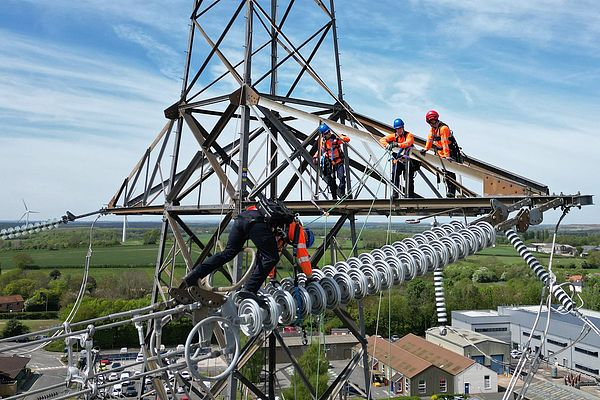
Group 1 - The global AI competition is intensifying, leading countries to seek new energy sources like wind, nuclear, and solar power, but outdated grid infrastructure is becoming a bottleneck for electricity distribution [1] - Global electricity production investment has surged nearly 70% over the past decade, reaching $1 trillion annually, while annual grid construction spending has only increased to $400 billion [1] - In the UK, the aging grid infrastructure distorts the energy market, with significant costs incurred from not utilizing available renewable energy sources [5] Group 2 - The UK is launching a massive grid construction plan, investing approximately $40 billion over the next five years to upgrade its grid, which is expected to increase household electricity costs [2] - Average household electricity expenditure in the UK was nearly $1,500 last year, more than double that of 2008, while the average American household spends about $1,700 [2] - The UK's outdated grid has led to a backlog in connecting new renewable energy projects, with approval processes taking 5 to 10 years, significantly longer than in the past [5][6] Group 3 - The UK's transition to renewable energy has resulted in wind power becoming the largest source of electricity, contributing to one-third of the total generation, but the grid's capacity is insufficient to meet demand [6] - The construction of new transmission lines can take up to 10 years, primarily due to community consultations and obtaining various approvals, which the National Grid aims to reduce by half [7] - In contrast, China is rapidly expanding its power generation capacity, with projections indicating a $560 billion investment in grid projects by 2030, significantly outpacing other regions [9]
白银市值短暂超越英伟达,成为仅次于黄金的全球第二大资产!
Jin Shi Shu Ju· 2025-12-29 05:36
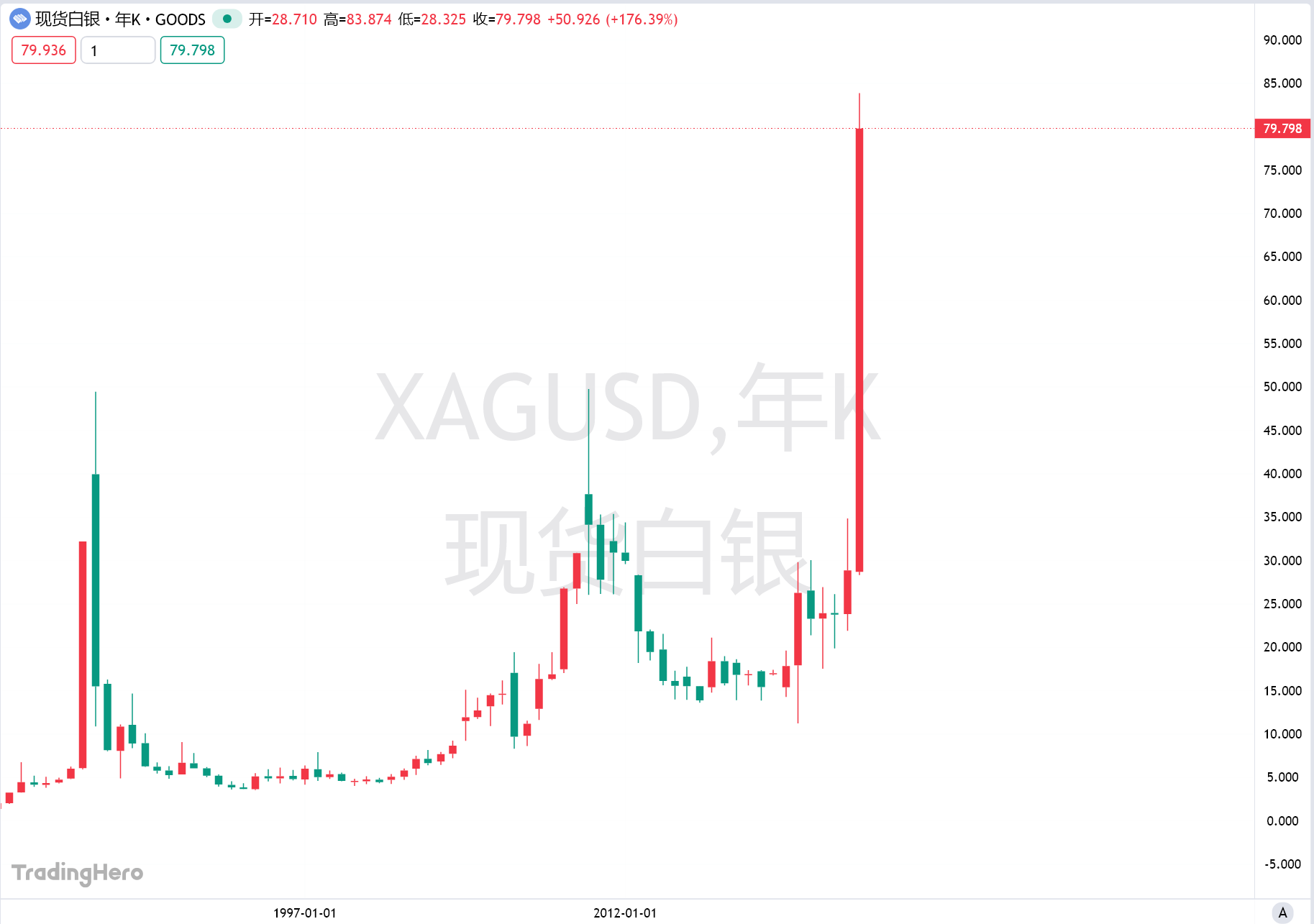
AI播客:换个方式听播客 下载mp3 音频由扣子空间生成 周一,白银短暂超越英伟达(NVDA),成为全球市值第二大资产。这一历史性洗牌标志着资本正从科技股向实体大宗商品深度轮换。 白银的加速上涨为贵金属长达一年的涨势画上了阶段性句号。推动这一轮上涨的因素包括各国央行增持贵金属、交易所交易基金(ETF)资金流入,以及美 联储连续三次降息。借贷成本下降对不产生利息的大宗商品构成利好,交易员们预计2026年美联储将进一步降息。 "毫无疑问:我们正在见证白银市场上演一场跨代泡沫,"澳大利亚IG集团市场分析师托尼·西卡莫尔(Tony Sycamore)向彭博新闻社表示,"新建矿山需要长 达10年时间才能投产,而资本正像飞蛾扑火般涌入这场贵金属泡沫,目前根本无法判断泡沫何时会破裂。" 实物供应短缺 推动白银价格上涨的因素有两方面:长期的实物供应短缺和货币需求的复苏。 与主要作为投资品持有的黄金不同,白银年供应量中约50%用于工业应用。太阳能光伏产业的爆发式增长以及汽车行业的电气化进程,已将伦敦和纽约仓库 的白银库存消耗至数十年低点。 颇具讽刺意味的是,正是曾推动英伟达市值突破4万亿美元的人工智能(AI)热潮,加剧了白银的 ...

韩国开启后“龙山时代”,李在明重回青瓦台办公
Di Yi Cai Jing· 2025-12-29 05:13
Group 1: Political Transition - The return of the presidential office to Cheong Wa Dae marks the end of the "Yongsan Era" and symbolizes a significant political transition in South Korea [1] - The completion of the trials related to the "three special investigation laws" is expected to lead to a new political phase in South Korea, allowing for a fresh start [2] Group 2: Economic Measures and Challenges - The current administration under Lee Jae-myung has implemented measures such as issuing "consumption vouchers" to stimulate domestic demand and has increased investments in advanced technology sectors like AI and semiconductors [4] - Despite positive signals from the stock market, with the KOSPI index reaching a historical high of 4226.75, the GDP growth forecast for South Korea remains low at only 1% [4] - The depreciation of the Korean won has created challenges, including rising import costs and pressure on consumer demand, with the won being the worst-performing currency in Asia, depreciating over 8% against the US dollar [5] Group 3: Currency and Investment Strategies - The Korean government is taking measures to stabilize the foreign exchange market, including new tax incentives for repatriating overseas investments and a $65 billion currency swap agreement with the National Pension Service [6] - As of mid-December, the exchange rate of the won has slightly improved, with the dollar trading at 1433.55 won [7] Group 4: Diplomatic Relations - The current administration has shown a proactive stance towards China, with plans for a significant business delegation to visit China, indicating a focus on improving bilateral relations [8] - The US-Korea alliance has been managed effectively, with a recent investment agreement involving $350 billion and favorable trade conditions for South Korea [8] - Upcoming local elections in June 2024 will serve as a critical evaluation of Lee Jae-myung's administration, impacting his governance and the political landscape [9]

请查收!慢牛到存款搬家,2025影响投资的十大资本市场关键词
Xin Jing Bao· 2025-12-29 04:04
Core Viewpoint - The capital market in 2025 has achieved significant breakthroughs, with the Shanghai Composite Index surpassing 4000 points and A-share total market value exceeding 100 trillion yuan, indicating a "slow bull" market characterized by steady growth and improved market quality [3][4]. Group 1: Market Performance - The A-share market has experienced a "slow bull" trend, with the total market value reaching 100 trillion yuan and trading volume exceeding 400 trillion yuan for the first time in a year [3][4]. - Multiple institutions are optimistic about the future market, with Goldman Sachs predicting a 38% increase in the Chinese stock market by the end of 2027, driven by earnings growth and valuation recovery [4]. Group 2: Regulatory Environment - Regulatory authorities have maintained a high-pressure stance against financial fraud, emphasizing a "zero tolerance" policy towards financial misconduct and enhancing the enforcement of regulations [5][6]. - The China Securities Regulatory Commission (CSRC) has taken strict actions against several companies involved in financial fraud, reinforcing a comprehensive accountability system [6]. Group 3: Market Innovations - The "Two Innovation Boards" reform has deepened, with over 50 unprofitable companies successfully listing on the Sci-Tech Innovation Board, indicating a strong capital influx into technology innovation [7]. - The "A+H" listing trend has surged, with 19 A-share companies listed in Hong Kong, raising significant capital and attracting international long-term investors [8]. Group 4: Long-term Capital Inflow - There has been an acceleration in the entry of long-term capital into the market, with public fund holdings reaching a historical high of 3.58 trillion yuan [9]. - Insurance capital has also increased its presence in the top ten shareholders of 633 listed companies, with a total holding value of 651 billion yuan [9]. Group 5: Asset Allocation Trends - A significant shift in asset allocation has been observed, with a seasonal increase of 1.46 trillion yuan in deposits and a rapid growth in ETF scale, which reached over 6 trillion yuan within four months [10]. - The trend of "deposit migration" is particularly evident among high-net-worth individuals, indicating a shift towards equity markets [10]. Group 6: Fund Management Regulations - New regulations aimed at promoting high-quality development in the public fund industry have been introduced, focusing on long-term performance and transparency [11]. - The guidelines emphasize the importance of aligning the interests of fund managers with those of investors, fostering a more professional and transparent industry [11]. Group 7: Debt Market Developments - The resumption of government bond trading has been announced, which is expected to enhance the pricing capabilities of financial institutions and serve as a substitute for interest rate cuts [12]. - This move is part of a broader strategy to improve the bond market and ensure smooth monetary policy transmission [12]. Group 8: Mergers and Acquisitions - The A-share market has seen a continuous wave of mergers and acquisitions, with 4,671 events disclosed by the end of December 2025, supported by favorable policies [13][14]. - The government is expected to further enhance support for mergers and acquisitions in 2026, addressing challenges in valuation and approval processes [14]. Group 9: Market Communication - The concept of "market narrative" has gained prominence, with regulatory bodies emphasizing the importance of clear communication and reputation management in the market [15]. - Efforts to combat misinformation and enhance the overall market environment are underway, aiming to build investor confidence and promote a positive market culture [15].

金银抢占头条后,铜或成2026年大黑马?
Jin Shi Shu Ju· 2025-12-29 03:55
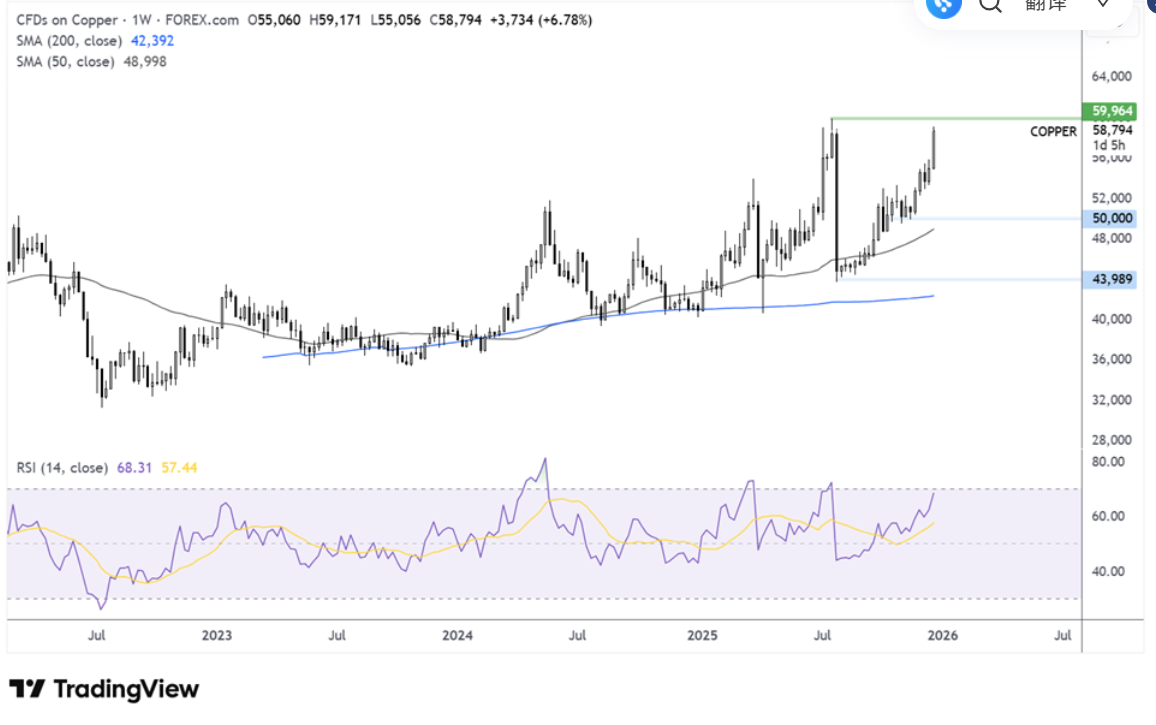
Core Viewpoint - Copper prices are experiencing significant growth, driven by supply constraints and structural demand changes, with expectations for continued upward momentum into 2026 [1][2]. Group 1: Price Trends and Market Dynamics - Copper prices on the New York Mercantile Exchange (Comex) have increased over 30% this year, reaching a five-month high of $5.90 per pound, while prices on the London Metal Exchange (LME) have surpassed $12,000 per ton, marking a 42% increase year-to-date [1]. - The demand for copper is being fueled by the AI and electric vehicle (EV) sectors, with expectations that copper demand in the energy transition sector will double over the next 20 years [1][2]. Group 2: Supply Constraints - Supply disruptions in Chile, Indonesia, and Peru are contributing to a tightening market, with BloombergNEF predicting a potential global copper shortfall of 19 million pounds over the next 25 years if new mines are not developed and recycling rates do not significantly improve [2]. Group 3: Policy and Market Sentiment - The U.S. government's tariff policy has created market volatility, initially excluding refined copper from a 50% tariff, but concerns are growing over potential expansions of this tariff, which could lead to inventory withdrawals from LME for Comex stockpiling [2]. Group 4: Valuation Signals - The copper-to-gold ratio has fallen to a 50-year low, suggesting potential for valuation recovery as copper prices are expected to stabilize after significant increases in gold prices driven by monetary policy and fiscal concerns [2]. Group 5: Technical Analysis - A long-term bullish trend for copper prices has been established, with prices rebounding from a summer low of $4.38 per pound to $5.91 per pound, supported by upward-sloping moving averages [2][3].