去美元化

Search documents
黄金踩下急刹车
吴晓波频道· 2026-01-31 00:29
Core Viewpoint - The article discusses the recent surge in gold prices, highlighting the rapid increase and the contrasting opinions among market participants regarding the sustainability of this trend [2][9]. Group 1: Gold Price Trends - Gold prices have seen significant increases, with the price rising from $1,000 to $2,000 over 12 years, $2,000 to $3,000 in nearly 5 years, $3,000 to $4,000 in 6 months, $4,000 to $5,000 in 3 months, and $5,000 to $5,500 in just 3 days [3][4][5][6][7]. - Recent predictions from major financial institutions have varied, with Citigroup initially forecasting a drop to $3,600-$3,800 by the end of 2026, but later revising to a target of $6,000 [9]. Group 2: Optimistic Perspectives - Many institutions are bullish on gold, with UBS raising its price targets to $6,200 for March, June, and September, while Deutsche Bank predicts a rise to $6,000 [18][19][20]. - The rationale includes geopolitical tensions and a trend towards de-dollarization, with a projected net increase in gold demand of 965 tons from central banks and ETFs between 2022 and 2026, against a supply increase of only 479 tons [22]. - High demand from ETFs and central banks is expected to continue, with Goldman Sachs noting a 500-ton increase in ETF holdings since early 2025 [23]. Group 3: Rational Perspectives - Some analysts argue that the current gold price reflects a speculative bubble, with significant participation from private investors using leverage [28][29]. - Concerns are raised about the sustainability of demand, with geopolitical risks potentially overstated and the actual gold reserves of central banks remaining unclear [30]. Group 4: Market Signals and Predictions - Key indicators to watch include central bank gold purchasing trends, with a significant drop in demand potentially signaling a market correction [34]. - The article emphasizes the uncertainty surrounding future gold prices, with various factors such as geopolitical stability and macroeconomic policies influencing demand [38].



黄金巨震 短暂回调?趋势反转?
Shang Hai Zheng Quan Bao· 2026-01-30 20:04
如何理解此番金价巨震?到底是短暂回调,还是趋势反转? 金属市场整体坐上"过山车" ◎记者 曾庆怡 北京时间1月29日至1月30日的48小时内,刚刷新历史纪录的国际金价、银价经历了惊心动魄的"过山 车"行情。1月30日,COMEX(纽约商品交易所)黄金期货和白银期货价格盘中分别失守5000美元/盎司 和100美元/盎司关口。 黄金巨震 短暂回调?趋势反转? "在金价开始大跌的1月29日,从COMEX黄金期货的K线走势来看,资金在这个位置开始出现一定的分 歧,部分原本看多黄金的资金在这个位置出现离场。"齐盛期货贵金属首席分析师刘旭峰在接受上证报 记者采访时说,当日,全球最大的黄金ETF基金——SPDR黄金ETF持仓白银和黄金均出现减持迹象。 多重因素交织,导致交易情绪共振 上证报记者采访获悉,在北京时间本周四凌晨美联储议息会议后,短期利多逻辑暂时出尽,市场多头资 金选择获利了结,叠加市场对下一任美联储主席人选的猜测等多重因素,或共同促成了金价的历史性暴 跌。 "此次大幅波动或许主要缘于市场情绪的变化以及获利盘的回吐。"前海开源基金首席经济学家杨德龙对 上证报记者表示,尽管从长期来看,"去美元化"趋势以及央行和私人 ...
金价狂飙2.22%,1月29日最新报价诞生,明日大概率大变盘
Sou Hu Cai Jing· 2026-01-30 17:43
Core Viewpoint - The gold market has experienced a significant surge, with international gold prices reaching $5286.28 per ounce on January 29, 2026, marking a daily increase of $115.04, or 2.22% [1][3]. Group 1: Price Movements - Gold prices have risen over 22% since the beginning of the year, with a notable increase from $4400 to over $5286 within a month [1][3]. - Domestic gold prices have also surged, with gold T D reaching 1186.85 yuan per gram and futures prices hitting 1191.66 yuan per gram [1]. - Retail gold prices in China have seen significant increases, with major brands like Zhou Shengsheng and Lao Fengxiang raising prices to around 1620 yuan per gram [1][11]. Group 2: Market Drivers - The surge in gold prices is attributed to escalating geopolitical tensions, particularly between the U.S. and Europe over Greenland, which has heightened market anxiety and increased demand for gold as a safe-haven asset [4][6]. - Global central banks have significantly increased their gold purchases, with gold now constituting 20% of global central bank reserves, surpassing the euro and becoming the second-largest reserve asset after the dollar [6][7]. - Concerns over developed economies' debt and interest rate volatility have led to a renewed interest in gold as a "no-counterparty-risk" reserve asset [7]. Group 3: Market Reactions - The gold price surge has led to increased activity in the A-share market, with companies like China Gold and Hunan Gold seeing significant stock price increases [13]. - The trading volume of domestic gold T D increased by 30% on January 27, indicating heightened market activity [13]. - Consumer behavior has shifted, with a decline in gold jewelry sales and a rise in custom gold-making services as consumers seek to balance high prices with personalized options [13]. Group 4: Risks and Speculation - The rapid price increase has attracted speculative investments, leading to a rise in fraudulent schemes, such as the "Chuangou Mall" app, which lured consumers with below-market prices [14]. - Regulatory bodies have begun issuing warnings about the risks associated with gold trading, with major banks adjusting trading rules to mitigate speculative behavior [16]. - Historical patterns suggest that current gold price movements may mirror past volatility, indicating potential for sharp corrections following geopolitical events [17].


海外热点冷思考系列3:沃什将带来什么:降息、缩表,缩职能
Changjiang Securities· 2026-01-30 14:43
Policy Proposals - Walsh advocates for "rate cuts + balance sheet reduction and functional downsizing" to restore the credibility of the Federal Reserve[2] - His main arguments include the need to address issues such as the blurred lines between monetary and fiscal policy, and the Fed's overreach into social and political issues[7] Implementation Challenges - The likelihood of successfully implementing Walsh's proposals in the short term is low due to political pressures, particularly from Trump, who seeks to lower medium- to long-term interest rates[2] - The conflict between reducing the balance sheet and the upward pressure on long-term rates due to increased term premiums complicates the situation[2] Market Implications - In the short term, rate cuts are likely, but balance sheet reduction is not feasible, which means the trend towards de-dollarization will continue[2] - The market is expected to maintain a "tightening trade" in the short term while reverting to a "loose trade" in the long term[2] Federal Open Market Committee (FOMC) Dynamics - The FOMC currently consists of 12 voting members, with a mix of dovish, hawkish, and neutral stances, which may shift if Walsh is appointed[7] - Walsh's potential appointment could increase the number of dovish members to five, enhancing the likelihood of rate cuts[7]
金银之后,会轮到铜吗?
虎嗅APP· 2026-01-30 13:58
Core Viewpoint - The article discusses the recent surge in gold prices, which have surpassed $5,500 per ounce, and the implications for industrial metals like copper, suggesting that the dynamics driving these metals are more complex than traditional sector rotation theories [5][6][7]. Group 1: Market Dynamics - The current market is experiencing a significant shift, with copper evolving from a purely cyclical commodity to a strategic asset, influenced by macroeconomic changes and geopolitical risks [10][22]. - The weakening credibility of the US dollar, evidenced by its drop to a four-year low, is prompting investors to seek alternatives, with gold being the primary beneficiary of this sentiment [14][18]. - As central banks reconsider their asset allocations in light of dollar instability, copper is increasingly viewed as a strategic resource rather than just a trading commodity [20][21]. Group 2: Geopolitical Risks - Geopolitical tensions, such as military actions in the Middle East and US-European relations, are contributing to a global supply chain restructuring, which heightens the demand for safe-haven assets like gold and introduces a "geopolitical risk premium" into copper prices [23][27]. - The potential for supply disruptions due to political instability in major copper-producing regions (e.g., Chile, Peru, Congo) adds to the urgency of securing copper as a strategic asset [24][25]. Group 3: Supply and Demand Factors - Current copper inventories are rising globally, particularly in the London Metal Exchange (LME), due to weakened demand from China and higher domestic prices, leading to a surplus in the market [33][34]. - The phenomenon of "deep contango" in copper prices indicates a supply surplus, with immediate delivery prices significantly lower than future contracts, reflecting a lack of current demand [36]. - Despite short-term supply issues, long-term projections indicate a tightening supply due to insufficient investment in new copper mines and declining ore grades, which could support higher prices in the future [45][48]. Group 4: Future Outlook - The article suggests that copper's price dynamics will diverge from traditional inventory-driven models, as it begins to incorporate premiums for its strategic importance and inflation hedging capabilities [62]. - In the short term (1-3 months), copper prices are expected to experience volatility, influenced by macroeconomic factors and geopolitical events, while the long-term outlook remains bullish due to structural supply constraints and increasing demand from sectors like renewable energy and electric vehicles [64][68]. - The interplay between current supply realities and future demand expectations will create a complex pricing environment, necessitating close monitoring of both financial and industrial reports to understand copper's trajectory [74][75].
金银之后,会轮到铜吗?
36氪· 2026-01-30 13:35
Core Viewpoint - The article discusses the recent surge in gold prices, which have surpassed $5,500 per ounce, and raises the question of whether industrial metals like copper will follow suit in a "catch-up" rally. However, it argues that the current situation is different from traditional market patterns of sector rotation or catch-up [3][4][5]. Group 1: Market Dynamics - The driving forces behind the rise in gold and silver prices are partly shared with those affecting copper, but the dynamics for copper are more complex [6][8]. - Copper has transitioned from being a purely cyclical commodity to a strategic asset, reflecting a significant change in market perception [9][10]. - The current market is experiencing friction in recognizing this transformation, leading to price volatility [10]. Group 2: Macro Factors Influencing Prices - The simultaneous attention on gold and copper stems from a dramatic shift in the macroeconomic backdrop, particularly the declining credibility of the US dollar, which has reached a four-year low [13][14]. - As trust in the dollar diminishes, investors are seeking alternatives, with gold being the primary beneficiary of this sentiment [15][16]. - Copper, priced in dollars, also benefits from dollar depreciation, as it becomes more expensive in dollar terms [19][20]. Group 3: Geopolitical Risks - The geopolitical landscape is increasingly unstable, with risks such as military deployments in the Middle East and tensions between the US and Europe contributing to market uncertainty [25][26]. - For gold, increased geopolitical turmoil drives up demand as a safe-haven asset, while for copper, geopolitical risks manifest in supply chain vulnerabilities due to political instability in major copper-producing regions [27][28]. - The potential for supply disruptions due to strikes or policy changes in these regions adds a "geopolitical risk premium" to copper prices [30][31]. Group 4: Supply and Demand Dynamics - The current copper market is characterized by weak demand, with rising global inventories and a lack of immediate consumption [38][40]. - Factors such as reduced demand from China and price discrepancies have led to increased copper stocks in warehouses [41][42]. - The current oversupply situation is reflected in significant discounts for immediate copper delivery compared to future contracts, indicating a lack of demand [44][45]. Group 5: Future Outlook - Despite the current weak demand, the long-term outlook for copper is driven by expectations of supply constraints and increasing demand from sectors like renewable energy and electric vehicles [60][63]. - The global copper supply is facing structural challenges, including insufficient long-term investment and declining ore grades, which are expected to limit future production [55][56]. - The anticipated demand from the global energy transition and infrastructure upgrades is expected to create a significant need for copper, potentially leading to a supply-demand imbalance in the future [62][66]. Group 6: Price Behavior and Market Sentiment - The article emphasizes that the current price movements of copper are influenced more by financial attributes and future expectations rather than immediate supply and demand realities [50][67]. - The market is currently in a tug-of-war between weak short-term realities and strong long-term expectations, leading to potential price volatility [68][70]. - The article suggests that copper prices may experience significant fluctuations in the short term, but a clearer upward trend is expected in the medium to long term as supply constraints become more apparent [84][90].
美指震荡冲高难改弱势 底色多空博弈白热化
Jin Tou Wang· 2026-01-30 13:31
Core Viewpoint - The US dollar index is experiencing volatility, with short-term rebounds not altering the mid-term downtrend, driven by three main variables: Federal Reserve policy divergence, US fiscal concerns, and global de-dollarization [1][2] Group 1: Federal Reserve Policy Divergence - The Federal Reserve's decision to maintain interest rates and end consecutive rate cuts has led to a short-term dollar spike, but internal divisions among officials regarding potential rate cuts weaken the dollar's appeal [1] - Market expectations for two rate cuts within the year contribute to policy uncertainty, limiting the rebound momentum of the dollar [1] - Ongoing personnel and judicial issues within the Federal Reserve raise questions about its independence, further suppressing the dollar's mid-term outlook [1] Group 2: US Economic and Fiscal Concerns - Despite an upward revision of the 2026 GDP forecast by the Federal Reserve, high fiscal deficits and debt levels, along with recurring government shutdown risks, create credit concerns for US Treasury bonds [1] - The Trump administration's tacit approval of a declining dollar suggests further downside potential, with historical patterns indicating that intervention may only occur if the dollar falls below critical levels [1] Group 3: Global De-dollarization - The acceleration of global de-dollarization is intensifying pressure on the dollar, as multiple countries pursue local currency settlements and reduce reliance on the dollar [2] - The dollar's share in global foreign exchange reserves has declined to a nearly 30-year low, with central banks selling US Treasuries and increasing gold holdings, undermining the dollar's credit foundation [2] - Technical indicators show that the dollar's short-term rebound lacks strength, with key resistance levels and insufficient trading volume limiting bullish momentum [2] Group 4: Market Outlook - The dollar is expected to remain in a tug-of-war between bulls and bears, with long-term weakness likely to persist [2] - Short-term attention should be on Federal Reserve officials' speeches, core economic data, and government shutdown developments, as hawkish signals or positive data could lead to temporary rebounds [2] - However, the mid to long-term outlook remains constrained by policy divergence, fiscal concerns, and de-dollarization trends, making any rebound likely to be short-lived [2]
金银突发暴跌,怎么回事?
Guo Ji Jin Rong Bao· 2026-01-30 13:24
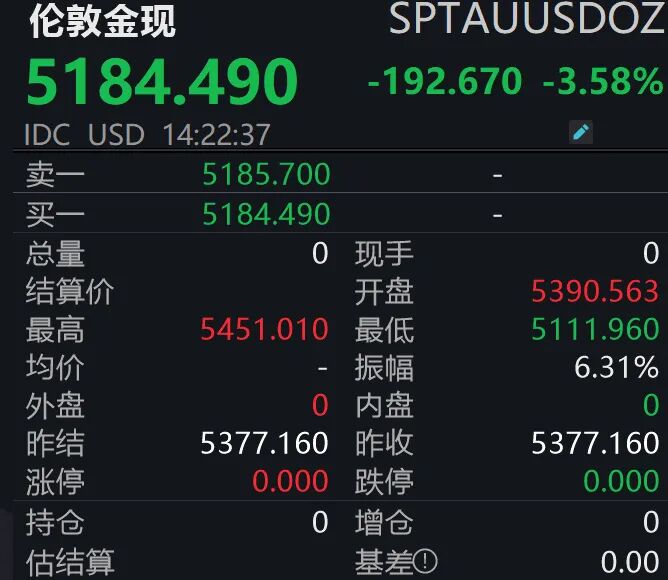
金银重挫! 1月26日,贵金属市场遭遇剧烈震荡,黄金与白银价格同步重挫,现货与期货市场集体承压。 现货市场方面,截至发稿,伦敦金现日内大跌3.58%,报5184.49美元/盎司,盘中最低触及5111.96美元/ 盎司,单日跌幅创阶段新高;伦敦银现跌势更猛,日内暴跌4.94%,报110.144美元/盎司,最低触及 107.947美元/盎司,短期回调力度远超黄金。 | 伦敦金现 | | | SPTAUUSDOZ | | --- | --- | --- | --- | | 5184.490 | | | -192.670 -3.58% | | IDC USD 14:22:37 | | | 0 | | 卖 | 5185.700 | | | | 买- | 5184.490 | | | | 总量 | 0 | 我 | 0 | | 结算价 | | 开盘 | 5390.563 | | 最高 | 5451.010 | 最低 | 5111.960 | | 均价 | | 振幅 | 6.31% | | 外盘 | (9) | 内盘 | 0 | | 昨结 | 5377.160 | 昨收 | 5377.160 | | 涨停 | 0.000 | ...
多只ETF、LOF罕见跌停
Xin Lang Cai Jing· 2026-01-30 12:51
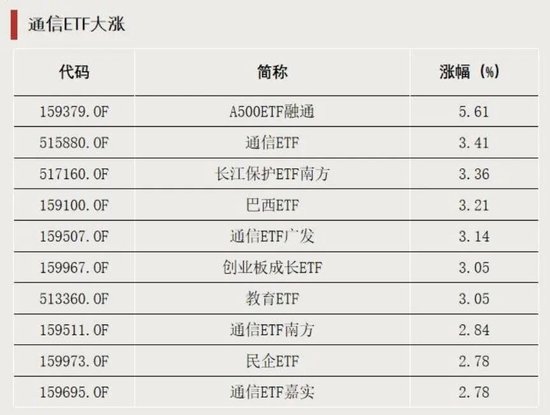
Group 1 - The precious metals, industrial metals, and minor metals sectors experienced a significant decline, with multiple gold and colored ETFs hitting the limit down [1][2][9] - Several LOF funds that had previously hit the limit up faced a limit down after resuming trading, indicating market volatility [10][18] - On January 29, gold and colored ETFs attracted substantial net inflows, while semiconductor-related ETFs also saw reverse positioning [11][15] Group 2 - The communication ETF sector showed a general increase, with several ETFs related to communication and artificial intelligence rising significantly [12][13] - Low-valuation sectors such as agriculture, forestry, and paper-making led the market gains, contrasting with the overall decline in precious metals [12] - The trading volume for gold ETFs surged, with the gold ETF reaching a transaction volume of 257.78 billion, significantly higher than the previous week's average of 71.07 billion [4][14] Group 3 - On January 29, various ETFs related to colored metals and gold saw net inflows exceeding 10 billion, indicating strong investor interest [15][17] - The semiconductor sector, despite its recent declines, attracted significant reverse investments, with notable inflows into semiconductor equipment ETFs [16][17] - The core logic supporting gold prices remains unchanged, driven by high geopolitical risks and the weakening of the dollar's credibility due to high U.S. government deficits [8][19]
黄金1小时暴跌440美元,现在是抄底良机还是逃顶时刻?
Sou Hu Cai Jing· 2026-01-30 12:17
Core Viewpoint - The international gold and silver prices experienced a significant drop, with gold falling below $5200 per ounce and silver below $110 per ounce, leading to panic selling among investors [3][4][6]. Group 1: Market Reaction - On January 30, following the price drop, several gold and silver stocks hit their daily limit down, including Sichuan Gold and Silver, which saw its stock price drop to 66.18 yuan per share [4]. - Investors expressed mixed feelings, with some feeling lucky for selling at the peak while others were left with losses [4]. Group 2: Price Movements - Since the beginning of 2026, gold prices have risen over 20%, while silver prices have surged over 60% before the recent drop [6]. - On January 29, gold prices peaked at over $5500 per ounce, and silver prices exceeded $120 per ounce before the sharp decline [6]. Group 3: Causes of Volatility - The recent volatility is attributed to a combination of technical factors, market sentiment, and significant profit-taking after a period of rapid price increases [4][8]. - The price drop was triggered by algorithmic trading and a shift in margin requirements by exchanges, leading to a feedback loop of selling pressure [8]. Group 4: Investment Strategy - Experts recommend that ordinary investors should avoid trying to "catch the bottom" and instead focus on long-term investment strategies, emphasizing the importance of using the right tools and maintaining a disciplined approach [4][12]. - The current market conditions suggest a transition to a high-volatility phase, where investors should be cautious and avoid over-leveraging [9][12]. Group 5: Gold vs. Silver Dynamics - The drop in silver prices was more pronounced than that of gold, reflecting the different market structures and pricing mechanisms of the two metals [10][12]. - Silver's market is smaller and more speculative, leading to greater volatility during sell-offs compared to gold, which is viewed as a stable store of value [12]. Group 6: Future Outlook - The long-term outlook for gold remains positive due to ongoing global demand and geopolitical risks, despite short-term fluctuations [8][13]. - Historical patterns suggest that after sharp declines, markets often enter a phase of consolidation before making a new directional move [9].