反内卷

Search documents
2025年12月中国物价数据解读:物价回升的背后:补贴和输入性因素
ZHONGTAI SECURITIES· 2026-01-09 11:25
Group 1: CPI and PPI Trends - In December 2025, China's CPI increased from 0.7% to 0.8% month-on-month, while PPI rose from -2.2% to -1.9% year-on-year[2] - The CPI reached a new high since February 2023, with a month-on-month increase of 0.2%, consistent with the seasonal average of the past three years[2] - Among eight categories, only transportation and communication, and other goods and services showed significant month-on-month increases, at 0.0% and 2.8% respectively[2] Group 2: Factors Influencing CPI - The rise in transportation costs is attributed to constraints on price reductions in the automotive industry due to anti-involution measures[2] - Subsidies for "old-for-new" vehicle exchanges and corporate subsidies may have led to an overestimation of transportation costs in the CPI[2] - The decline in oil prices has narrowed, with transportation fuel costs showing a month-on-month decrease of -1.1%, compared to a three-year average of -3.6%[2] Group 3: Other Notable Increases - The category of other goods and services saw a month-on-month increase of 2.8%, significantly higher than the three-year average of 0.2%[2] - The year-on-year increase for this category was 17.4%, driven primarily by rising prices of precious metals[2] - The household appliances category experienced a year-on-year increase of 5.9%, indicating a discrepancy between consumer perception and actual price data due to subsidies[2] Group 4: PPI Insights and Future Outlook - The transmission of upstream price increases to downstream consumer goods remains weak, with downstream living goods showing zero month-on-month change for several months[2] - The coal mining and washing industry reported a year-on-year decline of -15.7%, the only major industrial sector with a double-digit drop[2] - Looking ahead, CPI is expected to decline significantly in January 2026 due to the Spring Festival effect, but may return to above 1% thereafter[2]
黑色金属日报-20260109
Guo Tou Qi Huo· 2026-01-09 11:22
Report Industry Investment Ratings - Thread: ★★★, indicating a clear upward trend and a relatively appropriate investment opportunity [1] - Hot Roll: ★★★, indicating a clear upward trend and a relatively appropriate investment opportunity [1] - Iron Ore: ★★★, indicating a clear upward trend and a relatively appropriate investment opportunity [1] - Coke: ★☆☆, indicating a bullish bias but poor operability on the trading floor [1] - Coking Coal: ★☆☆, indicating a bullish bias but poor operability on the trading floor [1] - Silicon Manganese: ★★☆, indicating a clear upward trend and the market is fermenting [1] - Ferrosilicon: ★★☆, indicating a clear upward trend and the market is fermenting [1] Core Viewpoints - The steel market is in a state of weak domestic demand and high exports. The market sentiment has cooled, and the price is mainly in a range - bound oscillation [2] - The iron ore market has a relatively loose supply - demand relationship. The port inventory has increased significantly, and there is a risk of intensified high - level fluctuations [3] - The coking market's fifth - round price cut is on hold. The price is likely to be in a relatively strong oscillation, and attention should be paid to the downstream procurement volume next week [4] - The coking coal market has an abundant supply of carbon elements. The price is likely to be in a relatively strong oscillation, and the market has certain expectations for coal - related policies [6] - The silicon manganese market has a structural problem in port inventory. It is recommended to buy on dips [7] - The ferrosilicon market is affected by policies. The demand is still resilient, and it is recommended to buy on dips [8] Summary by Related Catalogs Steel - The thread's apparent demand continues to decline, production slightly rebounds, and inventory begins to accumulate. The hot - roll demand declines, production slightly rebounds, and inventory is slowly depleted with pressure to be relieved [2] - Steel mill profits are marginally repaired, blast furnaces are gradually restarted, and hot - metal production rebounds in the short term, but its sustainability is to be observed [2] - Real estate investment decline continues to expand, infrastructure and manufacturing investment growth rates continue to fall, domestic demand is weak, and steel exports remain high [2] - The market's optimistic sentiment cools, the trading floor is under pressure to fall back, and it is mainly in a range - bound oscillation in the short term [2] Iron Ore - On the supply side, global shipments decline seasonally, domestic arrivals remain high, port inventory rises significantly this week, and the number of stranded ships increases [3] - On the demand side, terminal demand is weak in the off - season, steel mill profitability declines, hot - metal production increases but there is no obvious restart in the short term [3] - Steel mill imported ore inventory continues to increase but is still at a low level, and there is still a certain expectation of winter storage replenishment [3] - The commodity market sentiment is volatile, and the iron ore's own fundamentals are relatively loose, so it is necessary to be vigilant against the risk of intensified high - level fluctuations [3] Coke - The price fluctuates mainly during the day. The fifth - round price cut is on hold, coking profits are average, and daily production slightly increases [4] - Coke inventory hardly changes, and attention should be paid to whether the downstream procurement volume increases next week [4] - The supply of carbon elements is abundant, downstream hot - metal production is likely to bottom out and rebound, and the demand for raw materials remains at an off - season level. Steel mills still have a strong sentiment of pressing prices on raw materials [4] - The coke trading floor has a premium, and the price is likely to be in a relatively strong oscillation [4] Coking Coal - The price fluctuates mainly during the day. Yesterday, the Mongolian coal customs clearance volume was 1,291 vehicles [6] - Coking coal mine production slightly decreases, and the mine restart situation is good after the New Year's Day [6] - Spot auction transactions are okay, the transaction price rises slightly driven by the trading floor price increase, and terminal inventory slightly increases [6] - Total coking coal inventory increases significantly, and production - end inventory rises significantly [6] - The supply of carbon elements is abundant, downstream hot - metal production is likely to bottom out and rebound, and the demand for raw materials remains at an off - season level. Steel mills still have a strong sentiment of pressing prices on raw materials [6] - The coking coal trading floor has a premium over Mongolian coal, and the price is likely to be in a relatively strong oscillation [6] Silicon Manganese - The price rebounds after hitting the bottom during the day. Driven by the trading floor rebound, the manganese ore spot price rises [7] - There is a structural problem in the current manganese ore port inventory, and the balance is relatively fragile [7] - Silicon manganese smelters pursue the most cost - effective option and change the manganese ore blending formula. If the reduction of oxidized ore is large, the demand for cheaper semi - carbonate ore is likely to increase [7] - Last week, the manganese ore spot transaction price rose. On the demand side, hot - metal production decreases seasonally, silicon manganese weekly production slightly decreases, and silicon manganese inventory slightly decreases [7] - It is recommended to buy on dips and pay attention to the impact of "anti - involution" [7] Ferrosilicon - The price rebounds after hitting the bottom during the day. Affected by relevant policy documents, the price is relatively strong [8] - The market's expectation of coal supply guarantee increases, and there is a certain expectation of a decline in power costs and blue - charcoal prices [8] - On the demand side, hot - metal production rebounds to a high - level range, export demand drops to above 20,000 tons, and the marginal impact is not significant [8] - Metal magnesium production increases month - on - month, secondary demand increases marginally, and overall demand is still resilient [8] - Ferrosilicon supply drops significantly, inventory slightly decreases, and attention should be paid to the impact of "anti - involution" [8] - It is recommended to buy on dips [8]
2025年12月价格数据点评:物价的上行周期或已开启
KAIYUAN SECURITIES· 2026-01-09 11:13
Report Information - Report Title: 2025 December Price Data Review [2] - Date: January 9, 2026 [1] - Research Team: Fixed Income Research Team [2] - Analysts: Chen Xi, Wang Shuaizhong [3] Report Industry Investment Rating No information provided in the report. Core Viewpoints - The market consensus is to "end deflation" rather than "enter inflation," expecting PPI to reach 0% in H2 2026 and -0.6% for the whole year, but the report predicts prices will enter a "positive growth rate" [4]. - The report believes that factors such as anti - involution, policy lag, overseas fiscal expansion, and "dual - carbon" initiatives will drive prices up, and if PPI环比 can maintain 0.15 - 0.2%, price year - on - year increase to 2% is just a matter of time [5][6][7]. - The upward trend of prices will confirm the start of the economic cycle, and price recovery will form the fundamental basis for the upward movement of bond yields in 2026, with the 10 - year Treasury bond expected to fluctuate between 2 - 3% and the central value around 2.5% [7]. Summary by Related Catalogs Event - In December 2025, the PPI环比 was +0.2% and positive for three consecutive months, the first time since 2022 [3]. Market Expectation vs. Report Prediction - Market expectation: PPI year - on - year negative growth rate will converge in H1 2026, and then rise to around 0% in H2, with an annual PPI year - on - year of -0.6%, essentially expecting prices to level off [4]. - Report prediction: Prices will enter a positive growth rate, with the following logics [4][5][6]: - Anti - involution restricts price decline, and the market starts to raise prices in some categories. - The price inflection point lags behind the policy inflection point. In this weak recovery, the price inflection point lagged by 1 year, and prices started to stop falling and recover in September 2025. - Overseas fiscal expansion leads to currency depreciation and rising prices of physical assets. - "Dual - carbon" initiatives may lead to a new round of "capacity reduction." Impact on the Market - In 2025, the stagnation of "non - technology" sectors was due to the market's expectation of flat prices. As prices rise, the upward movement of the economic cycle may be confirmed [7]. - Price recovery will form the fundamental basis for the upward movement of bond yields in 2026. If PPI环比 can maintain 0.15 - 0.2%, the "potential inflation of 2.0%" will form the lower limit of the 10 - year Treasury bond, with the 10 - year Treasury bond expected to fluctuate between 2 - 3% and the central value around 2.5% [7]. Data Summary - **CPI Data in December 2025**: CPI环比 rose 0.2%, and CPI year - on - year rose 0.8%. Core CPI环比 rose 0.2%, and core CPI year - on - year rose 1.2%. Urban CPI year - on - year rose 0.9%, and rural CPI year - on - year rose 0.6% [9][18][31]. - **PPI Data in December 2025**: PPI环比 rose 0.2%, and PPI year - on - year fell 1.9%. Production materials PPI year - on - year fell 2.1%, and living materials PPI year - on - year fell 1.3% [11][23][31]. - **Industrial Producer Purchase Price Data in December 2025**: The price环比 rose 0.4%, and the price year - on - year fell 2.1% [28][31]. - **Industry Price Data in December 2025**: For example, the price decline of the coal mining and washing industry narrowed by 2.9 pct year - on - year compared with November; the price of the non - ferrous metal mining and dressing industry rose 24.0% year - on - year [33].
4月1日起,取消光伏等产品增值税出口退税
中国基金报· 2026-01-09 11:08
1 月 9 日,财政部官网公布《关于调整光伏等产品出口退税政策的公告》。 重点内容如下: 中国基金报 晨曦 综合整理 一、自 2026 年 4 月 1 日起,取消光伏等产品增值税出口退税。 二、自 2026 年 4 月 1 日起至 2026 年 12 月 31 日,将电池产品的增值税出口退税率由 9% 下调至 6% ; 2027 年 1 月 1 日起,取消电池产品增值税出口退税。 三、对上述产品中征收消费税的产品,出口消费税政策不作调整,继续适用消费税退(免) 税政策。 审核:木鱼 版权声明 《中国基金报》对本平台所刊载的原创内容享有著作权,未经授权禁止转载,否则将追究法律责任。 实际上,近年来市场上关于 " 取消光伏退税 " 的讨论不绝于耳。有业内人士指出,取消光伏 等产品的增值税出口退税,有助于行业 " 反内卷 " 、加速清退行业老旧产能,破解长期的低 价怪圈,带动产业链健康发展。 据市场监管总局近期消息,市场监管总局开展规范光伏行业价格竞争秩序合规指导。市场监 管总局通报了光伏行业价格违法问题和风险,并指出,当前光伏行业存在的低质竞争、同质 化重复建设等 " 内卷式 " 竞争行为,让企业普遍面临盈利困境 ...


中国PPI连续3个月环比上涨
21世纪经济报道· 2026-01-09 11:06
Group 1: Consumer Price Index (CPI) Insights - In December 2025, the Consumer Price Index (CPI) increased by 0.2% month-on-month and 0.8% year-on-year, with the year-on-year growth rate reaching its highest level since March 2023 [1][4] - The rise in CPI was primarily driven by food prices, which increased by 1.1%, contributing approximately 0.17 percentage points to the year-on-year CPI increase [5][4] - The overall CPI for 2025 remained flat compared to the previous year, indicating insufficient effective consumer demand and a mismatch between supply and demand [2][6] Group 2: Producer Price Index (PPI) Insights - The Producer Price Index (PPI) rose by 0.2% month-on-month in December 2025, marking the third consecutive month of increase, while the year-on-year decline narrowed to 1.9% [8][7] - Key industries such as coal mining and lithium-ion battery manufacturing saw price increases, reflecting improvements in supply-demand structures and ongoing capacity governance [8][9] - The overall PPI for 2025 decreased by 2.6%, indicating a historically low price level combination, which aligns with the current macroeconomic context of supply exceeding demand [9][10] Group 3: Economic Outlook and Policy Implications - The "stabilize growth and promote consumption" policies are expected to gradually release their effects, with a low base effect anticipated to contribute to a moderate increase in CPI in 2026 [2][6] - The ongoing governance of key industries and the establishment of a unified national market are expected to continue into 2026, potentially improving price competition and market expectations [10][11] - Factors such as the low base effect from 2025's PPI decline and complex domestic and international economic conditions may drive an increase in upstream raw material prices in 2026 [11]

市场监管总局公布“反内卷”十大制度建设成果
Zhong Guo Jing Ji Wang· 2026-01-09 10:09
三是体现分类施策,统筹规范与发展。对于涉及安全底线的领域,突出刚性约束。对于创新活跃、 模式复杂的领域,侧重合规指导,帮助企业建立健全内部合规机制。对于具有国际竞争力的优势产业领 域,则通过标准与认证激励产业提质升级。这种差异化制度供给,既划清了企业行为边界和竞争的法律 红线,也为企业创新发展留出了充足空间,实现了规范秩序与激发活力的有机统一。 中国经济网北京1月9日讯(记者 佟明彪)1月9日,市场监管总局召开新闻发布会,公布了2025年综合 整治"内卷式"竞争十大制度建设成果:一是新修订的反不正当竞争法。二是《强制注销公司登记制度实 施办法》。三是《公平竞争审查条例实施办法》。四是《互联网平台反垄断合规指引(征求意见稿)》。 五是《关于提升网络交易平台产品和服务质量的指导意见》。六是《外卖平台服务管理基本要求》。七 是《网络销售重点工业产品质量安全监督管理规定》。八是《新能源汽车、锂电池和光伏产业标准提升 行动方案》。九是《关于稳步扩大标准制度型开放的若干措施》。十是《关于进一步推进内外贸产 品"同线同标同质"工作的公告》。 赵春雷表示,从实施效果看,这批制度已初步展现出协同发力的良好态势。对不当干预行为的 ...
12月PPI环比连续上涨 CPI同比创2023年3月以来最高
2 1 Shi Ji Jing Ji Bao Dao· 2026-01-09 09:48
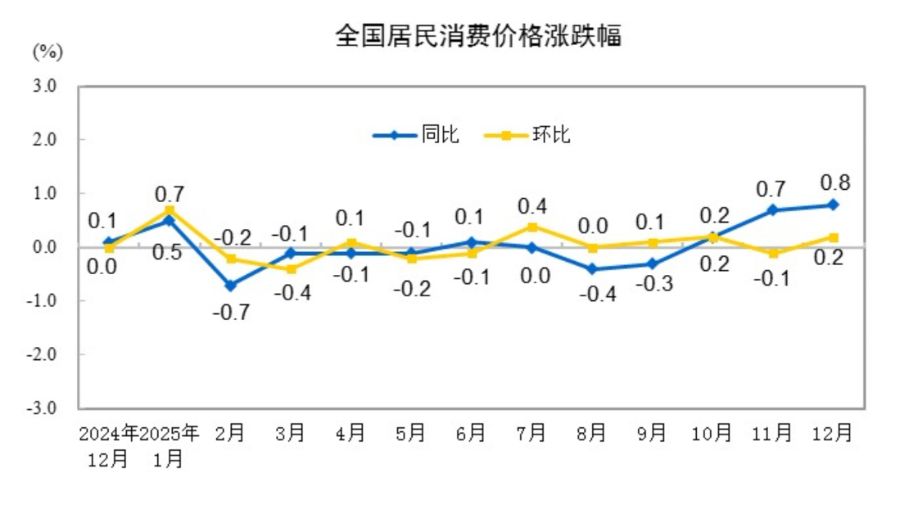
2026年1月9日,国家统计局发布数据显示,2025年12月份,扩内需促消费政策措施继续显效,叠加元旦临近,居民消费需求增 加,居民消费价格指数(CPI)环比上涨0.2%,同比上涨0.8%。受国际大宗商品价格传导拉动以及国内重点行业产能治理相关政 策持续显效等因素影响,工业生产者出厂价格指数(PPI)环比上涨0.2%,同比下降1.9%。 其中,CPI同比上涨0.8%,涨幅比上月扩大0.1个百分点,回升至2023年3月份以来最高,同比涨幅扩大主要是食品价格涨幅扩大 拉动。PPI环比上涨0.2%,连续3个月上涨,涨幅比上月扩大0.1个百分点。 整体来看,2025年全年,全国居民消费价格与上年持平。2025年全年,工业生产者出厂价格下降2.6%。 远东资信研究院副院长张林对21世纪经济报道记者表示,12月CPI同比与环比价格改善,在市场预期范围之内,但处于市场预期 的上沿。对于全年数据,从历史上来看,0%的CPI和-2.6%的PPI是偏低的价格水平组合,这符合当前宏观经济供强于需,以及居 民部门仍处在去杠杆过程中的总体背景和基本面。 12月份,全国居民消费价格环比上涨0.2%。其中,城市上涨0.2%,农村上涨0.2 ...
电力设备行业点评报告:反内卷趋势无忧,太空光伏产业提速
Yin He Zheng Quan· 2026-01-09 09:20
Investment Rating - The report maintains a "Recommended" rating for the electric equipment industry [1] Core Insights - The report highlights that the trend of anti-involution is not a concern, and the space photovoltaic industry is accelerating [1] - The report discusses the recent regulatory actions in the photovoltaic sector, emphasizing the prohibition of monopolistic behaviors such as price and capacity coordination, while allowing compliance with cost-based sales and technology standard improvements [4] - The report notes a continued upward trend in industry prices, with expectations for profit recovery in 2026 as terminal demand gradually improves [4] - The rise of commercial space and the acceleration of the space photovoltaic industry are underscored, with significant plans for deploying solar energy networks in space [4] Summary by Sections Regulatory Environment - The market regulatory authority has halted self-regulatory actions related to the photovoltaic industry's silicon material integration platform, citing monopolistic concerns [4] - A collaborative governance framework is being established among enterprises, power generation entities, and associations to ensure compliance and quality standards [4] Industry Price Trends - The average transaction price for N-type silicon material has increased to 59,200 CNY per ton, reflecting a week-on-week increase of 9.83% [4] - Prices for N-type silicon wafers and battery cells have also seen upward adjustments, indicating a recovery in the industry [4] Space Photovoltaic Development - Elon Musk's plan to deploy 100GW of solar-powered satellites annually is highlighted, along with China's plans for gigawatt-level space data centers [4] - The report anticipates that space photovoltaic technology will become commercialized in the next 10-15 years, driven by decreasing launch costs and technological breakthroughs [4] Investment Recommendations - The report suggests focusing on companies with technological reserves in space photovoltaic, such as Junda Co., JinkoSolar, Trina Solar, and others [4] - It also recommends monitoring leading companies with strong advantages in new technologies, as well as those benefiting from anti-involution policies in the silicon material segment [4]
基础化工行业年度报告:周期成长双线轮动,持续看好成长赛道和反内卷大方向
Xin Lang Cai Jing· 2026-01-09 09:00
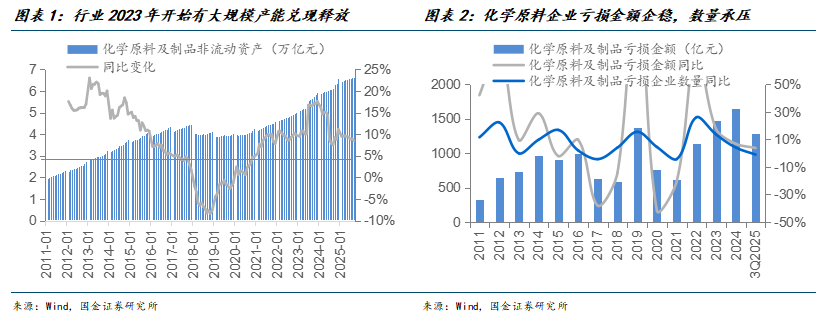
Group 1 - The chemical industry is at the bottom of its profitability cycle, with the chemical PPI showing signs of stabilization, indicating limited further downside risk [1][6][41] - The trend of "East rising, West falling" is evident, with Chinese companies expanding their product and capacity overseas to mitigate risks and enhance market presence [1][23][35] - There is a clear trend of polarization within the industry, where only companies above the industry median can realize profits, while marginal firms face significant challenges [1][36][39] Group 2 - Supply-side constraints are expected to improve industry sentiment, leading to price and profit recovery, particularly in sectors with limited new capacity [2][43][44] - The demand side remains weak, but structural opportunities may arise from new market segments and changes in demand patterns [3][47][48] - Emerging sectors such as AI, robotics, and solid-state batteries are anticipated to drive long-term investment opportunities due to their growth potential [2][48][49] Group 3 - The chemical industry is experiencing a significant shift in its competitive landscape, with European chemical competitiveness declining, allowing Chinese firms to capture more market share [23][25][29] - The export of chemical products from China has been increasing, with a net export value of $24.1 billion, indicating a positive trend in mitigating domestic supply pressures [15][31][33] - Companies are increasingly focusing on overseas resource acquisition, such as phosphate and potassium mines, to secure raw materials and enhance their competitive edge [1][35][36]
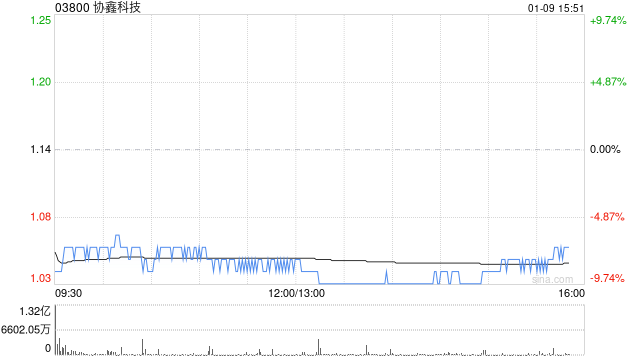
小摩:光伏业最差情境为无序内卷 大全新能源(DQ.US)与协鑫科技仍将为最终胜利者
Xin Lang Cai Jing· 2026-01-09 07:51
Core Viewpoint - Morgan Stanley's report indicates that the National Market Supervision Administration's statement regarding the China Photovoltaic Industry Association's proposal to establish a consolidation fund and allocate industry production quotas violates antitrust laws, which negatively impacts the industry's anti-involution initiative. However, the bank views this event as an adjustment rather than a reversal due to China's push against "involution" [1][5]. Group 1 - The report anticipates multiple potential outcomes, including government agencies managing production quotas or higher-level departments setting conditions for quota exemptions [1][5]. - In the worst-case scenario, there could be chaotic involution consolidation within the industry [1][5]. - Companies with significant net cash reserves, such as Daqo New Energy (DQ.US), and the lowest cash cost producer, GCL-Poly Energy (03800), are expected to emerge as the ultimate winners in this situation [1][5]. Group 2 - Morgan Stanley maintains an "overweight" rating on Daqo New Energy with a target price of $38 and on GCL-Poly Energy with a target price of HKD 1.7 [1][5].