
新消费

Search documents
食品饮料行业周报:优质食品公司价值逐步显现,白酒继续等待-20250809
Shenwan Hongyuan Securities· 2025-08-09 15:25
Investment Rating - The investment analysis opinion indicates a positive outlook for traditional consumer leading companies, suggesting they have long-term investment value from a dividend and yield perspective [5]. Core Viewpoints - The report emphasizes that the head companies in traditional consumption have undergone adjustments and are now positioned for long-term investment value. It highlights the potential for performance differentiation among food stocks characterized by new consumption trends, with a focus on companies that possess long-term competitiveness and improvement potential [5]. - In the liquor sector, the report notes that due to slow macro demand recovery and further restrictions on consumption scenarios, sales pressure is expected to remain significant this year, with financial statements also under pressure. Key recommendations include Guizhou Moutai, Shanxi Fenjiu, and Luzhou Laojiao, while also paying attention to Wuliangye, Jinshiyuan, and Yingjiagongjiu [5][6]. - For the mass consumer goods sector, the report suggests that cost advantages will support profitability, and the emergence of new products and channels will foster growth. It recommends leading companies in mature sectors like dairy and beer, and highlights growth opportunities in new retail formats driven by consumer trends towards self-indulgence, health, and convenience [5][7]. Summary by Sections 1. Weekly Industry Insights - The food and beverage sector saw a 0.63% increase last week, with liquor rising by 0.38%. However, it underperformed the broader market, lagging by 1.48 percentage points [4]. - The report ranks the food and beverage sector 26th among 31 sub-industries in terms of performance [4]. 2. Liquor Sector Analysis - Moutai's bottle price is reported at 1875 RMB, with a week-on-week increase of 15 RMB, while the box price remains stable at 1910 RMB. Wuliangye's price is approximately 870 RMB, also stable [6][19]. - The report suggests that high-end liquor prices have stabilized since July, but future trends remain uncertain, advising patience for fundamental changes in the industry [6]. 3. Mass Consumer Goods Sector Analysis - The report increases its recommendation for Uni-President China, noting that the company's mid-year performance exceeded expectations. Forecasted net profits for 2025-2027 are 2.315 billion, 2.579 billion, and 2.843 billion RMB, respectively, with year-on-year growth rates of 25%, 11%, and 10% [7][10]. - The report highlights the continuous improvement in profitability driven by structural upgrades in food and beverage businesses, alongside a focus on expanding into dining, gift boxes, and family consumption scenarios [7]. 4. Market Performance of Sub-sectors - The food and beverage industry underperformed the Shenwan A index by 1.29 percentage points during the period from August 4 to August 8, with various sub-sectors showing mixed performance [35]. - The report indicates that the liquor sector has consistently lagged behind the market, with a notable decline in excess returns compared to the Shenwan A index [36].





汇丰最新观点出炉!继续看好这一板块
证券时报· 2025-08-09 14:26
Group 1 - The core viewpoint emphasizes that monetary policy will focus on enhancing policy transmission, reducing overall financing costs, and promoting the use of structural monetary policy tools. There will be increased funding support for sectors such as technological innovation, service consumption, and elderly care [1] - The company maintains a positive outlook on the A-share market, particularly favoring high-quality growth sectors. According to market consensus, companies involved in AI infrastructure, AI drivers, and AI applications are expected to see significant profit growth by 2025 [3] - The further popularization of AI and the deepening trend of domestic substitution are anticipated to accelerate revenue growth in cloud services. Major Chinese tech companies and telecom service providers have begun to increase capital expenditures, which is expected to improve user data and boost industry investment confidence [4] Group 2 - New consumption trends are emerging, driven by structural changes in Chinese society and demographics. The Z generation is becoming a core force in this new consumption wave, contributing 40% of the total consumption despite representing less than 20% of the population. Their overall consumption scale is projected to quadruple to 16 trillion yuan by 2035 [6][7] - The company expects that as the consumption power of the Z generation continues to rise, the new consumption sector will sustain growth, presenting structural growth opportunities [7] Group 3 - The company maintains an optimistic view on the Asian market, particularly in the healthcare sector, which is seen as attractive due to increased investment and AI innovation. However, caution is advised as the industrial sector's valuations have risen above their five-year average [10] - The company is optimistic about markets in China, India, and Singapore, while maintaining a neutral stance on Japan. The US stock market is viewed positively, especially in the communication services, information technology, and financial sectors [11]


当前环境下资管机构对各类资产走势的预判和投资策略之变
2 1 Shi Ji Jing Ji Bao Dao· 2025-08-08 12:36
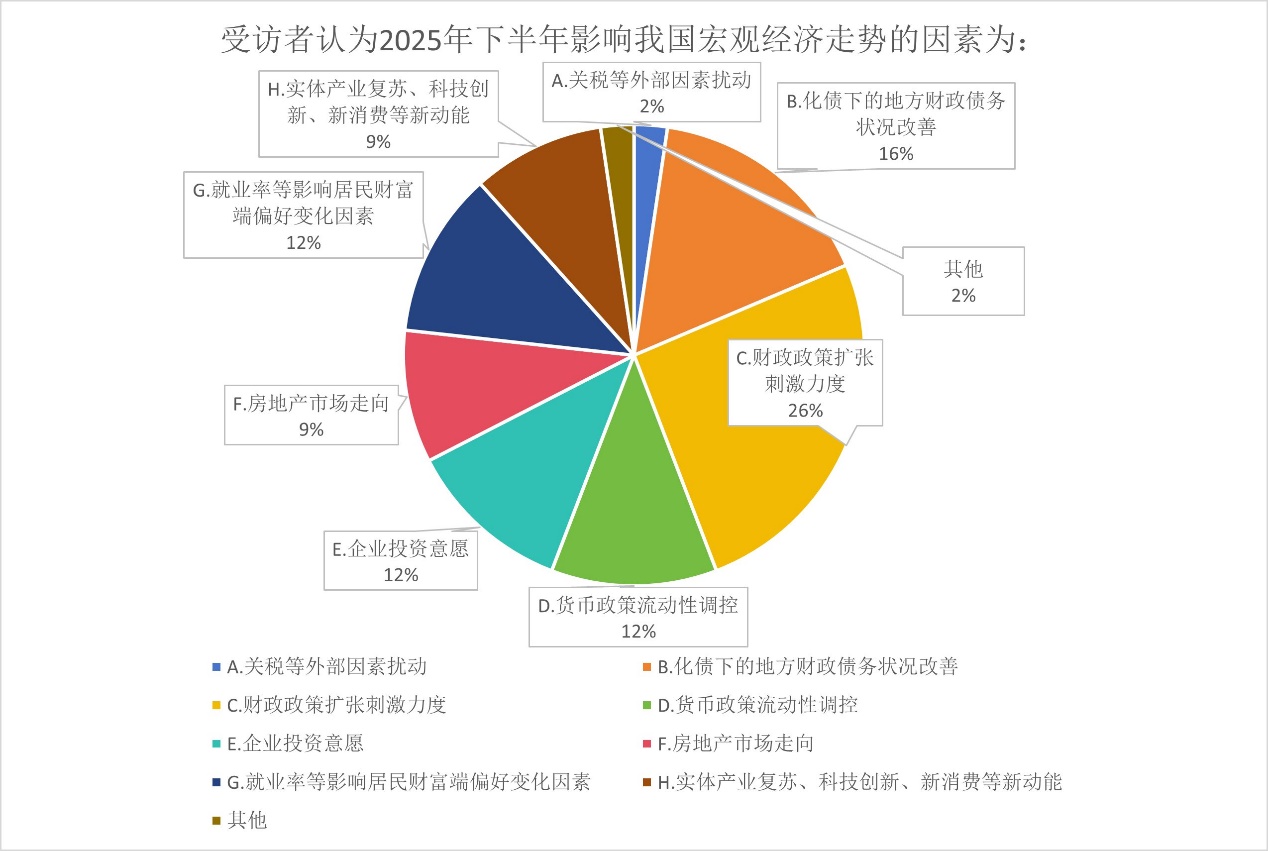
Group 1: Macroeconomic Overview - The macroeconomic landscape is shaped by a combination of policy efforts and market confidence recovery, with GDP growth in the first half of 2025 at 5.3% year-on-year, driven by infrastructure investment and government consumption [2][5] - The survey indicates that the main drivers of economic growth in the second half of the year will diversify, with a focus on technology innovation and green development [2][5] Group 2: Equity Market Performance - The A-share market exhibited an "N-shaped" upward trend in the first half of 2025, with the Shanghai Composite Index rising by 2.76% to close at 3444.42 points by June 30 [6][8] - Small-cap growth stocks outperformed, with the North Securities 50 Index leading with a 39.45% increase [6][8] - Despite a preference for high-dividend assets, institutional investors maintain confidence in the long-term prospects of growth sectors such as technology and healthcare [12][14] Group 3: Fixed Income Market Dynamics - The bond market in the first half of 2025 displayed characteristics of "low interest rates, low spreads, and low volatility," with the 10-year government bond yield fluctuating between 1.64% and 1.8% [18][23] - The survey results suggest a preference for bond trading strategies focused on short-term fluctuations, while caution is advised regarding high-yield bonds due to credit risks [21][23] Group 4: Global Market Trends - The global capital market experienced increased volatility in the first half of 2025, with the U.S. dollar weakening and U.S. stock markets facing significant challenges [26][27] - Survey results indicate a stronger preference for Hong Kong stocks over U.S. stocks, reflecting expectations for market recovery [28][35] - There is a notable avoidance of non-standard assets and traditional safe-haven assets like bank deposits and real estate in first-tier cities, indicating a shift in investment strategies [33][35]
结构性行情引领市场震荡上行
Jin Rong Shi Bao· 2025-08-08 08:00
6月30日,A股以总市值首次站上100万亿元的高光时刻结束上半年行情。在业内人士看来,这一历 史性突破不仅体现了中国资本市场体量的跃升,更折射出经济转型、产业升级与制度优化正加速演进。 回顾上半年,A股在偏窄区间内震荡波动,整体走出向上态势,结构性行情明显,成长、消费、周 期和红利均有亮点。Wind数据显示,2025年上半年,A股主要股指悉数收涨,上证指数上涨2.76%,北 证50指数表现最强,累计涨幅达39.45%;从行业来看,有色金属、企业服务、家庭用品、银行等涨幅 居前,均超15%。 7月1日下半年首个交易日,上证指数、深证成指收涨,创业板指微跌0.24%。下半年A股市场行情 将如何演绎,成为市场分析人士关注的重点。 "在外部不确定性明显消除前,A股主要指数或延续窄幅波动特征。"在中金公司研究部首席国内策 略分析师李求索看来,考虑到国际新秩序重构下我国基本面韧性以及估值优势,预计下半年A股市场 或"前稳后升"。 谈及具体行业,万联证券研究所在研报中提出,以绩优高景气成长与内需方向下的稳健大蓝筹为主 线,可关注发展新质生产力方向下的科技成长板块及全方位扩大内需政策下的大消费产业链。 主要指数悉数收涨 结构 ...

ETF半年度业绩出炉 哪些是“香饽饽”
Jin Rong Shi Bao· 2025-08-08 08:00
Group 1 - As of June 2025, the total scale of ETFs in China has surpassed 4.31 trillion yuan, reflecting a year-to-date growth of 15.58% [3] - Stock ETFs have seen a net inflow of 144.9 billion yuan this year, exceeding 3 trillion yuan in total scale, while bond ETFs have grown by 120.71% to reach 383.98 billion yuan [3] - The credit bond ETF market has experienced significant growth, with a net inflow of 109.09 billion yuan in the first half of the year, accounting for half of the total bond ETF scale [3][4] Group 2 - The average return of all ETFs in the market for the first half of the year is 6.08%, with Hong Kong stock ETFs performing particularly well, dominating the top 50 performing ETFs [5] - Ten ETFs have achieved returns exceeding 50%, primarily in the innovative drug and biotechnology sectors, with the top performer being the Huatai-PB Hong Kong Stock Connect Innovative Drug ETF at 58.77% [5] - The innovative drug sector is experiencing a new wave of growth driven by policy support and technological breakthroughs, with significant increases in stock prices for many Hong Kong-listed pharmaceutical companies [5][9] Group 3 - The technology and gold ETFs have also shown strong performance, with returns concentrated above 20%, while 13 ETFs have reported losses exceeding 10%, mainly in the photovoltaic and energy sectors [6] - Analysts are focusing on sectors such as innovative drugs, technology growth, and new consumption for future investment opportunities [8][9] - The new consumption sector is expected to see investment opportunities shift between growth styles and high-dividend styles, influenced by changing consumer preferences among Generation Z [10]
消费活力与投资机遇“双向奔赴” 多维数据勾勒扩内需新图景
Zhong Guo Zheng Quan Bao· 2025-08-08 07:23
Group 1: Consumer Goods and Market Trends - The "old-for-new" policy for consumer goods has shown significant effectiveness, with 48.8 million consumers purchasing 51.5 million digital products, generating sales of 143.26 billion yuan as of May 22 [2] - E-commerce platforms have seen a surge in sales during the "618 shopping festival," with notable increases in categories such as 3C products, where sales of action cameras and gaming laptops grew over 300% and 110% respectively [2] - The automotive market is experiencing steady growth, with passenger car sales reaching 1.755 million units in April, a year-on-year increase of 14.5%, and new energy vehicle sales growing by 33.9% to 905,000 units [3] Group 2: Emerging Consumption Sectors - New consumption sectors such as pet products and trendy toys are gaining traction, with pet brand sales doubling during the "618" event, showcasing the competitive advantage of domestic brands [4] - The toy sector also reported impressive growth, with companies like Pop Mart seeing a revenue increase of 165%-170% in Q1, driven by a 95%-100% growth in the Chinese market [4] - Health-related consumption is on the rise, with retail sales of sports and entertainment goods increasing by 23.3% in April, and sales of health monitoring devices growing by 41.6% in Q1 [5] Group 3: Policy Support and Economic Outlook - Various cities are implementing comprehensive measures to boost consumption, focusing on new consumption models and local economic development [7] - The government is expected to continue supporting consumption and technology sectors, with fiscal spending likely to increase, indicating a positive outlook for sustained consumer growth [8] - The overall sentiment in the consumer sector is optimistic, with many companies in the sports and retail industries expressing confidence in future growth [6]
连续两周加仓 百亿级私募带头冲锋
Zhong Guo Zheng Quan Bao· 2025-08-08 07:18
在经历4月上旬的减仓后,股票私募机构对当前市场逐渐形成共识,仓位指数在75%上方逐渐稳定 下来。值得注意的是,百亿级私募仓位指数连续两周上涨,并且时隔五周后再次突破80%大关。此外, 私募机构也在通过定增等方式,积极参与A股市场投资。展望后市,机构普遍认为,中国资产重估叙事 逻辑在继续加强,以科技创新突破为代表的新经济领域已经展现出蓬勃生机。 百亿级私募积极加仓 排排网最新数据显示,股票私募最新仓位指数稳定在75.16%,连续六周坚守在75%上方。在经历4 月上旬的减仓后,私募机构对当前市场逐渐形成共识,"按兵不动"成为主流策略。 从股票私募仓位分布来看,数据显示,56.18%的股票私募处于满仓水平,24.10%的股票私募处于 中等仓位水平,12.64%的股票私募处于低仓位水平,另有7.08%的股票私募处于空仓水平。 不同规模股票私募仓位差异较大,仓位由高到底依次是百亿级私募、50亿-100亿元级、0-5亿元 级、5亿-10亿元级、10亿-20亿元级和20亿-50亿元级私募。其中,百亿级私募带头冲锋,仓位指数连续 两周上涨,并且时隔五周后再次突破80%大关,较两周前增加4.09个百分点。 从百亿级私募仓位分布 ...
天价LABUBU引热新消费!如何解读Z世代的财富密码?
Xin Lang Ji Jin· 2025-08-08 07:17
Group 1: LABUBU's Market Performance - LABUBU's unique mint green collectible sold for 1.08 million yuan at an auction, highlighting its exclusivity and high demand [1] - The company's market value reached 347.5 billion HKD, with its founder Wang Ning becoming the new richest person in Henan with a net worth of 20.3 billion USD [1] - The secondary market for LABUBU products shows significant price premiums, with the hidden variant "Ben Wo" averaging 1,200 yuan, over 10 times its original price [1] Group 2: New Consumption Trends - The rise of new consumption reflects a shift from traditional value-for-money and functionality to quality and personal satisfaction, driven by technological advancements and new business models [2] - New consumption is characterized by a "consumption grading" phenomenon, where consumers are willing to pay for quality at lower prices and justified premiums [5] - The Z generation's consumption behavior, emphasizing value and quality, is a key driver of the new consumption wave [5] Group 3: Supply Side Dynamics - The supply side benefits from ongoing infrastructure improvements and increased digital R&D investments, leading to an intelligent upgrade in consumer goods [7] - Historical insights from Japan's consumption changes in the 1990s provide valuable lessons for understanding current new consumption trends [7] Group 4: Market Outlook - The current liquidity-driven environment favors high-growth assets, making new consumption a focal point for investment [8] - Performance validation through fundamental research shows promising growth potential in new consumption companies, with one leading Hong Kong stock projected to achieve a net profit of 3.125 billion yuan in 2024, a 188.77% increase [8] - New consumption is seen as a consensus direction for funds, with opportunities in both Hong Kong and A-share markets [8]
公募“后浪”汹涌而来 控制回撤成必修课
Shang Hai Zheng Quan Bao· 2025-08-08 07:17
Core Viewpoint - A new generation of fund managers is emerging in the public fund industry, demonstrating impressive performance by capitalizing on structural opportunities in the new consumption and innovative pharmaceutical sectors [1][2][4]. Group 1: Performance of Young Fund Managers - As of June 20, 2025, five out of the top ten actively managed equity funds have managers with less than three years of experience [2]. - Notable performances include Liang Furui's Changcheng Pharmaceutical Industry Selected Mixed Fund, which achieved a return of 71.21% this year, and was his first fund managed since its establishment in October 2023 [2]. - Another example is the Huazhong Pharmaceutical Biotechnology Stock Fund, managed by Sang Xiangyu, which has also exceeded a 60% return this year [2]. Group 2: Investment Focus and Background - Young fund managers have successfully identified opportunities in the innovative pharmaceutical sector, with many having strong professional backgrounds in relevant fields [4]. - Liang Furui has six years of experience in pharmaceutical research, while Sang Xiangyu has a dual background in bioengineering and economics, and Liu Haihao has been involved in consumer sector research for several years before becoming a fund manager [4]. Group 3: Market Conditions and Fund Establishment - The timing of fund establishment has been favorable, with several top-performing funds launched in late 2023, allowing managers to fully benefit from the rising innovative pharmaceutical market [5]. - The rapid establishment of these funds, often in a small scale, has enabled fund companies to effectively capitalize on market opportunities [5]. Group 4: Balancing Risk and Return - While young fund managers have shown strong performance, there is a need for them to learn how to manage drawdowns effectively, especially in a cyclical market [7]. - Funds with concentrated holdings, such as the Zhonghang Preferred Navigation Mixed Fund, have experienced significant volatility, highlighting the risks associated with aggressive investment strategies [7][8]. - Industry experts emphasize the importance of providing young managers with opportunities while also encouraging a shift towards long-term, value-oriented investment strategies as their fund sizes grow [8].
私募上半年成绩单出炉 事件应对成致胜关键
Zhong Guo Zheng Quan Bao· 2025-08-08 07:16
Core Insights - The A-share market in the first half of 2025 experienced significant volatility, leading to a stark performance divergence among private equity firms, with some capitalizing on new trends while others faced losses [1][2] - The focus of investment strategies shifted towards sectors such as artificial intelligence (AI), new consumption, innovative pharmaceuticals, and dividend assets as firms actively adjusted their portfolios [1][5] Performance of Private Equity Firms - Notable private equity firms showed significant performance variation, with firms like Tongben Investment achieving substantial positive returns due to the rise of the new consumption sector, shifting their focus from "big consumption" to "new consumption" since November 2024 [2] - Conversely, some well-known private equity firms faced losses exceeding 20% due to heavy investments in the oil and gas sector [2] Market Reflections - The market's main theme in the first half of 2025 was characterized by "wide fluctuations combined with structural opportunities," leading many investors to struggle with decision-making during periods of volatility [3] - Key events included the "DeepSeek moment" before the Spring Festival and overseas disturbances in early April, which influenced investment strategies and market dynamics [3] Outlook for the Second Half - Private equity firms expressed optimism for the second half of the year, maintaining focus on AI, new consumption, innovative pharmaceuticals, and dividend assets [5][6] - Investment strategies are expected to emphasize a dual focus on "technology + consumption," with an increased emphasis on sectors like financial technology and biotechnology as well as new consumption leaders [6] - Firms like Qinghequan Capital anticipate that the Chinese market remains attractive to foreign capital due to relatively low valuations, with expectations of a positive market sentiment driven by global capital flows [6]