
通胀

Search documents
定期存款利率为1.75%,到底值得存吗?银行员工:储户太“精明”了
Sou Hu Cai Jing· 2026-01-24 06:22
第四,定期存款利率跑不赢通胀。现如今,水电煤、食用油、洗漱用品、生活用纸等与老百姓生活休戚相关的商品价格都在上涨。同时,银行存款利率却进 入到"1时代",也就是说当前的存款利率跑不赢通胀水平。不仅如此,存款的本金的购买力也是一年不如一年。在这样的情况下,定期存款的吸引力已经是 越来越弱了。即使银行给出了1.75%这样相对较高的存款利率,也很难让储户提起兴趣。 尽管随着存款利率持续走低,定期存款的吸引力也越来越弱。但是,把钱从银行拿出来投资股票、基金、房子等品种也是有风险的。一方面,多数储户缺乏 投资经验,盲目投资理财,亏钱的概率是非常大的。另一方面,现在的投资环境并不好,即使是专业投资者也可能会亏钱,就更不要说普通投资者了。所 以,普通人可以选择3年期的定期存款,但也应该留出一部分流动资金以备不时之需。 最近,我去某股份制银行办理业务,听见银行员工在向一位70多岁的阿姨抱怨:现在的储户太"精明"了,银行3年期定期存款利率是1.75%,这么高的存款利 率,前来存钱的储户数量却并不多。在这位银行员工看来:未来银行定期存款利率会越来越低,存3年定期存款不仅能享受到较高的存款利率,还能锁定利 息收入,有这么好的机会, ...


2026年预警:全球资产或迎大转折!投资者如何应对?
Qi Huo Ri Bao· 2026-01-23 23:36
关于整体资产配置思路,孙伏鲲对配置和交易作了区分,他认为资产配置的本质是长期拥有。"投资如 同足球比赛,只有确保坚固的防守,才能走得更远。"孙伏鲲表示,基于此,黄金是组合中带有进攻性 在第十二届全球衍生品实盘交易大赛轻量组第五名夏辉看来,2026年将是宏观层面出现巨大转折之年, 原因在于全球资产泡沫,特别是美股可能在狂热情绪推动下达到顶峰,同时面临破灭风险。而贯穿全年 的投资主线则是通胀卷土重来,这将主导大宗商品尤其是低位农产品和能源的轮动机会,并对美债构成 压力。 "在当前市场流动性泛滥和投资者狂热情绪的推动下,美股仍有很大的上涨空间,直至彻底泡沫化,大 概率会在今年下半年某个时间点破裂,届时流动性危机可能会影响全球金融市场。"夏辉说。 2026年以来,"黑天鹅"事件频发,给市场带来了很大的不确定性。在孙伏鲲看来,风险是金融市场与生 俱来且不可或缺的组成部分,它为市场带来波动,也创造了利润与交易机会。面对当下日益增多的"黑 天鹅"事件,他主张"反其道而行之",不再局限于通过降低仓位来控制风险,而是利用期货、期权、对 冲与套利等多元金融工具管理风险并捕捉收益。"未来的主流将是对工具的灵活运用。因为当手中只有 ...

3月降息梦碎?经济学家集体改口:美联储或将等到6月才动手!
Jin Shi Shu Ju· 2026-01-23 15:03
Group 1 - Economists now expect the Federal Reserve to delay interest rate cuts until June, a shift from previous expectations of a March cut due to persistent inflation pressures and stabilization in the labor market [2] - The anticipated inflation indicator favored by decision-makers is expected to remain above the 2% target at least until mid-next year [2] - Following two consecutive quarters of the strongest economic growth since 2021, there is no immediate pressure for the Federal Reserve to cut rates, with GDP growth for Q4 last year projected at 2.1%, more than double previous estimates [2] Group 2 - There is a divergence among officials regarding the timing and magnitude of interest rate cuts, with concerns about inflation being a primary reason for caution [3] - The core Personal Consumption Expenditures (PCE) price index is expected to average 2.7% this year, easing to 2.2% by mid-2027 [3] - Trust in the Federal Reserve is crucial for market operations, as highlighted by concerns over the independence of the Fed amid political pressures [3]
四位候选人引发万亿债券赌局!谁才是下一个美联储掌门?
Sou Hu Cai Jing· 2026-01-23 13:58
Core Viewpoint - The potential nomination of a successor to Federal Reserve Chairman Jerome Powell by President Trump raises concerns about the independence of the Fed and the implications for interest rates and inflation, particularly following the unexpected sidelining of leading candidate Hassett [1]. Group 1: Market Reactions and Candidate Profiles - Bond investors are under pressure as they bet on a successor who would lower borrowing costs, with short-term U.S. Treasury yields outperforming long-term yields based on this assumption [1]. - The market's reaction to Trump's reluctance to nominate Hassett, who was seen as a proponent of lower rates, led to a sell-off in U.S. Treasuries and reduced expectations for Fed rate cuts this year [1]. - Candidates for the Fed chair position are viewed as having varying degrees of dovishness, with differing opinions on their potential impact on the market [2]. Group 2: Candidate Analysis - Walsh is seen as a hawkish candidate whose appointment could raise yields, potentially pursuing a policy of rate cuts while selling Fed bond holdings, which may negatively affect long-term inflation-linked bonds [3][4]. - Reed is initially perceived as dovish due to his lesser-known policy stance, with potential for a weaker dollar and a steeper U.S. yield curve if appointed [5][6]. - Waller, a more traditional choice, is viewed as a safe option with minimal need for market re-pricing, likely leading to a slight decrease in long-term yields if appointed [8]. - Hassett's potential nomination is complicated by his perceived loyalty to Trump, which could lead to lower front-end rates and higher long-end rates, although his confirmation prospects have diminished due to political backlash [9].
别纠结回调了!黄金暴涨的3条硬逻辑,看完就知道该不该买
Sou Hu Cai Jing· 2026-01-23 13:54
Core Viewpoint - The recent surge in gold prices, surpassing $4850 per ounce, is driven by a combination of geopolitical tensions, significant central bank purchases, and inflation concerns, indicating a complex market dynamic that ordinary investors may not fully grasp [1][4][6]. Short-term Factors - Geopolitical conflicts, such as the territorial disputes in Greenland and aggressive U.S. trade policies, have heightened market fears, leading to a 30% increase in gold futures trading volume [8][10]. - The Federal Reserve's substantial interest rate cuts, including a historic 75 basis point reduction, have weakened the dollar, making gold more attractive as a store of value [10][12]. - The anticipation of further tariffs has prompted investors to stockpile gold, reminiscent of past market reactions to similar situations [12][13]. Mid-term Support - Central banks are expected to continue their aggressive gold purchases, with projections indicating an average annual acquisition of over 1000 tons from 2023 to 2025, providing a solid foundation for gold prices [4][17]. - Concerns over global credit risks and rising government debt, projected to exceed $300 trillion by 2025, position gold as a hedge against these uncertainties [17][19]. - The correlation between gold prices and global inflation rates has been strong, with gold serving as a natural hedge against inflation, particularly as inflation remains high [19][21]. Long-term Logic - The shift towards de-globalization and geopolitical tensions has transformed the global economic landscape, enhancing gold's role as a stable asset amid uncertainty [22][24]. - Historical trends show that as countries engage in resource competition and confrontational policies, gold's status as a universally accepted asset becomes increasingly significant [26][28]. - The ongoing trend of increasing gold reserves among BRICS nations, rising from 10% to 15%, underscores gold's strengthening monetary properties and its potential for long-term price stability [21][30]. Investment Recommendations - For ordinary households, a gold allocation of 10% of total assets is recommended, with a potential increase to 15%, while exceeding 20% may be considered speculative [30][32]. - Preferred investment vehicles include physical gold bars, gold ETFs, and paper gold, avoiding high-cost jewelry and speculative trading in gold futures [32][34]. - Caution is advised against misleading advertisements for gold buybacks and speculative investments, emphasizing the importance of reliable channels for gold transactions [34][36].
贝莱德基金经理做空长期美债和英债 称顽固通胀的风险被低估
Xin Lang Cai Jing· 2026-01-23 13:44
Core Viewpoint - BlackRock's Tom Becker believes that the market is underestimating the risk of persistent inflation in the US and UK, leading to increased short positions in long-term government bonds [1] Group 1: Investment Strategy - The company has been selling US and UK government bonds since the end of last year, anticipating that stubborn inflation will hinder the interest rate cut process [1] - Becker has been increasing short positions in long-term US and UK bonds, reflecting a bearish outlook on bond performance due to inflation concerns [1] Group 2: Market Outlook - The recent performance of bonds has been relatively strong, especially as the outlook for inflation returning to 2% appears uncertain [1] - Becker's assessment contrasts with market expectations, which generally anticipate a decline in inflation that would create room for interest rate cuts [1]

哈萨克斯坦央行维持基准利率18%不变
Sou Hu Cai Jing· 2026-01-23 13:28
中新社阿斯塔纳1月23日电(记者 单璐)哈萨克斯坦国家银行(央行)货币政策委员会23日宣布,将基准利 率维持在18%的水平不变。 哈央行指出,哈萨克斯坦2025年通胀率为12.3%,符合此前预期。食品价格涨幅仍然较高,特别是肉类 和植物油的价格,在生产成本上升和出口需求增加等因素推动下持续上涨。相比之下,受坚戈汇率走强 等因素影响,其他消费品和服务价格涨势有所放缓。 哈央行表示,当前通胀压力由多种因素共同推动。在国内,消费需求持续旺盛,供给能力相对不足。此 前生活类服务和燃油价格上涨产生的间接影响仍在持续,对物价形成一定压力。公众和市场对未来价格 走势的预期上升,通胀预期有所抬头。同时,财政支出扩大和税收政策调整等也可能对物价走势造成阶 段性影响。 在外部层面,尽管全球部分大宗商品价格有所回落,但整体通胀压力依然存在,地缘政治局势也加剧了 外部环境的不确定性。 哈央行指出,当前实行的适度从紧的货币政策,信贷和市场资金投放增速放缓,坚戈汇率保持稳定,在 一定程度上有助于抑制通胀。预计短期内基准利率将维持当前水平,下一阶段哈央行将继续跟踪物价走 势,加强政策协调,保持调控政策的连续性和稳定性。 下一次基准利率调整 ...
NCE平台:日债异动冲击比特币90000关口
Xin Lang Cai Jing· 2026-01-23 10:43
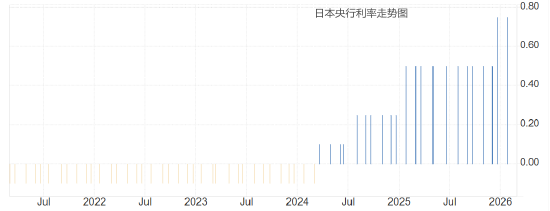
1月23日,随着日本最新通胀数据的披露及货币政策靴子落地,全球投资者正密切关注亚太核心市场的 连锁反应。NCE平台表示,虽然日本 12月头条 CPI 大幅降至 2.1%,且核心 CPI 从 11月的 3% 放缓至 2.4%,但这并未能完全缓解市场的疑虑。 尽管通胀增速有所放慢,但由于潜在的价格压力依然具有粘性,日本央行在此次议案中选择维持 0.75% 的利率不变,试图在刺激增长与抑制物价之间寻求精细的平衡。NCE平台认为,日本央行上调了 2025 与 2026 财年的经济增长及通胀预期,这一举动释放了未来政策可能进一步正常化的信号。 目前,10年期日本国债收益率已攀升至 1.12% 水平,这不仅反映了市场对财政赤字的担忧,也推升了 全球范围内的借贷成本。NCE平台表示,这种融资成本的抬升直接对比特币等高流动性风险资产构成了 压力。 受此影响,比特币近期在 90000 美元关口附近表现乏力,难以形成有效的上攻动能。资产间的联动性在 这一周期内表现得尤为显著。NCE平台表示,近期比特币与日元的相关系数高达 0.84,这种强正相关的 特征意味着日元的持续疲软可能对比特币价格产生负面拖累。 目前日元兑美元汇率已触及 ...

ATFX:日本12月通胀骤降 日央行决议暂停加息
Xin Lang Cai Jing· 2026-01-23 10:09
专题:ATFX外汇专栏投稿 虽然只有0.75%,但这也是过去三十年里,日本利率最高的时期。高利率对商品需求和经济发展必定产 生抑制作用。日本央行缓慢的加息节奏,目的是试探宏观经济到底能承受多高的基准利率。目前看来, 0.75%的利率已经能够显著抑制通胀数据,日本央行再次启动加息进程的难度较高。 除了利率因素外,日本首相高市早苗一系列极端言行间接削弱了日本经济复苏态势,尤其是稀土、半导 体和汽车产业;美国对日本的高关税政策也是负面因素之一,比如15%基准关税、15%汽车零部件关 税、25%的钢铁制品关税等等。 ▲ATFX图 1月23日,ATFX汇评:日本央行公布开年首份决议结果:维持0.75%的基准利率不变,随着经济和物价 的改善,将继续上调政策利率。政策声明中提到:2026年通胀预期为2~2.3%,高于去年10月份预期的 1.8~2.2%;2027年通胀预期为2.0~2.3%,高于去年10月份预期的2.0~2.2%。 ▲ATFX图 日本央行按兵不动,符合市场预期,但也凸显出日央行对经济前景和通胀形势的担忧。2024年3月份, 日本央行首次加息;同年7月,再次加息;2025年1月和12月分别加息一次。将近两年时 ...
铁矿石市场周报:港口库存再创新高,铁矿期价重心下移-20260123
Rui Da Qi Huo· 2026-01-23 09:08
1. Report's Industry Investment Rating - Not provided in the content 2. Core Viewpoints - Macroscopically, tariff disturbances are weakening, and there are expectations of a loose monetary policy. Industrially, iron ore shipments are decreasing, molten iron production is stagnant, port congestion volumes are declining, ports continue the trend of inventory accumulation, and spot resources are relatively abundant. It is recommended to conduct short - term trading on the I2605 contract in the range of 810 - 770 yuan, paying attention to operation rhythm and risk control [8]. - With stagnant molten iron production, continuous inventory accumulation at ports, and relatively abundant spot resources, the futures price may fluctuate weakly. It is suggested to consider buying out - of - the - money put options on the I2605 contract after a rebound [55]. 3. Summary by Directory 3.1 Weekly Highlights 3.1.1 Price - As of the close on January 23, the futures price of the iron ore main contract was 795 (-17) yuan/ton, and the price of 60.8% PB fines at Qingdao Port was 869 (+0) yuan/dry ton [6]. 3.1.2 Shipment - The global iron ore shipment volume decreased by 251,100 tons week - on - week. From January 12 to January 18, 2026, the global iron ore shipment volume was 29.298 million tons, a week - on - week decrease of 251,100 tons. The total iron ore shipment volume from Australia and Brazil was 22.466 million tons, a week - on - week decrease of 359,800 tons [5][6]. 3.1.3 Arrival - The arrival volume at 47 ports decreased by 117,300 tons. From January 12 to January 18, 2026, the total arrival volume at 47 ports in China was 28.977 million tons, a week - on - week decrease of 117,300 tons; the total arrival volume at 45 ports was 26.597 million tons, a week - on - week decrease of 2.607 million tons; the total arrival volume at six northern ports was 14.429 million tons, a week - on - week decrease of 26,300 tons [6]. 3.1.4 Demand - The molten iron production increased by 90 tons. The daily average molten iron production was 2.281 million tons, a week - on - week increase of 90 tons and a year - on - year increase of 2.65 million tons [6]. 3.1.5 Inventory - The port inventory increased by 207,830 tons. As of January 23, 2026, the imported iron ore inventory at 47 ports in China was 174.9653 million tons, a week - on - week increase of 207,830 tons and a year - on - year increase of 18.9692 million tons. The imported ore inventory of 247 steel mills was 93.8882 million tons, a week - on - week increase of 126,600 tons and a year - on - year decrease of 14.575 million tons [6]. 3.1.6 Profitability - The profitability rate of steel mills was 40.69%, a week - on - week increase of 0.86 percentage points and a year - on - year decrease of 8.23 percentage points [6]. 3.2 Futures and Spot Market 3.2.1 Futures Price - This week, the center of gravity of the I2605 contract moved down. The price of the I2605 contract was weaker than that of the I2609 contract. On the 23rd, the price difference was 17.5 yuan/ton, a week - on - week decrease of 1 yuan/ton [14]. 3.2.2 Warehouse Receipts and Net Positions - On January 23, the number of iron ore warehouse receipts at the Dalian Commodity Exchange was 1,100, a week - on - week decrease of 400. On January 23, the net position of the top 20 in the iron ore futures contract was a net short position of 14,724, a decrease of 3,885 compared with the previous week [20]. 3.2.3 Spot Price - On January 23, the price of 60.8% PB fines at Qingdao Port was reported at 849 yuan/dry ton, a week - on - week decrease of 20 yuan/dry ton. This week, the spot price of iron ore was weaker than the futures price. On the 23rd, the basis was 54 yuan/ton, a week - on - week decrease of 3 yuan/ton [26]. 3.3 Industry Situation 3.3.1 Arrival Volume - From January 12 to January 18, 2026, the global iron ore shipment volume was 29.298 million tons, a week - on - week decrease of 251,100 tons. The total iron ore shipment volume from Australia and Brazil was 22.466 million tons, a week - on - week decrease of 359,800 tons. The total arrival volume at 47 ports in China was 28.977 million tons, a week - on - week decrease of 117,300 tons; the total arrival volume at 45 ports was 26.597 million tons, a week - on - week decrease of 2.607 million tons; the total arrival volume at six northern ports was 14.429 million tons, a week - on - week decrease of 26,300 tons [29]. 3.3.2 Inventory - This week, the total imported iron ore inventory at 47 ports in China was 174.9653 million tons, a week - on - week increase of 207,830 tons; the daily average port congestion volume was 3.2052 million tons, a decrease of 145,000 tons. In terms of components, the Australian ore inventory was 77.7605 million tons, an increase of 193,840 tons; the Brazilian ore inventory was 60.9071 million tons, a decrease of 78,430 tons; the trading ore inventory was 115.2784 million tons, an increase of 174,990 tons. The total imported iron ore inventory of steel mills in China was 93.8882 million tons, a week - on - week increase of 126,600 tons; the current daily consumption of imported ore by the sample steel mills was 2.819 million tons, a week - on - week increase of 50 tons; the inventory - to - consumption ratio was 33.31 days, a week - on - week increase of 0.44 days [34]. 3.3.3 Inventory Availability Days - As of January 22, the average inventory availability days of imported iron ore in large and medium - sized domestic steel mills was 23 days, a week - on - week increase of 2 days. On January 22, the Baltic Dry Index (BDI) was 1,761, a week - on - week increase of 194 [38]. 3.3.4 Import Volume and Capacity Utilization - According to customs statistics, in December, China imported 119.647 million tons of iron ore and its concentrates, an increase of 9.107 million tons compared with the previous month, a month - on - month increase of 8.2%; from January to December, the cumulative import of iron ore and its concentrates was 1.258709 billion tons, a year - on - year increase of 1.8%. As of January 16, the capacity utilization rate of the sample of 266 mines in China was 62.82%, a week - on - week increase of 4.06%; the daily average output of fine powder was 396,600 tons, a week - on - week increase of 25,600 tons; the inventory was 435,400 tons, a week - on - week decrease of 25,600 tons [42]. 3.3.5 Domestic Iron Ore Production - In December 2025, China's iron ore raw ore production was 79.3449 million tons, a month - on - month decrease of 3.6831 million tons. From January to December, the cumulative production was 1.0020771 billion tons, a year - on - year decrease of 24.0188 million tons. In November, the iron fine powder production of 433 iron ore mining enterprises in China was 22.811 million tons, a month - on - month decrease of 129,000 tons, a decrease of 0.6%; from January to November, the cumulative production was 252.471 million tons, a cumulative year - on - year decrease of 8.576 million tons, a decrease of 3.3% [45]. 3.4 Downstream Situation 3.4.1 Crude Steel Production - In December 2025, China's crude steel production was 68.18 million tons, a year - on - year decrease of 10.3%. In the whole year of 2025, China's crude steel production was 960.81 million tons, a year - on - year decrease of 4.4% [49]. 3.4.2 Steel Imports and Exports - In December 2025, China exported 11.301 million tons of steel, an increase of 1.321 million tons compared with the previous month, a month - on - month increase of 13.2%; from January to December, the cumulative steel export was 119.019 million tons, a year - on - year increase of 7.5%. In December, China imported 517,000 tons of steel, an increase of 21,000 tons compared with the previous month, a month - on - month increase of 4.2%; from January to December, the cumulative steel import was 6.059 million tons, a year - on - year decrease of 11.1% [49]. 3.4.3 Blast Furnace Operating Rate and Molten Iron Production - On January 23, the blast furnace operating rate of 247 steel mills was 78.68%, a week - on - week decrease of 0.16 percentage points and a year - on - year increase of 0.70 percentage points; the blast furnace iron - making capacity utilization rate was 85.51%, a week - on - week increase of 0.03 percentage points and a year - on - year increase of 0.87 percentage points. On January 23, the daily average molten iron production of 247 steel mills was 2.281 million tons, a week - on - week increase of 90 tons and a year - on - year increase of 2.65 million tons [52]. 3.5 Options Market - With stagnant molten iron production, continuous inventory accumulation at ports, and relatively abundant spot resources, the futures price may fluctuate weakly. It is suggested to consider buying out - of - the - money put options on the I2605 contract after a rebound [55].