地缘政治风险

Search documents
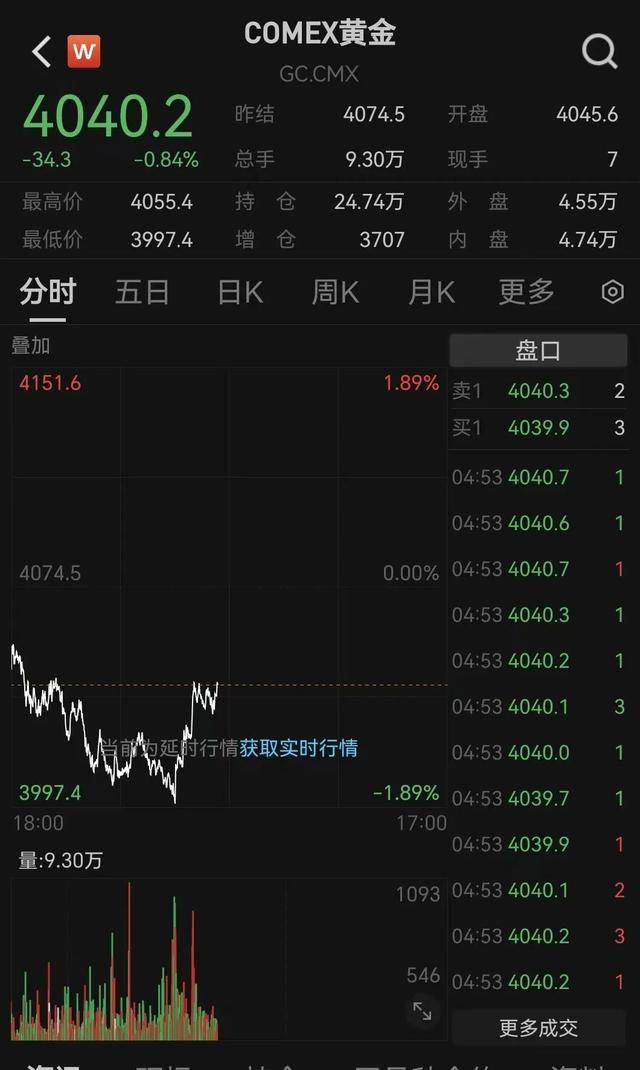
11月22日金价:大家要提前做好准备,下周起,金价可能这样走
Sou Hu Cai Jing· 2025-11-22 16:30
Core Viewpoint - The recent volatility in the gold market, highlighted by a significant drop in gold prices, is primarily driven by the Russian central bank's unexpected sale of gold reserves to address fiscal challenges, alongside changing market expectations regarding the Federal Reserve's interest rate policies [1][5][11]. Market Dynamics - On November 21, gold prices experienced a dramatic fluctuation, peaking at $4088 per ounce before plummeting to a low of $4025.38, marking a single-day movement exceeding $50 [3]. - The London gold price as of November 22 was $4063.94 per ounce, reflecting a slight decline of 0.35% from the previous trading day, while the Shanghai gold market showed an increase of 0.49% to 932.03 yuan per gram, indicating a divergence in market behavior [3][5]. Influencing Factors - The market's reaction to the Federal Reserve's policy changes is crucial, with expectations for a December rate cut dropping from over 90% to 32.8%, while the probability of maintaining current rates rose to 60.4% [3]. - Geopolitical tensions, particularly in the Middle East and the ongoing Russia-Ukraine conflict, continue to create uncertainty, impacting gold's appeal as a safe-haven asset [5][11]. Technical Analysis - Current gold prices are at a critical juncture, with short-term traders' positions concentrated around $4050. A breakout in either direction could trigger significant market reactions [7]. - Analysts predict three potential scenarios for gold prices: a rebound towards $4200, a range-bound movement between $3950 and $4150, or a slight pullback testing support at $3850 to $3900 [9][11]. Institutional Perspectives - Major financial institutions have differing forecasts for gold prices, with UBS raising its mid-2026 target from $4200 to $4500 per ounce, while JPMorgan anticipates an average price of $5055 by the end of 2026 [11]. - The global central bank's gold purchases have provided essential support for gold prices, with China increasing its reserves for 12 consecutive months and a total of 634 tons purchased globally in the first three quarters [5][11]. Investment Strategies - For long-term investors, the focus remains on the ongoing trend of de-dollarization and central bank purchases, suggesting a strategy of accumulating gold during price dips [13]. - Short-term traders should closely monitor Federal Reserve signals and geopolitical developments, establishing clear stop-loss and take-profit levels [13][15]. Market Sentiment - The recent outflow of $1 billion from the largest gold ETF indicates shifting investor sentiment, with some reallocating funds towards equities, particularly in the tech sector [13][20]. - The gold market's volatility reflects broader economic uncertainties, with gold maintaining its status as a traditional safe-haven asset amidst fluctuating market conditions [21].

山金期货贵金属策略报告-20251121
Shan Jin Qi Huo· 2025-11-21 11:08
投资咨询系列报告 山金期货贵金属策略报告 更新时间:2025年11月21日15时44分 一、黄金 报告导读: 今日贵金属震荡回调,沪金主力收跌1.40%,沪银主力收跌3.70%。①核心逻辑,短期避险方面,中美会谈利空兑现,地缘异动风 险仍存;美国就业走弱通胀温和,联储官员偏鹰,降息预期回调。②避险属性方面,中美经贸磋商成果共识公布。俄乌、中东等地 缘异动风险仍存。③货币属性方面,美国9月就业增长超预期,但失业率升至4.4%。美联储官员警示金融稳定风险,12月是否降息 仍存分歧。美联储公布的10月政策会议纪要显示,美联储决策层在上月降息时存在严重分歧。许多官员认为,在2025年剩余时间 内维持利率不变"可能是合适之举"。更多美联储决策者暗示对12月降息持谨慎态度。美国政府结束停摆,市场等待更多经济数 据指引。目前市场预期美联储12月降息25基点概率跌至30%附近。美元指数和美债收益率下行遇阻偏强;④商品属性方面,CRB 商品指数震荡偏弱,人民币贬值利多内价格。⑤预计贵金属短期震荡偏弱,中期高位震荡,长期阶梯上行。 | 策略:稳健者观望,激进者高抛低吸。建议做好仓位管理,严格止损止盈。 | | --- | | 表 ...
9月非农“打脸”市场,却意外点燃12月降息火种,金价暴涨在即?
Sou Hu Cai Jing· 2025-11-21 02:41
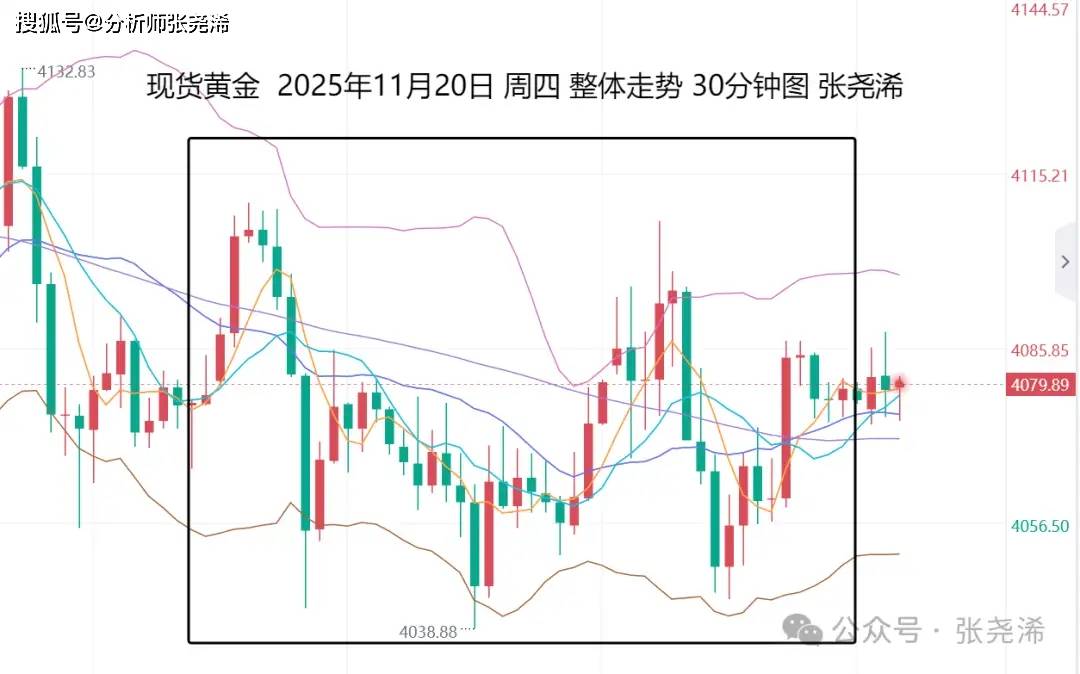
美元指数应声冲高,一度逼近100.35,创下11月5日以来的新高,以美元计价的黄金对海外买家瞬间变 得更贵,金价盘中快速回落近40美元。 汇通财经APP讯——周四(11月20日)现货黄金在剧烈震荡中顽强收稳,收报4077.17美元/盎司,全天 最高冲至4110.03美元,最低跌至4038.82美元,波动幅度超过70美元。这波看似平静的横盘,实则暗流 涌动——美国迟来的9月非农就业报告彻底打乱了市场节奏,既浇灭了部分降息幻想,又因为失业率意 外抬升而重新点燃了鸽派希望。黄金作为最敏感的利率交易品种,再一次站在了风口浪尖。周五(11月 21日)亚市早盘,现货黄金窄幅震荡,目前交投于4085美元/盎司附近,市场目光开始聚焦美国提出的 俄乌和平计划。 9月非农"王炸"来迟:11.9万vs预期5万,夏季疲软只是假象? 因美国政府历史最长时间的停摆,原定10月3日发布的9月非农数据直到11月20日才姗姗来迟。结果直接 把市场吓了一跳:9月非农就业岗位新增11.9万个,是经济学家预测值5万个的两倍多!8月数据也被大 幅下修至-0.4万个。这份迟到却异常强劲的报告瞬间让"美国经济正在硬着陆"的叙事被撕得粉碎。 摩根士丹利当晚 ...
贵金属日评-20251121
Jian Xin Qi Huo· 2025-11-21 01:09
行业 贵金属日评 日期 2025 年 11 月 21 日 宏观金融团队 研究员:何卓乔(宏观贵金属) 021-60635739 hezhuoqiao@ccb.ccbfutures.com 期货从业资格号:F3008762 研究员:黄雯昕(国债集运) 021-60635739 huangwenxin@ccb.ccbfutures.com 期货从业资格号:F3051589 研究员:聂嘉怡(股指) 021-60635735 niejiayi@ccb.ccbfutures.com 期货从业资格号:F03124070 请阅读正文后的声明 每日报告 一、贵金属行情及展望 日内行情: 由于会议纪要显示较多美联储官员在 10 月底会议时即已反对降息,市场对美 联储 12 月会议降息概率从 50%附近骤降至 25%,美元指数则强势反弹至 100 上方, 美联储降息预期降温与美元汇率反弹使得隔夜伦敦黄金冲高后显著回落至 4080 美元/盎司附近,而且市场传言特朗普政府力推 28 点计划,试图联合俄罗斯施压 乌克兰同意停火,这也削弱了贵金属的避险需求。我们判断短期内美联储放缓降 息步伐甚至暂停降息、中美贸易形势边际缓和等利空因素, ...
张尧浠:9月非农好坏参半、金价短期将维持震荡调整
Sou Hu Cai Jing· 2025-11-21 00:44
Core Viewpoint - The international gold price is expected to maintain a period of fluctuation and adjustment in the short term due to mixed signals from the non-farm employment data and ongoing hawkish comments from Federal Reserve officials [1][5][6]. Market Performance - On November 20, gold opened at $4077.91 per ounce, reached a high of $4109.92, and then fell to a low of $4038.65 before closing at $4077.22, with a daily fluctuation of $71.27 [3]. - The market anticipates mixed economic data releases, including the U.S. November PMI and consumer confidence index, which may continue to influence gold prices [3]. Economic Indicators - The strong performance of the September non-farm employment data and the Federal Reserve officials' reluctance to rush into rate cuts have reduced the likelihood of a December rate cut, but this could also be seen as a temporary alleviation of negative factors for gold prices [5]. - Long-term, the Federal Reserve is expected to continue easing policies, indicating that the rate cut cycle remains in play, supported by ongoing geopolitical risks and central bank gold purchases [6]. Technical Analysis - On a weekly basis, gold prices are currently supported by the 10-week moving average, suggesting potential for future strength if this support holds [8]. - The daily chart indicates that gold is in a triangular consolidation pattern, with key resistance at $4230 and support at $3930, guiding trading strategies [9]. Price Levels - Key support levels for gold are identified at $4050 and $4030, while resistance levels are at $4105 and $4130 [10].
贵金属日评-20251120
Jian Xin Qi Huo· 2025-11-20 10:36
行业 贵金属日评 日期 2025 年 11 月 20 日 宏观金融团队 研究员:何卓乔(宏观贵金属) 021-60635739 hezhuoqiao@ccb.ccbfutures.com 期货从业资格号:F3008762 研究员:黄雯昕(国债集运) 021-60635739 huangwenxin@ccb.ccbfutures.com 期货从业资格号:F3051589 研究员:聂嘉怡(股指) 021-60635735 niejiayi@ccb.ccbfutures.com 期货从业资格号:F03124070 请阅读正文后的声明 每日报告 一、贵金属行情及展望 日内行情: 中日紧张形势推高东亚地缘政治风险和贵金属的避险需求,而高频数据显示 联邦政府停摆事件对美国就业市场带来较大冲击,美联储降息预期重新升温进一 步支持贵金属价格,19 日亚盘时段伦敦黄金反弹至 4100 美元/盎司附近。我们判 断短期内美联储放缓降息步伐甚至暂停降息、中美贸易形势边际缓和等利空因素, 与地缘政治风险上升和国际贸易货币体系加速重组等利多因素相平衡,伦敦黄金 需要在 3880-4380 美元/盎司的波动区间内运行更长时间以积累再次突破 ...
黄金狂飙6年涨219%!4380美元历史峰值后,还能继续冲高吗?
Sou Hu Cai Jing· 2025-11-20 07:54
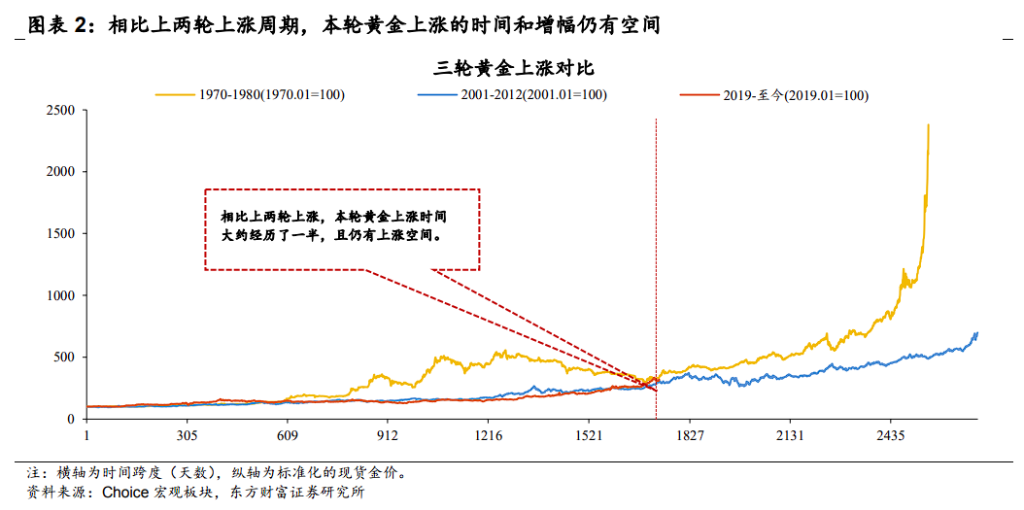
6年狂飙219%:黄金为何"停不下来"? 2025年的黄金市场,用"疯狂"二字形容毫不为过:伦敦现货金价年内飙涨超50%,10月冲上4380美元/盎司的历史峰值,截至11月19日仍稳居4100美元上 方,创下1979年以来最强年度表现。更令人惊叹的是,自2019年启动第三轮上涨周期以来,黄金已连续6年走强,累计涨幅达219%,成为全球资产中"最 亮的星"。然而,站在历史高位,一个关键问题萦绕在投资者心头:黄金的上涨势头还能持续吗?地缘政治、央行购金、实际利率三大变量,将如何左右 未来走势? 3. 实际利率:金价的"隐形推手" 黄金与实际利率呈负相关关系:实际利率越低,持有黄金的机会成本越低,金价越易上涨;反之则承压。2024年,美联储开启降息周期,实际利率下 行,成为金价上涨的重要推手。然而,未来利率路径存在不确定性:若美联储因通胀反弹而暂停降息,甚至重启加息,实际利率可能上行,对金价构成 压制。 未来展望:黄金还能"飞"多高? 黄金的这轮上涨,堪称"教科书级"的慢牛行情。2019年,全球贸易摩擦升级、美联储开启降息周期,黄金从1200美元/盎司起步,开启第一波攻势;2020 年疫情冲击下,全球经济停摆,黄金 ...

黄金惊魂一日:4000美元关口失而复得,多空激战后谁主沉浮?
Sou Hu Cai Jing· 2025-11-20 07:48
Core Viewpoint - The gold market experienced significant volatility on November 18, 2025, with spot gold prices dropping below $4000 per ounce before rebounding due to comments from Federal Reserve Governor Waller supporting interest rate cuts [1][3][4] Group 1: Market Movements - Spot gold prices fell to $3998.2 per ounce, marking the first drop below $4000 since November 10 [3] - COMEX gold futures also declined, reaching a low of $3985.6 per ounce, while silver prices fell below $50 per ounce, with a daily drop exceeding 2% [3] - Following Waller's comments, spot gold rebounded nearly $40, closing at $4038.677 per ounce, while COMEX futures recovered above $4040 [3][4] Group 2: Federal Reserve Policy Impact - Recent hawkish statements from several Federal Reserve officials dampened market expectations for interest rate cuts, with the probability of a December cut dropping from 93.7% to 48.6% [3][4] - Waller's dovish remarks emphasized the need for rate cuts to mitigate risks in the labor market, which reignited bullish sentiment in the gold market [4][5] Group 3: Long-term Outlook - Despite short-term volatility, the long-term bullish outlook for gold remains intact, supported by central bank gold purchases and geopolitical risks [4][6] - Central banks are expected to continue significant gold purchases, with 800 tons acquired in the first three quarters of 2024, a 34% year-on-year increase [4] - Analysts predict gold prices could rise to $4900 by the end of 2026, driven by ongoing demand from both central banks and private investors [4] Group 4: Upcoming Economic Data - The upcoming non-farm payroll report and unemployment rate will be critical for the gold market, as strong employment data could delay rate cuts, while weak data may boost gold prices [5][6] - Other significant events, such as the October CPI data and the European Central Bank's interest rate decision, will also impact the gold market [6]
专访中欧国际工商学院金融学教授黄生:中国企业出海要练好内功
Zhong Guo Jing Ying Bao· 2025-11-20 02:09
中经记者 郝亚娟 夏欣 上海北京报道 在全球经济不确定性加剧和地缘政治风险上升的背景下,中国企业逆势突围,供应链全球布局全面提 速。 德勤统计数据显示,中国企业海外投资规模突破1.5万亿美元,出海模式正从"流量出海"转向"品牌、合 规与组织出海",标志着全球化进入新的发展阶段。 围绕企业出海面临的挑战、路径选择与政策支持等问题,《中国经营报》记者专访了中欧国际工商学院 金融学教授、副教务长兼EMBA课程主任黄生。 企业出海要"因业制宜、因地制宜" 《中国经营报》:当前贸易保护主义抬头,中国企业在"出海"过程中主要会面临哪些阻力或挑战? 黄生:中国企业在"走出去"的过程中,面临的挑战既有外部的,也有内部的,且因企业类型、规模、发 展阶段不同而差异显著。总体而言,外部挑战可从宏观、中观与微观三个层面分析。 第一,宏观层面:地缘政治的不确定性。对于那些已具有丰富海外经验的大型企业而言,最大的挑战来 自地缘政治。例如,一家中国企业在欧洲设有生产基地,而两国关系紧张或出现政策摩擦(如投资审 查、并购限制等),企业就会犹豫是否继续扩大投入。 第二,中观层面:法律法规与劳工制度差异。对于仍处在出海探索阶段、计划在当地建厂或 ...
三轮黄金上涨周期复盘,黄金如何定价?
Hua Er Jie Jian Wen· 2025-11-19 13:56
Core Viewpoint - The current gold price uptrend, which began in 2019, has lasted for six years with a cumulative increase of 219%, raising market concerns about future price movements [1][2]. Group 1: Historical Context - Gold has experienced three major uptrends since 1968, with the first from 1970 to 1980 (highest increase of 2323%) and the second from 2001 to 2012 (highest increase of 599%) [2]. - The current uptrend, starting in 2019, has shown a cumulative increase of 219% over six years, which is shorter in duration compared to previous cycles [3]. Group 2: Monetary Attributes - The dollar has depreciated nearly 100% against gold since 1970, with a 35% decline in 2025 alone, driven by increasing fiscal deficits and monetary supply [9]. - The relationship between the dollar index and gold prices has been negative, with the dollar index dropping nearly 10 percentage points since 2025, benefiting gold prices [9]. - Economic and political uncertainties have increased the U.S. economic policy uncertainty index significantly since early 2025, impacting the dollar's credibility [11]. Group 3: Commodity Attributes - Central bank gold purchases have surged from 255 tons in 2020 to 1089 tons in 2024, with an average annual growth rate of 44%, increasing their share of total demand from 5% to 22% [15]. - Jewelry demand has decreased from approximately 50% before 2020 to 32% in the first three quarters of 2025, indicating a shift in demand dynamics [15]. - Global gold reserves have increased significantly, with European countries showing high reserve ratios, contributing to upward pressure on gold prices [15]. Group 4: Financial Attributes - The traditional negative correlation between real interest rates and gold prices has weakened since 2021, as high inflation distorts real interest rates and enhances gold's anti-inflation properties [22]. - Real interest rates have increased by 213% during the current cycle, contrasting with previous cycles where they remained near zero or negative [38]. - The ratio of the S&P 500 to gold prices is approaching historical averages, suggesting that gold may be fully valued relative to equities, yet still has room for growth compared to previous cycles [22]. Group 5: Key Variables for Future Price Movements - The report identifies three critical variables that will influence future gold prices: geopolitical risks, growth in gold reserves, and changes in real interest rates [25][32]. - The geopolitical risk index has risen by 72% since 2019, reflecting heightened global tensions due to events like the COVID-19 pandemic and the Russia-Ukraine conflict [28][31]. - Global gold reserves have increased by 167% during the current cycle, a significant rise compared to previous periods, indicating a strategic shift among central banks [35].