地方债结存限额

Search documents
5000亿地方债结存限额年末“续力”,今年地方政府债发行规模已突破10万亿
Xin Lang Cai Jing· 2025-12-23 06:01
Group 1 - The issuance of local government bonds in China has exceeded 10 trillion yuan for the first time in history, reaching 10.29 trillion yuan as of December 22, with general bonds at 2.61 trillion yuan and special bonds at 7.68 trillion yuan [1] - The special bonds include 3.09 trillion yuan in refinancing special bonds and 4.59 trillion yuan in new special bonds, indicating a significant focus on refinancing hidden debts [1] - The issuance of special refinancing bonds aimed at repaying existing debts has resumed since August, with over 300 billion yuan issued this year, highlighting ongoing efforts to manage local debt [1] Group 2 - The central government allocated 500 billion yuan from the local government debt limit, with 200 billion yuan designated for new special bonds to support investment and 300 billion yuan for resolving existing project debts [2] - The issuance of new local special bonds has surpassed the initial target of 4.4 trillion yuan for 2025, reaching 4.59 trillion yuan, which is 104.2% of the planned issuance [2] - The adjustment of the debt limit has favored economically strong provinces, with specific allocations disclosed for several regions, indicating a strategic approach to debt management [3] Group 3 - The 500 billion yuan debt limit has become a crucial support for fiscal spending, despite challenges from land finance and short-term revenue pressures, suggesting a potential recovery in fiscal expenditure growth [3] - The proportion of new debt limits allocated to self-auditing provinces is the highest, indicating a shift towards enhancing risk prevention in local debt issuance [3]
【广发宏观吴棋滢】经济大省的投资修复是2026年的关注点之一
郭磊宏观茶座· 2025-11-07 08:30
Core Viewpoint - The article discusses the implementation of a new policy financial tool amounting to 500 billion yuan aimed at supporting major economic provinces in China, highlighting the importance of these provinces in driving economic growth and investment recovery. Group 1: Policy Financial Tool Implementation - A new policy financial tool of 500 billion yuan was fully deployed by the end of October, with significant funding directed towards 12 major economic provinces, accounting for approximately 78%, 72%, and nearly 80% of the total funding from different policy banks [1][5][6] - The Ministry of Finance has allocated a local debt limit of 200 billion yuan specifically for projects in these major economic provinces [1][5] Group 2: Identification of Major Economic Provinces - Major economic provinces are defined as those ranking in the top 12 by GDP for 2024, including Guangdong, Jiangsu, Shandong, Zhejiang, Sichuan, Henan, Hubei, Fujian, Shanghai, Hunan, Anhui, and Beijing, which together represent 69% of the national economic total [2][7] - Adjustments to the special bond management mechanism will allow 10 provinces to conduct "self-initiated self-examination" trials, which aligns closely with the list of major economic provinces [2][8] Group 3: Rationale for Targeting Major Economic Provinces - The focus on major economic provinces is attributed to their relative flexibility in increasing infrastructure investment amid debt constraints faced by other provinces [3][8] - The "14th Five-Year Plan" emphasizes the role of major economic provinces as growth poles, encouraging them to lead in the modernization process [3][8] Group 4: Economic Performance and Investment Trends - In the first three quarters of the year, GDP growth reached 5.2%, with notable strengths in exports and industrial production, while fixed asset investment showed a decline of 0.5% year-on-year [4][9] - Major economic provinces exhibited significant investment shortfalls, with Guangdong's fixed asset investment down 14.1%, the lowest in the country, and other provinces like Jiangsu and Hunan also showing declines [4][9][10] Group 5: Future Investment Recovery Potential - If fixed asset investment growth in provinces like Guangdong, Jiangsu, Zhejiang, Anhui, Shandong, and Hunan can return to the average level of 2024 (approximately 1.4%), it could contribute an estimated 0.5 percentage points to overall fixed asset investment growth [4][13] - A recovery to the 2023 average level (approximately 3.3%) could boost fixed asset investment by about 1.2 percentage points, while aligning with GDP growth (around 5%) could lead to a 1.8 percentage point increase [4][13]


政策与大类资产配置周观察:翘首十五五规划出炉
Tianfeng Securities· 2025-10-22 08:13
Domestic Policy News - President Xi Jinping emphasized the importance of women's development at the Global Women's Summit, highlighting women's roles as creators and transmitters of civilization [9] - The State Council, led by Premier Li Qiang, focused on reducing logistics costs and promoting green trade during a recent meeting, aiming to enhance the modern logistics system [10][11] - The Ministry of Finance announced a limit of 500 billion yuan for local government debt to support the resolution of existing debts and promote effective investment [21] International Policy News - The IMF projected a 3.2% growth for the global economy in 2025, while noting signs of a significant slowdown in the US economy [16][20] - The recent IMF and World Bank meetings highlighted concerns over rising trade tensions and their potential impact on global economic stability [19] Equity Market Analysis - The A-share market saw a slight decline, with the ChiNext and CSI 500 indices dropping over 5%, while the Shenzhen Component Index fell by 4.34% [22] - The China Securities Regulatory Commission revised the Corporate Governance Code to enhance the governance standards of listed companies, effective January 1, 2026 [23][24] Fixed Income Market Analysis - The central bank conducted a net withdrawal of 69.79 billion yuan in the open market, maintaining liquidity above 1.4% [40] - The Ministry of Finance's announcement to allocate 500 billion yuan from local government debt limits aims to support local fiscal stability and effective investment [42] Commodity Market Analysis - The prices of non-ferrous metals declined, while precious metals saw a rebound; the overall commodity market showed mixed trends post-holiday [3] - The National Development and Reform Commission issued guidelines to support energy-saving and carbon reduction investments in key industries [11] Foreign Exchange Market Analysis - The US dollar index weakened to 98.56, while the Chinese yuan appreciated to 7.13, reflecting a 0.29% weekly increase [4] - The central bank emphasized the market's decisive role in exchange rate formation, amid ongoing trade tensions with the US [4]
【申万固收|地方债周报】5000亿元结存限额下达,四季度地方债发行或继续放量——地方债周度跟踪20251017
申万宏源证券上海北京西路营业部· 2025-10-21 02:52
Core Viewpoint - The article discusses the issuance and management of local government bonds in China, highlighting a limit of 500 billion yuan for the remaining balance and the expectation of continued issuance in the fourth quarter [2] Group 1: Local Government Bond Issuance - A total of 500 billion yuan has been set as the limit for the remaining balance of local government bonds [2] - The fourth quarter is anticipated to see an increase in local government bond issuance, potentially leading to a higher volume compared to previous quarters [2] Group 2: Market Implications - The increase in local government bond issuance may have implications for liquidity in the market, affecting interest rates and investment strategies [2] - Investors should monitor the trends in local government bond issuance as it may signal broader economic conditions and fiscal policies [2]

5000亿元结存限额下达,四季度地方债发行或继续放量:地方债周度跟踪20251017-20251019
Shenwan Hongyuan Securities· 2025-10-19 12:50
Report Information - Report Title: 500 billion yuan of carry - over quota issued, local bond issuance may continue to soar in Q4 - Local Bond Weekly Tracking 20251017 [1] - Report Date: October 19, 2025 - Analysts: Huang Weiping, Yang Xuefang [1] 1. Investment Rating of the Reported Industry No investment rating information for the industry is provided in the report. 2. Core Views - The central government has allocated 500 billion yuan of carry - over quota to local governments, and local bond issuance may continue to increase in the fourth quarter. Compared with last year, this allocation has increased in scale and expanded in scope. The 500 billion yuan may be issued through both new special bonds and special refinancing bonds, and policy support will drive the growth of local bond issuance in Q4 [2]. - The current issuance progress of new bonds is slow, with the cumulative issuance progress lower than that of 2023 and 2024. The planned issuance scale of local bonds in October - November 2025 is 923.4 billion yuan, with 507.3 billion yuan for new special bonds [2]. 3. Summary According to the Directory 3.1 This Period's Local Bond Issuance Declined and the Weighted Issuance Term Lengthened - This period (October 13 - 19, 2025) local bonds totaled 32.301 billion yuan in issuance and - 19.781 billion yuan in net financing (last period was 82.528 billion yuan/39.784 billion yuan), and the next period (October 20 - 26, 2025) is expected to issue 247.228 billion yuan and have a net financing of 165.751 billion yuan [2][6]. - The weighted issuance term of local bonds this period was 16.21 years, longer than 12.93 years in the previous period (September 29 - October 12, 2025) [2][6][8]. - As of October 17, 2025, the cumulative issuance of new general bonds/new special bonds accounted for 83.9% and 83.4% of the annual quota respectively. Considering the expected issuance in the next period, it will be 84.1% and 86.0%. This progress is lower than that of 2023 and 2024 [2][10][12]. - As of October 17, 2025, 28 regions have disclosed a planned issuance scale of 923.4 billion yuan for local bonds in October - November 2025 (542.3 billion yuan in October and 381.1 billion yuan in November), including 507.3 billion yuan for new special bonds (366.3 billion yuan in October and 141 billion yuan in November) [2][17][18]. - As of October 17, 2025, the cumulative issuance of special new special bonds was 1206 billion yuan (3.1 billion yuan issued this period); the cumulative issuance of special refinancing bonds for replacing hidden debts was 1992.4 billion yuan (6.2 billion yuan issued this period), with an issuance progress of 99.6%. 32 regions including Zhejiang have completed issuance, and Hubei was added this period [2]. 3.2 This Period's 10 - year Local Bond - Treasury Spread Narrowed, 30 - year Spread Widened, and the Weekly Turnover Rate Rose - As of October 17, 2025, the 10 - year and 30 - year local bond - treasury spreads were 20.54BP and 17.98BP respectively, narrowing by 4.40BP and widening by 0.26BP compared to October 11, 2025, and were at the 58.80% and 70.20% historical quantiles since 2023 [2][22][24]. - This period's local bond weekly turnover rate was 0.56%, up from 0.35% in the previous period [2][30]. - This period, the 7 - 10 - year local bond yields and liquidity in regions such as Dalian, Qinghai, and Ningxia were better than the national average [2].
地方债周度跟踪:5000亿元结存限额下达,四季度地方债发行或继续放量-20251019
Shenwan Hongyuan Securities· 2025-10-19 12:13
1. Report Industry Investment Rating No relevant content provided. 2. Core Viewpoints of the Report - Recently, the central government has allocated 500 billion yuan in remaining quota to local governments, and local bond issuance may continue to increase in the fourth quarter. Compared with last year, this arrangement has increased in intensity and expanded in scope. Based on policy statements, the 500 billion yuan may be issued through both new special bonds and special refinancing bonds, and local bond issuance may continue to rise in the fourth quarter [2]. - The issuance and net financing of local bonds in the current period decreased compared to the previous period, but are expected to increase significantly in the next period. The weighted issuance term of local bonds in the current period has lengthened. As of October 17, 2025, the cumulative issuance progress of new general bonds and new special bonds is slower than in 2023 and 2024. The planned issuance scale of local bonds from October to November 2025 is 923.4 billion yuan, with new special bonds accounting for 507.3 billion yuan. Special new special bonds and special refinancing bonds for replacing implicit debts were issued in the current period, and the issuance progress of special refinancing bonds has reached 99.6%. The spread between 10Y local bonds and treasury bonds narrowed, while the spread between 30Y local bonds and treasury bonds widened, and the weekly turnover rate increased [3]. 3. Summary According to the Table of Contents 3.1 This Period's Local Bond Issuance Volume Decreased, and the Weighted Issuance Term Lengthened - The total issuance/net financing of local bonds in the current period (October 13 - October 19, 2025) was 32.301 billion yuan / -19.781 billion yuan, compared with 82.528 billion yuan / 39.784 billion yuan in the previous period. The expected issuance/net financing in the next period (October 20 - October 26, 2025) is 247.228 billion yuan / 165.751 billion yuan. The weighted issuance term of local bonds in the current period was 16.21 years, longer than the 12.93 years in the previous period [3][10]. - As of October 17, 2025, the cumulative issuance of new general bonds/new special bonds accounted for 83.9% and 83.4% of the annual quota respectively, and is expected to be 84.1% and 86.0% considering the next - period's expected issuance. The cumulative issuance progress in 2024 was 85.1%/90.1% and 87.6%/94.6%, and in 2023 was 90.1%/87.9% and 90.1%/89.0% [3][20]. - As of October 17, 2025, 28 regions have disclosed a planned issuance scale of local bonds of 923.4 billion yuan from October to November 2025 (542.3 billion yuan in October and 381.1 billion yuan in November), with new special bonds accounting for 507.3 billion yuan (366.3 billion yuan in October and 141 billion yuan in November). The issuance in the same regions and the whole country in the same period last year was 1424.8 billion yuan and 267.5 billion yuan, and 1997.2 billion yuan and 382.8 billion yuan respectively [3][24]. - As of October 17, 2025, the cumulative issuance of special new special bonds was 1206 billion yuan (3.1 billion yuan issued in the current period); the cumulative issuance of special refinancing bonds for replacing implicit debts was 1992.4 billion yuan (6.2 billion yuan issued in the current period), with an issuance progress of 99.6%. 32 regions including Zhejiang have completed the issuance (Hubei was added in the current period) [3]. 3.2 This Period's Spread between Local Bonds and Treasury Bonds Narrowed for 10Y and Widened for 30Y, and the Weekly Turnover Rate Increased - As of October 17, 2025, the spreads between 10 - year and 30 - year local bonds and treasury bonds were 20.54BP and 17.98BP respectively, narrowing by 4.40BP and widening by 0.26BP compared to October 11, 2025. They were at the 58.80% and 70.20% historical quantiles since 2023 respectively [3]. - The weekly turnover rate of local bonds in the current period was 0.56%, an increase from 0.35% in the previous period. The yields and liquidity of 7 - 10Y local bonds in regions such as Dalian, Qinghai, and Ningxia were better than the national average [3].
2025年9月财政数据点评:如何解读前三季度财政数据?
EBSCN· 2025-10-18 13:41
Revenue and Expenditure Trends - From January to September 2025, the cumulative year-on-year growth rate of general public budget revenue was +0.5%, up from +0.3% in the previous period[1] - Cumulative year-on-year growth rate of general public budget expenditure remained at +3.1%[1] - Government fund budget revenue showed a cumulative year-on-year decline of -0.5%, improving from -1.4% previously[1] September Fiscal Performance - In September, general public budget revenue increased by 2.58% year-on-year, a recovery from the previous month[3] - Central government revenue grew by 3.47% year-on-year, while local government revenue increased by 1.96%[3] - Tax revenue in September rose by 8.66% year-on-year, marking a significant improvement[5] Tax Revenue Breakdown - Domestic consumption tax increased by 3.83% year-on-year, with vehicle purchase tax rising by 8.53%[4] - Corporate income tax saw a year-on-year growth of 19.59%, although it was a decline from the previous month[5] - Personal income tax grew by 16.68% year-on-year, reflecting a strong performance[5] Government Fund Budget Insights - Government fund budget revenue in September improved to +5.6% year-on-year from -5.7%[22] - Cumulative progress for government fund budget revenue was 49.1%, below the five-year average of 54.4%[22] - Cumulative expenditure progress for government fund budgets was 60.0%, above the five-year average of 56.1%[22] Special Debt Issuance - By September 2025, the issuance of new local special bonds reached 3.68 trillion yuan, completing 83.6% of the annual plan[31] - The acceleration of fund activation post-special bond issuance is expected to improve liquidity and stabilize infrastructure investment growth[31]
财政部:四季度加码5000亿元
2 1 Shi Ji Jing Ji Bao Dao· 2025-10-18 03:40
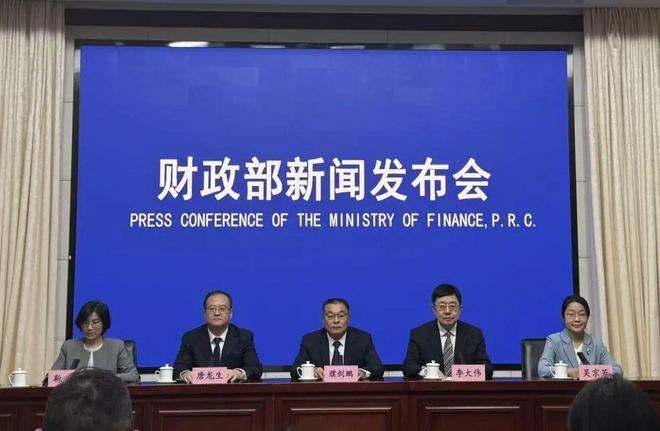
Core Insights - The Ministry of Finance reported that the general public budget revenue for the first three quarters reached 16.39 trillion yuan, a year-on-year increase of 0.5%, while expenditure was 20.8 trillion yuan, up 3.1% [3][5] - The increase in fiscal revenue is attributed to a stable economic performance and the implementation of proactive fiscal policies, including significant growth in government fund expenditures [3][8] - The Ministry announced the allocation of 500 billion yuan from local government debt limits to support debt resolution and expand investment [10][11] Revenue and Expenditure - General public budget revenue for the first three quarters was 16.39 trillion yuan, with tax revenue at 13.27 trillion yuan (up 0.7%) and non-tax revenue at 3.12 trillion yuan (down 0.4%) [5][6] - The revenue growth reflects a recovery in tax revenue, with notable increases in value-added tax and personal income tax, while non-tax revenue saw its first negative growth of the year [5][6][7] Sector Performance - Tax revenue growth was driven by key sectors, with notable increases in the computer and communication equipment manufacturing (12%), electrical machinery (8.3%), and scientific research services (13.4%) [7] - The decline in land sales revenue has narrowed, with government fund budget revenue at 3.07 trillion yuan, down 0.5%, and land use rights revenue at 2.23 trillion yuan, down 4.2% [7][8] Fiscal Policy Measures - The Ministry of Finance emphasized the importance of proactive fiscal policies, with significant allocations for social security, education, and health sectors, achieving the highest growth rates in three years for these areas [8] - The announcement of 500 billion yuan in local debt limits aims to support local governments in resolving existing debts and enhancing investment in key projects [10][11]
财政部:四季度加码5000亿元
21世纪经济报道· 2025-10-18 03:34
Core Viewpoint - The Ministry of Finance reported a slight increase in public budget revenue and a notable rise in expenditure for the first three quarters of 2023, indicating a proactive fiscal policy aimed at supporting economic recovery and investment expansion [3][5][8]. Revenue Summary - Total public budget revenue reached 16.39 trillion yuan, a year-on-year increase of 0.5%, with tax revenue at 13.27 trillion yuan (up 0.7%) and non-tax revenue at 3.12 trillion yuan (down 0.4%) [5][6]. - Tax revenue growth was driven by a rebound in major tax categories, with notable increases in personal income tax (up 9.7%) and value-added tax (up 3.6%) [6][7]. - Non-tax revenue decline was primarily due to a drop in penalty income, which fell by 7% [5][6]. Expenditure Summary - Total public budget expenditure was 20.8 trillion yuan, reflecting a year-on-year increase of 3.1% [3][8]. - Government fund expenditure saw a significant rise of 23.9%, supported by the issuance of special bonds and other financial instruments [3][8]. - Key areas of expenditure included social security, education, health, and technology, all showing the highest growth rates in three years [8]. Debt Management and Future Policies - The Ministry of Finance announced the allocation of 500 billion yuan from local government debt limits to support debt resolution and investment expansion [9][10]. - Plans for 2026 include an early allocation of local government debt limits, with a total of 5.2 trillion yuan in new local bonds expected [10][11]. - The focus will be on addressing existing debts and supporting major projects to ensure stable local government finances [12].