就业压力

Search documents
专家说出实话:上海、深圳等一线城市,出现4大怪象,提前准备!
Sou Hu Cai Jing· 2026-01-20 04:53
Core Viewpoint - The article discusses the significant changes in social behavior and economic conditions in major cities like Shanghai and Shenzhen, highlighting the increasing trends of young people choosing not to marry or have children, the challenging job market, rising traffic congestion, and exorbitant housing prices. Group 1: Marriage and Birth Rates - The marriage rate in China has declined from approximately 9‰ in 2015 to around 4.3‰ in 2024, while the birth rate has dropped from 11.99‰ in 2015 to 6.77‰ in 2024, indicating a rising trend of "non-marriage and non-childbearing" among the post-90s and post-00s generations [5][8]. - The high cost of housing and raising children in first-tier cities is a significant deterrent for young people considering marriage and parenthood [11][13]. - Parents from the 70s and 80s are becoming less insistent on their children marrying and having children, recognizing the pressures faced by the younger generation [15][17]. Group 2: Employment Challenges - The youth unemployment rate for ages 16-24 once exceeded 20%, marking a historical high, reflecting the increasing difficulty for young people to find jobs [20][22]. - The number of college graduates has consistently surpassed 10 million annually, leading to an oversupply in the job market, while traditional industries are contracting and new technologies like AI are replacing certain jobs [22][24]. - Young job seekers often face challenges such as unresponsive job applications and low salary offers, contributing to a sense of instability in employment [24]. Group 3: Traffic Congestion - Major cities like Shanghai and Shenzhen are experiencing severe traffic congestion, with the number of registered vehicles in Shanghai nearing 5.9 million, while road infrastructure has not expanded correspondingly [33][35]. - Average commuting times in Shenzhen are around 36 minutes, but many residents experience over an hour of travel each way, highlighting the daily struggles with traffic [37]. - Cities are implementing technological solutions to alleviate congestion, such as AI traffic management systems, but individuals are advised to consider their commuting choices to improve their quality of life [39][41]. Group 4: Housing Prices - Housing prices in first-tier cities remain extremely high, with average prices in cities like Shenzhen, Beijing, and Shanghai reaching 30,000 yuan per square meter or more [43][45]. - The housing price-to-income ratio in many first-tier cities exceeds reasonable levels, with Shenzhen's ratio approaching 30, indicating that ordinary families would need to save for decades to afford a home [47]. - The rental yield for residential properties in these cities is generally below 2%, suggesting that property values are primarily driven by appreciation expectations rather than actual rental income [48].


世界银行:全球经济韧性超出预期,穷国和富国收入差距拉大
2 1 Shi Ji Jing Ji Bao Dao· 2026-01-15 05:41
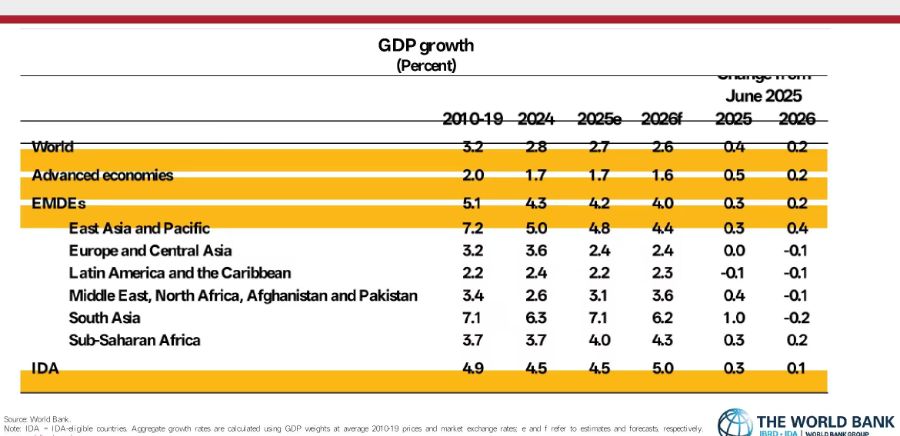
Group 1 - The World Bank projects that the GDP growth for developing economies will slow from 4.2% in 2025 to 4% in 2026, with a slight recovery to 4.1% in 2027 due to easing trade tensions and improved financial conditions [4] - By 2026, the per capita income growth for developing economies is expected to be 3%, which is approximately 1 percentage point lower than the average growth rate from 2000 to 2019, resulting in per capita income reaching only 12% of that of developed economies [4][3] - The report indicates that by the end of 2025, nearly all developed economies will have surpassed their per capita income levels from 2019, while about one-quarter of developing economies will still be below that level [3] Group 2 - The World Bank's latest Global Economic Outlook report highlights that global economic resilience has exceeded expectations despite ongoing trade tensions and policy uncertainties, with a forecasted global growth rate of 2.6% in 2026 [3] - The chief economist of the World Bank emphasizes the need for governments in both emerging and developed economies to actively promote private investment and trade, while managing public spending and increasing investment in new technologies and education to avoid stagnation and unemployment [4] - The report suggests that the upcoming decade will see 1.2 billion young people entering the labor force in developing economies, which may exacerbate employment pressures, necessitating comprehensive policy actions to enhance productivity and employment capacity [5]
对话李燕萍:“考公热”深刻塑造一代年轻人
经济观察报· 2025-12-14 04:51
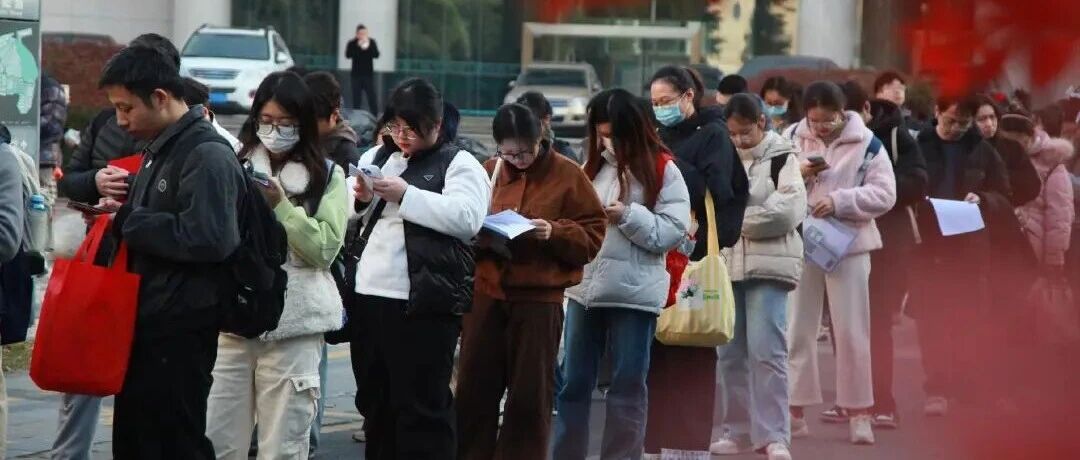
Core Viewpoint - The increasing trend of civil service examinations among young people is a rational risk management decision based on current employment conditions, rather than a sign of lost dreams or conservatism [1][4][11]. Group 1: Examination Trends - The number of candidates for the national civil service examination surpassed that of graduate school entrance examinations for the first time in history in 2026, with a significant increase from 157.6 million in 2021 to 371.8 million in 2026, marking a growth rate of 235.9% [2][4]. - In contrast, the number of graduate school applicants has been declining rapidly, with a drop from a peak of 4.74 million in 2023 to 3.43 million in 2026, a decrease of over 1.3 million [2][4]. Group 2: Competitive Landscape - The competition for civil service positions is intense, with an admission ratio of approximately 98:1 for the national examination compared to 3.2:1 for graduate school [4]. - The phenomenon of "civil service examination fever" reflects a broader societal anxiety that transcends age and class, indicating a shift from a growth-oriented mindset to one focused on job security and stability [4][19]. Group 3: Long-term Implications - The long-term effects of failing the civil service examination can lead to significant career disadvantages, including lower starting salaries and limited advancement opportunities, as candidates return to the job market with gaps in their resumes [6][8]. - The current employment pressure is characterized as a systemic anxiety affecting various demographics, including young graduates and middle-aged workers, indicating a shift away from the belief that hard work guarantees better outcomes [19]. Group 4: Changing Definitions of "Good Jobs" - The definition of a "good job" has shifted from seeking high growth opportunities to prioritizing job security and stability, reflecting a broader change in societal values and economic conditions [9][11]. - The current job market emphasizes the importance of practical skills and experience over academic credentials, leading to a more competitive environment for graduates [23][24]. Group 5: Structural Employment Issues - There exists a structural mismatch in the job market, where the increase in job postings does not align with the expectations of recent graduates, leading to a perception of difficulty in finding suitable employment [13][14]. - The employment landscape is increasingly complex, with various groups, including young graduates, middle-aged workers, and small business owners, facing unique challenges that contribute to a pervasive sense of job insecurity [19][18].
对话李燕萍:“考公热”深刻塑造一代年轻人
Jing Ji Guan Cha Bao· 2025-12-14 03:44
Group 1 - The number of candidates for the National Examination (国考) surpassed that of the Graduate Entrance Examination (考研) for the first time in history in 2026, with 371.8 million candidates for the National Examination compared to 343 million for the Graduate Entrance Examination, marking a significant shift in trends [1] - The National Examination has seen a rapid increase in candidates from 157.6 million in 2021 to 371.8 million in 2026, representing a growth rate of 235.9% [1] - The competition for the National Examination is intense, with a reported admission ratio of approximately 98:1, compared to a ratio of 3.2:1 for graduate studies [1] Group 2 - The phenomenon of "考公热" (the craze for civil service exams) is not indicative of young people losing their dreams but rather reflects a rational decision-making process in response to current employment pressures [2][3] - The long-term impact of the "考公热" may reshape career trajectories and influence the economic structure, as individuals face opportunity costs and potential career stagnation due to failed attempts at civil service exams [3][4] - The current employment pressure is characterized as a systemic anxiety affecting various demographics, leading to a chain reaction that exacerbates job scarcity and economic challenges [14] Group 3 - The definition of a "good job" has shifted from seeking growth opportunities to prioritizing job security, reflecting a broader change in societal values and economic conditions [6] - The increase in job postings does not correlate with the expectations of recent graduates, as many positions are concentrated in lower-tier roles, leading to a mismatch between job availability and graduate aspirations [7][9] - The current employment landscape is marked by a structural contradiction where the growth in job postings does not meet the expectations of graduates, resulting in a perception of difficulty in finding suitable employment [9][10] Group 4 - The decline in graduate school applications from 2024 to 2026 is attributed to an oversupply of master's graduates and a shift in employer expectations towards practical skills over academic credentials [16][17] - The competition for graduate programs remains intense at top-tier universities, while some less prestigious institutions face declining enrollment in certain fields [18] - The changing landscape of employment has led to a more pragmatic approach among students and parents regarding the value of graduate education, emphasizing the importance of skills and experience over mere academic qualifications [17][18]
惠普盈利却裁员,6000人被淘汰,机器人上岗潮来临,员工前路难测
Sou Hu Cai Jing· 2025-11-29 23:16
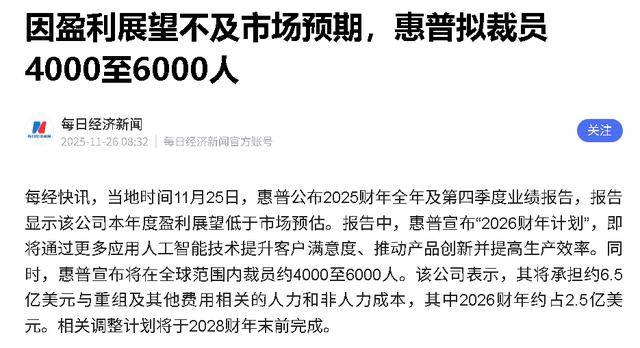
Core Insights - HP announced significant layoffs of 4,000 to 6,000 employees despite reporting increased revenue and strong sales in personal computers, highlighting a disconnect between profitability and workforce stability [1][4] - The trend of layoffs is not isolated to HP; other tech giants like Amazon, Microsoft, and Intel are also reducing their workforce despite good financial performance, indicating a broader industry shift [4][5] - The drive for efficiency and cost-cutting is being fueled by investor pressure, leading companies to prioritize productivity over headcount [7][9] Group 1: Layoff Trends - HP's decision to cut jobs comes after previous layoffs, reflecting a growing trend in the tech industry where companies are downsizing even when they are financially healthy [1][4] - The layoffs are particularly affecting older employees who may find it challenging to adapt to the changing job market [1][2] Group 2: Impact of Technology - The rise of AI and automation is replacing many traditional roles, allowing companies to operate with fewer employees while maintaining or increasing efficiency [9][11] - Companies are increasingly relying on technology to handle tasks that previously required human labor, leading to a significant reduction in the workforce [9][11] Group 3: Employment Landscape - The job market is becoming increasingly competitive, with many individuals forced into freelance work as traditional job security diminishes [11][13] - There is a growing need for workers to acquire new skills to remain employable, as the demand for high-skilled positions rises [11][13] Group 4: Societal Implications - The rapid changes in the job market due to technological advancements are creating significant pressure on individuals and families, necessitating a collective response from government and businesses to support workforce retraining [13][16] - The challenge lies in ensuring that technology serves to enhance human capabilities rather than replace them, which is crucial for future employment stability [16]


别只盯着房价了!一个更大的雷正在逼近,普通人更危险……
Sou Hu Cai Jing· 2025-11-29 14:42
Core Viewpoint - The real estate market is experiencing significant declines in both new and second-hand housing prices, with major cities not being immune to this trend, leading to a broader economic impact [3][4][10]. Group 1: Housing Market Trends - Recent data from 70 cities indicates that both new and second-hand housing prices have reached record declines this year, with first-tier cities also experiencing downturns [3][4]. - The decline in housing prices has created a domino effect, where one area's price drop forces neighboring areas to adjust their prices downward, resulting in a vicious cycle [4]. Group 2: Policy Effectiveness - The effectiveness of government policies aimed at stabilizing the housing market is being tested, as multiple measures have not yielded the expected market responses [4][6]. - The tools available for policy intervention are diminishing, with market reactions to new policies becoming shorter and less effective over time [6]. Group 3: Economic Ripple Effects - The decline in housing prices is causing a ripple effect throughout the economy, with significant drops in retail sales growth and negative growth in fixed asset investment [7]. - Industries related to real estate, such as renovation, furniture, and building materials, are facing severe downturns, leading to reduced orders and income for workers [7]. Group 4: Employment Concerns - The job market is under pressure, with a record number of college graduates expected next year and a decrease in manufacturing job demand [9]. - The real estate sector, which employs millions, is cooling down, threatening the income stability of many workers in related fields [9]. Group 5: Financial Risks - The banking sector is facing rising bad debt rates, which could worsen if housing prices continue to decline, creating a negative feedback loop affecting credit availability and economic stability [10]. - Concerns are growing about the potential for a downward spiral where falling property values lead to reduced credit, further exacerbating economic downturns [10]. Group 6: Future Outlook - The real estate market is undergoing a deep adjustment that may take longer than anticipated, necessitating precise policy measures to stabilize the economy and protect employment [13][14]. - The focus should be on meeting housing demands effectively while fostering new economic growth points to navigate through this challenging period [13].

鲍威尔放鸽就万事大吉了?财政压力更值得关注!【纽约Talk 14】
Hua Er Jie Jian Wen· 2025-08-25 11:49
Group 1 - Federal Reserve Chairman Powell unexpectedly released dovish signals at the Jackson Hole meeting, leading to a significant rise in the three major U.S. stock indices [2] - Powell's shift in focus from inflation to employment pressures raises questions about the Fed's stance in September [2] - The implications of potential interest rate cuts on U.S. fiscal health are being debated [2] Group 2 - The upcoming content will cover macroeconomic strategies for the 2025 market and new opportunities in the commodity market for 2024 and 2025 [4] - Insights into the behavior of sovereign funds and their impact on the market will also be discussed [4]

穆迪首席经济学家:美国经济正处于衰退边缘
news flash· 2025-08-03 22:31
Core Viewpoint - Moody's chief economist Mark Zandi warns that the US economy is on the brink of recession due to a series of weak economic data and stagnation in consumer spending [1] Economic Indicators - Recent indicators show economic stagnation, with consumer spending at a standstill and declines in construction and manufacturing sectors [1] - Employment is expected to weaken, with signs of a significant freeze in hiring and a reduction in average working hours [1] Inflation and Policy Impact - High inflation complicates potential policy support from the Federal Reserve, impacting overall economic stability [1] - Zandi attributes much of the current economic slowdown to policy choices in Washington, including tariffs that erode corporate profits and household purchasing power [1] Labor Market Dynamics - The unemployment rate remains low primarily due to stagnant labor growth, a decrease in immigrant labor, and a declining labor participation rate [1] - The reduction in immigration limits the overall growth potential of the economy [1]
“本升专”的年轻人,比你想象中清醒
Hu Xiu· 2025-07-23 00:37
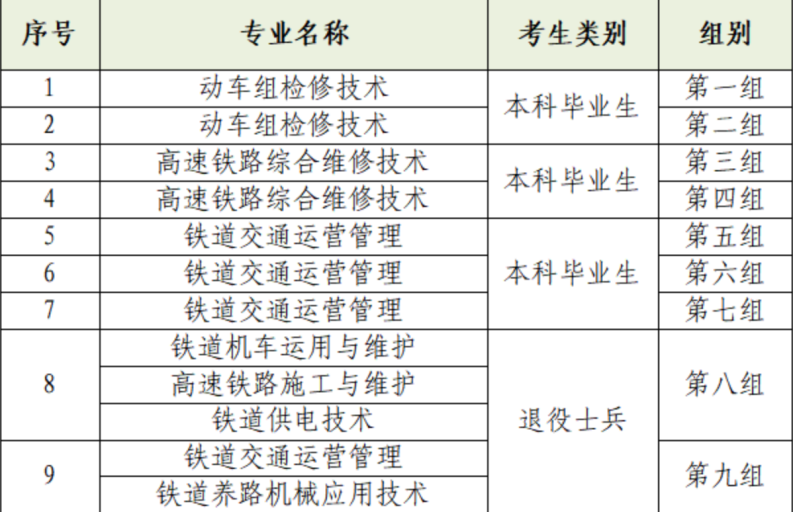
Core Viewpoint - The emergence of "本科生回炉" (undergraduate students returning to vocational schools) is gaining attention, particularly with Zhengzhou Railway Vocational and Technical College's 2025 enrollment plan that specifies certain programs will only accept undergraduate graduates, leading to a phenomenon referred to as "本升专" (undergraduate to vocational) [1][3]. Group 1: Enrollment Trends - Zhengzhou Railway Vocational and Technical College has increased its enrollment of undergraduate students from 30 in 2022 to a planned 135 in 2023, highlighting a growing trend of undergraduates seeking vocational education [2]. - Other vocational institutions, such as Guangdong Lingnan Vocational Technical College and Shandong Qingdao Technician College, have also started offering programs specifically for undergraduates looking to retrain [3]. Group 2: Employment Challenges - A report by Zhilian Recruitment indicates that undergraduates face difficulties in the job market, where positions requiring higher education often favor master's and doctoral candidates, while practical skill-based roles are better suited for vocational graduates [4]. - The increasing pressure of employment has led many undergraduates to consider vocational training as a viable path to transition into more stable job opportunities [5]. Group 3: Student Experiences - Interviews with students who returned to vocational training reveal motivations such as job security and the desire to acquire practical skills that are in demand [6]. - Students enrolled in "订单班" (order classes) report mixed experiences, with some finding the promised job placements to be less reliable than advertised, often resulting in labor contracts rather than direct employment [19][23]. Group 4: Industry Insights - The trend of undergraduates pursuing vocational education reflects a broader shift in the labor market, where blue-collar jobs are becoming increasingly attractive due to competitive salaries and job stability [41]. - The average monthly salary for blue-collar workers has risen significantly, indicating a narrowing wage gap between blue-collar and white-collar jobs, which may further encourage undergraduates to seek vocational training [41].
军警院校成新“顶流”,部分录取线逼近顶尖985
3 6 Ke· 2025-07-22 10:13
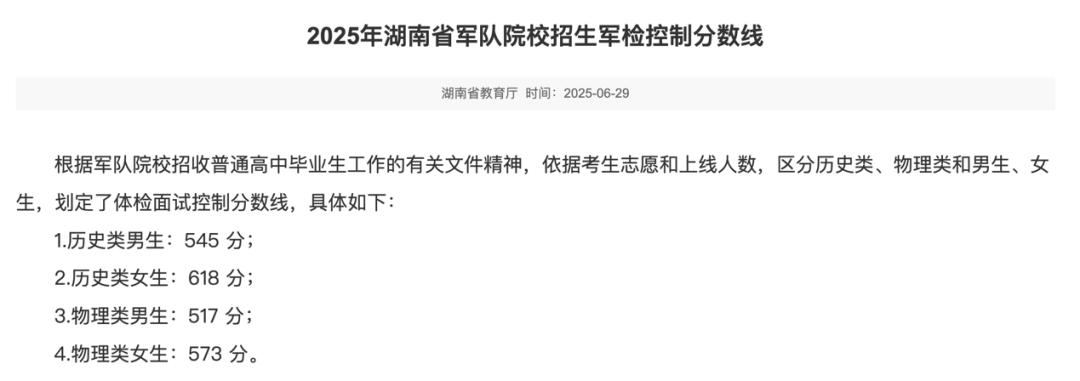
Group 1 - The core viewpoint of the articles highlights the increasing popularity of military and police academies among students due to rising admission scores and job security concerns amid a challenging employment landscape [1][2][3][26]. - The admission scores for military and police academies have significantly increased, with the highest score reaching 671 points for the National University of Defense Technology, closely approaching the scores of top universities like Tsinghua and Peking University [1][16][24]. - The employment situation for graduates is becoming increasingly dire, with 12.22 million graduates entering the job market this year, leading students to prioritize stable job opportunities [4][28]. Group 2 - Data shows that the offer acquisition rate for recent graduates is lower for bachelor's and master's degree holders compared to those with associate degrees, prompting students to consider "iron rice bowl" jobs in military and police sectors [5][28]. - The National University of Defense Technology and various police academies have reported high admission rates and full enrollment, indicating strong demand for these programs [8][9][10][29]. - The employment rate for graduates from police academies is notably high, with some institutions reporting a graduation employment rate of 99.44% for police-related majors, significantly higher than the average for other fields [29][30]. Group 3 - The trend of students choosing military and police academies reflects a shift in priorities towards job stability and security, as evidenced by the increasing scores and enrollment in these institutions [26][27]. - Other institutions, such as Shanghai Customs College and Beijing Electronic Technology College, are also gaining popularity due to their high employment rates and perceived job security, further diversifying the landscape of higher education choices [31][37]. - The articles emphasize that the focus on stable employment is reshaping the decision-making process for students when filling out college applications, with many opting for programs that promise better job prospects [28][39].