
弱势美元

Search documents
汇市动荡加剧!特朗普“弱势美元”预期引发期权交易“返场”
Hua Er Jie Jian Wen· 2026-02-05 12:03
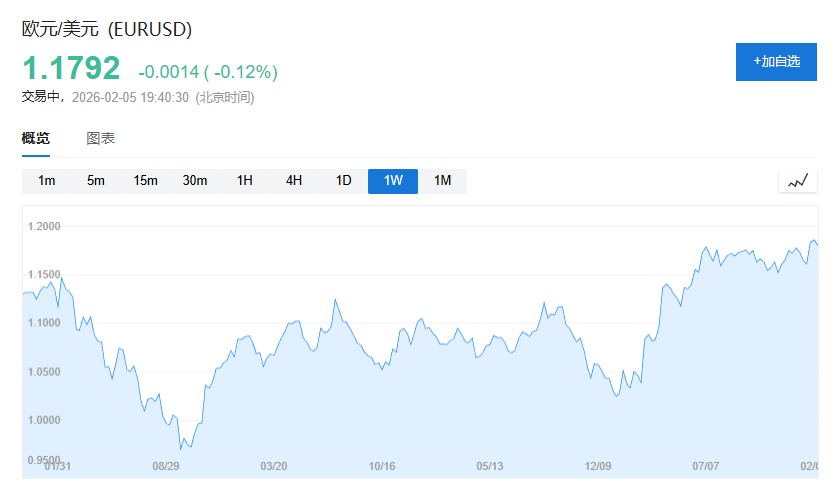
Core Insights - The global forex market, valued at $9.6 trillion, is experiencing a resurgence in volatility, providing trading opportunities for market participants [1] - The U.S. dollar has fallen to a four-year low, while the euro has surged to a five-year high, marking the most significant fluctuations in the currency market since April of the previous year [1] Group 1: Market Dynamics - The surge in volatility is primarily driven by unpredictable policy decisions, including Trump's threats and the confusion surrounding Federal Reserve policies, which are undermining confidence in the dollar [4] - The weakening dollar has led to the British pound reaching its highest level since 2021 and the Swiss franc hitting its strongest level since 2015 [4] - The correlation between the weakening dollar and volatility has reached record levels, indicating that further volatility may be on the horizon [8] Group 2: Trading Activity - Options betting on significant dollar fluctuations are at their highest level since April of the previous year, coinciding with market disruptions caused by Trump's tariffs [7] - Major corporations with forex exposure are likely seeking to hedge their positions, while hedge funds are becoming more active in profiting from volatility [7] - There has been a notable increase in trading volumes, with Optiver reporting an 80% rise in average daily trading volume compared to the second half of 2025 [9] Group 3: Market Sentiment - Investors are increasingly looking for alternatives to the dollar as a safe-haven asset, as its traditional role is diminishing [8] - The expectation of a weaker dollar is supported by Trump's advocacy for a weaker currency, contrasting with the historical preference for a strong dollar [8] - Some analysts express skepticism about the sustainability of increased trading volumes and volatility, citing past instances where volatility quickly subsided [10]

玖亓周评 | 一日暴跌创下40多年纪录,黄金风险启示录
Sou Hu Cai Jing· 2026-02-02 04:06
Group 1 - The recent volatility in gold prices has been characterized by a dramatic drop, with spot gold prices plummeting over 9% in a single day, marking the largest decline in over 40 years [2] - The surge in gold prices earlier in January 2026, where it rose by 30% from around $4,300 to nearly $5,600, was followed by a sharp correction, indicating a potential bubble driven by irrational exuberance [2] - The appointment of Warren as the next Federal Reserve Chair by Trump has created confusion in the market regarding future dollar policies, contributing to the sell-off in gold as investors reacted to the shift in monetary policy expectations [2][3] Group 2 - The current gold bull market is primarily driven by currency devaluation and global economic weakness, with central banks engaging in quantitative easing to stimulate growth [3] - A weak dollar has been a central theme, as Trump's administration has favored a weaker dollar to boost domestic manufacturing and reduce trade deficits, which inversely supports rising gold prices [3] - The potential shift back to a strong dollar policy could hinder the ongoing gold bull market, as the dollar's strength and gold prices are inversely correlated [3] Group 3 - The unpredictability of Trump's policies adds a layer of uncertainty to the gold market, making it difficult to forecast whether the dollar will strengthen or remain weak [4] - Central bank gold purchases are a critical indicator of the gold market's health; a slowdown in these purchases could signal significant changes in international politics and market trends [4] - Investors are advised against chasing gold prices due to its volatile nature, emphasizing a strategy of gradual investment and risk management to navigate market cycles [4][5] Group 4 - Gold serves as a defensive asset with both protective and investment characteristics, similar to insurance products, but with a more globalized investment appeal [5] - The recent fluctuations in gold prices highlight the importance of treating gold as a long-term investment rather than a short-term trading opportunity, as its historical annual return is close to 10% [5] - Both gold and insurance are viewed as long-term products, where frequent trading can lead to negative returns, reinforcing the need for a long-term investment mindset [5]

沃什接掌美联储后,“强势美元”时代将终结?全球资产该投向何处
Sou Hu Cai Jing· 2026-01-31 10:47
Core Viewpoint - The nomination of Kevin Warsh as the next Federal Reserve Chairman by President Trump indicates a potential shift in U.S. monetary policy aimed at reviving American manufacturing through a weaker dollar strategy, moving away from the "strong dollar" era [3][5]. Group 1: Warsh's Background and Philosophy - Kevin Warsh, at 55, is known for being one of the youngest governors in Federal Reserve history and served as a liaison between Wall Street and Washington during the 2008 financial crisis [1]. - Warsh has criticized the current Federal Reserve leadership for being "rigid" in their thinking, arguing that they overestimate inflation risks while underestimating the productivity gains from artificial intelligence (AI) [5][10]. Group 2: Proposed Monetary Policy Changes - Warsh's approach includes three main strategies: leveraging AI as a disinflationary force, prioritizing economic growth over inflation control, and deregulating financial oversight to enhance U.S. banking competitiveness [6][10]. - He believes that AI will significantly boost productivity, allowing for interest rate cuts even during strong economic growth, as it will lower labor costs without triggering inflation [9][10]. - Warsh argues that inflation is a result of poor policy decisions rather than an overheating economy, suggesting that the Federal Reserve should focus more on supporting economic growth than merely maintaining price stability [10]. Group 3: Market Reactions and Implications - Wall Street's response to Warsh's nomination is mixed, with concerns about increased uncertainty and potential premature interest rate cuts that could lead to long-term inflation risks [12]. - Analysts suggest that investors should hedge against dollar risks and consider diversifying investments internationally to mitigate potential impacts from a weaker dollar [11][12]. - The shift towards a "loose credit + high growth" model under Warsh could benefit multinational corporations with significant overseas revenues, as a weaker dollar would enhance their earnings when converted back to dollars [12].

东海证券晨会纪要-20260130
Donghai Securities· 2026-01-30 08:21
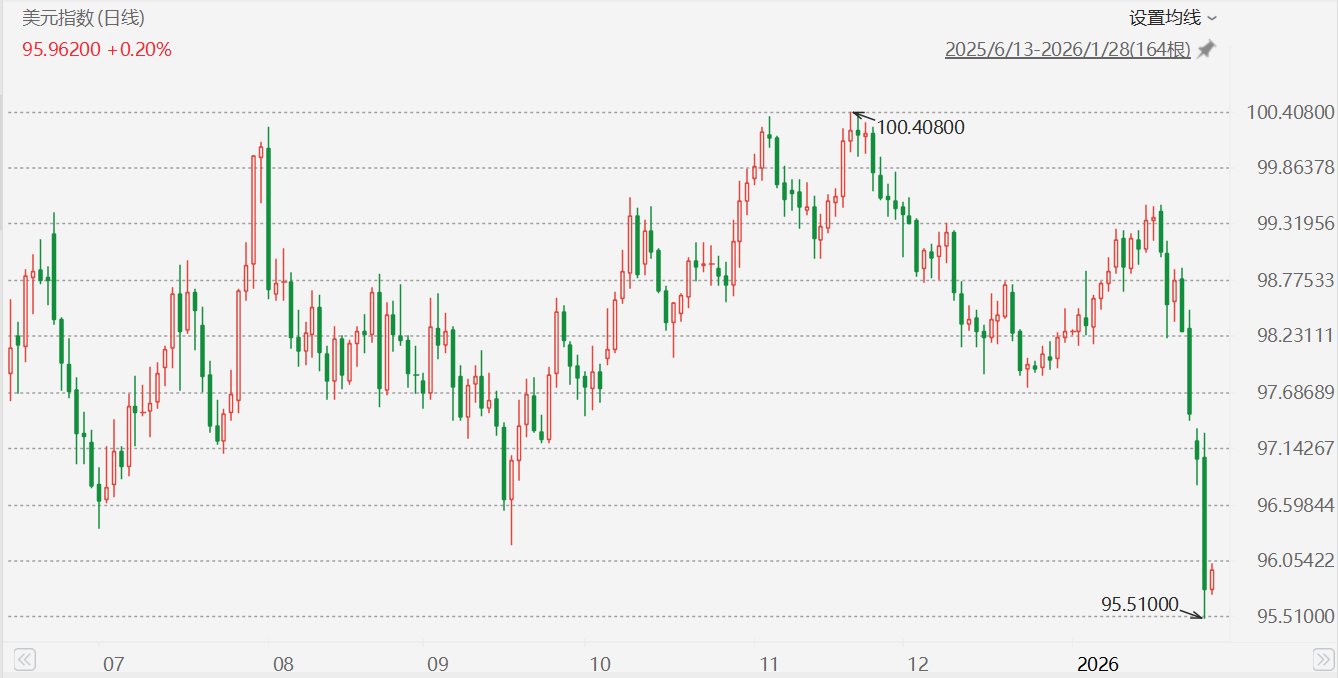
Group 1 - The Federal Reserve has decided to pause interest rate cuts as of January 2026, maintaining the benchmark rate in the range of 3.50%-3.75%, which aligns with market expectations [5][6] - The FOMC statement reflects a more optimistic outlook on the economy and employment, indicating that the threshold for future rate cuts has increased based on economic data [6][7] - The internal voting threshold for rate cuts has slightly decreased due to the rotation of regional Fed presidents, with a more neutral to dovish stance compared to the previous year [8] Group 2 - Following the FOMC meeting, U.S. Treasury yields rose, and gold prices surged, breaking through $5,400 per ounce and reaching a new historical high of over $5,500 per ounce, indicating a shift in gold pricing from interest rates to credit risk [6][9] - The market is seeing a significant influx of safe-haven funds into gold, driven by concerns over U.S. dollar assets and the recent comments from former President Trump regarding currency manipulation [9][10] Group 3 - The report highlights the recent decline of the U.S. dollar, which fell over 1.2% to a low of 95.55, the lowest since February 2022, following Trump's comments favoring a weaker dollar to boost the economy [11][12] - Concerns about a potential "Plaza Accord 2.0" are discussed, but the report suggests that achieving such an agreement would be challenging due to the lack of support from other Western nations and the complexities of current economic conditions [13][14] Group 4 - The A-share market is experiencing a mixed performance, with the Shanghai Composite Index showing slight gains while the Shenzhen and ChiNext indices have declined, indicating a divergence in market trends [25][26] - The report notes that the liquor sector has seen significant investment, with a notable increase of 9.68%, while other sectors like semiconductor and electronic components have faced declines [27][29]
美国经济热点简评:美元大跌会是广场协议2.0吗?
Donghai Securities· 2026-01-28 12:23
Group 1: Economic Context - The joint intervention by the US and Japan in the yen is primarily to prevent risks associated with rising US Treasury yields, rather than to weaken the dollar[2] - Trump's administration is actively seeking a "weak dollar" to boost the US economy, which may not receive support from Western allies[2] - The current geopolitical tensions, particularly regarding Greenland and Denmark, have created a significant rift between the US and Europe, reducing the likelihood of coordinated currency interventions[2] Group 2: Market Reactions - On January 27, 2026, following Trump's comments on the dollar, it depreciated by over 1.2%, reaching a low of 95.55, the lowest since February 2022[3] - Gold prices surged, exceeding $5200 per ounce on January 28, 2026, in response to the dollar's decline[3] - Trump's remarks about manipulating the dollar like a yo-yo challenge the independence of the Federal Reserve, raising concerns about market stability[3] Group 3: Future Implications - The potential for a "Plaza Accord 2.0" is considered low due to the complexities of unilateral currency appreciation and the current geopolitical landscape[4] - A reduction in the US current account deficit could lead to capital outflows and asset devaluation, threatening the stability of the dollar's dominance[4] - Risks include unexpected inflation in the US and faster-than-expected recovery in the domestic economy, which could impact market dynamics[4]
特朗普“默许”弱势美元,全球资本调仓亚洲:日元韩元迎补涨关键窗口
智通财经网· 2026-01-28 01:59
Group 1 - The global foreign exchange market is experiencing a significant structural shift as the Trump administration's nuanced change in attitude towards a strong dollar is becoming a major benefit for Asian currency assets [1] - The dollar index fell to a four-year low in late January, indicating a growing inclination from Washington to utilize currency depreciation to reduce trade deficits and boost exports [1] - Market strategists believe that Asian currencies are in a favorable position to benefit from a weaker dollar, despite ongoing tariff threats [1] Group 2 - Comments from market observers highlight that the Trump administration is taking a calculated risk with currency depreciation, which could be beneficial before the situation escalates [2] - The weakening dollar reflects market unease regarding U.S. policy and economic outlook, with particular focus on major Asian exporters like Japan and South Korea [2] - Analysts suggest that the yen could see a rebound, especially with anticipated monetary policy divergence, as the Bank of Japan is expected to raise rates while the Federal Reserve may cut rates [2] Group 3 - The strategy of promoting a weaker dollar may help reduce trade imbalances in the long run but could also trigger extreme financial turmoil and distortions in other areas of the global economy [3]
美元指数跌至近4年低位!特朗普:美元“表现很棒”
Xin Lang Cai Jing· 2026-01-28 01:13
Core Viewpoint - The US dollar index has significantly dropped, reaching a low of 95.51, the lowest since February 2022, indicating a potential shift in currency dynamics and market sentiment towards the dollar [1] Group 1: Dollar Performance - The US dollar index fell sharply, hitting 95.51, marking a new low since February 2022 [1] - President Trump expressed that he does not believe the dollar has "dropped too much" and described its performance as "great," suggesting that currency fluctuations are normal [1] Group 2: Economic Implications - Trump indicated a desire for the dollar to return to its "proper level," which he considers a "fair approach" [1] - Analysts interpret Trump's comments as an endorsement of a weaker dollar, which could enhance US export competitiveness [1] Group 3: Market Reactions - The market perceives Trump's statements as tacit approval of the dollar's decline, potentially leading to foreign capital withdrawal from the dollar [1] - Despite a decent performance of US stocks last year, their value diminishes when converted to foreign currencies, highlighting the impact of dollar depreciation on international investors [1]
黄金股ETF领涨,机构:金价中长期存在支撑丨ETF基金日报
2 1 Shi Ji Jing Ji Bao Dao· 2025-11-20 02:23
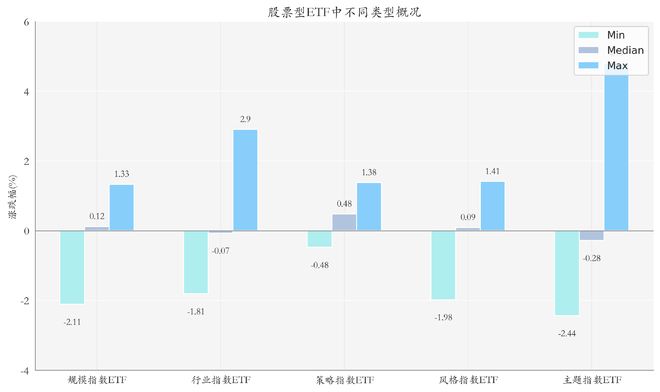
Market Overview - The Shanghai Composite Index rose by 0.18% to close at 3946.74 points, with a daily high of 3960.05 points [1] - The Shenzhen Component Index showed minimal fluctuation, closing at 13080.09 points, with a peak of 13164.97 points [1] - The ChiNext Index increased by 0.25%, ending at 3076.85 points, reaching a maximum of 3113.22 points [1] ETF Market Performance - The median return for stock ETFs was 0.0%, with the highest return from the Ping An SSE 180 ETF at 1.33% [2] - The highest performing industry index ETF was the China Tai CSCI Nonferrous Metals ETF, yielding 2.9% [2] - The top thematic index ETF was the Yongying CSCI Hong Kong Gold Industry ETF, achieving a return of 4.79% [2] ETF Gains and Losses - The top three ETFs by gain were: - Yongying CSCI Hong Kong Gold Industry ETF (4.79%) - Guotai CSCI Hong Kong Gold Industry ETF (4.55%) - Huazhang CSCI Hong Kong Gold Industry ETF (4.27%) [4][5] - The top three ETFs by loss were: - Guotai CSCI Film and Television Theme ETF (-2.44%) - Penghua CSCI Media ETF (-2.44%) - Yinhua CSCI Film and Television Theme ETF (-2.42%) [4][5] ETF Fund Flows - The top three ETFs by inflow were: - Southern CSCI 500 ETF (inflow of 1.06 billion) - Southern CSCI 1000 ETF (inflow of 539 million) - Huaxia SSE Sci-Tech 50 ETF (inflow of 491 million) [6][7] - The top three ETFs by outflow were: - Huaxia SSE 50 ETF (outflow of 1.183 billion) - Penghua CSCI National Defense ETF (outflow of 373 million) - Huatai Baichuan CSCI Low Volatility ETF (outflow of 296 million) [6][7] ETF Margin Trading Overview - The top three ETFs by margin buying were: - Huaxia SSE Sci-Tech 50 ETF (buying amount of 441 million) - E Fund ChiNext ETF (buying amount of 436 million) - Guotai CSCI All-Index Securities Company ETF (buying amount of 362 million) [8][9] - The top three ETFs by margin selling were: - Huatai Baichuan SSE 300 ETF (selling amount of 40.917 million) - Huaxia SSE 50 ETF (selling amount of 18.278 million) - Huabai CSCI All-Index Securities Company ETF (selling amount of 6.098 million) [8][9] Institutional Insights - Precious metals are expected to maintain a strong trend due to market risk aversion driven by concerns over economic conditions without interest rate cuts by the Federal Reserve [10] - Long-term support for gold prices is anticipated due to the rising status of gold as a monetary metal amid de-dollarization and ongoing central bank purchases [11]
金价创历史新高!2025年9月30日金店黄金价格涨至1126元/克
Jin Tou Wang· 2025-09-30 11:33
Core Insights - Gold prices reached a historic high on September 30, with multiple jewelry stores pricing gold ornaments around 1120 CNY per gram, reflecting a significant increase in retail prices across major brands [1][4] - The SPDR Gold ETF holdings surged to 1011.73 tons, the highest since August 2022, indicating a continuous inflow of institutional funds into the gold market [2] - Market expectations for the Federal Reserve to cut interest rates in October and December have increased, with a 89.3% probability for a rate cut in October, which would lower the opportunity cost of holding gold and enhance its attractiveness [1] Gold Price Trends - Current domestic gold price is 872 CNY per gram, while international gold price stands at 3853 USD per ounce [3] - Major jewelry brands have reported the following gold prices: - Laomiao: 1126 CNY per gram - Liufu: 1123 CNY per gram - Chow Tai Fook: 1123 CNY per gram - Zhou Liufu: 1077 CNY per gram - Jinzun: 1123 CNY per gram - Lao Fengxiang: 1122 CNY per gram - Chao Hong Ji: 1123 CNY per gram - Chow Sang Sang: 1125 CNY per gram - Caibai: 1075 CNY per gram [4] Precious Metal Recovery Prices - Current recovery prices for precious metals are as follows: - Gold: 861 CNY per gram - Platinum: 346 CNY per gram - Palladium: 271 CNY per gram - Silver: 10.00 CNY per gram - 14K Gold: 495 CNY per gram - 18K Gold: 638 CNY per gram - 24K Gold: 856 CNY per gram [5] Hong Kong Gold Prices - Current gold price in Hong Kong is reported at 35314 HKD per tael, with major brands like Chow Tai Fook, Liufu, and Chow Sang Sang all pricing their gold ornaments at 42570 HKD per tael [6][7]
财富观 | 突破4000美元不是梦?这五大影响因素至关重要
Sou Hu Cai Jing· 2025-09-30 08:17
Core Viewpoint - Deutsche Bank indicates that central banks and exchange-traded funds (ETFs) are becoming major driving forces behind gold prices, which recently surpassed $3,800 for the first time, reaching a historic high of $3,855.2 per ounce due to factors such as U.S. interest rate cut expectations, concerns over a potential U.S. government shutdown, and escalating geopolitical tensions [2][4]. Group 1: Economic Indicators and Market Sentiment - The U.S. Commerce Department reported a 0.2% month-on-month increase in the core Personal Consumption Expenditures (PCE) index, with a year-on-year rate stabilizing at 2.9%, aligning with market expectations [4]. - Traders currently estimate a nearly 90% probability of a Federal Reserve rate cut in October and about 65% in December, driven by the recent moderate inflation data [4]. - Market sentiment is optimistic, with expectations that gold prices may test historical highs again this week, although heavy long positions in the gold market may warrant caution [4]. Group 2: Geopolitical and Government Factors - Investors are closely monitoring the independence of the Federal Reserve amid President Trump's nomination of Stephen Miran, who has expressed views significantly lower than other Fed officials [5]. - The risk of a U.S. government shutdown is looming, with negotiations ongoing to extend government funding, which could impact the release of key economic data [5]. - The potential government shutdown is contributing to increased demand for safe-haven assets like gold, putting slight pressure on the dollar and supporting precious metals [5]. Group 3: Gold Demand and Supply Dynamics - Central banks are expected to continue increasing their gold holdings, with annual net purchases exceeding 1,000 tons since 2022, projected to reach 900 tons by 2025 [6]. - The World Gold Council (WGC) anticipates that central bank purchases will account for 23% of total annual demand from 2022 to 2025, double the average from the previous decade [6]. - The European Central Bank's report indicates that two-thirds of central banks invest in gold for diversification, with a significant portion doing so to hedge against geopolitical risks [6]. Group 4: Currency and ETF Influence - The U.S. dollar index fell nearly 0.3%, dropping below 98, with a cumulative decline of over 10% this year due to Fed rate cut expectations and trade policies [7]. - The inverse relationship between gold and the dollar has been particularly strong, with the weakening dollar contributing to rising gold prices [7]. - Gold ETFs have become a significant source of gold demand, with inflows reaching 397 tons in the first half of the year, the highest since 2020 [8]. Group 5: Retail Investment Trends - Retail investment demand for gold products is showing notable changes, with bar investment demand expected to grow by 10% in 2024, while coin purchases are projected to decline by 31% [9]. - The overall purchasing volume in the retail investment market remains strong despite these shifts [9]. Group 6: Jewelry Demand - Jewelry demand is highly sensitive to price changes, with high gold prices leading to a decrease in demand, particularly in major markets like China and India [11]. - The WGC estimates a 14% decline in jewelry gold demand in Q2 2025, reaching the lowest level since Q3 2020, primarily due to high prices [11]. - The global jewelry manufacturing gold usage is expected to decrease by 9% in 2024 and further by 16% in 2025 [11].
